

 19
19 38
38 8
8 1
1 1
1 1
1 1
1 1
1 6
6 2
2 3
3 1
1 1
1 1
1 3
3 1
1 3
3


When Life Comes With a Cheat Sheet
What if life gives you a Ctrl Z button, but instead of going back a few steps, it throws you into a whole different decade? That is exactly the kind of chaos and charm that Dream of Golden Years plays with, and honestly, I was hooked faster than you can say “time is money.”Xia Xiao Lan starts off as your classic modern day corporate warrior, except without the glory. She is overworked, underloved, and carrying a lifetime of loneliness after losing her parents. No family, no safety net, just vibes and regrets. Then boom, New Year fireworks hit and suddenly she is transported from 2026 to the 1980s, into the body of another Xia Xiao Lan. Not her younger self, not a redo of her own timeline, but a completely different life with the same name and face. That twist alone already sets the drama apart, and I was instantly intrigued by how she would navigate a life that was never hers to begin with.
What I really appreciated is how quickly Xiao Lan adapts. No endless crying, no drawn out existential crisis. Girl wakes up, processes, and gets to work. It feels very “I have suffered enough in life, let’s not waste this second chance” energy. And that energy drives the entire drama. The pacing is fast, the conflicts come and go like quick waves, and just when you think disaster is about to strike, Xiao Lan flips the situation in her favor. It becomes oddly comforting. After a while, I stopped worrying because I trusted her to handle business, literally and figuratively.
At its core, this is a slice of life story that leans heavily into growth and business ventures rather than high stakes melodrama. It focuses on everyday struggles, relationships, and small victories that slowly build into something bigger. The conflicts rarely drag, and even when tension builds up, it resolves quickly in a way that feels satisfying. It might not give you that intense dramatic high some viewers look for, but for me, it felt like a warm bowl of soup on a rainy day. Simple, comforting, and quietly fulfilling.
That said, the drama is not without its questionable moments. Some arcs feel exaggerated, like the bullying Xiao Lan experienced just for being an orphan. It felt a bit one note and could have been more layered. Xia Zi Yu’s storyline also went full soap opera mode with the plastic surgery and identity switch. It was entertaining in a “did that really just happen” way, but it clashed with the otherwise grounded tone of the show. There were also moments where confrontations felt forced, like the drama was trying a little too hard to push Xiao Lan into proving herself.
The ending is something that will always make viewers nervous, especially with time travel involved. While it follows the expected restrictions, I found myself surprisingly content. We get a glimpse of the life Xiao Lan built, her success, her family, and her love with Zhou Cheng, and that alone felt like a quiet confirmation of what could have been. Her waking up in the present felt a bit too calm for someone who just lived such a full life, and I did wish for a stronger emotional payoff. Interestingly, when she reflects on her experience, she focuses more on her romance than her growth in family and business, which felt slightly off given everything we saw.
Speaking of characters, Xiao Lan is easily the heart of the drama. She is relatable in that painfully real way, carrying regrets and big dreams at the same time. Watching her become more confident, sharp, and unapologetically driven was incredibly satisfying. She is not written as someone who revolves around love, and I loved that. She prioritizes her goals, her family, and her independence. Of course, she has her flaws. Her occasional arrogance and the irony of having what is essentially a life cheat sheet adds a layer of complexity that makes her even more interesting.
The performance by Zhou Ye truly surprised me in the best way. This is easily one of her most natural performances. She balances emotions, dialogue, and even comedic timing so effortlessly. Her portrayal evolves with the character, from a simple countryside girl to a confident businesswoman, and even her visuals reflect that journey beautifully. The styling throughout the drama deserves a chef’s kiss moment because every era appropriate look just hits right.
Zhou Cheng, played by Zhai Xiao Wen, is the definition of a walking green flag. Calm, gentle, and supportive to a fault. He brings a sense of stability that makes you feel like everything will be okay as long as he is around. That said, his character does feel a bit one dimensional at times since his world revolves heavily around Xiao Lan. Still, his presence is comforting, and his softer approach to love adds a nice balance to Xiao Lan’s driven personality.
The supporting cast is where the drama truly shines. Xiao Lan’s mother, Liu Fen, played by Dong Xuan, has one of the most satisfying growth arcs. Watching her transform from a passive woman into someone more confident and radiant was genuinely touching. Her relationship with Tang Hong En, played by Zhang Duo, adds a sweet layer of mature romance to the story. Then there is Du Zhao Hui, portrayed by Lawrence Wong, who starts off shady but turns out to be surprisingly endearing. His dynamic with Xiao Lan is more admiration than romance, and honestly, watching him try to win her attention felt more cute than threatening.
Family plays a huge role, especially in the earlier episodes. The warmth from Liu Yong’s family and later additions like Granny Yu creates a strong emotional core that contrasts sharply with the toxicity of the Xia family. And yes, Grandma Xia is the kind of character that will have you talking to your screen like she can hear you.
Production wise, the drama does a great job capturing the feel of the 80s. From the sets to the costumes, everything feels cohesive and intentional. The retro vibe is consistent, and the OSTs add that extra layer of nostalgia. There are minor hiccups like slightly confusing flashbacks early on and some awkward English dubbing, but nothing that ruins the experience.
In the end, Dream of Golden Years left me feeling warm and oddly hopeful. It is not perfect, but it is sincere, engaging, and filled with characters you grow attached to. It made me laugh, made me frustrated, and most importantly, made me imagine what I would do if I had my own life cheat sheet. Because let’s be real, who wouldn’t want to speedrun life with insider knowledge?
Was this review helpful to you?
This review may contain spoilers
An Underrated Masterpiece
Started watching this with no expectations and ended up finishing it in two days, not able to move on.This drama explores the theme of human rights, social class, and women empowerment. Despite the heavy theme, it is packed in a slightly light manner with enough elements of humor and suspense to keep you entertained. engaged, and curious as to how the story folds out.
Zhao Pan Er is not your average Chinese drama female lead. She is a 24 year old woman with a past that puts her on the bottom of the social class. While the male lead, Gu Qian Fan, is also a man with a complicated past and a reputation feared by the public, not to mention, caught in a power struggle. Aside from them, there are also two other characters whose roles are pivotal to the theme of this drama, Song Yin Zhang and Sun San Niang, friends of Zhao Pan Er, each with their own struggles.
Rather than the ‘pretty’ parts of a woman, this drama features their struggles and how they empower one another. This drama doesn’t really delve much into the male characters aside from Gu Qian Fan, who’s the male lead. In terms of story, it was definitely well written and well paced. I do think that the ending could’ve been better though. I wish that we could see more happy moments between the leads and primary characters of the show. Also, I think that it’s a bit of a pity that Xu Ouyang served as one of the major character of this drama, only to disappear in the middle of the drama, then reappear as a major villain in the end. It left me with several questions. Although so, I do like and enjoyed how the story was written and unfolded.
All the actors also did very well in bringing their characters to life, especially the two leads. I would like to give credits to Liu Yifei for her detailed acting like when her character was surprised, it looked so real. I also liked how Chen Xiao made Gu Qian Fan’s character look so reliable and charismatic. Not to mention, the inexplicit facial expressions to show his admiration and love towards Zhao Pan Er, lovely! Jelly Lin also did a great job. As someone who plays a character with the most character development in the show, she did a really great job at portraying that naive, jealous girl turned mature, smart, independent woman. The change in her attitude and expression were evident!
All in all, this drama was entertaining, inspiring, and definitely keeps you hooked to see how it all unfolds!
Was this review helpful to you?

The Lie That Built a Life
If I had to summarize Pursuit of Jade in one sentence, it would be this: a butcher girl picked up a half dead man in the snow and accidentally picked up a marquis, a war, political conspiracies, and the love of her life along the way. The story follows Fan Chang Yu, a butcher’s daughter who becomes the breadwinner after her parents’ death, and Xie Zheng, a fallen noble hiding under a fake identity while seeking revenge and justice. What started as a fake marriage slowly turned into real love, but fate and war had other plans. Chang Yu eventually carried her butcher’s knife onto the battlefield while Xie Zheng reclaimed his title and fought to protect his country and the people he loved. In the end, they reunited through war, politics, and bloodshed, uncovering the truth behind the past while choosing each other again and again.What made this drama special for me from the very beginning was Fan Chang Yu as a character. She is strong but not overpowered, kind but not naive, capable but still very human. She is not book smart, she makes mistakes, she struggles with money, she gets tired, she cries, and that makes her feel real. Watching her butcher pigs in the morning, fight debt collectors in the afternoon, and worry about her sister at night made her one of the most grounded female leads I’ve seen in a costume drama. Tian Xi Wei really carried this role with so much charm. She can look cute, funny, fierce, heartbreaking, and charismatic all at the same time. One moment she is carrying a grown man on her back through the snow, the next moment she is sitting properly because she realized the man she saved is handsome. That duality is exactly why Chang Yu is so lovable.
Then we have Xie Zheng, also known as Yan Zheng, the most handsome matrilocal husband in drama history. Zhang Ling He looks insanely good in this drama, probably his best costume drama look so far. But what made his character work is not just the visuals. Xie Zheng is smart, strategic, calm, and ruthless on the battlefield, but in Xigu Lane he becomes someone soft, awkward, and quietly in love. The way he fell for Chang Yu was very gradual and believable. It was not love at first sight. At first he trusted her, then respected her, then admired her, then slowly loved her. One of the most beautiful parts of their relationship is that Chang Yu respected the Marquis Wu’an before she even knew Yan Zheng was him, and Xie Zheng fell for Chang Yu before she knew he was powerful. They loved each other as people, not because of status.
Their relationship progression is honestly one of the best parts of the drama. From fake marriage, to awkward newlyweds, to partners, to lovers, to fighting side by side on the battlefield. Their romantic scenes were full of tension even before they officially became a couple. The silhouette scene, the measuring clothes scene, the cheek kiss, the tangerine candy kiss, the iconic teardrop, the forceful kiss in the snow, the gua sha scene, the bathtub scene, all of them were memorable. Their chemistry was not just romantic but also emotional and strategic. They trust each other with their lives, not just their hearts.
The side characters were also very memorable, and this is actually one of the reasons the drama stood out to me. Qi Min and Qian Qian in particular provided a very interesting parallel to Xie Zheng and Chang Yu. Both Chang Yu and Qian Qian saved the men in their lives, but the relationships that followed went in completely different directions. Chang Yu and Xie Zheng’s relationship grew into mutual respect, trust, and partnership, while Qi Min and Qian Qian’s relationship turned into something much darker and more obsessive. When Qi Min made advances toward Qian Qian, she often had to play along as a way to survive and protect herself, but when Xie Zheng tried to flirt or push Chang Yu, she would literally smack him or push him away. The contrast between these two relationships was very strong, and it made both arcs more interesting. One relationship showed what love built on respect looks like, while the other showed what happens when love turns into control and obsession. It was also impressive how the drama made viewers emotionally invested not just in the main leads, but also in side characters like Qi Min and Qian Qian, whose story was tragic, frustrating, but very memorable.
Another thing I really loved about this drama is Xigu Lane. The Fan sisters, Uncle Zhao, Madam Zhao, the neighbors, the pig butcher squad, all of them made the drama feel warm and alive. A large portion of the early episodes focuses on Chang Yu and Xie Zheng’s life there, and those episodes are honestly some of the most charming and heartwarming parts of the entire drama. Because of that, when the story later shifted into politics, revenge, and war, the change felt quite sudden. I sometimes wished the drama had sprinkled more political developments or court conflicts earlier on so the transition would feel more gradual rather than switching from slice of life to political drama almost all at once.
The cinematography in this drama is honestly one of the best I have seen. The director plays a lot with warm and cold tones, framing, symbolism, and camera angles. Xigu Lane is always warm, golden, and lively, while the palace, battlefield, and revenge arcs are often cold, blue, and distant. Some scenes feel like paintings. The snow scenes, the lantern festival, the massacre and war scenes, the fire scenes, the Yin and Yang composition bathtub scene, so many wallpaper worthy shots.
Interestingly, the drama also did a very good job with Chang Yu’s action scenes. When she finally stepped onto the battlefield, she did not feel like a random civilian holding a weapon. She moved like a soldier and fought like a general. Her fight scenes were sharp, decisive, and powerful, and Tian Xi Wei really managed to give Chang Yu a very commanding and empowering presence in those moments. You could believe that soldiers would follow her into battle. However, this also made the contrast with the rest of the war scenes more noticeable. For a story filled with generals, battles, and military strategy, many of the large scale fights and duels felt surprisingly restrained. Some confrontations that should have felt desperate and intense ended up looking more stylized than dangerous. As the story moved toward its political climax and final confrontation, the scale and urgency never quite matched the amount of buildup. The rebellion, the revenge, and the palace showdown should have felt explosive, but instead some parts felt smaller and less intense than expected. This is probably where the drama felt the weakest, not because the story was bad, but because the execution of the final conflict did not fully match the emotional and narrative weight the drama had been building for so long. Episode 39 in particular felt like it should have been bigger, more chaotic, and more emotionally explosive.
However, episode 40 gave a very good closure. We finally learned the truth about what happened in the past, and it turned out many characters were victims of the late emperor’s tyranny. Wei Yan was not purely evil, Qi Sheng was just a puppet emperor who went mad, Qi Min and Qian Qian finally had closure, Bao Er becoming emperor felt like a new beginning, and the best part was Chang Yu, Xie Zheng, and Chang Ning returning to Xigu Lane and becoming a real family with the Zhao couple. When Chang Yu called Uncle and Madam Zhao mother and father, that scene really hit me emotionally. It felt like everything came full circle. The love knot tree scene near the end perfectly describes Xie Zheng’s love. He wrote his name on many love knots so that no matter where Chang Yu throws hers, it will still land with his. That is basically his character in one scene. He does not control her, he just makes sure that no matter where she goes, he will always be there.
Overall, Pursuit of Jade is a drama that starts warm, becomes intense, then ends warm again. It has romance, comedy, politics, war, action, friendship, family, and very beautiful cinematography. It is not a perfect drama, especially near the climax and war execution, but the characters, relationships, emotions, and visuals make the journey very worth it. More than politics or revenge, this drama is really about finding a home, finding people who choose you, and choosing them back no matter how chaotic the world becomes.
And honestly, who would have thought that a butcher’s knife could shine brighter than a general’s sword.
Was this review helpful to you?
This review may contain spoilers
Home Was Always Each Other
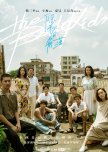
Love for You is a poignant story about two souls tied together not by blood, but by circumstance and fate. Set against the backdrop of the late 1990s, Chen Yi and Miao Jing find themselves living under the same roof after their parents' relationship changes the course of both their lives. Although they are never legally family, they slowly become one in every way that truly matters. What begins with resentment gradually turns into trust, then companionship, and eventually love. They weather loss, loneliness, and hardships side by side until tragedy pulls them apart. Years later, fate brings them together again, forcing them to face the ghosts they left behind. On paper, it has everything needed for a memorable angsty melodrama. Unfortunately, while the destination is satisfying enough, the road getting there loses itself along the way.The drama constantly alternates between the past and the present, and its strongest chapters are undeniably the childhood and teen years. Miao Jing and her mom arrives at the Chen household carrying nothing but good manners and the hope of finally belonging somewhere, while Chen Yi greets her with resentment born from wounds much older than she could ever understand. Despite his coldness, he never truly wishes to hurt her, and little by little, both children discover that they are carrying burdens far too heavy for their age. Miao Jing longs for a family, yet repeatedly finds herself abandoned by a mother who chooses survival over presence. Chen Yi struggles with an abusive and distant father while desperately missing his mother. They become each other's home. She finally has someone who protects her, while he finally has someone worth protecting. Home, after all, is not always a place. Sometimes it is simply another person.
A huge reason why these early episodes work so well is because of the child actors. Zhou Yu Chen delivers an incredibly convincing performance as young Chen Yi, effortlessly expressing anger, sadness, fear, resentment, curiosity, and warmth with remarkable emotional honesty. Chen Zi Xuan is equally impressive as young Miao Jing, capturing the vulnerability and quiet loneliness of a little girl searching for someone to rely on. She also resembles Zhang Jing Yi surprisingly well, making the transition between younger and older versions feel seamless. Together, these two young actors establish the emotional foundation of the entire series, setting a melancholic atmosphere that immediately pulls you into their world.
The high school years continue that emotional momentum. Once Zhang Jing Yi and Song Wei Long take over, the drama becomes even more heartbreaking. Family problems, irresponsible parents, and financial struggles force two teenagers to shoulder responsibilities that should never have belonged to children. Chen Yi sacrifices his dreams and works countless jobs simply to provide for both of them, even paying for Miao Jing's education. Meanwhile, Miao Jing studies tirelessly, hoping scholarships will lessen his burden while helping however she can. The tragedy lies in the imbalance. Chen Yi keeps descending deeper into darkness just so Miao Jing can continue walking toward the light. It is painful because his sacrifices grow larger while she remains too young and innocent to fully understand what he is giving up for her. Once she reaches adulthood and both can no longer deny their feelings, they finally become a couple. It feels like the natural culmination of years spent growing together rather than a sudden romance. Their chemistry also sells this progression well. They convincingly transition from sharing a family-like bond into becoming lovers, even if the emotional line separating those two stages occasionally feels a little blurry. Real life is often messy like that.
Their melodramatic scenes are easily among the drama's biggest strengths. One line that particularly stayed with me was when Miao Jing asked, "Do you have any idea how much it burns to live in a future built on your scars?" That dialogue cuts surprisingly deep because it perfectly captures the guilt, gratitude, and helplessness that define their relationship. The emotional writing is at its strongest whenever the story allows these two characters to simply exist together without unnecessary distractions.
Sadly, that strength begins fading after the incident that separates the past from the present. Throughout the episodes, the drama repeatedly teases glimpses of a mysterious fire and Chen Yi's involvement in underground fighting. Naturally, I expected those events to become the emotional centerpiece of the story. Instead, the narrative suddenly skips forward, shows the breakup, and moves straight into adulthood without properly exploring what actually happened. The separation itself feels less like fate and more like prolonged miscommunication. Chen Yi pushes Miao Jing away because he wants to protect her from his darkness, while Miao Jing believes he is destroying the only home they ever built together. Then they reunite years later, with Chen Yi running a billiards business and Miao Jing working as an auditor.
From there, the drama starts feeling like an entirely different show. Rather than continuing the heavy emotional storytelling it spent over half the series building, it leans into a familiar reunion romance filled with denial, push and pull, misunderstandings, and emotional games. Miao Jing appears cold and manipulative while Chen Yi keeps keeping his distance. They obviously still love each other, but watching them circle the same emotional drain eventually becomes exhausting. The only thing that kept me invested was wanting answers about Chen Yi's missing years.
Unfortunately, those answers arrive far too late. The truth behind the fire and Chen Yi's time in the fighting ring is only fully revealed during the final stretch, mostly through dialogue and courtroom testimony. Instead of letting the audience experience those traumatic events alongside the characters, the drama simply tells us about them. Considering how much these mysteries shaped the entire narrative, the payoff feels surprisingly anticlimactic. Chen Yi's time in the ring should have been one of the darkest chapters of his life, yet it receives only brief attention before the story quickly moves on. It feels like enormous emotional potential was left untouched.
The tonal shift also becomes difficult to ignore. Around episode 22, the series suddenly embraces fluffy romantic comedy clichés that feel completely disconnected from the atmosphere established earlier. I enjoy romantic comedies, but genre shifts only work when they happen organically. Here, it feels like watching someone replace a violin concerto with party music halfway through the performance. Instead of strengthening the emotional core, these scenes dilute it. Some moments become so cheesy and predictable that I found myself laughing at scenes clearly meant to be emotionally powerful. It almost feels as though the drama became unsure whether it wanted to remain an angst-filled melodrama or transform into a conventional romance mixed with a justice story. In trying to balance both, it never fully commits to either. That said, the whole arc with Zhang Bin’s business also dragged that I found myself losing focus at times and just want to speed it up.
Thankfully, the cast remains consistently excellent. Zhang Jing Yi beautifully portrays both versions of Miao Jing, balancing youthful innocence with the confidence and intelligence of adulthood. I especially appreciated how natural she looked during the teenage scenes without relying on glamorous styling. Song Wei Long once again proves that stories built around growing up together fit him exceptionally well. He captures Chen Yi's quiet darkness while never losing the warmth reserved exclusively for Miao Jing. Their chemistry remains believable throughout, carrying even the weaker parts of the script.
The supporting cast is more uneven. Chen Yi's two close friends bring welcome warmth to his otherwise lonely life, although they never leave a lasting impression. Zhou Kang An and He Wen Jie, however, stand out as the parental figures Chen Yi and Miao Jing deserved from the beginning. Their kindness gives the story some of its most heartfelt moments, making their eventual fate both heartbreaking and unsurprising. Zhang Bin, on the other hand, never quite works as an intimidating villain. He spends so much time making you question his true nature that, when his role finally becomes clear, he still lacks the presence needed to feel threatening. Ironically, the most memorable thing about him might be his impossibly perfect teeth. Other supporting characters such as Chen Ye and Linda contribute enough to be remembered, while Tu Li unfortunately feels like a character searching for a purpose. She functions neither as an effective love rival nor as a meaningful friend, making her entire storyline feel unnecessary despite He Rui Xian giving a pleasant performance.
Visually, the drama does a commendable job establishing its melancholic atmosphere. The muted colors, soft lighting, and restrained contrast create a quiet sadness that perfectly complements the first half of the story. The cinematography is pleasant without being particularly memorable. The soundtrack generally supports the emotional tone well, although one recurring rap track feels oddly placed and occasionally pulls attention away from scenes instead of enhancing them.
The finale attempts to reconnect with the drama's original identity by returning to life and death stakes involving Chen Yi, Miao Jing, and Zhang Bin. By then, however, the story has already become so predictable and overstretched that some supposedly tense moments unintentionally come across as more amusing than suspenseful. Even so, the ending provides enough closure to feel emotionally satisfying. Rather than ending with a grand promise or symbolic status, Chen Yi and Miao Jing choose something much simpler and more meaningful. They promise to become each other's home. After everything they have endured, that feels like the most fitting conclusion they could have received. As Miao Jing asks, "Will you be my home?" In many ways, that single question captures the entire essence of their journey.
Love for You ultimately feels like a house built on an incredibly strong foundation that slowly loses its architectural blueprint halfway through construction. The childhood and teen chapters deliver a moving, emotionally rich story about two lonely souls finding home in each other, supported by excellent performances and heartfelt chemistry. Sadly, the latter half trades much of that emotional depth for familiar romance tropes, underdeveloped mysteries, and a justice storyline that never reaches its full potential. I eventually watched the final episodes at double speed, yet I still genuinely wanted to know how everything would end. That, perhaps, is the drama's greatest strength. Even when it stumbles, it never completely lets go of your curiosity.
Was this review helpful to you?
This review may contain spoilers
Do You Believe in Fairy Tales?
What begins as a seemingly innocent summer adventure takes a dark turn when three children in a quiet coastal town accidentally capture a murder on camera. Drawn into the orbit of the prime suspect, they soon find themselves tangled in a web of secrets, lies, and moral gray areas. Like a stone cast into still water, a single act sends ripples through multiple families, exposing hidden fractures and setting off a chain of consequences no one can control. The Bad Kids is a gripping slow-burn thriller where appearances deceive, innocence blurs, and every choice carries a price. This is not a story about what happened. It is a story about what people choose to believe happened, in order to survive it.What elevates The Bad Kids beyond the framework of a conventional crime drama is its refusal to concern itself with the mystery of who committed the crime. The answer arrives almost immediately. Instead, the series turns its gaze toward something far more unsettling: the gradual erosion of morality and the quiet ways in which darkness takes root. It is less interested in murder as an act than in the emotional and psychological conditions that make it possible. Beneath its suspenseful exterior lies a haunting meditation on loneliness, neglect, desire, and the fragile boundaries between victim and perpetrator.
At the heart of this story is Zhu Chao Yang, one of the most fascinating young protagonists television has produced. Initially presented as a bright but isolated child struggling to navigate a fractured family life, he slowly emerges as something far more complex. The further the story progresses, the more it invites uncomfortable questions. How much of what we see is truth? How much is performance? At what point does survival begin to resemble manipulation? The show never provides easy answers, and it is all the more haunting for it. Every scene feels like a subtle negotiation between truth and performance, innocence and calculation. By the end, the question is no longer whether Chao Yang is a victim of circumstance, but how much those circumstances have reshaped him.
Then there is Zhang Dong Sheng, one of the most compelling antagonists I've seen. What makes him memorable is not simply his capacity for violence, but the painful humanity that exists beneath it. He is not introduced as a monster lurking in the shadows. He is a man desperate to hold onto love, dignity, and a place in a world that seems determined to reject him. The series never asks us to forgive his actions, but it repeatedly forces us to understand them. That distinction is what makes him so frightening. Monsters are easy to condemn. People are not. His relationship with Zhu Chao Yang forms the beating heart of the series. Though positioned on opposite sides of the story, the two function as distorted reflections of one another. Both are intelligent, emotionally isolated, desperate for acceptance, and capable of concealing their true selves behind carefully constructed facades. What begins as a battle between innocence and corruption gradually transforms into something far more tragic: a portrait of two souls recognizing themselves in each other.
The title itself becomes one of the drama's most unsettling questions. Who exactly are the bad kids? The children who make terrible decisions? The adults who fail them? The parents whose love comes with conditions attached? The series offers no simple answer. Instead, it dismantles the comforting illusion that goodness and wickedness belong to separate categories. Everyone carries the capacity for both. The difference lies only in circumstance, opportunity, and choice. This idea echoes throughout the entire narrative. Nearly every tragedy in the story can be traced back to a longing to be loved. Parents choose favorites. Children compete for attention. Spouses seek validation. Affection becomes transactional, offered and withheld according to expectations. In a world where love feels conditional, morality itself begins to erode. The series suggests that people rarely become dangerous because they are inherently cruel. More often, they become dangerous because they are desperate.
Visually, The Bad Kids wraps this darkness in sunlight. Coastal landscapes, humid afternoons, crowded apartment blocks, and endless summer skies create an atmosphere filled with nostalgia. Yet beneath the warmth lingers a persistent sense of dread, as though something is quietly decaying beneath the surface. The result is a world that feels both beautiful and deeply unsettling. Childhood, often romanticized as a time of innocence, becomes a stage upon which innocence slowly disappears. The recurring melody of Little White Boat also serves as the perfect embodiment of this contradiction. What begins as a simple melody gradually evolves into something eerie and unforgettable, drifting through the narrative like a ghost. Each appearance feels less like a lullaby and more like a reminder of what has already been lost. Few dramas have used music so effectively to bridge the distance between innocence and tragedy.
The Bad Kids often feels like a fairy tale that has lost its way. Not the sanitized stories we inherit as children, but the older kind, where forests conceal dangers, innocence offers no protection, and every choice carries a consequence. As the narrative unfolds, the line between reality and storytelling becomes increasingly blurred. The series repeatedly gestures toward the comfort of neat conclusions, inviting both its characters and its audience to believe in endings where justice is restored and wounds are healed. Yet beneath that comforting surface runs a darker current, one that quietly questions whether such endings ever truly existed. By the finale, the drama leaves us standing between two versions of the same story: the fairy tale we wish to believe and the reality we fear may be true. The tension between those possibilities becomes one of the show's most enduring and haunting achievements.
What has fueled discussion around The Bad Kids long after its finale is its deliberate ambiguity. The series leaves behind clues, contradictions, and shadows that encourage multiple interpretations. There is a version of the story that feels reassuring, where justice prevails and innocence survives. There is another version that is considerably darker, one that lingers in the corners of certain scenes and between carefully chosen lines of dialogue. The drama never tells us which version to believe. Instead, it asks a far more interesting question: why do we want to believe one over the other?
Long after the murders, twists, and revelations fade from memory, that question remains. The Bad Kids is not ultimately a story about crime. It is a story about perception. About the stories people tell themselves in order to live with guilt, grief, and regret. About the frightening possibility that evil does not arrive all at once, but grows quietly in places where love, trust, and innocence have been allowed to wither. Like the best prestige dramas, it understands that the greatest horror is not discovering who the monster is. It is realizing how easily one can be made.
Was this review helpful to you?
With Food as the Main Course, Everything Else Was Just a Side Dish!
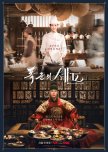
After being transported 500 years back to Joseon, award-winning French chef, Yeon Ji Yeong, met temperamental tyrant, King Yi Heon, when he was out on a hunting spree. Despite being in shock and disbelief, Yeon Ji Yeong ended up cooking her first dish in Joseon. Although initially skeptical, Yi Heon gave it a taste and memories about his late mother, the deposed Queen, came flooding in. After a failed attempt at escaping, Yeon Ji Yeong was brought to the palace by Yi Heon where he commanded her to cook for him as his Chief Royal Cook. As they work together, love blooms and eventually continues across time.I never knew food could be such scene stealers. I believe the dishes in this drama and the visualization of its taste makes up a majority of the scenes. The camera angles and sound effects when cooking and tasting the food would make you drool. This would be perfect for a food or cooking show. However, as a drama that promises themes of fantasy, comedy, and romance, Bon Appétit, Your Majesty did not deliver mainly because of sloppy writing.
The story started out promising showing enmity between the two main characters. As the drama progresses, there was a repetitive formula of conflict, cooking, tasting, and conflict solved. This made it seem that cooking and tasting were the focus of the drama and everything else were just grounds to serve the food. The comedy in this drama was also below par. Compared to its predecessor Mr. Queen, as a historical, cooking, time travel, comedy romance drama, this drama left no lasting impact. Not to mention, the sloppy ending that left so many unanswered questions. The writer was definitely lazy towards the end and decided to go for the "what matters is that it's a happy ending, everything else doesn't matter" approach. The script in the end left me scratching my head in disbelief as it clearly represents how the writer just don't want to be bothered writing anymore.
Aside from the story, the character development was also poorly written. Despite Yoona and Lee Chae Min's potential as actors, it is a pity that their abilities were not used to the best advantage. In the first two episodes, Yeon Ji Yeong and Yi Heon's chemistry were interesting enough to keep you anticipating. However as the story progresses, the chemistry between the characters started to get plain and boring, which was ironic considering that their romance were supposed to start and make you feel butterflies in the stomach. The only evident progress was that they went from a hostile relationship to becoming friendly and closer. The buildup of romance was not strong enough to support the ending when Yi Heon lost Yeon Ji Yeong and how they reunite in the present. Watching the ending actually made me cringe as I wonder how dramatic and exaggerated the characters are.
To summarize, this drama definitely lacks depth in terms of story and character development. It is a drama best watched on a faster speed and while eating some food, just to kill time. However, if you are a fan of Yoona or Lee Chae Min, Bon Appétit, Your Majesty is worth giving a try!
Was this review helpful to you?
The Monster We Create
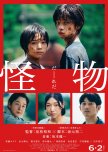
I went into Monster completely blind. I did not read the synopsis, watch the trailer, or know what to expect. Looking back, I genuinely believe that was the best way to experience it. If you are planning to watch this film, I highly recommend doing the same. The less you know, the more it has to give.Set in a quiet lakeside town, what begins as an ordinary schoolyard incident sends ripples through the lives of everyone involved, like a stone thrown into still water. A devoted mother, a conscientious teacher, and a young boy each offer their own version of the same events, turning certainty into a moving target and allowing the truth to slip through the cracks of perception. Just when you think you understand what happened, the story gently asks you to look again. As public scrutiny grows and the media adds fuel to the fire, a simple misunderstanding evolves into something much larger. Then, on a stormy morning, two children disappear, leaving behind one haunting question: who, if anyone, was the real monster?
Monster adopts a Rashomon-style narrative, telling the same events through three different perspectives. It constantly challenges your assumptions, forcing you to question not only what is happening, but also why you are so quick to believe one version over another. It explores themes of perception, prejudice, identity, and the quiet pressure of societal expectations. It is remarkable how easily our opinions shift depending on who is telling the story. Every new perspective changes the picture, reminding us that truth is often less about what we see and more about what we fail to notice.
Some stories ask you to watch. This one asks you to look again.
That, to me, is Monster's greatest strength. Its brilliance does not come from shocking twists or dramatic reveals, but from understanding. The storytelling is quietly devastating, meticulously layered, and deeply humane. Every revelation feels earned instead of manufactured. Every emotional beat lands with purpose. It is one of the finest examples of storytelling I have seen in a long time, proving that the loudest stories are not always the most powerful. Sometimes the quietest ones leave the deepest scars.
One recurring phrase throughout the film is "pig's brain." Without going into specific details, it becomes one of the film's most heartbreaking ideas. It is used as a cruel label for behavior that society considers abnormal or "sick," planting seeds of shame in children who simply do not fit neatly into expected norms. What begins as a careless insult slowly transforms into something much more damaging as it is internalized by those around it. The phrase becomes a symbol of societal rejection, abusive labeling, and the painful belief that being different somehow makes someone broken or even monstrous. It is a chilling reminder that children often inherit the fears and prejudices of the adults around them.
The performances deserve just as much praise as the writing, especially from Kurokawa Soya and Hiiragi Hinata as Mugino Minato and Hoshikawa Yori. Both young actors deliver performances that feel incredibly natural, raw, and emotionally convincing. They perfectly capture the confusion, vulnerability, innocence, and complicated emotions their characters carry throughout the film. Considering the sensitive subjects Monster explores, I cannot help but admire both the cast and the production team for handling everything with such care and sincerity.
Beyond its writing and performances, Monster is also a beautiful film to look at. The cinematography, color grading, and visual presentation create a youthful summer dream atmosphere that gently contrasts the emotional weight of the story. There is a quiet warmth to its visuals, making moments of joy feel brighter while making moments of heartbreak linger even longer. It is the kind of film where every frame seems carefully considered without ever calling attention to itself.
[SPOILERS: TWO PARAGRAPHS AHEAD]
By the end, I realized that the "monster" was never meant to be a single person. Early on, everyone seems convinced that someone else must be the villain. The teacher, the principal, the children, or the parents all become easy targets depending on whose perspective we are following. But as each layer unfolds, it becomes clear that the real monster is born from misunderstanding, prejudice, fear, and the assumptions people project onto others. It is the invisible force created when society demands conformity while refusing to truly understand those who are different. The adults are not monsters because they are evil. They become monstrous because they allow fear, pride, and prejudice to cloud empathy, creating an environment where two innocent boys feel they must hide who they are.
The ending is beautifully open to interpretation. Whether the boys survived or not is left unanswered. Part of me wants to believe in the fairy tale where they made it through together. Another part of me sees the open gate as something more symbolic, a passage toward freedom, where they are finally released from the labels, fears, and expectations that imprisoned them. I think both interpretations are equally beautiful, and perhaps that is exactly the point.
[SPOILERS END]
By the time the credits rolled, I found myself thinking about the title one last time. Maybe we spend so much time searching for monsters because it is easier than confronting the uncomfortable truths within ourselves. Monster is not interested in giving easy answers. Instead, it gently asks us to question our own perceptions and reminds us that what we choose to believe can shape someone else's reality.
In the end, I was incredibly glad that I stumbled upon this film. It quietly became one of the most memorable movies I have watched in recent years. If there is one thing I would repeat, it is this: go in blind. Trust the story, let it unfold on its own, and allow it to challenge the way you see people. After all, perhaps we are all monsters in someone else's story.
Was this review helpful to you?
Ghosted by Fate, Haunted by Love
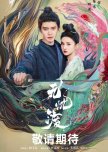
In Guangping City, where humans and demons share the same streets but not the same truths, Duan Ban Xia lives with a gift that feels more like a curse. She can see demons in their real forms, yet everyone around her insists she is imagining things. When she exposes her cousin’s bride as a demon, her world collapses and she is forced to run. Along the way, she meets Jiu Xuan Ye, a demon hunter who does not just save her life but reshapes how she sees it. Through him, Ban Xia begins to understand that the line between good and evil is not as clear as she once thought. As the two dig deeper into a series of strange cases and the mystery behind her father’s death, their partnership slowly turns into something more. But with Xuan Ye’s past lurking in the shadows and a truth about his identity waiting to surface, their journey is anything but simple.From the very first case, the drama knows exactly how to hook you. Each arc feels like its own eerie bedtime story, yet all of them are stitched together with careful precision, leaving breadcrumbs that quietly point toward a larger truth. It never treats its audience like passive viewers. Instead, it invites you to play detective, giving just enough clues so that when the reveal comes, it clicks into place like the final piece of a puzzle. The pear case and the reunion inn lingered in my mind the longest, both unsettling in that slow, creeping way that makes you double check the shadows in your room. The painting illusion case stretched a little longer than necessary, but given its layered nature, it earns its runtime.
What makes the story even more compelling is how it plays with fate. Right from the start, Ban Xia unknowingly tips over the first domino by entering the Wuyou realm and pulling Xuan Ye into the mortal world. Neither of those things were meant to happen, and that single deviation spirals into consequences that ripple through every character’s life. By the time the truth unfolds, you can trace every tragedy back to that moment. It is almost poetic, in a chaos theory kind of way, where one small glitch rewrites an entire system.
Ban Xia herself can be a bit of a paradox. There were moments when her hesitation and slow processing made me want to shake her and say, please keep up. She often feels like the designated bait in dangerous situations, which made me question her role at times. But as her backstory sinks in, her behavior starts to make more sense. Being labeled delusional by your own family does not exactly build confidence. Song Zu Er captures that mix of vulnerability and stubbornness quite well, making Ban Xia frustrating but still endearing. Her action scenes are not her strongest suit, though in a way it fits the illusion of her character rather than breaking it.
Xuan Ye, on the other hand, is the definition of quiet charisma. Ren Jia Lun plays him with a calm intensity that makes you trust him instantly. He is composed, intelligent, and carries himself with a kind of steady strength that anchors the entire story. What surprised me most were the glimpses of his lighter side. Those fleeting moments of mischief and immaturity add just enough contrast to keep him from feeling untouchable. Ren Jia Lun balances both sides effortlessly, and somehow even sneaks in bits of humor without trying too hard. It is the kind of performance that reminds you why he excels in roles like this.
Their relationship is a slow burn done right. No fireworks on day one, no dramatic declarations out of nowhere. Instead, it builds through shared experiences, quiet understanding, and the kind of trust that only forms when two people survive chaos together. It is less about grand gestures and more about consistent presence. While some might find their chemistry understated, that is exactly where its charm lies. When Xuan Ye finally confesses, it feels earned, soft in delivery but heavy in meaning. Add in those small, fleeting moments of physical affection, and it is enough to make any viewer melt just a little.
The supporting cast adds warmth and texture to the story. Chi Xue brings a playful chaos that balances the heavier themes, even if his antics occasionally toe the line of being too much. The group of law officials creates a dynamic that evolves naturally over time. Wen Jian stands out for his unwavering trust, acting as a bridge between Xuan Ye and the human world. Chu You Huang’s journey from skepticism to loyalty is particularly satisfying, showing growth that feels genuine. Then there is Zi Kong, who arrives later but leaves a strong impression. His presence is magnetic, and his relationship with Xuan Ye adds emotional depth, especially as duty and brotherhood begin to collide.
Visually, the drama shows its limitations, but it works with what it has. The sets can feel repetitive, especially the Wuyou realm and parts of the mortal world. The underground city offers a bit more flair with its darker, almost Halloween-like aesthetic, though it too starts to repeat itself after a while. The CGI is decent, not groundbreaking but not distracting either. The cinematography strikes a comfortable balance, giving the drama a polished look without trying too hard to be flashy.
As for the ending, it may not be the fairytale some viewers hope for, but it feels right for the story being told. Instead of forcing a neatly wrapped happy ending, it leans into the consequences of everything that came before. There is closure, space to breathe, and a goodbye that does not feel rushed. The idea of fate being rewritten, only to demand a price in return, ties everything together in a way that feels both bittersweet and meaningful. It leaves behind a quiet sense of hope, like a story that has not completely ended, just paused.
All in all, this is a demon tale that understands its own heart. It balances mystery, emotion, and character growth with a steady hand, keeping you invested from beginning to end. The pacing works, the narrative makes sense, and by the time the final scene fades, there are no lingering questions, only lingering feelings. And sometimes, that is exactly what a good story should leave behind.
Was this review helpful to you?
This review may contain spoilers
Lanterns and Long Shadows
During the Lantern Festival, Princess Ning Yuan dies under eerie circumstances at a night banquet, and the palace air turns colder than winter in Chang’an. Li Pei Yi, Princess of Fuchang County, and Xiao Huai Jin, deputy director of the Astronomical Bureau, are ordered to investigate. She is frost on the outside but soft at heart, a sharp judge of character who fights as swiftly as she thinks. He is meticulous, blessed with a razor sharp memory and eyes that miss nothing. Together they navigate arrogant nobles, a secretive Imperial Guard commander, and a web of lies to unmask the killer. Yet the first case is only the beginning. One by one, unsettling mysteries tied to the fates of women in the inner court surface. As the bodies and secrets pile up, so does the truth about the massacre of Li Pei Yi’s family fifteen years ago and the mastermind quietly pulling strings behind the Tang palace curtains.Unveil: Jadewind wastes no time telling you that this is not a fluffy palace romance. From episode one, the tone is dark, eerie, and constantly nudging you to think twice. It sits comfortably beside investigative dramas like The Wanted Detective, Judge Dee’s Mystery, and Kill My Sins, especially with cases that flirt with illusion, psychological twists, and the thin line between superstition and strategy. This is not a light watch. If you blink, you might miss a clue. If you scroll your phone, good luck figuring out who is victim, suspect, vigilante, or all three at once.
The drama opens with a solid introduction to Li Pei Yi. Through her narration, we understand her past trauma, her present mission, and the quiet storm brewing inside her. Right away, you can tell this is plot driven and female centric. Many of the cases revolve around women in the harem who go to extreme lengths, whether as victims cornered by power or as perpetrators seeking justice in morally gray ways. There is a consistent theme of women surviving in a system that rarely protects them.
Visually, the drama is pleasing. The color grading elevates the overall quality and gives the palace a moody, almost gothic texture. Costumes and makeup are beautifully done, especially for Bai Lu. Her styling strikes the perfect balance between lethal investigator and fallen noble lady. The sets are fairly basic, but the cinematography and camera angles do heavy lifting. That said, some visual effects are a bit too dramatic. Certain sequences felt overly edited, to the point that my eyes needed a short vacation. For a story that leans dark, many gory moments were clearly toned down. I understand censorship exists, but sometimes I wished they let the horror breathe a little more. A scream here, a sharper sound effect there, and the impact would have hit harder.
Bai Lu delivers one of her fiercest roles to date as Li Pei Yi. This is the first time I have seen her go full badass mode, and she commits physically. Her fight scenes are sharp and swift, and you can see the effort in every movement. What I appreciate most is her deeper vocal tone. It grounds the character. Even her subordinate Wu Ren carries a similar low toned, minimal makeup look. The production really tried to make these women look convincingly formidable instead of just pretty in dark clothes.
Xiao Huai Jin intrigued me from the start. Wang Xing Yue plays him with a controlled stillness. In early episodes, he does not emote much, but his eyes do the talking. There is a particular scene when he first sees Li Pei Yi, and his gaze lingers in a way that makes you wonder what history sits behind it. Curiosity, recognition, longing? It is subtle but effective. As the episodes unfold, we learn that his family has been quietly keeping tabs on Li Pei Yi, especially regarding her supposed amnesia about her family massacre. That revelation made me anxious. Are they protectors or are we heading into Romeo and Juliet territory?
Their romance is the definition of slow burn. No grand confessions under fireworks. No dramatic declarations. Instead, it is acts of service, quiet concern, and the occasional playful tease. When Li Pei Yi says, “If you’re buying me a meal, don’t order raw sliced fish,” I knew she was already halfway gone. Xiao Huai Jin, on the other hand, falls first and falls harder. He slowly turns into a gentlemanly puppy, especially during the drinking scene where he gets tipsy while she handles her alcohol like a boss. I will admit that at first their chemistry felt very besties coded. Off screen familiarity might have blurred the lines for me. But by episodes twenty five and twenty six, especially with the childhood flashback, they genuinely started to look adorable together.
Now, onto the cases. The first case hooked me with its eerie atmosphere but ended a bit anticlimactically. There was so much information thrown around that by the time the truth was revealed, my reaction was more “oh” than “whoa.” It was unexpected yet lacked that punch because the buildup felt complicated to digest. The second case, however, had me seated. Even when the suspects seemed obvious, the unfolding investigation kept me invested. The drama has a curious strength. Even when you can guess the perpetrator early on, the journey to justice remains engaging. Sometimes the culprits reveal their sob stories upon capture, which can feel repetitive and slightly cringey, but it also reinforces the theme that many villains were once wronged.
As for the larger arc involving the Right Chancellor, Cui Min Zhong, the revelation felt anticlimactic for such a deep rooted grudge. The emotional payoff did not quite match the scale of the crime. I was especially frustrated when Xiao Huai Jin stopped Li Pei Yi from killing him the first time, only to later accept it when the execution was sanctioned. I understand his desire to protect her from punishment and nightmares, but his moral line felt a little inconsistent.
The palace elders are surprisingly kind to Li Pei Yi. The Emperor and Consort Shu treat her with warmth that almost fills the void left by her lost parents. Yet the hypocrisy of imperial polygamy and political marriages is hard to ignore. One moment a daughter is cornered into despair for political gain, the next a musician is casually asked to join the harem. It is uncomfortable, and perhaps intentionally so.
There are pacing issues. Some scene cuts are obvious, and certain character dynamics, like Du Zhi Xing firing Li Pei Yi only to appear fine with her later, feel abrupt. Du Zhi Xing himself became one of my favorite characters, especially after that impressive display of martial arts in episode twenty one. His death hurt. He was a father figure, and losing him added emotional weight that the drama handled well.
By the final stretch, the heaviness of constant twists became exhausting. The drama even throws in a last minute character shift and introduces a major figure only in the final episodes. My brain never got to rest. Watching it ongoing with one or two episodes per day helped. If I had binged it, I might have tapped out halfway.
The ending feels rushed. We see where most characters land, and Li Pei Yi and Xiao Huai Jin clearly end up married, but we are robbed of a proper wedding ceremony scene. After thirty four episodes of yearning, give me the full bridal procession please. And that final crown prince cliffhanger? It gave strong open ended vibes reminiscent of certain other dramas, but without any guarantee of a second season, it feels like being handed a mystery box with no key.
In the end, Unveil: Jadewind is a visually aesthetic, female driven investigative drama that thrives on atmosphere and slow burn relationships. It is not perfect. Some revelations are anticlimactic, some moral lines blur inconveniently, and the pacing can be overwhelming. But when it works, it really works. It keeps you thinking, questioning, and occasionally shouting at your screen. Dark, twisty, and a little bit dramatic in every sense of the word, it is a journey through the palace that demands your full attention. Enter at your own risk, and maybe keep a notebook nearby.
Was this review helpful to you?
This review may contain spoilers
The Quiet Anatomy of Moral Decay
Set in 1609 during the Wanli era of the Ming Dynasty, Ripe Town begins with a string of gruesome murders that seem to have nothing in common except for one chilling detail. Every victim is staged in an eerie tableau, each crime scene marked by the different cryptic messages. Determined to uncover the truth, young Bailiff Qu San Geng joins forces with his friends, only to find themselves peeling back layers of deception, buried secrets, and a cold case that refused to stay dead. As the investigation spirals deeper, the mystery becomes less of a whodunit and more of a descent into the ghosts of the past, where every answer comes at a price."To Confucius, it's just so hard to be a decent man."
That line perfectly captures what Ripe Town is really about. At its heart, this is a story about moral decay, justice, and the exhausting struggle of navigating the space between right and wrong. The murder of Captain Leng Wu Ji, Qu San Geng's mentor, immediately makes the investigation personal. The first episode deserves praise for how naturally it flows from tragedy to grief, then to investigation, before ending on an intriguing revelation that immediately hooked me.
San Geng leads the investigation, but interestingly, he is never written as the kind of protagonist who dominates every scene. Instead, he serves as the embodiment of growth. As a young bailiff, he wants to uphold justice with clean hands, believing the world should be divided into black and white. Through frequent flashbacks with Captain Leng, however, the story slowly dismantles that idealism. Captain Leng teaches him that reality is rarely so simple. Sometimes justice requires imperfect methods, and sometimes you only have the wrong tools to reach the right outcome. One of my favorite lines in the drama comes from Captain Leng:
"Conscience is such a thing. If you want to sell it, it won't sell for much. But if you want to keep it, then it's expensive."
It is such a beautiful paradox. Integrity itself has little market value, yet preserving it often demands tremendous sacrifice. Throughout those flashbacks, we watch San Geng admire his mentor's teachings while still desperately trying to preserve his own ideals. It is only after Captain Leng dies and that protective figure disappears that San Geng truly begins to understand what those lessons meant. Bai Yu Fan portrays this evolution convincingly. He honestly reminds me of a chick that has just hatched, slowly discovering that the world is far harsher than it first appeared. His performance is not flashy, but it feels sincere, and that sincerity makes San Geng's growth believable.
After Captain Leng's death, another fascinating character joins the investigation, Judge Song Chen. If Captain Leng teaches San Geng how the world works, Song Chen reminds him what justice should strive to be. Song Chen is perhaps the purest soul in this morally grey world, which is ironic considering he himself is a victim of one of its greatest injustices.
Once a brilliant prodigy with limitless potential, Song Chen became entangled in an Imperial Examination fraud case born from political factionalism. Wrongfully imprisoned, tortured, stripped of his ability to paint after losing fingers on his dominant hand, and left with a crippled leg, he emerges from prison carrying wounds that never truly heal. His closest friend dies because of the same injustice, leaving him burdened with both grief and survivor's guilt. Even after his innocence is restored, nothing meaningful can be returned to him. His scars have already become permanent.
Despite all of this, Song Chen continues pursuing justice with remarkable conviction. Ironically, his own methods are not without cruelty. As a judge, he becomes known for extracting the teeth of criminals during interrogation. It is an uncomfortable contradiction that fits the drama perfectly. Justice itself is not always gentle. Ning Li delivers one of the finest performances in the series. Every expression carries years of accumulated resentment, grief, regret, and quiet fury. Even with relatively limited emphasis and focus on his character, Song Chen left an enormous emotional impact on me. I sympathized with him, cried for him, and admired how steadfast he remained despite everything life had taken from him.
As the investigation progresses, the story begins dedicating entire episodes to events from twenty years earlier, allowing the audience to witness both the present investigation and the origins of the tragedy side by side. Eventually, those flashbacks center on Lu Zhi, who became, without question, the most fascinating character in the drama for me.
Lu Zhi feels less like a villain and more like the product of his upbringing and consequence of adults who failed him. At first, he appears gentle, almost forgettable, like the type of character destined to become another victim. But little by little, something unsettling begins surfacing beneath that kindness. It becomes impossible to tell whether he genuinely wants to become a better person or whether goodness itself has simply become another mask for survival.
The most chilling moment comes when he explains why he chooses to hurt good people. Good people are less likely to retaliate. It presents one of the drama's most disturbing moral paradoxes. Do you target evil people and invite violent revenge, or prey upon kind people because their kindness makes them vulnerable? Virtue, ironically, becomes its own weakness.
Yet the drama never allows Lu Zhi to become a one dimensional monster. His cruelty exists alongside fear, hesitation, and genuine inner conflict. There are moments where he quietly wonders why doing good feels so difficult while evil comes so naturally. Even after everything he does, I still find myself asking whether he was truly good or bad. Looking only at the outcome makes the answer seem obvious. Looking deeper makes it surprisingly difficult. His fear whenever he is cornered reminds us that beneath all the darkness still exists a frightened human being trying to survive.
Yu Yao's performance deserves a standing ovation. Every tiny shift in expression feels deliberate. Every glance, every hesitation, every restrained emotion adds another layer to Lu Zhi's character. His elegant manner of speaking and composed posture create a striking contrast with the chaos inside his mind. Combined with Wang Zheng's direction and exceptional character writing, Lu Zhi becomes one of the most memorable characters I have encountered in recent years. Exploring morality, desire, fear, ideals, and conscience through a single character is no easy task, yet Ripe Town does it with remarkable precision.
Despite its slow pacing, the story never feels dull. Every scene contributes to the larger mystery, making it easy to become absorbed in the investigation. The clues are carefully planted, rewarding viewers who pay attention to small details. It genuinely feels as though you're investigating alongside San Geng and his companions. There is even a subtle layer of dark humor woven naturally into the dialogue, preventing the atmosphere from becoming overwhelmingly bleak.
The visual presentation surprised me just as much as the writing. Director Wang Zheng reportedly drew inspiration from Wu Guanzhong's Jiangnan paintings, and that influence is visible throughout the drama. The compositions emphasize layers, depth, and spatial balance, transforming nearly every frame into something resembling an ink painting. Doors, windows, curtains, screens, and veils are used to create visual penetration, allowing interior and exterior spaces to flow seamlessly into one another. Instead of relying on grand spectacle, the drama embraces stillness. Long, quiet streets stretch across the screen while conspiracies quietly bloom beneath the surface. It is a perfect example of a Latin phrase, which means “the art of concealing art.” The directing appears effortless precisely because every artistic choice is so carefully considered.
The sound design deserves equal praise. Rather than constantly filling scenes with music, Ripe Town uses its original soundtrack sparingly, reserving it primarily for the opening and ending themes. Yet those tracks linger long after each episode ends. During most scenes, subtle sound effects take center stage, quietly reinforcing the tension and atmosphere without drawing attention to themselves. The restraint makes every emotional moment feel even more effective.
The finale delivers one revelation after another with remarkable composure. It never resorts to sensational twists simply for shock value. Instead, every revelation feels earned, and the ending remains grounded in the reality the drama has carefully established from the very beginning. Each major character receives meaningful growth. San Geng becomes more flexible in his methods while continuing to pursue justice. Song Chen's conclusion also feels unexpectedly merciful, offering him perhaps the only path that could finally free him from the resentment he had carried for years. Fittingly, he remains a judge until the very end, both in title and in spirit.
Ripe Town earns its title in more ways than one. Beneath its peaceful streets lies a town that has ripened not into prosperity, but into something rotten. Old grievances have fermented into vengeance, justice has become tangled with compromise, and morality has quietly spoiled with time.
This is a drama I thoroughly enjoyed for its tightly constructed mystery, atmospheric suspense, morally complex characters, breathtaking visuals, restrained sound design, and thoughtful exploration of justice and human nature. It does not simply ask who the murderer is. It asks what kind of world creates murderers in the first place. Long after the mystery was solved, it was the characters and their impossible moral dilemmas that continued haunting my thoughts. Ripe Town has easily become one of the finest Chinese mystery dramas I have watched, and one of the strongest entries in the genre as a whole.
Was this review helpful to you?
This review may contain spoilers
Duty Before Blood
Eight Hundred is, at its core, a story about limits. Not the kind you casually brush against, but the kind that force a choice out of you when there is nowhere left to run. Set in a late 90s mining town, the story begins with a seemingly straightforward case that quickly unravels into something far more personal. Police officer Chen Hong Bin notices glass fragments on a victim that point toward a banned drug, and what starts as a routine investigation slowly exposes a trafficking network embedded within the town. The real turning point comes when the shadow behind it all is revealed to be someone closest to him. From there, the drama shifts into something more intimate and painful, a moral tug-of-war between duty and blood.The premise already tells you how this will end. Not the exact details, but the direction. Once you understand Hong Bin’s rigid sense of justice, there is no illusion of a miraculous escape. The question is never if, but how heavy the cost will be. The drama plays this out as a prolonged cat and mouse game between Hong Bin and his son, Chen Hui. Hong Bin relentlessly pushes forward, following every lead with almost mechanical persistence, while Hui does everything he can to stay one step ahead. Hui’s descent begins with something almost understandable. Together with his girlfriend Gao Song Ge, he enters the drug trade to pay for her medical treatment. They are not framed as inherently bad people, just desperate and naive enough to believe they can control the scale of their actions. Like many tragedies, it starts with a small compromise that quietly snowballs into something irreversible.
That said, the execution of this cat and mouse dynamic can feel repetitive. The structure often loops: Hong Bin closes in, Hui narrowly escapes, and the story resets before building tension again. It works in maintaining suspense, but at times it feels like running on a treadmill rather than moving forward. Each near discovery could have shifted the stakes more meaningfully, but instead the narrative occasionally retreats into familiar territory. It is engaging in theory, but the impact softens when the progression does not match the intensity of the premise.
The investigation itself walks a fine line between satisfying and frustrating. There are moments where Hong Bin’s methods reflect a classic investigative mindset, such as when he painstakingly pieces together scattered styrofoam fragments. It echoes that old idea that no detail is too small. However, the narrative does not always justify why certain clues deserve that level of focus. When this reconstruction points toward Hui, it feels less like a solid breakthrough and more like a conclusion driven by suspicion. At times, it seems as if Hong Bin is working backward from a belief he already holds, rather than building toward it with airtight logic. It does not ruin the experience, but it does chip away at the credibility of the investigative process.
Where the drama truly finds its weight is in its characters and their choices. I found myself siding with Hong Bin, even knowing how unforgiving that stance is. He is a man who was a cop before he was anything else, and that identity defines every decision he makes. There is something both admirable and unsettling about how unwavering he is. He does not bend, not even for his own son. In a world that often negotiates with morality, Hong Bin feels almost anachronistic, like a relic of a stricter era that refuses to soften. What surprised me most was not that he pursued Hui, but how little hesitation he ultimately showed in doing so.
Hui, on the other hand, is a character who crosses lines one by one until there is nothing left to defend. At first, his actions feel redeemable within a certain moral lens. But the turning point comes when he chooses violence not out of desperation, but intent. His plan to kill Luo Yan, and later his involvement in orchestrating it through Huo Kai Ming, marks a shift into darker territory. The final nail is the death of Tian Jin Hai. What could have been self defense spirals into something far more brutal, and from that moment on, Hui becomes someone you can no longer excuse. Framing Liu Na afterward only deepens that fall. That decision feels particularly cruel, not just because of what it represents legally, but because of the personal betrayal behind it.
Episode 15 stands out for how raw it feels. It strips everything down to a simple but uncomfortable question: what do people choose when given the chance to do right or wrong? The drama does not dress this up with spectacle. It leans into the quiet tension of decision-making, and that is where it resonates most. It is less about plot twists and more about whether characters will make the right choice when it actually matters. In that sense, it reflects reality in a way that is almost unsettling. Crime here is not abstract, it is the direct result of accumulated decisions.
By the time the ending arrives, it does exactly what it promises. There is no dramatic escape, no last minute miracle. It stays grounded. Episode 20 is emotional not because it shocks you, but because it follows through. Watching a father send his own son to prison while still holding onto that bond is quietly devastating. Xu Kai delivers what is easily his strongest performance here. The moment Hui looks back at his parents while being taken away lingers longer than any plot twist could.
Visually, the drama does a commendable job capturing its setting. While some sets lean slightly theatrical, the overall aesthetic works. The costumes and makeup help sell the time period, and the attention to detail in the characters’ appearances adds authenticity. Hui’s tanned complexion and Song Ge’s frail, sickly look subtly reinforce their circumstances without needing explicit dialogue.
In the end, Eight Hundred is a compelling character study wrapped in a crime narrative. As an investigation drama, it falls short in consistency and progression. But as a story about choices, consequences, and the fragile line between right and wrong, it lands with impact. It may not be airtight, but it is thought-provoking in a way that stays with you after the final episode.
Was this review helpful to you?

This review may contain spoilers
A Bittersweet Tale of Love, Justice, and Revenge!
During one his attempts to uncover the truth behind the tragedy that befell his family, Xiao Wu Xia, who lives in hiding as Wei Zhao, met Jiang Ci who disrupted his plans. Wei Zhao then hurt Jiang Ci with a poisoned knife to silence her. After being saved and taken in by Pei Yan, Wei Zhao continues to keep an eye on Jiang Ci to make sure she does not reveal anything to Pei Yan. While staying with Pei Yan, Jiang Ci kept on disrupting Wei Zhao's plans as to her, he was the villain. It was not until she saw how people would sacrifice themselves for Wei Zhao that she realized his plans were for a great cause. From then on, Wei Zhao and Jiang Ci got closer as they work together to fight for justice. Love sprouts and enemies turned to lovers. By the end of the story, Wei Zhao, Jiang Ci, and Pei Yan unite against the Emperor to protect Yueluo City and achieve justice.Love of Nirvana is an example of extreme enemies to lovers trope, as well as lovers (or friends) to enemies trope. Wei Zhao is a selfless, just, and kindhearted character with a tragic past. Even though he is not necessarily a paragon of virtue, it is enough to say that Wei Zhao is a sheep in wolf's clothing. On the other hand, Pei Yan is a wolf in sheep's clothing although, he is not necessarily a bad guy. Being caught in between filial piety and his own values for justice ended up making him a villain. Wei Zhao and Pei Yan's love hate friendship and camaraderie throughout the drama was something to look forward to. In between these two is Jiang Ci. She is one innocent, naive, and free-spirited lady with a mysterious identity. It's very interesting to see how her relationship with the two male characters progresses. Jiang Ci went from enemies to lovers with Wei Zhao as they work together for the same cause, while her relationship with Pei Yan went downhill as he continuously chose the wrong path. Jiang Ci's relationship with the two male characters were mind-boggling for different reasons.
Despite Wei Zhao's attempts to kill Jiang Ci three times, they still manage to fall in love. Is it stockholm syndrome? Pretty sure it is. Even after they fell in love, Wei Zhao doesn't seem to feel guilty about it as he did it to protect a cause. Yes, he is not an "I'd let the world burn" male character. I still question why exactly Jiang Ci fell for Wei Zhao. To fall for someone who tried to kill you three times is worth a great reason. Is it because he is just and selfless? That doesn't make sense! However, this questionable stockholm syndrome plot was definitely masked over and put to rest when we Pei Yan's selfishness and possessiveness comes out. This change somehow made Wei Zhao shine and appear as a better option of the two. Jiang Ci's naivety masked over the notion of being grateful also irks me. Pei Yan was possessive, controlling, and often gaslights Jiang Ci. Despite seeing firsthand how selfish Pei Yan was, she still gives him chances under the reason of feeling grateful for saving her.
Although there were some things that could be improved, it is enough to say that this story was well-written and well-paced. As much as I understand the bittersweet and tragic ending, I do wish we could have had a better one. One where justice prevails! However, the ending managed to give me some closure as his legacy continues.
They did really well in casting Ren Jia Lun, Li Landy, and Jeremy Tsui as the three leads. Ren Jia Lun was perfect for the role of Wei Zhao as he exudes charisma, intelligence, righteousness, and a cold aura. Li Landy did great as the innocent, naive, and free-spirited Jiang Ci. Jeremy Tsui also did well at acting out the possessive, controlling, conflicted, and mature Pei Yan. The supporting actors were also scene stealers. Special mentions to both Wei Zhao and Pei Yan's sidekicks, as well as the Wei Zhao's Yueluo City friends and family!
All in all, this drama will leave you questioning, thinking, squealing, and definitely keep you hooked to see how everything unfolds. I have personally rewatched this drama more than 5 times, mainly to see the enemies to lovers trope. Love of Nirvana easily makes it to the top of my recommended Chinese drama list!
Was this review helpful to you?
This review may contain spoilers
The Math Adds Up. The Romance Doesn't.
I went into Genius Girlfriend with quite a bit of anticipation, partly because of its cast and partly because of the reuters. Unfortunately, the drama ended up being one of those cases where the ingredients sound better on paper than they taste on the plate.At its core, Genius Girlfriend follows Lin Zhi Xia, a girl who is brilliant with numbers but supposedly awkward with people. She crosses paths with Jiang Yu Bai, the charming golden boy who initially seems like he could be her academic nemesis. I was honestly expecting an enemies-to-lovers setup when Yu Bai paid attention to Zhi Xia being the school's top scorer. Instead, we got something much sweeter. Yu Bai was actually nervous when he met her, and rather than treating her as an enemy, he genuinely wanted to be her friend and compete with her fairly. Their friendship gradually becomes the emotional foundation of the story, and eventually Yu Bai realizes that what he feels for Zhi Xia may be more than friendship.
I actually liked Yu Bai's competitiveness quite a lot. His decision not to team up with Zhi Xia for the math competition made sense to me, despite some criticism from other viewers. Sometimes being friends with someone much better than you at something can quietly chip away at your confidence. Wanting to compete against her from another group was, in a way, his attempt to stand beside her rather than behind her. It was less about beating her and more about proving to himself that he could be on the same level. That's probably one of the healthiest portrayals of academic competitiveness I've seen in a youth drama. Hu Yi Tian played Yu Bai well enough. Nothing particularly mind-blowing, but he wasn't bland either, which suited the character. I also didn't have much of an issue with him playing a high school student. He didn't look so old that I was constantly pulled out of the story.
Tian Xi Wei also did well as Zhi Xia. The character is described as socially awkward, but I honestly didn't see much awkwardness in her. She is simply extremely logical and inexperienced in navigating the more irrational parts of human interaction. Give her one socially capable person who accepts her for who she is and explains how the world works, and she'll be perfectly fine. I have socially awkward friends, and Zhi Xia doesn't really strike me as one. Still, I enjoyed watching her grow. Tian Xi Wei gave Zhi Xia a cute, innocent, and naive quality during her school years, while her adult portrayal showed someone who had gained a better understanding of the world without losing her conscience and convictions. That consistency in her core personality was one of the stronger aspects of the drama.
Unfortunately, I couldn't feel the romantic chemistry between Zhi Xia and Yu Bai beyond friendship and an adolescent crush. And this is especially painful for me because I am a sucker for slow burn romance. I love slow burns. Give me lingering gazes, tiny gestures, emotional intimacy, accidental hand touches, and all those crumbs that make viewers scream into their pillows. I don't need endless kissing scenes to believe two people are in love. Romance isn't measured in lip-to-lip contact. The problem here is that I didn't even feel the slow burn.
The drama kept their high school relationship remarkably innocent for a very long time, which I understand. Chinese coming-of-age dramas often handle teenage romance with a certain restraint, and I don't necessarily need them to start dating in high school. But if the intention was to keep things innocent, there still needed to be more subtle sparks. The friendship itself was convincing. The romance was not. By the time they finally became romantic, they felt more like two best friends who had collectively decided, "Well, I suppose we're dating now." Even the romantic gazes and supposedly intimate moments didn't quite reach me. This becomes even more complicated when Shen Fu Xuan enters the picture.
Fu Xuan is lonely, intelligent, quiet, and much more similar to Zhi Xia than Yu Bai. Interestingly, he is also attracted to Zhi Xia because of her intelligence. In fact, the timing of his interest creates a giant "what if" hanging over the entire story. What if Zhi Xia and Fu Xuan had met first? What if Fu Xuan had been given the same amount of time Yu Bai had to understand her? What if both men had started from the same position?
That is not necessarily a bad thing for a love triangle, but the drama didn't give me enough reason to dismiss those possibilities. Many viewers may argue that Yu Bai understands Zhi Xia better, but I kept thinking that perhaps Fu Xuan could have understood her just as well if circumstances had given him the same opportunity. Once a drama makes me start doing alternate timelines in my head, the romance has already lost some of its footing. It also doesn't help that Lai Wei Ming is incredibly charming here and portrays Fu Xuan well. So now I have both a believable alternative and an actor making me wonder about the road not taken.
Ironically, the relationship I cared about the most was not Zhi Xia's romance at all. It was her relationship with her older brother, Lin Ze Qiu. Ze Qiu is almost suspiciously perfect. He is a thoughtful son, a caring brother, and only one year older than Zhi Xia, yet he worries about her. They bicker like normal siblings, but the moment Zhi Xia comes home late, he is ready to lose his mind and call the police. He even asks their parents to get her a cellphone when he doesn't have one himself.
One of my favorite details was his initial reluctance to let people at school know that Zhi Xia was his sister. I assumed it was because she was so academically brilliant that he didn't want people comparing them. Nope. It was because he was worried that people would discover her brother wasn't as smart as she was and that she would feel embarrassed. That tiny reveal told me so much about how deeply he cared about her. I also loved the scene where he initially refuses to walk to school with her, only to change his mind when she looks distressed. Once he notices that she needs him, he immediately switches into protective big-brother mode and doesn't let her out of his sight. Their conversations have that lovely sibling combination of genuine affection and slight awkwardness. They clearly care about each other deeply, but neither of them is particularly good at saying it directly.
Wu Jia Kai deserves credit here. Despite playing someone only a year older than Zhi Xia and being even younger than some of his co-stars in real life, he brought a surprisingly mature presence to Ze Qiu through his expressions, delivery, gait, and body language. Visually, the transformation was more convincing during the school arc, where he looked more mature than the other students. As an adult, he actually looked younger than much of the cast, but his mature styling helped sell the character.
Jin Bai Hui was another character I found interesting, although mostly because I kept wondering what happened to her character development. She starts out as the typical Asian daughter with demanding and controlling parents. Her first encounter with Zhi Xia is unpleasant, and she sees her as a rival. Bai Hui is guarded, competitive, and at times mean enough that I genuinely wondered whether she might be responsible for some of the things happening to Zhi Xia. Then suddenly, she warms up to Zhi Xia and joins her band. I understand that teenage conflicts can sometimes be resolved quickly, but this transition felt like someone had skipped a chapter. I needed a bridge between "I see you as my rival" and "let's be friends." Bai Hui's writing is probably the most inconsistent among the main supporting characters. Her songwriting and singing hobby also felt underused, which was a shame because it could have given her character more depth.
The drama practically announces that Bai Hui and Ze Qiu will have a relationship too, especially with the way the camera focuses on Ze Qiu when she first performs on stage. But by then, I was already far too invested in the Lin siblings to care much about romance. Still, I have to admit that Ze Qiu and Bai Hui's relationship ended up being one of the romantic arcs I enjoyed more. The other was Tang Ting Ting and Duan Qi Yan.
These two are childhood friends, and somehow they managed to show more romantic chemistry throughout high school than the actual leads did. Qian's gaze, Ting Ting's behavior, their little interactions, the way they reacted to each other... everything quietly screamed "something is blooming here." This was the innocent adolescent romantic buildup I was looking for with Zhi Xia and Yu Bai. Nothing needed to be explicit. It was simply there. Their adult dynamic worked well too, although Qi Yan's angry outbursts still had the energy of a child throwing a tantrum. Li Jia Qi and Xia Hao Ran both did a good job with their characters, and their confession scene genuinely made me giggle. The same goes for Ze Qiu and Bai Hui's confession. Both scenes felt natural to the relationships that had been established, which made them land much better for me. Ironically, the romance that had the most screen time was the one I felt the least invested in.
The narrative itself takes a fairly episodic approach. Each episode introduces a different conflict involving Zhi Xia or one of the supporting characters, then explores how she navigates it. Most of these side conflicts are resolved within an episode, with some being referenced later. Fu Xuan's unrequited love and Bai Hui's conflict with her parents are among the longer-running threads. I appreciated the variety, but the execution wasn't always convincing. Continuity was one of the drama's weaker points, particularly with Bai Hui's sudden change in attitude. There were also moments where the logic made me pause. Yu Bai's debt situation, for example, left me wondering how exactly he was able to repay everything without the financial struggle the story seemed to imply for years. These aren't necessarily deal-breaking problems individually, but they accumulate and make the story feel less polished. And then there is the biggest structural issue: the high school arc is simply too long.
The drama spends so much time in high school that by the time the romance finally begins to properly bloom, there are only around three to five episodes left for the romantic relationships to develop. That is a particularly strange choice for a drama called Genius Girlfriend. The title made me expect romance to be a major part of the story, but the actual romance feels like it arrived late to its own drama. If the writers wanted to keep the high school portion innocent, that's completely fine. But then they needed to use that time to establish stronger emotional intimacy. Give me more romantic, fluffy moments. Instead, the story waited until the final stretch to turn the friendship into romance, and by then it felt like a switch had been flipped.
The funny thing is that the final stretch proved the drama could do romance quite well when it actually tried. Ze Qiu and Bai Hui's confession worked. Ting Ting and Qi Yan's confession worked. I genuinely giggled during both. Zhi Xia and Yu Bai's romantic scenes also worked better for me than their confession scene. Their confession felt a little too grand for the emotional buildup they had received, but their romantic interactions were cute. I was especially amused by how straightforward Zhi Xia was once romance finally entered the equation, while Yu Bai was the one trying to restrain himself and be considerate. That dynamic was adorable and felt very fitting for them. I just wish I had gotten more of it.
Visually, the drama was another disappointment. Everything looked almost too clean and polished. The constant focus on the subject with heavily blurred backgrounds, the pristine school sets, certain lighting choices, and the overall artificial quality made the drama feel less lived-in than it should have. At times, I wondered whether AI had been used heavily in the production. I don't have a problem with AI when it blends naturally into the work, but here, the artificiality stood out to me.
The one visual element I consistently liked was Zhi Xia's drawings and sketches. They felt much more tangible and personal, and I liked how they were used to summarize what she had experienced in each episode. They gave the drama a little bit of personality that some of the overly polished visuals lacked.
The OSTs are pleasant too, although none of them really stayed with me after the scenes ended. They did their job of elevating the emotional moments, but they weren't the kind of songs that made me immediately want to add them to a playlist.
Ultimately, Genius Girlfriend became a 2x-speed drama for me surprisingly early on, and that probably says everything about my level of enjoyment. I wasn't suffering through it, but I also wasn't exactly counting down the minutes until the next episode.
There are things I genuinely liked. Zhi Xia's growth was pleasant to watch. Yu Bai's competitiveness and friendship with her were thoughtfully portrayed. Fu Xuan was an interesting alternative that created some genuinely intriguing possibilities. The supporting relationships, particularly Ze Qiu and Bai Hui and Ting Ting and Qi Yan, gave me some of the romantic moments I actually enjoyed. But above all, the Lin siblings left the strongest impression on me. Their relationship had warmth, personality, and emotional credibility that I wish the main romance had possessed.
So, do I recommend Genius Girlfriend? Honestly, it depends on what you're looking for. If you enjoy wholesome youth dramas with academic themes, friendship, family dynamics, relatively innocent romance, and a generally positive atmosphere, you may find this charming. If not, then you should manage your expectations. This drama spends a long time solving everything except the equation that matters most: how to make me believe these two people are in love.
For me, Genius Girlfriend wasn't terrible. It was simply too bland, too polished, and too safe to leave much of an impression. I finished it with a mild sense of "that was nice" rather than the emotional devastation or excitement I had hoped for. Sometimes a drama doesn't need to be bad to be disappointing. Sometimes it just needs to promise you one thing, take its sweet time getting there, and then arrive when you're already halfway out the door.
Was this review helpful to you?
Overdone
Overdo was one of my most anticipated dramas of the year. With Zhang Ling He and Wang Chu Ran leading the cast, I walked in with expectations through the roof. In hindsight, that might have been my first mistake. The irony is almost poetic because, much like its title, everything about this drama feels overdone. It constantly tries to raise the stakes, only to end up feeling exaggerated instead of impactful.Set against the fading days of Republican-era Shanghai, the story follows Murong Qing Yi, a doctor whose life has been shaped by a cruel mistake made at birth. A chance exchange of letters leads him to Ren Su Su, an orphan carrying wounds just as deep as his own. Their relationship begins with quiet sincerity before fate tears them apart, leaving Qing Yi imprisoned under the belief that Su Su betrayed him while Su Su disappears without a trace. Three years later, she returns under a new identity, now engaged to his brother. Their reunion is fueled by resentment, misunderstandings, and buried truths, all unfolding as the nation inches toward war. On paper, it sounds like an emotional roller coaster filled with second chances, mistaken identities, and undying love. In execution, however, it often mistakes melodrama for emotional depth.
The problems start almost immediately with the cinematography and directing. The color grading, lighting, soft focus, and camera treatments constantly reminded me of a vertical drama. I have nothing against vertical dramas. I actually enjoy them. The issue is that I expected a high-budget long-form production, only to feel like I was watching one dressed up with a bigger cast and longer runtime. The directing only amplifies that impression. Many scenes feel unnecessarily dramatic, to the point where they become unintentionally funny.
The clearest example is the scene where Qing Yi jumps into the water to save Su Su. Instead of diving naturally, he launches himself flat into the water with his hands stretched forward, looking less like someone rescuing another person and more like someone accidentally participating in a belly flop competition. It completely took me out of the moment. If Zhang Ling He was unable to perform a proper dive, there were plenty of alternatives. He could have simply run into the water or jumped normally. Sometimes the simplest solution is the smartest one. Instead, the final result became comedy when it should have been life or death.
The use of AI in certain scenes also does not help. AI itself is not necessarily a deal breaker if it blends naturally into the production. Unfortunately, scenes like the airplane sequence look noticeably artificial, making it difficult to stay immersed. There are many moments throughout the drama where everything feels just a little too exaggerated, reinforcing that same vertical drama energy.
That said, not everything misses the mark. There are genuinely beautiful scenes scattered throughout the series, and several supporting actors deliver surprisingly strong performances. Li Bo Ze, Hai Tang Qing, and several other major supporting characters leave a positive impression. The drama also deserves credit for attempting to create morally layered characters. Li Rong Zhang, for example, is presented as both an abusive father and a patriot willing to sacrifice himself for the nation. That contradiction could have been fascinating, but the writing never explores it deeply enough. Rather than feeling like a complicated human being, he simply came across as confusing. Complexity only works when the audience is given enough time to understand it.
As for Zhang Ling He and Wang Chu Ran, they are easily among the drama's biggest strengths. Both actors maximize every opportunity they're given and deliver convincing performances despite the material. Unfortunately, they become victims of weak directing and increasingly outrageous plot twists. Qing Yi and Su Su are constantly trapped between personal desires and external responsibilities, which could have been compelling. Instead, their relationship becomes an endless cycle of misunderstandings, separation, reconciliation, love, hatred, and then back to misunderstanding again. I normally enjoy these kinds of tropes, but there is a difference between using them as seasoning and making them the entire meal. By the end, their relationship feels emotionally exhausting rather than heartbreaking.
One thing I cannot complain about, though, is the styling. The costumes, hairstyles, and makeup absolutely delivered. Everyone looked stunning, and the visual presentation of the cast deserved praise even when the script did not.
Ironically, the first half of the drama gave me hope. The early mysteries surrounding Su Su and Qing Yi immediately pulled me in. I especially found Su Su's past involving the women and the Huo family intriguing. The drama explores dark subjects including human trafficking, prostitution, and violence, and despite Chinese censorship, it presents these themes with surprising rawness. Some scenes are genuinely disturbing in ways that effectively capture the brutality of that world. Qing Yi's own mysterious past also kept me invested.
Unfortunately, once these mysteries are resolved around the middle of the series, the drama changes gears completely. Instead of building naturally upon what had already been established, it veers into increasingly dramatic territory filled with makjang-style twists and a storyline involving biochemical virus terrorism. It feels as though the writers kept asking, "How can we make this even bigger?" without asking whether it actually made the story better. Sometimes less really is more.
The ending perfectly reflects this issue. I actually prefer tragic endings for stories like this, but tragedy only works when it feels earned. Here, it often feels manufactured for the sake of making the audience cry. Certain sacrifices and plot developments seem unnecessary, and everything becomes so chaotic. Someone is gravely ill, then suddenly recovers. A terrorist incident appears out of nowhere. An entire village ends up paying the price. I found myself trying to justify the characters' decisions by assuming they simply had no better options under such desperate circumstances, but the story never fully convinces me that this was truly the only path available.
Overall, Overdo became an emotional graph that never quite stabilized. I started disappointed, became genuinely invested once the mysteries unfolded, then found myself disappointed all over again as the story spiraled into increasingly excessive territory. Thankfully, the short episode runtime made it easy enough to finish.
This is one of those dramas that I cannot confidently recommend, even if there are parts I appreciated. Whether you enjoy it will depend heavily on your tolerance for exaggerated melodrama, constant emotional whiplash, and makjang storytelling. If that sounds like your cup of tea, you may find much more to love here than I did. As for me, Overdo lived up to its title a little too well.
Was this review helpful to you?
A Taste of Your Own Medicine
In a world where teachers have lost their grip on the classroom and discipline has become little more than a polite suggestion, the government launches a bold solution: the Educational Rights Protection Bureau (ERPB). Na Hwa Jin, a no-nonsense inspector is tasked with restoring order where chaos reigns supreme. Armed with unprecedented authority, Hwa Jin and his team are dispatched to troubled schools across the country, confronting unruly students, broken systems, and the uncomfortable truth that respect cannot be legislated into existence. Part school drama, part social commentary, Teach You a Lesson asks a timeless question: when the old rules no longer work, how far should society go to write new ones?What makes the drama stand out is how it broadens its lens beyond the usual school bullying narrative. It explores conflicts in all directions, from student against student to teacher against parent, and even the misuse of legal systems. Each case reveals a different layer of dysfunction, making the story feel less like a simple revenge tale and more like a commentary on accountability. The ERPB’s approach is simple but striking. They make perpetrators experience the consequences of their own actions, giving them a taste of their own medicine. Violence is met with violence, manipulation with manipulation, and abuse of law with the law itself. It is harsh, but in the context of the drama, it feels like a twisted form of justice that is oddly satisfying to watch.
The emotional backbone of the story lies in its origin. The bureau was created by Minister Choi Gang Seok after the tragic death of his daughter, Choi Ga Yun, who was also Na Hwa Jin’s fiancée. Her death at the hands of a student becomes the catalyst for everything that follows. Despite their grief, both Hwa Jin and Gang Seok carry forward Ga Yun’s belief that teachers should not live in fear of their students. This shared loss adds a quiet weight to the narrative, grounding all the action and retribution in something deeply personal.
Na Hwa Jin himself is easily the highlight of the drama. As a former special forces operative turned inspector, he brings a commanding presence that is both intimidating and charismatic. His methods are ruthless, but his personality remains surprisingly laidback and even playful at times. There is a clear distinction in how he handles different perpetrators. With students, he holds back, keeping his punishments relatively restrained. With adults, however, he shows no mercy. This contrast not only reinforces his moral code but also makes his character more intriguing. Kim Mu Yeol fully embodies Hwa Jin, delivering a performance that is both magnetic and intense. The action sequences, especially, are executed in a way that keeps the adrenaline high and the tension sharp.
Structurally, the drama follows a case-by-case format, with each episode focusing on a new school or conflict. However, it never feels disconnected. Episodes often reference previous cases, creating a sense of continuity that ties everything together. The formula is familiar but effective. We are shown the problem, the ERPB steps in, and the lesson is delivered. While the bullying, violence, and abuse can be difficult to watch, they serve a purpose. They build emotional weight so that when the punishment finally comes, it lands with full impact. The satisfaction comes not just from seeing justice served, but from seeing it served in a way that mirrors the crime.
Interestingly, the drama also manages to keep the viewing experience enjoyable rather than stressful. From early on, it establishes the ERPB as highly competent, capable of navigating both physical confrontations and political maneuvering. This creates a sense of security for the audience. Instead of worrying about whether the protagonists will succeed, you find yourself anticipating how they will turn the tables. Even moments that seem like setbacks often reveal themselves as calculated moves. This approach makes the show incredibly bingeable, as each episode delivers a sense of closure along with anticipation for what comes next.
Given its webtoon origins, it is no surprise that the drama occasionally leans into exaggerated or comical elements. Some cases feel almost over the top, with characters that seem larger than life. The Guun High School storyline, in particular, stands out for its almost cartoonish energy. At times, the logic may not hold up under scrutiny, but that is part of the charm. This is not a drama that asks to be taken too seriously. It thrives on its boldness and its willingness to push boundaries. That said, not every character lands perfectly. Im Han Rim, played by Jin Ki Joo, can feel a bit overbearing at times. Her tendency to shout and her somewhat awkward delivery make her character harder to connect with, especially compared to the more grounded performances around her. It is a noticeable contrast, though it does not detract too heavily from the overall experience.
On the technical side, the drama delivers as expected. The visuals are polished, and the cinematography enhances the intensity of key moments. The action sequence at the end of episode two is particularly memorable, combining dynamic action sequence with sharp camera work. The soundtrack also deserves a mention, with its hip and energetic tracks that perfectly match the tone of the series. It is one of those rare cases where the opening and closing themes are worth watching every time.
In the end, Teach You a Lesson is a highly engaging and binge-worthy drama that knows exactly what it wants to be. It may not always be realistic, but it is consistently entertaining and thought-provoking in its own way. At its core, it delivers a simple yet powerful idea: actions have consequences, and sometimes the most effective lesson is the one you experience yourself. With a standout performance from Kim Mu Yeol and a narrative that balances action with social commentary, this is a drama that leaves a strong and lasting impression.
Was this review helpful to you?


