


 19
19 38
38 8
8 1
1 1
1 1
1 1
1 1
1 6
6 2
2 3
3 1
1 1
1 1
1 3
3 1
1 3
3



A Place to Be
Love in the Big City is warm, witty, quietly heartbreaking, and emotionally messy in the best way. It tells the story of Koo Jae Hui, a free spirited woman, and Jang Heung Su, a closeted gay man, two misfits who gradually become each other’s safe place. As they navigate loneliness, prejudice, identity, messy relationships, and the growing pains of adulthood, the movie becomes less about finding the perfect life and more about finding a place where you can finally be yourself.What I appreciate most is how genuine the story feels. It never tries too hard to make a statement, nor does it romanticize the characters’ struggles just to squeeze tears out of the audience. Tragedy exists because tragedy is part of life, but so do laughter, desire, bad decisions, insecurity, friendship, and all the wonderfully complicated things in between. The movie simply lets its characters live through them. At times, it felt less like watching a movie and more like quietly witnessing the lives of two people trying to figure themselves out. Raw, imperfect, and very human.
I also really liked how the movie treats Jae Hui and Heung Su’s relationship. It never forces their bond into romance, yet somehow they feel like soulmates. Not the romantic kind, but the platonic kind. They have each other’s backs, tease each other, bicker, playfully hit each other, and somehow remain each other’s person even after the ugliest arguments. There were moments when they could have a huge fight and then, one second later, immediately worry about each other. That kind of friendship feels incredibly precious. Who says a soulmate has to be a lover?
Kim Go Eun was fantastic as Jae Hui. I have never doubted her performance, and she brings so much life into this character. While some people might see Jae Hui as a misfit, I honestly found her refreshing. She says what she thinks, owns who she is, and when she decides to make a statement, she makes it with her whole chest. Girl, slay! More than anything, I found myself rooting for her because there is something liberating about watching someone refuse to shrink herself just to fit into other people’s expectations.
And then there is that crying scene. My goodness. Script aside, Kim Go Eun’s performance alone broke me. The way she cried while trying to speak, gasping for air, choking on her words, and struggling to get everything out felt painfully real. It was as if years of pent up emotions had finally found the exit and came rushing out all at once. I especially appreciate that she did not try to make the crying pretty. It was messy, ugly, and completely human. I cried with her.
Noh Sang Hyun was equally impressive as Heung Su. He brought so much nuance to a character carrying layers of complicated emotions about his identity. His love life could be frustrating because he has genuine people interested in him, yet he keeps pushing them away. But honestly, I understood him. Before he can commit to someone else, he needs to figure himself out first. He has not even found the courage to tell his own mother, a person who clearly holds enormous influence in his life.
I also read Heung Su’s reluctance to come out as partly rooted in the fact that he does not want his identity to be treated as something abnormal. He wants to live somewhere where it simply is not a big deal. This is why his argument with Jae Hui about why her identity gets to be considered normal while his requires a coming out felt especially meaningful. Noh Sang Hyun delivered all of that uncertainty, frustration, fear, and vulnerability so convincingly that Heung Su never felt like a character designed to represent an issue. He simply felt like a person trying to live.
That brings me to one line that really stayed with me: “How can being yourself be your weakness?” It is such a simple question, but it hit hard. I have always felt that being different should not automatically make someone lesser, although I understand why Jae Hui and Heung Su are considered misfits within the world they live in. I feel fortunate to have grown up exposed to different kinds of people and perspectives, because it taught me to be more open minded. Still, seeing the characters constantly negotiate with a world that wants them to be more acceptable made that line resonate deeply.
The movie also made me think about how subjective the word “misfit” really is. Sometimes the problem is not that we do not belong. Sometimes we are simply standing in a room that has not learned how to make space for us yet. Jae Hui embraces who she is more openly, while Heung Su spends much of the story trying to understand whether he can do the same. Their journeys are different, but ultimately they are both searching for the same thing: somewhere they do not have to apologize for existing.
The visuals are pretty normal. Nothing particularly breathtaking, but nothing distracting either. The OSTs are similar for me. They work, but I was so invested in the characters and their story that I barely paid attention to anything else. And honestly, that is probably a compliment. The story itself was enough to hold my attention.
The ending felt a little rushed, especially when it came to Heung Su’s mother. I wish the movie had explored their relationship more because her shift from approaching his identity through a strongly religious perspective to seemingly trying to accept it felt a little too sudden. There was room for more emotional development there. Still, the ending works. It feels less like a conclusion and more like the opening of another chapter. The characters get their closure, and somehow, so did I.
By the end, Love in the Big City felt like a warm embrace or a gentle pat on the back. We have all been misfits in our own way. Some of us embrace it, some hide it, and some spend years trying to figure out what it even means. This movie does not promise that being yourself will always be easy. It simply reminds us that it should never be a weakness.
And perhaps that is what touched me most. Beneath all the messiness, humor, heartbreak, and growing pains, Love in the Big City is ultimately a story about finding someone who makes you feel at home while you are still learning how to make a home out of yourself.
Was this review helpful to you?
Where Chemistry Wins the Case
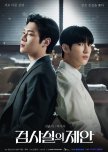
Going into The Prosecutor's Proposal, I honestly had one goal. I wanted to see the romance. This is also my very first BL, so I'm reviewing it purely on its own merits rather than comparing it with other series in the genre. Everything I say here comes purely from my experience watching this drama as it is. Safe to say, it was a surprisingly enjoyable introduction to the genre.The story begins fifteen years after the murder of a powerful casino mogul, a tragedy that forever changed the lives of two boys. Fate reunites them as adults, one becoming Prosecutor Ju Tae Seon while the other, Lee Chae Ha, works as a Senior Assistant in the Fine Collection Division before eventually becoming Tae Seon's investigator. Together, they find themselves digging into a conspiracy that stretches far beyond a single murder, reaching into a powerful corporation and even the prosecution itself. At its heart, however, this is less about solving a mystery and more about two people carrying opposite burdens. Chae Ha lives with guilt while Tae Seon carries resentment. Justice, revenge, and forgiveness constantly pull them in different directions, making them each other's greatest weakness and, at the same time, their only source of hope.
The first episode does a really good job establishing Chae Ha's character. He comes across as quiet, gentle, and almost painfully meek. At the same time, those qualities makes me question his past as an ex-police officer. Anyway, his gloomy home life, his dependence on sleeping medication, and the nightmares about his father immediately hint that there is a much deeper wound beneath his calm exterior. Then comes his first encounter with Tae Seon during lunch. Even with just a few exchanged words, there is already tension between them. Their first crime scene together only amplifies that feeling as Tae Seon constantly challenges Chae Ha while Chae Ha quietly tries to do his job. It becomes even more interesting when Chae Ha sincerely admits that he respects Tae Seon as a thorough prosecutor, only to be unexpectedly assigned to work under him the following day. From there, their dynamic becomes the driving force of the entire drama.
I was already excited to see a “your dad murdered my dad” trope. Without question, the chemistry between Chae Ha and Tae Seon is this drama's greatest strength. Chae Ha is soft spoken, patient, and often lets himself be led by others. Considering the guilt and doubt he has carried from the past, it makes sense that he naturally keeps a low profile. Tae Seon, meanwhile, is commanding and often controlling. His lingering anger from the past gives every interaction between them an extra layer of intensity. Watching them together somehow awakened my teenage fangirl self all over again. Their dynamic, with Tae Seon often taking the lead while Chae Ha quietly holds his ground, the constant tension, and the longing hidden beneath every confrontation all worked surprisingly well for me. Every romantic scene had enough electricity to make me smile without even realising it.
Kim Yoon Shik deserves special praise for his portrayal of Ju Tae Seon. His performance shines the brightest during the romantic moments. His eyes and even the smallest movements of his lips communicate emotion without needing lengthy dialogue. He also fits the cool and aloof image of Tae Seon naturally. There were a few emotionally expressive scenes outside the romance that felt a little awkward, but whenever the story leaned into quiet yearning or restrained affection, he absolutely delivered.
I also appreciated that the drama actually tried to tell an engaging crime and mystery story instead of using it as mere background decoration. Going in, I honestly had very few expectations for the plot because I was mainly interested in the romance. Still, I found myself invested in uncovering the conspiracy. It is not the kind of mystery that constantly leaves you scratching your head, and most of the major reveals are fairly easy to predict. I had already guessed who the mysterious figure and the main villain were long before the reveal. Even so, it remained entertaining enough because the emotional stakes between the two leads carried the narrative.
Unfortunately, the production has a few noticeable flaws. Scene transitions occasionally feel awkward. The overall story remains understandable, but the editing makes these jumps difficult to ignore. There are also a few logic gaps and plot holes scattered throughout the series, though none of them were significant enough to ruin my enjoyment.
Visually, the drama sits comfortably in the middle. Nothing particularly stood out as spectacular, but nothing looked bad either. I actually liked the cool, gloomy colour grading because it matched the emotional weight of the story. On the other hand, the AI generated scenes were distracting and felt unnecessary. The final scene also switches to an extremely bright sunset palette that almost feels like the drama is making a statement. I understand the intention, but the heavy saturation clashes with the otherwise subdued visual style. A low contrast bright ending could have worked just as well to maintain the atmosphere established throughout the series.
The soundtrack, however, was genuinely nice. The OSTs create the perfect emotional backdrop and elevate many scenes. They are the kind of songs I would happily listen to even without revisiting the drama, which is always a good sign.
The ending itself feels a little rushed. Once the story reaches its climax, events unfold at an unexpectedly fast pace, especially regarding how quickly the villain is dealt with. The climax is also more subdued than exciting, making it feel slightly anticlimactic. Strangely enough, I was not disappointed because my expectations were never centred on the mystery. I came for the relationship between Chae Ha and Tae Seon, and that aspect remained satisfying until the end. Despite the rushed pacing, the story still manages to wrap things up in a reasonably satisfying way.
Overall, The Prosecutor's Proposal was a wonderful start to the genre. It certainly has its share of logic gaps, plot holes, inconsistent scene transitions, and questionable use of AI, but none of those outweighed what the drama did best. The chemistry between the leads is undeniably its strongest asset, and I appreciate that the writers still put genuine effort into crafting a mystery that complements rather than overshadows their relationship. Like a courtroom where the evidence may not be flawless but the final verdict still feels right, The Prosecutor's Proposal won me over where it mattered most.
Was this review helpful to you?

This review may contain spoilers
How Dare You!? Fool Me Like That!
I kept putting off How Dare You!? because I simply was not in the mood for another comedy. Then because of Cheng Lei, I finally gave in, fully expecting a lighthearted palate cleanser. Instead, the drama pulled off one of the biggest bait and switches I have seen in a while. It dresses itself in comedy, only to slowly reveal that beneath all the jokes, fourth wall breaks, and ridiculous situations lies a surprisingly tragic story.The story follows workplace rookie Wang Cui Hua, who suddenly wakes up inside the pages of a novel as the infamous demonic consort Yu Wan Yin. There, she discovers she is not the only transmigrator. Emperor Xia Hou Dan is actually Zhang San, someone from the modern world who has been trapped inside the novel for nearly a decade. Like two chess players who unexpectedly realize they are on the same board, they rely on their knowledge of the story to outwit dangerous enemies, survive ruthless palace politics, and challenge a prophecy that insists only one of them can live to see the peaceful future they are trying to build.
The first episode was pure fun. Watching Cui Hua and Zhang San awkwardly test whether the other was also from the modern world while trying to navigate an unfamiliar fictional setting was endlessly entertaining. I find it brilliant to use “how are you? I’n fine thank you, and you?” to find out who’s a transmigrator. Their modern references, chaotic teamwork, and shameless glances at the camera gave the drama a playful charm. Then came the second and third episodes, and suddenly tragedy barged in without knocking. Characters started dying. Violence became more frequent. The stakes grew heavier. Yet somehow the comedy never disappeared. Instead, it became a coping mechanism. The laughs never erased the pain, but they made the journey easier to carry. Of course, the tragedy itself was obviously intentional. It felt comical and somehow highlights that they are in a novel. As the political conflicts became more serious, the drama balanced its darker themes with enough humor to keep everything surprisingly digestible. I did find some palace politics scenes dragging a little, but they ultimately gave the story much more depth.
Wang Cui Hua was an absolute delight. She was bright, loud, vibrant, and completely unapologetic about bringing her modern personality into a historical world. What I appreciated most was that she never tried to become the person who knew better simply because she came from the future. She embraced living as Yu Wan Yin, sympathized with the people around her, and genuinely wanted to help clean up corruption and endless power struggles. She carried herself with so much personality that even the way she walked became memorable. Her first entrance into the Emperor's chambers with that confident, flirty swagger instantly became iconic. Whether casually sitting with her legs wide open or gracefully walking through the palace in breathtaking costumes, Wang Chu Ran completely owned both Cui Hua and Wan Yin. She balanced flirtiness, humor, determination, vulnerability, and heartbreak effortlessly. It certainly helps that she looked absolutely stunning throughout the entire drama. I lost count of how many screenshots I took of her costumes despite knowing I will never wear them.
Then there is Zhang San, easily one of the most tragic characters in the series. Imagine entering a novel as a teenager, growing up entirely inside its world, and slowly forgetting your real life. After nearly ten years, Zhang San had become Xia Hou Dan in every sense of the word. He mastered court politics, learned to survive endless schemes, and even perfected the act of pretending to be an incompetent puppet emperor just to fool the Empress Dowager and Xia Hou Bo. When Cui Hua finally appeared, he was no longer just relieved to find another transmigrator. He had finally found someone who understood the loneliness of existing between two worlds.
Cheng Lei once again reminded me why I keep watching his dramas. His greatest strength has always been his facial expressions. He can deliver the smallest, softest emotions just as convincingly as explosive anger, grief, or comedy. His performance made Zhang San's internal conflict feel believable. There were moments when he admitted he had deliberately drawn information from Cui Hua to help himself survive, and instead of making him feel manipulative, it made him feel painfully human. Survival had become second nature. Yet despite his own motives, his feelings for Cui Hua never felt dishonest. When he told her, "In you I found home," it became one of the sweetest lines in the entire drama. There was one small detail that felt inconsistent, though. Since he had spent nearly a decade living entirely as Xia Hou Dan, hearing him casually mention needing a CT scan, even when Cui Hua was not around, felt oddly out of character. By that point, modern vocabulary should have come much less naturally.
The chemistry between Cui Hua and Zhang San was one of my favorite parts of the drama. They were lovers, partners, best friends, and fellow survivors all at once. They respected each other, trusted each other, and always found their way back to each other no matter how dangerous things became. Their relationship never relied on possessiveness or misunderstandings for drama. Instead, it was built on quiet support and mutual understanding. Some of my favorite scenes were simply the two of them eating hotpot together. There was something wonderfully hilarious about watching modern souls happily enjoying hotpot while dressed in elaborate historical costumes. Their planning sessions, complete with occasional looks straight into the camera, were equally entertaining. Beneath all the laughter, though, was the bittersweet reality that they were the only two people who truly understood each other's circumstances. They were wandering souls who finally found home in one another.
One of this drama's greatest strengths is how memorable its supporting characters become. Xie Yong Er completely surprised me. At first, I was convinced she was another transmigrator from the modern world. Later, I became convinced she had come from the future. I was wrong twice. The reveal that she was actually a fictional character who had transmigrated into another fictional story genuinely made my brain short circuit. It was such a clever twist. I loved her friendship with Cui Hua, their girls' moments together, and seeing her happily sharing hotpot and dumplings with everyone. That only made her tragic fate hurt even more. I was rooting so hard for her happiness, especially with Xiao Tian Cai.
The tragedy did not stop there. Xu Yao's death came shockingly early and signaled that nobody was safe. Then came the scholars, whose unwavering loyalty to justice turned them into one heartbreaking sacrifice after another. After the first scholar died, I should have realized what the drama was preparing me for, yet every subsequent death still landed. The series did an excellent job developing even its supporting characters enough that losing them genuinely hurt.
The death that broke me the most was Bei Shu's. He was far more than Xia Hou Dan's loyal protector. He became the father figure Zhang San never had during all his years trapped inside the novel. Watching Zhang San lose the one constant source of unconditional support was devastating. Even knowing the narrative reasons behind his sacrifice, I still cannot shake the feeling that it was unnecessary. Seeing him lying inside the casket genuinely broke my heart alongside Zhang San's. Cui Yi and Fan Siu Wong portrayed Bei Shu with so much warmth that his absence left a lasting void.
As for the villains, Xia Hou Bo and the Empress Dowager were thoroughly detestable. Xia Hou Bo had the classic tragic backstory of an abused child growing into a resentful adult, but his suffering never excused his actions. Manipulating Yong Er, using her love, and forcing her into such cruel circumstances made him absolutely disgusting. Tang Xiao Tian played him remarkably well because I spent most of the drama wanting someone to punch him. The Empress Dowager was equally infuriating. Power mattered more to her than anything else. She manipulated Xia Hou Dan, isolated him from everyone he cared about, and remained determined to control him even after he saved her life.
Visually, this drama was absolutely gorgeous. Normally I find overly polished historical dramas a little too artificial, but here the dreamy aesthetic actually worked. The costumes were easily one of the production's biggest strengths. Yu Wan Yin's wardrobe was simply breathtaking, while Xia Hou Dan's elegant robes and hairstyles perfectly complemented both his character and Wang Chu Ran's glamorous appearance. Together they looked like they had stepped straight out of an illustrated fairytale. The soundtrack also grew on me. At first, it barely registered. By the end, the songs had quietly settled into my head and refused to leave.
The ending may not satisfy everyone, but I appreciated what it tried to do. The fictional world wrapped up much like a classic novel with hope after overwhelming hardship, even if a few threads remained unresolved. The sudden return to the modern world happened so quickly that I barely had time to process it, but given the limitations, it was probably the closest thing to a satisfying closure. What I appreciated most was that the drama addressed the exact question I had been asking myself. Were Cui Hua and Zhang San only in love because they happened to be the only two modern people trapped inside the same novel? Would they still choose each other back in the real world? Zhang San's quiet reassurance that they would was enough for me. I may still have my doubts, but sometimes closure does not need certainty. Sometimes hope is enough.
Overall, How Dare You!? turned out to be so much more than I expected. It tells a solid story filled with lovable characters, heartbreaking sacrifices, palace intrigue, beautiful visuals, dreamy costumes, and a soundtrack that slowly sneaks into your playlist. Most importantly, it understands that laughter and grief are not opposites. They often sit at the same table, sharing hotpot while pretending everything will be okay.
Was this review helpful to you?
Autopsy Ever After
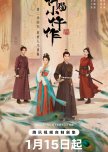
If season one was about sparks flying in the courtroom and the autopsy room, season two is about what happens after the “I do.” The Imperial Coroner Season 2 follows the married life of the ever composed Prince An, Xiao Jin Yu, and the brilliant imperial coroner Chu Chu. Now juggling careers, marriage, and rising responsibilities, they team up once again with the young talents of the Three Judicial Offices to crack mysterious cases and maintain peace in the Tang Dynasty.Right from episode one, the drama makes it easy to slip back into its world. The recap is short, clear, and genuinely helpful, even giving a quick refresh on the characters without dragging. Still, not everyone makes a strong re entrance. Xiao Jin Yu, Jing Yi, and Leng Yue feel a little muted at first, while Chu Chu ends up standing out the most. She feels noticeably more mature this season, from her calmer demeanor to her more refined tone of speech. It is a subtle shift, but it works. That said, I cannot lie, I do miss her iconic bangs.
As the story settles, the dynamics start to shine again. Leng Yue wastes no time reminding us why she is that girl. Her fight scenes flow so smoothly they almost feel effortless. Now married to Jing Yi, their relationship is equal parts adorable and hilarious. She leads with quiet authority while he happily clings along, and somehow it just works. In fact, this season flips expectations in a fun way. The women are strong, decisive, and career driven, while the men take on a more supportive, occasionally clingy role.
The show also keeps many of its signature elements, which is a huge plus. The reenactment role play scenes are back, still dramatic and slightly theatrical in the best way. The autopsy graphics remain clear and engaging, making each case easy to follow. Even the POV narration at the start of episodes returns, adding a familiar storytelling rhythm. Solving cases with this team feels a bit like playing a mystery simulation game, where every clue is laid out just a little too perfectly. Sometimes a bit too perfectly, like that oddly flawless footprint early on.
Romance, however, takes a different route this time. Since the couples are already married, the tension that made season one so exciting is mostly gone. At first, it feels a little flat. Sweet, but predictable. Yet as the episodes go on, the charm slowly creeps back in through smaller, quieter moments. A simple act like Jin Yu washing Chu Chu’s feet, then gently washing hers right after, becomes unexpectedly endearing. By the time we get to his drunken hug, it is hard not to smile. It may not give butterflies, but it gives warmth.
What truly strengthens their relationship is the trust they have in each other. Even when rumors try to stir trouble, neither of them wavers. The real conflict comes not from jealousy, but from their roles and responsibilities. When Jin Yu removes Chu Chu from a dangerous case, it initially feels frustrating and even unprofessional. Their reactions seem off, and the tension lingers awkwardly. But once Chu Chu’s perspective becomes clear, everything clicks into place. She is not upset about the danger itself, but about being treated as someone to protect rather than someone capable. That shift adds depth to their relationship and makes their reconciliation all the more satisfying.
Among the male characters, Jing Yi quietly steals the spotlight. There is something about his mix of competence, loyalty, and slightly clingy husband energy that makes him incredibly appealing. Yang Ting Dong brings a charm to the role that feels both playful and dependable. Xiao Jin Yu, portrayed by Wang Zi Qi, remains solid and composed, but the writing does not give him as many standout moments this time. It feels less like an acting issue and more like a missed opportunity in the script.
Then comes You Chen An, a character who adds intrigue the moment he appears. His presence brings a layer of unpredictability that keeps things interesting. You are constantly wondering where he stands. Zhang Chen Xiao does well in key moments, especially when leaning into the character’s darker side, though his performance still feels like it is finding its footing. The character itself has a tragic and compelling background, but the buildup is not quite strong enough to fully support his role as the main antagonist.
The emotional beats of the story are a mix of impactful and rushed. Wu Jiang’s death feels both heartbreaking and unnecessary, while Chu He’s journey takes a surprising turn. He starts off frustrating, almost like a walking headache, but ultimately redeems himself in a deeply tragic way. His sacrifice hits hard, especially knowing it was driven by love and loyalty. The connection between him and You Chen An also carries a certain warmth that could have been explored more. There are also moments of unexpected humor that keep things light. One scene in particular, where Jing Yi is left hanging upside down while everyone else calmly investigates, feels so absurd that it becomes genuinely funny. It is these small, chaotic touches that give the drama its personality.
That said, the flaws become more noticeable as the story progresses. Some emotional scenes lack impact, particularly from Su Xiao Tong, who excels in portraying Chu Chu’s intelligence but feels more restrained in heavier moments. Certain arcs, like the surgery storyline or Xiao Jin Li and Luo Yan’s relationship, carry strong ideas but feel rushed in execution. The biggest issue lies in the overall structure. This season does not quite feel like a full sequel. The central conflict lacks weight, and when the main villain’s plan finally unfolds, the payoff feels underwhelming. The resolution comes too easily, almost as if the tension built up over many episodes dissolves in an instant. Even the ending for the main characters feels surprisingly basic, especially after everything they have been through.
And yet, despite all these shortcomings, the drama remains an enjoyable watch. It may not fully pull you into its world, but it keeps you entertained enough to stay. It is the kind of show you turn on when you want something light, familiar, and just engaging enough without demanding too much attention. In the end, The Imperial Coroner Season 2 feels less like a grand continuation and more like an extended chapter. Not as impactful as the first, but still charming in its own way.
Was this review helpful to you?
Surprisingly Entertaining!
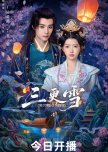
After her family and life was destroyed by tyrant Jun Che, Lu Ying Ying got a second chance in life and was determined to change her fate. Upon being reborn before the tragedy begins and meeting Jun Che, who was then a slave, she bought him and attempted to get revenge. However, as they work together, love sprouts and new revelations came to light.This was a random watch on a slow afternoon. With no expectations, this is the type of drama that would surprisingly keep you engaged without needing your full unwavering attention or critical thinking skills. A light watch indeed! It is a cliché enemies to lovers story yet it would keep you seated to see how things unfold. The casting, although not perfect, was enough to bring the characters to life and portray each character's development and relationship throughout the drama.
It is definitely not the best short drama of its kind but enough to receive a rating of 7. This is an easy drama to watch when looking for an enemies to lovers plot without needing to think or fully commit your attention.
Was this review helpful to you?

Monkey Carrying a Speaker
Xiao Fang is one of those dramas that quietly sneaks up on you. It welcomes you with bright colours, lush greenery, cozy homes dressed in warm earthy browns, and a peaceful rural atmosphere that feels like a comforting cup of tea. Then, it throws you straight into one of the most frustratingly realistic portrayals of family, gossip, and societal expectations.As Yang Xiao Fang and Qi Xiao Wei return to their rural hometown for the Spring Festival, the radio announces that a monkey carrying a loudspeaker is running loose around the village. It sounds ridiculous at first, almost comedic, but as the story unfolds, it becomes one of the drama's most brilliant recurring motifs. Xiao Fang arrives home pregnant, her engagement hanging by a thread, and before she can even settle in, rumours spread through the village faster than that monkey carrying a speaker. Every neighbour suddenly becomes a judge, every conversation becomes public property, and everyone seems convinced they know what is best for her.
That is where the drama immediately won me over. It never romanticizes rural life. Instead, it presents a community that is warm yet suffocating, loving yet intrusive. The gossip feels painfully authentic because it reflects how quickly a person's private life can become public entertainment. Watching Xiao Fang remain calm through all of it was almost unbelievable. Either way, her quiet composure became one of the most admirable parts of her character.
Then there is Xiao Wei. He is Xiao Fang's childhood friend, the father of her baby, and someone who genuinely wants to protect her. Unfortunately, every ounce of sympathy I had for him disappeared almost immediately. Unlike Xiao Fang, who chooses to face problems head on, Xiao Wei allows every piece of gossip to crawl under his skin. It certainly does not help that he comes from an exhausting family. His father is incredibly stingy, manipulative, controlling, patriarchal, and somehow always manages to make every situation worse. His mother is equally realistic in a different way. She pushes back just enough to show she has opinions of her own, but inevitably folds under her husband's authority. Their family dynamic is frustrating precisely because it feels so believable.
The moment that completely destroyed Xiao Wei's image for me was when both families were arguing and he blurted out, "Xiao Fang was the one who liked me first!" It sounded exactly like something a child would say after getting caught. Rather than taking responsibility, he shifted the attention onto Xiao Fang. It gets worse.
The painting incident was the point of no return for me. Rumors spread that Xiao Wei had painted a nude portrait of Xiao Fang, creating another public scandal. When everyone gathered to uncover the truth, Xiao Wei stumbled through lie after lie before finally admitting he had copied an existing famous painting. But what truly made my blood boil was his excuse. Out of embarrassment, he snapped that if Xiao Fang had not been kissing him that day, he would have finished painting instead. That sentence genuinely shocked me. Once again, he shifted responsibility onto Xiao Fang for something they had both participated in. The logic behind his excuse felt disturbingly similar to victim blaming, and from that point onward, I simply could not see him as a suitable partner or father, regardless of how much character development the drama tried to give him later.
Ironically, that is also why Xin Yun Lai deserves a lot of praise. He plays pathetic men incredibly well. I hated Xiao Wei so much because Xin Yun Lai portrayed every ounce of insecurity, immaturity, and cowardice with remarkable conviction. I had a similar impression of him in In Between, where he also excelled at playing a loser who constantly fumbles through life. Interestingly, I feel he struggles much more with cold, charismatic roles like the one he played in The Glory, where his expressions often felt too restrained. If anything, this drama proves he has found a niche that suits him perfectly, although I would still love to see him challenge himself with more expressive characters outside of that comfort zone.
One storyline I found surprisingly fascinating revolved around the bride's price, or cai li. Watching the Yangs and the Qis negotiate over it causes more misunderstandings as it revolves around money, pride, tradition, family honour, and ego. As the misunderstandings, lies, and arguments pile up, the gap between them becomes impossible to ignore. Xiao Fang handles every challenge with remarkable maturity. She refuses to view her pregnancy as a weakness, stays confident in her own decisions, and carefully considers how every choice affects not only herself but also her child and both families. Xiao Wei, meanwhile, remains trapped inside his own insecurities. Even when trying to solve problems, his solutions usually create even bigger ones because they revolve around protecting his own pride rather than understanding Xiao Fang's perspective.
Their biggest argument became one of the most memorable scenes in the entire drama. When Xiao Fang questioned his decisions, Xiao Wei exploded, telling her to stop making him feel like a fool and to change her attitude. Her quiet response, "But you said you never wanted me to change," broke me. That conversation became Xiao Fang's wake up call. The following day, she publicly announced through the village loudspeaker that she no longer loved Xiao Wei and was calling off the marriage. That was the exact moment I fell in love with her character.
She knows what she wants, draws clear boundaries, and refuses to sacrifice her own happiness simply because society expects her to. She is calm without being passive, kind without being naïve, confident without being arrogant, and mature without losing her youthful energy. Wang Ying Lu captures every side of Xiao Fang beautifully. She effortlessly balances her tomboyish charm with the softer changes that come with pregnancy and motherhood. Her naturally deep voice also gives the character an unexpected sense of charisma that makes Xiao Fang feel incredibly memorable. Every performance I have seen from Wang Ying Lu has impressed me.
After the breakup, the story shifts its attention away from romance and focuses instead on family. Rather than chasing an unnecessary reconciliation, the narrative explores how both families adapt to Xiao Fang's decision, and this is where the drama truly shines. The Yang family quickly became my favorite part of the entire series. They perfectly capture the beautiful contradictions of many Asian families. They argue constantly, interfere with each other's lives, make decisions that nobody asked for, and somehow still become each other's strongest source of support when it matters most. One minute they are shouting at one another, and the next they are standing shoulder to shoulder against anyone threatening one of their own. Every member leaves an impression, especially her dad, her first aunt, her cousin Dan Dan, and her grandma.
Yang Fan Hu may not have been the perfect husband, but he strives every single day to become the father Xiao Fang deserves. He supports his daughter without controlling her choices. Rather than telling her what to do, he simply reminds her that he will always be there if she falls. Yang Fan Yan, the eldest aunt, was the character I related to the most. Beneath her strong personality lies years of pressure, resentment, and exhaustion from always feeling responsible for everyone else while believing she had to work harder than her siblings for everything she achieved. As a fellow eldest daughter, her struggles hit especially close to home.
Dan Dan completely steals every scene he appears in. The contrast between this thoughtful, emotionally intelligent child and the unbelievably immature Xiao Wei is hilarious in the best possible way. Then there is Grandma Qu Man Xia, played wonderfully by Wu Yan Shu. She is simply iconic. Every time she puts on those black sunglasses, she instantly becomes the coolest grandmother in the village. Despite belonging to an older generation, her outlook is refreshingly progressive. She encourages Xiao Fang to value herself first and constantly reminds her daughters not to let men dictate their lives. Xiao Fang’s second aunt, Yang Fan Mei, and uncle, Yang Fan Zhu, also left a strong impression.
Even after Xiao Fang gives birth, I appreciated that the story refuses to reduce her entire identity to motherhood. One of my favourite details is how she dislikes being referred to only as "Bi Te's mother" because she still wants people to call her Xiao Fang. That small detail speaks volumes. Becoming a parent should not erase who you are as a person.
I also appreciated that the drama does not trap Xiao Fang within motherhood after giving birth. Instead of spending every waking moment caring for Bi Te, she continues pursuing her ambitions, builds her business, and allows herself to remain her own person. Fortunately for her, that works because she has both families and Xiao Wei sharing the responsibility of raising the child. I really liked that perspective. Parenting is often portrayed as one person sacrificing everything, but Xiao Fang suggests something healthier. When parents continue loving themselves, pursuing their dreams, and growing as individuals, they are also able to love their children without resentment or regret.
Visually, Xiao Fang is a beautiful drama. The natural colour grading, bright lighting, lush greenery, and warm wooden interiors create an atmosphere that feels incredibly comforting. Every frame captures the charm of rural life without making it feel overly idealized. The soundtrack deserves praise as well. The songs and background music fit the countryside setting perfectly and always seem to arrive at the right emotional moments without overpowering the scenes.
The ending tied up its loose ends in a satisfying way. Xiao Fang's business is thriving, she has established a stable life for herself and Bi Te, and Xiao Wei decides to leave town to pursue his own dreams. As someone who spent almost the entire drama hating him, I honestly felt relieved that he was leaving. More importantly, it was the right decision for both of them. They needed space to grow into better versions of themselves.
Objectively speaking, their farewell was beautiful. I appreciated how carefully the drama handled co-parenting. Rather than forcing a romantic reunion, the drama allows them to become supportive co-parents and genuine friends. It acknowledges that some people make better partners as parents than as lovers. Xiao Wei stood behind Xiao Fang when she chased her dreams, and now Xiao Fang stands behind him as he leaves to chase his. One of my favorite moments is when Xiao Fang and little Bi Te see him off from afar and recreate one of their old inside jokes together. It is such a small detail, but it reflects how carefully the writers remembered the little moments that shaped their relationship. Those callbacks made the ending feel all the more rewarding.
I also appreciated how naturally the drama redeemed Qi De Yao. His growth never felt forced because it came from experiences that genuinely challenged his perspective. The narrative gave him understandable reasons to change, making his transformation feel earned. As he changed, the atmosphere within the Qi family became noticeably brighter. Seeing the two fathers slowly move from lifelong rivals to friendly fellow grandfathers was another touching payoff that felt completely believable.
The drama closes by returning to the monkey carrying the speaker that was introduced in the very first episode. As Xiao Fang's business bus travels down the road, it comes across a loudspeaker abandoned in the middle of the street. Looking at it with a smile, she simply says that the monkey is now free. To me, the monkey carrying the speaker symbolizes a person weighed down by constant noise. Not literal noise, but the endless chatter of gossip, judgement, expectations, and the desire for validation. Once the monkey lets go of the speaker, it no longer carries everyone else's voices. It no longer feels the need to broadcast itself or live according to society's expectations. It is finally free.
That perfectly mirrors Xiao Fang's journey. Throughout the story, she is constantly surrounded by people telling her what she should do, who she should marry, how she should raise her child, and what kind of woman she should become. By the end, she has learned to let go of all that noise. She chooses herself without becoming selfish. She embraces motherhood without allowing it to define her entire identity. She loves the people around her while still protecting her own peace. In many ways, the drama quietly suggests that freedom begins the moment we stop carrying everyone else's expectations.
Overall, Xiao Fang is a beautiful yet frustratingly realistic slice of life drama set in rural China. It is warm without being naïve, emotional without becoming melodramatic, and honest about the complicated relationships between family, tradition, love, and independence. The writing made me feel genuinely connected to its characters, whether I was cheering for them, crying with them, or wanting to scream at Xiao Wei through my screen. By the time the credits rolled, I realized that this was never just a story about an unexpected pregnancy. It was a story about learning to live for yourself, even when the whole world keeps trying to speak over you.
Was this review helpful to you?
This review may contain spoilers
Objection, Your Honour… Justice Is Complicated
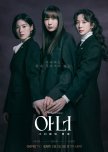
Friendship, secrets, and justice walk into a law firm. What could possibly go wrong?Honours follows three women who have been friends for roughly twenty years. Yun Ra Yeong, Kang Sin Jae, and Hwang Hyeon Jin first met as university students in their twenties. Two decades later, life has brought them to the same destination: L&J Law Firm, a place that specializes in defending female victims of crime.
Among the trio, Yun Ra Yeong is the star. She is a well known television personality, a celebrity lawyer with hundreds of thousands of followers who can charm an audience as easily as she dismantles an argument. Kang Sin Jae is the commanding force of the group, a lioness in a suit whose negotiation skills and intimidating charisma make people fold like cheap umbrellas in a monsoon. Hwang Hyeon Jin is elegance wrapped around fire, a lawyer who prefers action over paperwork and never hesitates to challenge anything that goes against her principles.
From the outside, they look like an unstoppable trio of brilliant lawyers and loyal friends. But beneath the polished surface lies a secret they have carried for twenty years. When a new case begins to unravel a large prostitution ring, the shadow of their past resurfaces. Old wounds reopen, buried truths claw their way out, and the three women must decide whether their friendship is strong enough to survive what comes next.
Right from episode one, the drama hooks you like a good legal thriller should. The story opens with a disturbing rape case involving a minor, Jo Yu Jeong, and an actor named Kang Eun Seok. At first it feels like a standalone case, but the breadcrumbs quickly lead to something much bigger. A prostitution ring operating through an app called Connect In begins to surface, and suddenly the scale of the story expands from one crime to a whole system of exploitation. Naturally, my inner detective woke up and immediately started wondering who the mastermind was. My money was already on corrupt officials because the way the law gets maneuvered in this show screams power and privilege.
One of the drama’s biggest strengths is the chemistry between the three leads. Their friendship feels lived in. They share the same office, the same lounge, and an easy comfort that only comes from years of knowing someone’s worst habits. Watching them banter made me think, wow, I wish I had a best friend group like that. At the same time, it becomes clear early on that their passion for defending sexual violence victims might come from personal scars. Something happened in the past, and the drama keeps teasing that mystery like a dangling carrot.
Then there is Hwang Hyeon Jin and her complicated personal life. The revelation that she cheated on her husband, Koo Seon Gyu, with her ex Lee Jun Hyuk was honestly disappointing. I kept hoping maybe it was just a kiss, but nope. That whole storyline made me feel bad for the husband, who is basically walking around with a giant green flag above his head. Meanwhile Hyeon Jin spends a good chunk of the early episodes spiraling in panic as her detective husband investigates her ex’s murder case. Out of the three friends, she definitely came across as the most frustrating character at the beginning. Her emotional reactions sometimes made her feel less like a composed lawyer and more like someone who misplaced their common sense.
Still, one thing I genuinely loved was how open the three friends are with each other. Their transparency feels rare. In many dramas, even close friends hide information with the classic “I’ll tell you later” trope. Here, they lay things out on the table, even when it hurts. That level of honesty made their bond feel stronger and more believable.
As the episodes roll on, the Connect In case becomes darker and deeper. Victims like Han Min Seo and Jo Yu Jeong reveal just how cruel the system is. One scene that stuck with me was when Han Min Seo arrives at a client’s house and casually asks whether they want to do “it” one by one or all together. The way she delivers that line shows just how emotionally numb she has become. It is chilling. The drama does a good job portraying how exploitation can hollow someone out from the inside.
The mystery around the past also slowly unfolds. Eventually we learn that the man now known as Park Jae Yeol is actually tied to a traumatic incident from the women’s university days. He attempted to assault Yun Ra Yeong, and during the struggle Hwang Hyeon Jin struck him in the head, leaving him with lasting damage. Instead of reporting it, the women hid the incident. That decision comes back to haunt them twenty years later when Park Jae Yeol resurfaces as both a judge and the mastermind behind Connect In. Talk about karma doing a dramatic U turn.
There are many twists along the way. Some work brilliantly. Others make you raise an eyebrow. The revelation that Han Min Seo is actually Yun Ra Yeong’s daughter was predictable but still gasp worthy. It adds a tragic layer to their relationship because Min Seo spent her life suffering in the very system her father built, while blaming the mother who gave her up. If Shakespeare wrote legal thrillers, this would probably be one of his plotlines.
Another fascinating character is Baek Tae Ju. At first he appears to be a mysterious ally, then slowly reveals himself as the creator of the Connect In app. His motivation stems from revenge connected to an old case involving Seo Ji Yoon. In theory he is a morally grey character who believes justice requires blood. In practice, the drama pushes him into full psycho mode near the end, and the shift feels a bit abrupt. The camera work and his sudden intensity made those scenes feel slightly out of sync with the earlier tone of the show.
The story also has a few logic gaps that made me scratch my head. The three lawyers spend more time investigating crimes themselves than actually practicing law. Court scenes are surprisingly rare for a legal drama. At one point they even leave a crucial witness alone in their supposedly sacred evidence room, which naturally leads to missing evidence. Watching that unfold felt like yelling at a horror movie character not to open the creepy basement door.
Despite these issues, the show keeps you entertained with constant twists. Episode after episode delivers revelations about corrupt VIP clients, buried cases from the past, and the uncomfortable reality that powerful people rarely face consequences.
The casting deserves praise. Lee Na Young, Jung Eun Chae, and Lee Chung Ah bring distinct personalities to their characters, making the trio feel balanced and believable. Newcomer Jeon So Young also delivers a convincing performance as Han Min Seo. As for Yeon Woo Jin, he shines in the early episodes with his mysterious charm, but once his character goes full villain the performance becomes a bit too exaggerated for my taste.
The ending is perhaps the most realistic yet frustrating part of the drama. Justice is messy. Some villains escape punishment thanks to power and corruption. The protagonists continue fighting rather than celebrating victory. Yun Ra Yeong and Han Min Seo are still awkward with each other, Kang Sin Jae is struggling to rebuild her family’s law firm, and Hwang Hyeon Jin is simply trying to hold her marriage together. It is not the triumphant finale people might expect, but it mirrors reality in a way that feels honest.
In the end, Honours is an entertaining ride filled with suspense, emotional trauma, and plenty of twists that keep you glued to the screen. The early and middle episodes are gripping, even addictive. The final stretch loses some momentum with convenient evidence and a slightly messy focus shift, but the overall experience remains engaging.
It is not a perfect drama, but it definitely keeps you on the edge of your seat. And sometimes that is exactly what you want from a late night binge session.
Was this review helpful to you?

Like Sitting Beneath a Tree on a Sunny Afternoon
Meet Yourself begins with grief, but it never uses grief to manipulate the audience. Xu Hong Dou loses her best friend, resigns from the hospitality job she dedicated a decade of her life to, and travels to Yun Miao Village near Dali, a destination they had once planned to visit together. Some viewers may find the first episode difficult because of how heavy it feels. Interestingly, the drama never relies on lengthy flashbacks or exaggerated tragedy to make us mourn. Instead, it quietly reminds us that life should not be postponed until "someday." As someone who also feels trapped in the endless cycle of work, that message struck home. There is nothing wrong with chasing success, but it also asks a simple question. What is the point of working so hard if we never allow ourselves to enjoy the life we are building before it is too late?What follows feels like going on a long vacation yourself. Imagine sitting beneath the shade of a tree with someone who enjoys silence just as much as you do. Nobody feels pressured to fill the quiet. Somehow, simply sharing the same space becomes comforting enough. That is exactly how Meet Yourself made me feel. I deliberately watched it slowly because every episode felt like something to savor instead of binge. It made me smile, occasionally brought me to tears, yet never resorted to dramatic emotional whiplash. The pacing is calm and steady, the conflicts feel grounded, and every character is given room to breathe. Rather than chasing huge plot twists, the drama finds beauty in ordinary days, reminding us that even simple stories can carry remarkable depth.
One detail I especially loved was Hong Dou's decision to document everything she experienced in Yun Miao Village. Every place she visited, every meal she ate, every memory she made became something she was living for both herself and the friend who never got the chance. It was heartbreaking, yet incredibly inspiring. There was something liberating about watching someone set aside the noise of the world and spend three months simply experiencing life. Then reality kicked in and I remembered Hong Dou had ten years of savings while I am... broke.
The village itself quickly became one of my favorite characters. What starts as a guesthouse filled with strangers slowly transforms into a community where everyone knows and cares for one another. The friendships Hong Dou builds with Damai, Na Na, the locals, and the other guests became just as important as the romance.
Damai was the character I resonated with the most. We are both writers, introverts, and socially awkward people. Watching her spend an entire day socializing only to immediately bury herself under the blanket afterward felt painfully relatable. Work has forced me to become a functioning introvert, but my social battery still sends me invoices after every gathering. One line from Damai stayed with me long after I finished the drama: "We're often trapped in all kinds of judgments from others. But actually we need to understand this. When the flood rushes toward you, you feeling overwhelmed is not your fault."
That quote comforted me because it never tries to invalidate fear with empty optimism. It simply acknowledges that being overwhelmed is a natural response when life crashes into you like a flood. Eventually, the water recedes, or perhaps we simply learn how to swim. Either way, the script chooses compassion over forced positivity, and that felt refreshingly honest.
Na Na's story also resonated with me in a very personal way. Like her, I create content for a living. It is surprisingly easy to become the target of strangers hiding behind screens. Even reading hostile comments can leave you anxious, so I could only imagine the nightmare of having your personal information exposed, strangers calling your phone, and people showing up at your doorstep. The drama captured that fear remarkably well. What moved me most was not simply her trauma, but the unwavering trust her friends showed once they learned the truth. They stood beside her without hesitation. Having people who choose to believe you instead of the rumors is a rare blessing. Watching Na Na slowly reclaim her courage and step back into the world became one of the drama's most rewarding journeys.
Then there is Xie Zhi Yao, arguably the busiest man in Yun Miao Village. After leaving behind a successful corporate career, he returns home determined to revitalize his hometown through sustainable tourism. Whether it is investing in the guesthouse, building a horse ranch, opening businesses, or helping every villager solve their problems, everyone seems to have "Call A'Yao" permanently saved in their mental speed dial. Despite carrying so much responsibility, he never loses his warmth or humility.
His relationship with Hong Dou is easily one of the most natural romances I have seen. It is the definition of a slow burn, not because the writers artificially delayed it, but because two emotionally mature adults naturally took their time. Everyone leaned on Zhi Yao whenever they needed help, yet Hong Dou became the person he leaned on in return. He trusted her with his worries, while she found someone who quietly listened to her grief without trying to erase it. They supported one another not by solving every problem, but by simply being present. Their chemistry never relied on grand romantic gestures. Instead, it grew through conversations, shared meals, comfortable silences, and countless little moments.
Their biggest obstacle was also wonderfully realistic. Hong Dou would eventually return to Beijing while Zhi Yao could not abandon the village he had devoted everything to. When his friends suggested convincing her to stay, his response completely won me over: "Since it's impossible for me to go with her, what right do I have to ask her to stay for me? Why do men take it for granted that women should make more sacrifices and compromises for love, while men only need to offer a verbal promise: I'll treat you well forever."
That single line speaks volumes about his character. Love, to him, is not asking someone else to sacrifice what you cannot. Instead, he chooses to find ways to bridge the distance himself, even joking that he could use his grandmother's savings for his future marriage to frequently visit Hong Dou. Green flag? More like an entire bamboo forest.
His confession later became one of my favorite confessions in any drama. It was not dramatic or desperate. It simply laid his heart bare, expressing gratitude for meeting her while wishing her happiness regardless of the outcome. There was no pressure, no expectation, and no emotional bargaining. Just sincere love spoken against the backdrop of the sea, the breeze, and the evening sunset. I cried because it felt so genuine. Zhi Yao's understanding of love is beautiful. Loving someone does not always mean possessing them. Sometimes it means cheering for them as they walk toward the life they truly want. Hong Dou's simple "thank you" in response somehow made the moment even more perfect.
Of course, no discussion about this drama would be complete without mentioning the real MVP, Granny Xie. Wu Yan Shu absolutely steals every scene she appears in. She is wise, endlessly supportive, hilariously mischievous, and surprisingly ready to grab whatever object is nearby to discipline her grandsons when necessary. Seeing her rush over with a toy sword to defend Hong Dou was both hilarious and oddly heroic. She became everyone's emotional anchor while simultaneously serving as the couple's biggest wingwoman. Gangster granny deserves her own fan club.
The performances across the board were excellent. Liu Yi Fei perfectly captured Hong Dou's quiet resilience. There is something incredibly soothing about her gentle voice that made every conversation feel comforting. Li Xian effortlessly embodied the dependable village heartthrob without making the character feel idealized or larger than life. He remained charming because he always felt human. Ma Meng Wei and Hu Bing Qing were wonderful as Damai and Na Na, while Dong Qing and Tu Song Yan also delivered memorable performances. Even the four neighborhood children completely stole my heart whenever they appeared.
Visually, the drama understands that sometimes less is more. The cinematography itself is fairly straightforward, but Yun Miao Village hardly needs embellishment. The scenery speaks for itself. Every frame invites you to slow down and breathe. The soundtrack deserves equal praise because every song perfectly complements the atmosphere. I even found myself searching for the OST after finishing the drama. The calm acoustic tracks made peaceful moments even warmer, while the playful romantic songs added so much charm to Hong Dou and Zhi Yao's flirtatious scenes.
I also appreciated the ending. It was predictable, but in the best possible way. Rather than showing everyone magically reaching their final destination, the drama simply lets us see the direction each character chooses to walk toward. Hong Dou decides to build a new life in the village after careful consideration, both families finally meet, everyone gathers together, and the story quietly closes with warmth instead of spectacle. It felt less like saying goodbye and more like waving at old friends, knowing they would continue living happily after the credits rolled.
After taking my time and savoring every cozy moment, saying goodbye to Meet Yourself felt bittersweet. It was like finishing a peaceful holiday and reluctantly packing your bags to return home. This drama reminded me that healing rarely arrives with fireworks. More often, it comes through ordinary conversations, shared meals, meaningful friendships, and learning to slow down long enough to truly live. It comforted me, reassured me that I am not alone in my struggles, and gently reminded me that sometimes the life we are searching for only reveals itself after we stop running. If you are looking for a relaxing, heartwarming slice of life that feels like sitting beneath a tree with someone who understands the beauty of silence, Meet Yourself is an easy recommendation.
Was this review helpful to you?
What Got Me Addicted to Chinese Dramas
Enemies to lovers and arranged marriage, two tropes that never fails to catch my attention. Although the plot is cliché, the delivery was perfect. The story was well written and perfectly paced, leaving no plot holes or unanswered questions. The actors brought their respective characters to life.Liu Yuning flawlessly portrayed Wei Shao as the sharp and kind leader of the Wei family who grew up bearing a grudge and heavy responsibilities after being betrayed by the Qiao family. While Song Zuer was made for the role of Qiao Xiao as the beautiful, kind, and strategically smart daughter of the Qiao family who was never afraid to stand up for her family.
I particularly like how wise Wei Shao was. Despite his grudge towards the Qiao family, he always puts the people first. Although Qiao Xiao’s beauty caught his attention at first glance, as the leader, he was not blinded by it. He remains steadfast in his resolve to care for the people. I also like how despite her beauty, Qiao Xiao was also a smart, strong, and independent woman, who like her grandpa said, could lead the family if only she was a man. Even as she falls for Wei Shao, she was not lovestruck and she still has her family in the back of her mind.
The OSTs, set, color grading, all gave the right ambience to this drama. One thing worth mentioning is the ending. I would say that it’s not so often a Chinese drama would have that perfect ending, but this one definitely does. The ending gave the closure I need after watching the whole story.
Lastly, I would like to thank Wei Shao’s advisor because without him, the drama could’ve ended by episode 1.
Was this review helpful to you?

The Road Was Worth Every Detour
Sometimes the road to success begins with a detour. Returning to her hometown, Ph.D. student Lin Wan Xing unexpectedly takes a job as a high school sports equipment custodian, only to find herself rebuilding a forgotten football team alongside her mysterious tenant, Wang Fa, a former youth football coach from the UK. What starts as an uphill battle gradually becomes a story about resilience, healing, and finding purpose again. It reminds me of the Japanese saying nana korobi ya oki, fall seven times, stand up eight. Road to Success carries that spirit from beginning to end, showing that true victory is not measured by the final score, but by the courage to keep moving forward.One thing I appreciated from the very beginning is that this drama knows exactly what kind of story it wants to tell. It is not a heavy character study that lets every emotional conflict simmer for several episodes, nor does it aim to dissect every issue down to its deepest layers. Instead, it chooses to tell many stories, giving almost every character their own moment to shine before naturally moving on to the next. Surprisingly, I never found this disappointing because the pacing is handled remarkably well. The narrative always feels clear with a proper beginning, middle, and end for each arc. It knows when to slow down and let emotional moments breathe, and when to pick up the pace without making the story feel rushed. As a comfort drama, it never overwhelms me with exhausting conflicts, yet it still made me genuinely invested. There were even several moments that caught me off guard emotionally and left me tearing up. I found myself sincerely rooting for these characters every step of the way.
Lin Wan Xing is easily one of my favorite parts of the drama. She feels like a ray of sunlight peeking through a crack in a closed window. Burdened by painful memories and lingering regrets, she returns home intending to live quietly, following her grandfather's wishes to simply exist without carrying the weight of ambition anymore. She plans to do only what her job requires, perhaps even less. Yet kindness has a funny way of refusing to stay hidden. Despite her reluctance, she slowly builds genuine connections with the football team and begins helping them understand not only the game, but also themselves. I especially loved how the drama incorporated her psychology background into her interactions with the students. Many of the methods she introduced felt surprisingly practical, and I even found myself wanting to apply some of them in real life.
Yu Shu Xin did a wonderful job portraying Wan Xing. I know her naturally cute mannerisms tend to divide audiences, but personally, I don’t find it distracting. In fact, I think it fits Wan Xing's personality perfectly. Her warmth, optimism, and occasional adorableness are exactly the qualities that slowly pull Wang Fa out of his shell. If I had one criticism, it would probably be her wardrobe. Her outfits are undeniably beautiful, but I occasionally wondered whether they were appropriate for someone working at a school. Maybe school regulations in China are different, but from my perspective, some outfits felt more suited for a fashion shoot than faculty attire. I also think that she sometimes appear distant or too indifferent with the team but I’m not familiar with teacher student relationship enough for me to judge.
Wang Fa, also known as Winfred Wang, initially comes across as the classic emotionally distant man carrying unresolved regrets. As he spends more time with Wan Xing and the football team, he gradually smiles more, opens up, and rediscovers his passion for coaching and life itself. As a romantic lead, I absolutely adored him. The progression from suspicion to admiration and eventually love feels believable because the drama takes time showing him quietly observing Wan Xing's kindness, intelligence, positivity, and unwavering care for others.
As a legendary football coach, however, I have mixed feelings. The story tells us how capable and famous he is, and there are certainly moments where his expertise shines through, but they never left a lasting impression on me. More often than not, he quietly stands on the sidelines until Wan Xing encourages him to step in or acts whenever he sees her in distress. Ironically, Wen Cheng Ye sometimes came across as the better strategist and coach. Chen Jing Ke was also somewhat hit or miss for me performance wise. Sometimes his expressions felt too restrained, almost as if he was trying a little too hard to look cool, while other scenes landed perfectly. Objectivity aside though, the man is ridiculously handsome. Every time he appeared on screen, I found myself reaching for the screenshot button more often than I probably should have.
Before watching, I had heard people describe this as a "she fell first, he fell harder" romance, so that was what I expected going in. To my surprise, it is almost the complete opposite. Wan Xing is emotionally guarded because of her past and far too occupied with her football team to spend much time thinking about romance. Wang Fa, meanwhile, slowly finds hope again through her presence. Since he spends so much time quietly observing her, it makes perfect sense that his thoughts gradually become filled with her while hers remain focused almost entirely on her students. Watching him shamelessly pursue her while she stays wonderfully oblivious was incredibly entertaining. Their relationship grows naturally, and when Wan Xing finally reveals every painful part of herself, expecting rejection, Wang Fa simply tells her that she is wonderful exactly as she is. It is one of the sweetest moments in the entire drama. And of course, because this is still a romance drama, we also get the classic rich guy fantasy of renting an entire theme park just to confess without expecting anything in return. Their relationship is gentle, healthy, and undeniably adorable.
As much as I loved Wang Fa himself, I think the real treasure is actually the Wang family. They might honestly be one of my favorite families in any Chinese drama. Papa Wang is hilarious with his cheerful rich dad energy, but beneath that playful personality is someone incredibly capable who resolves Wan Xing's family issues with surprising efficiency. Mama Wang only appears briefly, yet immediately leaves a strong impression as a brilliant, charismatic professor. Wang Fa's sister is equally impressive as a confident businesswoman helping manage the family company. What makes this family so refreshing is that despite their wealth and influence, they never look down on others. They warmly accept both Wan Xing and Yu Bo without hesitation. By the end, I almost felt like Wang Fa was simply the bonus package that came with this wonderful family.
Although the romance is charming, the Hongjing football team is undeniably the true heart of the story. The students quickly became the emotional anchor that kept me invested until the very end. I love that I could remember all eleven team members by face, even though not every player received an equally developed storyline. Wen Cheng Ye and Fu Xin Shu understandably receive the deepest arcs, while Qin Ao, Lin Lu, and Chen Jiang He each get memorable moments of their own. Even those with smaller roles still felt like part of one family rather than forgettable background characters. I have such a soft spot for these kids. They simply want to play football together, yet constantly face rejection because the school has little faith in them. Watching them slowly earn trust through perseverance made every small victory feel rewarding. I also appreciate that the drama never sells unrealistic positivity. Success is earned through failures, disappointments, and repeated setbacks, making every achievement feel much more meaningful. The young actors deserve plenty of praise because they brought so much sincerity and energy to their performances.
Visually, the drama is also quite pleasing. Beyond the crisp cinematography, I like how the lighting and framing subtly enhance the emotions of each scene. It is not flawless, of course. There are a few moments where certain camera angles are clearly chosen more for convenience than realism, especially during some of Wang Fa's football demonstrations. The early episodes also contain slightly choppy editing that occasionally left me wondering how one scene suddenly transitioned into the next. Thankfully, these issues become much less noticeable as the series progresses. The soundtrack is another highlight. Every song feels perfectly chosen for the drama's atmosphere, and several tracks happily continued living rent free in my head long after I finished watching.
The ending stays true to the overall tone of the series. It neither aims for an explosive climax nor settles for an anticlimactic finish. Instead, it provides enough closure for most of the major characters while leaving some details to the imagination. I do wish we had learned what became of each football team member, even if it had only been through a brief narration or text epilogue. Ju Li's conclusion also felt rather random, as if becoming a band's vocalist suddenly appeared out of nowhere. To be honest, I never fully understood her purpose in the story beyond acting as a harmless romantic distraction or teasing a possible female crush on Wan Xing. I also would have loved seeing more of the supporting cast during the final episode. Still, while the ending is not particularly memorable, it remains satisfying enough and fits the drama's comforting nature.
Overall, Road to Success became exactly the kind of drama I hoped it would be. It is warm without becoming shallow, emotional without becoming exhausting, and optimistic without pretending that life is easy. It reminds us that success is rarely a straight road. Sometimes it comes after taking the long way around, stumbling countless times, and finding people willing to walk beside us until we are ready to stand again. It may not be the deepest sports drama or the most unforgettable romance, but it has a sincerity that quietly works its way into your heart. Long after the final whistle blows, I found myself missing these characters, this team, and the comfort they brought me. That alone feels like a victory worth celebrating.
Was this review helpful to you?
Everyone Needed Someone to Be Guilty
The Scarecrow feels like the kind of crime thriller that understands the most terrifying thing about violence is not the blood itself, but the memory of it. The way it lingers long after the crime scene is cleaned up. The way it quietly reshapes everyone who came too close. Inspired by true events, the drama moves with the cold patience of an old wound reopening itself. It is less interested in cheap shock value and far more obsessed with guilt, obsession, fear, and the unreliable nature of truth itself.At the center of the story is Kang Tae Ju, a retired criminal profiler dragged back into a case he thought time had already buried. There is something deeply unsettling about a serial killer demanding the presence of the very man who once hunted him, insisting he will only confess after Tae Ju recounts his story of what happened in 1988 Kangseong City. Then there’s Cha Shi Yeong, an ambitious prosecutor tied to Tae Ju through a fractured relationship that clearly never healed properly. Their dynamic gives the drama its emotional voltage. Every conversation between them feels less like dialogue and more like a courtroom cross examination layered with resentment, guilt, and unresolved history. Nobody fully trusts each other, yet everyone is forced into proximity to catch the scarecrow, even if their reasons for doing so are completely different.
What makes this drama compelling is that it is not really structured like a traditional whodunnit. The mystery matters, but the story is more interested in exposing how flawed, outdated, and deeply frustrating investigations were in late 1980s Korea. The pressure placed on investigators is constant, and you can see how desperation leads to rushed conclusions, violence, and irreversible damage. The parallels to the Hwaseong murder cases are impossible to miss. Countless suspects investigated, innocent people destroyed, reputations buried alongside the truth. The Scarecrow painfully illustrates how institutions meant to protect people can become the very thing that ruins them instead.
Ironically, Kang Tae Ju is a good person but not necessarily a good detective. His tunnel vision becomes one of the most frustrating parts of the series because his desire for justice repeatedly blinds him to other possibilities. Park Hae Soo portrays him brilliantly as a man whose outdated methods and rigid instincts slowly sabotage the very justice he wants to uphold. At the same time, Tae Ju keeps giving Cha Shi Yeong chance after chance, almost relying on old friendship and personal morality to correct itself somehow. That trust becomes increasingly difficult to watch.
Cha Shi Yeong, meanwhile, is probably the most fascinatingly hypocritical character in the drama. Lee Hee Joon captures his instability with frightening precision. Shi Yeong is torn between finding the correct suspect and living up to expectations placed upon him, both professionally and personally. The more pressure mounts, the more he resorts to violence, intimidation, and forced confessions. What makes it worse is how normalized all of it feels within the system around him. Innocent until proven guilty barely exists here. Instead of proper profiling, deduction, or evidence, people are beaten until a confession appears. The realism of it becomes genuinely maddening.
The first half of the drama keeps its grip through uncertainty. The question of who the real killer is hangs over every episode like cigarette smoke trapped inside an interrogation room. Earlier episodes focus heavily on character dynamics, especially the uncomfortable victim bully relationship between Tae Ju and Shi Yeong. At times, it was difficult to watch and I kept wondering whether certain aspects were truly necessary or simply there for additional dramatic weight. Still, their frenemy relationship becomes important to understanding the emotional collapse surrounding the 1988 case. Misunderstandings, fear, regret, and traces of genuine friendship all bleed together until it becomes impossible to separate sincerity from manipulation.
The title itself is clever. A scarecrow is designed to resemble a person without actually being one. Human, but not humane. A decoy pretending to be alive. That symbolism quietly infects the entire narrative because almost everyone in this drama hides behind constructed identities, selective memories, or false certainty. The deeper the investigation goes, the more the line between hunter, witness, and suspect begins dissolving into something morally indistinguishable. Persona non grata everywhere.
The second half expands the story in a way that makes everything feel heavier and far more tragic. Seeing events unfold from different perspectives adds tension while exposing how cruelty exists on both sides of the investigation. Surprisingly, the killer’s evil becomes less terrifying than the hypocrisy of the people chasing him. Different motives, same madness. Watching how far people are willing to go while disregarding the collateral damage left behind becomes one of the drama’s strongest points. Once the killer is revealed, it becomes obvious that the drama intentionally spent episodes misleading viewers through carefully planted clues and assumptions. Looking back, many scenes feel entirely different in retrospect. The timeline jumps between past and present already hint at wrongful prosecutions, so the real mystery becomes less about who committed the murders and more about why the truth was allowed to remain buried for so long.
Seo Ji Hye also delivers one of the most emotionally memorable performances in the series as Kang Sun Yeong. One particular scene in a dimly lit setting stayed with me long after the episode ended because the emotions felt painfully raw and restrained at the same time. Kwak Sun Yeong was equally enjoyable as Seo Ji Won, Tae Ju’s journalist friend, who honestly would have made a far better investigative partner than the endless parade of yes men surrounding him. Tae Ju desperately needed someone willing to challenge his thinking instead of simply following it. Unfortunately, he keeps brushing her off. The unnecessary family drama, however, was one element I could have done without entirely.
What makes The Scarecrow linger is that the narrative is not simply about revisiting an old case. Tae Ju is excavating his own memories along with it. Thirty three years may have passed, but the past here never truly stays buried. It festers. Nietzsche once wrote, “He who fights with monsters should be careful lest he thereby become a monster,” and this drama feels completely fascinated by that slow moral corrosion. Not through exaggerated theatrics, but through the quiet erosion caused by staring into violence for too long while convincing yourself you remain untouched by it.
By the end, The Scarecrow creates this suffocating late night atmosphere where everyone looks exhausted and every truth arrives carrying collateral damage behind it. The mystery itself matters, but what lingers afterward is the heavier question underneath everything: how much of our identity is built upon the stories we choose to believe about ourselves? The drama understands that truth, especially in old cases, is rarely clean. Trauma distorts memory. Institutions protect themselves. People rewrite history to survive it. Sometimes the scariest possibility is not that the monster escaped justice, but that everyone involved needed the wrong person to be guilty.
The ending itself leans into a kind of realism that is hard to ignore. There is a quiet acceptance that not everything can be fully resolved, especially when time has already done its work. Statutes of limitation, buried truths, and cases that slowly fade out of reach all come into play, leaving behind a sense of justice that feels partial rather than complete. It reflects a reality where justice is often only possible for what can still be fought for, not for what has already been lost to time. In that sense, it feels painfully aligned with real life cases as well, where answers do not always lead to closure, and accountability sometimes arrives too late to matter in the way we expect.
Bleak, intelligent, and deeply atmospheric, The Scarecrow feels less like a conventional thriller and more like being trapped inside a long winter with people who have spent decades lying to themselves. Veritas filia temporis. Truth is the daughter of time. But this drama also suggests that time can make the truth almost impossible to survive.
Was this review helpful to you?
Dedicated to Us, As We Set Out Once More
Bloom Life feels like a love letter to Kashgar and to the people who are still trying to figure out where “home” truly is. Set against the breathtaking landscapes and vibrant culture of Xinjiang, the drama follows three young women, Xia Zi, Minawar, and Laili, as they navigate adulthood, love, grief, family expectations, and the quiet fear of wasting your life. Despite only having eight episodes, the drama manages to feel both intimate and expansive at the same time. It is soft and comforting on the surface, yet underneath all the warmth lies a deeply reflective story about identity, freedom, and growing into someone you can finally live with.The drama opens with Xia Zi in Shanghai, and honestly, that was the quickest way for the story to emotionally grab me. She is not some glamorous heroine chasing impossible dreams. She is just an ordinary young woman stuck in a repetitive corporate life, surviving more than living. As someone also trapped in the “wake up, work overtime, sleep, repeat” cycle, I immediately connected with her. Her situation becomes even heavier after losing money to a runaway property developer and carrying unresolved guilt over her father’s death. The scene where her father waits for her to come home while the seasons quietly change absolutely shattered me. Bloom Life understands that grief is not always loud. Sometimes it just sits there like untouched tea growing cold on the table.
When Xia Zi returns to Kashgar after her father’s passing, the drama slowly changes color both literally and emotionally. Shanghai is painted with colder blue tones that perfectly capture isolation and exhaustion, while Kashgar glows in warm earthy shades that feel alive with family, memory, and belonging. It is one of the most visually thoughtful dramas I have watched recently. Every alley, mountain, marketplace, and sunset feels like poetry without trying too hard to be poetic. Watching this drama genuinely made me want to book a flight to Kashgar and wander through its old city while its soundtrack plays in the background like my own coming of age movie.
Xia Zi’s relationship with Zhou Heng Zhi is also one of the most comforting romances I have seen in a while. They meet at a low point in their lives, both carrying disappointments from the big city, and slowly become each other’s safe place. Their connection feels natural because it grows through conversations about work, burnout, money, and the terrifying question of whether we are living for ourselves or just surviving for the next paycheck. Heng Zhi is the type of character who would usually frustrate me because he is almost too understanding, but somehow his calmness felt liberating instead. The way he pauses to appreciate life, take in the scenery, and breathe through hardship feels like the drama itself whispering “hakuna matata” to every exhausted twenty-something watching.
Their ending was honestly beautiful. Xia Zi nervously preparing to tell him she found a job outside Kashgar while he stays behind to manage the inn could have easily become a dramatic breakup scene. Instead, Heng Zhi simply buys a ticket for her and tells her to go chase her dreams while he waits for her at home. Sir, the bar is now somewhere in the mountains of Xinjiang.
Minawar’s story hit me just as hard, if not harder. Unlike Xia Zi, who returns to Kashgar searching for healing, Minawar desperately wants to escape it. She loves her hometown, but she also feels trapped by it. Freedom, to her, means independence, opportunity, and the ability to choose her own future. What I found especially compelling was her relationship with Xia Zi. Their friendship is full of love, but also quiet envy and unspoken competition. Minawar sees Xia Zi as someone who already has everything she longs for: education, career, independence, and the freedom to leave. The drama handles this tension so delicately. There is no villain between them, only two women trying to make peace with the different cards life handed them.
Ironically, both women end up discovering freedom through what initially feels like failure. Xia Zi loses her job. Minawar’s marriage collapses. Yet neither story feels tragic. Instead, they feel like redirection. Bloom Life captures that terrifying phase in adulthood where your carefully planned future suddenly falls apart and you are forced to ask yourself whether that future was ever truly yours to begin with. I only wish the drama spent more time exploring Minawar’s life after leaving Kashgar because her arc starts incredibly strong but feels rushed near the end. By the finale, we understand that she is liberated, but not necessarily who she becomes afterward.
Laili’s storyline, meanwhile, explores gender expectations within a conservative family structure. Compared to the other two girls, she initially seems the most carefree, but her struggles run deep. She simply wants recognition from her father and the right to inherit the family pottery business despite being a daughter. Her relationship with Parhat was probably my favorite romance in the drama. Their awkwardness around each other feels straight out of an old school romcom, complete with shy glances and soft smiles that somehow say more than words. I do think the emotional buildup between them could have been stronger because the drama relies more on dreamy chemistry than actual development, but they were still incredibly charming together.
What touched me most about Laili’s arc was how it eventually became a story about being seen. Her father slowly realizing that capability is not determined by gender felt incredibly rewarding, especially after everything she sacrificed trying to earn his approval. The moment he encourages her to explore the world and learn more about pottery before returning home felt like the drama finally opening a locked door for her.
Still, the heart of Bloom Life is not romance. It is friendship. Xia Zi, Minawar, and Laili feel less like best friends and more like sisters who have grown up sharing the same heartbeat. Their bond feels messy, raw, and real. They argue, keep secrets, misunderstand each other, then somehow find their way back every single time. I especially loved the grandmother character because she quietly anchors their friendship with warmth and wisdom. Watching the three girls together honestly made me a little jealous in the best way possible. Everyone deserves friendships that feel this genuine.
For such a short drama, Bloom Life accomplishes a lot emotionally, though its pacing becomes noticeably rushed toward the end. There are sudden time skips, unresolved questions, and moments that clearly needed more room to breathe. Some scenes also felt oddly out of place, particularly the overly dramatic motorbike sequence and the Bollywood-inspired dance moment. While cute, those scenes disrupted the otherwise grounded and reflective atmosphere. I would have preferred that screen time be used to provide more closure for the characters instead.
That said, the drama’s strengths far outweigh its flaws. The cinematography is stunning, the music makes every moment feel alive, and the cast fully embodies their characters. Li Landi perfectly captures the exhaustion and emotional numbness of a young woman lost in city life, while Mukerrem Qeyser brings so much depth and beauty to Minawar. Qiu Tian also makes Laili effortlessly lovable with her mix of cool charm and vulnerability. Even the supporting characters, especially the family members and grandmother, feel incredibly warm and lived in.
In the end, Bloom Life feels like a gentle journey back to yourself. It is a drama about loss, love, family, responsibility, and the courage to choose your own path even when you are terrified of where it leads. More than anything, it feels like a warm vacation to Kashgar, one filled with music, food, laughter, heartbreak, and healing. It is both an emotional feast and a visual feast, quietly reminding us that growing up is less about finding perfect answers and more about learning how to keep moving forward.
As the drama says in its final moments: “Dedicated to us, as we set out once more.”
And honestly, that line alone stayed with me long after the credits rolled.
Was this review helpful to you?
He Kept His Oath, She Kept the Pain
Zhou Sheng Chen, a prince raised within the palace yet forged on the battlefield, grows into a loyal and formidable general devoted to protecting the realm. Cui Shi Yi, born into the prestigious Cui family, is promised to the Crown Prince from birth, but her fate shifts when political tides turn and her betrothal is reassigned. Stripped of her voice after a childhood trauma, she returns to a capital simmering with unrest, where power struggles dictate every move. To ease tensions between their families, Zhou Sheng Chen takes Shi Yi in as his disciple and brings her to his estate in the Western State. Within the quiet walls of the manor, a tender bond begins to form between master and pupil, but their connection is constantly restrained by duty, loyalty, and the ever tightening grip of palace politics.Right from the start, One and Only sets the mood with tension so thick you could slice it with a butter knife. It practically whispers, “This is going to hurt,” and somehow still lures you in like a moth to a very tragic flame. The opening political maneuver involving Shi Yi’s broken engagement already adds weight to the story. It is the kind of move that makes you sit up and think, oh, we are not playing around here. And just like that, I was hooked. Shi Yi’s childhood arc is where things feel a little shaky. Her transition into muteness after her father’s sudden departure feels more like a dramatic shortcut than a fully earned emotional breakdown. The setup had potential, but the execution lacked depth. The young version of Shi Yi, played by Liu Qi Qi, was expressive and did her part well, which makes it feel more like a writing issue than an acting one. The moment itself felt rushed, almost like the drama pressed fast forward on what should have been a slow emotional spiral. Then enters Zhou Sheng Chen, portrayed by Ren Jia Lun, and suddenly everything feels heavier in the best way possible. His introduction on the battlefield is commanding, setting him up as both a protector and a potential threat. A prince who could easily claim the throne yet chooses loyalty instead? Classic recipe for pain. His oath to never marry or have children is the kind of decision that screams future heartbreak, and I felt that anxiety settle in immediately.
When Shi Yi, now played by Bai Lu, arrives at the Western State, the story slows into something softer, almost deceptively peaceful. Their dynamic as master and disciple is both heartwarming and quietly amusing. Zhou Sheng Chen, a brilliant general, suddenly feels like a clueless teacher, while Shi Yi is proactive and earnest. Their interactions are gentle, filled with curiosity and an unspoken pull. That said, I could not help but question a few things during this phase. Everyone somehow understands Shi Yi’s sign language flawlessly, which felt a bit too convenient. And for a student teacher setup, there was surprisingly little teaching going on. It almost felt like the whole arrangement existed purely to let their relationship bloom, which, to be fair, it did beautifully. The timeline, however, can get a bit confusing. The frequent flashbacks blur the sense of progression, especially when it comes to their emotional development. After spending what feels like a relatively short time together, their reunion after 19 months carries the emotional weight of a long lost romance. It left me wondering if I missed a few chapters somewhere. But then again, distance makes the heart grow fonder, or in this case, absolutely wrecked.
And wrecked I was.
The ending of One and Only is not just tragic, it is soul crushing. Zhou Sheng Chen, a man who spent his life protecting others, meets his end not in glory but in unimaginable cruelty. Accused of treason and subjected to brutal torture, his fate feels deeply unjust. I was beyond frustrated, the kind of frustration that makes you want to argue with fictional politics. Shi Yi’s reaction is where the emotional damage truly peaks. Bai Lu delivers a performance that is nothing short of devastating. Her silent grief, the kind that does not scream but suffocates, hits harder than any dramatic outburst. And when she finally makes her choice at the end, it feels both inevitable and painfully justified. That final moment broke me in ways I did not sign up for.
The strength of this drama lies heavily in its emotional restraint and the performances of its leads. Ren Jia Lun brings a quiet charisma to Zhou Sheng Chen, embodying a man who loves deeply yet chooses duty every single time. His affection is subtle, expressed through small gestures rather than grand declarations, which somehow makes it even more impactful. He is the definition of “if he wanted to, he would,” except he will not, because he cannot. At the same time, his unwavering selflessness can be frustrating. There were moments where I wanted to shake him and say, please, just be selfish for once. His refusal to seize power, even when it could have prevented so much suffering, feels noble yet painfully naive. It is a character flaw that adds depth, even if it tests your patience. Bai Lu, on the other hand, surprises with her portrayal of Shi Yi. Known for stronger and more assertive roles, she fully transforms into someone soft, timid, yet emotionally resilient. Shi Yi’s love is quiet but unwavering. She does not fight fate, she walks alongside it, accepting her role while holding onto her feelings. There is something incredibly refreshing about a character who does not try to rewrite destiny but instead finds meaning within it. Their chemistry is, simply put, magic. No grand romance, no excessive physical affection, yet every glance feels loaded with emotion. Their relationship is built on restraint, which makes every moment they share feel precious. It is the kind of love story that lingers, quietly haunting you long after it ends.
The supporting cast adds warmth and dimension to the story. Zhou Sheng Chen’s disciples bring a sense of found family that balances the heavier themes. Their bond with Shi Yi is endearing, like protective older siblings rallying around their little sister. Among them, Xiao Yan, played by Zhou Lu La, stands out with his calm and playful presence, adding a touch of lightness to an otherwise heavy narrative. On the darker side, the villains leave a strong impression. Qi Zhen Zhen, portrayed by Liang Ai Qi, is as unsettling as she is effective, while Liu Zi Xing, played by Wang Xing Yue, is a walking bundle of anxiety. His character feels like a ticking time bomb, unpredictable and deeply disturbed. While his obsession with Shi Yi raises some questions, his presence undeniably heightens the tension.
Visually, the drama is stunning. The cool toned color palette enhances the melancholic atmosphere, making every scene feel like the calm before an inevitable storm. While the CGI occasionally breaks immersion, the overall aesthetic remains pleasing. The OST complements the story well, with tracks that linger in your mind long after the episode ends.
In the end, One and Only is not just a love story. It is a story about restraint, sacrifice, and the kind of love that exists even when it cannot be fulfilled. It hurts, it frustrates, and it stays with you. This is the kind of drama that does not just break your heart, it keeps the pieces as a souvenir.
Was this review helpful to you?
A Visual Feast of a Dark and Suspenseful Story
My Journey to You is a dark, visually appealing, and suspenseful Wuxia that follows Yun Wei Shan, a covert agent who yearns for freedom and enters the Gong residence under the guise of a mission. Within the dark and perilous walls of the Gong household, she discovers unexpected bonds of love and friendship. As she navigates danger and intrigue, Yun Wei Shan begins a journey of self-reflection and finds the resolve to choose her own path. Alongside the defiant young noble Gong Zi Yu, the two evolve and come of age through the trials they face together.The true strength of the drama lies in the Gong family dynamics and the secret they are sworn to protect. Each lineage bears immense responsibility, making Gong Zi Yu's sheltered upbringing a point of resentment. While the mystery and pacing occasionally falter—especially with a late, anticlimactic antagonist reveal—the interconnected plots remain engaging. The ensemble cast is the standout, filled with eccentric, layered, and memorable characters that often overshadow the main storyline.
Romance exists but is not the focus, and viewers expecting a conventional love story may be disappointed. Gong Shang Jue and Shangguan Qian's tense, morally gray relationship is far more compelling than the main couple, as Yun Wei Shan remains intentionally elusive, making it harder to emotionally anchor the narrative. Still, this choice allows the ensemble to shine, with strong performances across the board. Visually, the drama excels: striking cinematography, elegant action scenes, and Guo Jing Ming's signature aesthetic elevate the experience. Despite some narrative flaws, My Journey to You remains a visually stunning, character-driven Wuxia that rewards viewers who appreciate atmosphere and ensemble storytelling.
I’d say this drama serves as a breakthrough for its cast.
Esther Yu as Yun Wei Shan
Known for portraying cute and bubbly characters, Esther Yu was a pleasant surprise as the mysterious and elusive Yun Wei Shan. This role marked a complete 180 from her usual image. Instead of her signature high-pitched voice and cheerful demeanor, she exuded elegance, charisma, aloofness, and quiet intensity. Her action scenes were especially impressive—while I knew she was flexible and skilled in dance, this was my first time seeing her handle fight choreography so well. Credit goes to the choreographer, as Yun Wei Shan’s fight scenes were beautifully designed, flowing with an elegance as fluid as water.
Her costumes and hairstyles were stunning—easily among the best female styling I’ve seen in costume dramas. Credit also goes to her lower-toned voice dubbing. Despite her naturally high voice, she managed to keep it restrained and fitting for the character, with only occasional slips that didn’t significantly affect the viewing experience.
That said, while Esther delivered a strong performance, I do wish Yun Wei Shan had been written better. She was a promising character with great potential, yet she often felt bland and emotionally distant. At times, she nearly faded into the background if not for her striking visuals and captivating fight scenes. In fact, the second female lead often felt more memorable. For Esther Yu’s first “badass” role, this performance was both a hit and a miss—successful in execution, but limited by writing.
Zhang Ling He as Gong Zi Yu
Visually, Zhang Ling He was undeniably attractive as Gong Zi Yu. He portrayed Gong Zi Yu’s mischievous, immature nature well, while also conveying the weight of unexpected responsibility placed upon him. His expressive acting—both playful and serious—captured the character’s growth convincingly. While I wasn’t a fan of his hairstyle, his costumes complemented his tall, well-built figure nicely.
Yun Wei Shan & Gong Zi Yu’s Chemistry
Their chemistry was hit or miss. Their first encounter wasn’t impactful enough to justify Gong Zi Yu’s love-at-first-sight devotion—it felt like he could have fallen for almost anyone under similar circumstances. His unwavering, unconditional love for Yun Wei Shan sometimes came across as cringe-worthy due to the lack of emotional buildup. Given their personalities, the relationship didn’t feel sufficiently developed to fully convince me as a viewer.
As the main couple, their story didn’t quite live up to the drama’s title, My Journey to You. That said, the “only you understand and believe in me” trope and their visuals helped compensate somewhat. While they didn’t shine as a couple, both actors were memorable individually. Their chemistry wasn’t a complete miss—it just could have been much better.
Cheng Lei as Gong Shang Jue
Cheng Lei was an absolute standout as Gong Shang Jue. Charismatic, cold, and mysterious, he embodied the role effortlessly. His mastery of micro-expressions—softened gazes, subtle smiles, and restrained emotions—made his performance incredibly compelling. His character was far more intriguing than the main male lead, remaining principled and selfless throughout. I especially appreciated that Gong Shang Jue never sought power for himself, but only wanted someone truly capable of bearing responsibility. His final decision regarding Shangguan Qian was fitting and satisfying.
Lu Yu Xiao as Shangguan Qian
Lu Yu Xiao was perfectly cast as Shangguan Qian. She balanced innocence and seduction beautifully, delivering a strong femme fatale performance. Her voice, expressions, and emotional control elevated the character, making her another undeniable scene stealer.
Gong Shang Jue & Shangguan Qian’s Chemistry
This pairing easily stood out. Gong Shang Jue’s cynicism and Shangguan Qian’s mystery created a compelling slow-burn dynamic that kept me invested. Compared to the main couple’s fast-paced romance, their relationship felt more layered and engaging. While they didn’t completely overshadow the leads, they left a far stronger and more lasting impression.
Another debatable aspect is the ending and its epilogue. While I found the epilogue intriguing and mind-blowing, the open ending left me wanting more—especially without any confirmation of a Season 2. If the story had proper continuation, this would easily be a perfect 10. Even so, the drama’s strengths far outweigh its flaws, and I’m happy to rate it 9.5/10.
Was this review helpful to you?
This review may contain spoilers
Crowned by Hype, Dethroned by Writing
Perfect Crown was one of those dramas that had everyone seated long before the premiere even aired. A cast lineup led by IU and Byeon Woo Seok already sounded like a recipe for success, and adding Gong Seung Yeon and Noh Sang Hyun into the mix only raised expectations higher. The premise itself also sounded promising: a modern Korea still ruled by a constitutional monarchy, where noble blood determines opportunities, status, and power. It had all the ingredients for a layered political romance with emotional depth. Unfortunately, this drama became a reminder that a strong cast and an interesting premise cannot fully save weak execution.The story centers around Seong Hui Ju, the illegitimate daughter of Korea’s wealthiest conglomerate family. Ever since she was young, Hui Ju grew up painfully aware that she would never be treated equally simply because she lacked noble status. At school, noble students were given privileges she could never access. At home, she constantly compared herself to her father’s legitimate son and resented the cold treatment she received. Those experiences shaped her into someone fiercely self reliant, ambitious, and desperate to prove herself. She builds her success through hard work and eventually becomes the CEO of Castle Beauty, but beneath all her confidence is still a girl trying to compensate for years of feeling lesser than everyone else.
Hui Ju is introduced as someone narcissistic and media obsessed, constantly showcasing her achievements and luxurious lifestyle. At first, I honestly struggled with IU’s portrayal of the character. Not because she is a bad actress, but because this type of role feels outside her natural forte. IU shines brightest in emotionally wounded characters with quiet vulnerability, so seeing her act coquettish, flashy, and almost arrogant felt awkward at times. Still, the more the story progressed, the more I understood that Hui Ju’s personality itself was meant to feel performative. Her confidence is basically designer armor. She challenges the status quo at every opportunity, whether through her words or by boldly showing up to a palace banquet in a striking red modern outfit while everyone else stayed within tradition.
That same banquet introduces Grand Prince Yi An. Much like Hui Ju, Yi An quietly rebels against the rigid royal expectations surrounding him. His untied hunting costume and melancholic demeanor practically turned his entrance into Byeon Woo Seok’s personal runway show. Visually, their first meeting as adults was stunning. Fire sparks flying, Yi An noticing Hui Ju standing confidently in red, the slow motion eye contact. Blandly beautiful is honestly the best way I can describe it. The drama looked expensive, but emotionally, I felt very little.
Flashbacks later reveal that Hui Ju and Yi An actually attended the same school, with Yi An being her senior. Their first interaction at the archery range was genuinely cute. Hui Ju openly voices her resentment toward the inequality between nobles and commoners while still respecting his royal position, and Yi An immediately becomes intrigued by her. Like every classic drama cliché, the prince falls for the girl who dares to challenge him. The problem is that the drama never develops that fascination into anything deeper. We are constantly told Yi An has loved her for years, but the writing barely explores why beyond “she’s different.” Did he ever try to know her better? Did he admire her resilience? Did he understand her loneliness? The emotional depth simply never arrives.
The turning point comes when Hui Ju’s father begins arranging marriages for her with wealthy commoners. Feeling insulted and cornered, Hui Ju decides that the only way to secure her future is to obtain noble status herself. Naturally, her eyes land on the kingdom’s most untouchable bachelor: Grand Prince Yi An. I actually enjoyed watching her desperately try to secure a meeting with him. Yi An ignores every request until she addresses herself as his 후배, the title he always used for her. It was obvious the writers wanted that word to become Perfect Crown’s signature romantic phrase, but the execution lacked impact. By the end, it never carried the emotional weight the drama clearly intended.
Yi An also faces pressure from the palace. Queen Dowager Yun Yi Rang arranges his marriage to someone she can control in order to maintain political influence over him. Refusing to become her puppet, Yi An accepts Hui Ju’s proposal for a contract marriage instead. From there, the drama focuses on palace politics, public image management, fake relationship tropes, and of course, the inevitable transition from fake love to real love.
The issue is that Hui Ju and Yi An’s romance never truly convinced me. Their relationship felt surface level from beginning to end. Yi An’s love mostly came across as fascination, while Hui Ju’s feelings seemed built from proximity and repeated moments of nonchalant love bombing. Yes, they had cute scenes. Yes, they had emotional scenes. But it often felt like the drama was stitching together random romcom moments without properly building the emotional foundation underneath. A collection of pretty scenes does not automatically create a memorable romance. At times, I felt more chemistry from the lighting department than from the actual couple.
Ironically, the relationships surrounding the leads carried far more emotional depth. Prime Minister Min Jeong Woo, played by Noh Sang Hyun, completely stole my attention. Jeong Woo’s feelings for Hui Ju felt believable because the drama actually showed his quiet care and long standing admiration. Noh Sang Hyun portrayed yearning so well that every glance toward Hui Ju carried emotional weight. I genuinely found myself rooting for him instead. When Hui Ju revealed her marriage to Yi An was only contractual, his visible relief honestly gave me peak second lead syndrome. Him telling her to marry him instead if she only wanted noble status? Sir, I understand you completely.
Another unexpectedly compelling relationship was between Yi An and Queen Dowager Yi Rang. Before their history was revealed, their scenes carried a strange mixture of political tension and unresolved emotional intimacy. The hotel scene where Yi Rang barges into Yi An’s room after spotting a woman’s bag while Yi An casually appears in an untied bathrobe practically screamed unresolved tension louder than the OST itself. Yi Rang ended up becoming one of the drama’s strongest characters. Once a bright young woman with dreams of her own, she sacrificed everything under her father’s greed to maintain her family’s legacy as producers of queens. Her guilt over the late king’s death, her complicated bond with Yi An, and her desperation to maintain control all gave her layers the main romance lacked. Gong Seung Yeon was phenomenal here. She carried herself with such commanding elegance that she genuinely felt like royalty.
The political side of the story also had potential but suffered from rushed writing. Yi An spends most of his life stepping aside for his weak older brother because tradition dictates the eldest must rule. Even after his brother, the late king, secretly wished for Yi An to inherit the throne instead, Yi An continues suppressing himself for the sake of peace. But after repeated assassination attempts and Hui Ju getting hurt because of palace schemes, he finally decides to ascend the throne himself. I was genuinely excited to see where the story would go from there. Then the drama immediately pulled the rug out from under everything.
Yi An’s very first decision as king is abolishing the monarchy entirely. Excuse me? That twist felt painfully underdeveloped. If dismantling the monarchy was always the endgame, the story should have planted those ideological seeds much earlier. Instead, it felt like the writers suddenly realized they needed a clean ending where everyone could conveniently move on. Hui Ju gets to continue her business life without dealing with royal restrictions, Yi Rang gets closure, and Yi An becomes a romantic hero who destroys the system for love. It sounds poetic in theory, but in execution, it felt shallow.
Jeong Woo’s downfall frustrated me too. His sudden villain arc because Yi An “wouldn’t let Hui Ju go” felt inconsistent with how passive he had been throughout the story. If he truly loved her that deeply, why did the drama barely show him actively fighting for her before the final stretch? Even his exposure was anticlimactic. One conveniently recorded conversation suddenly destroys him, and after his final confrontation with Yi An, he practically disappears from existence. The drama simply forgets to address what happened to him afterward. Plot hole kingdom, your crown is slipping.
Toward the end, the relationships that emotionally worked best for me were actually the family dynamics and the side characters. Hui Ju’s relationship with her family slowly reveals itself to be far more loving than it initially appears. Early on, her father and brother seem cold, manipulative, and hostile. But later episodes reveal that much of their harshness came from wanting Hui Ju to survive in a ruthless world. Her father’s fury after she gets hurt and her brother risking his own reputation to protect her genuinely moved me. I would also like to formally apologize to Sir Brother for doubting him.
The secretaries unexpectedly became my favorite source of romance. Aide Choi Hyeon and Secretary Do Hye Jeong had more natural chemistry in a few scenes than the main couple had across the entire drama. Their relationship progression actually made sense. Watching them slowly bond after work and awkwardly show interest in each other was adorable. Also, that kiss scene? Not a camera angle trick. Not a dead fish kiss. A real REAL kiss. Thank you for your service.
Visually, Perfect Crown is undeniably beautiful. The cinematography, palace sets, and costume styling were all impressive. The OST lineup, especially songs by Sam Kim and RIIZE, was also pleasant to listen to. However, the music rarely blended memorably into the scenes themselves. I also remained deeply confused by the drama’s worldbuilding choices. One episode gives us traditional palace banquets in hanbok, the next gives Disney prince cosplay energy mixed with modern suits and gowns. Sometimes it felt elegant, other times it felt like the costume department spun a roulette wheel before filming.
In the end, Perfect Crown is a drama filled with beautiful ideas but lacking emotional depth. Beneath the luxurious cinematography and star studded cast is a story that constantly settles for clichés without fully exploring them. The romance feels underdeveloped, the political arcs feel rushed, and many character motivations remain frustratingly surface level. Still, despite all my complaints, I kept watching every week. Not because I was deeply attached, but because the drama remained an easy watch with enough pretty moments to keep me entertained. If you go into Perfect Crown without overthinking the logic or expecting layered storytelling, you may still enjoy the ride. Just do not expect the crown to fit perfectly.
Was this review helpful to you?


