


 4
4 17
17 1
1 5
5 1
1 1
1 1
1



This is how you do a teenage rom-com
I love this.The comedy is spot-on, both all of the characters (the students of class 8/1 are a hoot!) and the comedic timing. It's very silly, and still the film has some depth.
The eternal desire of highschool students -- I want to fit in -- is tackled for several characters' perspective. Whether it is that your secret crush is exposed in the most demeaning way, whether you have a condition that sets you apart form the others, or whether your nipples are inverted -- all of us want recognition, and even love. But how to achieve that?
This rom-com is not only funny as heck until the last minute, it also surprised me not only with a positive message, but also with excellent acting, a good pacing, great animation(!), and very, very likable characters.
Was this review helpful to you?
This review may contain spoilers
Solid Thai BL with blue-collar characters
If I had to recommend some Thai BL dramas, then this one would be among the recs for someone who has seen a few already and wants to explore the genre some more.What I liked:
* Highest point: Blue-collar workers in a lot of roles and as love interest, which is a refreshing deviation from all the super-rich college boys, who I am sick of. We need more normal people in Thai BLs. In connection to that, a gentle critique of classism.
* Very gentle and smooth evolution of the main couple. I love how they care for and respect each other. The dynamics between them feel very equal from the first time they meet (which is reflected by the use of names instead of titles and the pronouns เรา /rao/ and นาย /naai/).
* Workplace setting; hospital with a good balance of medical jargon and not too much nonsense.
* middle-aged long-term same-sex partners as advisors and role models, who get a decent amount of screentime.
* a trans gender person in a non-comedic role.
* the three riders, who provided not only comedic relief but also gave Mork the occasional insight.
* The acting is decent, if a bit uneven on Fluke's part (Mork). Pat (Por) was excellent as the slimy boyfriend.
What I did not like:
* the doctor-only couple. I'm allergic to bullying (and what Toy does, can only be called bullying). Yes, he does apologize in a way, but even after, he "teases" Boss, and runs rough-shod over his mental needs, we almost never see Toy respect them. Boss is shown as an introvert, with a sensitivity to explosion noises and a need for his order and rules. In their progression, it's Boss, who has to change much more than Toy and "overcome" his needs. Also, there's no real connection to the main couple , other than that they both work under Tawan. I would have liked to see more of the love story between Fueng and Kru Ai than them.
* The critique of classism ends when the relationships get serious -- only after Nadia learns that the barista owns his café and is a famous YouTuber, she accepts his advances. Mork starts his college education to be able to "care for Tawan" (which shouldn't be needed, Tawan should earn enough as a doctor.) and even ends up with the same hairstyle (helmet-like and styled upwards) as all of the higher-class characters.
* A bit of inconsistency in how and when Mork realises his feelings -- he does so twice in ep. 4 and in ep. 7.
* The sub-plot with the kid could have been improved with a bit more room -- as it is, it doesn't feel like an organic part of the whole story. The kid appears, is there, and disappears again. At least, maybe show him in the epilogue scene?
* Por and his boyfriend have more heat between them than the main couple -- either tone one down or give the other a bit more intimacy.
Was it good? -- There are certainly better BLs out there, but it was solid all around.
Did I like it? -- I loved the gentle progression and the respect in the main couple and the blue-collar characters.
Would I recommend it? -- I would, it's smooth, and easy to watch.
Was this review helpful to you?

If you don't have the budget, you should you use it to your advantage
Overall, I liked the idea -- people coming into a café where its barista can make a coffee flavored drink based on the cup you choose and then, when you drink it, it will help with the problem you currently have.It's an interesting twist on shows with similar ideas like the Japanese "Three Star Bar" or the S-Korean "Would you like a cup of coffee".
I also don't mind that it is basically just a long commercial for the Vibie platform.
What I do mind is that the production is lacking.
In episode one, there are serious sound problems, which do get better in the following episodes.
The acting is bad to mediocre -- considering that most of the people are just internet personalities, not actors, it is probably to be expected.
The set is ... obviously a set that is trying very hard to be a real café. I can only guess why they couldn't rent an actual café for their filming or why the set looks so cheap (what café has only one table and a sofa and is an office space converted to a café?) -- probably they did not have the budget.
In my view, if you don't have enough money to make things look good, you should either choose a story to something you can afford (the new "Fake Buddies" did this very well) or you "own" it. Why not go all the way and make it obvious that this is a set? Let it take place on a theatre stage, make the props look like props -- except maybe for the magical coffee -- theatre is magic, and the way the drinks help people is too -- and with this, you'd have made a mediocre story with a small budget into something special.
As it is, I can only say: Nice try, do better next time.
Was this review helpful to you?
Tomorrow, won't the world be a little better than today?
Slice-of-life drama about a team of prosecutors in the South Korean province, whose office branch is so insignificant that the top-most official forgets to visit them.This show is not at all flashy or fast. It delves into the everyday lives of some prosecutors, shows how they struggle to make the best possible case before they go into court.
Whoever was responsible for the sets did a great job in underlining the day-to-day of office life. I noticed that the paperwork in the offices never looks the same over time.
Regarding the cases, there are some which seem very mundane (but are important to the victims), and I liked that they are taken very seriously by the team. Usually, there are several cases which belong to a similar topic per episode -- there's no trial shown though, so we usually don't know what the sentence is going to be. The focus is on the process that comes before the trial.
Having said that, the drama is not all serious and sombre. There are a lot of hilarious scenes, that had me chuckling or even laughing loudly. The humour more prominent in earlier episodes but it's still there until the very end, unlike in some other K-dramas.
I loved that all of the team (and other people in the branch) get their own character and their own share of time during the drama -- at the end, I felt that I'd grown close to all of them.
I've seen comments on VIKI which called them a family -- it's not quite that, I think, just a very good team with people who like to spend the odd evening together, who are interested in the ups and downs of their lives -- but normally don't get actively involved in each other's private or family lives.
(If there is one flaw in this show, it's that the family lives are only brought up in one episode per prosecutor -- which is especially noticable in the case of the mother, who has altogether too much time to hang out with her colleagues, considering she has two small children at home.)
These characters are first and foremost --- people.
People have strengths and weaknesses, they might be warm-spirited or cold-faced, all of them struggle in some way or the other.
But what counts is how you face your struggles: Will you bend to pressure? Will you keep your moral compass? Will you learn from your experience? What will make you compromise? Will you be able to look at the humorous side of things?
There are no heroes; there are only people trying to do what they think is right. And if you can say "Tomorrow, won't the world be a little better than today?" (cf. ep. 16, 1:08h), I think that you've lived your life well.
I had hoped to be able to add this show to my "No Romance!" collection -- but there is just enough of a romance arc (barely) that it doesn't fulfill my rules. Still, even so, the romance is cute, nicely developed, and really only a very minor part of the whole drama.
Very much recommended!
Was this review helpful to you?
This review may contain spoilers
How do romantic feelings change a friendship?
Living with Him is a slow-paced, slice-of-life, friends-to-strangers-to-roommates-to-lovers story. It's one of those very gentle J-BLs which are not so much about the story but more about the characters.The strength of this drama lies in how it is showing the dynamics of two childhood friends who are most comfortable together when they just live in the moment, don't think about what they are to each other, don't think about how others perceive them. As long as they are in their own world, everything is fine. It's when one of them starts to overthink things as well as when they think about what they are to each other that this closeness falls apart, and suddenly there's this chasm that they feel can't be overcome.
But they want to be near each other, so they try to find that balance, only to lose it again in the next moment. And this is what makes the drama interesting, not the plot but the change of distance in an evolving relationship.
The actors are quite good at showing this; unfortunately the story telling is quite different. It doesn't manage to build up the kind of tension the premise deserves, everything feels a bit flat. The scenes where Natsukawa and Kazuhito are very close to each other have the same overall feeling as those where there should be uncomfortable distance.
What also does not help is that Natsukawa is not a consistent character -- he says he is glad to be free of his obligations to his younger sisters but proceeds to fill exactly the same role in his new household with Kazuhito. And the question remains: After he realizes his feelings, what is holding him back? This is more than just the usual Japanese communication difficulties. Does he think he's not worth it? As the one who took care of two sisters for years, and seems to be mature beyond his age, his sense of self-worth shouldn't be that low. Does he have some internalized homophobia? Then it should have had more room than just that small scene.
In my opinion, a focus on one solidly developed inner obstacle and a consistent characterization for Natsukawa would have helped a lot.
The drama is worth watching for the change in distance romantic feelings can bring to a life-long friendship, just be aware that this is definitely not fast-paced, and much of what happens seems very mundane.
Was this review helpful to you?

This review may contain spoilers
During the first few episodes this series seemed a bit bland, but it picked up in the fourth episode.* The main couple are just adorable! I love how gentle they are with each other from the first moment they met until the very end. The progression from comfortable silences to learning how to express their emotions with each other was also really well done.
* The scond cuple was a bit ... weird at first, with the "bunny" and "owner" it gave uncomfortable vibes. Also, Phu playing hard to get took a bit too long. Overall, they have a similar progression, in that they have to learn how to give and take -- and not one only giving and the other taking.
* I hated the het romance, if you can even call it that. Starting from Khim, who ships real-life people and posts their photos online without asking for permission, and ending with Dr. Lies -- why two people have a crush on him, I'll never understand -- this whole storyline was a mess. It also didn't have anything to do with the others. Khim's illness was only there as long as it was usable for the plot. Overall, too much screentime for a (badly written) het romance -- there are already enough het romance series, I don't need them in my BLs. (Maybe as a very small side couple, but this here was too much.)
* I don't really get the father. I have no idea what he thought, and why he acted that way. They could have done a "Gui has to prove himself" subplot without a fiancée, and without that much pressure. It also changed the tone of the drama a lot. Instead of the het romance, it would have been much more interesting to develop this further.
* There are some smaller inconsistencies, but they can easily be overlooked.
* The cinematography was good though. At first I found it a bit beige-y and dull but it got better later.
* Also, the slow pacing of the first ten episodes was nice and appropriate for the development of the relationships. The music underlined this feeling.
Overall, I'm glad I picked this series up again (after dropping it last year after three episodes or so), but I probably won't watch it a second time.
Was this review helpful to you?
This review may contain spoilers
Question: Is the Kim Pilheung the same character as in To My Star, just a few years younger?What I liked:
* I actually liked that there was no inner dialogue, which is there in the series -- it made things a bit more ambiguous for me, which suits the characters' developing emotional state.* I liked the acting of all the actors.
* The girl's mother was cute :)
* We still don't know what is so different at the end of the story that it is possible for the couple to be together. I actually like that.
What I did not like:
* The premise is interesting (though similar things have been done already), but things don't really add up, unless Gang Gook is in some kind of indentured servitude? If they are both 18 or so, then 15 years ago, when their master-bodyguard-relationship began, Gook must have been three years old?
* Even if he started his role later, he would still have been a minor.
* Tae Joo's father seems to regard Gook as some kind of whipping boy, which is otherwise not seen as a problem, but it is an archaic practice that should not have a place in modern society.
* All of this imbalance of power between Tae Joo and Gook is adressed several times but never resolved between them. It makes the happy ending unfinished, for me, and leaves a bad taste...
The last points of both my lists would make an excellent starting point for a second series, in which their difference in status and the need for balance in their relationship would be the main theme. (Could even be as good as the second series of To My Star, I think).
Compared to the movie, I like the series less, since the movie's music score fits it better, and also I liked that we don't get the inner monolgue, which I found more distracting than helpful.
So, overall, it's not that bad, if you can and want to watch the story, then watch the movie.
Was this review helpful to you?
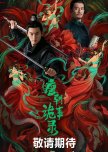
The story:
* I like the cases, which usually take several episodes to solve. They are engaging, and it's easy to follow Su Wu Ming's and Lu Ling Feng's train of deductions -- until it isn't because the audience doesn't get all of the information in time, for a more surprising twist. Which I can live with, it's not as if other detective series haven't done this too.
* The cases are not solved quickly, it's a series that has quite a few red herrings, and solving the case is often enough helped by finding out motivations of the suspects.
* Usually, there are one or a few aspects in the cases that can't be explained rationally by Su Wu Ming, and seem a bit supernatural. I like that it's open to the audience's interpretation if it's truly supernatural or if the people of this era just don't have the knowledge.
* When things get dangerous, and there's fighting, then the scenes don't tend to be very long. I not able to say say much about the choreography, but it seemed solid. It found it interesting that Lu Ling Feng usually gets help if he knows that there will be a fight, and does not try to be heroic and take fights on his own, if he can avoid it. The most dangerous of enemies are usually taken down only because there's a communal effort.
* I love the banter between Lu Ling Feng and Su Wu Ming -- and how their relationship evolves so that they know what the other thinks just by looking at each other.
* While I loved the portrayal of the crown prince and the Princess, who were very ruthless and loyal to family at the same time, the nationalism was obnoxious, as usual in Chinese dramas. Seems that Tang (China) just can't do anything wrong; it's always only singular black sheep who have been led astray, never the system.
* The plot point about Lu Ling Feng's background was a bit contrived. But since they did not milk it too much (and also served a point both for the plot and for Lu Ling Feng's characterization), it was all right.
The romance:
* Is almost non-existant, but not completely. There are two couples, Pei Xi Jun / Lu Ling Feng and Sun Xue Ning / Su Wu Ming.
* The first couple is all right. I don't like (het) romance very much, so I'm usually very critical. But here, it works, in my opinion. Pei Xi Jun, yes, is completely infatuated in the first episodes, and a bit annoying about it. But that is toned down later on, to the point that there are almost no romantic interactions between them for most of the series. We get small interactions between the two young people though, that show that the attraction is definitely not one-sided, but it's more that Lu Ling Feng thinks he has more than enough reasons not to pursue anything with her.
* The second couple though. Oh man. That was definitely NOT needed in any way. It doesn't fit with the character of Su Wu Ming as we knew him until that started, and overall, it feels more like a "no homo"-type of romance than actual interest. Su Wu Ming was *very* close to Lu Ling Feng, so authors might have felt they had to counter that. That romance arc really diminished my enjoyment of the last episodes. Again, a forced het romance where it shouldn't be.
The characters:
* Su Wu Ming, the brains in this series, has little to no character development. He is, basically, the same intelligent and shrewd detective over the course of the drama. He feels very one-dimensional, and probably is supposed to be the good hero, who can do nothing wrong -- but I feel that there could have been more behind the facade of the humble genius that just wasn't explored.
* Lu Ling Feng, on the other hand, evolves from an arrogant, "hit first, talk later" general to a thoughtful gentleman with great potential as an official of the state. He is much more fleshed out than any of the other characters. That his actor is good looking also does help, I admit it.
* Pei Xi Jun could have been an annoying one-train-of-thought kind of girl. She wasn't. After the first few episodes, she calmed down a lot. She still stayed headstrong during the whole drama, following her goal of marrying Lu Ling Feng -- but she also knew where to push and where to retreat for a bit. She has grown up very sheltered, as a girl of noble birth, but still faces danger with a strong heart. Also, with her special skill, she was a valuable member of the group, without whom cases could not have been solved, not just a follower-on.
* Sun Xue Ning is a superfluous character, and it hurts to say that about a female character, because I'll always want more women in my dramas. But she doesn't bring anything to the group (we already have a fighter with Lu Ling Feng, and knowledge of poisons is covered by Fei), apart from being the romantic interest of Su Wu Ming. Her character is also the one where the typical macho tendencies show most -- she is both the fearless warrior woman and still has to be protected and shielded by the stronger men who try to send her away from danger "for her own good". Whenever there's a fight and both her and Lu Ling Feng are there, she is relegated to the side and has to protect the weaker characters. Oh, and also, in one fight, her clothes were torn so one of her shoulders was bared -- that has never happened to Lu Ling Feng. Strange, huh? And in this case, I don't care about historical accuracy. Either write your strong female fighter so she is equal to the men or don't write these characters at all.
* Another intriguing character is Master Fei ("Chicken Fed"). He brings the knowledge of the healing arts (and with it, the knowledge about anything poisonous) with him, as well as the much needed comedic relief. It's unfortunate that, even though we get to see part of his back story, his interesting past is never fully explored. Maybe in the second season?
* Xue Han was cute. Not much more to say. He had his bit of development, but remained a supporting character.
Overall, if you're there for intriguing mysteries and plots, then this is definitely a drama for you. If you are there for the romance or for cool fighting scenes, then not so much.
I admit, because of the misogynistic treatment of Sun Xue Ning, I won't rewatch it and probably also won't watch the second season.
Was this review helpful to you?
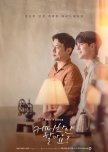
I'll drink this cup, even though I don't like coffee.
The most stressful parts of this series are the previews for the next episode.This is a slow-paced slice-of-life drama, and although it addresses heavier topics (illness, death, financial problems, social injustice etc.), all the episodes end on a positive note.
Each episode focuses on one question or person -- but there are enough recurring characters from the neighbourhood that the shop feels like a part of the community.
The coffee shop is not just a backdrop for the stories, but the process of making a cup of coffee and the pleasure of drinking it are a integral part of the series -- even I, who do not like to drink coffee, was tempted to go and try some of these. In later episodes, the focus tends toward the beans and their origins, and that lost me a bit; my investment in the characters was strong enough to continue regardless.
Also, I liked that they incorporated the pandemic -- a lot of shows just ignore it, even though it has had a huge impact on most of us over the last few years.
The open but hopeful ending suited the slice-of-life theme of the whole show -- life does not have a Happily Ever After.
All in all, I can recommend it.
Although the show reminds me of Japanese shows like "Rokuhoudou" oder "Three Star Bar", it lacks that certain je ne sais quoi that those shows have -- so it's worth watching and I enjoyed every minute of it, but I don't think I'll be coming back.
Was this review helpful to you?
This review may contain spoilers
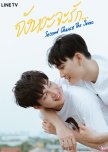
Forget it; I did.
This show is forgettable. And I mean this in the most literal way: I first watched this series some time the summer of 2022. When I came across the title again in the autumn of the same year, I had no idea what story this was supposed to be -- only during watching had I the feeling that I knew it somehow. And that happened again a few weeks later.I have no idea why the series was such that I forgot about it -- even after I watched it a fourth time. This is what could have contributed:
* The storylines are stereotypes -- friends to lovers / trusting a new relationship after a bad one / secret identities; they all seem to develop slowly but fast at the sam time? Maybe three couples was a bit much for 6x40 minutes. I am not even able to give a description of the stories (see above).
* The actors all look the same to me. Not only those who are brothers IRL, but also Chris and Ton Fah looked rather similar.
* The music was amazing in itself but made the whole show feel a bit dreamlike and apart from reality. I think a second soundtrack for the more dramatic and the emotionally heavy scenes would have helped.
* It feels as if there's a lot of backstory that we don't see, and there are also several inconsistencies.
All in all, I don't think I've made a connection to the characters in the series, maybe due to one of the points above, maybe not.
That said, the show is not bad, even mediocre is not the right word for it, it's just ... bland.
Was this review helpful to you?
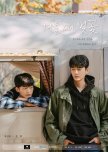
It's a slow and gentle story -- both the school bullying and short violence in the beginning and the initial coldness of Tae Seong's make the thawing of feelings and the beginning warmth between the couple clearer.
I really like the progression of the story, the pacing is right, the camera work is solid. I like that the young men change their hair style and their clothing when starting university. I also think both their body language changes with their changing feeling, though that point is more subtle.
There's one thing I wish would have been different. I feel that the sets and the colour palette of this series are very cool, too white, sometimes even a bit sterile. While this makes sense in the beginning (Hae Bom's room looks more like a guest room than a teenager's room -- but then again, he feels like a guest in this house), I would have like a shift to warmer colours in later episodes -- spring colours to go with the plot. Unfortunately, Tae Seong and Hae Bom's flat still looks impersonal and cold -- personal effects, a bit of untidyness could have helped. The strings of lighting, I'm sorry to say, only feel artificial to me. Still, this is something that I only can put in words now, after having watched this series several times, so it's really only a minor thing.
Was this review helpful to you?

The tropes quickly come one after the other, and the whole drama is very fast-paced.
I loved all the side couples and the couples in the background. Also the parents really are the epitome of "mob"!
There is one, maybe a minor, point I did not like:
* I don't understand why "Mob" is so desperate to avoid a romance storyline -- I get it in the beginning, when he's reading about "Meriba"-endings, which I wouldn't like for me either, but after a while it just feels a bit homophobic, especially as he doesn't want his little brother to end up with a guy too! I wish we'd get a better explanation for that. As it is, the whole thing feels a little off for me especially regarding the ending, which kind of comes out of nowhere.
Recommended, if you need a laugh and if you know a lot of BL tropes.
Was this review helpful to you?
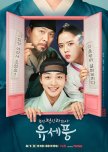
Not really about psychological cases
I must say that the title and the first episode deceived me as to the content of this series.I thought that this would be a more light-hearted series with interesting cases, like the one in the first episode, cases that actually could be considered psychological.
Mostly, cases in following episodes were based in familial conflicts, poisoning etc. -- they also felt samey after a while.
I did not care for the court intrigue at all, and so I needed about two months to get through the second-to-last episode.
I also wished that we got to see more of Gye's family, I think the characters could have been really interesting but they remained rather one-dimensional. Overall, I enjoyed the interaction between the family members.
One last addition: The poisonous plant ("Dansacho") shown seemed to be Cyclamen, which is native to Europe and to the east up to Iran, NOT Korea. If it is, the symptoms are not what characters experience in the series. That fact makes me question the reliability of other medical practices in the show.
Was this review helpful to you?
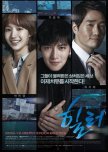
What I liked:
* The main lead's acting. I loved how he portrayed his character's emotional turmoil and, especially in the first half, his confusion about his feelings.
* I liked the pacing overall. There was a bit of a drag around the 2/3 mark, and the last episode felt rushed, but I really liked how the story, the parent's history and the love story, unfold.
* The action scenes were well done, and there was no excessive violence, only what was needed by the plot.
* I like the underlying message. Namely, that a free press (Free of politics and free of commercial restrictions) can be very powerful and that is why we need it.
* Something which I loved: At the beginning of each episode we were shown the last scene of the episode which came before -- which is not that new, but that scene always had something new, either just an extended version or the pint of view of another character, which sometimes even made me re-evaluate what I saw before. I don't think I've seen that done before, at least not that consistently.
What I did not like:
* Maybe I'm spoiled by dramas like "The Good Detective" or "Stove League", where there are multilayered characters and no clear line between good and bad, but I was disappointed by the "mystery", which was basically the "evil group who controls everything with an even more evil leader" trope. That trope is old and overdone, and I think audiences can and should expect more respect for their intelligence.
* I especially don't understand why they had to introduce a new plotpoint in the last two episodes. I'm sure they wanted to resolve the "item" and the murder of the first episode and maybe they wanted to finish with a bang, but it did not feel as an organic part of the rest.
* The female characters (apart from "Ajumma") also stayed remarkably passive during the whole show. The plot was mainly driven by Healer and the male reporter, while the young female reporter and the lady in the wheelchair usually followed behind, although both women's lives were equally, if not more, affected by the bad guys. Also, they are meant to be reporters! I expected them to take the lead at least in the later episodes.
All in all, it wasn't a bad watch but I'm not sure if it's worth a rewatch.
Was this review helpful to you?
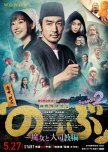
You could probably understand most of what's happening without knowing the first season but I'd recommend watching season 1 first, as the regular customers are I introduced there.
The food, the acting, and the general atmosphere ware delightful again.
There are a few minor things that made me subtract half a point:
* I felt that in season 1 the customers interacted a bit more. The Izakaya felt emptier and not as lively. In season 1 it felt like a centre of a community.
* It felt like the food had less variety? I'm not sure why though.
* The hairstyle of some characters looked more anime-ish than in season 1.
* I missed the characters from before, especially Nikolaus. But I liked how they gently wrote most characters out and did not just let them disappear.
Overall, another mouth-watering, light and mostly fluffy series, a great watch if you just need a diversion from the Real World.
Was this review helpful to you?


