


 4
4 17
17 1
1 5
5 1
1 1
1 1
1



This review may contain spoilers
Most of us who have already passed the age of fourty will probably concur that this age does feel like a threshold. Whether your kids are starting to leave home (or will do so soon) or your parents start to need your help (or pass away even) -- suddenly, you notice that you are no longer young and chances are that the years ahead will be fewer than the years already behind.Add to that the comfortable days you are living -- you finally settled into your job and know your role, days have a predictable routine. You think you know yourself, what you want and what you fear.
Youth seems like a dim memory, something you are no longer allowed to have.
But Kozue is lucky. He gets a Togawa, and is able to rediscover his own self, and find new passion for life (and for love). This story is told concisely, never rushed. No scene, no line of dialogue, no gesture is unecessary. Both leads and the supporting actors act with precision.
Browns and greys, shades and dim lighting are contrasted with bright spring greens and the lovely crisp spring sun -- Colours, light and shadows play an important role in this drama, if you care to look for it.
Follow the colour, the sets, the acting, which gets increasingly tight, tense and even oppressive -- the tension rises, until Togawa reaches his breaking point -- and it seems as if things are broken. Everything is grey and brownish again, but changed. Spots of light and colour show how Nozue's life has already changed -- but wouldn't it be brighter and livelier with Togawa in it?
Even after watching this lovely series more than a few times, I haven't found anything that I don't like -- it's that excellent!
Was this review helpful to you?
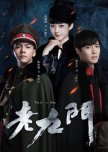
Compelling -- until episode 42.
Was it good?It was one of the better adaptations for the DaoMu BiJi novels, and well-shot. It's all a bit overdramatic, and tropes have their place, but that's true for all of the Grave Robbers stories. However, the writing (or the editing) made it fall apart in the last episodes.
Did I like it?
Yes, especially the interactions between Ba Ye and the lieutenant. But I wouldn't watch it again.
Would I recommend it?
Yes, if you like action and mystery and also don't mind some romance or if you want to collect all you can from the Lost Tomb Universe.
If they'd stopped after episode 42, this series would have earned a solid 9 from me. As it is, the last story arc was crammed into 4 of the last 6 episodes, with the last 1.5 episodes dedicated to flashbacks and battle scenes. That last story arc had scenes cut, which made it almost incomprehensible. I wish they'd cut some of the romantic flashbacks, of which we had entirely too many, instead.
Other grievances:
* The show is, like all of the Lost Tomb series, quite misogynistic. All of the women are only there to serve the men's plot, one of them is even a classical case of fridging. At least they put the female characters in less revealing clothes, but that was probably because of the historical setting.
* Clichéd depiction of non-Han, "tribal" minority groups. Why would you think that they all dress the same? And what's with the face paintings? (Although, tbh, C-Dramas tend to be Han-nationalist, so it's not every surprising.)
* I would have liked to see more of the other families. Why is the drama called "The Mystic Nine" if we see three of them only in few short scenes?
But:
* The sets are better than some C-Dramas, the acting is superb, the mysteries are compelling -- all in all a great watch. If you liked the other Lost Tomb dramas, you'll like this one.
* Ba Ye and the lieutenant held the story, they are hilarious together.
Was this review helpful to you?
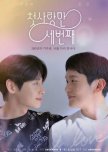
This review may contain spoilers
Who is it you love?
Do you really love the person as they are or is it just an image you have made of that person in your head?What I liked:
* I loved the development of the author's character. He went from very much self-assured, narcissistic, and someone who is sure that his love story will finally come to the end he wished for three hundred years ago to a very much shocked, insecure person whose world has been turned upside down, and at last to someone who is starting to learn that there are always two people in a relationship with their own thoughts and feelings.
* The author's actor showed all of these emotions well, sometimes dramatically, and completely unashamed to be seen. I can hardly believe that this was Jin Gun's first drama.
* In contrast to the author, Ha Yeon knows what he wants very well and he is not afraid to go for it. This makes for an interesting dynamic.
What I did not like:
* I wish we would have got to see more of the second life. It was always flashbacks to the same scene. How long had they known each other then? How did they meet? What was their relationship like?
I think if we knew more about this time, the question the modern Ha Yeon asks -- Which Ha Yeon do you love? -- would have made more sense to more people in the audience.
I suppose that, in both of their lives, they did not have much time together in mundane situations (it was obviously a time of strife and struggle in their second life, and in the first they did not even get to speak as someone else than slave and lady), and that's why Yeon Seok had this image of "Ha Yeon" of someone who is not goofy, but rather refined -- who knows how the first two Ha Yeons really were?
Is it love if you only know the other person's facade that they show to the public?
It would have been nice if the show had more time to explore this question in greater depth.
Still, the story we get to see is cute, well acted, and we get to see some character development.
Recommended!
Was this review helpful to you?
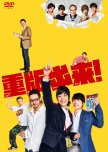
Why I gave ten points:
* The main character was quirky, energetic and enthusiastic, without being annoying. These traits were balanced with a grounding earnestness to understand and to grow.
* Overall, the show has a positive outlook on life and work, it is a Japanese-typical "ganbarimasu"-type of story. This, too, is balanced with scenes of failure, of darkness that lives within people, of sadness and introspection. Not everything is roses here, just like in Real Life.
* During the unfolding events, we get to grow close all of the characters, mangaka and editors alike. Some are more multi-faceted than others, but they all have their individual characteristics. Many of the characters get some chance to grow, sometimes in subtle ways -- which is an accomplishment to show for so many characters in such a short time.
* I liked that different sub-storylines connected to others, sometimes just for a few moments, sometimes longer.
* No Romance! It's about the characters and their journey, their interactions as colleagues and/or as editor-and-mangaka. (There is one scene when one character sends some glances in another character's direction which could be seen as some kind of romantic interest, but that's never acknowledged, and it's only the one time.)
* The struggles in the storylines were all either internal struggles of a person or issues of the publishing industry. There were no external conflicts, no "evil" people -- in short, no unnecessary drama.
* The length of the drama was just right for the storyline. It doesn't need more, but if it was shorter, the atmosphere would probably suffer.
All in all, I recommend the series, which has an overall optimistic tone balanced by darker and more sombre parts, which make a well-rounded story, with a small plot twist in the last episode.
[This is a very slightly edited version of my review on Viki.]
Was this review helpful to you?

This show is NOT: A romance drama. And NOT: A baseball drama.
Why not a baseball drama? Well... It's about the time between seasons, so there can't be any games played. We actually see only bits of a game at the start and pieces of two practice games. That's all.This drama is more about the politics and management side of professional baseball in South Korea. If you are not a fan of strategic machinations and emotional development of characters, you might want to give this show a miss.
I liked that the drama does not insult its audience's intelligence. It does not spell out every little thing, it does not repeat the same information endlessly, and there are several times when little throwaway comments or actions make an impact in later episodes. This is not a drama to watch while doing other things.
I especially liked how realistic the actions of (almost) every character was. In systemic coaching (which I'm starting to learn for professional reasons), two of the main theses are: "Every person's actions make sense for that one person within the current situation, always." and "Every decision has a prize and a price."
Even if some things are only hinted at, or not fully explained, there's this feeling that every character has their own motivation for their decisions. There is no pure good or evil, just people.
The actors did a terrific job in bringing their characters to life.
I'm also glad that the writer did not try to force a romance into the plot. The dynamics between the two main characters were of the profesional sort, maybe with a hint of a possible friendship, but nothing more.
And one last thing I loved is the ending. This is not a 100% happy, team-spirit-has-overcome-everything ending, but an ending which rather shows that even though you might have grown, things will probably not work out like you would have wanted them to. For me, that was absolutely satisfying.
[this is an updated version of the review I posted on Viki]
Was this review helpful to you?

Down-to-earth but with introspective tones
The cases as they are, are not that complicated, it is much more about the characters themselves, their story, their motivations and how they deal with grief and danger. There a quite a few scenes where it seems as if "nothing" is happening -- those scenes show the characters, what they think, how they (re)act. Sometimes theyare there for the atmosphere, to allow for some introspection.As such, the pacing can feel slow at times, but in my opinion, there is not one scene that's superfluous ar dragged out. Everything has its time.
This, and the fact that nothing is glittering or modern in this drama, make it exceptional. The main character is linving in a small neighbourhood in a house that doesn't even have an indoor toilet; the police in Shangta have their quarters in an old cinema, where there's no heating and the walls are crumbling. The whole town looks more or less run-down -- as do the actors. There are no airbrushed, beautiful people in colourful clothing here. Everything feels real (and very, very cold).
I love how down-to-earth the police are in this drama. While I certainly don't expect any real criticism of the system, the way the police officers make the best out of their limited ressources, how they grumble a bit about them but basically take them with a bit of humour; how they plod along and try to find the girl, but as humans, fail again and again -- this also makes the characters relatable.
And after the cases are closed, they all return to their daily lives; they live on as before, but something in them has changed.
Another point that I loved were the female characters, few of them as there were:
* The girl, of course. What a great actress! And what a strong and resourceful character! This is not a pitiable and helpless victim.
* The karaoke bar owner. She lost her family at an early age, is clearly jaded -- and still finds humanity and love in herself.
* And last but not least, the fire watcher ("bear lady"): She was beautiful in her love for the forest and the creatures living there, but was very realistic in her approach to life and death. She lived alone and was happy with that. She felt very solid and grounded.
One last mention goes to the music -- both the songs for the opening and closing credits are beautiful and fitting for the rest of the series.
[Cross-posted to Viki]
Was this review helpful to you?
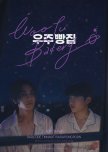
With the right vision, a well-written screenplay and creative use of props and sets, this could have been a top-tier It's-so-bad-it's-good C-grade low-budget SF spoof.
I really liked the aliens' shiny cheap polyester clothing and their obvious hand-wavey misunderstanding of Earth's culture. I liked the poser-like "grandeur" of Prince Raon and Hachi's ever-changing dog-ears. I liked the reason for using three different languages in the series.
Unfortunately, the series doesn't hold what the first episode promised. Obviously, the circumstances of its history are partly to be blamed: Filmed by a Korean company (one which is now known for productions of questionable quality) and never finished, the material was then boought by another Korean company, who tried to finish the series. I don't know how much editing and general post-production had been done at that point, but to me, it seems that it must have been either extremely poor or not at all -- the end product shows much unevenness, jumps in continuity, and in one case, material from either the casting videos or a workshop was obviously used.
The cast's performance varied between "poor" and "quite a bit better than adequate".
Another point that did not help with the overall quality was that the script tries both to be a Whacky Comedy With Much Silliness and a sweet Romance With Tragic Background. Combining these two very different genres into one whole is not an easy task, and then the script introduces a third plot-line of Conspiracies And Backstabbing. None of it is developed properly, plot lines appear and disappear at random, and some characters lose any characterisation they had. No effort in editing could have saved this. The interesting points I mention above are toned down or not used at all (For example, I would have gone overboard with the language thing and let every alien character speak different languages).
I suspect that the script was already poorly written, but that the production was started by one group of people (who had a specific idea what they wanted to make) and finished by another group (who probably put their own spin on it), was certainly the nail in the coffin.
The potential for a silly C-grade comedy series was there. But it never came to fruition.
Was it good?
Not really. There were some great ideas, but none of them were developed well.
Did I like it?
I kind of want to see a Japanese remake, I think that could be brilliant.
Would I recommend it?
No.
Was this review helpful to you?
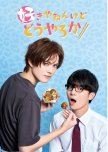
The drama had it all: Cute and talented actors, a tried-but-true premise of "opposites attract but have to put in effort to make it work", a solid technical crew -- but then the whole thing is watered down by an unnecessary rival and inconsistent characterizations.
The drama starts out strong -- we get a meet-cute between an outgoing Kansai dweller and a reserved man from Tokyo, a "love at first sight" trope and tasty-looking food. All of the cast give their characters life in just a few scenes.
The plot progression in the first few episodes, which focuses on the two men who slowly get closer and learn each other's likes and dislikes, and how to talk to each other, would be good too, if it wasn't for Soga's poor characterisation: He is a divorcé, so he should be able to recognize attraction and desire in himself, right? But he very much acts as if all of this is new to him, and he has never even thought of himself as someone who could be in a relationship -- and it's not that he is confused that it's a man; nor is he asexual (he very bluntly proposes sex in a later episode).
So, his character is already inconsistent (but somewhat in accordance with J-BL "rules"), but then it gets worse: Sakae's ex, who left him a while ago, is back and wants to restart the relationship. Much of the short runtime is wasted on this love rival side plot instead of further exploring how two people who have next to nothing in common could make a relationship work.
I think this as well as the inconsistent characterisation of Soga's is why other viewers feel that there's no "chemistry" between the leads.
And it's worth of note that as soon as this is resolved and our couple is again on the search for the middle-ground (quite literally!), their dynamics start to get interesting again. Unfortunately, that is the point where the runtime ends already.
This could have been a cute and light story about two people who are very different, who tend to pull back to make their partners happy and who learn that to make a partnership work you have to find compromise that fits both of you.
Was it good?
It has much potential to be one of the J-BLs with tight writing and interesting character dynamics which I so love. Unfortunately, it id not use this potential at all.
Did I like it?
I really want to. I liked the start and the end, but the middle dragged the whole thing down.
Would I recommend it?
Not really.
Was this review helpful to you?
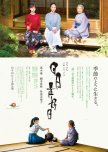
Some things are quickly understood and some things take time
I was surprised by how much I liked this film. Usually, films like this one, films that get very philosophical and don't have much plot in favour of thinking about life, quickly tip over into "too much" for me. Either they are too preachy (like "The Zen Diary") or pretentious (like "Glasses") or too artificial (like "Bread of Happiness").But for some reason, "Every Day a Good Day" managed to keep to the side of thought-provoking while not getting to obnoxious about it. I can only guess why that is. It might very well be because a large part of the first half takes the time to just show the Tea Ceremony in detail -- the way it is filmed and the way the teacher comments on the details, feels much more like a documentary than a fictional story.
Added to that, the way of the tea ceremony is carefully balanced with Noriko's life -- and what an ordinary life it is! There's nothing special about her, she's struggling to find a job, she's clumsy and very mediocre both in real life and in learning the ceremony, she despairs when a young girl learns much quicker than her. Not only did she stay simply human throughout -- she does it not in the pretentious "Look at how humble I am", but in the much more relatable way of "I am not good at the things I do, but I have to try to find the good things in life, even if it's hard". Her teacher is the same, and I love her last sentence in the film (which is the second-to-last overall):
"By teaching, we are taught."
Noriko's life also echoes much of my own experience through adulthood, and when the film ends, she is about the same age as me now, give or take a few years. And I feel that the both of us look back at our life (so far) in a similar fashion -- only that she is, of course, doing it in a much more concise way, since the author surely refined her own thoughts into the essence of her life when she wrote her book.
One aspect I really loved was how the seasons were an integral part of the narrative. The crew took the time to film throughout the year -- they connected the meditative aspect of tea making with the surrounding sounds and sights of nature, and thus they managed to show us viewers how much we stand to gain from paying attention to what is around us:
"On a rainy day, listen to the rain. Savour the moment with all five senses, with your whole body. On a snowy day, look at the snow. In summer, feel its heat. In the winter, the freezing cold. `Every day a good day` So that's what it means!"
I wonder how much I would have liked the film twenty or even ten years ago? Not much, I guess. Commenters on the JFF website mentioned how much they cried, or that the film was devastating. I did not feel that at all! I felt mildly melancholic, yes, but definitely not devastated. So, I think this is probably one of the films that either speak to the viewer (and everyone would hear something different) or it doesn't speak to them at all.
Was it good?
It was a film with great technical expertise, and marvellous actors. It's obvious how much care went into showing the ceremony and into integrating it with the life of the protagonist.
Did I like it?
Surprisingly, yes.
Would I recommend it?
I have no idea. I think this is one of the films where every viewer gets something else out of it -- or not. Those who need plot and exciting things to happen, or even a neat ending, might want to stay away.
"Some things are quickly understood and some things take time. The things easily understood need only be gone through once. But those other things you come to understand only with time, little by little."
Was this review helpful to you?
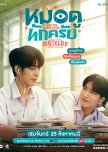
Consequently, the drama asks: What do you want in life? Where are you going? Why are things important? Or if not, why not? Are you good enough -- and for whom? Who are you, and who do you want to be?
Both Err and Mawin will have to find their own way of navigating interactions with their peers and expectations of adults -- and in the meantime manage their first romantic feelings.
Despite the slightly ridiculous set-up of a maths camp in a hotel, I'd call this drama slice-of-life-adjacent.
Both main actors performed well -- which surprised me in a good way because Sea ("Mawin") was still rather stiff and unexpressive in his first role in "Only Boo!".
The romance took a backseat in favour of the coming-of-age, which I did not mind one bit.
Actually, I think this little drama would have worked as well, if not better, as an ensemble piece. The supporting characters -- the other students at the camp -- seem to have interesting backstories: The perpetually grumpy Mangpor, the boy with the broken arm, sunny Mhee. I am sure they would have added more depth to the themes the series touched upon.
Alternatively, the focus could have been tightened to the two main characters, that would have worked too.
But overall, I feel that the writers and the director made exactly the story they wanted to tell; I felt that there was a good attention to detail both in the screenplay and in the execution of the drama (unlike in other recent cash-grab GMMTV BLs).
However, for what it is, this short drama did what it wanted to do, not more and not less. The themes might not be exactly new, but they are certainly relevant to most teenagers.
Was it good?
It was a well-executed short coming-of-age story. I didn't feel it lacked anything there; viewers focused on the romance might feel that it didn't get enough time.
Did I like it?
I liked it well enough. I usually don't feel too strong about coming-of-age stories nowadays.
Who would I recommend it to?
To those who don't mind a story that is not that focused on the romance in favour for a more slice-of-life-leaning plot.
Was this review helpful to you?

However, this is not all there is to this drama. It surprised me with a goodish amount of emotional depth and a light touch of social issues. Also, it has a ghost as a main character, it's a Thai drama, after all.
Contrary to the first impression, this is not an exact imitation of those 1980's action comedies. For one, the rampant sexism and machismo is missing. Yes, the men are all *very* heterosexual, and there are quite a few jokes about that, but mostly not at the expense of a woman. Actually, despite there being only two female characters versus more than ten major male characters, these two women are the ones that have the strongest and best developed personalities.
Bam seems to be a stereotypical sex worker at first glance -- who is killed and literally fridged; but during the course of the story, she is the one character that gets the most emotional depth of all. Phing, is a woman who doesn't take anything from men -- she is the strongest character of them all. And even the men, who go out to have a party with alcohol and sex, are always respectful towards *actual* women.
(Although, on second thought, maybe it is more sexist than I feel it is? I expected much more misogyny and machismo, so I might be biased here.)
Large part of the plot relies on the childhood connection between three characters; as well as a love triangle quadrangle -- but since most of the jokes are rather tropey too, this didn't impact my enjoyment. Actually, the romance was quite well done, usually not at the front of the story, and also a bit open-ended. Something I enjoyed was how the script ties in social issues with the comedy -- it usually lightly touches upon them, and then dances away immediately. The script also is not high-energy all the time; when needed, it gives the character time to show us their personality and tells us their backstory, and it lets the emotions breathe, which is what gave the characters the needed depth to keep me engaged for the whole eight episodes.
The actors fit their roles well, and are delightful in their overacting. A special mention goes out to Pearwah Nichapat (Bam), whose character had the broadest range of emotions to show, and whose ghostly Bam I loved to watch.
Was it good?
Overall, it was a light action comedy with a lot of silly jokes; and while it made fun of certain characteristics and tropes, I never felt that it laughed at groups of people in a mean way. On the contrary, most characters are very sympathetic, even some of the baddies.
Did I like it?
I did! I was looking for something where I could just pass the time with a bit of sillyness, and then I got surprised by emotions.
Would I recommend it?
It's something one neeeds to like, and I am sure not everybody will get on with the comedy violence and the over-the-top everything.
Was this review helpful to you?

Combined with the artistic way of filming, the style of acting I am used to seeing in modern theatre plays , and the stage-like one-room set, "Maybe it's Love" is not easy to follow or understand.
I believe that this is one of those short films where the viewer is supposed to understand what is being said implicitely, and that we need knowledge about gay life in general, and gay life in Taiwan specifically, to really get what is not being said.
The repeated mention of "Cat"'s age ("a mature man", "an old fart") might play a major role in it. "Dog", who has a boyfriend but still goes out cruising, maybe even starts affairs with more people than just "Cat". The boyfriend, who seems to be absent for long enough that "Cat" has lived with "Dog" for a while.
In the end, both men seek to escape loneliness. But at what cost?
Was this review helpful to you?
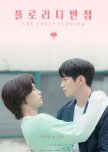
This review may contain spoilers
A visual delight!
As many shorter K-BLs, this is a snack for in-between; light, without much substance but well-executed for what it is.What I liked:
* This movie is a visual delight. The actors are cute, the lighting at night is bright and fits the mood, the sets look comfy.
* The background music confirms the light-heartedness of the story.
* The story does not pretend to be anything but what it is: A light and simple love story.
* The straightforwardness of the younger guy was refreshing, I loved how he made it very clear what he wanted, without pressuring the chef.
What I did not like:
* I wish the plot would focus on either the chef's inner journey from "Is it possible I find another man cute?" to "I want a relationship with him, even if my friend wants it too!" or the love triangle. Doing both means that they couldn't do either enough justice within the time frame they had.
* Why the timeskip at the end? It did not add anything meaningful to the plot or the character development, and it took away from the emotional impact that the couple had their happy ending. Maybe it was supposed to be a set-up for a possible sequel? It would explain why the usually more stoic chef would cry so hard during the hug.
* The realist in me is pointing out that a rooftop restaurant with comfy chairs and sofas is not a sensible thing: If it rains, everything will get wet. And what about winter?
Overall, like some other Korean BL-movies, a nice way to spend an afternoon if you need something where everybody is beautiful and nothing hurts (much) -- but you won't miss anything if you skip this one.
Was this review helpful to you?
This review may contain spoilers
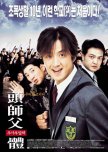
Watch it for the insights into South Korean society.
This film, from 2001, is in my eyes more interesting for its historical value and the insights it gives into South Korean society then -- and now -- than for its own merit.The story itself is okay-ish, I did not laugh that much even if it was supposed to be a comedy (there was too much violence against innocents for that). In the storytelling, the directing and the camera work we can see the roots of today's masterpieces, it's still uneven but there are also brilliant scenes.
For that, and the insights into society, I'll give eight stars.
I have been thinking for a while now that violence seems to pervade South Korean's society (which is not that surprising, considering people lived under a military regime until 1987, and also the strictly hierarchical structure that's still there). In this movie, this idea was confirmed.
Yes, it's a film about gangsters, and a comedy, so a certain amount of violence is to be expected. But let's have a look at the different situations where people use force:
1. The violence amongst the gangsters is, as I said, expected. But I want to point out one aspect -- the boss casually slaps around his subordinate. If you've seen other K-Dramas, you've probably seen this kind of violence a lot. It's only interesting in the light of ...
... 2. the bullying of the newbie by the class bully and his cronies, which is probably intended as funny. The roles are inverted, the boss is now the victim and can't fight back (because he, in turn, is pressured by HIS boss to get an education). The bully, in turn is ...
... 3. bullied by another gangs of students. Violence begets violence -- but this circle of violence is not even worth mentioning for the protagonists. Instead the main character "defeats" the bullies by beating them up.
4. Teachers slap their students around habitually. This was, until a few years ago, a practice condoned by society in South Korea. I don't know if it still is. Slapping, beating students when they are already on the ground, beating them with sticks -- all of it is obvously "okay".
4. The violence against teachers (by students, by parents) is, in contrast, very much condemned.
So, violence against subordinates, against those lower in seniority, against those lower in status -- this is absolutely all right in this movie. As media are just a mirror of society, this is what people who are now adults, have learned. You can see this in the interaction between fathers and sons, between bosses and subordinates. It becomes clear when an older man in a drama has difficulties to understand that young people (especially women, but that's a whole other kettle of fish) are allowed to speak their minds.
If you, dear reader of this review, watch your next K-Drama, maybe keep this in mind while interpreting the drama, you might see certain scenes in a new light.
Was this review helpful to you?
This review may contain spoilers
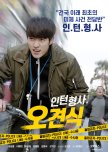
This film feels more like a pilot for a series. I'd even say it feels like an exposé for a series -- the movie's plot could have been the first half of the episodes, with the later half dedicated to the resolution of the main character's backstory.The plot seems unfinished, some parts of it feel rushed, and it's unfortunate that a lot of backstory just gets told via the older detective's thoughts. I also would have liked to see more of all characters, and more of how they grow to like the main character. As it is, we still get a surprising amount of character development, especially from the team leader. (Heo Sung Tae is a highlight, as always.)
I think if the writer might have originally planned to have this produced as a longer series. There's a surprising amount of world building there, the characters all seem to have much more backstory than what we got to see. I certainly would like to watch this as a longer series, if it ever gets made.
Well, who knows what happened, at least they got a small budget for making this film, right?
One thing that is probably better because of the short duration of the movie: There was no time to force a romance subplot into it.
Overall, the movie does what it can with its short time and low budget, and it is a nice watch for a rainy afternoon or so.
Was this review helpful to you?


