


This review may contain spoilers
Me siento estafado aunque la serie ha sido preciosa
Comencé el kdrama porque me encantan los actores. La trama es divertida y te echas muchas risas. Sin embargo, creí que se resolvería el tema de la exnovia más rápido y podríamos disfrutar del romance entre Dae-Hyeon y Saet-Byol durante más rato. Y aunque técnicamente no se les ve salir, sí que lo han estado haciendo. Me habría gustado que no gastaran tanto tiempo en tonterías que sí que no y sobretodo que Saet-Byol no huyera sin hablar con nadie cada vez que oía algo.Sin embargo, me siento estafado porque no hemos podido disfrutar de ello plenamente en pantalla. NO HUBO ESCENA DE BESO. No me comí 16 capítulos para que no se comieran la boca al final. Estoy muy triste al respecto.
¿Te ha parecido útil esta reseña?

This review may contain spoilers
Sirve para lo que sirve
Todes estamos de acuerdo en que los tailandeses no saben actuar pero lo que sí saben hacer son BLs. La trama es inexistente y las actuaciones regulares. Pero las escenas de romance valen la pena.De hecho, recomiendo prácticamente ver solo las escenas románticas de estos dos. Hacían buena pareja.
¿Te ha parecido útil esta reseña?

La mejor serie de 2024.
No tengo palabras para describir cuanto adoré esta serie. Hicieron un trabajo impecable. La actuación es totalmente destacable, al igual que la producción. Una serie que a pesar de sus episodios largos, te mantiene mirando la pantalla sin querer apartar la mirada ni por un segundo.La historia es más que atrapante, el desarrollo es interesante y no solo el romance es excelente; sino que también retrata la diferencia entre las clases sociales y las dificultades que viven las personas de escasos recursos. Es bellísimo el desarrollo de cada uno de los personajes, como intentan superarse a si mismos con tal de lograr no solo su propio bien, sino también el de los demás. No haré un análisis mayor, te recomiendo verla y disfrutar cada minuto al máximo.
Una serie que te hace reír, llorar, sentir nervios y hasta mariposas. Totalmente recomendada, aplaudo de pie a todo el equipo que logró traer Jack & Joker a la pantalla.
¿Te ha parecido útil esta reseña?

This review may contain spoilers
Faltó algo
Aunque la historia estaba genial y las actuaciones muy bien, a la historia le faltó algo, al principio iba bien pero luego en lugar de continuar con su premisa de venganza se torno en una historia sobre lo triste que es la vida de un montón de niños ricos que maltratan a todos. Prometen una venganza que nunca llega, por eso le doy 10 a las historia porque es buena historia pero está mal, muy mal desarrollada.Es como si los protagonistas fueran los niños ricos y la idea es sentir lástima por ellos nada más.
¿Te ha parecido útil esta reseña?
This review may contain spoilers
-No pude rendirme, porque yo aun no he vivido una vez.
Definitivamente es una gran serie pero para mi lo mas seguro es que sean de esas series que ves una vez y ya, esto porque si bien sabia que la serie tenia temas fuertes no sabia a ciencia cierta lo que iba a tratar y por primera vez capítulos de 25 minutos que siempre se me hacen cortitos de ver con esta serie se me hacia que el capitulo no iba acabar no porque fuera tediosa de ver si no por tanta escena que yo quería que se acabara el capitulo para sentir un poco de paz o asi, esta si te causa emociones distintas pero en ningún momento felicidad, todo es demasiado crudo y pues en realidad este reflejando algo que si pasa y bastante, creo que esta reseña es un tanto difícil de hacer por los temas que se tocan y el como se termina expresando uno.Keito / Haoran
Conforme avanzaba la serie nomas me iba dejando en shock total todas las cosas que tuvo que pasar desde tener que entrar en este mundo donde lo vendían (por dar ejemplos: empecemos con la primera vez que lo vendieron que pasa toda esta escena de el recordando a su mama, cuando le piden que coma blanco para que el se lo vomite a la persona porque asi lo pidió, cuando termina en el hospital por todos los golpes del que lo contrato al punto que consideraron cirugía plástica, la única vez en que su mama lo pudo proteger del abuso que iba a sufrir de pequeño, que el junto con las demás chicas lxs encerraran en maletas y por ultimo la escena donde nos dejan ver su cuerpo y podemos observar todas las marcas/heridas que le dejo esto) y siento que literal esto es nada es solo una mínima parte de lo que nos muestran y pues tenemos toda esta parte de el ya no queriendo aferrarse a nadie hasta que encuentra a su madre que si bien nunca nos queda claro que si fuera el hecho de que muriera y el viera su cuerpo genero una grieta mas, es un personaje demasiado complicado de entender porque si bien sientes pena por todo lo que ha pasado y asi creo que uno mismo no puede entender el sentimiento, tenemos toda esta escena de cuando acuchilla a Maya que fue porque ya no pudo controlar sus emociones a causa de lo que Maya le había hecho pasar a Chihiro y al final decide entregarse a la policía y en si para pagar por todo siento que tuvimos todo un arco completo de el.
Kashiwagi Chihiro
Siento que aquí no hay punto de comparación cada personaje sufrió y sufrió tanto de la misma manera como de diferente, Chihiro pues tenemos este contexto de que el se la paso enamorado Shunichi (no lo menciono mas abajo porque irrelevante) que podríamos decir que este le bajo la luna y las estrellas y que al final resulta que solo lo estaba utilizando para después cuando se declara gay sufrir el repudio de su familia que lo corran de la casa y de ahí que le toque mendigar sin duda también es un personaje que ha sufrido y que como cualquier otro tiene sus traumas y podríamos decir que lo que el buscada era simplemente sentir cariño aun asi fuera falso y vemos como pasa de mendigar a querer salir adelante consiguiendo trabajos para el final ver su sueño de ser fotógrafo cumplido.
No voy a hablar de ellos como pareja en si mas bien en torno a su desarrollo que empieza de una manera muy atropellada y que sigue asi por varios capítulos y no es hasta que pasa tiempo que podríamos llegar a ver un avance entre ellos pero después de mucho (de los momentos mas asi es cuanto Haoran le dice que es un juguete sexu** viviente o cuando le dice que es un parasito) entonces lo que vamos viendo es como ellos teniendo un avance pero debido a los traumas e inseguridad retrocediendo y es en realidad pocos momentos donde uno como espectador puede disfrutar verdaderamente de esta pareja.
Como personajes secundarios:
Kaji
Si bien trato de ayudar la primera vez a Haoran mandándolo con Maya yo creo que el no sabia por todo lo que tuvo que pasar y ya se entero hasta su segundo encuentro y pues sabemos que el mismo Kaji dice que nunca se perdonara el haberlo mandado y el personaje para mi siempre me cayo bien (dentro de lo posible) y siento que en algunos momentos fue de apoyo aunque no había mucha interacción personal me hubiera gustado saber que fue de el porque lo único que se nos dice es que siguió siendo amigo de Chihiro.
Matsuki
Otro que fue de gran apoyo para los protagonistas y siento que si bien no hace nada tengo muy marcada la escena de el cuando tuvo o al menos se nos dio a entender que tuvo relaciones con Haoran (cuando era menor de edad) y que ahí mismo le dice que si mejor quiere ser su mascota como digo el lo mas seguro es que tenga cola que le pisen, también sabemos todo esto que el "adopta jóvenes" para que sean sus mascotas y que hasta donde entendí creo que si los trata bien aun asi hay algo que tienen en común todos los personajes que conocemos y que retomo mas abajo.
Maya
No tengo mucho que decir de el, la verdad cada vez que sale nomas puedes saber que nada bueno va a salir de eso, porque en cualquier escena que salga es algo malo lo que se avecina su final si bien puede no ser del agrado de todos porque en si no hubo una justicia y maybe querían que sufriera mas pues no se pudo y al final quede con la duda de que tan mal estaba el (mentalmente, psicológicamente etc) para decidir hacer lo que hizo.
Sin duda ninguno de los personajes (tanto principales como secundarios) son exentos de las cosas que hicieron y que es algo con lo que van a tener que vivir (unos dándose cuenta y otros no).
Para mi no hubo episodio que pudiera disfrutar un poco siempre hubo una escena o algo que o me ponía muy mal o hasta empezaba a lagrimear incluso el ultimo capitulo que uno esperaría una resolución y ya disfrutar todo pues no, a lo mucho puedes empezar a disfrutar a partir de que faltan 10 minutos pero en si si quieres ver de nuevo a los protagonistas y asi entonces creo que solo los 2 últimos minutos.
Sin duda una serie demasiado complicada y que para nuestra fortuna nos dieron un final "feliz" dentro de lo que cabe ya que está profundamente influenciado por todo el sufrimiento previo, lo que para mi hace sentir más como un alivio que como una verdadera felicidad, los temas creo que fueron tocados de manera realista y que la mayoría si no es que todos son temas que no había visto creo que nunca en series BL y en general en las series.
La frase del titulo es del cap. 6.
¿Te ha parecido útil esta reseña?
Dreaming films, telling stories, opening paths, making history
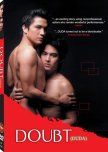
Many years before December 23, 2003, Crisaldo Pablo decided to embark on an adventure. Its main motivation: "cinema and the Filipino LGBT+ community and, why not, also that of the other side of the border," the recipients responded in chorus at the time. Even today, more than 20 years later, they repeat it.To do this, he gathered a group of friends and some professional actors who said "Yes" in unison. He raised some funds, very few, in truth, from his own pockets, or from donations from people who supported the idea.
He summoned his friends, most of them homosexual, like him, those with whom he shared the same dream: promoting a gay cinema through the filming of artisanal films; He wanted to raise awareness of LGBT+ people among the Filipino population. This is how he outlined his venture.
«There is a very special magic in the artistic object that you achieve with your own hands. It may be imperfect, but that difference makes it unique. That feeling of uniqueness is what a creator feels, whether with a story he wrote or a film he shot," he convinced others with this certainty.
Due to the low budget he could afford, he wrote a script without great needs and expenses. Knowing that he would use an unconventional production method, which would only have scarce production resources, he decided to film in a few locations, only in those real places known to all those involved, and discarded the ideas of large stages or sets built from papier-mâché and other unnecessary artifices.
He planned to film wherever necessary, without asking for the relevant permission. He borrowed a Sony VX from a friend. In a moment of breakdown, he had to rent another digital camera, one of those that you can find today in museums or in the yellowed pages of magazines of the time.
He went out to the streets, to the theaters, to the workshops where actors and actresses are trained. He accidentally stumbled across Amanda Virrey, a young woman who would later appear in the films 'Compound' (2006) and 'Sa kamay ng Diyos' (2005), with Larry Burns, a young man who would never again be in front of a camera, with Bell Clerigo, the actress who in 2009 would appear in the film 'Boylets', with Arnold Reyes, who would later star in the two seasons of 'Papa, What Is Love?' and the film The Commitment (2014), with a homosexual theme.
Likewise, it added experienced actors and actresses, such as Jojo Nones, known for his role in 'Dear Uge' (2016), 'Mga lihim ni Urduja' (2023) and 'Agimat ng agila' (2021); John Lapus, who had already participated in 'Mahal Kita: Final Answer' in 2002, and in 1997 in 'Ang Pulubi At Ang Prinsesa'; Rey Pumaloy, known for his role in 'Buko pandan' (2002), 'Sa iyong mga haplos' (2001) and 'Muling umawit angtuvo' (1995).
As protagonists it would have Andoy Ranay, a professional actor who was already known for his films 'Markova: Comfort Gay' (2000), and 'Soft Hearts', with which he debuted in 1998, and Paolo Gabriel, an unknown who would never return be under the direction of a filmmaker.
Since then, he began holding summer camps-workshops for young people on presentation and acting on social networks and independent films and production management for independent projects.
Wait to make profits from sales and distribution of the resulting product? Do you wish that the film would go down in the annals of the history of Philippine cinematography as one of the most watched by the public? Do you aspire to present the film at film festivals both inside and outside the borders of your country? Quite a dream, the same one that every filmmaker has, especially when they embark on the path of artistic creation for the first time.
With 'Doubt' (Doubt, in Tagalog), his debut film, filmed in 2003, Crisaldo Pablo was not only making films. I was making history. He was filming the first feature film shot digitally in the Philippines. With a raw and independent approach, he was making guerrilla cinema. I was making the LGBT+ community visible in a homophobic and conservative society.
In this brave film from an independent team, the pioneering filmmaker of Philippine guerrilla cinema addresses for the first time in his extensive filmography themes such as homosexuality, promiscuity and infidelity in a homosexual relationship, while telling a story about a driven film director for an idea to film a film, against all odds, and create a significant statement that resonates deeply within a heteronormative and patriarchal society.
'Doubt' is recognized as the first full-length digital film ever filmed in the Philippines. The comments of Cris Pablo and some of the actors who appear in the "making of" of the DVD demonstrate how much dedication to a vision represented in this small and essential film.
With an autobiographical approach, for the first time in one of his films, his main character was called Cris. Then would come Jet Alcantara's Cris from 'Bathhouse' and Cris Vicente from 'Moreno', played by the director himself. Curiously, in the 2009 film 'Showboyz', the main character is named Krys, and is played by Filipino actor Kristoffer King.
It was also the first time that Crisaldo Pablo had to fight battles against censorship, challenging, confronting and defeating the Philippine government's Film Board, when the film was originally given an X rating, which would have prohibited it from being shown in theaters. Finally, it was able to receive the desired R-18 rating. He had to do similar actions before the release of his later films 'Bathhouse' (2005) and 'Moreno' (2007).
In this faux-autobiographical docu-drama with healthy doses of interpersonal kitsch, a group of friends and acquaintances discuss the relationship of the film's central couple, in response to the frequently repeated and absorbing question: "What do you think of Cris and Eric?
Everyone is worried and reflects on the fate of the relationship while watching the existing romance between the two young protagonists collapse.
Cris (Andoy Ranay) is a documentary filmmaker with a recognized body of work and a large community of friends and admirers. A gay man in his thirties with a voracious sexual appetite, he has never had a serious relationship and, throughout his fifteen-year sexual career, he claims to have had sexual relations with more than 4,000 men. But after falling in love with Eric (Paolo Gabriel), a twenty-something tabloid television news reporter, Cris has given up meaningless sex for the pleasures of monogamy, much to the surprise of his wide circle of gay friends.
For his part, Eric sees a space for a more open relationship (of course, they don't talk about this) and is baffled by Cris's jealousy.
Much of the story unfolds by showing simultaneous television talk shows, one about Cris's life and the other about Erick's adventures.
The friends automatically go from joy at the change in Cris's life to distrust of Erick's fidelity. Doubt arises and Cris confronts Erick for staying away from home too long, a factor that makes the experienced Erick feel outraged by Cris' constant jealousy.
Complicating matters is the appearance of Ben (Warren de Leon), a former lover of Cris, who makes one last attempt to rekindle the fires of past passion before marrying a girlfriend, but young Cris rejects his advances.
All of the above gives rise to his friends observing from a distance, while they speculate about what is happening between Cris and Eric.
Although the film moves away from the open emotionalism of the couple involved, what 'Doubt' lacks in intensity seen in other films that explore homosexual relationships, such as 'Cheun gwong tsa sit (Happy Together', 1997), by Wong Kar-Wai, Pablo's film almost makes up for it with its free look at the vital gay community of Manila, the Philippine capital.
'Doubt' goes for the intimacy of a home movie rather than the sleaze of porn, with cleverly manipulated beachfront nudity thrown in for good measure.
In fact, when Cris, driven by jealousy, frustration and despair at seeing the relationship crumble, attempts to commit suicide, the viewer suffers an apparent hallucination in the form of a media mockery of egocentrism: an elegant talk show in garish candy-colored colors where a group of magical guests in sequined outfits are interviewed as they try to answer the question on everyone's lips: "What do you think of Eric and Cris?"
The astute viewer will be able to find in the DVD extras the director expressing that his script was based on his own relationship experiences and those of his friends. Likewise, he declares that if he had stuck more closely to them, he could have made a better film. Instead, it adopts a soap opera style of storytelling from the start, with increasingly tense emotional crises, overacted by its largely inexperienced and unprofessional cast; rapid changes in emotional direction; a tangle of plot threads, not all of which go anywhere, and some very strange directorial decisions about how to try to make sense of it all in the end, and each successive emotional crescendo is followed by a cut to black.
Towards the ends, Pablo's response is to establish a television talk show format in which the hosts and Cris and Eric's friends discuss the couple's relationship.
Despite these failures, 'Doubt' has many positive qualities. The flashback sequences are filmed in black and white in a grainy, semi-focused manner that allows the theme of sensuality to be presented in a surprisingly subtle way. Taking into account that the film is shot with a digital camera, the flow is fluid and the feeling is one of immediacy and spontaneity.
Andoy Ranay draws a compelling three-dimensional character we can identify with: a man approaching the age of being "undesirable" in the gay world of the Philippines.
The rest of the cast, although not very skilled in their performances, offers a committed work, achieving as a whole a somewhat rough but ultimately honest and creative film about the public and private pain of homosexual relationships.
¿Te ha parecido útil esta reseña?

This review may contain spoilers
ESPECTACULAR !!!
Es el mejor drama chino que he visto !!!!Se destaca el crecimiento personal de cada uno de los 5 personajes principales... Nunca había visto un drama así...
Me encantaron todos los personajes... demasiados chicos lindos...
Aunque el final no es el típico final... ES UN FINAL FELIZ !!!!!!!!!!!!!
¿Te ha parecido útil esta reseña?

'Moreno', between polygamy and absent monogamy
Already in 'Doubt' ('Duda, in Tagalog), his debut film filmed in 2003, and in 'Bathhouse' (2005), his second film, Crisaldo Pablo addressed topics such as promiscuity, infidelity and homosexuality.In 'Moreno', in Tagalog, (translation: 'Bronze'), a 2007 film shot on digital video, the pioneering director of Philippine guerrilla cinema addresses infidelity in a homosexual relationship, and compares its consequences with the marriage traditions of a poor town on the margins of civilization.
Characterized by its low budget, the intervention of a small number of actors, mostly non-professionals; an unconventional production method, few resources in production, a script without great needs and expenses, few locations, predominating real places to the detriment of sets built for filming; filming wherever necessary without asking for the relevant permission, filming with reduced technical and artistic teams, 'Moreno' follows a raw and independent approach to the so-called guerrilla cinema, as Pablo did in his debut film 'Doubt' and in his second film ' Bathhouse'.
In 'Moreno', its director chooses to demonstrate that he is capable of bringing homosexual relationships to the public eye and making the viewer care about the characters he develops.
Its main protagonist, Cris Vicente, is a documentary filmmaker who is going through difficulties in his romantic relationship with Denver (Ray An Dulay, 'Bathhouse'), his long-term partner.
While Cris tries to improve him relationship with Denver, Denver likes to be unfaithful to him boyfriend. Despite loving Cris deeply, Denver feels the need to look for lovers with whom to share him daily life. At the anniversary party, Denver drugs Cris so he can have a clear path to participate in an orgy with all her male guests, while Cris is unconscious.
The opportunity to leave behind his recent dark past is presented to Cris when the next day he must leave for Lake Sebu, in South Cotabato, to fulfill the assignment of documenting the traditions of the people of T'Boli, specifically making a profile on local women and their changing opinions on multiple marriages.
Waiting him in T'Boli is a woman Mawen (Ynez Veneracion, 'Retaso' 2007), his old friend, who serves as a link between the film company and the inhabitants of the coastal town.
Mawen's husband is also blatantly unfaithful to her, and his situation mirrors that of the cuckolded filmmaker.
The film leads the viewer to reflect on the polygamy of the town's inhabitants and, on the other hand, the absent monogamy of Denver.
Consider the last-minute twist involving Cris and his boss, which turns out to be too much of a coincidence to be believable.
Cris is also aware that one of the male villagers is bothering him. During filming, Cris forgets that he is supposed to be objective and becomes personally involved in the lives of several young women who are engaged to the Datu sa dokyu (Wings Lock), the village patriarch.
The Datu, as the richest men in the village are known, are allowed to have dozens of wives, forced by their impoverished families into marriage against their will to live a life of servitude in exchange for a dowry.
Thus, once again, another disturbing and undesirable view of marriage is presented to the public.
When Ngapon, a young T'boli woman, tells Cris that she wants to free herself from the marriage established by her parents and go to Manila, the main character begins to confront what she left behind in the city. Like the proud Datu with many wives, Cris remembers that he has Denver, his tanned-skinned lover in Manila, who is proud of his many relationships. Ngapon's search for freedom becomes Cris' journey into a dark and very sad past.
However, the experience lived in T'Boli will allow Cris to solve his relationship problem and find the only and correct answer.
With an autobiographical approach, in three of Crisaldo Pablo's films his main character is called Cris. Thus we have Jet Alcantara's Cris from 'Bathhouse', Andoy Ranay's Cris in 'Doubt', and Cris Vicente from 'Moreno', played by the director himself.
Curiously, in the 2009 film 'Showboyz', the main character is named Krys, and is played by Filipino actor Kristoffer King.
Accustomed to fighting battles against censorship, Crisaldo Pablo challenged, confronted and defeated the Philippine government's Film Board, when the film was originally given an X rating, which would have prohibited its exhibition in theaters. Finally, it was able to receive the desired R-18 rating.
Among the mistakes of 'Moreno' we must point out that the dynamics of Cris and Denver's toxic relationship are interesting and should have been explored more. When the story leaves Manila to unfold in T'Boli, it seems as if we left one film behind to watch another.
Although at the beginning Cris frequently remembers Denver's moments of infidelity and the viewer witnesses the slow disintegration of her marriage through some very effective flashbacks, these disappear towards the middle of the film and do not reappear until its climax.
All of this prevents the story in the coastal town from developing organically and effectively, leaving the viewer with what appears to be a very choppy documentary. The reaction of the public that criticizes the lack of a structured story with fully represented dramatic peaks is logical.
Among its successes, we can highlight that the film is capable of showing homosexual couples who have the same problems and struggles that heterosexual couples face; the director develops interesting gay male characters who are not the stereotypes of macho dancers, rent boys or drag queens very common in Filipino LGBT+ themed films.
The first act of the film is very attractive. It's also surprisingly explicit and features a lot of frontal male nudity.
Crisaldo Pablo's work is thought-provoking and encourages the viewer to hope that the characters will be successful in their relationships and achieve a sense of peace and satisfaction in their lives.
The beautiful photography by Jonathan Batoy, Claude Santos and Crisaldo Pablo himself show village scenes and virgin, exotic landscapes that can, in themselves, stimulate the senses.
Despite its low budget and murky night photography, Pablo shows a good eye for the cinematic image. The scenes involving Cris and Denver give the symbolic image of a couple breaking up. Equally striking is the Bergman-style image that almost functions as a split screen in which Cris is sitting, dejected, on one side of a wall, while Denver lies in bed with another man at the other end.
The difference in the men's attitudes is also conveyed by their contrasting appearances. Cris's appearance is average, while the flirtatious Denver usually appears bare-chested and sports a shaved head with a light tuft of beard on his chin.
Isha's low-key, ethnic music, usually consisting of a single repetitive note, effectively sets the mood of the characters in each of the flashbacks.
'Moreno' confirms Cris Pablo as a pioneering figure of the guerrilla style in Philippine cinema, a filmmaker who has turned his cinema into an integral pillar of Filipino, Asian and world independent cinema, celebrated for his ingenuity, authenticity and unfiltered vision, by that gives it a documentary touch.
¿Te ha parecido útil esta reseña?

El Amor es como el Cha-Cha-Cha
A 0 usuarios les ha parecido útil esta reseña
This review may contain spoilers
Reseña: El amor es como el chachachá
A pesar de que me pareció que las cosas iban un poco lentas, es completamente necesario para que la pareja principal evolucione y valoro que la protagonista tome la iniciativa y busque conversar aunque a él le resulte difícil hablar y abrirse con ella. Las expresiones de Du-sik ante las preguntas de Hye-jin me resultan tan familiares y dolorosas al mismo tiempo. También me gustaría añadir que cada personaje tiene un papel importante, una historia detrás y sus propias luchas y eso se va mostrando a lo largo de los episodios. En cuanto al triángulo amoroso, pensé que las cosas se complicarían, pero evolucionaron de manera positiva y el personaje de Seong-yeong me cayó muy bien. Las cosas que me disgustaron fueron mínimas. La recomiendo completamente.¿Te ha parecido útil esta reseña?

CRINGE.
El más enorme espectáculo de autocompasión que he visto en años, de parte de un protagonista que claramente carece de columna vertebral, fue todo un desafío terminar de verla, la incomodidad que genera está serie es totalmente otro nivel, la terminé solo porque no me gusta dejar las series por la mitad pero, indiscutiblemente NO la recomiendo, es lenta, da vergüenza ajena, el protagonista es incómodo, y como dije al principio solo se revuelca es su propia autocompasión, ni siquiera tiene una historia triste de fondo para que justifique lo total y completamente pusilánime que es literalmente durante los diez capítulos que dura la serie.¿Te ha parecido útil esta reseña?

East palace, West palace
A 3 usuarios les ha parecido útil esta reseña
An essential Chinese political-erotic drama
The images run before my eyes once again. I resist filling the blank page with my ideas. I fear that on this occasion, as on so many others, I will not be able to say everything about this political-erotic drama full of nuances and trust, that something will get stuck in my throat and I will not be able to express what I feel correctly.Next to me lies, open to its last page, a volume of the story by writer Wang Xiao Bo, who became co-writer, which tells a story of oppression and torment set in a time and place where people were criminals if they were part of the community LGBT+. To understand what happens before my eyes, I need to drink from its most intimate and pure essences. That's why I go to the book as well as the movie.
I think I see A Lan before me touring the two parks, the East Palace, the West Palace, with its public bathrooms, more than in search of sex with other homosexuals, trying to bump into the policeman he has fallen in love with. . It all happens there, behind the Forbidden City, behind the doors of the Palace, in Beijing.
It's 1996 and Zhang Yuan, the Sixth Generation filmmaker, comes to my aid to tell me the story about a repressed and latent homoerotic relationship between a "master and a slave". I enjoy the intense and dark author's chamber piece that leads me to learn about the relationship between an openly gay writer and a police officer who refuses to accept himself because he is overcome by a strong internalized homophobia.
I glimpse Xiao Shi, the handsome man with big hands, those hands that A Lan loves so much, how he fulfills the young gay writer's dreams of being arrested and interrogated by a police officer, it doesn't matter to him if it's for "vandalism".
I witness Xiao Shi go from initial repulsion to fascination and finally attraction. I judge that the accusation of intolerance is not intended to be limited to the Chinese government, but rather to that which is manifested in all parts of the world regardless of the political regime of a given country.
I distinguish before me eros, death and sensuality walking the avenues towards sadomasochism. I sense a possible reconciliation and even the beginning of a romantic relationship between the gay writer and his captor.
I discover in Jian Zhang's beautiful photography how two worlds collide. I notice the back and forth, the initial imbalance of power between victim and executioner. I notice how the power dynamic changes between these two people over the course of a single night, in the middle of an interrogation.
I experience that the writer, from his playful kiss that left the policeman perplexed, to the confrontation between the two moments before the final credits roll, never gives up or shows signs of self-pity.
The images run before my eyes once again, and allow me to appreciate that the effeminate and masochistic, who may seem submissive, transforms, towards the middle of a film that equally transforms into both a power game and a gender performance, upon receiving the freedom granted by Xiao Shi to tell the story of his life.
I enjoy how he manages to turn the interrogation room into his own stage, where he is not only able to spread his wings and fly, but also to shout his love to the police officer.
I evaluate the analysis of gender and sexuality, the replay between pain and pleasure. I recognize myself, like so many others, in the feelings expressed in this film. I appreciate how A Lan can express that she could be a man or a woman, a goddess or a prostitute, the thief in love with her jailer.
I watch as the prisoner assumes the position of power and completely dominates (and even hypnotizes) his captor and all the spectators. And if there is one complaint, it is the script, for not giving a writer, like A Lan, more power over his words to counterattack the uniformed man, and only repeatedly using a single reason: "It's not disgusting. It's love. You can find me despicable, but my love is not".
I appreciate in the film the use of Piaget's genetic psychology and his atmospheric Fassbinder.
I allow myself another regret, the last one, I assure you, but one that affects the film not being much better than it already is: unfortunately, Hu Jun does not always seem to know what to do, how to function in front of the cameras, while his interest in the life story of the homosexual man he interrogates is not given the necessary nuance.
However, I vibrate as I listen to A Lan reply to the policeman, "You've been asking me this whole time. Why don't you ask yourself?" In this way, 'East Palace, West Palace' returns to itself the institutional inquisition that pursues queerness, asking about its own queer nature.
I open my eyes as the film plays with the limits and rules of attraction and seduction as one man's story becomes another's gateway.
I compare the film with that experience that we have all had of risking everything for the opportunity to be ourselves, whether in the search for love, sex, happiness, or simply those moments of connection with other people who can feel like oneself.
I sharpen my senses about how the film also explores the complicated relationship between gay men and the desire to feel loved by those in power, both in the figure of a law enforcement official and in that of the rich daddy that the writer once followed to his house, to receive the burning of the lit cigarette butt in his chest.
I believe that by turning the police interrogation process into seduction, Zhang Yuan's film subverts expectations as expected, and crosses the borders between pain and pleasure, between hate and love.
I distinguish that the emotional structure of the story and the enthusiasm that Si Han and Hu Jun put into expressing their lines make this film moving, beautiful, and shocking. It is a triumph for those who were handcuffed and imprisoned for their sexual identity.
I estimate that it is in that moment, as well as during the 90 minutes of footage, that we can appreciate queer cinema at its maximum expression of gay liberation, a political cinema at its most subversive and resistant, while analyzing how malleable the presentation of the human being to the world. Because the film also fulfills its objective of functioning as an intriguing experiment on the clash between the State and personal space, between the public dimension and private life.
The images run before my eyes once again, and I notice how the cut scenes, in magnificent and precise flashbacks, fill in the missing story of the mysterious writer's past of suffering.
I thus learn about A Lan's hidden desires at school, her relationship with her mother, the sad existence of "Omnibus" (Vicki Zhao), her classmate that anyone can ride; the public shame that the homosexual suffers, his first sexual experience, his furtive encounters in abandoned places with other gay men; how pain has led him to be the person he is, how he has preferred pain rather than being ignored...
In this way I understand the dreamlike epiphanies of the androgynously stylized Chinese theater, whose images also roll before my eyes.
I do not lose sight of the fact that through questions and answers the tumultuous life of the person questioned since his childhood is narrated, the difficulties that come with being homosexual in China, and how the brief intimate scenes of A Lan's life blur the feelings of the man who wear uniform.
I resist the idea that this gay film was written and directed by a straight filmmaker, especially since the portrayal of the queer character is riddled with stereotypes.
However, I applaud that 'East Palace, West Palace' escapes the stereotypical view of narcissistic heterosexual directors, and doesn't tell us one more tearjerking trope about the story of a sad, lonely queer man who has been oppressed all his life and accidentally falls for himself. falls in love with the apparently "straight" police officer who tortures him, because one of the strengths of the film is to present as the protagonist a homosexual character who has almost disappeared in conventional cinema on a global scale due to the horrific process of assimilation of the community and gay culture.
In this sense, Zhang Yuan uses all the queer expressions and traits that are most irritating to heterosexuals. He never sugarcoats the young writer's life and experience of sexuality, to interrogate the very core of homophobia and internalized homophobia, that self-hatred that the character played by Hu Jun feels towards himself.
I see the loud cry for help, both political and sexual, which in this case go hand in hand.
I see the amazing and moving performance of the real-life gay man. I was amazed to learn that Si Han was there as part of the technical team and was only chosen because the supposed protagonist dropped out at the last minute.
The images run before my eyes once again. Contrary to the way Western critics try to frame the film, I don't think the film criticizes the "authoritarian government". Firstly, there are no major differences between how an American LGBT+ film from the 90s criticizes the way society and the state approach homosexuality and what Zhang Yuan's film examines.
That's not to say it's all the same, but simply that certain sections of the public would like to use what was shown in 'East Palace, West Palace' as evidence of some specifically unique and more terrible oppression in China.
The truth is that just by watching the film, I do not feel or see the supposed repression that Western propaganda seeks to impose, ignoring, in the process, the realities of nearby countries. Clear example of political motivation.
I resist the idea that the topics presented are intended to explicitly attack China. However, obviously the film does talk about what is accepted and what is not accepted within any society, in this case the Chinese one.
But A Lan himself raises his voice at this, and expresses (paraphrasing): "we are all different and we walk at our different paces, but we are identical." That is, the repression suffered by the main character throughout his life can be similar to that suffered by any homosexual in any heteronormative and patriarchal society.
Even in societies that are supposedly more liberated with respect to homosexuality, such as the United States, from the beginning of 2023 until today there has been an unparalleled process of legislative violence and regression in the human rights of LGTB+ people.
I am referring to the approval of anti-LGBT+ laws by different states that openly limit different facets of the rights of said community, which aim to put the members of this group back in the closet, and which will begin in 2022 when Ron DeSantis, the governor of Florida, approved the Don't Say Gay Bill, whose text prohibits teaching any educational content related to sexual orientation or gender identity to students between 3 and 17 years old, and requires that the educational curriculum necessarily define he sex as "determined by biology and reproductive functions" and gender as "binary, stable and fixed".
I believe it is necessary to make these distinctions because too often legitimate criticism is used by opponents as incendiary ammunition. It would be an injustice to this film if it were used like this.
The images flash before my eyes once again, and I hear Min Xiang's music, while the audience gives a standing ovation to 'East Palace, West Palace' at its premiere at the Mar del Plata Film Festival in Argentina, in November 1996, and at the 1997 Cannes Film Festival.
¿Te ha parecido útil esta reseña?

De las peores que he visto.
Definitivamente es una de las peores series que he visto, y no por el ForceBook porque ellos lo dan todo, pero en la serie el personaje de Book miente, engaña y manipula al personaje de Force en lugar de ser sincero con sus sentimientos, luego de eso primero lo niega delante de su amigo y más tarde lo abandona, como si esto fuera poco por alguna razón nos hacen creer que el personaje de Force no es digno y lo hacen viajar literalmente a otro continente para recuperar su "amor", definitivamente mala, muy mala, terrible, horrible.¿Te ha parecido útil esta reseña?

This review may contain spoilers
Es una buena serie
Cuando empecé a ver la la serie me entretuvo y al lo largo de la historia me encanto. al terminar de ver la serie sentí que necesite un poco más de momentos románticos para la pareja secundaria. con respecto a la pareja principal estuve genial, los momentos y su química es perfecta. no me gustó mucho el ost pero eso no afecta mucho a la serie. en algunas escenas de la serie las actuaciones no me gustaron mucho, en especial en las escenas tristes.en resumen, es una buena serie para verse un fin de semana.
¿Te ha parecido útil esta reseña?

Love Sea Special Episode
A 0 usuarios les ha parecido útil esta reseña
This review may contain spoilers
-Porque te quiero he llegado a amar el mar que tu amas.
La verdad si tengo que agradecer demasiado la existencia de este capitulo especial que para mi vino a arreglar cosas que en la serie me habían dejado inconforme y también me hizo pensar el porque no haber metido esto en la serie y desarrollar un capitulo especial diferente (como en este mismo que se menciona que quieren ir de viaje).Mahasamut y Tongrak
Ellos fueron los que me quedaron a deber (mas Tongrak) y este capitulo me hizo "perdonar"/querer a Tongrak porque nos lo muestran de una manera mas decidida, mas feliz, mas encariñado y que esta sin duda enamorado y disfrutando por completo de su relación con Mahasamut, sin duda se vio la química que tienen y se vio una pareja mas establecida cosa que en el final de la serie pues todo esto queda en duda pero si este capitulo viene a arreglar esto que para mi me lo debía.
Ahora la pareja secundaria Vivi y Khaimuk discúlpenme pero yo no se para que las trajeron si no desarrollaron nada de ellas (por lo menos en pantalla), si bien al principio se nos dice que Vivi lleva 1 año persiguiendo a Khaimuk (lo que entonces quiere decir que no ha pasado mas) en este capitulo no es como que pasen muchas cosas al principio se sentía como que iban a ser una reversión de Tongrak y Mahasamut o al menos asi lo sentí a lo largo del capitulo se ve mas de lo mismo que paso en la serie, Vivi persiguiendo a Khaimuk ya para el final como que se nos da a entender que ya decidieron estar juntas pero sigo diciendo que a ellas si las dejaron muy en el tintero.
Y pues ya seria todo, al principio salió Palm el hermano de Mahasamut y desde la serie me cayo muy bien y aquí es lo mismo me hubiera gustado ver un poquito de el, que hicieran algo mas con su personaje pero ya es cosa mía, sin duda como ya dije este capitulo vino a arreglar cositas pero otras no.
La frase del titulo se la dice Mahasamut a Tongrak.
¿Te ha parecido útil esta reseña?

This review may contain spoilers
The King: Eternal Monarch es todo lo que debió ser Goblin y no hicieron
Antes de ver este drama no conocía a Lee Minho, aunque sí a gran parte del elenco que le acompaña en este drama.Para mí ha sido perfecto de principio a fin. No puedo evitar comaprarlo un poco con Goblin debido a la misma protagonista y concluir que The King: Eternal Monarch es todo lo que debió ser Goblin y no hicieron. En mi opición le da mil vueltas éste.
Si bien es cierto que habría agradecido un cartelito indicando en cada Korea en la que estaban rápidamente te acostumbras y no es tan confuso como mucha gente lo vende. Para todo el jaleo que se traen de los multiversos y los saltos temporales me parece magistralmente hecha y no se hace pesado ni repetitivo.
Me encantó que la relación entre Gon y Tae-ul estuviera muy definida desde el principio; en el capítulo 5 ya podíamos verles con las cosas claras. La muchacha lo tenía claro con un novio que salta entre planos y menos mal; me habría dado algo de tener que esperar al capítulo 12 con esta tensión.
La banda sonora es preciosa. La actuación es preciosa. Tiene un final muy digno y precioso. Todo el conjunto es precioso. Me hizo sentir al mismo nivel que Crashlanding on you (mi kdrama favorito) lo cual es decir mucho.
¿Te ha parecido útil esta reseña?


