

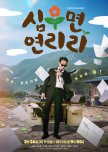
The Lead and Rural Life: The family's forced relocation from the big city to the chaos of the countryside (Yeonri-ri) brings hilarious moments. Watching a proud corporate expert try to grow the "perfect cabbage" carries the entire show.
Low-key Romance: The subtle romance between the supporting characters (like Ji-cheon and Bo-mi) never steals the spotlight, serving as a nice breather for the main plot.
Loose Ends: The script leaves a few corporate conflicts and minor subplots unresolved in the final stretch, without much explanation. While it doesn't reinvent the wheel, it delivers exactly what it promises: a cozy, pollution-free comedy that is genuinely fun to watch.
¿Te ha parecido útil esta reseña?

NOT A BL, but a fun watch for the fans of the actors
NOT A REAL BL, but rather a BL-flavoured episodic exorcist series. The ending exposes a major but avoidable misunderstanding, which is a lame plot vehicle.Reminds me of countless manga, anime, cartoons, TV shows of this genre, even a couple of widely popular mystery GMMTV series from the late 2010s.
But this one is made pretty good and fun. And if you are a fun or the actor, it is totally worth to watch.
It is also interesting that the leading couple took the roles that would naturally fit them more versus their pairing, famous for its unusual setup where the smaller lad is meant to be “top”.
Production values are great. Make up is mostly good, costumes, props and set designs, music etc.
A WARNING: never substitute peas or any other legumes with fake ones made of just some protein powder because those powders most often are made of legumes. They often put legumes even in powders that are labelled whey or other proteins. Only use powders with zero legumes and a guarantee they do not use legumes for other batches on the same production line so they would be no trace amounts.
A REALITY check: see a post with spoilers tags below.
THE NARRATIVE is also typical for GMMTV: about how rich and powerful elites — that actually rob common man — are somehow good and kind, even though it almost never reality, including young heirs. They just had a series like this in 2022: Never Let Me Go, where Phu was playing too-good-to-be-true heir.
¿Te ha parecido útil esta reseña?
This review may contain spoilers
The pair deserved better storyline
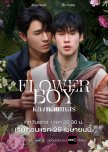
Flower Boy is a case of strong visual execution paired with weak narrative depth,despite the interesting concept, it suffers from inconsistent character writing, rushed emotional arcs, and underdeveloped storytelling, resulting in a drama that looks better than it feelsMudan people were giving me a cult instead of special people with special scent
My biggest issue with is Gaysorn himself. While the series clearly wants viewers to see him as an innocent, kind hearted, and sheltered character, his writing is so inconsistent that I often found him more frustrating than sympathetic.
At first, his naivety is understandable,he comes from a excluded area and has little experience with the modern world,however, as the story progresses, his innocence starts to feel less like a character trait and more like a plot device,Gaysorn repeatedly ignores obvious warning signs, trusts people far too easily, and makes decisions that stretch believability,Instead of rooting for him, I often found myself questioning how he could be so oblivious, also the whole saint father/uncle situation… i genuinely don’t get how the story expects me to just move on from them being the killers of gaysorn’s parents, and accept scent with gaysorn, which btw scent lost his importance by ep 4, idk why they made character such weak and unlikable.
¿Te ha parecido útil esta reseña?

a let down after the first two seasons
while the running plot was nice, the individual cases this season were very weak — all the deduction and voting happened on how someone “behaved” instead of actual clues and evidence.i like solving alongside the crew for such shows, but here i felt bored instead because there were never any sufficient clues to *actually* solve and reach a result. it was all just "oh he is behaving weird today" - which is fun for banter and debate throughout the episode but when that is the ONLY reason one is voted, it takes the fun of mysterysolving away.
S1 and S2 (but S1 especially) gave actual evidence against people that they had to defend against and try to spin in a way where they dont look as guilty; in s3 if you passed off as acting innocent, youre good to go honestly.
¿Te ha parecido útil esta reseña?
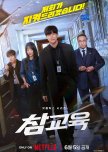
At first glance, it may seem like an exaggerated revenge-action drama where bad students are punished by adults who refuse to tolerate bullying. But as the story unfolds, you realize that the most shocking thing about Teach You a Lesson isn't its action scenes or its ruthless methods, it's how frighteningly real parts of it feel.
School violence has been a long-standing issue in South Korea. Over the years, countless real-life cases have surfaced involving physical abuse, cyberbullying, extortion, social isolation, and relentless harassment that pushed victims into depression and, in some tragic cases, even suicide. While Teach You a Lesson dramatizes these situations for television, the emotions behind them, the fear, helplessness, and silence are very real. That's what makes many episodes so difficult to watch. You aren't simply watching fictional victims; you're constantly reminded that stories like these exist beyond the screen.
What makes the drama so compelling is that it taps into a frustration many viewers have felt while watching news reports or reading about bullying cases. What happens when the people who are supposed to protect students fail them? What happens when schools prioritize reputation over justice? What happens when victims are told to endure while perpetrators walk away with little consequence? Teach You a Lesson builds its entire premise around those questions.
What I appreciated most was that beneath all the action and confrontations lies a story about protection. Every case reminds us that children and teenagers are still learning how to navigate the world, and when adults fail them, the consequences can last a lifetime. The drama doesn't just expose bullies, it exposes the systems, parents, teachers, and bystanders who enable them.
Watching this drama often felt uncomfortable, not because it was poorly made, but because it touched on realities that many would rather ignore. The bullying is cruel. The victims' pain feels genuine. And the anger you feel while watching is exactly what the drama wants you to feel.
Teach You a Lesson is not a subtle drama, nor does it try to be. It is bold, provocative, and unapologetic in its message. Some viewers may disagree with its methods, but it's impossible to deny the conversations it sparks. More than an action drama, it is a reminder of how much damage can be done when injustice is allowed to continue unchecked.
By the end, you're left with a simple but powerful question: how many lives could be changed if people chose to act instead of look away?
¿Te ha parecido útil esta reseña?
This review may contain spoilers
Plot is dull and boring to me and weird too
First I hesitated to start because FML is ml cousin? not blood related but still she's a family? i have seen a few with weird relationship like these I tried watching this onewhat's weird in plot
1.she's super rich and comes to a country side to adopted aunty place ? if she's adopted whose the grandmother? she has money to live in hotel? and was going live only for few days
2.that was okay but making her live in grown male cousin room ? seriously? even if have good relationship with my cousin I still won't live like that?
3. ep 1 and 6 literally the same thing happening nothing new it felt repetitive
4. plot setting is so similar to speed and love ? i have liked that one because their interactions are really cute and plot goes well here from start it's complicated, ml is same repair guy FML will move in with him
5. their interactions don't really seem interesting to me it felt slow dull boring ep 1 ep 6 just the same
6. don't feel like any chemistry at all I'm not curious about them getting together
7. what kind of character aunty is ? playing and chatting all day with neighbour? not looking upon her niece at all ?
i care more about how story goes, what personality they have , here both are not satisfying
¿Te ha parecido útil esta reseña?
L'obsession magnétique...
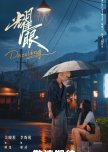
L’amour doit-il être un sentiment de sacrifice où souffrir pour l’autre est une déclaration en soi ? Ou est-il préférable d’être égoïste et de s’éloigner, peu importe si le cœur saigne ?Dès les premiers épisodes, Double Helix plonge dans une atmosphère sombre et pesante où la psychologie des personnages prend tout son sens, en particulier pour Lu Feng. On voit ses traumatismes et son obsession grandir de jour en jour. Une descente aux enfers qui m'a souvent rappelé Sin Jae Min de « Secret Relationships », que l'on voyait sombrer dans la folie au fil des épisodes.
Pour être honnête, je ne me souviens que vaguement des films que je n'avais pas particulièrement appréciés. Cette version offre davantage de profondeur aux personnages dans un contexte plus moderne. L'un des points forts de la série est dans ses acteurs. Ayden Sng et Lu Si Tong livrent des personnages complexes, sans cesse partagés entre désir et désespoir, amour et rage, le tout avec une alchimie solide et intense. He Jia Shu et Fa Xuan Ge sont mignons à suivre, bien que leur rôle serve davantage pour faire avancer l'intrigue.
Cependant, le scénario abuse du drame. Certaines scènes tombent dans le cliché et la répétition des malentendus finit par devenir superficielle, perdant l'intensité originale de l'histoire. J'y attribue une partie de la faute au format. Je comprends la construction de l'histoire en trois temps, cela dit, j'ai le sentiment que huit épisodes auraient largement suffi. Avec le format actuel, on ne passe pas à côté d'une répétitivité évidente (conflits, blessures, séparations, retrouvailles…). D’ailleurs, le titre est un indice en lui-même d'une forme de répétition. Pour moi, l'histoire aurait mérité d'être moins mélodramatique.
Ceci dit, le choix de maquillage naturel, loin des visages irréalistes, est parfait. La qualité de production est remarquable avec une photographie soignée, et des décors simples et agréables.
En bref, Double Helix mise sur l'intense et le toxique et y parvient grâce à un couple principal solide, malgré un scénario parfois trop dramatique.
¿Te ha parecido útil esta reseña?

This review may contain spoilers
Fight, Suffer, and Fight Again
Japan always delivers when it comes to making characters diverse—and that goes for both women and men. Every guy is unique, standing out with his own clothing style, hairstyle, hair length or color, and even tattoos. However, when it comes to the plot, the logic is definitely lacking.I understand this is a school drama and nobody expects to see actual classes, but at times it feels like the school exists solely as a place for fights. Shimura is supposedly struggling financially and saving money wherever he can, yet he casually skips work, somehow always has food to eat, and still manages to pay his mother's bills.
The romance line also raises a ton of questions. Out of nowhere, Asamiya asks Shimura on a date, cries when he gets beaten up, and worries constantly... But when did she even develop these feelings? How did they get close? Shimura can disappear for a whole month without a single word. Another time, he shows up at her workplace only to be told, "She quit a month ago". So they don't talk for months at a time? Maybe I missed something?
And Rumi's story is a bit strange, too. It's okay for an underage schoolgirl to climb the career ladder through sex, but drinking alcohol, as her client told her, is a big no-no. Oh yeah, sure...
I was expecting a story about a weak guy gradually getting stronger, learning how to fight, and pushing past his limits. But a few episodes in, it feels like his only "growth" is just being able to take a beating for longer. You can barely call his match wins actual victories—it's more like the villain just got exhausted from punching a nice guy and lost.
I haven't read the manhwa or watched the anime, and maybe (actually, I'm pretty sure) the story is fleshed out a lot better there. Overall, though, it's a cool, fast-paced J-drama.
¿Te ha parecido útil esta reseña?

De las Cenizas a la Corona
A 3 usuarios les ha parecido útil esta reseña
This review may contain spoilers
A Story’s Letdown
Casting & First Impressions: The casting didn’t impress me, but I was willing to look past it if the story delivered. Unfortunately, it didn’t. The poster was striking and drew me in, but the actual show failed to live up to that promise.Episode 1 Structure: The opening flashback stressed me out more than it intrigued me. An animated storytelling intro would have been a better choice, followed by about 15 minutes of the show, and then the intro song. Instead, the pacing felt rushed and didn’t allow viewers to settle into the world.
Characterization: The female lead was a major letdown. I dislike naive female leads, and here she seemed frustratingly dependent. The only way she felt at home in the capital was through a man — why not a friend, or even a deeper tie to her father, a general who could have shaped her upbringing? That would have been a more logical and empowering foundation. Instead, the narrative leaned on the “male savior” trope, which undermined her character completely.
Overall Feel: The show feels too much like a short C-drama, lacking depth and atmosphere. The rushed pacing, shallow character development, and reliance on tired tropes made it hard to stay engaged.
Verdict: Ashes to the Crown is a “bleh” experience for me. It promised something grand with its poster, but delivered a rushed, shallow drama with a naive lead and uninspired storytelling. I won’t be continuing with it.
¿Te ha parecido útil esta reseña?

Tan Lian Ai Bu Ru Shang Qing Hua
A 0 usuarios les ha parecido útil esta reseña
This review may contain spoilers
I actually loved it!!
So after a long hiatus from cdramas, I dove into this series like any other and was instantly hooked. The cast completely won me over, and I have found my new favorite Chinese actors!Now you may ask, with such an abrupt ending, how can anyone love it? But I think that makes this series more lovable and beautiful in a realistic sense.
The series begins with the FMC facing a day that spirals from bad to worse, a feeling we’ve all experienced. She aches for a new beginning after discovering her so-called best friend sabotaged her exam and manipulated her into a toxic relationship with her crush, all to derail her. The regret of a missed gaokao score lingers like a shadow. While most people never get a second chance, fate steps in when an elevator accident with her terrible boss leaves her in a coma.
The story rewinds ten years, giving her a chance to rewrite her fate. Armed with memories from her past life, she shields her parents from debt, guides her brother toward a job in the gaming industry rather than at the internet cafe, and pours herself into achieving a stellar Gaokao score. Despite her dislike of her boss, she persuades him to help her achieve a good Gaokao score, since he was once considered the top student at the high school. With his help and guidance, she gets into her dream university, finally living the campus life she always dreamed of. She is free from the regrets of lost love and her best friend’s manipulations. Happiness seems within her grasp.
The focus shifts to the MMC, who remembers his past life and is determined to make it better. In the past, it's shown that after losing his best friend in a car testing accident, he blames himself, spirals, and his life derails. It's also shown that the MMC has always liked the FMC, who was working at the company. He hates that she gave up her ambitions and goals because of her then-boyfriend, who was just a leech and never treated her right. Since he also remembers his past, he wants to make his second chance at life "right." He saves his best friend from dying (which, I might add, just alters everything in real life; you can never bring anyone back from the dead or save them because there's no way around it, even in a fictional sense; maybe I'm being too realistic here, but that's just my opinion). He pursues his attraction to the FMC, but he is also afraid of messing everything up because, well, he has liked her for more than ten years.
Through it all, you see that once they get together, they build happiness for themselves, and it shows how different a life they could've had if they'd had a little courage, taken more risks, and not given a damn about other people's opinions of what they could or couldn't do. But this comes with the knowledge of their past selves, and since they've both seen the worst, they want something better for this life. You can see how they reflect and how different their perceptions are. The MMC is more open to experiences and life than he was before, and the FMC is not dwelling on what she could've done and is just bulldozing ahead with what she believes she could've gotten if her best friend wasn't being an absolute bitch to her. But somewhere, you see the cracks in the perfect second life. Even if you completely change your life and it works, are you actually living that, or is it still your first life? Are you actually living the life you wanna live because you actually want to?
I believe this drama shows you that if all of us had gotten a second chance, we would've seen the bullshit coming at us a mile away, dodged it, and made it out with a better outcome. But at the end of the day, we're all living life for the first time, and it's important we don't dwell on the past, learn and grow from our mistakes, but not let the past dictate us, because this is our first life. We gotta be a little patient, take some risks, and explore our world and the world outside a little, just to show us there are so many possibilities, and you just gotta give yourself a chance.
¿Te ha parecido útil esta reseña?
What got me was there was not a single boring episode. Every door they entered had its own unique plot, its own set of characters and its own emotional depth. The sanatorium door and the box master door were genuinely unforgettable. The villains actually made your blood boil, the supporting characters were so well written, and the set designs and soundtrack just added to everything perfectly.
And then there is the bromance between Ling Jiushi and Ruan Lanzhu. Technically censored but honestly the way Lanzhu looked at Jiushi said everything words were not allowed to say. The emotionally charged conversations between them were on another level and you just felt everything they could not show outright.
The story kept building and building and I finished 48 episodes in just a couple of days because I genuinely could not stop. Every episode pulled you deeper and the stakes felt so real throughout.
The ending was bittersweet and a little questionable but somehow it still felt true to the journey. The kind of sad that stays with you not because it was cruel but because you were so deeply invested in these characters.
One of those dramas I will carry with me for a long time.
¿Te ha parecido útil esta reseña?
Nuestro Seúl por Descubrir
A 1 usuarios les ha parecido útil esta reseña
This review may contain spoilers
Everyone keeps hiding, What they long to find...
Drawing inspiration from one of storytelling's most enduring motifs—the double and the exchange of identities—Our Unwritten Seoul transforms a potentially familiar premise into a profound reflection on invisible pain and the weight of expectations. The series explores alienation, the search for belonging and purpose, and the painful reckoning with dreams that can no longer be pursued.Through the lives of twin sisters Yoo Mi-ji and Yoo Mi-rae, seemingly opposites in both temperament and circumstance, the drama gradually reveals a cast of characters united by hidden wounds, lingering guilt, unspoken regrets, and fragile inner lives concealed behind reassuring façades.
The writers deserve considerable credit for embracing such an ambitious narrative structure. Expanding through a remarkable number of interconnected backstories, the series touches the lives of nearly every major character without ever losing sight of its emotional core. As its world grows, Our Unwritten Seoul maintains a striking thematic unity, weaving together love, solidarity, quiet melancholy, and a rare emotional restraint that becomes one of its defining qualities.
One of the drama's greatest strengths lies in its constant reversal of perspectives. Those who appear to have everything under control often stand closest to breaking point, while the individuals most readily dismissed as unsuccessful or directionless prove to be the ones most capable of understanding and supporting others. Through this tension between perception and reality, the series encourages viewers to look beyond first impressions and question assumptions that seem firmly established.
Seen in this light, the theme of identity exchange serves a far deeper purpose than a simple narrative device. The twins do not merely step into each other's lives; they experience the weight of the judgments, misunderstandings, and expectations that shape those around them. In doing so, the drama challenges the notion that identity can be easily recognized or defined from the outside, revealing how little we often know about the struggles hidden beneath the surface.
Mi-rae appears to be the successful daughter while carrying a loneliness few people ever notice; Mi-ji is viewed as the sister who never quite found her place despite her remarkable ability to connect with others; Ho-su seems to have built the life everyone admires, yet remains deeply marked by physical and emotional wounds. Even Ro-sa ultimately proves very different from the figure the neighborhood—and the audience—had come to know.
The title itself carries a meaning that extends far beyond its geographical reference. This "unwritten Seoul" evokes lives still waiting to be told, stories struggling to break free from the definitions imposed by others—or by the characters themselves. The twins' journey becomes an attempt to reimagine their identities through a new perspective and a different understanding of their past.
The places themselves contribute to this reflection. The Seoul portrayed by the series bears little resemblance to the city of postcards and tourist guides. Alongside the modern metropolis survive seemingly modest spaces such as Ro-sa's restaurant and Se-jin's strawberry farm, which become places of memory, healing, and renewal. By preserving stories, relationships, and identities threatened by time and modernity, they offer the characters refuge from external pressures and the opportunity to reconnect with parts of themselves they believed lost.
These reflections on identity, belonging, and self-discovery find their clearest expression in the journeys of the main characters. Though their paths differ greatly, Mi-rae, Mi-ji, and Ho-su share the same challenge: learning to separate who they truly are from who others believe them to be, while coming to terms with wounds and guilt that have shaped their lives for far too long.
Mi-rae is not alone because she lives alone. She is alone because she has learned to carry everything on her own. Family responsibilities, professional expectations, successes, and failures have gradually built an invisible prison around her, one in which vulnerability feels like weakness and asking for help like a personal defeat.
Nothing illustrates this condition more effectively than her desk at the office. Isolated from her colleagues, exposed to everyone's gaze yet excluded from any genuine sense of belonging, it functions as a modern-day scarlet letter—a tool of exclusion that turns Mi-rae into a warning for anyone who dares challenge the company's hierarchy.
Her breaking point does not stem from weakness, but from the gradual disappearance of every space in which she can simply exist as herself. Her family sees a dependable daughter, her workplace a problem to manage, and society a measure of success. Eventually, Mi-rae begins to see herself through the same lens.
By contrast, Se-jin's strawberry farm becomes a place of healing. Where the office demands performance and conformity, the farm offers acceptance, the freedom to fail, and the chance to reconnect with a more human version of herself.
The exchange with Mi-ji does not transform Mi-rae into someone else; it allows her to reconcile with who she already is. Thoughtful and cautious until the very end, she gradually learns to separate her worth from achievement and expectation. When she leaves the company and chooses a different future, she is not abandoning herself—she is choosing herself for the first time. Her journey ultimately reflects one of the series' central ideas: one's place in the world does not necessarily coincide with the role the world has assigned.
If Mi-rae embodies the weight of expectations, Mi-ji represents the ability to keep moving forward despite disappointment and loss. Her apparent lightness does not come from an absence of pain, but from a refusal to let pain define her. Having lost her dream of becoming an athlete and spent years struggling with isolation and self-doubt, she nevertheless retains a rare ability to look beyond immediate obstacles.
Her optimism never feels naïve. It emerges instead from a genuine resilience that allows her to recognize the suffering of others without judgment and offer support without trying to solve every problem. This quality makes her Ho-su's anchor during the most difficult period of his life.
Mi-ji's own healing begins when she stops seeing herself as someone who needs to be saved and discovers that she can be a source of strength for others. In a drama filled with characters searching for their place in the world, she comes to embody perhaps its simplest and most meaningful idea: the ability to move forward, one day at a time, without losing faith that each new page may still hold something beautiful.
Ho-su is perhaps the most idealistic character in the series. Guided by a strong sense of justice and unwavering loyalty to his principles, he struggles to accept compromises he considers morally wrong, even when they might make his life easier. This integrity often places him at odds with his professional environment and leads him to stand beside those he believes have been treated unfairly.
To the drama's credit, however, Ho-su is never portrayed as a figure of heroic perfection. His convictions often turn into self-imposed isolation, convincing him that every burden must be carried alone.
Like Mi-ji, he lives under the weight of a past he has never fully forgiven himself for. The accident that took his father's life and damaged his hearing continues to shape both his sense of self and his relationships. Despite Bun-hong's unconditional love, Ho-su still sees himself as a burden to those around him. When his condition worsens, this fear resurfaces with renewed force, leading him to push Mi-ji away precisely when he needs her most.
Their bond acquires a particular depth because both are defined by wounds and guilt that have kept them tied to the past. It is no coincidence that Ho-su is one of the few people capable of recognizing Mi-ji regardless of appearances or circumstances. His confession carries an additional significance: the person Mi-ji has always considered less accomplished and less worthy of love is exactly the person he falls in love with. Ho-su loves her not for who she might become, but for who she has always been. At a time when he had stopped believing in himself, she was the one person who continued to believe in him.
His journey reaches its conclusion when he realizes that accepting help does not mean surrendering his dignity. Coming to terms with his worsening hearing loss is not an act of resignation, but an acknowledgment that vulnerability does not diminish a person's worth. In this sense, Ho-su embodies one of the series' most delicate reflections: courage does not lie in facing every battle alone, but in allowing those who love us to walk beside us.
Ro-sa and Sang-wol's beautiful backstory feels almost like a drama within the drama itself. Through the lives of two women raised on the margins of society and forced to confront poverty, exclusion, and violence, it retraces part of the long and difficult path of women's emancipation in modern Korea. Despite their different backgrounds and personalities, they come to embody many of the values at the heart of the series: solidarity, sacrifice, belonging, and mutual devotion.
It is no coincidence that Ro-sa refers to Sang-wol as her "twin", creating a striking parallel with Mi-ji and Mi-rae. Like the sisters, their bond transcends conventional definitions, becoming a relationship built on profound emotional intimacy and unwavering support. The result is one of the series' most moving relationships, granting these secondary characters a depth rarely afforded to figures outside the central storyline.
Their story also offers one of the drama's most poignant reflections on identity. For decades, Sang-wol lives under Ro-sa's name, not to erase herself, but to preserve the memory of the only person who ever offered her love, dignity, and belonging. In a narrative deeply concerned with how identity is shaped and perceived, their bond suggests that identity itself can become an act of care—an emotional legacy carried forward through time.
Equally important are the maternal figures, portrayed with remarkable nuance. Far from idealized, Bun-hong and Ok-hui reveal how love can be expressed through both devotion and imperfection. In different ways, they pass on not only affection and protection, but also fears, guilt, and expectations that echo across generations. Some of the drama's most moving moments emerge when these inheritances are finally acknowledged, allowing old cycles of pain and misunderstanding to be broken.
Ultimately, the series suggests that rewriting one's life does not mean becoming someone else. It means learning to revisit one's story with greater understanding, making peace with mistakes, regrets, and missed opportunities without allowing them to define the present. Every blank page becomes an opportunity to continue the story with a deeper awareness of who we are.
Perhaps the authors' most insightful choice lies in their refusal of artificial complementarity. The exchange does not turn the sisters into improved versions of one another, nor does it merge their personalities. Instead, it allows them to understand themselves and the world around them more deeply while remaining true to their nature. Mi-rae stays thoughtful and cautious, Mi-ji impulsive and radiant; what changes is not who they are, but the way they learn to inhabit their own identities.
Much of this delicate balance rests on Park Bo-young's extraordinary performance, which serves as the emotional core of the series. Tasked with portraying two profoundly different characters without relying on exaggerated distinctions, she delivers a performance of remarkable sensitivity, capturing the full emotional range of the narrative—from vulnerability and strength to melancholy, hope, and the desire to begin again. More than a display of technical skill, her portrayal makes both sisters feel authentic and deeply moving throughout their journeys.
Alongside her, an excellent ensemble cast brings depth and credibility to a richly layered narrative world where even secondary characters leave a lasting impression. From Ho-su, Ro-sa,/Sang-wol to the maternal figures whose influence resonates throughout the story, each character is given meaningful space without ever feeling superfluous.
This may be Our Unwritten Seoul's greatest achievement: its ability to embrace a remarkable number of themes, characters, and narrative threads without sacrificing cohesion or emotional depth. Where many stories would lose focus, the drama remains firmly anchored to its human core, guiding every character toward a resolution that feels both earned and sincere.
Ultimately, Our Unwritten Seoul is not a story about becoming someone else, but about learning to accept who we are. It is a story about identity, memory, belonging, and second chances, reminding us that no life can be rewritten by erasing the pages that came before. What we can do is learn to see those pages differently and find the courage to keep writing the ones still ahead. As the finale gently suggests, every blank page is not a reminder of what has been lost, but a testament to what we may still become.
9/10
¿Te ha parecido útil esta reseña?
In Your Brilliant Season
A 1 usuarios les ha parecido útil esta reseña
Love,love,love..
Just finished In Your Radiant Season, and what an amazing drama it was. Not a single second felt boring, it kept me completely hooked from start to finish. Every episode had something meaningful, emotional, or exciting that made me want to keep watching.I know some viewers felt that the ending was rushed, but personally, I didn't feel that way at all. The drama gave us a happy ending and beautifully wrapped up the stories of all the characters. It was satisfying to see everyone get the closure they deserved. And the youngest sister and her boyfriend's story was captivating enough.
Overall, In Your Radiant Season is a heartfelt and engaging drama that kept me invested throughout. Definitely one of those shows that stays with you even after it ends. And i already miss them.
¿Te ha parecido útil esta reseña?
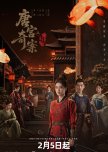
El misterioso caso del palacio Tang
A 3 usuarios les ha parecido útil esta reseña
This review may contain spoilers
Infuriating, rage bait nonsense not suitable for any audience let alone western sensibilities
If you are looking for a logical, tightly-plotted Tang Dynasty detective thriller, keep walking. Unveil: Jadewind manages to completely insult the viewer’s intelligence within the first eighty minutes of its runtime, relying on artificial frustration rather than competent storytelling.The production budget is clearly on screen. The cinematography is moody, the costumes look expensive and the lighting effectively channels that "Tang Dynasty Gothic" aesthetic. If you mute the television and just look at the pretty pictures of Bai Lu and Wang Xingyue, it is a visually polished show.
However, the writing is absolute garbage, driven entirely by a double-standard logic that breaks the universe immediately. Episode 1 introduces a Female Lead who is supposed to be a martial-arts-elite palace investigator. Yet, when a government official tries to openly assassinate her, she refuses to take a kill shot, leaving her looking utterly passive and weak. Apparently, the script wants us to believe she is bound by rigid legal bureaucracy, while the villain is allowed to commit open treason in broad daylight with zero consequences. Episode 2 doubles down on the nonsense during the princess's murder investigation. We are introduced to the Right Chancellor's daughter—a toxic, unhinged bully who treats everyone around her like a human trampoline. Instead of being punished by the literal Royal Family, the Princess gives her a "gentle dressing down" because the writers want us to accept the absurd trope that a Chancellor holds more power than the Emperor himself.
This drama doesn't build tension; it just builds rage. The script is structurally engineered to keep you infuriated at the constant, unpunished injustice handed to decent people, expecting you to stick around for dozens of episodes for a payoff that isn't worth the psychological torture. Netflix have packaged this up based purely on star power metrics, but no amount of high-budget cinematography can save a show built on such a deeply flawed foundation. Save your sanity and drop it now.
¿Te ha parecido útil esta reseña?
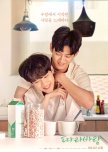
Warm and authentic
This one reminded me of Given — not in plot but in feeling. Music as emotional language, a pairing that feels genuine rather than performed, and a warmth that doesn't need to manufacture drama to hold your attention. If you know Given, you'll understand why that's a compliment.The couple feels authentic in a way that's harder to achieve than it looks. Baram's quiet, consistent support of Han Tae never tips into something saccharine — it just feels like someone who actually sees another person and chooses to stay. And Han Tae's journey of learning to believe in himself and let someone in is handled without overplaying it. The music running through all of it earns its place rather than just being backdrop.
A genuine comfort series — the kind you put on when you want to feel something warm without being put through the wringer. Those are rarer than they should be, and this one does it well.
¿Te ha parecido útil esta reseña?


