

This review may contain spoilers
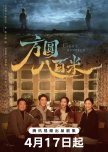
Duty Before Blood
Eight Hundred is, at its core, a story about limits. Not the kind you casually brush against, but the kind that force a choice out of you when there is nowhere left to run. Set in a late 90s mining town, the story begins with a seemingly straightforward case that quickly unravels into something far more personal. Police officer Chen Hong Bin notices glass fragments on a victim that point toward a banned drug, and what starts as a routine investigation slowly exposes a trafficking network embedded within the town. The real turning point comes when the shadow behind it all is revealed to be someone closest to him. From there, the drama shifts into something more intimate and painful, a moral tug-of-war between duty and blood.The premise already tells you how this will end. Not the exact details, but the direction. Once you understand Hong Bin’s rigid sense of justice, there is no illusion of a miraculous escape. The question is never if, but how heavy the cost will be. The drama plays this out as a prolonged cat and mouse game between Hong Bin and his son, Chen Hui. Hong Bin relentlessly pushes forward, following every lead with almost mechanical persistence, while Hui does everything he can to stay one step ahead. Hui’s descent begins with something almost understandable. Together with his girlfriend Gao Song Ge, he enters the drug trade to pay for her medical treatment. They are not framed as inherently bad people, just desperate and naive enough to believe they can control the scale of their actions. Like many tragedies, it starts with a small compromise that quietly snowballs into something irreversible.
That said, the execution of this cat and mouse dynamic can feel repetitive. The structure often loops: Hong Bin closes in, Hui narrowly escapes, and the story resets before building tension again. It works in maintaining suspense, but at times it feels like running on a treadmill rather than moving forward. Each near discovery could have shifted the stakes more meaningfully, but instead the narrative occasionally retreats into familiar territory. It is engaging in theory, but the impact softens when the progression does not match the intensity of the premise.
The investigation itself walks a fine line between satisfying and frustrating. There are moments where Hong Bin’s methods reflect a classic investigative mindset, such as when he painstakingly pieces together scattered styrofoam fragments. It echoes that old idea that no detail is too small. However, the narrative does not always justify why certain clues deserve that level of focus. When this reconstruction points toward Hui, it feels less like a solid breakthrough and more like a conclusion driven by suspicion. At times, it seems as if Hong Bin is working backward from a belief he already holds, rather than building toward it with airtight logic. It does not ruin the experience, but it does chip away at the credibility of the investigative process.
Where the drama truly finds its weight is in its characters and their choices. I found myself siding with Hong Bin, even knowing how unforgiving that stance is. He is a man who was a cop before he was anything else, and that identity defines every decision he makes. There is something both admirable and unsettling about how unwavering he is. He does not bend, not even for his own son. In a world that often negotiates with morality, Hong Bin feels almost anachronistic, like a relic of a stricter era that refuses to soften. What surprised me most was not that he pursued Hui, but how little hesitation he ultimately showed in doing so.
Hui, on the other hand, is a character who crosses lines one by one until there is nothing left to defend. At first, his actions feel redeemable within a certain moral lens. But the turning point comes when he chooses violence not out of desperation, but intent. His plan to kill Luo Yan, and later his involvement in orchestrating it through Huo Kai Ming, marks a shift into darker territory. The final nail is the death of Tian Jin Hai. What could have been self defense spirals into something far more brutal, and from that moment on, Hui becomes someone you can no longer excuse. Framing Liu Na afterward only deepens that fall. That decision feels particularly cruel, not just because of what it represents legally, but because of the personal betrayal behind it.
Episode 15 stands out for how raw it feels. It strips everything down to a simple but uncomfortable question: what do people choose when given the chance to do right or wrong? The drama does not dress this up with spectacle. It leans into the quiet tension of decision-making, and that is where it resonates most. It is less about plot twists and more about whether characters will make the right choice when it actually matters. In that sense, it reflects reality in a way that is almost unsettling. Crime here is not abstract, it is the direct result of accumulated decisions.
By the time the ending arrives, it does exactly what it promises. There is no dramatic escape, no last minute miracle. It stays grounded. Episode 20 is emotional not because it shocks you, but because it follows through. Watching a father send his own son to prison while still holding onto that bond is quietly devastating. Xu Kai delivers what is easily his strongest performance here. The moment Hui looks back at his parents while being taken away lingers longer than any plot twist could.
Visually, the drama does a commendable job capturing its setting. While some sets lean slightly theatrical, the overall aesthetic works. The costumes and makeup help sell the time period, and the attention to detail in the characters’ appearances adds authenticity. Hui’s tanned complexion and Song Ge’s frail, sickly look subtly reinforce their circumstances without needing explicit dialogue.
In the end, Eight Hundred is a compelling character study wrapped in a crime narrative. As an investigation drama, it falls short in consistency and progression. But as a story about choices, consequences, and the fragile line between right and wrong, it lands with impact. It may not be airtight, but it is thought-provoking in a way that stays with you after the final episode.
Was this review helpful to you?

how can a short show be this meaningful
I start this show because I love my journey to you so I started to watch other this director work and honestly this doesn’t disappoint me . It’s short but there is a whole story in it . I love this director work . He always add some amazing phrase in it here ^ no one is innocent in this world ^ . I can’t wait to watch his other work. This Wuxia show is well written for it 37 minutes long . it’s hard for me to explain it as my understanding because of my poor English. This show is mainly about the person who was treated as tool forever finally feel important and get treated as a person for the first time in so long .Was this review helpful to you?
Considering dropping at episode 10
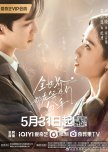
So far I keep waiting for this drama to turn good but instead I find the FL so annoying and I like the actress in 2-3 other dramas. I just find her so crazy and unreasonable in this drama to the point she’s super annoying and hard to watch. I may or may not drop it only because other reviewers say it’s so great and I’m waiting for the great part to happen. Will update this review if I watch more and my opinion changes.Was this review helpful to you?
Jumvengers, assemble!
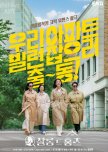
I havent come across a show that could make me laugh my heads off and then sob in the next minute since A Dream Within a Dream, until Salon de Holmes came along my feed. I was laughing my heads off with tears in my eyes on Ep 2, then shed quite a bit of tears before 10minutes in, so much that I immediately declared Jung Young Joo to be my new favourite korean actress after Lee Siyoung. Heck this is also my first Lee Siyoung’s show that her character didnt become my most favourite one, cuz hers here was sleuth instead of a full on martial fighter.The show tells the story of 4 women in their 20s, 30s, 40s and 50s who met each other in a mall hostage incident where they ended up solving the mistress mystery of the gunwoman. Forming a group of friendly neighbourhood sleuths to pass their time, the first case being a simple parking hoarder gradually escalated into a more serious case with each episode, that eventually led them to Gong Miri’s childhood nightmare, the serial killer, Ribbon Man.
This is the first show of Lee Siyoung’s that I saw of her taking up a cheerful, classic clumsy housewife role with no martial ability. All the past roles that i saw of her are cold and reserved women with fighting ability. This Gong Miri role gave me a different perspective of Lee Siyoung’s talent that i never expected of. She was really good at playing Gong Miri that I stopped seeing her as the boxer Lee Siyoung. She really nailed this role that depicts of a housewife who has a rare talent at sniffing clues and deducing mysteries, yet also struggling to handle her in-laws while being frustrated at her husband who’s having problem in the bedroom chores, like how she did her other shows.
Although I liked Gong Miri, i loved Jung Youngjoo’s Chu ‘The Hulk’ Gyeongja even more! Becoming a housewife when she was at the rising stride of her policewoman career was the hard choice she had to make in order to make concessions for her then mentee turned husband upon her retirement. Her husband had been her subordinate when she was in the force, but his low self-esteem never dwindled even after she left, hence he never stopped putting her down when they were around his subordinates. Chu generally plays along but when he pushed her buttons too hard, she had no qualms to turn to violence, which usually puts her husband back in his place cuz he is no match for her strength.
I really love the flow of the plot that gradually escalated from petty parking fights and garbage owner tracking to decade-long serial killer hunt. The writers are also really brilliant at incorporating comedic scenes into sob scenes then goes directly to thrillers. I also love the fact that the lives of the housewives is depicted to be closest to normal daily life with partriachal husbands to bedroom problems to the schoolchildren’s bullying cancer which many viewers can relate to.
The fightings are really good and they definitely did not spare an effort to make our main characters bruise and bleed, or even crack a bone or two for our retired police officer. I miss seeing Le Siyoung fight though, cuz she did none in here. Okay she’s got a few clumsy brawls but that’s just about it, no fancy martial art moves other than those executed by Jung Youngjoo’s Chu ‘The Hulk’ Gyeongja. Like, for real, it is truly mindblowing to know that Jung’s age had been 53 when she filmed the show. All her moves were powerful and she definitely didnt look like someone in her 50s 🤯 This is one of the few things that I admire about kdrama industry - they do not give a qualm about hiring actresses at veteran age as main lead. This is definitely not the first kdrama that I saw above 50yo actress taking up the lead helm. Truly inspiring.
This show definitely did not disappoint and I can’t wait for season 2!
Was this review helpful to you?
ONE OF TGE BEST SERIES GMM HAVE EVER MADE
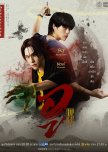
after reading the novel, i was worried abt the CGI. the last time i saw gmm did a great CGI was way back YEARS ago, thru The Gifted. after that, gmm declined a bit (i guess it's bc they dont releass much fantasy series anymore) but then WU came.To whoever brought P’wa, the writer, the one who also produced The Gifted before and Parbdee who is a powerhouse in terms of production wise, together, is definitely a genius. + SKYNANI who are great actors, jinjja actors that can ACT. GMM just made the right decision to combined them all and we all are seeing the results.
I'm so excited for the next scenes on how they will delivered it, coz watching EP1, i knew i dont have to worry about anything.
Skynani, you deserve this. Not because you two are my mains, but you two are hardworking actors and one of the most talented artists from tye company.
I’m so so so proud of you two.
Was this review helpful to you?

GL romcom of the year
I love the novel so much and I appreciate how devoted it is to the novel. I can't wait for the scenes and conflict they have added in aside from the things in the novel cause I know this production is good for those scenes and I know JanJingjing will nail those. My favorite part is where they talk before they go home like a REAL talk outside of work.Was this review helpful to you?
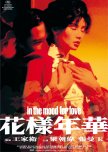
My May Recommendation movie
Watched this because the recommendation challenge by 𝑫𝒂 𝑩𝒂𝒐…For once the synopsis from MDL is true to its point. So I'm not gonna write another one....
What I like / appreciate:
+ The beautiful & very aesthetics and cinematography. For you who love this kind of cinematography will gonna love this.
+ The character is really interesting. Despite their spouse infidelity, they still find the strength to avoid the same mistake nor they seek revenge.
What I don't like:
- I found this quite boring & very uninterested
- kinda wait for a little confrontation between chou & su & their couple... But it's not happening, for me making it more boring ..
Overall this a good movie for those who fond with this kind of story telling or cinematography. But once more this is not for me...
Was this review helpful to you?
Love by Chance Season 2: A Chance to Love
0 people found this review helpful
Only came for Perth who was brilliant as usual
I’m so frustrated by this follow up series as about the only thing that made any sense was… er…. They should have stopped at one series. The ending for Tun and Can, although awful was realistic in season 1 - love doesn’t always win in the end and life isn’t always fair.This second series would have been so much better (IMO) if it had started with Tun trying to win Can back and Ae and Pete being separated by a year abroad, focusing on how they coped with distance rather than devastating heartbreak ( we only get one sentence to explain what split them up).
The business with Tun’s brother Tul, his lies and their father’s favouritism made no sense (lost in translation I guess) and after years of abuse why did this fractured family just pat each other on the back as if it hadn’t happened 🤷🏼♀️
This series should have also continued with more emphasis on Ae and Can’s friends who helped carry them forward so brilliantly in the first series. ☹️💔.
This had so much potential and Mame and the team blew it.
Would I watch it again? Absolutely not
Was this review helpful to you?
This review may contain spoilers
The Epoch of Miyu: Strategic Trope Reconnaissance
I finished The Epoch of Miyu (蜜语纪), and by the final ten episodes I had transitioned from traditional viewing into what I can only describe as executive-summary drama consumption via strategic trope reconnaissance. This was not binge watching. This was me fast-forwarding through organizational nonsense, pausing for moments of consequence, and conducting a live forensic analysis of trope collapse under corporate fantasy conditions.The frustrating thing is that this drama had the bones of something much better.
At its core, the story seems to want to be about a divorced woman rebuilding her identity through work, independence, and love in a high-pressure luxury hotel environment. The OST certainly thinks that’s the story. The music is genuinely beautiful, emotionally coherent, and often deeper than the writing itself. Songs like 熟透 (“Fully Ripened”), 被遗忘的 (“The Forgotten”), and 南柯一梦 (“A Dream/Illusion”) suggest themes of emotional maturity, abandonment, illusion, regret, and growth. The problem is that the actual drama rarely earns those emotional beats.
The single biggest issue with this show is that it constantly mistakes escalation for development.
Things are always happening:
- misunderstandings
- sabotage
- jealous exes
- promotions
- accidental intimacy
- workplace conspiracies
- dramatic illnesses
- relationship resets
But very little develops organically over time.
The clearest example is the central romance between Xu Miyu and Ji Feng. The drama insists repeatedly that they are deeply in love, but it rarely dramatizes how they got there emotionally. Instead of gradual intimacy, we get trope stacking:
- gazing over billowing bedsheets
- umbrella scenes
- forced proximity
- accidental falls into kisses
- spotlight ballroom dips
- dramatic misunderstandings every few episodes
And after nearly 30 episodes of tension, the show jumps from unresolved attraction straight into sex with almost no believable emotional progression between them. The result is that many scenes that were clearly intended to feel romantic instead felt awkward, forced, or unintentionally comedic.
Ironically, the side plots were significantly stronger than the main romance.
Yu Cheng and Zhen Zhen were, without question, the strongest and most narratively honest characters in the show. Their relationship was messy, manipulative, toxic, tragic, and psychologically coherent. Every decision they made flowed naturally from who they were. Betrayal led to mistrust. Opportunism led to emotional rot. Regret came too late. Even when melodramatic, their storyline felt emotionally causal in a way the main romance rarely did.
Director Wei was also consistently written. He was always exactly who the show said he was: corrupt, entitled, politically manipulative, and hollowing out the hotel for personal gain. Whether I liked him or not is irrelevant. He made sense as a character.
Meanwhile, Xu Miyu gradually stopped feeling like a human being and started feeling like a universal competency fantasy.
Within roughly a year, she goes from housewife to:
- housekeeping
- executive floor forewoman
- lobby manager
- sales
- AI business development
- international negotiation
- investigator
- scholarship recipient to Switzerland
The show treats titles as rewards, not responsibilities.
The organizational aspects were not even close to being believable, and this became increasingly impossible to ignore. Promotions happened without openings existing. HR exists as a magical title generator. Roles changed overnight. No meaningful training occurred. Security procedures made no sense. Sales structure was fantasy-level nonsense. At one point, two surveillance employees left the surveillance room completely unattended because they wanted to go eat before investigators arrived. The show repeatedly rearranged reality to make plot points possible.
And yet, despite all of that, there were still moments I genuinely liked.
Tan Ji Zhou (“Kevin Tan”) was probably my favorite “good guy” character in the drama. He was emotionally mature, respectful, calm, and direct. His relationship with Miyu felt more grounded and believable than the official romance. One of my favorite moments in the entire show was near the end when he asked her, “May I hug you one more time?” The fact that he asked permission in a drama otherwise full of emotionally forceful romance tropes stood out immediately. His father Daniel Tan was also a very enjoyable character.
Xue Rui (Ji Feng’s assistant/friend) and Li Qiao Qi (chef/Miyu’s friend) had surprisingly natural chemistry early on through small, quiet interactions that actually felt earned. Unfortunately, like several side plots in this drama, that relationship was quietly abandoned without explanation. The same thing happened with Duan Ao Xiang and Li Qiao Qi. The show repeatedly introduced emotional threads for momentary effect, then dropped them entirely instead of developing them to completion.
As for Wallace Chung: this is the first drama I’ve seen him in, and I genuinely do not think this script gave him a fair opportunity to shine. Ji Feng was often written less like a psychologically grounded person and more like a delivery mechanism for tropes and emotional spikes. At times the performance felt overly intense for what the scene had actually earned emotionally, but I suspect a large part of that comes from the writing itself constantly demanding heightened emotion without enough buildup beneath it.
Oddly enough, I did not dislike the ending. In fact, I thought the ending was one of the more reasonable parts of the show. Miyu going to Switzerland instead of immediately rushing into marriage actually fit her larger aspirational arc better than a wedding would have. The relationship ending on “we’ll wait for each other and see where life goes” felt calmer and more emotionally mature than many of the conflicts the show manufactured throughout its run.
Ultimately, The Epoch of Miyu is a drama with excellent music, strong side characters, scattered moments of emotional sincerity, and one of the weakest central romantic structures I’ve seen in a long time.
The drama repeatedly asks the audience to feel depth instead of building it.
And by the final stretch, I realized the most enjoyable part of the experience wasn’t actually watching the show itself; it was analyzing the narrative chaos afterward.
Was this review helpful to you?
This review may contain spoilers
I am totally imprisoned by the beauty of this drama.
Just a few episodes in, I was already completely hooked— definitely had me locked in, anticipating to see how everything would unfold. It's the kind of story that becomes addicting to watch, pulling you in so deeply that you feel everything alongside the characters, as if you’re part of their journey. From the very beginning, it lays a strong foundation, and as it progresses, I found myself growing more and more attached— not just to the story, but to the characters themselves. Not to mention, the trope is enemies to lovers— what better setup is there for tension and slowburn than that?The plot truly thrives on tension, strategy, and emotional conflict. While it leans more on its comedic tone, the emotional intensity was executed effectively and most of the pivotal moments hit where they need to. What makes it even more engaging is the constant push-and-pull— both in the political schemes and the characters’ relationships— which keeps the stakes feeling high. The narrative doesn’t rely solely on big twists; instead, it builds tension through layered interactions, conflicting loyalties, and gradual revelations, making every move feel calculated and meaningful. I appreciate how the story didn’t rush major developments. Instead, the pacing of emotional conflicts, "betrayals", and realizations felt earned, which made the payoff more satisfying.
The characters are definitely one of the drama’s strongest points— they have depth and are complex, compelling, and deeply human. I truly love how every character was written out.
Manman: I felt deeply protective of her immediately from the very start. Despite being intelligent, strategic, and capable, she remains soft-hearted— that contrast gives her so much depth. You understand her decisions—even when they hurt—because she’s caught between two clans, carefully threading her way in a path that could break at any moment. She isn’t reckless with her choices— every move she makes is calculated, yet still guided by compassion and rooted deeply in her circumstance. Even when she schemes or makes difficult decisions, she never loses her humanity. That balance between rationality and emotion is what makes her so admirable. She’s constantly torn between family and love, between her hometown Yanzhou and her new home in Wei, between filial piety and her own heart. I truly empathized with her early on, which only proves how well-written her character is. Song Zuer’s portrayal elevates it even more— her performance is so convincing that every time Manman is mistreated, misunderstood, or breaking down, it genuinely feels painful to watch. I cry when she cries.
Wei Shao: A truly morally gray character. His actions aren’t always right, but they’re understandable and deeply rooted in his past. The storytelling does a great job making his motivations feel natural rather than forced. He comes off as tough and guarded, yet carries so much beneath the surface. As Yulou pointed out, the people of Wei are slow to trust— but once they do, it’s unwavering. That trait is perfectly reflected in Wei Shao, especially in how his relationship with Manman and the Qiao Clan develops. You can tell he’s just as torn— if not more conflicted and skeptical than Manman— which makes him feel even more genuine. Hence, the way he allowed himself to let go of the lifelong hatred he held toward the Qiao Clan— choosing instead kindness, forgiveness, and sincerity— was truly touching. Its emotional intensity was powerful and comeplling, largely because Wei Shao's character arc was portrayed so effectively. His journey and motivations were clearly laid out, making every development and shift in his character feel earned and worthwhile. Liu Yuning’s performance was definitely remarkable— you can visibly see how he softens in the later episodes compared to the earlier ones. He was truly convincing as Wei Shao.
The Qiao Clan and Wei Clan— except Manman's uncle— were also wholesome to watch. Unexpectedly, Mayors Zhen and Yang also left an impression on me. I found myself empathizing with them and, in a way, even feeling proud of them for choosing to die for the cause they believed in. The four generals’ brotherhood was easily one of the most heartwarming parts of the drama— I truly adored their bond. In particular, Wei Qu and Wei Liang’s relationship stood out the most. The way Wei Qu was willing to sacrifice himself for Wei Liang— to bring their brother back home— it was emotional and gutwrenching for me. His breakdown upon realizing Wei Liang was no longer breathing was one of the most devastating moments in the entire drama, made even more powerful by how deeply their bond had been established. Xiaotao and Wei Liang were absolute cuties, and I genuinely found myself rooting for them. They were a wonderful addition to the story, bringing warmth and lightness whenever they appeared— making Wei Liang's death truly heartbreaking. Even though it was foreshadowed, it didn’t lessen the emotional impact. The weight of that moment hit hard, especially because he was one of those characters you grow attached to early on.
Nonetheless, Manman and Wei Shao's relationship and dynamics were truly well-written. It’s literally a game of “one step forward, three steps backward”— especially with how they both navigate their relationship and circumstances. One of the most enjoyable aspects was the constant scheming. Watching them go against each other was so entertaining, yet also stomach-turning whenever they have a confrontation. I truly appreciated how the drama stayed true in its premise— a strong enemies-to-lovers foundation— filled with tension, distrust, and conflicting loyalties. This makes their relationship feel natural and not rushed— they became conscious of each other and eventually fell inlove. Wei Shao being vulnerable— only to Manman— serves as a major turning point in their relationship (I ate those kinds of tropes) He may not exactly have had a dramatic groveling arc, but his pining was undeniable. The way he consistently shows concern and protectiveness toward Manman speaks volumes. He expresses love more through actions than words— very much an acts-of-service type— which contrasts beautifully with Manman, someone who has her way with words, which adds another layer to their dynamic. It's truly compelling how they started off toxic and guarded, yet ended up developing strong communication, mutual understanding, genuine trust, and heartfelt love towards each other. It’s almost ironic— in the end, all they truly wanted was peace and happiness.
The production aspects elevated the drama even further. The cast delivered strong performances, especially in emotionally intense scenes (even the side characters) The fight scenes were also one of the strongest aspects which were perfectly complemented by the OST— making each and every scene hit harder.
The final episode however was an emotional rollercoaster. It went from intense and anxiety-inducing battle scenes to deeply emotional tributes (especially for Fan and Wei Liang) to a sudden transition into a peaceful timeskip. While I appreciated that the drama gave us a happy ending— showing Manman and Zhonglin with their daughter, Feifei— the resolution felt lacking. It was abrupt, rushed, and overall lacking in buildup and proper conclusion. It felt like the drama compressed too many major events into a short span, then quickly moved to a brief happy conclusion. I just wish we had more time to truly sit with their happiness after everything they went through.
Overall, this drama— no doubt— excels in character depth and arcs, emotional storytelling, relationship development, tension and dynamics. It’s not hard to grow attached to the characters— they feel real, flawed, and human. Despite some pacing issues toward the end, I genuinely loved the experience and I enjoyed every bits of the drama. It made me feel a wide range of emotions— from excitement and tension to heartbreak and warmth. This is truly a compelling drama driven by complex characters and a powerful enemies-to-lovers romance— definitely done right. The journey itself was emotional, engaging, and absolutely worthwhile.
Would I recommend this? Definitely! If you’re a sucker for the enemies-to-lovers trope— especially one that goes beyond simple passive hostility— and with real stakes on the line, this is a must-watch. The plot itself may not be particularly unique, but it makes up for it with gripping and emotional storytelling that keeps you fully invested, almost as if you’re imprisoned inside the drama alongside the characters.
Was this review helpful to you?

This review may contain spoilers
Funniest cdrama!!
It was so funnnn while watching this drama I have laughed so hard 😂omg I loved all the scenes but that one when feng baobao start showing her skills she's my fav Wang yinglu loved herrr
also going to watch all her dramas🌷💕
btw it's an interesting drama if u also love to laugh so this will be the best 😹 drama everrr
Was this review helpful to you?
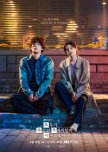
The Most Phenomenal Screenwriting and Acting of 2026
I would say the drama 'We Are All Trying Here' is the best K-drama of 2026 so far.I have never rewatched a TV series while it was still ongoing, but this is the first drama where I’ve wanted to understand every word and scene in detail to truly get all the characters. The script is phenomenal. It really reflects our everyday crises while also healing our own dramas—whether they stem from hardships, trauma, work politics, or even small anxieties in daily life.
'Dong-man,' the male protagonist, represents someone who never gave up on his dreams or his faith in making them happen, despite many failures throughout the decades. That’s so rare to see this type of people nowadays, but he reminds us that we aren't alone in trying to live our lives.
Highly recommend this to anyone who likes deep, inspiring, and bittersweet dramas.
Was this review helpful to you?
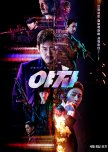
I NEED MORE PARK JINYOUNG IN ACTION MOVIE
Park Jinyoung stands out with his natural presence in an action-heavy narrative. He doesn't try to overpower the scenes, but instead fits seamlessly into the fast-paced spy world. His subtle reactions and controlled expressions make the character feel realistic. It’s a quietly effective performance.Was this review helpful to you?
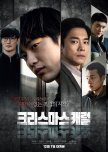
PARK JINYOUNG DUAL-ROLE???
Park Jinyoung truly elevates Christmas Carol with his dual-role performance. He creates a clear emotional separation between the twins while keeping both characters equally compelling. His ability to balance and differentiate them without overacting is very impressive. It’s a performance that feels both controlled and powerful.Was this review helpful to you?
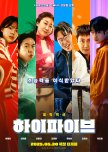
THE VILLAIN IS HOT!!!!
Park Jinyoung absolutely steals attention in Hi-Five with his portrayal of a dangerously charming villain. His presence alone feels powerful, and the way he controls his emotions adds a layer of unpredictability. He makes the character feel both attractive and intimidating at the same time. It’s a performance that keeps you hooked whenever he appears.Was this review helpful to you?


