


I don't know what to write
dqjebhqwebfhbhvqry hfbqbfyqhbfhhfquuhhqhrbqhbr rfqhuhbquhugvyfiqbhfgvrifbhuvryiguwfbhrviguf hfrqgiuhihuqygfuhbirygfueibhyfuhbihg jyegirquhjbh hbqhwfhqbfqefvqufqwvf efgefuyf u4yevjqvjhugygyguf fbuyghfhfvfuquefgefq fef fqfvuyfhfuqhfhvfyuqjhyffb quhfygfbfbjqwifufhfb efvwuqrbrherurqghrhrghyqbirh jrhhrjhbjjrhgjrhghrgrgjerhghrjw jhgerughrgjregwjrgjrgjrhghrghregrejgjregherg jgerrrrrrrrrrrrrrrrrrrrrrrrrrrrrrgjWas this review helpful to you?
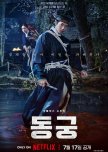
The drama took the theme of Korean mythology and gave it a fresh spin in form of Gucheon, who gains the ability to travel between the world of the living and the world of Gwi when his shaman mother committed suicide, taking him with her. Miraculously, he survived the ordeal despite his mother's death. And we also have Saeng-gang, an abandoned princess who was banished from the palace because she had the ability to listen to the voices of the dead. When the crown princes of the kingdom kept dying of mysterious causes, the king summoned Gucheon and Saeng-gang to investigate and eliminate the root of the problem but in doing so, the two end up uncovering the king's darkest secrets.
You can tell if a drama has a good story if it manage to capture your attention from the first episode. East Palace was able the deliver a good balance of mystery and horror that kept you wanting to find out what comes next. And the two mains had a very good dynamic that grew from reluctant cooperation into trusted companionship. And to complete it, the ost served a healthy serving of heavy metal as Gucheon and Saeng-gang work together to defeat evil spirits that threatens their lives.
Was this review helpful to you?
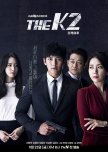
just google who the killer is
The K2 is one of those dramas that is always on a must-see k-drama list; so, I added it to mine.I loved JCW in the Worst of Evil and the Manipulated, but even he wasn't enough to keep me watching The K2. I was only able to make it up to episode 8 * I did have to ff through some of the episodes
First the good- Ji Chang-wook and Song Yoon-ah carried the show. They are the reason for 8 stars for acting,
The Bad- Yoona (Anna) It would have been better if her character was a child (like 9-12 years old) It felt like the character of Anna was purposely made to be an adult just so there would be "romance" in this drama. The "romance between Anna / K2 character was forced on the viewer and it was unnecessary to the storyline.
the plot also gets muddled with all political talk and it isn't intriguing. I decided to save myself some time skipped to the last episode to find out who killed Anna's mother.
Was this review helpful to you?
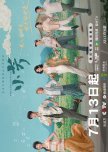
A Truly Outstanding Rural Drama – Xiao Fang
Xiao Fang is an absolute gem and one of the most heartwarming Chinese rural series I've ever watched. It beautifully captures the simplicity of countryside life while telling meaningful stories about family, friendship, perseverance, and community. Every episode feels genuine, with characters who are relatable, kind, and full of depth.The acting is exceptional, bringing each character to life with natural emotion and authenticity. The stunning rural scenery adds so much charm to the series, making every scene visually relaxing and immersive. The storytelling strikes a perfect balance between heartfelt moments, light humor, and inspiring life lessons.
What makes Xiao Fang truly stand out is its ability to remind viewers of the importance of compassion, hard work, and staying connected to one's roots. It celebrates everyday people and shows that even the simplest lives can be filled with extraordinary moments.
This series is not only entertaining but also uplifting and refreshing. It's the kind of show that leaves you smiling, thinking, and appreciating the beauty of ordinary life. I highly recommend Xiao Fang to anyone looking for a touching, well-crafted, and unforgettable drama. It deserves every bit of praise and easily earns a 10/10.
Was this review helpful to you?
This review may contain spoilers
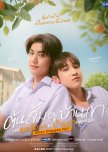
Dropped show because of controversy
Would have rated this a 10 but the way Gmmtv handled this controversy and the amount of toxic fans they have is a no from me.Story is pretty sweet. Acting is nice. Cinematography is good. I can’t comment on the finale or anything because I only watched up to episode 9. I was waiting for the rest of the episodes to come out so I could finish the rest of the series in one go but then I heard about the controversy surrounding the actor Justin. I think Gmmtv handled this poorly and I think a lot of their fandom is pretty toxic.
Was this review helpful to you?
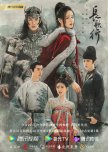
I want to be Li Changge when I grow up.
This is one of the most thrilling historical dramas I’ve seen. It has some of the most epic fight scenes — moments that literally had me punching the air and rewinding to play back the action again. That being said, I was not a fan of the animated sequences. I tried to give it a fair chance at first but I just don’t think this drama benefits from them. I More often than not, I felt that they were jarring, out of place, and confusing; and I would have to wait for the live action to resume to fully understand what was happening. As a storytelling element, they just don’t work. And at times, they are cheesy (especially when they superimpose the live actors over the animatiom). It doesn’t feel cohesive and needed better narrative exposition. I know it was probably due to time constraints/budget/paying homage to the source material but there was definitely a better way to execute it.I loved all of the actors and feel that every character was 10/10 perfect, no notes. I know a lot of people hate on the first couple for their “lack of chemistry” but I didn’t really notice this. For one thing — I feel that it fit their characters because they’re both so tough, I don’t need or expect them to be super mushy. Also, I don’t necessarily watch historical dramas for the romance. I watch them for the badass fight scenes, which this one more than delivers.
The music is also so good. Lots of earworms. And I always love playing the “Is this song a Liu Yuning song?” game while watching dramas.
Overall, this is an excellent drama and definitely worth your time.
Was this review helpful to you?
This review may contain spoilers
It was good but not great
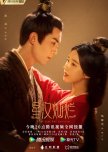
I found this drama while doing a random drama search. I am relatively new to c-dramas, but I have seen Zhao Lusi and enjoyed her in Dating in the Kitchen.I was immediately sympathetic to Zhao Lusi's character from the first episode. I loved the progression of her character in LLTG part 1 (not so much in part 2) Personally, I preferred Shaoshang's interaction /banter with Yuan Shen over Zisheng.
I wish we saw more of Wan Qiqi, as she was a favorite character of mine.
I also wish the story dealt more with the betrayal by Shaoshang's mother- her mother knew of the mistreatment for 15 years and she did nothing because it served her purpose of sowing discord between her husband and his mother. It felt as though we were just supposed to accept it. Later on, her mother does try to make amends for other misdeeds but it's not enough.
Overall, I enjoyed this drama
Was this review helpful to you?
Better than I was expecting
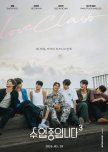
Watching this as a K-pop fan is weird. From seeing the survival shows, eliminations, and trainees continuing to work hard for a debut that may never come. All of that felt more personal because I've watched so much of the IRL version. I liked that they showcased the toxicity from the company and the crazy fans; these things always feel like they are covered up unless the group is BTS or SKZ-level big. It would have been nice to see more than dance practice, like vocal practice, recordings, etc. Just more aspects that make up being an Idol.Once again, we are given an Idol show with almost no music involved.
I've heard this is based on a true story, but I don't know many of the details since I'm still very new to the K-pop world. I've always liked the music, but I only recently got interested in knowing the members. (I've never been very interested in celebrities, but SKZ came in like a wrecking ball & have literally taken over without me noticing.)
This was probably my favorite of the Love Class series. Mostly because I actually cared about both couples in this one, whereas in the others there was always 1 couple that I just didn't care about. I also think that while the chemistry was a bit hit or miss, it wasn't that bad. The acting was also pretty good considering this was most of the main actors' first role in a drama.
I got Su An & Jae Min confused more than a few times, especially in the beginning. The choppy editing did not help at all. We would constantly switch from one character to the next with no warning. I had to rewind and replay some scenes because it would switch from Jae Min to Su An with no warning & I didn't know we had changed characters. It got tiring.
Everything that happened with the CEO & Hyeon Jae was handled in a choppy way. They tried to build tension and failed. It also didn't make sense that Hyeon Jae had to "disappear", and it made even less sense that he actually could. The ending just felt very rushed & left things kind of unresolved when they didn't need to be.
(I'm actually listening to SKZ while writing this review because the world is too noisy.)
Was this review helpful to you?
this f up greed for the throne is so accurate. it makes you do filthy things for power. i love f up characters like everyones crazy. thank god saeng gang was thrown out of the palace honestly.
cinematography ate so bad. the color grading left me in awe. cgi is so good. hopefully, there was no AI. ghost/monster designs felt eerie like in video games.
Was this review helpful to you?
This review may contain spoilers
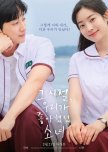
I admit I was hooked in the beginning but then the plot just started to go out of control and slowly made the movie boring. First, it was too long. I mean, we literally saw their whole story. We watched them in their high school years until they became full grown adults. At first it was cute but then it became more confusing the longer I watched it. It didn't even show us when they got together and we didn't see him ask her out officially. I feel like it focused mainly on him after they graduated high school and they didn't show us that many scenes of them together until the very end. Speaking of, that was one of the most weirdest endings ever.
Why would she call him right before her wedding and why would he tease her like that unless it was them getting married? I didn't understand that phone call.
We got a kiss from them but at what cost T^T
It was pretty funny that they all tried to kiss her husband after that, but respectfully, if my future partner was making out with their ex right in front of me I would definitely have second thoughts. If the director was going to end it like that, they might as well let the main couple get married right??
Was this review helpful to you?
Below expectations but has potential
I understand what people are saying about the directing being bad, and honestly I agree with them. The camera angles, shots and lighting give short drama vibes and the music becomes randomly dramatic at times. Also, the lines are so funny, and not in a good way. However, the plot shows potential and the acting is okay. Also, the face cards are beyond a doubt excellent. If you can get over the use of AI, cheap, amateurish editing and cringey script I think it has potential and may be worth a watch.Honestly, I had very high hopes for this drama because of the promoting and marketing and the lead actors, but although it is far below my expectations, I wouldn't say its as horrible as some people are making it out to be.
Was this review helpful to you?

Comfort drama in my July
One word comes to mind: comfortable.This drama is so refreshing and enjoyable that I watch it every day in the most comfortable situation. The drama's conflict is clear and uninhibited. It's resolved in a mature and straightforward manner, adding to my appreciation.
Road to Success is truly a journey, from the lowest point of 11 students almost giving up on their dreams to the peak of their careers. Lin Wangxing, who was at her lowest point where her light was dimming, now shines brightly. Wang Fa, who was lost in the darkness and almost retreated, finds his purpose in life. Together, they truly share a meaningful journey.
"𝒀𝒐𝒖 𝒅𝒊𝒅𝒂 𝒅𝒊𝒅𝒂 𝒎𝒆, 𝑰 𝒉𝒖𝒂𝒍𝒂 𝒉𝒖𝒂𝒍𝒂 𝒚𝒐𝒖" this is the most memorable line, i remember laughing and feeling tickled hearing it but kept repeating it. Fellow viewers must be familiar with this, I can even hear this line while typing it.
I appreciate this drama for showing me that
-No matter how far we run, we must eventually face the problems we avoid.
-Giving up in life is not an option; there is always a purpose and meaning to life, even if it's small.
-Big dreams are good, but even better with effort and knowing how to achieve them. It may be difficult, feel impossible, and think it's just a dream. But don't give up before trying your best.
-Everyone has problems. It's hard to say, but when you do, you can overcome those difficulties as if they weren't a big deal.
Was this review helpful to you?
The editing and sound effects are giving Short Drama Core
I know republican dramas are supposed to be dramatic and what not but I feel like it could’ve done better. Why are the camera shots and sound effects EXACTLY the same as what short dramas give us.I honestly love chaotic and angsty plots but I feel like they should cut back on the short drama editing style and make it more serious. Like of course humor should be part of this show but not with these weird ass sound effects. The sound effects take away the angst because its trying to tell me how to feel. It ruins the mood of the show. Now I can only pray The Lament of Autumn doesn’t follow this formula and goes down a more serious route.
The pacing of this story is also very quick. I wish we got more backstory of the two characters for like 2-3 episodes as it would help build up the angst for when they first see each other again. The wedding scene could've been such a stomach twisting moment but since we never got to really see their relationship together, it felt more like a wasted moment.
As I continue watching I am also noticing a lack of natural chemistry. I noticed in the promo pics and trailers that they don't seem to have chemistry. Like theoretically putting two equally gorgeous beings seems like a good mix but they just don't have the right vibes. I feel like Wang Churan has a more mature and elegant vibe whereas Zhang Linghe has a more youthful vibe so the two of them don't really seem to mix romantically onscreen.
I hope it gets better 🙏 (updating review as I keep watching)
Was this review helpful to you?
This review may contain spoilers
No crown leaves the palace uncursed
I had been patiently waiting for The East Palace ever since the casting announcement. I mean... Cho Seung Woo and Nam Joo Hyuk leading a Joseon mystery-horror drama? There was no way I was going to miss that. Thankfully, it completely lived up to my expectations. From the very first episode, this drama had me hooked. Seriously, within the opening ten minutes we're already thrown into a horrifying tragedy inside the palace. We don't even have enough time to learn everyone's names before the crown princes start dying one after another under a mysterious curse. It immediately establishes an unsettling atmosphere that never really lets go. I totally understand why people keep calling this "Stranger Things, but make it Korean historical." The comparison isn't only because of the monsters or the supernatural elements—it's the way this drama builds another terrifying world beneath reality. The Realm of Gwi, with its upside-down palace, is genuinely creepy. Every trip into that world feels unsettling thanks to the incredible production, eerie cinematography, haunting score, and sound design. You can literally see where the budget went, and every single episode benefits from it.At first, I honestly thought this would be a straightforward ghost-hunting drama. Gu Cheon, a man who can see ghosts and cross into the spirit realm, is ordered to investigate the mysterious deaths surrounding the royal family. Alongside him is Saeng Gang, whose overwhelming yang energy allows her to hear and communicate with spirits. Together, they slowly uncover the truth behind the curse surrounding the palace. Sounds simple enough, right? Well... not at all. What completely addicted me wasn't the ghosts themselves—it was the mystery. Every time Gu Cheon and Saeng Gang believed they had found the answer, the drama would pull the rug out from under them with another revelation. Twist after twist kept exposing tragedies buried deep within the palace walls, making me question everything I thought I knew. For much of its runtime, the investigation unfolds with remarkable confidence, balancing horror, suspense, and mystery almost perfectly.
One thing I really appreciated was Gu Cheon himself. I've seen some people say Nam Joo Hyuk looked too expressionless or emotionally flat, and honestly... I don't entirely disagree—but I also don't think that's necessarily a flaw. Have people actually looked at Gu Cheon's background? This is someone whose yang energy is so weak that simply existing around spirits slowly drains his life away. He's constantly exhausted, sarcastic, emotionally unavailable, and would rather walk away than risk his own life for strangers. That isn't a fearless hero—it's a very human reaction. He values his own survival above everything else, and that made him feel refreshingly realistic. His chemistry with Saeng Gang works because they're complete opposites. While Gu Cheon is overwhelmed by yin energy, Saeng Gang almost overflows with yang energy, making them naturally complement one another throughout the investigation. I also have to give a huge shoutout to Nam Joo Hyuk, Roh Yoon Seo, and of course Cho Seung Woo. They completely sold their characters, and Cho Seung Woo once again proves why he's one of Korea's finest actors.
The biggest surprise, though, is realizing that The East Palace isn't really about ghosts. At the beginning, the drama convinces us that everything started because of the Pond Spirit. Long ago, there was a favored concubine who became the object of the queen's jealousy because she was carrying the king's child. Unable to bear losing both her position and the chance to produce an heir, the queen drove the concubine into despair until she eventually took her own life by drowning herself in the palace pond. From that moment on, she became the infamous Pond Spirit, and everyone inside the palace believed she was the one who cursed the royal bloodline. Every crown prince who inherited the throne would eventually die. Naturally, both the audience and Gu Cheon begin their investigation believing this vengeful spirit is the root of every tragedy. But this drama keeps asking one question: What if the ghost was never the beginning?
As Gu Cheon and Saeng Gang continue their investigation, every answer only opens another wound buried thirty years deeper. We learn that the king himself is not as innocent as he appears. He was born to Suk Bin, a concubine so obsessed with making her own son king that she secretly poisoned every prince standing in his way. The current king didn't choose that bloody path himself—he inherited it from his mother's ambition. In many ways, he is a victim too. He ascended the throne built on corpses he never personally created, carrying guilt that never truly belonged to him. That's what makes Cho Seung Woo's character so fascinating. You understand him. You sympathize with him. Yet you can never completely forgive him. The tragedy doesn't end there. Thirty years later, history repeats itself. The king has four sons. The first and second princes die, leaving the third prince to become Crown Prince. Like Saeng Gang, he possesses the rare ability to hear spirits. During his investigation, he uncovers the horrifying truth about how his own father became king—that the throne he is destined to inherit was built upon poison, betrayal, and countless innocent deaths. Instead of breaking the cycle, he embraces it. Believing power can only be preserved through bloodshed, he murders his own brothers to secure the throne, repeating the exact sins committed by the previous generation. When the king discovers what his son has done, he's forced into an impossible position. As a father, he desperately wants to save his child. As the king, he knows allowing another ruler like this would only condemn the kingdom to another generation of bloodshed. In the end, he chooses the kingdom over his own son and poisons the Crown Prince himself. The prince dies consumed by hatred and regret, returning as a vengeful spirit whose curse is terrifyingly simple: no one who seeks the throne shall ever truly become king. Even the youngest prince eventually becomes another victim of that endless cycle.
And that's the moment everything clicks. The Pond Spirit was never the true villain. She was simply another victim. The curse that haunted the palace for decades wasn't born from ghosts—it was born from people. Every generation blamed spirits for their suffering while refusing to acknowledge that every tragedy originated from human greed, jealousy, obsession, and ambition. Suk Bin poisoned princes out of maternal ambition. The queen destroyed an innocent woman because of jealousy. The Crown Prince murdered his own brothers because he feared losing power. Even the king, despite carrying endless guilt, eventually became capable of ordering the annihilation of an entire village simply because disease threatened his kingdom. That moment completely shattered any sympathy I had left for him. I understood why he became the person he was, but understanding someone is not the same as justifying their actions. That's why I think this drama is so much more than a horror drama. The ghosts are frightening, yes. The folklore creatures are creepy, the Realm of Gwi is beautifully terrifying, and the palace itself feels haunted in every frame. But none of those things are the real horror. The real horror is watching history repeat itself because human desire refuses to die. Long before ghosts began haunting the palace, greed had already made it a cursed place.
To sum it up, The East Palace exceeded every expectation I had. It delivers horror without relying on cheap jump scares, mystery that constantly keeps you guessing, gorgeous cinematography, phenomenal production design, and a haunting atmosphere that lingers long after each episode ends. More importantly, beneath all the ghosts, monsters, and folklore, it's a story about how human greed creates tragedies that no curse ever could. Sometimes the scariest thing inside the palace wasn't the spirits lurking in the Realm of Gwi—it was the people wearing crowns.
Was this review helpful to you?
This review may contain spoilers
When finding a scapegoat matters more than finding the truth
How unhealthy does a society have to be to blame a doctor for a helicopter crash he wasn't even on board?One thing that has always disturbed me is how quickly people look for someone to blame after a tragedy, even before the facts are fully known. Episode 10 of Doctor on the Edge reminded me of exactly that.
In the story, the protagonist—a doctor who had already endured the trauma of losing someone close to him—finds himself living through another nightmare after being blamed for the crash of a helicopter transporting one of his patients.
Based on the doctor's initial diagnosis, the patient was believed to have appendicitis and needed to be transferred by helicopter. After the crash, the media reported that the helicopter had attempted a risky landing. Later, however, it was revealed that the patient didn't actually have appendicitis, but simply an upset stomach.
What struck me most was that the misdiagnosis generated more outrage than the actual cause of the crash.
The doctor's diagnosis did not cause the helicopter to crash. The accident occurred because the newly built helipad had serious design flaws, including inadequate lighting for night operations. In other words, it was an accident waiting to happen.
Yet the immediate reaction was to find someone to blame.
And that someone was the doctor.
That made me reflect on how quickly people can turn someone into a scapegoat before even understanding what actually happened. A misdiagnosis is certainly a legitimate subject for discussion. Doctors make mistakes, and medical errors can have serious consequences. But discussing a diagnostic error is one thing; holding someone responsible for an accident caused by a structural failure is something else entirely.
This reflection also reminded me of other situations involving South Korea that I've followed over the past few years.
A few weeks ago, for example, a Brazilian woman commented on X that she found Koreans' natural skin tone beautiful and didn't understand why so many people strive for increasingly lighter skin. The comment sparked a huge debate because many Korean users interpreted it as denying that they are "white." Regardless of who was right in that discussion—after all, ideas about race and identity differ across cultures and historical contexts—I was surprised by the intensity of the reaction to a comment that, at least to me, did not appear to have been made with any offensive intent.
I was also reminded of South Korea's recent elimination from the 2026 FIFA World Cup. The defeat triggered an extremely intense reaction from some fans. Coach Hong Myung-bo received death threats, returned home under enhanced security measures, and eventually resigned after taking responsibility for the team's performance. Regardless of expectations, the level of hostility directed at the coach was astonishing.
At the same time, it is striking how certain scandals seem to carry vastly different weight in the court of public opinion. Cases involving drug use or drunk driving often result in celebrities being fiercely canceled, whereas sexual offenses—while obviously provoking public outrage—sometimes appear to carry less severe social consequences than one might expect. Likewise, it is not difficult to find examples of female celebrities being judged far more harshly than their male counterparts for comparatively minor mistakes.
None of these examples mean that all Koreans think alike. It would be unfair to make that claim about any country. However, they do raise questions about certain aspects of South Korean society that frequently appear both in the news and in many Korean dramas: intense social pressure, a strong concern for public reputation, the tendency to look for someone to blame almost immediately, and the harshness of public judgment.
Perhaps that is precisely why stories like Doctor on the Edge resonate with audiences. Fiction does not have to mirror reality perfectly, but it often reflects concerns that exist within the society that produces it.
In the end, I found Doctor on the Edge to be a fairly average drama with good performances and a decent script. Yet it left me thinking about something much bigger than the story itself:
How can an economically advanced society continue to tolerate social mechanisms that encourage public shaming, scapegoating, and the destruction of people's lives before the facts are even fully understood?
That question stayed with me long after the episode ended.
Was this review helpful to you?


