

Meh
The story was ok, but it had too many holes to make it good. The fact that it was a short vertical only made it worse.The best thing of this drama were the visuals.
I like the idea of mixing two languages, but the English of most of them was so bad, that it didn't work. The emotions didn't come out enough because of that.
The acting was ok, but not great. Jung Jae Bin did good, Fluke Parinya Tulesin not so much.
The chemistry of the mains was not consistent, there were moments they had a lot of chemistry and moment there was none.
I recommend skipping this one.
Was this review helpful to you?
This review may contain spoilers
Too Dangerous to Love, Too Addictive to Resist”
The Early Spring — When Desire Is More Dangerous Than Love 🖤🔥The Early Spring is not the kind of romance that gives you butterflies and lets you sleep peacefully afterward. It gives you tension. Temptation. Stolen glances. Long silences. And that delicious feeling that two people are standing far too close to a line they absolutely should not cross. ❤️🔥
Luan Nian (Jing Boran) is exactly the kind of man a sensible woman should probably stay away from—brilliant, intimidating, emotionally guarded, and almost impossible to read.
And unfortunately… ridiculously attractive. 😏
He doesn’t need grand romantic speeches. Sometimes all Jing Boran has to do is look at Shang Zhitao for one second too long, lower his voice, or let that perfectly controlled expression crack just a little—and suddenly the entire scene feels intimate.
That restraint is what makes him so dangerously seductive.
Then there is Shang Zhitao (Sun Qian). She may enter his world as an inexperienced newcomer, but she is never simply a helpless girl waiting for a powerful man to rescue her. She has ambition, pride, stubbornness, and desires of her own—and watching her slowly learn how to stand her ground against him makes their attraction even more irresistible.
Because this isn’t love at first sight.
It’s desire at first resistance. 🔥
Boss and employee.
Distance and attraction.
Control and surrender.
Two people pretending to be perfectly professional while their eyes are having an entirely different conversation.
And THAT chemistry… 🥀
Jing Boran and Sun Qian understand that sometimes the sexiest thing on screen isn’t a kiss.
It’s the moment before it.
The hesitation.
The eye contact.
The tiny change in breathing.
The question neither of them is brave enough to ask.
Are we really going to do this?
And you already know the answer. 😏❤️🔥
What makes The Early Spring so addictive is that underneath all that temptation is something much messier. These are flawed adults mixing ambition, loneliness, power, vulnerability, and desire—and convincing themselves they can keep emotions under control.
Spoiler: feelings rarely respect contracts. 🖤
Is Luan Nian a walking red flag sometimes? 🚩
Absolutely.
Would I recommend dating him in real life?
Probably not.
Would I watch Jing Boran play this emotionally unavailable, dangerously charming man for another twenty episodes?
Without hesitation. 😂🔥
The Early Spring is sophisticated, messy, mature, frustrating, and incredibly seductive—not because it shows too much, but because it knows exactly how much to hold back.
Sometimes the most irresistible romance isn't the one that feels safe.
It's the one that whispers:
“You know this is a bad idea… so why can’t you look away?” 🖤🔥🥀
Was this review helpful to you?
The story hits the ground running: the clash between Yoryak (Great), a cocky boxer, and Wandee (Inn), a doctor who refuses to put up with his attitude, explodes into a passionate encounter after a heartbroken, drunken night. From episode 1 all the way through 12, the intensity between them is incredible. They don't need long speeches; simple glances, body language, and their sheer natural magnetism carry the entire show. On top of that, Yoryak's brother and his boyfriend add so much charm with their "bickering old married couple" dynamic that brings pure, wholesome vibes to the screen.
However, the show isn't without its stumbles. Throughout the series, the unnatural hospital gossip moments lead to ridiculous behaviors that pull you right out of the story. Furthermore, starting around episode 7, the narrative drags: unnecessarily stretching out the moment they formally admit their feelings feels frustratingly absurd since they act like an established couple the entire time, accompanied by a few overly predictable plot twists and silly character actions.
Despite these weak script choices and unrealistic hospital scenes, Wandee Goodday more than compensates thanks to an immensely charismatic cast. It isn't perfect, but it's wildly entertaining and highly recommended if you're looking for genuine heat.
Was this review helpful to you?
Lady by day, Ninja by night
I loved this show from the very first episode. It was refreshing to see a female lead like Yeohwa, a noblewoman who secretly becomes almost a ninja at night, helping people and actually being a great fighter. She has such a strong presence that at times Suho honestly feels more like a supporting character.
The villains were fairly obvious, but I was much more interested in the mystery surrounding what happened years ago. I also loved the seokjong's character; his English such a fun addition to the Joseon setting. I took a wild guess about his identity (& I was right!)
One thing I didn't like was “I’m hiding the truth to protect you” trope. Suho hides things from Yeohwa, his brother hides things from him, and it just creates unnecessary problems. Sometimes characters need to actually communicate. however it wasn't dragged so I'm not really mad.
I also got annoyed at Seok Jong for staying hidden after returning (cuz it was giving me anxiety), especially knowing his father wanted him dead. But thankfully, the story handled his situation better than I expected. (I'm so glad they didn't kill his character)
What I really appreciated was that the show didn't rely on unnecessary deaths or drag out the villain's downfall. Everything was wrapped up quite neatly, and I didn't have any major complaints. The story maintains a good pace, it's funny, emotional, and constantly thinking "hopefully yeohwa's doesn't get caught".
overall, The acting was great (female lead dominated the presence) the comedy worked well, and the balance between action, mystery, romance and humour made it such an enjoyable watch. My only real complaint is that I wanted a longer epilogue because I wasn't ready to leave these characters yet.
Overall, Knight Flower was fun, refreshing and surprisingly addictive.
Was this review helpful to you?

Soul Mate — What If Love Doesn't Need a Name?
How am I supposed to describe Soul Mate? Beautiful, certainly. A BL? Maybe, depending on what we expect that label to mean. A bromance? That feels too small. A romance without romance? Perhaps that comes closer. What I am certain about is that I loved it. Netflix itself presented Soul Mate as a ten-year love story between two young men and categorises the finished series as LGBTQ+. So technically, calling it BL is hardly something viewers invented afterwards. But anyone going into these eight episodes expecting the usual BL language should probably know what they are getting. There is no kiss, no sex scene and almost none of the conventional skinship we have learned to associate with two fictional men becoming a couple. Ryu and Johan don't even spend much time trying to define what they are to each other. And strangely, that is exactly what made me think about what a “soulmate” actually means.We often treat love and sex as if they automatically belong together, then treat romance as if it can only be proven through physical behaviour. But the soul isn't the body. Someone can desire another person's body without loving them at all, while another person can become so essential to your existence that imagining life without them becomes almost impossible. Soul Mate seems much more interested in that second kind of connection. Ryu and Johan meet because both are already damaged. Ryu has fled Japan carrying enormous guilt over what happened to his friend Arata, while Johan is a Korean boxer being exploited inside a violent environment of his own. Their meeting in Berlin is almost absurdly dramatic—Johan literally saves Ryu's life—but what develops afterwards isn't the instant sexual attraction of a conventional romance. It is recognition. One lonely person seems to recognise another. Then life keeps pulling them together for ten years.
Berlin, Tokyo and Seoul are not simply pretty international backgrounds. Their relationship has to survive geography, different languages, work, military service, family, violence, illness, grief and long periods when one cannot physically be beside the other. Yet whenever something truly matters, they move toward each other again. Johan saves Ryu. Ryu searches for Johan. They create a home. They help Sumiko. Eventually they construct something resembling a family without ever stopping to explain to everybody what box that family belongs in. That is why calling them simply “brothers” doesn't work for me either. Brotherhood can absolutely produce extraordinary devotion, particularly between men who have survived difficult experiences together. Friendship can also become more important than many marriages. But Soul Mate deliberately places Ryu and Johan within a queer story and repeatedly uses the language of love, fate and spending a life together. Netflix didn't advertise this merely as two male friends; even its original Japanese announcement calls it a story of their “souls and love.” At the same time, I understand why some BL viewers were frustrated. Queer audiences have spent decades being given relationships where everything was implied because filmmakers were unwilling or unable to show two men actually being lovers. So when a drama markets itself as an LGBTQ+ love story and then refuses even one kiss, questioning that choice is legitimate. Critics themselves were divided over exactly this point. The Japan Times thought the ambiguity allowed the script to play things both ways, while other reviewers saw the lack of conventional physical romance as essential to what the drama was trying to express.
For me, the difference is intention. I didn't feel that Soul Mate was embarrassed by these men loving each other. I felt that it was deliberately asking whether their relationship still needs our permission to be called love when it isn't demonstrated through sex. There is a significant difference between censoring homosexuality and presenting intimacy that simply isn't sexual. Would one kiss have destroyed that idea? Of course not. That is where I remain slightly conflicted. There are moments where the absolute avoidance of physical affection becomes so conspicuous that you start noticing the absence rather than concentrating on what is present. Two people can have a nonsexual relationship, but even platonic friends hug, lean against one another or touch naturally. The restraint occasionally feels less organic than the emotions surrounding it. Yet the emotional commitment is never small. These aren't two men who meet, spend a summer together and remember each other fondly. Their lives remain intertwined across a decade. They repeatedly make choices most people would only make for someone occupying an extraordinary place in their lives. Eventually the question “Are they boyfriends?” starts to feel less interesting than “Why do we need them to be?” That is where the title becomes beautiful. A soulmate isn't necessarily the person you sleep with. It isn't necessarily your spouse either. It can be the person whose presence permanently changes the direction of your life—the person who understands a part of you nobody else can reach. Some people marry their soulmate. Some find that person in friendship. Some probably never meet one at all. Ryu and Johan become family in that deeper sense.
The addition of Sumiko is important because Soul Mate also refuses the traditional idea that a family has one acceptable structure. After tragedy changes her life, the three of them eventually build a household around a child. Netflix even describes the series through friendship as well as LGBTQ+ themes, and that combination makes sense: the drama doesn't keep putting walls between romantic love, friendship and chosen family. Everything overlaps because real relationships often do. That broader definition of love also explains why the series can sometimes feel much more painful than a normal romance. It is filled with people carrying guilt they cannot easily put down. Ryu believes his actions—or his failure to act—helped destroy someone else's life. Johan has learned to survive through physical endurance. Other characters deal with bereavement, family expectations and responsibilities that arrive whether anyone is emotionally ready for them or not. Love does not magically repair those people. That may be one of the things I appreciated most. Johan cannot punch trauma until it disappears, and Ryu cannot simply meet a wonderful man and suddenly forgive himself. They help each other survive, but they don't become magical medicine for one another.
Shunki Hashizume was probably an ideal writer-director for that kind of story. He previously directed More Than Words that I love, another Japanese queer drama far more interested in the complicated shapes relationships can take than in fitting them comfortably inside conventional romance. With Soul Mate, he wrote and directed all eight episodes himself, so this unusual emotional language is clearly not the accidental result of several creators disagreeing about what kind of series they were making. The production also had considerably more experience and resources than the average BL. ROBOT has been producing Japanese film and television since the 1980s and was behind major Netflix productions including Alice in Borderland and Yu Yu Hakusho. Netflix itself produced Soul Mate, with filming spanning Berlin, Seoul and Tokyo. Whatever we think about the romantic ambiguity, this is certainly not one of those BLs where weak production limits what the creators are capable of showing.
And the two leads justify that investment. Ok Taecyeon is excellent, as usual. Johan could very easily have become the stereotypical strong Korean boxer whose purpose is simply to protect the more emotionally vulnerable Japanese protagonist. Instead, Taecyeon makes physical strength and emotional isolation exist simultaneously. The body looks powerful while the person living inside it often seems terribly alone. That contrast suits him particularly well because Taecyeon has spent years playing characters with very different energies, from the terrifying Jang Jun-woo in Vincenzo to romance, historical dramas and action roles. He said when accepting Soul Mate that he wanted to broaden his acting spectrum, and Johan certainly gives him something different. Isomura Hayato is an equally strong match. He doesn't need to compete physically with Taecyeon because Ryu's vulnerability operates differently. Isomura lets guilt remain visible even when Ryu appears functional. The series depends on us believing that ten years can change somebody without completely erasing the younger man he once was, and he carries that continuity very well. Both are established actors with substantial careers in their respective countries, and that maturity matters. This story could easily have become ridiculously melodramatic in less capable hands. Instead, even when the screenplay piles tragedy upon tragedy, the performances keep the emotional centre surprisingly quiet. Perhaps that is ultimately why I don't really care whether everybody agrees about the BL label. If somebody asks me whether Soul Mate resembles the BLs we normally watch, I would say no. If you specifically want flirting, romantic tension, kisses, sexual intimacy and the progression toward an identifiable boyfriend relationship, this may actually disappoint you. The marketing created understandable expectations because Netflix itself described it as a love story between two men. But if you ask whether I think Ryu and Johan love one another, then my answer is completely different. Yes. I just don't know whether the vocabulary we normally use is large enough to describe exactly how.
Final Thought
Maybe Soul Mate works best when we stop asking whether Ryu and Johan are boyfriends, brothers, best friends or something somewhere between all three. They are soulmates. Two broken people from two different countries accidentally meet thousands of kilometres from home. One saves the other's life, and from that moment their lives keep returning to one another for ten years. They protect each other, search for each other, hurt because of each other, construct a home around each other and become part of a family that would not exist in the same form without both of them. If that isn't love, then I'm not sure what else to call it. The absence of a kiss doesn't make that devotion meaningless, just as adding a sex scene would not automatically have made it deeper. At the same time, I understand viewers who wanted the series to be less afraid of physical intimacy, because queer love deserves to be allowed a body as much as heterosexual love does. Both reactions can be true. For me, however, Soul Mate ultimately reaches for something slightly different. Bodies age. Bodies become sick. Careers disappear. Countries separate people. Life changes around us whether we want it to or not. What the series asks us to imagine is a connection surviving beyond all of that—something that cannot quite be reduced to sex, romance, friendship or family because it contains pieces of all of them. That is why I found it beautiful.
Not a conventional BL. Not simply a bromance either. Just two souls that found each other, and never really became separate again.
Was this review helpful to you?
More Like Backpay!
Obviously, the theme of this series is revenge with a side order of justifiable karma. I, perhaps alone, found this series exceptionally dark with very little socially redeeming value to it. Honestly, the two protagonists are certainly not compasses of morality. The story is replete with immorality and cut-throat business practices. Although the story likely contains some truths, it centers on the entertainment industry’s more salacious aspects. Because of its concentration and focus on the depraved part of the entertainment industry, the end result makes it look like there is nothing socially redeeming about any of it. Yet, the lure and enticement of fame and fortune is, and always will be, its addiction. I would agree that this series is a dark romance – very dark. And that is all acceptable. What concerns me is when it tries to be morally correct or present the moral arc as somehow bending towards the antagonists being seen as protagonists because they have been favored with astonishing and exceptional good looks while the real champions are mapped out as expendable, superfluous, or irrelevant. That is so plain wrong.Was this review helpful to you?
This review may contain spoilers
Awesome
The story was great. The guys playing Rin and Phob i hope tobsee them paired up again. Grandma was best she gave advice and wisdom. The dad and Chat i could not stand their characters but in the end they received karma.Overall one of the best BL dramas. I will repeat Tin and Phob portayed their characters well. Theirblove with stood seperations and still they find their way back to each other. Their love for each other is young adult love trying to overcome obsticals. Even though their obsticals were bigger than they are today.
Was this review helpful to you?
This review may contain spoilers
Nice historical drama
Personally, this was the first show I watched that incorporated historical motifs, and even though I didn't think I would connect with the genre, it completely surprised me in a good way.As someone who watched Lee Min-ho's early roles as a young actor years ago, it was entertaining and fascinating to see him in a more mature drama and to witness his growth as an actor over the years.
He brings immense presence and charisma to his role as the King.
And Woo Do-hwan, who plays the King's personal bodyguard.... His performance completely steals my sight from lee min ho! Because the show deals with parallel universes, he plays a dual role: one as the serious, tough, and fiercely loyal captain of the guard, and the other as a lighthearted, comedic character in the alternate world. His transitions between the two personalities and his close bond with the King were a absolute joy to watch.
The series explores a fascinating parallel-universe concept, creating an unpredictable storyline filled with action, suspense, and deeply emotional, even sad moments.
The cinematic visual quality and production value are top-tier.
As for the ending—it is certainly interesting and complex, though personally, I found it a bit frustrating and annoying due to how the timelines resolved.
It is a very enjoyable, thrilling, and imaginative drama. Highly recommended for fans of fantasy, action, and anyone who loves Lee Min-ho
Was this review helpful to you?
This review may contain spoilers
Welcome to the true facelift of a hateful character
Well, to begin a review with this drama with that cheesy and horrible title, I prefered to start with an important advice: do not make the same mistake I did: do not read the original novel. While this drama is reasonably good and amusing, the book was pure bulls***, my God. In all levels; the plot, the narrative style (I think a poor high school student could do it better) and the worst of the worst; the misogynistic tone that hovers over the entire work.In the book, the ML Xiao Yu’er is a complete son of a b*** with no remorse and selfish in extreme levels. He is capable to bully, harass, harm and humiliate every woman in the worst ways and yet they all fall for his “charm” (totally red flag, for me also inacceptable). That mr. Gu Long tries (and fails) to depict supposed warrior women, who end up becoming useless hotties or damsels in distress or, even worse, ending her life in a cheap mode of a Disney Princess, becoming somewhat of a housewife (Ninth sista). What a shame.
Tie Xinlan, the supposed FL, begins the plot being a mighty fighter, but as soon as she falls for Xiao yuer, her martial skills vanished magically, today I still don’t understand why. The rest of the plot is a stone guest who does nothing.
Su Ying only appears at the end of the plot because the ML need a hottie, and her inmediately falling for the guy is inexplicable and ridiculous. Its so useless to the point that is capable of throwing herself off a Cliff because her “sweetheart” had fallen before (something that Xinlan does too, wtf).
Far worse is the case of Murong Jiu, my God. From a feared cold warrior with ambition to wandering the martial world, ends up to a nearly borderline character in the most extreme case of karmic rebound, my god. The guy bullies her, scared her, harasses her, tries to rape her… It’s nauseating and irreal. Mr Gu, really? The cold, distant and inaccesible beautiful girl turns into a moron capable to pull down her panties without problems by a little trick. I don’t buy it. Luckily, the world isn’t like that. Wankers of the world, keep dreaming…
Tie Pinggu is another annoying case. An abandoned girl who don’t know nothing about people, falls for another macho who is capable to drunk her, fuck her and, likewise, the girl falls for him. Inacceptable. Besides, this girl have an strange ability to end fully naked with stupid excuses, really annoying.
The mocking of the fat girl of the Duan manor, the Murong sisters, who are not going to fight Wuque because “he can ruin her makeup”… WTF!!!! I nearly lost my nerves reading this pure piece of shit. Almost all female characters in the book are selfish, jealous, dim witted or simply useless.
This is all in the book, of course. Thankfully, this new adaptation of this work is muuuuch better than the original plot. The script is more amusing, the leading roles are shared, and everything works good here; settings, customs, the main plot and, far better, the amazing cast. Everyone shines really bright in this dorama, flawless performance by all roles; main, support and ocasionally guests.
The main role of the work, Xiao Yuer (Chen Zheyuan), here is too a trickster, a troublemaker, and a survivor who scrapes a living, but in a far better way, without extreme harassing over people or women. On the point he apologizes for all the harm caused to Murong I was nearly crying, it’s true. This character have an important facelift compared to the original character, an absolute moron.
Hua Wuque, the only handsome sibling hahaha, is portrayed by Hu Yitian, with a performance that starts stiff but along the way it’s getting better and ends superb. His fighting scenes are astonishing and the man is really enjoying to watch.
Tie Xinlan is lucky enough to have been portrayed by Vicky Liang. My god, with that useless character, that girl is capable to do something far better than the limitations of her role.
Su Ying (Liang Jie) have little development in the story, but i can only praise the actress for her performance.
Here, I only can praise the girl who portrays Murong Jiumei, that actress called Shao Yun. She is wonderful in this difficult and ever-changing role. Thumbs up for her, the really best part of the show. I loved her relationship with Little Fairy, Gu Renyu and Black Spider.
The sisters of Yinhua palace, Meng Li and Mao Linlin, also do a good job in her villain role, as well as Jiang Biehe, of course. What an excelent performance of this “mature” mr, really amusing to watch.
In another level, the astonishing wirework here is really amusing to watch. Sometimes I was worried for the poor actors, wtf… What a hard level of spinning, hahaha, what a dizziness. The fighting scenes and martial choreography are really good, one of the better I have ever seen (i believe). Here there are no cgi or annoying magic powers, invocations o somewhat cultivation tropes. Here there are martial skills, a lot with sword work, but there are too simple naked hand fighting, and is very amusing to watch. The two male leads make a great performance all around the show, but same can be said about the Little Fairy (oh, what a wonderful woman) or Black Spider, maybe the best of all.
All in all, without being a masterpiece, I enjoyed almost all episodes and I have thanked the changes respect the original plot. Thumbs up for the screenwriters!!
Was this review helpful to you?
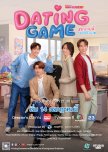
At the heart of the series is Hill, played by March Chutavuth Pattarakhumphol, a creative video game designer who finally lands his dream job. Hill is an exceptional protagonist who is sincere, reasonable, endearing, and entirely firm in his boundaries. Opposite him is Junji, played by Mukai Koji, the CEO of the Thai branch of the gaming company. While Junji initially seems like the typical reserved Japanese man amidst extroverted Thai colleagues, both leads gradually reveal deeper layers that show they are far more complex than their initial stereotypes suggest.
Both March Chutavuth and Mukai Koji bring their veteran acting experience to deliver subtle and moving performances. While Mukai’s acting and Thai pronunciation might initially feel a bit stiff or insecure, later episodes brilliantly show rather than tell the narrative reason behind his posture, turning an apparent flaw into a poignant strength. Together, the two main characters grow in a mature, steady way, helping each other overcome past trauma through unconditional trust.
The secondary couple, played by veterans Judo as Bay and Fluke as Phat, adds fantastic energy to the show. The dynamic between Bay, a charismatic game designer with a huge ego, and Phat, a quiet and dedicated chef, is a joy to watch as both actors clearly have fun with their roles. The only minor drawback is that while Phat gets a decent backstory, Bay’s history remains largely unexplored.
Overall, Dating Game proves that a series doesn't need high-stakes toxicity to keep viewers hooked. By prioritizing slow-burn character development, genuine communication, and emotional honesty, it stands out as a thoroughly refreshing and comforting drama.
Was this review helpful to you?

This review may contain spoilers
Enjoyable romantic comedy
This show is incredibly sweet, hilarious, and lighthearted. If you love the 'office romance' trope, this drama absolutely delivers on every expectation.It takes all the classic K-drama clichés and executes them in such a clever and fun way that it is simply a joy to watch. One of the funniest parts of the series is watching Ha-ri try her absolute best to scare off Tae-moo during their forced blind date, along with all the chaotic double-identity situations that follow at their workplace.
The cast is phenomenal, and the chemistry between the lead couple is amazingly natural. Beyond the main leads, the second lead couple also brings so much charm, humor, and fantastic romantic moments to the table.
Don't expect a complex plot or deep storyline—the premise is quite simple and predictable. However, the show's true strength lies in its great physical comedy, fast pacing, and overall fun, uplifting vibe. It is the perfect series to relax, laugh, and pass the time with a big smile. Highly recommended!
Was this review helpful to you?

Once in a lifetime masterpiece
I started watching this drama when my semester exams were approaching. The whole drama had me so hooked from start to end that I watched it within a week, which is crazy given I was studying and writing exams.The plot is so good, till the end there is not one episode where I felt like this is a redundant episode. In cdramas, this is a novelty to me.
The cast and their costumes and sets and vfx were so good.
And the chemistry between lyx and hmh is to die for.
Was this review helpful to you?
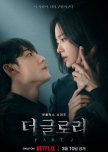
Truly powerful and intense experience
in my opinion, it is an outstanding show, but it comes with a strong content warning: it features severe abuse scenes that are very difficult to watch.Learning that parts of the bullying are based on a real-life incident makes the viewing experience even more harrowing.
At the same time, the series reflects trauma and violence in a raw, realistic, and unfiltered way—a refreshing and important departure from typical K-dramas.
Because the core subject touches upon real-world issues, it is very easy to empathize with the female lead, feel her pain, and support her meticulous, years-long revenge strategy.
Song Hye-kyo delivers a phenomenal performance—cold and calculated, yet deeply layered with emotion.
Beyond the personal revenge plot, the series raises profound questions about human nature, class privilege, and the way institutional systems often fail victims of severe violence.
It is a brilliant, gripping, and masterfully crafted drama, but it is definitely not recommended for viewers who are sensitive to heavy depictions of abuse
Was this review helpful to you?

Truly powerful and intense experience
in my opinion, it is an outstanding show, but it comes with a strong content warning: it features severe abuse scenes that are very difficult to watch.Learning that parts of the bullying are based on a real-life incident makes the viewing experience even more harrowing.
At the same time, the series reflects trauma and violence in a raw, realistic, and unfiltered way—a refreshing and important departure from typical K-dramas.
Because the core subject touches upon real-world issues, it is very easy to empathize with the female lead, feel her pain, and support her meticulous, years-long revenge strategy.
Song Hye-kyo delivers a phenomenal performance—cold and calculated, yet deeply layered with emotion.
Beyond the personal revenge plot, the series raises profound questions about human nature, class privilege, and the way institutional systems often fail victims of severe violence.
It is a brilliant, gripping, and masterfully crafted drama, but it is definitely not recommended for viewers who are sensitive to heavy depictions of abuse
Was this review helpful to you?
This review may contain spoilers
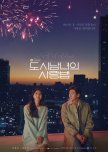
Sweet and unique
What makes this series so refreshing and different is its distinct format: it is shot mockumentary-style with characters interviewing directly to the camera, alongside shorter 30-minute episodes, which is perfect for my opinion.It really breaks the usual mold compared to traditional K-dramas. At first, the pacing can be a bit confusing because it jumps between different timelines and perspectives, but as you keep watching, everything begins to connect and the concept becomes fascinating. This structure might not appeal to every viewer, but I personally loved it.
Ji Chang-wook delivers an incredible performance as always, and the story explores the diverse experiences of several couples. The best part of the show is that it feels much less conservative and far more realistic and mature than usual, making it very easy to relate to the characters and the complexities of modern dating.
If there was one drawback for me, it was the prolonged plotline where Yoon-oh hides her true identity from Jae-won, which felt somewhat frustrating over time. Nevertheless, the way all the individual storylines ultimately weave together into one cohesive picture is clever and satisfying.
It is a lighthearted, modern, and highly recommended drama for anyone looking for something a bit different but still interesting and romantic
Was this review helpful to you?


