

This review may contain spoilers
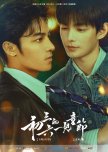
Transports you to 1980s Hong Kong. Unforgettable CP chemistry
This is my first time hearing a Cantonese dubbed drama, and this language is very musical and pleasant to the ears. The cinematography and the aesthetic lighting really make this BL stand out from the usual BL fare. I am in love with the set design, especially He Chu San's room back at Mr. He's place and also his new apartment. The 1980 Hong Kong walled city vibes are immaculate.What also makes this drama stand out to me is the eye acting, especially from He Chu San's actor. His emotions are very believable. Lots of micro expressions, and his face tells a story in and of itself. Hesitation, worry, concern, affection, exasperation, fear... He Chu San feels like a character who can exist. You can give the script to actors and say, "here, this scene is sad so cry" or "this scene is happy so smile," and actors may deliver something passable. But once in a while, an actor comes along and single-handedly elevates what is otherwise mundane dialogue or a mundane scene. He Chu San's actor is one of those actors. I can count on one hand the BL actors who make me believe them, and He Chu San's actor is one of them (unfortunately, I often have to turn my brain off when it comes to acting in a lot of BLs and just enjoy the vibes lol, looking at you GMMTV). His silent devotion and yearning for Xia Liu Yi really come through in a convincing way.
The actor who played Xia Liu Yi is simply arresting on screen. He does extremely well when the character is in a serious situation. You can see his thoughts going a million miles per second on his face as he weighs the pros and cons as a gangster leader. His very first bloody entrance made me gasp and sit up, such an unforgettable scene when he looks back at the camera like a rabid dog. He comes off as effortlessly badass in any fight scene. I give his sense of playing up the physicality for the camera a 10/10.
What fascinates me is how Xia Liu Yi's actor switches between his dominant side and his submissive side in a very natural way. Tbh, it's not easy to play a power bottom that pleases the average BL audience member's aesthetic, who is used to seeing typical masc top and femme bottom roles. You have to be commanding and dominant and walk around like a "top," and then when the actual dominant love interest comes in, you have to adjust your physicality to be submissive in scenes where the submissive concedes to the dominant person. Tho I also feel obliged to point out that He Chu San bottoms at least once for Xia Liu Yi in the novel, so I am not talking about the sex positions when I say dominant and submissive, but dominant and submissive in terms of personalities or the courtship pursuit.
Xia Liu Yi starts off snapping and being aggressive, and now in these last two eps, you feel like he is this flustered dog who is not really sure what to do in He Chu San's presence. Just that the dog likes the safety and affection he gets from a safe, stable place. He Chu San is like a steady, calm harbor, a lighthouse in Xia Liu Yi's life of calamity and violence and chaos.
Ultimately, this BL stays true to its namesake in the 8 episodes so far. Xia Liu Yi is truly Chusan's Liu Yi, a stray dog taken in by Chusan who becomes his.
If they were going to do multiple seasons, I feel like they should have kept 12 eps for the first season instead of just 9, as 9 is way too short imo. If this were just a fluffy story without much happening, then 9 would be fine, but as it is, it feels inadequate. There's a lot of stuff going on in the story,
Regardless, I am very grateful we have what we have. The BEST romance in 2026 for me by faaar. That ending kiss eclipsed the rooftop confession scene of Bad Buddy for me, and if you know what I am talking about, that seemed like such an impossible bar to cross.
Was this review helpful to you?

This review may contain spoilers
A wonderful ugly duckling meets CEO office kind of a fluffy drama. Strong themes of friendship, self confidence and believing in yourself no matter what comes in life. It does have a second ML who is so charming, light amount of jealously and unfortunately lights on physical chemistry. I was interested in everyone's story and not just the leads! Very well written with lots of bubbly, quirky, pretty actors. There were times when the FL was a bit annoyingly over the top loud, super energetic behavior. The OST...I am not sure it even contains anything memorable at all. She Was Pretty is a typical romantic comedy that you watch when you are looking for something sweet and funny to unwind and relax, with a guaranteed happy ending.
Was this review helpful to you?
you know a show is SO good when you write a review about how good it is before finishing it!
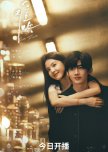
Sang Yan the man you are!! oh boy i still didn't finish it but this gives me k-drama vibes. I've never watched something like this in a c-drama so it feels different. So in love with this, really!! i was hesitiant at first because i don't like Life/meldodramas. this is really really deep, it touched me deeply, sang yan i've never seen someone so loyal in their love and devotion, he really IS the standard. I had to pause, smile and giggle all on my own and then continue watching. Never skipped a scene! which is very rare of me to do. got hooked up from ep 1 and throughout the story.10/10 for me and i don't need to finish it determine that its a 10/10.
P.S: this is my first review ever!! this is how much i loved this show, felt the need to write a review.
Was this review helpful to you?
A Killer App in Every Sense
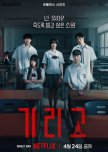
Would you dare trade your life for a wish that comes true, no fine print except the ultimate cost? That is the Faustian bargain at the heart of If Wishes Could Kill, a high school thriller that spins temptation, fear, and friendship into one very bloody cautionary tale. It all begins at Seorin High School, where five close friends stumble upon an app called Girigo. The pitch is simple and dangerously alluring: make a wish, and it will be granted. The catch is even simpler. You will die soon after. Cue the moral dilemma, the paranoia, and the slow unraveling of a friend group that was already hanging by a thread.Before the app even enters the picture, the story quietly sets up a web of secrets and unspoken tension among the five. Yu Se Ah is secretly dating Kim Geon Woo, fully aware that Im Na Ri has feelings for him. Geon Woo plays the classic “I see nothing, I know nothing” card, even though he probably does. Na Ri keeps chasing him anyway, while also judging Hyeong Uk behind his back for his otaku interests. Hyeong Uk, for his part, carries that insecurity like a shadow. Then there is Kang Ha Jun, silently liking Se Ah despite her relationship. It is less “best friends forever” and more “recipe for disaster,” just waiting for a spark. Girigo becomes that spark, and then some.
When Hyeong Uk uses the app to ace a math test, nobody takes it seriously at first. It feels like your typical urban legend, the kind you would laugh about over instant noodles. That disbelief shatters the moment the curse reveals itself through his chilling death. His final moments are unsettling enough to send shivers, and credit goes to Lee Hyo Je for making that descent into something eerie and memorable, even with such limited screen time. His death hits the group hard, though not uniformly. Se Ah is deeply shaken, especially as she witnesses it firsthand, triggering memories of her parents’ death. Geon Woo and Ha Jun are left reeling from the sheer horror of it. Na Ri, however, feels like a question mark from the very beginning. The nail biting, the restless eyes, the fact that she was not there when things went south. Something about her screams “there is more to this story.” That is where casting does some heavy lifting. Having Kang Mi Na as Na Ri adds a layer of assurance. The role demands a careful balance of vulnerability and secrecy, and she delivers that quiet tension convincingly. While many of the younger cast are relatively new faces, her presence anchors the emotional undercurrent, especially when the narrative starts peeling back its layers.
As the stakes rise, the story expands beyond the school setting. In an attempt to save Se Ah after she makes a wish, Ha Jun brings her to his sister Ha Sal’s secluded mountain home. Ha Sal, or Haetsal, is introduced as a powerful shaman figure, someone so overwhelmed by her own abilities that stepping outside her domain could literally kill her. It is a compelling concept on paper, but the execution feels undercooked. Despite Jeon So Nee having proven her range in other works, Ha Sal ends up feeling more like a plot device than a fully realized character. The gravitas you would expect from someone holding that kind of power just is not quite there, and the writing does her no favors. Interestingly, the character who leaves the strongest impression is not one of the central five, but Bang Wool. Played by Noh Jae Won, Bang Wool walks in with charm, comedic timing, and just enough eccentricity to steal scenes without trying too hard. He brings a refreshing energy into an otherwise tense narrative, like a splash of color in a grayscale world. There is something oddly endearing about him, to the point where emotional investment sneaks up on you. It does make you wish the script had explored his backstory and the mystery around him a bit more, because there is clearly untapped potential.
Back at the core group, the performances are a mixed bag. Jeon So Young as Se Ah shines more in darker, emotionally heavy moments than in lighter scenes. There are times when her expressions feel a bit restrained, which, combined with the writing, makes her presence as the central lead less impactful than it could have been. Visually though, there is a moment during her search for the phone where her look oddly echoes Usagi, which is a fun little déjà vu for fans of survival thrillers. Baek Sun Ho fits Geon Woo’s archetype perfectly, the handsome, devoted high school boyfriend who only has eyes for one person. With limited screen time, he still manages to convey Geon Woo’s loyalty and affection convincingly. Hyun Woo Seok as Ha Jun, on the other hand, struggles to leave a strong impression. Part of it is the writing. Ha Jun is impulsive, loud, and often frustrating, the kind of character who feels like a ticking time bomb but not always in a compelling way. There is a particular moment involving a very questionable decision that might make you want to yell at your screen. You will know it when you see it.
Structurally, the drama starts strong. The first half builds tension effectively, pulling you into the mystery of Girigo and the race against time. It is less about the gore and more about the suspense, the constant feeling that something is about to go very wrong. Even if you are not a fan of horror, the show has a way of keeping you hooked. The jump scares are there, and while most are predictable, they still serve their purpose. You brace yourself, and then it happens anyway. The second half, however, feels like it loses some of that momentum. There is an entire episode dedicated to explaining the origin of the app and the curse. While the intention is clear, the execution feels oddly anticlimactic compared to the buildup. Instead of a slow drip of revelations, the story opts for a full info dump, which does not quite match the tone established earlier. The ending follows a similar pattern. It feels rushed, leaving several threads dangling and raising more questions than it answers. If you are the type who enjoys neat resolutions, this might test your patience.
On the production side, the drama initially gives off a modest, almost web drama vibe. But as it progresses, the quality of editing and CGI stands out in a good way. The visuals, especially during the more intense sequences, are polished enough to elevate the experience. The soundtrack and sound effects also do their part, sometimes even sneaking in a bit of unexpected humor amidst the tension.
At its core, If Wishes Could Kill is not reinventing the wheel. The cursed app concept has been explored before, but what keeps it engaging is the interplay between desire and consequence, wrapped in a suspense driven narrative. It is the kind of show where you do not overanalyze every detail. You sit back, let the tension do its thing, and enjoy the ride, plot holes and all. In the end, it is a quick, gripping watch with enough thrills to keep you entertained, even if it does not stick the landing perfectly. A solid 7.5 feels just right.
Was this review helpful to you?

This review may contain spoilers
Lovers Against Fate
This story follows a classic transmigration setup. A young woman, Wang Cuihua, is reading a novel when she suddenly finds herself transported into its world, inhabiting the body of Yu Wanyin, the infamous demonic concubine of the tyrant emperor Xiahou Dan.In the original plot, Yu Wanyin is destined to die and serves as a cruel antagonist to the story’s main couple: Prince Xiahou Bo and the concubine Xie Yonger. Xie Yonger is meant to fall in love with the prince, overthrow the tyrant, and bring justice to the empire.
But things immediately go off-script. Now aware of her fate, Yu Wanyin refuses to follow that path. She doesn’t want to die, nor does she want to play the villain. On her first night in the palace, when she is presented to the emperor, he initially dismissed her, which leads to them interacting and something in his speech catches her attention: a modern expression that shouldn’t exist in this historical setting. Testing her suspicion, she greets him in English. When he replies, they both realize the truth, they’ve both transmigrated into this novel.
What follows is a mix of political intrigue and comedic moments as the two form an unlikely alliance. Together, they try to avoid their doomed fates, navigate palace schemes, and counter the prince’s rebellion, as they begin to wonder if the supposed “hero” couple has transmigrated as well, all while keeping their shared secret hidden.
The male lead really delivers a standout performance. His portrayal of a ‘tyrant’ is layered and deeply sympathetic. Poisoned since childhood by the empress and his brother, he suffers from constant headaches, emotional trauma, and isolation. He was forced into adulthood through abuse and control, he’s a puppet emperor teetering on the edge of madness, yet he still finds the strength to resist and fight back. What makes his story even more tragic is that he has been trapped in this world for over a decade, enduring years of loneliness before Yu Wanyin arrives.
Xie Yonger is another compelling character. Though initially framed as the “destined heroine”, her story is far more tragic. Manipulated by those around her, she tries to survive in this ruthless environment, even facing the devastating loss of her unborn child, gutted by the knowledge that the father, the prince, wanted her dead. Her character arc is emotional and well-executed.
Yu Wanyin herself is charming, mischievous, and kind-hearted, though there are moments where the portrayal could have explored deeper emotional nuance to me. As for the prince, he perfectly embodies a self-righteous, paranoid figure whose moral superiority quickly becomes insufferable. He’s easy to dislike from the start, and never really redeems himself.
The ending in the drama is simple and somewhat abrupt, implying a happy resolution. However, the original version of this story offers a much more complex conclusion, where the emperor eventually dies from the poison and wakes up in the modern world, while Yu Wanyin remains behind, raising their child alone. She lives out the rest of her life in solitude as the empress before finally dying herself and returning to the modern world, where the two are ultimately reunited. This ending adds a bittersweet layer that the adaptation chose to totally skip.
One clear weakness of the drama lies in its action scenes, which were poorly choreographed and almost cartoonish at times.
That said, the central relationship is a major strength. The chemistry between the leads is strong, and their bond develops naturally. They begin as strangers relying on each other for survival, gradually growing into something deeper. The male lead is protective without being controlling, embodying a quiet support that feels genuine and heartfelt. Their romance unfolds in a believable, gradual way that makes it all the more engaging.
The pacing is another highlight for me. Unlike many dramas that drag eventually, this one has a steady, dynamic flow. The plot progresses fast while still allowing time for character and relationship development.
Overall, it’s an enjoyable and engaging drama definitely worth watching.
Was this review helpful to you?
the acting is superbb!!!
okay so i went in fully expecting wall-to-wall jumpscares and honestly? i was so ready to be scared out of my mind every five minutes. but this drama said no actually, let’s do something different — and that ended up being the right call. the horror doesn’t hit you over the head constantly. it builds, creeps up on you, and when it does go there, it lands so much harder because you’re already emotionally attached. love when horror works like that.the premise is genuinely clever. Girigo is this app that supposedly grants any wish you upload as a video. sounds too good to be true, obviously, and it is — turns out the whole thing is a curse deliberately created by whoever built it. once that reveal starts unfolding, the story gets way darker and way more personal than i initially expected. it stops being about a spooky app and starts being about people.
and that’s where the drama really shines for me. the underlying message hits different — it’s not just the classic “be careful what you wish for” thing. it’s more about how human desire is messy and complicated. people think they’re wishing for something good but underneath it’s tangled up with revenge, with feeling abandoned, with wanting to hurt someone back without admitting it to themselves. that kind of nuance? in a YA horror? didn’t see it coming and i respect it.
acting-wise everyone holds their own but let’s talk about the worst characters because oh my god. Nari, Kwon Siwon, and Gitae — absolutely insufferable and i mean that as a compliment to the writing because they made me genuinely annoyed in the best way possible. and Hyungwook broooo 😭
Was this review helpful to you?
Kinda strange.
Overall, the show starts strong but towards the end its boring. Nothing great. 6/10
The backstory was interesting and good acting by the young actors.
Was this review helpful to you?
So good I am posting my first ever review
Gonna start this with, it’s going to be long and I’ve never commented like this before. Not once have I ever thought I would actually post any of the comments I’d like to make on the internet or social media about BLs until this damn series. Omg I love it sooooo much! I rank this series up there with my all-time favorites like “Beautiful Man” and “Addicted.” After the first few episodes I liked it so much that I went looking for a translation of the book. I finished it before the 7th episode came out and absolutely loved it! It was sooooo gooooood!!! It made me cry and laughing out loud. And omg! the frustration!!!! I wouldn’t be surprised if I revisit that book many times like I have with other beloved books and fanfictions. Anyways! After I finished the book I was, of course, comparing and seeing what they were leaving out, understandable so. I was disappointed some thing’s were left out and other things changed, but only slightly! It was the last, 5 mins, of episode 8, that was released just a couple hours ago, that made me start writing this comment/review.When He is touching Xi’s scars…. 😢 They did so good w that scene. As much as I wish they would just use the book as a script, they have made this its own thing and it’s beautiful! It’s rare that adaptations are good and this one is great! I can’t wait for the last episode!!!! But also hating that there’s only 1 more and they’ve only touched the smallest fraction of the story. Sigh. Maybe there will be more seasons, maybe not. I think I’d be ok w no more. I’d be ecstatic if there were 1 or 2 more. And I’ll never lose the hope that this will be adapted with more detail in the future. I’m not a anime fan at all but I’d def watch any animated version of this story.
If anyone wants to talk about the series or book, I’d love to! I have no drama or BL friends. If your ult stan is Skz, even better!
Love love love Sammy’s Children’s Day!!!! Can’t wait to reread the book and rewatch the series in its entirety soon!
And thank you if you actually read all this!
Was this review helpful to you?

Masterpiece
I don’t usually rewatch dramas — but Pursuit of Jade is the exception. I’ve watched it three times, and somehow it gets better every single time.What makes this drama unforgettable isn’t just the plot, but the emotional depth behind every character. The story is layered with tension, love, betrayal, and sacrifice in a way that feels intense but never forced. Every detail matters, and you start noticing new meanings with each rewatch.
The acting is absolutely outstanding. The characters don’t just feel written — they feel real. The complexity of the relationships, especially the emotional push and pull, keeps you completely invested. Even the “villain” isn’t one-dimensional, which makes the story even more powerful and heartbreaking.
Visually, the drama is stunning. From the cinematography to the soundtrack, everything is crafted to pull you deeper into the atmosphere. It’s not just something you watch — it’s something you feel.
What really stayed with me is how the drama explores love in a raw and sometimes painful way. It’s not perfect or idealized, and that’s what makes it so memorable.
Honestly, Pursuit of Jade deserves a 10/10 without hesitation. It’s one of those rare dramas that stays with you long after it ends — and clearly, it’s worth watching more than once.
Was this review helpful to you?

An amazingly built story, umtil...
I wanna start by saying that this whole concept felt very unique, an established that's not about how they get together, but how they manage a huge obstacle, one of the people in the relationship is scamming the other.In the first half, I really enjoyed this. It was well crafted where you could understand the character's motives, and also feel the strong build up towards the unevitable event where Pai finds out that Tim both scammed him and others.
I also really enjoyed the second couple, U and North, I could really feel the conflict in feelings, as well as the strong foundation they then build their relationship on.
The second half wasn't bad either, I just think it needed more time and have a bit better pacing. The previous emotional juiceiness drops a bit here where it feels like the characters gets no space to reflect or change.
I also feel like especially Tim's motives were a bit unclear, in terms of why he became a scammer. I also wish we could have seen more of his conflict cause it sometimes felt like it was set up for something deeper we would find out about later, but instead we heard nothing more about it. I feel like Tim's parents and family would have been a great way to show him opening up to Pai, but instead they just felt like your standard parents in a series.
Now I'm done with the bad things. I want to praise this series for the way it handled Pai's family and his family dynamics cause it really felt like no one were "the evil grandpa/aunt", they just had different viewpoints.
Overall, I think if you like the premise, than you're gonna enjoy this.
Was this review helpful to you?

This review may contain spoilers
A good drama with schoolkids who have superpowers, but:Overall, the story is solid and there’s great chemistry between the main characters whether it’s the parents or the students. Personally, the only thing I didn’t like about the story was the sequence about the parents’ past. It was way too long.
Sure, it helped us understand the mother and father’s story, but I think it could have been shortened a bit. I’ll admit that after a certain number of episodes focused on that, I felt a little demotivated. But as soon as the main story picked up again, I was instantly hooked once more!The final scene with the destroyed school and everything was really incredible!
The acting from the characters is good nothing to complain about on that front.
The OSTs are good too.
if you like drama with powers watch this!
Was this review helpful to you?
This review may contain spoilers
A terrible story
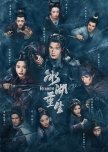
Rebirth” was a thoroughly disappointing drama that failed to live up to expectations. There was hardly a single element that truly engaged me. The storyline lacked depth, the direction was inconsistent, and at times even the acting fell flat. To make matters worse, the ending was extremely unsatisfying.I initially started watching this drama because of the male lead, but unfortunately, he was sidelined, receiving significantly less screen time than the second male lead. As someone who enjoys well-developed romantic arcs, I found it frustrating that the drama paid little attention to this aspect. Although both male characters eventually found closure and achieved relatively stable lives, the conclusion still left them emotionally isolated, which weakened the overall impact.
The plot itself was rather disjointed and poorly executed. It revolved around three clans—one striving to protect their kingdom, another driven by revenge, and the third aiming to abolish slavery. However, the narrative relied heavily on repetitive war sequences and strategic planning, which made the progression feel tedious and poorly paced.
Overall, I struggled to connect with either the storyline or the characters. Despite its ambitious premise, the drama ultimately fizzled out, leaving little impression on the viewer.
Was this review helpful to you?

This review may contain spoilers
Fun and Realistic
I’m pretty new to medical series/dramas, but here’s my review:I really enjoyed the story. It follows a young woman who is in debt and doesn’t want to work in this field again. I found the medical scenes very well made. At the same time, I looked up information about the job and noticed that it was quite accurately portrayed! There’s also a mini romance included, which was quite cute, along with some conflicts between certain characters. Overall, it was really good.The characters have great dynamics with each other, and there’s a nice connection between the superiors and the new staff members.
The music is good too.
I think series in this style, like The Trauma Code and others, have a lot of potential. I wouldn’t say no to a Season 2! Seeing how she evolves after the end of Season 1 would be interesting.
In short, I recommend it if you like medical dramas!
Was this review helpful to you?

This review may contain spoilers
HAHAAHAHAHAHAH
FIRST OF ALL SHUT UP EVERYONE WHO HATES ON HER HAIR. I FREAKING LOVE THE HELL OUT OF IT. ITS SO CUTE AND MATCHES HER GOOFY CHARACTER.So by the summary we all understand how the story is going to be, this is my first time writing a review so early on the story, but i felt this one deserves a one. The actors, the fl is so good and her acting is so nice, same goes to the other actors. Coming to to the plot, its very unique for a kdrama, i like how the writers tried something new apart from the old school, the plot although nothing fetish( which is good) but seems pretty realistic on the teen writer part, coming from the same shoes i can say its true that imagination sometimes run wild, but thats the charm of this drama. Haha. I really like how the ml (maths guy) was baffled by her scoring 4 marks in exam, and got obsessed into making her an ace. Hehe, i loved how she was the director who scolded her sir's character in her novel cause in real life he was an ass (not really but in a funny way) , but i must say he(the ml actor) got good acting skills like by how he portrayed his eyes getting soft whenever she was crying(or pretending to be) . Mainly i love this chaotic dynamics hehe. Now coming to the concerns, i hope its a non romance drama or if its so please let her be an graduate student then they must start really getting in that sector. Also i hope they don't ruin it by the last episodes by speeding the pace or something shit, let it be in this flow, perfect. Things i wish i could see as an possible ending, her being a famous novelist and her getting good results in her subject with the help of her maths teacher, and a affectionate smile from him being proud at the end (the best ending it could get) or something normal. Please no ones parents are dead or suicidal in this drama (already seen this shit) and let her be a successful writer please dont let the maths teacher ruin her novel. And mainly why does the korean literature teacher and P.E teacher have so much chemistry, wahh same goes for the ml and the korean literature teacher, (the korean literature teacher is a softieeee, love himmm😘), anyways till now very good AND IT MUST GO ON TILL THE END OR THE DIRECTOR BETTER START COUNTING YOUR DAYS.!...
UPDATE:
soo first of all to the director THANK YOU for not killing anyone or adding some unnecessary plotline to it and sticking with the original genre.
Secondly DAMNNNNN ITS SOO GOOD LIKE I LOVE ITTT. Mr Ga?! Jess the man you are so supportive of your students.. And to the other actors and actresses all of you did such a nice job, especially the actress of Euiju, no one could have pulled off the character more than herrr. Love herrr.
Coming about the novel plot its cringe but sooo funnily good. Love the actors of the teachers. ANDD LOVE EUIJU'S GROUP, HER FRIENDS, JENNY AND JENNY'S SEATMATE. Coming towards the ending, it was very much suited up to the drama genre. People who are not satisfied should know that even if it would have ended with both of them together it would have been very unethical, like the teacher student relationship. Um yeah about the other possibility yes it would have been good too with her graduating and then relationship but the raw emotion would not have been there, i like that part about this drama the open ending of it gives us a creative freedom to imagine further more. Do we need a second season? No. Its very much would not work in this case cause the whole season would have to be exaggerated in terms of it to happen so and the drama would loss its individuality but if done correctly there might be a chance. One thing we can surly ask for is to have Cha hakyoon and kim hyangi to act in another comedy romance drama cause yess THEIR CHEMISTRY IS TOO GOOD TO WASTE. So thats it, i loved it i hope you do too!
Was this review helpful to you?

Was this review helpful to you?


