

 148
148 438
438 16
16 2
2 6
6 3
3 8
8 10
10 3
3 13
13 1
1 1
1 1
1 1
1 2
2 7
7 9
9 5
5 9
9


This review may contain spoilers
"The time to decide was looming"
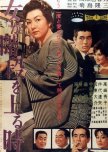
When a Woman Ascends the Stairs showcased Takamine Hideko's acting range as Yashiro Keiko, a bar hostess who had come to a crossroads in her life. Elegant with a backbone of steel, Keiko struggled endlessly to do the right thing when doing the morally gray thing could deliver her dream of buying her own bar far quicker. Director Naruse never took it easy on his characters and Keiko was no exception, watching her courageously face setbacks with a concentrated determination was highly compelling."I hated climbing those stairs more than anything."
Keiko worked upstairs in a bar that catered to businessman entertaining their clients. The men liked having a pretty woman or two around as they made their deals. Because she was a widow in her 30's the younger hostesses and even the patrons called her Mama. Keiko and the bar manager (charismatic Nakadai Tatsuya) also dealt with the business side of collecting from the companies and businessmen who owed on their tabs. Keiko hated her job, but needed the money as she also provided for her mother and adult brother and young nephew. She had three choices to better her life—get married, buy her own bar, or find a patron to help supplement her lifestyle. At her age, she didn't think the first one was a possibility. Buying a bar required more cash than she had. The third one was a form a prostitution she wasn't ready to submit to.
"The best go by cab, the second-rate take the train, and the worst go off with their customers."
One of the younger women had left and started her own bar, but she found herself swimming in debt with creditors hounding her every move. Another hostess married and moved away. A third young woman had no problem exchanging sex for money. Wealthy customer Goda offered Keiko the capital to start a bar if she would be his mistress. A likeable customer proposed to Keiko and for a moment she was happy until she realized he had not been truthful with her. The man she had fallen in love with was also living a double-life. Every time it looked like she might have found happiness or an answer to her problems, fate was waiting around the corner to trample her. Despite always seeking to do the right thing she was seldom rewarded for it. This was Naruse, not Ozu, so not surprisingly the characters fought to survive and make a living, let alone find love. He preferred a more pessimistic worldview where obstacles confronted or crushed his characters at every opportunity. Whether it was more realistic is up for debate, but the conflicts and character growth did make for an entertaining film.
"Women working in the Ginza fought desperately for survival…it was a battle she couldn't afford to lose."
Keiko strove to get ahead financially only to have her family continually siphoning off her savings. She didn't enjoy drinking but did so to make money. She despised drunks pawing at her, but she tolerated them to make money. What she wasn't willing to do was to sell herself. During one particularly poignant moment near the end of the film, she revealed her character's strength and resolve in a captivating way that left her integrity intact.
"There are limits, even in business."
Beautiful Takamine Hideko brought an elegant grace and strength to Keiko. I thought she did a wonderful job of conveying a wide gamut of emotions, subtly and effectively. When she emoted more forcefully with anger or sorrow, it was believable and organic to the scenes. Mama was a complex character who wasn't perfect, she made mistakes but she also took care of the people around her. She knew when to draw the line with problematic behavior and when to walk away. She didn't rail at the patriarchal society that limited her options or the widening division of the classes. Keiko took her blows, dusted off her kimono, got back up and kept moving forward even when life refused to offer her something better. As the people around her encouraged her to loosen her grip on her integrity, Keiko stayed true to who she was. After weathering numerous personal storms and losses she refused to buckle. Whether it was acceptance or resignation, she continued to walk up the stairs she dreaded, paste on a fake welcoming smile, and somewhere deep inside hope that her efforts would grant her the future she dreamed of someday.
"…the trees that line the streets can sprout new buds no matter how cold the wind. I too must be just as strong as the winds that gust around me."
8/1/23
Was this review helpful to you?
This review may contain spoilers
"In a mad world, only the mad are sane"
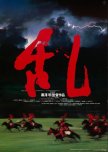
One of the meanings for Ran in Japanese is "chaos". You know when you are about to watch a film by Kurosawa based on Shakespeare's "King Lear" you are going to experience a theatrical marvel, chaos, and a boat load of pain. Kurosawa used all of his skills to bring to life the story of a king driven mad by his traitorous children. At 75, his directorial skills were far from obsolete. He made a stunningly beautiful and heartbreaking tragic epic in a manner only he could do.Hidetora who had unified his region through fire and the sword and an utter lack of mercy announces that he is ready to retire. Taro, his eldest son, flatters him feigning humility when Hidetora bequeaths the title to him. He gives the two other sons, Jiro and Saburo their own castles, confident that his actions will bring lasting peace to the valley. Far from a sycophantic speech to his father, Saburo, the only son who loves him, tells him the plan will never work as does the court jester. Saburo and Hidetora's loyal retainer, Tango, are both banished for speaking the truth. It doesn't take long for Hidetora to realize his youngest son was right. Taro, at the bequest of his wife, Lady Kaede, humiliates his father by forcing him to sign a pledge of loyalty and into handing over the title Hidetora had sought to retain. Hidetora travels to Jiro's castle but finds no welcome from his middle son. Upon hearing the third castle is empty he and his entourage seek shelter there only to fall into a trap. Taro and Jiro join hands to destroy their father. After every last man and woman loyal to Hidetora is killed trying to protect their lord, Taro is "accidentally" killed, and his father is allowed to walk out of the burning keep, his mind completely broken. For all of the victories in his life, he could not see the evil his sons had harbored in their hearts and that evil would bring all he'd fought for and attained to naught.
***Warning! 417 year old spoiler ahead in the next paragraph!!!***
As Hidetora wanders aimlessly, his jester and Tango find him and care for him. Lady Kaede seduces Jiro and orders him to have his gentle wife, Sue, murdered. When Saburo comes to find his father, Lady Kaede incites Jiro to attack Saburo's men after agreeing to a truce. Saburo finds his disturbed father in a rocky "grave". Saburo's forgiveness clears Hidetora's mind and they dream of telling tales and living together. Jiro's man kills Saburo and Hidetora loses all hope and dies next to him. Like in King Lear, the family was extinguished. Saburo's men and allies triumphantly kill Jiro and his men laying waste to the last of Hidetora's family.
Much like King Lear, Ran ended with the tragic and inevitable loss of life based on a father's bloody past, pride, and blindness to the truth. Hidetora was haunted by all those he'd killed, including the families of his daughters-in-law. Unable to escape the ghosts of his cruel actions, Hidetora and his jester were forced to take refuge among the rubble of the keep he'd burned, at one time spending the night in the hut of a man he'd blinded. His jester ever speaking the truth and folly of his actions. There were no heroes in this film. Hidetora had blood on his hands. Jiro and Taro were murderous and duplicitous. Although Lady Kaede was widely hated, her vengeful actions, with the exception of her hatred of the Lady Sue, were understandable. Only Saburo who spoke the truth perhaps had a vision for a better tomorrow and he ended up paying for his father's sins.
At times, Kurosawa showed the chaos of battle in a beautiful manner with soldiers racing across fields and in castle keeps, silently except for the haunting music. Just as quickly the exquisitely orchestrated military dances devolved into the brutality of war with bodies filled with arrows, severed limbs, and crimson blood dripping ceilings. Fire and smoke choked out all sanity and peace. At one point, Hidetora wondered if he was in hell. He was in hell, a hell of his own making carved out by the carnage he had wrought during his life, the example his sons had learned from, pitting them against him and each other.
The opening scenery was gorgeous, vibrantly alive with verdant green hills. Kurosawa was truly a master of filling the screen with interesting movement and use of color. After the dye was set and the father gave his sons their inheritance, the windblown landscapes became dry and vast. As always, Kurosawa's fateful wind blew across the screen, tinged with either dust or smoke. Emi Wada won an Oscar for best costume design and it showed. The lifeless beige and gray backgrounds were the perfect contrast for her intricately and brilliantly hued costumes. The only detractor in this film for me was Nakadai's makeup. Much like the aging makeup on Mifune Toshiro in "I Want to Live", it was overly theatrical. The white and purple makeup obscured Nakadai's face and thus his unhinged performance.
Whether order was restored out of the familial chaos, is unknown. The film showed that confusion and disorder are always at the ready when truth is abandoned for what people pridefully want to hear. Children learn from what their parents do, not what they say, especially when their parent has been burning villages and castles to the ground in his desire to gain more. Hidetora made the classic mistake of thinking upon his retirement he had any say over what the next generation would do. Their desire for power was just as ravenous as his own had been-maybe more.
The message is timeless, whether in Shakespeare's day, Kurosawa's, or our own. As long as chaos bids us take what is not ours, view others as less than and disposable, we are bound to repeat the actions that bring sorrow instead of joy. The last character standing, blind atop a precipice, his painting of the Amida Buddha fallen and out of reach, reflected much of the mood of the film. The lust for power blinds men, their only hope for peace lost, ultimately leaving everything in ruins.
"It is the gods who weep. They see us killing each other over and over since time began…They can't save us from ourselves."
Ran was a gorgeous and enthralling film to watch and a cautionary tale as well.
6/28/23
Was this review helpful to you?
This review may contain spoilers
"...and life will get better and better..."
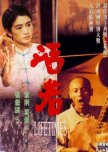
To Live aka Lifetimes put Zhang Yi Mou and Gong Li in the penalty box for two years due to what was considered a critical view of some of the Chinese government's policies. The film followed a family from the Civil War in the 1940's into the Cultural Revolution. The little family chose to adapt and to do what was necessary to live as the volatile political climate changed around them.Xu Fu Gui (Ge You) was an inveterate gambler married to Jia Zhen (Gong Li) with a young daughter and a baby on the way. His gambling caused him to lose the family mansion and his wife. Fu Gui lived in dire poverty with his mother as he attempted to sell thread and needles on the street. Jia Zhen came back to him with his daughter, now a mute due to a fever, and a baby boy when she heard he'd stopped gambling. Gifted a box with an elaborate shadow puppet set by the same man who maneuvered him into his losses, Fu Gui created a traveling troupe and took his show on the road.
While on the road, Fu Gui and his friend Chun Sheng become conscripted into the Nationalist army where they pull canons and entertain the troops with their shadow puppet show. The Red army overruns the Nationalist army and they end up doing the same thing for the other side. Fu Gui is finally able to go home and he finds a very different environment. His wife and kids are selling and delivering drinking water. Nui, a local communist leader oversees their neighborhood. Long Er, the man who ended up with their mansion was executed for being a counterrevolutionary after burning the house when the government tried to confiscate it. Fu Gui declares it's good they are poor and that he'd lost their house or he would have been the one executed.
The 1950's arrive and during the Great Leap Forward everyone is required to "donate" all of the iron items they own leaving them without cooking utensils. As Nui states, "We're racing toward communism and you're worried about food?" You Qing, their son, fights back against his sister's bullies and the family is almost labeled saboteurs. The next morning, after very little sleep he and all of the other young school boys are required to smelt iron. His mother tries to keep him home but Fu Gui is afraid of the repercussions if the child doesn't go. Tragedy strikes and an old family friend is reminded that he owes them a life.
The 1960's bring the Cultural Revolution. Fu Gui is ordered to burn his shadow puppets or risk being declared a capitalist. The neighborhood and homes are covered in Mao propaganda and images. Their daughter Feng Xia is wed to a lame Red Guard leader at a factory. When the time comes for her to birth their child, her parents discover that all of the doctors and medical professors have been imprisoned for being reactionaries with only young student zealots left. Feng Xia's husband brings an imprisoned doctor to help, but he's starving and of no use.
Some of the family's own choices led to their suffering as in Fu Gui's disastrous gambling habit. But the political situations had more than their share of tragic effects on the family. The lack of sleep so many suffered from caused a death. Locking away doctors and intellectuals left people vulnerable to unskilled students. With only one party, corruption or paranoia could lead to innocent people being arrested as capitalists, especially when no dissenting opinions were allowed.
Fu Gui's shadow puppets became symbols for part of the story's theme. Initially, they were used only for entertainment with the artistic freedom to make the show lewd or comical. Later the puppets told more propagandistic stories. Eventually, Fu Gui was forced to burn them lest their feudal and subversive nature land him in prison. His family became part of the neighborhood theater instead. When Feng Xia married, the song sung, toasts given, pictures taken, and even the presents all revolved around Mao. They didn't even have the freedom to say, "thanks, that's just what we needed, another Mao statue/picture/mural/book" as they glance over at the table and walls filled with them. The family never complained as the political landscapes changed, they merely dressed the part and endeavored to recite the party lines whatever they were. Only at You Qing's grave did the family crack, removing their masks and let loose their true feelings toward the governmental perpetrator.
The performances were phenomenal. Ge You gave an outstanding performance as the complex Fu Gui. He won a Best Actor award at the Cannes Film Festival. The film also won the Grand Prix award. Gong Li's part was smaller as the wife and mother, but her performance was powerful and compelling. Her tears, dignity, and rage pulled me in and never seemed contrived.
To Live showed how people adapt and survive even in tumultuous and dangerous times. The family conformed and persevered clinging to each other in order to live. Once he kicked his gambling habit Fu Gui realized why he wanted to live---his family. "There's nothing like family." Despite tragedies, Jia Zhen only desired "…a quiet life together" and repeatedly and doggedly chose to live. Together they weathered the political changes that created financial and social upheavals in their lives, never letting hope completely die. As Fu Gui declared to his grandson, "life will get better and better" without any evidence that it would yet he still chose to live in expectancy. To Live used the political changes as a structure to show how people are able to endure and to live with dignity even when the world tumbles around them. Zhang Yi Mou made a beautiful film about the tenacity of the human spirit and one well worth trying.
6/9/23
Was this review helpful to you?
This review may contain spoilers
A picture is worth a thousand words, or is it?
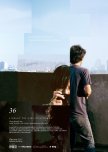
If you are not old enough to remember rolls of film, one of the commonly used rolls had 36 shots on it. This film was told in 36 segments based largely on camera shots or the memories from those shots as if labeling a picture or a memory. The film leisurely and gently explored the relevancy between photos and memories and the malleability and impermanence of both.Sai is a film location scout and Oom is the art director. They meet scouting out an abandoned love hotel from the Vietnam War era that Sai has memories of being in her old neighborhood. Sai uses a digital camera, taking many pictures that she will later store and keep. Oom still uses a film camera and often takes pictures of people when they aren't looking even though he refuses to have his picture taken. Though he says he will send them a copy, he rarely does. The two spend a lot of time discovering the nooks and crannies of the possible set and also negotiate with the landlady over room prices for the cast and crew. Oom takes a picture of Gita, the landlady's 12-year-old daughter that later may prove important. Afterwards, Sai and Oom enjoy an evening breeze from the roof and take their picture with her camera in front of the beautiful sky. Soon the "end credits" appear after the 11th shot.
The film jumps into the future 2 years. Sai and Oom have gone their separate ways. When the director she is currently working for discovers the building he built his new script around has been leveled, Sai mentions the other building. She attempts to recover the photos but even after a friend works to restore them, only a few survived and not the one of her and Oom on the rooftop. She returns to the building and talks to the landlady. It turns out Gita died and the landlady would love to have the picture Oom took of her. During the process of trying to find Oom and restore the pictures, she realizes her feelings for him were stronger than she had known. As the film closes in on the 36th segment, Oom looks at the picture of them on the roof faraway on his computer (unknown to her he had copied her images from the shoot long ago), Sai smiles as she remembers the special moment they shared.
36 was shot in an artful way that could also distance the viewer from the characters. Oom is never seen face on, and often shots of other characters were in profile or from behind or even half hidden by architecture. I liked the labeled 36 bits of the story, like looking at a picture album where the photo had been annotated and saved. The OST was also lovely, I especially enjoyed the piano music.
Just as film cameras have mostly transitioned over to digital cameras so are most movies now shot with digital film. The danger of digital film was also addressed in that backups are necessary, because once a disk or other device has been damaged the pictures are likely lost for good. Her friend Kai mentioned how many people brought hard drives to be fixed saying they needed them immediately, but instead never returned for them. A drawerful of memories lay untouched. For one reluctant woman who came to pick hers up, he offered to erase those memories.
Which is more important? To see a bird or to take a picture of it? To experience the person you are with, or only the relative engagement of photos? The argument is made for both the value of the human experience and memory as well as the memories that are brought back by glancing at a photo. For the director whose childhood building was destroyed a picture is all that is left of it and his memories. Ironically, at the end of the movie, Oom who always valued the human experience more is found looking at Sai's picture and reminiscing. Conversely, Sai goes back to the place they shared and the memory floods her mind as she gazes fondly to where they had been together. Memory is a fragile, fading construct of the mind, subject to change. While memories are important, photos help to shore up the time and events. Buildings crumble, people die, digital photos can be erased, photos fade and relationships shatter, 36 touched on the concept of impermanence as well. There comes a time when no one remembers the people or places in the pictures.
While I enjoyed this film, it also failed to emotionally capture me with the relationships involved. The ending was meaningful to the arguments of photo or memory, but it left a hole in the picture I had hoped to find. I was hoping for a 37th epilogue image or a new roll of film to begin. This is a very slow, artful movie, more philosophical than touching. Yet for its shortcomings I did find it engaging. If this genre is of interest to you, it would be well worth trying.
5/23/23
Was this review helpful to you?
This review may contain spoilers
"When will you become an honest crook?"
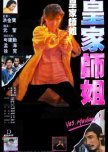
Yes, Madam! starring Michelle Yeoh and Cynthia Rothrock opened the door for the girls with guns genre. When they were fighting on screen they were a sheer joy to watch. Sadly, as often happens in a movie starring a woman, the majority of scenes focused on the bumbling male thieves and the Big Bad, leaving the women almost relegated to supporting roles.Two hapless hoods and their idiot forger friend get tangled up in triad boss James Tien's murderous methods for trying to retrieve microfilm a Scotland Yard detective had acquired of his illegal dealings. Dick Wei plays his vicious assassin who attempts to track down the damning evidence. Scotland Yard sends Cynthia to Hong Kong to join up with Michelle to investigate and discover who killed the British agent. The women are initially hostile with each other. Cynthia's methods are violent and she has a massive chip on her shoulder and hair-trigger temper compared to Michelle's calmer way of doing business and dealing with suspects. Before you can say Best Friends Forever, the two become battle buddies and it's on like Donkey Kong when they take on Hong Kong's worst.
Much of the film focuses on the bumbling crooks. Tsui Hark, Mang Hoi, and John Shum have their funny moments but they have more screen time and character development than the two leading ladies. James Tien and Dick Wei make for menacing enough, and in Tien's case, annoying enough criminals. Michelle Yeoh in her first starring role shone whenever she was given the chance. Cynthia Rothrock's fighting was much better than her acting but since that's when the women were together for the most part, it worked. As I've mentioned it would have given more dramatic depth to have the women be more than just fighting machines and learn more about them. Their characters were thinly drawn.
The script was uneven and the story in the middle of the film, felt repetitive and began to drag. How many times did we have to see Tsui Hark try to escape from bad guys in his rigged apartment? Or Hoi and Shum running afoul of baddies and getting beaten up and saved at the last minute? Some of the scenes were genuinely funny, but others began to wear thin.
What made this film memorable were the stunts. The opening scene's stunts were dynamic and breathtaking. The final fights at the Big Bad's mansion were brutally delicious. They were fast, creative, and dangerous. Michelle and Cynthia along with countless stuntmen hit the ground hard and some hit hard on architectural elements. Broken glass, broken furniture, broken bodies. The action took place with a bare minimum of wire work. This was all hard hitting, hard kicking, flipping, falling kung fu.
The women's clothes reflected the 1980's styles. They looked like a female version of Crockett and Tubbs from Miami Vice with their upturned colors and Flight of Seagulls' hairstyles. The music was bad 80's generic cop synth offerings. And the police brutality was showing its age as well. But all of this was to be expected from this era.
Given the title, Yes Madam, I would have liked to have seen this film through the eyes of Michelle Yeoh's character as she has to work with a strong willed foreigner and how they hunted down their suspects and developed a buddy camaraderie. Instead, most of the movie was shown through the criminal losers' perspective. As exciting as it was to watch the two women in action in those thrilling fights it didn't quite make up for them being largely window dressing in their own movie. And it didn't quite make up for the tedium of much of the movie when they weren't featured. I can appreciate the historical context of the film and how it gave women more interesting roles afterwards, but also see where they were afraid to completely leave it in their hands to carry the film. Michelle Yeoh is a favorite of mine and when given the chance she showed what star quality was, too bad they didn't let her shine more.
3/10/23
Was this review helpful to you?

This review may contain spoilers
"Of all the poisons, men are the most dangerous!"
Monkey King 3 took up where Monkey King 2 left off. Aaron Kwok returned as the Monkey King along with Feng Shao Feng, Xiao Shen Yang, and Him Law. Zhao Li Ying joined them this time as the Queen of the Women’s Kingdom.Wu Kong, Pigsy, Sandy, and Tang Seng are heading west on a river when a river demon assaults them. There’s an old joke, “You can lead a horse to water but you can’t make him ski.” This was as close to a skiing horse as you are likely to see! With the help of the goddess they escape and go from the frying pan into the fire. They crash through the portal into Woman Land where Tang Seng and the Queen seem to fall in love as they plummet down a mountain. The Preceptor, a very uptight woman dressed in white, declares the men must die because they have made the cardinal sin…of being men. Men’s love is poison to a woman and it’s looking like the Queen might have been infected. She rescues them during their execution and they seek to find a way out of the spell dome over the land.
The CGI was good for the most part and there was a lot of it. Woman’s Land had beautiful dwellings and strange monsters abounded.
Aaron Kwok is the best Monkey King I’ve seen. Too bad he had very little to do in this movie. This story was more of a romance and spiritual trial than adventure. Even the “villain” was just misunderstood and hurting. Tang Seng and the Queen had to decide between love and duty as did the Preceptor. Even if you are like me and only know the story from the movies, the ending was inevitable.
I had reservations about certain aspects of the story. The one whom the Preceptor had loved during her youth was an androgynous river god. Years before because of her duty to the new queen, the Preceptor had to reject the river god who then became unproductive, obsessive and wrathful. The spirit who could cause miscarriages appeared to be a man in woman’s clothing which was played for laughs. Not very 2018 of them on either count, neither was portrayed positively. The men ended up pregnant, very pregnant after accidentally ingesting the water from the river of womanhood. Setting aside the biological issues, and regardless of your stance on abortion, there were forced abortions. Finally, though the women seem to be well trained warriors, they still had to rely on the men to solve their problems and ultimately decided maternal love was greater than romantic love. Seemed like this movie could have at least tried to give them more agency and views on loving. There were also a couple of deus ex machina moments that took the tension out of volatile, dangerous moments.
Tang Seng wrestled with wanting it both ways. He wanted the Queen and he wanted to save humankind from suffering. He believed sensual love would weaken his soul. Ultimately, he and the Queen were able to live with their decisions because they faced the problems head on and made their choices freely. Perhaps the Goddess sent him to Woman Land, because just like heartache, you can’t understand love unless you’ve felt it and lived through it.
If you are wanting to watch a movie featuring the Monkey King, this is not it. He is a supporting character to the love story. The love story was hard for me to accept as they fell instantly in love as if they’d been poisoned, knowing nothing about the other person. Zhao Yi Ling and Feng Shao Feng did their best to convince me, and it almost worked. They were lovely to look at and capable actors. Ultimately, this felt more about duty than love even if Tang Seng believed loving one was the same as loving everyone.
11/19/22
Was this review helpful to you?
This review may contain spoilers
"Tragedy in life starts with the bondage of parent and child"
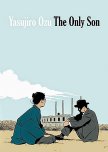
The Only Son is considered director Ozu's first talkie. Even with the spoken dialogue he still leaves space and silence to contemplate his characters' actions and conflicts. Classically Ozu, he studies the relationship between a parent and grown child. Instead of the wealthier families of some of his later films, this widow and child are living in poverty. In this film he also has the son and mother begin to define what success means to them and the emotional cost of failure.The story begins in 1923 in rural Japan. The mother works at a silk factory doing rigorous physical labor. Her son wants to continue his education, an education she can't afford. His teacher who is preparing to leave for Tokyo stops by the house congratulating the surprised mother on allowing him to go to high school as the son had told him she'd agreed to it. Ultimately, she decides to make whatever sacrifices she must for him to have a better chance in life. The last thing he tells her is that he will become a great man.
The story jumps ahead to 1935 with the mother missing her son and deciding to go visit him in Tokyo. Mother and son have not seen each other in years and seem happy to be together again. The son has a surprise for his mother, he is married and has an infant son. He also is working as a night school geometry teacher and living in a small house in view of the garbage incinerator smokestacks. This brings about the critical theme of the film. The son is ashamed of his job and lifestyle after the sacrifices his mother made for him. The mother is disappointed that he seems to have given up on attaining a better life. Much like in Tokyo Chorus, 1930's Tokyo is portrayed as the great dream destroyer.
Later in the film, the son helps a neighbor in such a way, that the mother beams at him with pride. He may not have become the great man she'd hoped for, but he had become a good man with a good wife. For her, this is enough to ease her worries about him. This is success in her eyes.
Ozu uses many of the techniques and compositions that will define his later work. Filming from the mat, even when in a car is in place. His ubiquitous teapot takes center stage in many scenes. As always, every prop, every angle is thoughtfully and creatively brought together to be aesthetically pleasing and to help tell the story. At one point after an emotional confrontation between mother and son, with his wife sobbing in the background, Ozu lingers on a shot of a painting on a wall near a window and holds that shot for almost a minute, as night turns to day. Almost as if the raw emotions of his characters needed time to be processed by them and us.
Tokyo was the great soul crusher, and during this time the depression had finally caught up with Japan, making work hard to come by. The son's teacher had to become a cook in a small restaurant. The teacher was played by Ozu regular Ryu Chishu, someone you could always count on to bring a character quietly to life. Lida Choko conveyed the mother longing to see her son, happy to be in his presence, and also discouraged at his negative resolution perfectly. Himori Shinichi felt like the weaker acting link. He spent much of his time smiling and gave no inkling of his character's desperate emotions for most of the film.
Interestingly Ozu had the mother and son go to the movies and watch a popular German talkie. Rather lengthy clips of the film were shown. The son's house also had some posters from German movies. Though imminently Japanese, the great director was also open to influence from foreign films.
The German film was one of the only outings we see that the son took his mother on as he spent most of their money trying to show her Tokyo. Unlike so many of the ungrateful male characters in older movies, ones women sacrificed everything for, this son, despite the financial hardship, wants his mother to have a special time. He wants to make her sacrifice worthwhile and up until then had felt he'd completely failed. Even with hardships, disappointments, and setbacks, the film had a warmth and gentle humanity to it. Life wasn't easy, but the film showed the value of family and friendship, of looking out for each other.
As so often happens in Ozu's films, the parent ends up alone. The mother may have been alone, but after seeing the man her son had become could find acceptance in her trials and life. The son, reinvigorated from his mother's belief in him, sat aside his nihilistic acceptance to once again hope. This quiet film was realistic and engaging on many levels. Easily one of my favorite Ozu films.
10/24/22
Was this review helpful to you?
This review may contain spoilers
Let's Start Over!
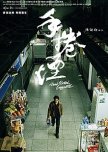
Hand Rolled Cigarette is an old school violent crime drama that almost makes itself into something a little more special, but just misses the mark. Even in the face of debt and despair, two criminal misfits keep marching forward, hoping for that chance to start over. Along the way, the disparate strangers find themselves counting on each other to survive.The film begins with the turnover of Hong Kong and the servicemen previously in the Queen's army now being left behind. Chiu bolsters his military brothers by saying it's their chance to start over. Years later, some have made it better than others. Chiu and another military brother had borrowed heavily and invested in the stock market only to watch it crash and lose everything. Deeply in debt, Chiu hustles on the triad fringe to try and stay afloat, now shunned by his military brethren. His next big deal is as a middle man for a guy selling illegal turtles and a local kingpin, a deal that goes south landing Chiu in trouble.
Mani is an Eastern Asian immigrant, reluctantly in the drug business with his brother/cousin Kapil. Mani also takes care of his younger brother who is still in school. Due to racism, the family runs into financial and social walls everywhere. Kapil wants to take greater risks to make bigger scores which leads to deadly events after he makes a major mistake. They find out that drug dealers keep track of their product and are neither kind nor forgiving, especially with those who steal from them.
Desperately fleeing a vicious gang, Mani ducks into Chiu's apartment and hides. Chiu isn't thrilled when he finds the interloper but against his better judgement allows the young man to continue to hide there as long as he doesn't touch anything. They don't have many interactions but Chiu does help when Mani's younger brother gets into a fight at school.
Eventually, they decide to sell the stolen drugs to try and pay off everyone they owe. All of which leads to a violent no holds barred final confrontation.
Hand Rolled Cigarette is more of a character study at times than crime drama. Chiu keeps a video of his military days when he respected himself and what he did. He suffers enormous guilt over his past actions leading him to act self-destructively at times. Mani wants a better life for his younger brother, including a good education, even if it means sacrificing his own. The two small time criminals both are good men at heart forced into grim decisions by their crumbling circumstances. Recognizing that in each other they do make a bond.
Be advised there are scenes of torture and brutal murders. Mani is repeatedly called by a racist name. They don't shy away from expressing the racism underlying the society. It can be a difficult film to watch.
The cinematography while showing greater Hong Kong at night, also shows the suffocating world the men live in and all the deadly and dangerous things that can happen in small places.
This film is dark as the two men try to navigate the dangerous world of the triads, forming an unlikely bond. My only real caveat is that their friendship felt underdeveloped to me. I would have preferred a little more buildup of their relationship, events that might have shown the evolution of their devotion more. Or maybe they were just two guys that were hunkered down in the same foxhole with only each other to rely on as the bullets and bombs whizzed by. Either way it was an entertaining Hong Kong crime film, but with a little more relationship development I would have rated it higher.
9/15/22
Was this review helpful to you?
This review may contain spoilers
"Men will remain clueless unless we're more open about these things"
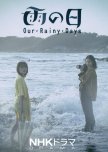
Our Rainy Days tackles a topic not only men are uncomfortable with, but many women as well---Menstruation. That monthly visitor most of the 51% of the population will deal with in some form or fashion in their lives is all part of being human for the female part of the species. Too often not medically studied or properly funded, because it's a "female problem", women have often suffered in silence. Period shame and period shaming will only end when people realize it is normal and healthy. This special takes a look at a photographer and a model both having to handle their symptoms on the job and in public.Kojima Hikari is a photographer on her fist big shoot and it's for a men's magazine. Aoi is a small time idol who wants to transition to acting and is following the path of a bikini shoot to get noticed. Hikari awoke to her alarm warning her it was PMS time, also that it was her first big shoot and to not screw it up. The day starts out raining as they travel by bus to the beach. Aoi's visitor pops in during the shoot causing problems that the men have no idea how to deal with.
This special discussed how not every woman can wear a tampon, much to the crew's chagrin. It also showed that despite their pain and other symptoms the two women were able to come up with creative solutions and do their work. As Hikari says, "Some crisis are opportunities, others leave you stuck." Menstruation is normal but it can also be challenging.
Our Rainy Days wasn't a be all end all in the discussion, but it did one thing that needs to happen more often-communication. By sharing our stories with each other we normalize something that is normal. What works for one may or may not work for another. There are lots of period paraphernalia options and medical ones for those who need it. Don't be afraid to talk with a medical professional or trusted female friend or family member. Most of all, be proud of being a woman and all that entails. And if you are a man, man up and learn about what the women in your life go through each lunar cycle and practice your empathy muscle. Sarcasm and shaming are no longer acceptable. And girls/women we have nothing to feel ashamed of, it's okay to be okay with our periods. So ends The Butterfly PSA addendum to this review. ^^
9/6/22
Was this review helpful to you?
This review may contain spoilers
Hard to Be Righteous, but Easy to Be Evil...
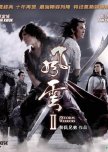
Ekin Cheng and Aaron Kwok returned as the characters they made famous a decade earlier in Storm Riders. Wind and Cloud were an unbeatable team who kept the bad guys at bay until The Evil Lord Godless and his son Heartless with their Japanese army kidnapped the emperor and searched for the treasure within the Dragon Tomb.I enjoyed The Storm Riders (1998). It was cheesy and the CGI was rudimentary, but the story was coherent and the action fun. The Storm Warriors (2009) took itself way too seriously and replaced storyline with endless slow-mo action scenes. Dialogue and character development were kept to a bare minimum. If you haven't watched the first one it may not matter because the atmospheric boys were hard to distinguish with the poor writing for them.
Simon Yam as The Evil Lord Godless seemed invincible and pretty soon it was just Wind and Cloud left to fight him and save China. They didn't have long for a super charged training montage so that they could take their revenge on the over-compensating dressed warlord. Wind went to Lord Wicked and took the, well, wicked route via an evil mud bath while Cloud went the righteous way and was trained by the wounded Nameless at the same time. Before you could say Buckets O' Blood, super slow motion, comic book style fighting with plenty of dismemberments and red goo flying through the air, took place and Cloud had to try and bring Wind back to the good side.
The story was frightfully thin and convoluted. Shu Qi knew what she was doing when she passed on the sequel and left her role to Tiffany Tang. The movie could have easily been 20 minutes shorter if the fights had been shot at regular speed. By the last twenty minutes I didn't really care about the consequences or who lived or died I just wanted it to end. A few of the fights were beautifully shot and the CGI was better than the first movie, but they dragged on at a glacial speed. When CGI replaces actual story and character development I lose interest quickly. During one of the overcooked fight scenes I really thought one of them might yell out, "Kamehameha!"
The Storm Warriors had a cast I was very excited about but they were criminally underused. Ekin and Aaron had grown as actors since the time Storm Riders was filmed but it was irrelevant as most of the time they were filming fight scenes in overly dramatic slow motion. They certainly didn't have to worry about learning many lines. Simon Yam was at least properly menacing as an undefeatable warlord, a nifty trick given how little time he had on screen. Nicholas Tse as Heartless had little to do except look pretty and scowl. Charlene Choi as Dream had little to do but look pretty and worried for her few scenes. Even for comic book characters the lot of them were mostly lifeless. Ultimately, I didn't care about any of them.
The OST was nice if melodramatic at times. As with many of the movies in this genre, the costume department used a lot of leather, gold lame, and metal looking armor. There was no shortage of wind machines as Ekin and Aaron had their long layered mom hairdos seemingly always flowing in the wind.
If you enjoyed The Storm Riders, don't get your hopes too high for this sequel. Several storylines were left dangling, completely forgotten. Maybe I am truly the Heartless one because I actually laughed during the last scene which I'm sure was so supposed to be emotional but came across as absurd to me. As one of my favorite TV baking judges would say, The Storm Warriors was style over substance. It might have looked good, but it didn't taste very well going down.
8/24/22
Was this review helpful to you?
This review may contain spoilers
Love means having to say hello and good-bye and hello and good-bye...
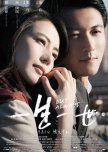
As young children Zhao Yongyuan (Nicholas Tse) and Anran (Gao Yuan Yuan) both suffered tragic events after an earthquake. They met as children and we in Dramaland know what this means: D-E-S-T-I-N-Y. Though they are torn apart again and again, pass just close enough to each other without seeing the other, suffer through lack of communication and noble sacrifices galore, we as the viewers know such obstacles are no match for Destiny. Or is the evil F-A-T-E in control?Spoilery opinions will follow so reader beware...
Yongyuan lived with his grandmother as a child, barely able to afford clothes. Anran's father provided well for her. Through one act of kindness the two children become inseparable with Yongyuan always following Anran, a heavy-handed foreshadowing. Fate tears them apart for the first time. They are offered a second chance in their twenties and yet again fate thrusts them apart. Along with broken hearts, misunderstandings and noble sacrifice the two suffer alone on different continents. Amran goes to the United States as a graduate student to Columbia (daddy must have made really good money). Yongyuan goes to jail where he learns impeccable English and how to become an international trading mogul in one year. (None of which you see.) Beijing prisons must be awesome! Anran, all alone in the US, suffers a horrible tragedy that is glossed over quickly.
They collide in the United States during their 30's where the tables have been turned. Yongyuan is outrageously wealthy and Anran can't get a job anywhere with her measly graduate medical degree from Columbia. Apparently, Daddy must have spent all his money on her Columbia degree leaving her no inheritance. Oops! Spoiler! Well, the writing was on the wall when she left for the US and he gave her his watch that stopped when her mother died. That's okay because his death is dealt with in one sentence. She washes dishes as well as being a "tour guide" for a living. Her job as tour guide entails escorting wealthy clients in clothes they provide for her and going to dinner and a show. I'll stop with the spoilery plot developments except to say through minimal conversation and no honesty between the lovers they get back together and through one of the worst tropes in Dramaland and are torn apart...again. And then again...
I'll start with what I enjoyed. The first two times they were together when they were young were quite entertaining, even moving. Nicholas Tse and Gao Yuan Yuan were lovely to look at as their young adult and adult selves and the child actors who portrayed the young lovers/friends were cute as well. Veteran actor Lam Suet made a brief appearance as YY's uncle.
What didn't work for me: The tragedy upon tragedy with no time to process them, lack of any adult communication and honesty, the heavy-handed foreshadowing for just about all the tragedies, no subtlety involved including the overwrought OST, many of the tragedies and heartache happened offscreen so there was no way for me to connect or feel any empathy with their unseen pain, Yongyuan's ridiculously fast rise to super wealth, and the fact that he waits for her and follows her for over twenty years (not including all the childhood years). It was hard to feel any sympathy for characters who kept their feelings and secrets locked down tight. The love triangle with a childish and unlikeable character was unnecessary. The writer mistook characters suffering tragedies, many of which were off-screen, as character development and reasons for the viewer to feel sorry for them.
The actual camera shots of them wandering around, alone and forlorn in China and the US would have been lovely if they hadn't blown them out to the point the film looked like it was a faded forty-year-old movie. I get they might have been going for a gauzy romantic feel, but it didn't work for me, it was one more blurry barrier to connecting with these two. When the final tragedy struck, which again was foreshadowed in the opening scene, I felt nothing but relief that the film was almost over except that I had to sit through a propaganda announcement at the end.
I need somewhat coherent and consistent plot and character development and relationship development, But Always gave me none of that. This felt more like two people who wandered into each other's lives, messed everything up when Fate wasn't hurling everything she could at them from dead parents to national disaster after national disaster (think Remember Me with Rob Pattinson, if you liked this movie, you should try that one out). All the pain and angst felt manipulative by the writer and director instead of organic to the story. They could have cut the tragedies in half, developed the characters and their dialogue, given them more realistic reactions to each other and their tragic lives and the tsunami of suffering (they missed using a tsunami!) and these gorgeous cardboard characters could have come to life. I know this is an unpopular opinion on MDL because this movie hit a lot of people in the feels, but it missed the mark with me.
Was this review helpful to you?
Dream Team vs Ghidorah the Three-Headed Monster!
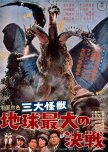
Earth is imperiled when a meteor drops a world ending monster in her lap. King Ghidorah threatens all life on Earth and only a reluctant team of Kaiju can stop him led by Godzilla.This movie is a fun monster ride. The writers threw everything at the screen in order to entertain the audience-a foreign princess with a death squad after her who is taken over by an alien presence (from Mars, Venus, or Jupiter depending on the version you watch), a police officer trying to protect her, an intrepid and annoying female reporter, various scientists, and a doctor who will look familiar to fans of Kurosawa movies.
The alien inhabited princess tries to warn the earthlings that danger in the form of the three-headed fire breathing Ghidorah is coming their way and that Rodan is waking up from inside a volcano. Everyone thinks she's a crackpot. Shimura Takashi as the doctor runs a number of tests on her to see what's going on inside her head even as the death squad appears with guns blazing. The Cosmos return to help out and warn that Rodan and Godzilla are headed back to town. Finally, people decided it's time to start running and screaming as the three giants make their presence known.
Ghidorah rains down destruction upon the people in town while Rodan and Godzilla fight each other in the countryside. Mothra, in her caterpillar form, arrives to try and convince them to fight together against a common foe to save humanity. And their response was, "what's humanity ever done for us?" When Ghidorah attacks the squabbling monsters, the story finally picks up and it is a royal rumble for the ages.
Ghidorah the Three-Headed Monster feels like a movie aimed more at children than adults, but there is enough for adults to enjoy, too. Even though the movie spends too much time leading up to the monster fights, the humans and human-alien were more entertaining than in Godzilla movies from this era. Ghidorah was nearly always a worthy opponent for Big G and it was fun to watch the Dream Team of Kaiju take him on. If you enjoy the Showa era movies, this is definitely not one to miss.
5 February 2022
Was this review helpful to you?
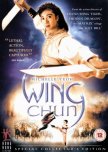
Michelle Yeoh was amazing as the young woman, Wing Chun, who had escaped a forced marriage and gone to study martial arts for years. Upon returning home and setting up a tofu shop she was often the wall between the townspeople and roving bandits. Michelle did nearly all of her own stunt work and truly shone brightly in this role.
Donnie Yen played Leung Pok To, Wing Chun’s childhood friend, who had returned after several years away to ask for her hand in marriage. He didn’t recognize her as she was dressed as a man and mistakenly thought the pretty young widow who worked in Wing’s tofu shop was her. Suitors competed for the women and there was some good-natured bed hopping. There was a love triangle, or maybe square, on second thought it might have been a love heptagon.
Donnie was as cute as a puppy in his role as Wing Chun’s would-be suitor. Leung was skilled in martial arts but not as accomplished as his childhood love. Norman Chu seemed to have a good time playing the Bandit King, he made a brash and comical villain. He couldn’t decide if he wanted to beat Wing Chun or marry her. The side characters were interesting and distinguishable--the money counting and intimidating sister who had eyes on a scholar, the scholar who was torn between Wing Chun and the young widow, the young widow who was in need of a man’s, uh, services, and a bandit who wanted the widow as his wife--all helped fill out the story in a meaningful way.
I liked this movie because unlike a lot of kung fu movies the romances weren’t tacked on and were relevant to the plot. These were all people trying to earn their happily ever afters in between kung fu fights, of course.
Yuen Woo Ping outdid himself with the creative fights, one particularly clever fight between Wing Chun, a hired fighter, and a plate of tofu was ingenious. There were no deaths or blood-soaked bodies, just lots of high wire, good old-fashioned fights with people who knew what they were doing. The action was fast, stunningly choreographed, and well-acted at the same time. Though some parts of the fights were unrealistic, who cares when they were so entertaining.
Importantly, they stuck the landing. I loved the final fight between Wing Chun and the Bandit King. I’ve never seen fight scenes quite like the ones shot for this film. The culmination of it was perfect. They also made me laugh. This film made me laugh several times and I rarely if ever laugh at “funny” kung fu movies. This was not a perfect film and some parts of it were dated. Regardless of its flaws, I enjoyed it.
Michelle and Donnie are two of my favorite actors and this film was a dream team for me complete with romance and spectacular fights. If you enjoy kung fu movies, this one is well worth seeking out.
Was this review helpful to you?
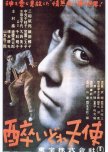
The angel of this movie, Dr. Sanada, is an ill-tempered alcoholic, as scruffy as he is cantankerous. Shimura Takashi gives a wonderful and unsympathetic performance as a doctor with little patience and even less tact. Though disheveled and always with a level of alcohol in his system he is a compassionate and skilled doctor. As he informs Matsunaga, the local gangster who comes to him for help, angels don’t look like beautiful dance hall girls, they look like him. Sanada not only tries to save Matsunaga’s life, but also his soul from being completely stamped out by the violent life he leads.
Matsunaga is torn between doing what must be done to live and the immorally squalid life where he is a big fish in a typhoid infested pond. Like Sanada, he has a terrible temper as well. Mifune Toshiro brings out all of the fear and frustration built up in this brutish character.
Unlike many yakuza or gangster movies, the criminals are not glamourized. Doctor Sanada speaks for those who live under the yakuza’s rule when he tells Matsunaga, the yakuza code of honor is a façade and merely self-serving. He compares it to the feudal system and declares it obsolete.
Sad guitar music often plays in the background setting the mood. Further setting the mood is the pool of filth where children play, foretelling their future in the crime ridden part of town.
The two damaged alpha males are fascinating to watch as they butt heads. A powder keg of fear and violence is set off when the deadly and treacherous Okada is let out of prison and has his sights set on Matsunaga’s job and girlfriend and Sanada’s female assistant.
This is a powerful movie about two opposing forces at work for the souls of the people, the hedonistic and violent yakuza on one side and the life ruled by reason and compassion on the doctor’s side of the disease infested swamp. It would take a “dirty, drunken angel” to reside in such a place and an angel tough enough to fight for the hard-won wins and suffer the heartbreaking losses. Drunken Angel is an emotional ride, but one worth seeking out and trying.
Was this review helpful to you?
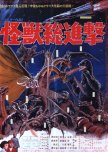
I'm going to start off with what I liked. The quality of the miniatures, sets, 1968 special effects, and space ship was quite good. I had to remind myself that this movie came out a year before the first manned trip to the moon. I appreciated their optimism that the world would be fully cooperating in 1999 not just on Earth but the moon as well. On the monster front, eleven popular Kaiju stars made appearances: Godzilla, Mothra, Rodan, Mandan, Kumonga, Baragon, Varan, Gorosaurus, Minya, Anguirus, and Ghidorah. The fight near the end was all you could hope for in this era from Ghidorah against Godzilla and friends.
What let me down about this movie-in a movie called Destroy All Monsters, I want to see monsters. I suppose it could have been talking about the aliens because out of 88 minutes, the monsters were only on screen for around 18 minutes. The alien story could have been interesting but the acting was stiff and unemotional from humans and aliens alike. There were some entertaining moments, but not enough to keep me from wondering what the monsters were up to while the humans were talking.
Even though I was happy to see all the monsters in one movie, it would have been nice if they'd felt like the stars instead of guest stars in their own movie.
Was this review helpful to you?


