

 148
148 438
438 16
16 2
2 6
6 3
3 8
8 10
10 3
3 13
13 1
1 1
1 1
1 1
1 2
2 7
7 9
9 5
5 9
9


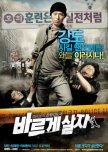
"I warned that you might regret this"
I wasn’t sure what I was getting into when I started Going by the Book. The old synopsis said a traffic cop went undercover in a robbery gang and that was far removed from the story in this film. The actual premise might have been far-fetched but it did provide for both tense moments and hilarious ones.Officer Jung Do Man had been a detective until a failed investigation resulted in his demotion to traffic cop. Upright and by the book he is a thorn in his colleagues’ sides. When the new police chief, Lee Seung Woo arrives, he discovers that there have been a number of unsolved bank robberies. After watching a military exercise, Lee decides to hold a police exercise to strengthen police response time to robberies and coordination with the banks. He secretly chooses Do Man to play the robber, a move the officer warns against. Lee learns the hard way that Jung Do Man takes his job very seriously when the simulation becomes more complicated and more public than Lee had planned.
The film started out slow, and I worried that it was not for me. Once the simulation began, that’s when the fun and tension ramped up. Do Man had done his homework and his way of handling the “hostages” was stressful and funny. Despite not wanting to upset the people in the bank, he was willing to see the simulation through to the end. And return his rented videos on time! Jung Jae Young was suited to a tee as Do Man. He portrayed a good cop who didn’t see the nuance in relationships yet could zero in on illegal patterns. Son Byung Ho brought out Chief Lee’s conflicted emotions as Jung had done exactly what he asked but to a degree he never dreamed.
Going by the Book was an interesting case study in hostage situations even if or perhaps because it was fake. People complained, freaked out, and cooperated. Pride pushed the chief to continue on long after he should have called the simulation off. Thankfully, the humor was not slapstick or bathroom oriented. It evolved organically from the claustrophobic and absurd experiment. I laughed out loud numerous times which is a rarity for me. Silly, serious, ridiculous---yet ended up being quite enjoyable.
12 May 2026
Favorite quote (roughly remembered): “In a fight, which one wins, wushu or boxing?” “The one who has a gun.”
Was this review helpful to you?
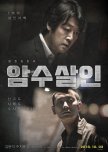
Trust but verify
Dark Figure of Crime was based on the true story of a serial killer in the RoK who played a dangerous game of “where are the bodies?” with a narcotics detective. The killer was aware of how to manipulate the judicial system which made the detective’s job all the more challenging.Detective Kim Hyung Min receives a tip from an informants to meet up with a source who knows where a body has been buried. The source, Kang Tae Oh, is arrested for the murder of his girlfriend before Kim can follow-up on the tip. Kang contacts Kim from prison and promises tantalizing information about other people he has killed. He’s willing to parse out information for contraband and commissary money. Kang is hardly forthcoming with explicit information putting Kim’s job and reputation in jeopardy.
This film paced itself with the speed of a police investigation. The cops were not inept, though the original officers hardly dug very deeply into the missing persons reports they processed. Kim Yoon Seok perfectly encapsulated a dogged detective who was more concerned for the victims and their families than he was about promotions. Good thing, because at every turn someone in the department attempted to discourage Kim from researching the cold cases. His best ally was Detective Jo played by the reliable Jin Sun Kyu. Jo believed in what they were doing even though their cases began to drag him down professionally. Ju Ji Hoon gnawed through the furniture to capture Kang’s malevolent behavior giving much needed energy to the film.
While I enjoyed the thorough nature of the investigation, the ongoing minutiae wasn’t exactly riveting viewing. My biggest problem was that I found the characters, despite their determination, to be coldly detached from the events around them which lessened my connection to their struggles and triumphs. One particularly frustrating hole in the real-life judicial system was filled a year after this film came out. Murder no longer had a statute of limitations meaning criminals like Kang could be held responsible for the full measure of their crimes regardless of how much time had passed. If you enjoy police procedurals, this might be one to try as it had strong acting and followed the relentless work of a detective who refused to give up.
11 May 2026
Was this review helpful to you?
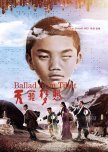
"They are not looking for sympathy, just for a chance"
Ballad from Tibet was exactly what I needed today. A feel good film based on a real life event, that showed the power of determination, dreams, and friendship. Oh, and the element that made it butterfly nip for me, it was a courageous road trip.Thupten is a ten-year-old boy living in Tibet who only has the use of one eye. He has promised three of his blind friends-Sonam, Droma, and Kelsang-that he will guide them to the Lhasa airport. Thupten is in dire need of a surgery to save his one working eye, but his promise comes first. The trio have talked their way into an audition to be on a televised talent show in Shenzhen over 1000 miles away. The show has provided airplane tickets but they must make it to the airport first, a tricky proposition since they have to sneak out of town without the adults knowing. When their teacher comes looking for them, the four are forced to take a circuitous route to Lhasa, a daunting task as they wind up on foot and Thupten’s eye begins to rapidly deteriorate.
Despite the struggles the children faced on their trip, kind and generous people appeared to give them aid or advice. “A single cow must not leave its herd.” When disagreements blew up into arguments they rallied to stick together on their quest. One of my favorite elements was a biker gang who crossed paths with the adventurers. Another was the bag of “gifts/payments” the boys procured to hand out as they met people.
The acting was natural and minimal as the film used children with visual impairments. Most of the adult actors with the exception of a couple of them appeared to be either locals or lesser-known performers. My most major disappointment was that the song the children sang was muted for whatever reason. The end credits showed the actual children who made the trip with the sound so I’m not sure who opposed the song in the body of the film. The writing and editing were a bit choppy though the cinematography helped take my mind off those detriments. The message and poignancy of the children’s indefatigable spirits covered over most of the weaknesses as well.
The children weren’t perfect, they squabbled at times. For the most part, they stood by each other and faced the unknown darkness on the road to their dreams by overcoming their fears. Most were resigned to the jobs they would be offered after school-weavers and masseurs. Their main mission wasn’t to perform, it was to show the world that they had far more capabilities than people believed. Beautiful children with a song in their heart able to see more clearly than some of the people around them…mission accomplished.
30 April 2026
Note: I hadn't realized the problems of cataracts in Tibet. Perhaps this film brought that important concern to light with increased awareness and medical services.
Update: YouTube does have full sound with the children singing the song separately. Please check the link Anusaya provided below.
Was this review helpful to you?
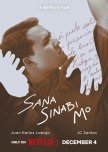
"If you see him, tell him I'm sorry"
A son has to come to terms with his father’s secret life and his own religion in I Wish You Had Told Me. This film was a touching story of a young man having his eyes opened to the idea that love is love.At his father’s funeral, Seph’s loving tribute to his dad is interrupted by a woman who lets everyone know that Otep had been gay. The pastor refuses to bless Otep damning him to an eternity in hell. Seph tries to appeal to the pastor and congregation reminding them of the kind and selfless man his father had been. No one budges. Seph discovers a suitcase with a cache of love letters his father had written to a pen pal in Spain. The woman who made a scene at the funeral tells Seph about the man his father had loved many years ago, and the final unmailed letter. Seph determines to deliver the letter in person, but the trip won’t be easy.
Seph’s trip to Europe began as a proselytizing mission with his church. His partner, Marlon, had his own issues with their pastor. Both men had to rethink their beliefs and what they had been taught from the church that maintained power over all aspects of their lives. This aspect of the film may be triggering for people in a variety of ways.
Seph maintained a connection to his father through his phone and was shown brief flashbacks of his father’s life. If anyone has ever lost a loved one and called their phone to hear the familiar voice on the outgoing message or texted just to send their love, you’ll understand Seph’s actions. The only difference was that he actually received messages back and visits that were heartwarming and poignant.
The church that caused numerous people so much pain, threw Seph’s existence into disarray, also chained his father to a sorrowful life. Despite ecclesiastical disruptions, father and son still maintained their faith, their belief in love simply expanded. Seph’s search was painful, awkward, and ultimately rewarding and not just for himself. It turns out he wasn’t the only one who needed closure and a reminder of the love that had been given.
6 April 2026
Trigger warning: Sexual assault alluded to
The oft quoted scripture Otep and Seph used:
Love is patient, love is kind. It does not envy, it does not boast, it is not proud. It does not dishonor others, it is not self-seeking, it is not easily angered, it keeps no record of wrongs. Love does not delight in evil but rejoices with the truth. It always protects, always trusts, always hopes, always perseveres.
I Corinthians 13. 4-7
Was this review helpful to you?
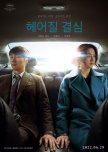
"Killing is like smoking...only the first time is hard"
Decision to Leave was another provocative Park Chan Wook film combining murder and obsession. At times it felt like he was being provocative for provocative’s sake, but it was a hauntingly beautiful, if disturbing film to watch.Detective Jang Hae Jun and his partner are investigating what appears to be an accidental death of a mountain climber. But they become immediately suspicious of his gorgeous Chinese wife because she’s not grief stricken enough. A chronic insomniac, Hae Jun stakes out the widow Song Seo Rae’s apartment and place of work. To his surprise, he sleeps on the stakeouts. And he also begins to question whether Seo Rae is guilty. As he falls deeper into her spell, she becomes not only the cure for his insomnia but its cause as well.
This never seemed like a murder mystery to me. It was not, “Did she?” or “Didn’t she?” More like, “Does she?” or “Doesn’t she”? Hae Jun appeared to be happily married to his weekend wife in Ipo, yet Seo Rae spoke to a deeper place inside. The song “Mist” was played often and Ipo’s fog was mentioned repeatedly. Just as the fog of war can obscure thinking and action so can the fog of lust. The mist of miscommunication (mistcommunication?) clouded conversations as Seo Rae’s Korean wasn’t strong. Translation apps and mistranslations of words hampered understanding in an already twisted and stressful environment.
If you have more problems with infidelity than bug covered dead bodies, this will be a film to skip. Aside from a scene with Hae Jun and his wife, the most intimate moments involved lip balm and hand lotion which were quite sensual. Much was made of the mountains and the sea, at times touching but never truly together. The film started on a mountain and ended at the sea, both beautiful and deadly. I had a few issues with the film, but like Hae Jun, I was willing to suffer to watch Tang Wei.
28 March 2026
Trigger warning: Bugs, dead bodies, creepy bugs. Mostly emotional infidelity. Suicide
Was this review helpful to you?
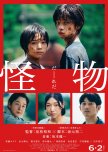
"Who's the monster?"
Having just finished Monster, I feel like a tsunami of emotions has washed through me. Some were easier to face and process than others.The film is an enactment of the Rashomon effect, a series of the same events told from primarily three different viewpoints. Despite the genre and tag for this film being thriller and psychological thriller, that was not my experience. More like social commentary with high stakes. Several things happened that concerned two boys, Minato and Yori, and their teacher, Mr. Hori. When Saori, Minato’s mother, believes Mr. Hori and possibly others have bullied her son, she goes to the school in a take no prisoner’s mode. The teachers (all male) and the principal (female) placate her with insincere apologies, writing her off as a neurotic single mother. Refusing to back down, she is relentless in her pursuit of justice for her child. But all may not be as it seems…
It truly is best to go into this film with no preconceived notions or knowledge. I found the first 2/3’s of the film shown through the adults’ eyes rather bland on occasion. Adults thinking they had all the answers jumped to conclusions, failed to properly communicate, and set rigid societal and familial boundaries. Single mothers were vilified and treated with condescending attitudes. The school faculty and administration cared only about protecting themselves and the school. And for one little boy who was viciously abused by his alcoholic father, the school, the law, and society in general offered zero protection. The school, with all of its "caring" teachers just presented another venue to cause the innocent pain.
Repeatedly through the film, questions were asked. “What is normal?” “What is a monster?” “What does it mean to be a man?” For me, with bullying being so pervasive, why did the teachers leave little monsters alone to terrorize the weak? This film will break your heart and make you angry. Above all, children need protection and acceptance at home, in school, and in society. And in their own home they need love and affection as well. How I wanted to hug these little boys and tell them that they were perfect the way they were. Too often it’s the people advocating a “normal” life who are the monsters inflicting the most fear and harm. An easy recommendation, but not an easy watch.
26 March 2026
Trigger warnings: Child abuse.
Was this review helpful to you?
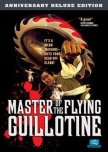
Honey, these guys don't use doors! *
Master of the Flying Guillotine aka One-armed Boxer vs the Flying Guillotine aka One-Armed Boxer 2, (that’s a mouthful!), was a sequel to One-Armed Boxer (1972). After the one-armed boxer killed two of Fung Sheng Wu Chi’s disciples in the previous film, the blind Master of the Flying Guillotine was out for revenge!Yu Tien Lung, the one-armed boxer, has opened a school to teach kung fu secretly. The Qing government wants to be rid of these martial artists they deem a rebellion risk. The Eagle Claw school is holding a tournament and Yu is invited. He declines to fight as he does not want to draw attention to himself or his school. What he doesn’t know is that Fung Sheng Wu Chi, the blind master of two men he killed in the past, is hunting him with his guillotine and killing every one-armed man he comes across. Fung gains the help of several foreign fighters who have entered the tournament.
Full disclosure, because I’m sure it does color my review even if I try to not let it. I’m not a Jimmy Wang Yu fan on screen or off. I don’t care for his wooden acting or his slow, awkward “fight” style. Putting that aside, he was not in much of the beginning and middle of the film when the story focused on Fung and the tournament. The tournament was fun because it showcased numerous stuntmen using different weapons and styles. Lau Kar Leung and Lau Kar Wing were the choreographers so there was no doubt the tourney fights would be on the money, brutal and entertaining. Doris Lung’s fight depended heavily on Wang Tai Lang’s Monkey style doing all the heavy lifting. Doris was beautiful but very slow. Similar to Yu’s fights, his opponents and his stunt double provided much of the excitement in the fights near the end of the film. With some low grade special effects, Jimmy walks on the ceiling like Spider Man. Speaking of superheroes, Yu was One Punch Man before the famous anime only with really bad form...painfully bad form.
This film had nothing to do with the original from Shaw Brothers The Flying Guillotine (1975), other than "borrowing" the titular weapon. Master of the Guillotine had some entertaining moments, despite lacking in the narrative department. The tournament offered numerous quick and lethal fights, including one with Lau Kar Wing wielding a 3-section staff. The foreigners, as so often happened during this time frame, came across in a racist manner. The Indian fighter whose arms could elongate was hilariously bad. And of course, flames and heat didn’t bother Yu while it cooked his opponent. Chin Kang tried to bring life to his hairy character through eyebrow acting. I can see why some people find this film iconic but for me it was average from 1976. I was laughing and cringing too much during the final fights to give it a better rating. As always, graded on a kung fu curve.
25 March 2026
Trigger warning: Hopefully, whatever they threw at Wang Yu was not the Indian’s owl.
*Quote from The Mummy 2
Characters rarely used doors, rather flying through windows or over walls or through the ceiling.
Was this review helpful to you?
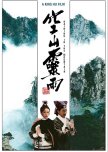
"Its true value lies in its meaning"
Raining in the Mountain was another gorgeous King Hu film starring Hsu Feng. I didn’t find it as compelling as Touch of Zen, but you would be hard pressed to find a lovelier cinematic experience from the 1970s than this film.Merchant Wen An is traveling to a remote temple with his concubine and servant. The abbot is in ill health and ready to name a successor. He has asked Wen, General Wang Chi (accompanied by the vile Lt. Chang Cheng) and the illustrious Buddhist scholar Master Wu Wai (accompanied by numerous beautiful women) to the temple to help him make his decision. Unknown to the abbot, Wen and Wang Chi are there to steal the Mahayana Sutra written by Tripitaka himself. Wen’s “concubine” is actually the notorious thief, “White Fox”, along with her cohort, “Gold Lock.” Aside from the thieves lurking behind every corner, at least two monks are vying for the top position by throwing their lot in with the powerful men. Into this volatile mix enters a thief who was falsely accused and sentenced to the military. Chiu Ming has the potential to upend everyone’s plans.
First, it’s important to acknowledge the true star of the show, the 8th century Bulguksa Buddhist temple in South Korea that has been designated a UNESCO World Heritage Site. The temple sits on a mountain, surrounded by forest, and was architecturally a thing to behold. Most of the scenes were shot on site. The film had also been restored which I am always grateful for.
While ostensibly a martial arts film, there weren’t many fights, the longest occurred near the end of the film. Much of the film involved people lurking around corners, running to hide, and generally slinking about searching for the sacred scroll and attempting to avoid detection. If people weren’t skulking in the shadows, they were making deals to be chosen abbot or deals that involved access to the scroll. The irony was not lost that these devout Buddhists coveted the scroll and were willing to lie, commit theft, and/or murder to obtain it. As the abbot said regarding the tattered paper, “Its true value lies in its meaning.” The monks competing for the abbot position were more interested in power than enlightenment. After complaining about the food, the monks were told they’d have to start farming and working harder at alms. Wait, we don’t actually want to work! The new abbot was going to have his hands full if he could manage to stay alive!
King Hu’s cinematography was stunning. I have watched many films from this era and it would be difficult to find one more aesthetically pleasing. The music perfectly enhanced the story and scenery. The actors all gave fine performances though some performances were more captivating. Other than the long length of the film and repetitive prowling scenes, I enjoyed Raining in the Mountain. The final fight and flight scenes were actually quite humorous, even as characters died. I’m not sure King intended them to, but they were reminiscent of a Looney Tunes cartoon. Raining in the Mountain contained no rain and was more philosophical than physical, at least until the epic game of keep away. If you enjoy 1970s historicals that are light on kung fu and heavier on Buddhist ideology, shot on an amazing location, this might be one to try.
22 March 2026
Was this review helpful to you?
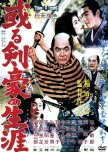
"Heihachiro of the nose is standing guard for lovers!"
Based on French playwright Edmond Rostand’s Cyrano de Bergerac, Samurai Saga may be the definitive film version of the story about a poetic swordsman who believes no woman could love him because of his large nose. Mifune Toshiro gave an emotionally compelling performance as the humorous and heartbreaking samurai who was willing to set aside his own feelings for the happiness of the woman he loved.Komaki Heihachiro is a gifted swordsman and poet, able to do both at the same time. He’s in love with his childhood friend, Lady Ochii, never letting on how he feels. She falls in love with the handsome Jurota believing him to have a noble mind. She begs Komaki to protect him which her friend reluctantly does. Turns out Jurota doesn’t have many creative thoughts which puts a damper on the romance. Komaki writes poetry for him to claim as his own which lures the lady back in. On a night before the two are called to battle, hidden under the moonlight, Komaki declares his love and yearnings through Jurota to Lady Ochii.
Samurai Saga was a full-blown romantic triangle featuring true love, poetry, humor, sword fights, bloody battles, and tragic revelations. Mifune Toshiro played Cyrano/Komaki. He managed the humor while dialing back the full manic he displayed in Seven Samurai and Rashomon. His scene under the moonlight and his final scene with the Lady Ochii were among some of his best work I’ve seen. Heartachingly vulnerable and brave at the same time. With Mifune it took little imagination to believe he could take on 25 attacking samurai and live to tell the boisterous tale, his romantic side was the revelation. Takarada Akira (Godzilla 1954) was the handsome and forthright samurai lacking the deep thoughts his lady so desperately craved. I was more familiar with Tsukasa Yoko’s work in Ozu films, but here she was convincing as the lady in love with the poetry and letters not written by the fair face she thought owned her heart.
Samurai Saga was a funny and sorrowful tale of poetic misunderstandings. Though theirs was a world of turmoil and shifting political powers, the three people ensconced in their romantic triumvirate saw only the face of their beloved. The mask of the undaunted and beautiful spirit would ultimately be revealed under the gentle fall of cherry blossoms in one of Mifune’s finer performances. If you enjoy older Japanese films or adaptations of Cyrano de Bergerac this would be one to try.
"Empty handed I journey to the moon, only taking my undaunted spirit."
16 March 2026
Was this review helpful to you?
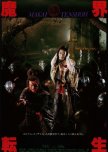
"The path of the sword is the path of hell"
Samurai Reincarnation was a campy, creepy samurai revenge film set after the annihilation of Christians during the Tokugawa Shogunate. Historical figures were tempted to reincarnate by naming their grudges or regrets.After 37,000 Christians are killed, Christian Amakusa Shiro renounces his god and makes a deal with the devil. He sets out and recruits the dead and the dying turning them into “devils”: Lady Hosokawa, Miyamoto Musashi, Iga no Kirimaru, and Hozoin Inshun. They immediately begin carving out their path of vengeful deaths and destruction. All that stands between them and burning Japan to the ground is the dying Yagyū Tajimanokami Munenori and his son Jubei.
The first forty minutes were a chore to get through as Shiro set about convincing different characters to join his devilish clan. Then Big Daddy Yagyu enters (53 minutes), played by "Lone Wolf and Cub" and "Zatoichi’s" Wakayama Tomisaburo, changing the balance and the stakes. Sonny Chiba’s Jubei finally fully joined the film after an hour. At that point, the story became more exciting and engaging with someone to stand against the devils. He certainly looked like a devilish manga character with his wild ponytail, blocky eyepatch, and shiny black costume. All he needed was a ghost killing sword---which sent him to another historical character. Sanada Hiroyuki’s ninja who maintained his humanity had a side story that like Star Trek’s famous hallway signs went nowhere and did nothing. I was really hoping for more from this character.
There were several nice fights, one was reminiscent of Mifune Toshiro’s beach battle in "Duel at Ganryu Island". Kirimaru’s attic fight was quick and exciting. But the most memorable took place in the burning palace between father and son, quite a spectacle for 1981.
Samurai Reincarnation was a bizarre vengeful horror film featuring historical figures led astray by their regrets and grudges. The rapist monk, seriously, this was a terrible time with sexploitation, was the vilest of all of the villains. Two of the recently deceased wanted to live again, even sign on with hell just for the chance to duel their rivals. They came across as terribly prideful and shallow. The one devil whose motivation I could understand was Shiro’s. He was determined to burn the Shogunate to the ground and bring on the chaos for the Christians killed and his anger at God and the nobility. Given the nobility’s corrupt and predatory practices aimed at the peasants, it was hard to root against him. But it’s always the peasants who pay whenever people in power decide it’s time to destroy whoever stands in their way. Did Jubei’s actions make life better for them? Maybe not, but he was entertaining.
14 March 2026
Triggers: Sexual assault, sexual situations, and nudity (mostly breasts and female derrieres). Heads split open. Numerous heads on spikes. Crucifixions.
Was this review helpful to you?
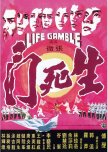
Four thieves rob an escort agency of a priceless green jade piece. Unwilling to spilt the proceeds in the future once the jade is sold, they decide to gamble for it at the infamous Golden Lion. Numerous interested parties descend on the area, all looking to either steal the jade or return it to the rightful owner. Drawn into this dangerous conflict is blacksmith Qiu Zi Yu who left the martial arts world and wants nothing to do with it.
Now as to why my faith has been shaken in Chang’s worldview. I have been annoyed on many occasions regarding the absence of female characters in his films as if half the population of the planet simply disappeared. Here there were FOUR women and just one of them was a prostitute. All were smart and capable, albeit only Xiao Hong wasn’t a criminal. There was the requisite blood bath, I stopped counting at 30 bodies, but none of the artery spewing #2 red finger paint he was famous for. And weirdly, except for Lo Meng of course, most of the men were fully dressed. Phillip Kwok had a laced-up vest but part of his ensemble was a wraparound weapon. The person who seemed more at home in a CC movie was a thief that was one pair of stiletto heels short of being a dominatrix. The muttonchop sideburns and heavy eyeshadow sported left at least part of my observations of his world intact.
The cast for this film was large meaning character development was out the window. Most characters were nefarious criminals which meant no one cared when they died. There was only a tiny handful of righteous folks trying to return the jade. Four of the Venoms made an appearance with Phillip Kwok leading the cast as the reformed blacksmith. Alexander Fu Sheng played against type as a killer for hire. Ku Feng was the constable father and Kara Hui was his investigative daughter who infiltrated the dangerous gambling den and might have found love at the same time. Most of the fighting was with weaponry both hidden and obvious.
Life Gamble involved numerous characters jockeying for allies, betraying allies, and murdering allies. No one was safe when a treasure was on the table. Few could envision a world where they would share wealth beyond their imagination. Every character went all in with their lives on the line with few living to walk away. I wish Chang Cheh would have gone all in with more capable women (not victims) in his films. In this instance he might have walked a way a winner in my view.
10 March 2026
Trigger warnings: Aside from the high body count and numerous projectile stabbings, weirdly nothing.
Venoms: The Five Venoms (1978): Phillip Kwok (Lizard), Lo Meng (Toad), Lu Feng (Centipede), and Chiang Sheng (Venom disciple). Not in this film, but part of the Venom Mob-Wai Pak (Snake) and Sun Chien (Scorpion). Not Venoms, but Johnny Wang, Ku Feng, Dick Wei, and Lam Fai Wong were also in both films.
Venom hairstyle complaint: Lo Meng's wig looked like horses had stampeded over it. Poor baby.
Random personal note: Many years ago, my friend was a flag girl for the high school marching band and I kept flashing back to their routines with the Big Bad's villainous flag bearers. They even had kicky black go-go boots ready for any halftime show!
Spoilerish note:
Lu Feng has an iron weaponized hand here and in The Crippled Avengers (1978)
Was this review helpful to you?
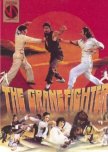
"If you had any character, you'd already be married"
Crane Fighter starring Chia Ling struggled to get out of its own way to make a coherent story, and I’m using that term loosely given the genre. Slapstick comedy juxtaposed with a high body count always takes away from the emotional stakes. Throw in some glaringly sexist language and this film was doomed to failure for me.Ping’er has been forbidden by her father from ever studying kung fu. So, she does what any dutiful daughter would do and studies behind his back. Her father was one of the few people to survive the Qing attack on the Shaolin Temple which means there are men hunting him. The imposing General Ko Chin Chung is determined to eradicate the remaining Shaolin members. Into this volatile situation struts in Blue Fan aka Busybody who is either helping Ping’er out or sparring with her after her secret is exposed. General Ko leaves no stone unturned in his effort to find Ping’er and her family and friends, something they make all too easy for him.
Admittedly, this Taiwanese film was already going to be a challenge as it was faded, the sound tinny, and the dialogue dubbed in English. Ray Lui directed, produced, starred in, and was also a martial arts director for this film. I feel comfortable laying most of the blame for the cringey sexist language at his feet as well as writer Chang Hsin Yi. Blue Fan was always dropping words of wisdom that often began with, “Women are just like children…” Minor spoiler alert, Ping’er believed her new husband would have to force her onto the marriage bed. Speaking of cringey, the comedy was the cringiest. I’m not a big fan of kung fu comedy, but the sentiment here was we need a laugh so throw the stooge into a vat of water, tofu or have the ML’s face be peed on. What was actually comic were the awful Bruce Lee wigs for the men with a pigtail tacked on.
I like Chia Ling and more often than not have enjoyed her films. She was quick and limber, capable of doing some of her own tumbling. She held up well against the larger than normal fu fighter, Chin Kang. Ray’s choreography was actually pretty good, but his filming techniques didn’t impress me on the bigger fights. The Big Bad’s weakness was ridiculous though I haven’t seen that particular weak spot before. And doubt I will again.
As much as I adore a hard-hitting woman taking down the bad guys, this film was a chore to get through. Chia Ling and her character deserved better than to be constantly belittled for being a woman, especially by the male lead. Rated on a curve.
9 March 2026
Was this review helpful to you?
The royal tutor has nefarious plans targeting the righteous Judge Bao and the emperor’s sister, Yung’an. His henchmen featuring the sinister Variegated Butterfly Hua Chong know no moral boundaries. On the other side of the spectrum is Chan Chao dubbed King Cat by the emperor for saving Yung’an. Chan tells Bao if he ever needs help to flash the Bat Signal, I mean red lantern and he’ll come flying in. Somewhere in the middle is the 5 Mice Clan. Brother 5, Pai Yu Tang the Brocaded Mouse, takes great offense to King Cat becoming the new national hero. No cat can top a mouse! The brothers plot to steal the princess’ jade incense burner unaware that Hua Chong is raping and murdering his way through the Princess’ maids which leaves Pai being blamed for the murders.
Most of the action was driven by the men in this film. Yet in walked Pat Ting Hung as Ting Yueh Hua and stole the spotlight in every scene she was in. Her swordswoman knew what she wanted and was capable of taking care of herself. The only other character who had any real sizzle was my fave, Lo Lieh, as the despicable Variegated Butterfly. Kiu Chong hammed it up as the Brocaded Mouse, but was still entertaining in his silver lamé trimmed outfits. Chang Yi, in only his third film, played the lackluster King Cat. There’s a reason he’s remembered for his villainous roles, and why he didn’t play a lot of these plain vanilla heroes. Ching Miao played the historical figure Bao Zheng in black face which was jarring to my western eyes. From what I read, the coloring meant the character was incorruptible.
Martial arts directors Tang Chia and Lau Kar Leung also worked on screen as the tutors’ minions (as well as brother Lau Kar Wing). This was not one of their better efforts. During one fight some participants were either standing still or swinging their sword at no one. There was quite a bit of primitive wire-fu as swordsmen flew up and over walls on a regular basis.
The only copy I could find was dubbed in Thai and had atrocious English subs, some of which made absolutely no sense. The dubbing wasn’t very good and actually quite funny in some scenes which could be distracting. ** I try not to let bad dubbing affect my rating but this film was a challenge. The Shaw Brothers knew how to world build with a limited budget. The sets and costumes were well crafted with beautiful dresses and hairstyles, stunning interiors and even a cave with bubbling mud pots.
King Cat had great fun with the cat and mouse antics between Chan and Pai with the adversaries having to set aside their differences to save the princess. And Pai’s brothers were obviously enjoying their mousey roles. The farcical antics and classic misunderstandings were a strange juxtaposition with the darker storyline of sexual assault and murder. While not all of the film worked for me, I did enjoy a heroine who could hold her own in battle, save herself, and make life choices that suited her as there were long stretches in the genre where that kind of feminine strength disappeared.
3 March 2026
Animal note: No actual cats or mice in the film
Trigger warnings: Sexual assault off screen. Attempted sexual assault on screen.
**Just to clarify, the Thai language was not distracting or funny, but the voice actors made some interesting choices for several voices and sound effects. I've run into similar things with English dubbing. One film had stereotypical accents such as a character with an American deep south accent, another had a British Cockney accent, and yet another sounded like he was from New York City. And I'm pretty sure the same guy did most of the voices except for the female characters. XD
Was this review helpful to you?
"You can't be a sentimental swordsman!"
The Sentimental Swordsman was a “whodunit” mystery regarding a terrifying assassin called the Plum Blossom Bandit. Despite dressing in a pink ninja costume and throwing poison darts in the shape of flowers, this baddie left a host of bodies in their wake. Based on a story by Gu Long, the film was packed with characters and red herrings.Little Flying Dagger Li is headed home with his faithful servant having been away for ten years. His sword brother, Long Xiao Yun, had saved his life during a battle with the Plum Blossom Bandit (PBB) so Li gave him his girl and his property as payment leaving afterwards. Now, the PBB has returned and Li is duty bound to bring him down. On the way he befriends a traveling swordsman, Ah Fei. Not long after returning to the area, fights break out over a golden vest that is impervious to PBB’s darts. Li is framed as the PBB with all the local clans coming after him. He stays to clear his name but his life is in constant danger from revenge seekers and the PBB.
The opening scenes and many other outdoor scenes were a stunning icy vista of snow and frozen lakes. The sound stage sets attempted to match the frosted world. Not to worry there were plenty of breakaway sets for bodies to jump or be thrown through! The pace rarely slowed down enough for the characters or audience to catch their breath.
Ti Lung was perfectly cast as the sentimental swordsman though I will argue with Li’s view that he could abandon his fiancé to another man and she’d be cool with it. Derek Yee appeared to be a stand in for the no longer available David Chiang given that his dress and character were similar to the ones Chiang played opposite Ti. Ching Li was the woman no man could deny and seeking vengeance on the PBB. Ku Feng was the blindly hypocritical clan leader who’d lost his son to the PBB. Norman Chu made an appearance as the Iron Flute whose little brother was murdered by the PBB and who also jumped to conclusions. And stiff upper lip Yueh Hua played the BFF Xiao Yun. Yuen Wah made a brief appearance as the love-struck swordsman Long Sheng.
The fight sequences were actually pretty good given that most of them were sword fights with a little hand to hand thrown in on occasion. With several acrobatic scenes you could see where the stunt doubles jumped in to lend an assist. As a Shaw Brothers movie, the characters were duty bound to use creative weaponry as well. The Poison Kid’s clan employed a variety of poisonous reptiles, big bugs, and amphibians, but they weren’t the only ones doling out poisonous treats. Thankfully, the bodies piled up without the spewing blood and flying limbs you’d see in a Chang Cheh flick.
The Sentimental Swordsman was overstuffed with characters and revenge plots, but they were easy to follow. Due to the casting, I knew immediately who the PBB was going to be. It took Li a little longer to read the writing on the wall. He could be very sentimental.
1 March 2026
Triggers: Snakes, frogs, giant centipede, big spider.
Was this review helpful to you?
The Human Condition II: Road to Eternity
5 people found this review helpful
"He who shouts the loudest isn't always the bravest"
The Human Condition II: Road to Eternity picked up not long after the end of the first installment with humanist thinker Kaji in basic training further away from his beloved Michiko. The frigid Manchukuo winter was the least dangerous enemy Kaji faced during the waning years of WWII.Now in basic training, Kaji tries to keep to himself, follow the rules, and lead an exemplary military career. He is on a “Red” blacklist and constantly surveilled. Shinjo is another free thinker who is always assigned guard duty as punishment and refused promotion. Enlisted with more time in, use any opportunity to beat the new recruits, with the humiliation and pain driving two soldiers to take drastic action. When Kaji’s squad is moved to the front, he runs into an old friend who tries to help him by putting him in charge of a rifle squad and new recruits. Kaji is able to run his barracks the way he envisions which means he chooses to suffer the blows the veterans would normally dish out to the new recruits. When the Russians invade, the soldiers find out how absurdly unprepared they are for the assault.
After attempting to help Chinese workers and POWs in the first film, Kaji concentrated his views of equality and humanity on his fellow recruits and later on the new recruits under him. Unlike other soldiers who believed Japan could not be beaten even after devastating losses in the Pacific and the Allies victory in Europe, Kaji saw the writing on the wall. Despite hating the army he was a disciplined soldier and an excellent marksman, but his ultimate goal was to survive and make it home to Michiko and for his men to see their mothers and loved ones.
Being a humanist in a savage military atmosphere tested Kaji regularly. I had read how drill instructors and higher ranking enlisted brutalized new recruits as the war went on, especially college kids. Fourteen years after the war, this film showed the civilian population a taste of the cruelty their young men experienced at the hands of their own people. In order to raise morale, Kaji attempted to inject a modicum of kindness and respect into the men he trained. By giving his recruits real reasons to live, he hoped to motivate them to train hard and survive. As the wartime situation deteriorated, rifles and ammunition fell into short supply. Adequate fire power was absent in the face of the Soviet Union’s tanks and cannons. The Japanese soldiers were all but using popguns and Roman candles against their enemy. Commanders needlessly sacrificed their men. “To die here, is to die a dog’s death.”
As this film was more a psychological study of Kaji and the violent, dehumanizing military culture, the battles were rarely shown. The final battle did involve tanks and their cannons, but even then the focus was largely on Kaji and the soldiers’ reactions in their foxholes. After the tanks left Kaji and two other survivors struggling in a charred landscape, Kaji was once again forced over an ethical invisible line within himself.
Kaji’s determination to treat all men as men and with respect was harshly challenged and he paid the price repeatedly. As in the first film, he made mistakes and used violence when he felt the situation called for it. Wins for Kaji were not measured by the tide of the war or on the battlefield, but in the small moments when his actions protected his men from the army and helped them live a more fully human life in the face of fear and death.
25 February 2026
Trigger warning: During the battle scene a person was blown up with body parts flying. Many brutal beatings. Suicide.
Was this review helpful to you?


