

 148
148 438
438 16
16 2
2 6
6 3
3 8
8 10
10 3
3 13
13 1
1 1
1 1
1 1
1 2
2 7
7 9
9 5
5 9
9



"No reward comes without a cost"
The Blossoming Love took 10,000 years to flower and at times it felt like it. A beautiful cast and a strong start, began to wilt by the final episodes.What worked for me:
I’ve had a soft spot for Bin Bin since TMOPB. He may not be the greatest actor but I find his presence comforting. Plus, he’s gorgeous.
Sun Zhen Ni gave a refreshing performance as Mu Xuan Ling.
Wang Duo once again came through as the elegant, but morally ambiguous character who threatens to steal the show.
The first half to two-thirds felt cohesive, and I was actually invested in the story.
Now for what didn’t work for me:
When the drama focused on Zhao Ming, it began to feel repetitive. While I preferred dark Bin Bin (he looked delicious in black and the darker guy-liner), the more childlike Pearl was a step backward.
There were numerous side characters, some worked, some didn’t. I tend to lose interest the further away from the main characters a story goes.
This drama is one of the most blood spitting dramas I've seen in a while. The props department must have shopped at Buckets O' Blood to keep the red fluid flowing. They also might have needed oxygen on hand for some of the long exposition dumps the actors had to spit out as well.
The last third of the drama as they hip-hopped through time began to drag. While waiting on the final episodes I watched other things and read books and completely forgot about the drama until I noticed it in my Currently Watching List which I rarely use. Forgetting a drama is not a good sign for me, despite enjoying the earlier episodes. The drama’s ending was convoluted in a timey-wimey twisted way to try and make all the pieces fit.
Final analysis:
Blossoms of Love was entertaining and pretty to look at. For the most part it kept my attention, and I enjoyed Vin Zhang and Sun Zhen Ni’s chemistry. I would have liked for it to have been shorter and had a more coherent ending. I don’t regret watching it at all, but would be hesitant to recommend to others without some serious caveats.
27 February 2025
Was this review helpful to you?

"The Americans have nuclear weapons, we have netizens!"
Way Back Home was based on the real life experiences of Jang Mi Jeong and her family. The film admitted to creative license for dramatic affect which didn’t seem necessary with this story and the film ran long. However, it was an amazing insight into how quickly people’s lives can come crashing down and how little government bureaucracy cares.Song Jung Yun and her husband Kim Jong Bae have a four-year-old daughter and opened their own car repair shop. Their world seems bright and secure. In one moment, it comes crashing down when a friend’s business collapses and it turns out Jong Bae had cosigned the loan with predatory interest rates. The small amount quadruples sending the family to a leaky basement apartment and closes their business. When it appears they could end up on the street Jung Yun accepts a job from another friend to transport uncut gemstones from Guyana to France. She’s stopped at the airport in Paris only to discover she has transported 30 kg of cocaine into the country. Labeled a drug smuggler she is given almost no help from the Korean Embassy or the French government. Drug dealers aren’t allowed phone calls and she can be held in prison for up to 2 years without a trial. She ends up in a prison in Martinique in the Caribbean, half a world away from home and the Korean Embassy with no translators and no idea what is going on.
This story was a cautionary tale about financial and social naivete. Co-signing a loan you can’t easily cover is always a dangerous move no matter how much you like someone. Especially, when you don’t understand the fine print. Jung Yun had a suitcase that weighed almost as much as she did. I wouldn’t carry my best friend’s purse through customs much less a mystery suitcase from a shady businessman.
The story was also a lesson in how little government bureaucracies care about little people. Jung Yun made a stupid mistake, but when her ignorance came to light, the people she counted on for her trial and freedom dropped the ball. And when called on it, threatened her. Sounds about right. I’ve yet to see a film where the Minister of Foreign Affairs was ever shown in a positive light. Prison was also expensive, something the family hanging on the edge of a cliff could ill afford. Thank goodness for the press and netizens! Netizens can do a lot of damage but in this case they rallied for good!
Jeon Do Yeon gave a stunning performance as Jung Yun and Go Soo came through solidly as Jong Bae. Much of the movie was filmed in the Dominican Republic and at a prison which gave it a realistic feeling. There were overly melodramatic moments in a story that was already heart tugging as it was. As much as I enjoyed the film it was overly long, after an hour of pain and frustration I realized there was over an hour more to go. Jung Yun and Jong Bae persisted when others may have faltered and their “stubbornness” helped save her life, no thanks to the Korean Embassy.* A difficult film to watch, but worth it if you can stick with it.
14 August 2026
Trigger warning: Attempted sexual assault
Spoilery comment below:
* I truly hope the Embassy workers were actually reassigned to places without three star Michelin restaurants. I only wish the family could have sued them for negligence.
Was this review helpful to you?
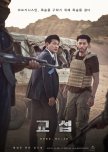
Jung Jae Ho and a team of negotiators are sent to Afghanistan to secure the release of 23 kidnapped South Korean missionaries. The missionaries ignored the travel ban, took the same road where Germans had recently been abducted, and unsurprisingly were abducted as well. Jung thinks he can walk into the president’s office and demand the release of the hostages and be home by dinner. The sticking point for the government is the demand for the release of 23 Taliban prisoners. A single release caused an uproar recently and 23 would be disastrous. Jung’s superiors are often more concerned about their reputations than the hostages’ lives. NIS operative Park Dae Sik is better informed about local customs and politics but largely ignored by the white collars from Seoul. Jung finally turns to him when his own efforts fail spectacularly.
This was not an action-packed film, but rather a cerebral thriller. There was one action scene in the film and I strongly suspect it was fictional, added because Hyun Bin looked like a badass on a motorcycle and fighting mano a mano. While I could appreciate the delicate and frustrating negotiations, the struggles within the Korean delegation did become tedious after a while. The final blood and tears negotiation was worthy of the grand finale.
The script did try to be well rounded. There was not outright Islamophobia. And the South Koreans were shown in the wrong when they arrogantly dismissed local customs and hierarchy. Most characters were portrayed as real flesh and blood men regardless of their side in the conflict. (Aside from the female hostages there were no women in the film.) I did have reservations about Kang Ki Young’s interpreter in brown face. And as so many directors do, Im Soon Rye used the dreaded sepia or yellow filter to indicate a third world country. It’s really time to retire that technique. There were sections where the music was so loud I couldn’t hear the conversations, a problem when they were speaking English with no subtitles.
Watching Hwang Jung Min and Hyun Bin in anything is usually worthwhile and the strongest recommendation for this film. If you enjoy the back and forth of complicated hostage negotiations involving different countries and groups this is a film worth trying. If you are hoping for something more action packed, this is not that film.
12 August 2026
Trigger warning: Smoking
Was this review helpful to you?

Only if you can separate the problematic man from the problematic role
Doll House is one of those films that I wish I’d checked the cast list more thoroughly before watching. Baron Geisler gave a strong performance as a drug addict and alcoholic. Unfortunately, his real life is even more problematic than a burnt-out singer looking to connect with a child he’d never met.Singer Rustin burns through each day performing with his band, hanging out at the beach with his buddies, and snorting cocaine. When a friend dies, he wanders around ending up in Rotterdam, the place where he’d left the love of his life. Turns out his ex-wife has died and his eight-year-old daughter is being raised by people who care deeply for her. He ingratiates himself and talks Uncle Bok into letting him babysit.
The film asks the viewer to take a lot of leaps over illogical ravines. Let’s see, I meet a guy dressed in leather stinking of soured booze and old cigarette smoke and since he’s from my homeland, I trust him with a child I adore. Not a chance in hell. Aside from that egregious plot setup, at least the film didn’t shy away from Rustin’s drinking and drug addiction. Yumi’s guardians were right to protect her from him once they realized who he was. Though director Mancheta laid on the father-daughter connection thick with numerous scenes of laughing in the park and rain. Which were ruined by a scene of Rustin putting Yumi in a barrel of cold water to teach her to sing.
Doll House attempted to walk the line between reality and familial fantasy, with a rough landing in reality dusted by a smidgen of hope. I wish I could separate an actor’s personal life from their role, but now the only thing I can think is that they should never have let Geisler near a child actor, much less a female one. I tried to rate it as fairly as possible, but I’m not sure I succeeded.
11 August 2026
Problematic behavior: Geisler’s had at least 4 sexual harassment/assault cases. Groping women’s breasts and performing lude acts in front of them. Two children on the television show Noah were said to have been traumatized by his behavior. That’s not including the car accidents and brawls. But by all means, give men lots of chances that women will never have. :/
Was this review helpful to you?

"Thank you for the meal"
A Dangerous Woman was a bizarre break-up film by Lee Ok Seop. Clocking in at under 30 minutes, the film hit a lot of notes, both comedic and dramatic.Bo Kyung has been in a relationship with her boyfriend Deok Woo for four years. Sexually attracted to another senior she decides to break up with Deok Woo. Not however, until he’s carried a couch to her apartment and later a standing fan across town for her. He’s wanting to get married and she’s wanting to have sex with Soo Jang. A last sexual encounter with Deok Woo goes unexpectedly and sets Bo Kyung into a tailspin.
Girl had every right to break up with her boyfriend and he had every right to ask why. I have to say, Bo Kyung is not someone I’d ever want to have to count on in an emergency. I’m guessing the choking scene was played for laughs, but I didn’t find it particularly funny and her selfish actions were beyond the pale. Deok Woo was obviously crazy about her and his final reaction was funny. Hurt and angry he managed to get his feelings across without actually being violent. I suspect Bo Kyung will discover that Soo Jang will not be so accommodating and to quote Spock from Star Trek, “Having is not so pleasing a thing after all as wanting. It is not logical, but it is often true.”
There were funny, frustrating, and heartbreaking moments in this short film, but I'm probably the wrong generation for A Dangerous Woman. As much as I support women choosing who they want to be with, I found Bo Kyung's actions annoying and cold. Deok Woo may come to the conclusion that he dodged a bullet. Sometimes a fan can’t be fixed.
9 August 2026
Was this review helpful to you?

"Don't cry and laugh at the same time"
Ms. Apocalypse began in the waning days of 1999 when everyone was worried the Y2K bug would send the world crashing down. A mousy bookkeeper who was punished for becoming entangled with embezzlement left behind the old century and built a new life in the new century with someone completely unexpected.Yeong Mi is a bookkeeper at a tech company where she develops a crush on recent hire Do Yeong. She discovers he is not collecting the money on his truck route. Instead of turning him in, she works extra jobs to replace what he’s stolen. When Do Yeong turns himself in, she is arrested as well for covering up his crime. After her release from prison the only person who comes to meet her is Do Yeong’s wife. Yu Jin is a paraplegic due to a hereditary disease and confined in a wheelchair. She makes Yeong Mi an offer that the newly released prisoner cannot turn down.
I liked the premise of the film though I wasn’t always satisfied with the implementation. It came across as low budget and there were awkward edits with pertinent pieces of information left out or glossed over. Director Im Seon Ae put her efforts into developing the relationship between a very odd couple. Yeong Mi was given her derogatory nickname by male co-workers who said she looked chaotic. And the film’s hair and makeup department did their level best to make Lee Yoo Young appear unattractive. Yu Jin’s acerbic attitude hid her fears and vulnerability. Im Seon Woo accomplished a difficult performance using only her face and voice. Both characters had been taken advantage of and/or shunned by loved ones. The two should have been adversaries but found they had much in common, including kind hearts.
Y2K had people on pins and needles with Yeong Mi and Yu Jin suffering more from their families than the threat of nuclear war. In the new millennium*, Yeong Mi’s life transformed from black and white to vibrant color. The two outcasts gradually learned to trust themselves and each other even as long buried secrets and betrayals rose to the surface. With another woman to count on, they had substantial emotional growth and gained a friendship in the process. I wanted more from the ending and wished that certain transitions had been smoother and better explained but applaud a film that showed the healing power of female relationships.
7 August 2026
*Date Note: The new millennium and century didn’t actually begin until 2001.
Was this review helpful to you?
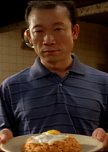
Walk away tall...
A Man Under the Influenza was a short film by July Jung. Set in a seedy restaurant, it was enough to make you lose your appetite. There’s a good reason for health inspectors.On a hot summer day, a young man wearing a heavy brown sweater and coughing walks into a dingy basement restaurant. The menu is small and he orders kimchi fried rice. Another patron is sneezing and blowing his nose in front of a fan. Two foreigners argue over who invented television. And the owner rails at anyone leaving food on their plate and not behaving up to his standards all while the cook kills flies with her ladle.
This is what a restaurant in Hell would look like to me. The man in the brown sweater at the center of attention sweats and feels compelled to eat the food in front of him, trying not to inspect the suspicious bits. The vignettes appeared unrelated. All I gleaned from the film was that we often feel social pressure to do things we know we should not. It’s okay to not eat. It’s okay to walk away. I kept hearing my father’s voice as this film played on, “If it doesn’t feel right, get the hell out of there.” Wise words to live by and I suspect the man in the brown sweater will wish he’d followed it.
4 August 2026
Trigger warnings: Fly killed.
Pre-Covid Note: It was wild seeing sick people coughing, sneezing, and eating in a small area.
Was this review helpful to you?
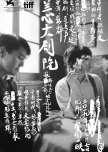
All the world may be a stage, but not everyone is a great playwright
Set in Shanghai during the days just prior to the attack on Pearl Harbor, Saturday Fiction attempted to be a noirish spy thriller. My experience with the film was trying to follow a muddled mess of a story with little character development. Even the glorious Gong Li could not overcome the film’s problems.Famous actress Jean Yu returns to Shanghai after spending time away in Hong Kong and globe-trotting. Her ex-lover, Tan Na, is directing a play based on their romance and has asked her to star in it with him. Jean stays in the Cathay Hotel situated in the French Concession. The hotel is filled with spies and soldiers, all skulking about, seeking intell on their enemy. Jean’s ex-husband is being held captive and is loathed by Chinese and Japanese alike. She’s there to help him escape and gather information for her foster father, the enigmatic bookseller, Frederic Hubert. A Japanese officer brings a new code book to town which garners a great deal of interest. Coincidentally enough, Jean is the spitting image of his late wife. Hmmmm…..
Gong Li made the most of her role as the “box of secrets”. She truly is mesmerizing to watch, even with this lame plot. Mark Chao was largely extraneous to the film though the age gap didn’t bother me. I could easily see how they would be attracted to each other. The stage play snippets only served to interrupt the flow and pace of the story which became very frustrating. Also, that was a crazy extravagant set. During the scene they showed repeatedly, the two actors whispered their lines to each other with music blaring in the background. Microphones weren’t used during plays in 1940 so no one in the audience would have heard a word spoken.
I didn’t like Lou Ye’s style in this film…at all. He overutilized extreme close-ups, blurred images, and a shaky camera following each tiny movement. Let Gong Li’s expressive face tell her story! Characters were given no backstory, development, and/or motivation. I honestly didn’t care who lived or died. For older viewers the Cathay Hotel was reminiscent of Casablanca with spies lurking about everywhere. Or for younger viewers, John Wick’s Continental if Winston and Charon listened in on all the phone calls. When the final 30 minutes were approaching, I begged the film to give me satisfactory answers. It did present a long shootout that at least helped determine which side people were on depending who they were shooting at. Even that didn’t provide definitive resolutions and revelations.
Saturday Fiction starred a great cast, was set during a tumultuous time in the glamorous “Solitary Island”, and had enough intrigue to make a dozen films. Yet due to problematic pacing and narrative issues, the film was strangely disappointing. Having said that, if you are a fan of Lou Ye’s shaky style and penchant for blending fantasy with reality, this might be one to check out. I can see where there is an audience for it, it just wasn’t for me.
22 July 2026
Trigger warnings: Sexual assault. Smoking.
Was this review helpful to you?
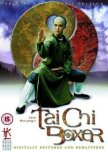
Hok Man and his cousin have been stuck in a room studying the classics, regimented by his overbearing father. Luckily, his mother has mercy on him, allowing him to escape occasionally. After 10 years he and his cousin break out to do a lion dance in a celebration and Hok meets Rose who has recently returned from studying overseas. She is engaged to Lin Rong/Wing, though doesn’t take it seriously as it was a birth betrothal. She does take a shine to Hok. Hok’s mother studied abroad, too, and teaches her son some English and gives him the English name Jacky. The way of true love is not smooth, because Jacky and Rose don’t only have to deal with Lin, there are foreign opium dealers they run afoul of.
This film felt like a patchwork of other films, primarily, Once Upon a Time in China. The story was rather weak, but the fights were strong. Billy Chow, who was nearly allows cast as a villain showed up first to challenge Jacky’s father. Billy showed off his kicking skills even though his character got his butt kicked. The father was played by Mantis expert IRL, Yu Hai. I always love watching Yu fight, especially when he drops down into Mantis pose. Wu Jing as grownup Hok Man was quick, strong, and athletic. He’s always a delight to watch, even in this early film. Mark Cheng may not have been the most skilled fighter but he honed his acting skills in numerous kung fu and action films. The foreign villain, Mr. Smith, was played by Darren Shahlavin who trained in various styles. He also was accommodating enough to rip his shirt off and pose with his well-muscled body.
Yuen Woo Ping’s fight choreography was fun and destructive. Boards were splintered, vases were smashed, not much was left standing when the fights were done. In true 90s style, not so subtle wire work and trampoline work were used. Fortunately, when Yuen wasn’t undercranking the shots, seriously, these guys were fast enough, the pros took over. That’s not to say there weren’t a lot of missed kicks and hits but the guys and stuntmen knew how to sell every supposed connection.
This lite version of OUATIC was diverting enough, the fights were the reason to watch. Each one used the environment and different skill sets to perfection, in a 1990s way. You can't go into this film expecting modern polished overly crafted fights. Wu Jing hadn’t hit his stride as an actor, yet he was still charming as the impish and thoughtful kung fu hero. And it might also be the first time, or only time, you’ll see Pigtail Fu. Past the time I usually grant a grading curve, but for Wu Jing’s introduction, I’m feeling generous.
7 July 2026
Tai Chi Note: This film was billed as Tai Chi 2, but had nothing to do with the original, Tai Chi Master, which starred Jet Li and Michelle Yeoh. Much of the cast from this film did return for a 1998 Taiwanese television drama called The Tai Chi Master. I’d watch it for sure if I came across it.
Was this review helpful to you?
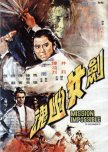
"It seems you've chosen death"
Shaw Brothers’ Mission Impossible was written and directed by the prolific Joseph Kuo. In many ways it was a typical SB film shot in Taiwan but this story had a nice twist thrown into it.The 10,000-year-old Golden Dragon Sword has been stolen from the Imperial Palace. Chaos is sure to reign without its magical light. Soldiers, martial artists, bandits, the good, the bad, and the ugly are all desperately searching for a sword so sharp it can wound a person from five steps away. The legendary swordsman Huo Yun Shan wrested the sword from thieves and now has to entrust it to his daughter Huo Xiao Fen. Her mission is to deliver the Golden Dragon to the Prime Minister, protecting it from all evildoers, but especially the Jade Child Xia Zhao. The Jade Child is 130 years old and impervious to most weapons and poisons, he is not someone Huo should tangle with.
Ching Li is one of my favorite female leads in these old martial arts films. Not a martial artist, but could look properly fierce and also vulnerable when the occasion called for it. Chen Hung Lieh had an unbeatable resting bitch face and was nearly always cast as the villain. This role gave him a chance to expand past his trademark snively laugh and sinister smirks. There were plenty of minions with colorful makeup, weapons, and costumes for Huo to cross swords with, played by familiar Taiwanese actors such as Yi Yuan and Tsai Hung.
The swordfight choreography was fairly typical for 1971. Ching Li wore a veil for a few of the more rigorous and acrobatic battles to hide the stuntman underneath. That or she had very masculine hands. There was a lot of light body wire work and trampoline work. Due to Shaw Brothers producing the film, the sets and costumes were higher end and more polished than the usual Taiwanese martial arts fare. The fight scenes weren’t shot in dark forests or at night either. There was even an underwater scene including special effects fish!
Mission Impossible followed a fairly standard format about a lost sword and the desperate need to return it before it caused societal upheaval. And then it wasn’t. The final “fight” was pretty entertaining. As usual, I grade these old kung fu films on a generous scale and in comparison to other similar films.
5 July 2026
Was this review helpful to you?

"If you don't respect animals, you'll be punished"
Mr Zoo: The Missing VIP was a cute cross between Dr. Doolittle and Pets starring a gorgeous German Shepherd named Ali and the dependable human ahjussi Lee Sung Min.Agent Joo Tae Joo leads a regimented life with a touch of OCD. He’s up for promotion and determined to get the position. When the Chinese envoy for the 25th Anniversary of the Korean-Chinese Diplomatic Relations turns out to be a panda named Ming Ming he doesn’t hesitate to volunteer for the assignment in hopes it will seal the deal for his promotion-despite his anathema for animals. His life takes a strange twist when he abuses a stray cat named GOD and later sustains a head injury trying to thwart a pandanapping. He ends up being able to understand what animals are saying and can communicate with them. The agency isn’t thrilled with his new “abilities” and benches Joo during the search for Ming Ming. Fortune smiles on him when a military dog named Ali steps in to help him find the culprits.
I found the first 40 minutes or so terribly uneven and uninteresting. Lee Sung Min gave his all as he always does so his performance was not the problem. Kim Seo Hyung made the most of this lighter role, showing she could do comedy as well. The problem was that this type of story has been done numerous times and execution is critical. The editing and scene setups came across amateurish and unpolished. There was the required estranged child who desperately needed the father who had no idea how to talk with her. And the competitive colleague licking his chops at the chance to leap frog over Joo.
Mr. Zoo had a beautiful German Shepherd, Ali, who was truly a good boy. Ming Ming, the star of the anniversary celebration knew her worth and tried to hog the spotlight whenever possible. An array of other creatures with legs and for those triggered-without them-were the highlight of the film. Not a great film, but entertaining for what it was. Fair warning, while this was a family film aimed at children there were disturbing scenes of violence against animals albeit with the requisite disclaimers.
27 June 2026
Trigger warning: A snake shown in different scenes. Dancing rats.
Kung Fu Panda Note: The animal costumes were actually pretty good.
Was this review helpful to you?
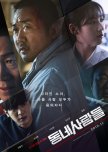
"Everything is fine, right?"
Ordinary People aka The Villagers had Ma Dong Seok playing the new gym teacher at a rural school in a town full of corruption and deadly secrets. The late Kim Sae Ron, in a role reminiscent of the one in Nowhere Man, was a high school student desperately searching for her missing best friend.Yuk Ki Chul takes a teaching job in a rural area after losing his boxing coach position. It’s not long before he realizes the people are on edge. The school staff and police are more concerned about protecting the governor who also chairs the school and is up for re-election than a missing high school girl. Senior Kang Yu Jin refuses to give up on her friend despite every adult she asks for help not only rejecting her but shaming her as well. When Ki Chul rescues her from a dangerous situation a glimmer of hope builds within her that she has found an adult to trust.
Let’s just get my bias out of the way. I will watch almost anything the best ahjussi hitter is in. MDS may not be the greatest actor but I find his screen presence comforting and it usually hits my groove. This film was a by the numbers story of powerful men abusing women and young girls and thinking they could get away with murder. Dang. It really hits hard with what is going on in the world right now. Kim Sae Ron’s Yu Jin made for a dogged sidekick to Yuk’s man with a conscience. The bad guys’ team was weakly drawn, but managed to give Yuk reasons to punch them in the face and kidneys or break through their doors with his fists. Given that nearly everyone in the film was on the take or prejudiced against girls, I was ready to bust some heads.
Ordinary People played to Ma Dong Seok’s strengths and went no further yet still kept me entertained. It was sad seeing the talented Kim Sae Ron who we lost too soon. If you aren’t super picky about your corrupt small-town mysteries, it might be one to give a try. Small ratings bump for MDS.
19 June 2026
Trigger warnings: Girls in jeopardy, but no sexual assaults. The few fights weren’t graphic compared to the Roundup series.
School note: For a rural area they had a huge high school.
Was this review helpful to you?
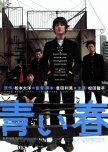
"People who know what they want scare me"
Blue Spring was a slice of life in a violent boys’ school filled with disaffected youth and indifferent teachers. Backed by a blaring rock score, the film was as much mood as it was message.Seniors Kujo and Aoki take part in the Clapping Game on the school roof in order to see who will lead their gang. The boys stand on the ledge, let go and clap before saving themselves by grabbing the railing. Whoever claps the most times in a row, wins. With either nerves of steel or complete detachment, Kujo easily triumphs. Aoki is geared up to rule the school with an iron bat by his friend’s side, but finds Kujo disinterested in but not above the violence. The students are facing a black hole that is dragging them toward a future none of them is prepared for. Their days in the graffiti covered high school are filled with violence, monotony, even death, and yet the crumbling building still seems a better place than what awaits them.
None of the boys had much of a plan. One student bet his future on his arm, playing baseball. One wrong pitch and he believed his chances had evaporated. Every day the boys treaded water hoping to not drown or be dragged under. Outside the fence, the yakuza lurked, waiting for boys with a penchant for violence to succumb to them. Old dreams of becoming Ultraman or a pilot sank into the murky depths of despair. With nothing to look forward to, there were only thin safeguards between the teens and death. Most teachers were scarcely staying afloat themselves, writing rote memory notes on the blackboard, unconcerned about the students wandering in and out of the classroom. A teacher who tended the gardens attempted to throw a lifeline to the disillusioned youth. Few were willing to grab it.
Unlike Kdramas where the bullying took place in classrooms, the bullies in Blue Spring operated in the hallways and stairwells. The brutality escalated, becoming uglier and deadlier as frustrations and crushing disappointment grew. Empty lives searching for meaning and a sense of control without any guidance were doomed to pain. Yet even under the dirt and cigarette butts, there were flowers hoping to bloom. Not an easy watch, more experiential than plot driven, but worth a try if you are interested in the darker side of education and how some teens view their lack of opportunities in a world that feels out of reach to them.
"Even if my body is broken
and all my tears and sweat dry up
My dreams remain
The Nationals
No regrets for my youth
Loser."
20 May 2026
Trigger warnings: Violence though often more implied than graphically shown. One backside naked scene. What amounted to suicide in one scene.
Was this review helpful to you?
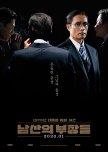
"You have my full support. Do as you please."
The Man Standing Next told the story of the KCIA director who assassinated RoK President Park in 1979. Forty days of intrigue, murder, and betrayals led to the fateful event. This particular snapshot in time is always hard for me because there were no good guys, just men willing to do what was necessary to maintain or gain power.President Park is furious that the ex-director of the Korean Central Intelligence Agency, Park Yong Gak, has been called before the American Congress to testify regarding bribes and gifts given to lawmakers to win their support for his government. To make matters worse, PYG has written a memoir titled Traitor of the Revolution. Current KCIA director Kim Kyu Pyung is tasked with convincing his old friend to turn the manuscript over. PYG tells Kim to watch himself as the president has been siphoning money off into Swiss bank accounts and unknown to the KCIA developed his own secret spy agency. The president’s bodyguard, Kwak Sang Cheon, has been currying favor with the president angling to become his successor. Between PYG airing Park’s dirty laundry and riots breaking out in Busan, Kim finds himself in a precarious position.
The film attempted to show Kim in a sympathetic manner. This angle didn’t work for me. For 18 years Kim had unwaveringly supported the dictator and done his dirty work. The KCIA was hardly a Boy Scout troop and known for torturing people. He seemed to have no qualms about ordering a hit on a friend. Suddenly he’s willing to sacrifice all for democracy? What was his rationale? Did he want to be president? If his plan had been a coup, he did a terrible job of securing support and planning. Was it to save his own life? Or did Kwak telling the president that murdering 2-3 million people was justifiable in order to maintain power the final straw? How did he come to make his decision and how did he convince his few agents to go along with him? Kim Kyu Pyung’s motivation and loyalty bounced all over the place. Park Yong Gak admitted to being a bad guy so I was not vested in his outcome. President Park was a heartless dictator and Kwak was utterly ruthless. Kim’s actions allowed another villain to take over who was waiting in the wings for his shot (the man standing next). A usurper who was much better at consolidating support. Power loves a vacuum and it’s usually the most vicious who rise to the top.
Lee Byung Hun and Lee Sung Min gave strong performances. Lee’s Kim Kyu Pyung required a great deal of nuance as the KCIA director dealt with humiliations, betrayals, and loss. Kim slowly unraveled before our eyes. The rest of the large cast gave adequate performances, some better than others. Kwak was an integral character yet very thinly drawn to the point of being a caricature. Aside from the issues I had with Kim, the film spent too much time on Park Yong Gak. His story could have been expedited. Kim Young Sam’s expulsion was the stimulus for political unrest and violent riots and the characters mentioned him often but the film never gave him so much as a cameo. It also felt like they looked at the cast and realized they didn’t have even one female in the story and added Kim So Jin as the broker for PYG. She did what she could with it, but there wasn’t much to work with. Hers was another role that could have been far more compelling with better writing.
If you enjoy historical films, especially during this tumultuous time in Korea, The Man Standing Next had some positive things going for it. The film was beautifully shot. The two mains gave engaging performances and the history lesson was interesting. However, it wasn’t always absorbing. I found myself checking my watch numerous times because the film failed to reel me in emotionally. Despite limiting the time frame to 40 days, there was no sense of urgency, no tension. I don’t need someone to root for in a political “thriller,” but it really helps if I understand why the main character makes a dramatic life altering decision instead of it coming across as, “This guy is really pissing me off.” It works in kung fu flicks, but with the fate of a nation hanging in the balance, it came across as impulsive which didn’t seem to be what the writers were going for.
18 May 2026
"Sequel" Note: If you haven't watched 12:12 The Day and might be interested in it, this would be a good film to watch beforehand as the other film begins where this film ends. I don't believe they are related otherwise.
Was this review helpful to you?
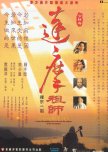
"All you see is an illusion"
Master of Zen must have been a deeply personal project for Brandy Yuen. He was the director, writer, martial arts director and producer for this film. Based on the legends of Bodhi Dharma who is believed to have brought Chan (Zen) Buddhism to China and even given the Shaolin monks the basis of their kung fu. I do not practice Buddhism and do not have much knowledge of the history of this story so my review will be based on my opinion of the artistic merit of the film.A third prince in India has a vision of himself as an old man when he’s out in the woods. Later, a Buddhist monk gives him this message, “Before my birth who was I to be? After I was born who became me?” Despite being the crown prince, he leaves the palace and goes to study Buddhism. He is renamed Bodhi Dharma. Sixty years later he makes the arduous three-year journey to south China. His message is often rejected as he travels among the populace as he is for being a foreigner. When he finds a cave at the backend of the Shaolin temple property, he begins his nine-year meditation without food or water that will change the perception about him. Elsewhere in China, a young monk is attempting to overcome his guilt over his bloody past. His journey will eventually bring him to Bodhi Dharma’s cave.
The presentation of the film was perplexing. It often came across as a documentary re-enactment, but then strayed into very magical wire-fu. The editing was painfully off-kilter. The most distracting aspect was Derek Yee’s makeup, from his early very dark brown makeup which lightened with each passing year. But most awful was his old man makeup. According to the film, he would had to have been at least in his 80’s. His aging prosthetics were abysmal. He looked much better when he hit 150 years old and lost the badly puckered brow ridge.
If you are looking for the miracles, many of them were in the film. There were also plenty of inspirational conversations and visits to temples. I just stumbled over the acting, and awkward stitching together of the stories. The scenery alternated between epic mountains and desert vistas to lower budget sets. If you are familiar with the stories and wish to see them on film, this may be a film to try. If not, the drawbacks may outweigh the more entertaining parts.
15 May 2026
Was this review helpful to you?


