

 148
148 438
438 16
16 2
2 6
6 3
3 8
8 10
10 3
3 13
13 1
1 1
1 1
1 1
1 2
2 7
7 9
9 5
5 9
9


This review may contain spoilers
The shadow shapes everything. The light illuminates it.
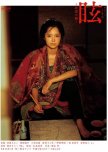
The current synopsis tells the entire story of the special on Katsushika Oi so I won’t go much into the story for this review. I wanted to write something to highlight this interesting special to draw attention to it.Oi and her famous father, Katsushika Hokusai, are at the center of this special. Though their relationship isn’t delved into very deeply it does show some of the conflict and comradery between them. Two artists obsessed with becoming better, letting everything else fall by the wayside. Along with their artistic disciplines there was a glimpse into their domestic habits. Neither cooked or cleaned, moving when the place became too cluttered.
The more Oi observed the world, the more interested she became in vibrant colors and the play of light and shadow. A fire could give her inspiration for creating new colors to work with. How much of Hokusai’s work she contributed to, especially after his stroke and/or palsy, may never be known, but her work can be seen in some of his. The ten surviving paintings directly attributed to her show a stunning use of color and shadow and also a different perspective than was often displayed at the time. This special attempts to understand her thinking as she worked through her own artistic beliefs and style.
The production values were quite good. The sets, costumes, and music all helped this viewer become emersed in the artists’ world. Miyazaki Aoi gave a wonderful performance as the daughter as consumed with painting as her famous father. Nagatsuka Kyozo’s portrayal of the wild haired artist and father was also quite good. Matsuda Ryuhei gave a nice turn in the supporting role of Keisai Eisen, an artist with whom Oi has a flirtatious friendship. It would have been more interesting for me if they could have gone deeper into what it would have been like for a single woman of advancing years staying unmarried and working as an artist with her father. All in all, as a brief look at Oi’s life and work, I found it educational and entertaining. I thought they did a good job of not making it about the more famous men in her life and giving her own artistic journey the proper attention. Even so, Oi may have been the focus of the film, her story couldn’t be told without her father. Until a light was illuminated on her own significant talent she worked in his shadow. Fortunately, a light did find the colorful storytelling in her own paintings.
Was this review helpful to you?
Don't start nothin', won't be nothin'!
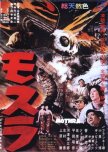
If Godzilla is King of the Kaiju, Mothra is the Queen. Lighter in tone than Godzilla (1954), yet still with a message of caring for the Earth and cooperation, Mothra carved out her own story.The synopsis tells most of the story. An unscrupulous relic plunderer kidnapped the Shobijin after an expedition to an island in a nuclear testing zone. The tiny twins had been befriended on their island by a reporter and a linguist who attempted to come to their aid in Tokyo. The Shobijin tried to warn them that Mothra would be coming for them and anyone in her way would be in great danger. Their pleading left the dastardly villain unaffected only causing him to double down on his efforts to keep the fairy priestesses to himself for his own profit.
Unlike Godzilla, who came to town obliterating buildings for seemingly no reason, Mothra was on a rescue mission. She arrived in her caterpillar form before transforming into her beautiful self. Tokyo and a major city in Rolisica (an amalgam of Russia and the US) took the brunt of her actions as she searched for her besties.
Mothra had one of the strongest casts in Kaiju filmdom. It's a good thing there was a strong cast as Mothra doesn't show up until over halfway through the movie. Koizumi Hiroshi who appeared in many Godzilla movies played the good-hearted linguist Dr. Chujo Shinichi. Kagawa Kyoko, from Tokyo Story, was the fearless photographer who worked with intrepid reporter, Bulldog, well played by Frankie Sakai. Hirata Akihiko from the original Godzilla made a welcome appearance. Shimura Takashi who starred in several Kurosawa movies, was the cranky news boss. Finally, the idols from their time, The Peanuts, twin sisters Emi and Yumi, brought the kind fairies to life. Their song "Mosura" woke their giant protector telepathically calling her to them.
Though there was destruction of buildings and cars, and the requisite helicopter blowing up, unlike in Godzilla, humans were not shown being killed. Mothra's story was gentler for a mass destruction movie as much of an oxymoron as that is. Song and dance numbers, a child looking to protect the Shobijin, and a big, beautiful monster made this movie more kid friendly, a direction Toho would continue to take the movies in, especially the Mothra movies as she evolved into a heroine.
The miniatures and Mothra were obvious toys, some more intricate and carefully created than others, but this was 1961 and viewers' imaginations played a big role in the success of these movies. I enjoyed Mosura, a somewhat slow-paced monster movie about a giant Moth stopping at nothing to save her friends.
21 February 2022
Was this review helpful to you?
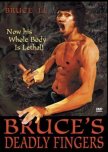
What drew me to the movie was the cast---Lo Lieh, Nora Miao, Michael Chan, a host of famous kung fu stuntmen, and Bolo even makes a guest appearance! Bruce Le was not playing Bruce Lee, his character's name was Bruce Wong, but he tried to duplicate some of THE Bruce Lee's mannerisms which came across as laughable.
Bruce Wong was trying to find Bruce Lee's secrety secret Kung Fu Finger Book which had been entrusted to his sifu. Lo Lieh, playing the Big Bad Lee Hung, was after it as well. There you go, that's the plot. Bruce Wong's sister and ex-girlfriend were kidnapped three times. Did they get their frequent kidnapping card punched each time? There was gratuitous nudity, one scene had a naked woman being threatened with a snake. Those scenes pandering to fifteen-year-old boys dropped my rating to a 1. I gave it a 1 point bump for Lo Lieh and Bolo.
The fight scenes were actually pretty good, especially the ones Bruce Le wasn't in. Wong's buddy and an Interpol agent spent a great deal of time fighting each other and the baddies as well. The strong bit part players lent to some good fights. The nunchuck work, however, like Le's Bruce Lee mannerisms should have been omitted.
The problem the director and writer had was they didn't know what to do in between fights or how to develop anything that resembled a coherent story. Let's kidnap and threaten the women again! Show some boobs! Let's have a shot of someone walking down the street or down a hallway! How about watching someone drive a car or play cards? How about two people watching television? Should we have them say anything that would be considered plot or character development? What's that?
This might have been a watchable movie if Bruce Le hadn't tried to look like and act like Bruce Lee. All he managed to do was remind me how charismatic the original was. Michael Chan seemed to be channeling his inner Bruce, too. It might have been a watchable movie if the women hadn't been there to be objectified and tormented. They didn't need the women as bait because the "good" guys were always looking for a fight anyway. This movie had a strong kung fu cast, with good fights, and a magic kung fu book, everything a kung fu movie needs. Too bad the filmmakers took the low road into exploitation.
Was this review helpful to you?
This review may contain spoilers
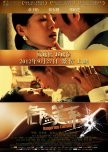
A remake of Dangerous Liaisons made with an international cast of Hong Kong, Taiwanese, Chinese, Korean, and American actors. If this is the first version of this story you've ever seen, you might be far more impressed than I was.What I liked about this movie: The cinematography was lush and the scenes were wrapped in golden light and settings. 1930's Shanghai came to life beautifully.
What didn't work for me: Mostly the acting and the reworked story. Cecilia Cheung played the Marquise de Merteuil/Madam Mo Jie Yu role. This is a key role, she was the independent, manipulative, devious mind pulling the strings in business, society, and the bedroom. She should have been the alluring lethal danger in this movie. Unfortunately, instead of displaying the cunning and cruelty at the heart of Jie Yu, Cecilia could only manage a fake smile and a grimace occasionally, bringing almost no nuance to this multi-layered character.
Jang Dong Gun in the Vicomte de Valmont /Xie Yi Fan role was pleasing enough but lacked the sexually sinister side needed as Valmont/Fan slept his way across Shanghai and ultimately tripped himself up by falling in love. Zhang Zi Yi portrayed the Madame de Tourvel/Madam Du Fen Yu role. Her performance was perhaps the most disappointing, and I'm a fan of hers. Somehow, they transformed her into a frumpy woman, a woman who moved and dressed like an elderly little old lady. A reserved character became almost lifeless in her hands, and it was hard to understand how Fan fell so hopelessly in love with her.
The secondary younger characters, integral to the story were given short shrift and much of their important action was done offstage.
Key parts of the original story were cut out or given to other characters. Sometimes a new vision works, this retelling of the tale did not for me. Again, if you've never seen other versions of this, this interpretation may be perfectly serviceable.
Most unsatisfactorily of all, they took the bite, rancor, revenge, and tragedy out of the ending. This cast lured me into watching yet another version of this story, bitterly disappointing me in the end. Jang Dong Gun's charisma did lift an otherwise limp version of this sexual and power games movie, but his performance wasn't enough to save it for me. Instead of Dangerous Liaisons it was more like Irksome Liaisons.
Was this review helpful to you?
Dumplings anyone?
The Name is a heartwarming and bittersweet love story built on longings and lies.Ri Ae offers Cheol Woo a small fortune for him to create 20 paintings and let her sign her name to them for an art exhibit. Living in what amounts to an artistic coffin in the park, Cheol Woo ultimately, if not reluctantly, agrees to being a ghost painter. Of course, not all is what it seems with the two characters.
The Name's plot is quite simplistic, with well used tropes and twists that can be seen from a mile/km away. The characters have some growth, but little depth. Cheol Woo's supposedly ground breaking artistic style peaked quite awhile back in the real world, but I understand they needed art for the displays.
Romantic movies whether comedy or tragedy succeed or fail on the chemistry of the leads, something The Name succeeded with for the most part. Jeon So Min gave a nice but not overly wrought performance as a woman with a complicated relationship with her mother, who was dealing with her own health concerns, and living with unrealized dreams. Choi Jung Won gave a charming turn as the down on his luck but rarely down in his mood artist whose success was just always out of reach. The remaining cast give perfunctory if not inspired performances.
If you are looking for something new and innovative, this is not it, unless you haven't watched many dramas. If you are looking for a comfortable, familiar romance with two likable actors this is just the ticket.
Was this review helpful to you?
The movie opened with a spider spinning her web. Political intrigue and battle strategy were woven throughout, complex and yet fragile. This three hour movie was divided into three segments. The first focused on Ku Shen Chai, an underachieving scholar and painter and his relationship with his mother. She harangued him for his lack of ambition and single status almost constantly. Strangers began wandering into town, including Hsu Feng's Yang Hui Ching bringing with them danger and subterfuge. The second segment turned into a battle between a large troop of government troops against a small band of rebels. Ku's knowledge and battle trickery came into play as his character evolved. The third segment moved into the spiritual realm as the monks sought to have both the good guys and bad guys move beyond the temporary conflict to peace.
ATZ was unusual for a martial arts movie, the fights didn't begin until after the first hour. The movie wasn't structured around the fights, the fights were used to enhance the story being told. The cinematography, sets, scenery, and costumes were extraordinary for a 1971 Taiwan martial arts movie. Hsu Feng had helped fund the restoration of this film and for that we should all be grateful. Clear, vibrant, lush, it was a treat for the eyes. King Hu's camera direction caused the viewer to ever look upward as the film progressed, symbolic for the message being woven throughout. His fight set among the bamboo inspired later films such as House of Flying Daggers.
Hsu Feng's character was a woman who spoke few words, preferring to let her blades do the talking. Wanted by the current corrupt regime, she was aided by two disgraced generals. They had hoped to find peace far away from the palace only to have trouble and death follow them. Hsu gave a quiet, yet memorable performance. Pai Ying 's General Shih also moved through the world with little to say. Only Ku and his mother chattering about gave the film a verbal foundation to stand upon. I enjoyed all the performances with the possible exception of Shih Chun's Ku. He seemed out of place with the other actors but perhaps that was the point. His character certainly evolved the most and showed that even someone without kung fu skills could still be beneficial in times of need. Lastly, Roy Chiao's performance as a Buddhist monk still connected enough to worldly events to aid those fleeing evil and spiritual enough to care about the evil doers was quite good.
Though clocking in at three hours long, A Touch of Zen kept my attention throughout. I could easily recommend this beautifully shot movie to martial arts movie enthusiasts and those who can look past a few dated performances and special effects to see the hidden gem lying beneath.
Was this review helpful to you?
This review may contain spoilers
An old school drama that dealt with AIDS, dementia, redemption, and single parenthood in a thoughtful and compelling manner.I loved how this drama did not back away from confronting the stigma HIV/AIDS patients face, especially nearly two decades ago. Once the little girl's situation was brought out into the open, the drama used each episode as a teachable moment not just for the characters, but the audience as well. The scope of her disease was narrowed down for drama purposes but I'm glad they showed how people afflicted with AIDS need support and not ostracization.
Seo Shin Ae, as little Bom, won my heart with her performance. She moved from tears, to laughter, to precocious behavior seamlessly. She was a joy to watch.
Jang Hyuk gave a stellar performance as the closed off doctor who found redemption and peace on a small island. A family of misfits washed him as clean as the shore after the waves recede-a single mother, a daughter with AIDS, and a father with dementia in a remote community was not where this ill tempered doctor ever thought he would wind up. Throughout the drama Jang Hyuk allowed us to feel Min Ki Seo's contempt, his sorrow, his compassion, and his reluctant love developing.
The drawback for me was Gong Hyo Jin's performance. Most of the characters grew and changed, all except her Lee Young Shin. Hyo Jin excels at playing self-sacrificing doormats, but aside from a few smiles with Bom, her performance was rather one note. The writers were at fault as well, they never fully developed this matriarch of misfits. Up until the very end of this drama, I never understood her, never saw a glimmer of affection for the man they told us she was falling in love with. Her mumbling, stumbling, head down performance and frozen expression took away from the emotional depth of this drama. It was hard to hope for a relationship to develop between Min Ki Seo and this woman who could not crack her heart open long enough to share a part of herself with him.
I enjoyed this drama overall and would have loved it more if the writers and actress had let us watch Lee Young Shin grow and blossom, learn to stand up for herself and her daughter, and bask in the love of the imperfect but dedicated man who fought to stand beside her. As it was, I found Min's and Bom's First Guardian Angel and Angel friendship much more heartwarming and engaging.
Was this review helpful to you?
Xuan Zang set out for India, when it was forbidden to leave the country, in order to bring copies of more accurate Buddhist scriptures home. Reason, laws, and the threat of death could not deter him from his holy quest.
The cinematography was extraordinary and a treat for the eyes as Xuan traveled through both cities and desert wilderness, often alone. Varying from lush green to desolate sand and stone, and later snow capped mountains, the scenery was breath-taking. Ancient ruins, temples, and shrines are visited. Often the scenery showed him barely visible, a tiny monk making his way through a vast and sacred world. The music fit with the mood perfectly.
This is a slow, reflective film as Xuan's faith meets up against disappointment and hardship. Living in a time when I can find information with the push of a button, I'm in awe of someone who was willing to risk death, imprisonment, starvation, and thirst to increase his knowledge and faith and then the overwhelming desire to bring it back home again to share. His journey took between 16 and 19 years depending on the source and he covered over 25,000 km (15,534 miles). This film gives a glimpse of what he accomplished, the people he met, the effect he had on others, and the joy the scriptures brought to him. There are a couple of narrative hiccoughs when an inexplicable time and place jump occur, but that's a rarity, and a small quibble. The censor's heavy hand causes a few shadows as well. For the most part this is a film to soothe the eyes, ears, and soul. Every moment and person is treated as holy and a gift. It may be the idealized version of his life but it was a pleasure to sink into it and let the beauty of the colors and notes and love for all life wash over me.
Was this review helpful to you?
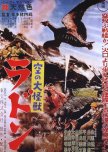
The movie starts with miners being violently killed in a dark, flooded cave. It is creepy and claustrophobic. Up out of the ground come giant killer dragonfly larvae. Much of the first part of the film is people hunting them down and attempting to kill them. Little did they know that what eats the giant insects was going to be more problematic-like letting a tiger in the back door to chase the wolves away at the front door.
Rodan was much more impressive in this movie than subsequent ones. He was huge, mobile, and destructive. Yes, you can see the wires at times if you look closely, but this old movie did quite a bit with the special effects and budget they had available to them. The miniatures were exquisite. Honda Ishiro and Ifukube Akira did a good job of bringing a giant flying dinosaur to life and making us care about him when by all rights we shouldn't.
Many times the human aspect of these movies fails. This time there was a sense of urgency and pathos from the beginning to the end. It also helped that this movie came before subsequent campy monster romps. As with Godzilla, by the end of the movie, even the human characters begin to feel sympathy for the great beasts.
Though around 65 years old I thought Rodan held up pretty well. He's now in my top three early Toho movies.
Was this review helpful to you?
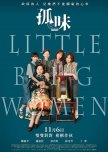
For me there were too many characters and too many conflicts to fully connect with many of the characters. I enjoyed it but I didn't love it and likely would not visit this group of dysfunctional people again. Bittersweet and heart-warming at the same time, Big Little Women at least gave us a largely female cast and shined a light on the complicated female relationships and strengths within a family.
Was this review helpful to you?
This review may contain spoilers
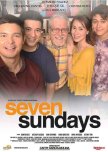
This is my first Filipino movie and I really enjoyed it. It's the story of a family that drifted apart after the mother died years ago.The story begins with the father of four grown children spending his birthday alone because his children are too focused on their own lives and problems to visit. On the day of his unattended party his receives news that he has cancer and only 7 weeks to live. He sends a text to his children to inform them of the news.
The eldest son took over the family store and is on the verge of bankruptcy. The second son became wealthy and successful but believes his family only likes him for his money. The daughter has three children with a philandering husband. The youngest child felt abandoned after the mother died and his siblings moved away and is now in legal trouble.
The children decide to come together on a Sunday and throw him a surprise birthday party, but old wounds flare up and arguments explode. After learning of their father's distress over their squabbles, the children agree to get along for his sake and to meet every Sunday at his house. Each Sunday the family comes together on various adventures and learn about each other in the process.
There are ups and downs in the story as wounds and secrets are revealed and healed.
I don't want to spoil the secrets, but I will say that this is not a downer or tragedy. This movie is the definition of heart-warming.
I can recommend this movie with a happy heart.
Was this review helpful to you?

This review may contain spoilers
I just finished this emotional T-drama about two young people shaped by tragedy and whether it was possible for them to overcome their tragic pasts. Story:
In this story two kids faced whatever life threw at them and most of the time it was boulders-mental illness, sexual assault, physical assault, PTSD, suicide, parental neglect, and evil outside forces. Somehow these two broken people found in each other the love and support they needed.
Both the ML and FL had to face their own individual traumas by peeling back the layers of lies and pain to heal and grow. And they had to do this while dealing with ongoing stressors and danger.
They fought for the right to walk hand-in-hand through the healing to the fulfillment of their dreams and no one was going to make it easy on them. Danger and disaster waited around every corner. Internal and external conflicts filled nearly the entire 21 episodes with little breathing room. It was a hard drama to let go of for something like sleep. It wasn’t a perfect story but it was compelling.
If you are triggered by any of the traumas listed above I would recommend not watching MARS. I don’t know that I would label this a dark drama but it does deal with very dark issues.
Acting:
I almost didn’t watch MARS because of Vic Chou. I’d only seen him in The Flame’s Daughter and was completely underwhelmed. I liked him in this drama. Maybe it was because he was rocking the David Cassidy/Uncle Jessie hairdo, but more likely it was the relaxed, natural performance he gave.
Barbie Hsu had the more difficult job of portraying a young woman in so much pain she walked and sat in self-protective postures. As the character grew and healed she portrayed believable fear and outrage. She did an amazing job.
OST:
I enjoyed it, didn’t love it.
On a somewhat related note-the production values were surprisingly high. Too often T-dramas look and sound like someone filmed them on a cell phone. I was pleasantly surprised, especially for an older drama.
Rewatch value:
I will likely go back to MARS for another visit.
Was this review helpful to you?

Music is terrifying and beautiful
Glass Heart boasted one of the more beautiful casts that I’ve seen recently. Satoh Takeru, Machida Keita, and Shison Jun were three-fourths of the band Tenblank. Miyazaki Yu rounded out the band as the lone female member. High on music and low on plot, Glass Heart was more mood than narrative. Fortunately, the music was pretty good for a drama making it a fast, upbeat watch.Musical genius Fujitani Naoki has gathered a guitarist, an on-line music sensation, and finally an amateur drummer who opened his heart back up to music three years ago at an impromptu concert in the rain. The group is an awkward fit at the beginning with the men’s egos and Akane’s lack of confidence. Guitarist Sho takes care of Naoki when he wears himself out. Kazushi’s own writing skills expand Naoki’s mind when it hits a wall. And Akane’s unique drumming style calls him. The band doesn’t realize that Naoki is working against the clock to release the music inside him.
The plot was paper thin and barely a scaffolding for the music videos. Few things happen in the 10 episodes. An estranged brother is reconciled with, a singer with a crush on Naoki as well as a jealous manager have to be dealt with, and the bandmates struggle to keep up with Naoki’s musical madness. Naoki’s old traitorous music partner is the lone source of conflict and doesn’t really cause many ripples in the band’s trajectory.
The performances were all solid, though Sho and Kazushi could have used more airtime. Right now, Miyazaki Yu is listed as a supporting cast member, but I would argue she was the lead. A non-threateningly cute, eager, every-girl, Akane stood in for the female audience and was usually the focus of the story when it wasn’t on Naoki’s genius. As per usual, a big chunk of the male drama population fell in love with her. I saw no chemistry between her and Satoh, though chemistry is often in the eye of the beholder. From the moment Sho princess carried Naoki, that was my ship, right until the moment when Sho asked Naoki, “Is this a proposal?”
I enjoyed the music, the found/made family, the reconciliations, and the karmic blow back for the cheaters. It was a quick, enthusiastic binge. Lucky Me ended up being my favorite of the songs and Suda Masaki’s voice my favorite of the singers. For the nice music, beautiful men, call to love through music, Glass Heart was worth the watch for me.
“Music isn’t concerned with who wins or loses. It just plays. That’s why it’s terrifying and beautiful.”
31 July 2025
Was this review helpful to you?
"It takes a village to keep a person alive"
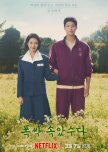
When Life Gives You Tangerines was a lovely bittersweet story of three generations of women, each desiring to do better than the previous generation. While the male characters were important, it was Ae Sun, her mother and her daughter that were the core of the story.Much of the drama took place on Jeju Island centered around the haenyeo and fishermen. Most of the people struggled to live day to day, relying on each other when things became dire. The sea is a harsh mistress and not only sustained life but took it as well. Yet there was laughter amongst the tears. And most importantly, there was the great love story between Ae Sun and Gwan Sik.
The different generations demonstrated the sacrifices that parents make for their children as well as their mistakes. Children learned that regret was a bitter pill to swallow once a parent was gone. The village relied on each other giving with compassion often accompanied by biting humor. Sometimes love was enough to sustain a relationship and sometimes it wasn’t. Life wasn’t easy about handing out answers regardless of the season people were in.
“It takes a village to keep a person alive.” The people of Jeju Island were generous, reconciliation often came after many tears, and the people showed great resiliency in the face of a collapsing economy. “Go together with others. If you do, 100 miles will feel like 10.” When Life Gives You Tangerines also reminded us that growing up is a lifelong process.
3 April 2025
Was this review helpful to you?

"Penetrate the paper with your gaze"
I was perusing Netflix’s offerings and saw an image of Yakusho Koji for Vivant’s advertisement. That was honestly enough for me to jump into the drama without knowing what it was about. Full disclosure for his other 12 fans, Koji doesn’t really show up until episode 8. Until then I had to rely on Abe Hiroshi and Mongolian actor, Barslkhagva Batbold, to keep me entertained. Sakai Masato’s performance as Nogi Yusuke was hit and miss with me.Nogi Yusuke is in deep doggy doo doo at his company when $100,000,000 is “accidentally” transferred to a business in Balka instead of the agreed upon payment of $10,000,000. Nogi heads to Balka in an attempt to retrieve the 90 million. From there he becomes entangled with a Japanese policeman, a Japanese doctor, a mute Balkan child with a heart condition, a mute Balkan agent, a relentless Balkan policeman, a whole heap of spy trouble, a terrorist organization, and a personified inner critic he talks aloud with. Throw in a few daddy issues and that about rounded the drama out.
Sakai Masato initially played Nogi for laughs as the businessman stumbled cluelessly about. This kind of wide-eyed childish character is the type I rarely connect with. Ham-fisted clues were not hard to pick up on as the innocent Nogi bumbled through Balka. Nikaido Fumi had the thankless role of the often annoying and selfless doctor, Kaoru. As her character calmed down and was thrust into the love interest role, she became less important to the story. I could detect no romantic chemistry and the 20-year age gap seemed wider in this drama. Despite his naïve persona, Sakai looked every bit of 50 or older which proved problematic with another age gap he was involved in. Abe Hiroshi swaggered his way through as the extremely confident policemen/agent with a 100 watt smile. I enjoyed Matsuzaka Tori’s turn as Nogi’s work buddy Kurosu. As I mentioned, Yakusho Koji is one of my favorite actors. He did what he could with his pivotal role even when his character was reduced to monologuing or giving ridiculous reasons for his actions. Was there a problem with two of the actors’ speaking abilities which caused the producers to make them both mute?
The Mongolian scenery, especially the desert, was stunning and often a backdrop for characters behaving inexplicably. The music was mostly pleasing relying heavily on classical tunes and a version of The Incredibles theme song. When you hear Wagner, you know they are going with the overly dramatic music. I may not have bought the romance but I really liked one of the enemies to friends relationships. The twists and cliffhangers were somehow predictable and at the same time fun.
The episodes were long and the first ep dragged almost causing me to drop it. I’m glad I stuck with the drama because even with ridiculous plot armor, unbelievable spy and political intrigue, family drama, and fantastical chase scenes I enjoyed Vivant right up until the last episode when they zapped all the pleasure out of it with long moralizing and nationalistic speeches. I feel like this review is too negative because I actually binged the heck out of Vivant. Cheese and small doses of implausibility don't bother me, and if not for the eye-rolling final episode I would have rated it an 8.0. If you are looking for a realistic spy drama or a self-acknowledged spoof of one, this isn't it. Vivant did try to step out of the usual comfort zone of office and home which I was quite pleased with.
24 June 2025
A few spoilery thoughts below:
****Spoiler talk****
Nogi’s mental illness was never properly addressed and was left untreated. He quite obviously talked to and argued with himself even in public spaces which made me wonder how he became a spy in the first place. Also, a petty observation, Nogi was supposed to be gifted with languages and I understood maybe a third of his English. Yusuke looked more like a brother to Beki than a son which did jostle my immersion into the story fairly often. I was thrilled when it was finally revealed that he was Vivant so that Nogi could back off of the clumsy routine. But that ending with Beki made no sense to me whatsoever.
Was this review helpful to you?


