

 148
148 438
438 16
16 2
2 6
6 3
3 8
8 10
10 3
3 13
13 1
1 1
1 1
1 1
1 2
2 7
7 9
9 5
5 9
9


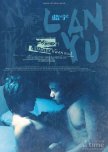
"A wise man never endangers himself"
Stanley Kwan’s Lan Yu told the story of a decade long up and down love story of two men in Beijing starting in the late 1980s. Based on an internet book by an anonymous author, Lan Yu won Golden Horse awards for Best Leading Actor, Best Director, Best Adapted Screenplay, Film Editing, and Audience Choice Award.Chen Han Dong intercepts a college student, Lan Yu, who was intended as a paid date for someone else. The night ends up being kismet for the two men. The older Han Dong may want to keep everything transactional, but Lan Yu has lost his heart. As always, the road to true love never runs smoothly. Through the years, Han Dong makes decisions based on fear of commitment and a desire for a life that is more normal in appearance, all to protect his heart which always ends up breaking Lan Yu’s.
Kwan resisted using outside influences as impediments to the men’s relationship. Family, co-workers, and friends seemed to have no problem with Han Dong and Lan Yu being together. While the two didn’t flaunt their relationship, neither did they carry it on in the dark. Han Dong’s own insecurities and selfishness caused the crises between them.
The film was beautifully shot and framed. You do have to make note of the small comments and changing seasons to determine when the story has shifted forward in time. Kwan kept the script spare, focusing on the high and low points. I wouldn’t have minded more development of the characters, but the director preferred the relationship lean and mean. Liu Ye and Hu Jun had a lovely chemistry with the characters often doing what couples do---talking, eating, or hanging out with friends and family. There was sex as well, but nothing gratuitous, with the exception of early in the movie casually showing full frontal nudity as the two talked. The ending was disappointingly common for the time.
The older and more financially established Han Dong ended up being the character needing the most growth. He could be maddeningly obtuse and unaware of his own feelings frequently expressing himself with his check book. The film wasn’t perfect and the title character could have used more depth, but overall, I enjoyed Lan Yu. Not all relationships work out perfectly, nor are all lovers perfect, even when destiny calls.
20 April 2025
Trigger warnings: Full frontal nudity (only in an early scene) as well as derrieres
Was this review helpful to you?
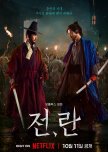
"You think you can attain real power through ideas alone?"
Uprising explored the plight of slaves and peasants around 1589 during a tumultuous time in Joseon history. It was also action packed with revolts and a Japanese invasion. All while the king waxed on about the insignificance of his tax and work base.Cheon Yeong has been a slave due to a legal and moral loophole ever since he was a child. He has reluctantly served the underachieving young master, Yi Jong Ryeo. Through the years they became fast friends until a broken promise and a misunderstanding set them on divergent paths as the Japanese began marching across the country.
The first thing I had to do was age the two main characters upward. When a flashback was labeled “Twelve years ago,” all I could think was that the two young boys did not look 30 years old. This trope of brothers or sworn brothers turned mortal enemies due to a misunderstanding has been done many times before. Poor Cheon didn’t even know there was a problem for seven years. He had his hands full fighting the Japanese with a ragtag assortment of peasants and slaves abandoned by the nobility. Yi served the king who had fled during the crisis. No one really cared what happened to the little people who were often killed or left homeless. Even when the king learned of the small band’s heroic results, he was more interested in how he was going to get a strong enough workforce and money to build a more splendid palace. Apparently, nobility had nothing to do with nobleness and keeping one’s word or administering true justice.
While the story was nothing new, the fights were well choreographed and gruesomely realistic. Swords are sharp and used with great force which meant body parts tended to go flying. Cheon was very disarming with a sword. Though it was the corrupt officials who caused righteous people to lose their heads. The director might have taken a little too much delight in mangled bodies. Kang Dong Won gave a strong performance as the dangerous and shrewd slave, though Cheon naively believed the duplicitous nobility too many times. I didn’t find Yi Jong Ryeo a very sympathetic or interesting character nor very nuanced. I enjoyed Kim Shin Rok’s Beom Dong who had a better insight into the ways of the nobility and a lot of moxie. She also wielded a mean staff.
Uprising kept a good pace throughout though it ran a bit long for me. The historical backdrop was far too complex to wedge into 120 minutes which made it feel like the story fast-forwarded over numerous subplots. The tragic showdown between Cheon and Yi was inevitable but a letdown. Honestly, I was more invested in the confrontations between Cheon “The Blue Robed God” and the “Nose Snatcher” Japanese commander Genshin Kikkawa. The animosity and fighting respect between the two warriors was compelling and thrilling. Going into the movie and knowing slavery continued for 300 more years after the events portrayed here only led to the feeling of pathos for many of the lives sacrificed. Despite some of my reservations, Uprising was an entertaining film and worth trying if you enjoy this genre.
22 October 2024
Trigger warnings: Numerous decapitations and dismemberments-many, many body parts flung around
Was this review helpful to you?
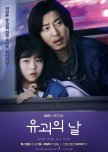
Flawed but emotionally engaging drama
The Kidnapping Day is one of those dramas where the main relationship was greater than the sum of its parts but not quite enough to overcome their shortcomings. And that math makes about as much sense as some of the plot holes in this drama about a loving father figure kidnapper and substitute daughter kidnappee.The strength of this drama was the relationship between Myung Joon and Ro Hee. The actors had great chemistry as the bumbling, good-hearted, desperate dad and genius 11-year-old who had never had the chance to form loving human attachments or simply play like the child she was. Once you left their nucleus, the characters and story began to break down with parts becoming repetitive and others lacking in logic. The plot trotted out the well-trod issues of police incompetence (with the exception of the lead detective) along with the requisite corruption issues although they waffled back and forth on the corruption. While I know women make up a small percentage of police officers in Korea it would have been nice to see one of the minor characters be a female officer in this overwhelmingly masculine drama. The bad guy pecking order and allegiances also shifted with similar incompetence issues. The overly dramatic villain left no furniture without his teeth marks as he chewed through the scenery. Class distinctions as they often do played a role in the story. And how far are people willing to go and who has to suffer for the good of all mankind or at least for those who have enough money? The role on which most of the drama ended up hinging was all over the place with motivations and reactions that often made little sense and the final confrontation missed the mark for me.
Despite its narrative flaws, I enjoyed this drama. Yoon Kye Sang gave a captivating performance as the father who would do anything to save his hospitalized biological daughter and the stranger in his care. His fists made up for what he lacked in strategical thinking, leaving the scheming up to the brilliant girl in his charge. Yuna demonstrated why Korea has the best child actors from any country. She portrayed not only the coldly, methodical experiment her character had been trained to be, but also the vulnerable child that needed an adult to protect her. Moments of the two playing, perhaps for the first time in her life, squealing in delight and getting her designer clothes dirty were heartwarming.
The Kidnapping Day may have had plot holes big enough to swallow The White Truck of Doom, but Myung’s devotion to the two little girls who depended on him covered those pitfalls enough to provide for an emotionally compelling drama. Roo Hee’s intellectual dominance might even leave you questioning who had really been kidnapped in this relationship.
10/31/23
Was this review helpful to you?
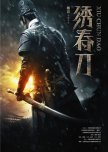
This review may contain spoilers
It's not very often a martial arts movie comes out with strong fight scenes and even stronger acting. Brotherhood of the Blades boasted a quietly competent cast who elevated this movie above standard wuxia fare. Three Imperial Assassins and sworn brothers, though skilled with their swords had to face down death and deception from various factions. The always troublesome eunuch (this time after he was deposed) who shows up in numerous martial arts movies, once again instigated double-crossing schemes, this time imperiling the three loyal assassins.
Chang Chen led the three sworn brothers. His character, Shen Lian, though loyal to his brothers and emperor, was morally ambiguous. Willing to do whatever the situation called for, he set into motion a sword that would hang over all three of the assassins' heads.
The three hearty friends all harbored a need for money. Shen Lian wished to free a courtesan but lacked the power and money to do so. Wang Qian Yuan, as Lu Jian Xing, longed for promotion, only lacking the amount of money needed for bribing officials. Li Dong Xue as Jin Yi Chuan, the third assassin and the youngest, loved a doctor's daughter and had secrets of his own. The eunuch's waning power and wealth still proved perilous and tempting. The loyal allies had no safe quarter with the emperor and his officials. Blades aimed at them from nearly every quarter, even longtime allies proved treacherous.
The fight choreography was quite good, less reliant on wires and Olympic level gymnastics. The fights were fast, brutal, and bloody. They stretched reality in a few scenes, but so do most action movies. If I have one quibble, it's that the action scenes went on too long and were overused. As the story felt thin, perhaps it distracted from the lack of a more complex plot and character development.
The cinematography though dark and dreary fit the mood of the film. Often monochromatic, the shots worked perfectly for the bloody fight scenes. The costumes and sets were well done, befitting the time period. Brotherhood of Blades was stunning to watch without being overdone.
Chang Chen gave a mesmerizing performance, filling in gaps the script lacked. The supporting actors were all strong even though many of their characters were thinly drawn.
Brotherhood of the Blades battered away at the characters through intrigue and loss. Dark and intense, this film balanced its three main characters on the edge of a knife in the midst of hungry wolves. And set this viewer on the edge of her seat wondering who, if any, of the Brotherhood would survive.
Was this review helpful to you?
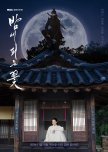
"Keep your enemies closer"
Knight Flower was a funny, entertaining cross between a female Robin Hood and Zorro. The story may not have had any surprises, but in this genre as in most. execution is key and Knight Flower kept the action moving and the long boring monologues by the villains to a minimum.Yeo Hwa never even met her husband who was killed on the way to the wedding and has been a cloistered widow for 15 long years. Stuck in the family shrine most days, never being able to set foot outside of her in-laws’ property she only has her maid Yeon Seon for company as she waits on her older brother to finally return and take her with him. What no one in the household knows except for Seon is that at night Yeo Hwa dresses in black and helps the helpless with her money and martial arts. Everything is going smoothly until she runs into the new Capital Defense officer, Park Su Ho. With lots of push and pull between the upright lawman and the vigilante, as well as the requisite romantic tension, the two find they have much in common as well as common enemies.
The first episode felt slow to me, but it picked up the pace as it went along and never slowed down again until the last episode. Given the prison-like existence of the widows and pressure to commit suicide for the family honor, it was a whimsical release to have the heroine running over rooftops and rescuing the male lead on occasion. Of course, only women were held to these standards. Widowers were free to go about and even encouraged to remarry. Repression reconfigured to look like honor.
I enjoyed the story, but stumbled some with the casting, or perhaps the writing. Full disclosure, I enjoy a good noona romance so that wasn't an issue . Nor do I have a problem with an older woman being an action hero, much older men do it all the time. Lee Ha Nee is a beautiful woman but at 40 she did not look 32 nor very athletic. Her character was someone skilled with living a double life for years, but Yeo Hwa could not manage a poker face when needed. Yeo Hwa was quick to act but often slow to catch on to the bad guys’ plans. Lee Jong Won looked like a sweet puppy who adored Yeo Hwa, but added little depth to his character. A quick glance at the cast list and it was easy to pick out who the baddies were going to be. When one used his kind grandpa voice instead of putting a character at ease, chills should have been running down their back. And Jo Jae Yoon can always be counted on to chew up the scenery maniacally.
Knight Flower, aside from bringing up the appalling way widows were treated, was for the most part a romantic action comedy. While there were some fights, they weren’t bloody or deadly. Most of the deaths occurred 15 years prior to the current story. The one murder in the present story actually felt quite deserved. So, if you like your historical dramas light and funny, with a little romance and a little action, this might be a good fit.
21 February 2024
Was this review helpful to you?
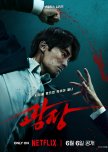
"It never ends until we're all dead!" That's the spirit!
Mercy for None wasn’t an extraordinary drama but it did what it set out to do-show mercy for none. As far as Korean revenge entertainment goes it succeeded for the most part. For those familiar with the genre there were no real surprises, but they never let the plot or action slow down. During Nam Gi Jun's lengthy revenge rampage they kept the “hero’s” plot armor to a minimum until the last two episodes. If nothing else, it was good to see So Ji Sub in a drama once again.Normally, I’d give a mini-plot summary about now, but this was a revenge drama so despite the twists and turns it was quite simple. Retired gangster Nam Gi Jun is called back into action when his brother is murdered. Nam Gi Seok was slated to be the JuWoon successor so there were plenty of people with an ax to grind. And grind and slash numerous characters did with axes, knives, bats, iron bars, with plenty of old school action. Gi Jun discovers how deep the treachery runs as he pounds through the bodies with his mighty fists. He could have given One Punch Man a run for his money.
So Ji Sub didn’t have to give an emotionally nuanced performance. He did what he needed to do, look fierce and bloody as he fought gangs of men. Mercy for None was a who’s who of ahjussis and harabeojis. The old boys gave a master class in acting. Sadly, there were younger actors who lacked the gravitas and menace required for their roles. With the exception of a female lawyer with a couple of quick scenes there were no women in this world, no molls, no nurses, no mobster mothers, this was all testosterone all the time.
The fights were well choreographed, especially for a drama. They contained more gore than your average Kdrama so if you are squeamish be prepared. This drama was an 8.5 for me until the end of episode four and then the “twists” and “surprises” began to weigh it down. Gi Jun’s fearsome abilities tread over into the supernatural as the drama wore on which took away from it. Despite only being 7 episodes long, it could have been cut to 5 or 6 at the most.
I desperately wanted to hold a class for these career gangsters. Things Every Bad Guy Needs to Know: 1) Round-house kicks are pretty but useless in a fight. 2) Never bring just your fists to a machete/gun/bat fight. 3) Never leave your weapon behind---there will always be another fight. 4) When using a gun, never let your enemy get too close. 5) Never trust someone who works for the enemy no matter how much you used to like them. 6) Be nice to the hired help. It could save your life. 7) Never turn your back on your enemy. Never. Ever. Like ever.
If you are looking for character development or innovative storytelling this is not that drama. If you are wanting to get an action and revenge fix with an easy on the eyes protagonist, you might want to give this drama a try.
13 June 2025
Was this review helpful to you?
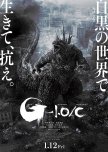
Minus color, plus menace
Godzilla Minus One/Minus Color was the same film as Godzilla Minus One yet different with the lack of color. Harkening back to the original in 1954, Gojira's appearance felt even more menacing. Watching him wreak havoc on Tokyo in B & W was reminiscent of OG Godzilla and more of a documentary feel for as everyone knows, people in the 1940s lived in black and white . For this film they not only removed the color but used a masking technique to make each frame have the quality of an artistic still photograph. It took my brain a while to process it. I'm used to watching old black and white films and the look of GMO/MC was different, clearer, with more depth. At first it was jarring as even the shadows were more defined and darker. So while it didn't have the same soft black and white appearance as the original it was an interesting new take on Minus One. If you enjoyed Minus One and the 1954 original, this version is definitely one to try.Below is my review for Godzilla Minus One from 2024:
When I saw the Toho logo my heart jumped with joy knowing Godzilla was back home where he belonged. In Godzilla Minus One he was no longer a comic character playing catch with a giant lobster or the King of the Kaiju restoring balance to the Earth. He was a destroyer and an indictment on humankind’s hubris and a reminder of the horrors of war. If Japan was at level zero after WWII, Gojira put them at minus one when he surfaced from the depths of the ocean with a terrible judgement.
Near the end of WWII, Shikishima Koichi is a kamikaze pilot who lands his plane on a small island held by the Japanese ostensibly for engine trouble. It’s not long before the mechanics realize he has run away from the fight. They don’t have long to berate him when they are attacked by a monster the locals call Gojira. When Shikishima freezes once again, he is labeled a coward by the only other survivor. Back home he is reviled by a sister for returning alive, as she blames the country’s problems on his failure. Koichi takes in a woman with an orphaned baby, unable to throw them out when Noriko makes herself at home. The war isn’t over for Koichi as he is paralyzed with regret, guilt and PTSD and unable to move on with his life. When Gojira heads for Japan, the pilot will have a second chance to redeem himself and his honor.
Godzilla Minus One succeeded in two areas. Firstly, they went back to Gojira’s mythology and his evolution from nuclear testing. Gojira was personification of the fear and memory of atomic weapons, something the people of Japan had suffered horrifically from. He was also a punishment for Japan’s militaristic era and the damage done to others and their own people. This monster claimed his territory with a fearsome rage. Capable of regenerating, modern weapons were all but useless against him. Secondly, for one of the first times since the original, there were compelling human characters with interesting stories seamlessly woven into Gojira’s appearance and threat. Too often, the humans were dead weight in Toho’s Gojira films saddled with mediocre actors and dialogue. Koichi was a complicated character and his boat buddies were developed enough to remember them. Noriko as a character was thinly but heroically drawn. Even the characters who reviled Koichi came around to being more well developed.
If there was one flaw, the horrors of the war were laid solely at the government’s feet, which categorically absolved the rank and file from atrocities committed during the war. And yes, the government had the “best ability of spinning and hiding information from the masses”. The government also, “...treated our lives too cheaply...Tanks with insufficient armor, poor supply chains-leading to starvation and disease…and fighter planes without ejection seats…as well as kamikaze and suicide attacks.” The characters emphasized living for their country and its future instead of dying for it even as they bravely faced a seemingly indestructible foe.
For a film made for 15 million dollars (USD), it looked far richer. The special effects were excellent whether it was Gojira’s atomic breath, miniatures, ships, or buildings crumbling like houses made of cards. Gojira himself, was frighteningly majestic and terrifying. Able to regenerate, he did come across as a vengeful god. This film deservedly earned an Oscar for Visual Effects. One last little production note--Sato Naoki is credited as the composer but some of the score was a reworking of Ifukube Akira's iconic Godzilla theme.
Not since the original Godzilla (1954) have I enjoyed a Big G film this much. Gojira was a merciless, destructive force, created by unnaturally splitting atoms. The people of Japan united not to fight to the death against this formidable opponent but to use all of their abilities in a battle that would ensure that they could live for their future. In the face of this harbinger of death, there were those who found redemption, love, and healing. Good job Toho! You made a film worthy of the original and a wonderful way to celebrate Gojira’s 70th anniversary.
2 June 2024
Was this review helpful to you?
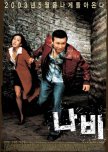
Min Jae leaves his rural town for Seoul promising Eun Ji he will return in a year when the snow falls again. But Min Jae forgets all about Eun Ji and joins a gang. When that doesn’t pan out he takes on work as a gigolo. Five years later he runs into Eun Ji scarcely recognizing her. When she brushes him off, he tracks her down and discovers she is the mistress of an evil colonel. The two decide to flee together but Colonel Cho has other plans for Min Jae.
That first hour of this film was agonizing. The acting was awful and the story was patchworked together. The director must have decided that rain and snow were powerful emotional indicators, so one or the other was nearly always falling. A comedic side story was included with two warring men volunteering to be on the bus to the Samchung Revival Camp. Of course, Min Jae ended up on the bus involuntarily. The camp was renowned for its brutal treatment of prisoners being “re-educated” so it was not surprising that Min Jae was constantly being tortured.
The biggest problem I had with Mr. Butterfly was not even the overly dramatic acting, music and story. Min Jae hadn’t given Eun Ji a thought for five years and suddenly he was ready to die for her. Both he and Eun Ji made stupid, disastrous decisions. Not unlike the Butterfly Lovers or Romeo and Juliet, you just want to tell the characters, “Hey, guys, why don’t you stop and think things through first.” But that wouldn’t have resulted in dire situation after dire situation with all the accompanying emotional crises. If you enjoy melodramatic tragedy interlaced with slapstick comedy and dated acting, this might be one to try, otherwise better to make like a butterfly and flutter away from it.
18 August 2026
Trigger warnings: Physical abuse, sexual abuse, torture, smoking.
Butterfly note: The prisoners commented on butterflies being a weak species. I beg to differ with them. The Monarch butterflies migrate over 2000mi/3200km each year, braving weather, predators, cars, food scarcity, and all manner of danger. Sounds pretty badass to me!
Was this review helpful to you?
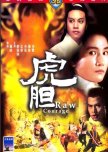
Could have been better and shorter
Raw Courage starred Cheng Pei Pei and Yueh Hua who were tasked with protecting the infant Crown Prince after the Ming Emperor was once again deposed. Director Lo Wei began the film with an army and ended it with a whimper.As the palace burns with the overthrow of Emperor Jian Wen, he entrusts his infant son to the Black Dragon leader. Rebel forces attack the Black Dragon and he is forced to send his daughter Hsiu Yi and surviving disciple Chin with the child to his brother the White Dragon far away. As they leave the duo are saved by Mo Wen Tien aka the Old Beggar. He gives them contacts to help on their journey. The first and most important is Fei Yun who ends up being their guide through the harrowing checkpoints. The little band is pursued by Yen Tsang and his army and the fearsome Old Monster.
I’m a huge fan of Cheng Pei Pei and love to watch her swing her sword while the stunt men go flying. This was not one of her stronger roles. Most of her dialogue centered on her asking Fei Yun, “what do you think we should do?” Wu Fung’s Chin was stuck with being the jealous older “brother.” Yueh Hua had the most fun as the easy going Beggar disciple guiding the two neophytes through treacherous territory. Tien Feng’s villain was poorly drawn and wasn’t that interesting. Lee Sau Kei’s blue-faced Monster had potential but not enough screen time.
The fights consisted of swinging swords. Aside from a trident and a weapon that looked like a garden weeder, there was nothing out of the ordinary. Poor Pei Pei fought with a baby on her back throughout the film. Three against an army over and over became wearisome as there was nothing to focus the eyes upon. Unlike 70’s films, there was no spewing blood or flying limbs. The bodies certainly stacked up, but most did so bloodlessly. I found myself watching the background characters during the fights. The extra fighters were at least given things to do beside hopping back and forth like some films. Though humorously one killed character pinned to a stone wall with a sword kept moving around during the fights. Poor guy had to be uncomfortable.
The film had the Shaw Brothers polish to it with quality sets and outdoor scenery. My biggest complaint with the film was the pacing and its length. Despite the chemistry of Pei Pei and Yueh Hua, the film dragged badly. The sense of urgency and danger dissipated due to the lack of stakes and repetition of conflicts. The intrepid trio inexplicably escaped overwhelming odds on numerous occasions to the point even for a martial arts movie that it made no sense. When I found myself focusing more on the stuntmen than Pei Pei, there was a problem. Having said all that there were entertaining moments so if you are a fan of any of the actors or enjoy martial arts films from this era it is one to try, just best to keep your expectations low. As always, graded on a kung fu curve.
7 August 2026
Trigger warning: Brief nudity, non-sexual.
Photo bomb note: I loved that during one scene while the trio paused on their horses, a dragonfly buzzed in front of the camera! No take 2!
Will someone please think of the children note! : The poor baby cried at all the inopportune moments during the early parts of the film and then went silent for the rest of the film. Probably because the poor thing was rarely fed or diaper changed. Proper care of a child was not a priority for the film, just an accessory for Pei Pei's back and something to alert the evil doers of the good guys' location.
Was this review helpful to you?
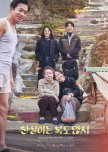
"Nothing happens"
Lucky Chan Sil was a charming “nothing happens” slice of mid-life crisis. Directed by Kim Cho Hee, there were times it felt a little like an inside baseball film as Chan Sil was the producer for an indie auteur much as Kim had been the producer for director Hong Sang Soo in real life between 2008-2015.Lee Chan Sil’s life is turned upside-down when the indie director she has worked for as a producer for years dies suddenly of a heart attack. The people who had praised her work now want nothing to do with her, belittling her as unimportant to the work of the genius Ji. She moves into a room in a small home owned by an older illiterate landlady. Her flaky actress friend Sophia hires her to be a housekeeper which is where Chan Sil meets Sophia’s French tutor, Kim Young. Young happens to be a short film director who tutors to pay the bills. As Chan Sil spends time with Young, she begins to wonder if she is falling in love or merely lonely. Leslie Cheung’s ghost visits wearing his Days of Being Wild underwear offering snippets of advice.
Several times the movie talked about films where “nothing happens” and that often when it looked like nothing was happening there was actually something profound quietly at work. I cheered when Chan Sil said that Ozu Yasujiro was her favorite director, another creator of “nothing happens” films. When Young minimalized Ozu’s work, preferring Christopher Nolan, I echoed her reaction!
So, what did happen in this film? Chan Sil was forced to look at her life and determine her priorities. She had spent her youth dedicated to making films and had lost out on love and family. Yet she had also been surrounded by people who enjoyed films as she did. With a little help from the ghost of Leslie Cheung, Chan Sil turned inward, digging into who she really was and what would make her fulfilled and happy. Old friendships were rekindled and new ones began. I loved the ending and thought it fit perfectly with the mood of the film. If you enjoy films that appear to be lower budget where “nothing happens”, this might be one to try.
“Flowers return with the seasons,
If only we could, too”
3 August 2026
Things that make you go hmmm….Notes: Several of the tags for this film would suggest that Chan Sil was a basket case, which was not the case. She was having to regroup after she lost her job but it was hardly a mental health crisis. Currently, the genres are Romance and Melodrama of which this film was neither. And Leslie was either Supernatural or CS was indeed seeing things. I prefer the former explanation which definitely added some whimsy to the otherwise realistic story.
Was this review helpful to you?

Cho’s descent begins in a subway restroom practicing his sales pitch for instant glue with men lined up at the urinals behind him. When luck turns against him, he makes fateful choices in order to eat. Joined by a woman as desperate as he is they feed off each other as their robbery spree escalates.
I wondered what the title Influenza meant and I’m still not sure, but as you watch this film, you’ll see people assaulting each other behind Cho. Like Kurosawa’s layered filming technique, there were layers of lawbreaking and cruelty from the forefront to the back. It was as if a violent, criminal virus was spreading. Even Cho’s one act of altruism likely aided another criminal. It was not all gloom and doom, there were humorous bits. Ahjummas do not give up their money so easily!
Bong’s use of CCTV as the only means of storytelling with a smidge of sound was an interesting one. The ever-vigilant surveillance never slowed the crime pandemic seeping over the city. Only when the nefarious couple took their brutal bender too far did civilization step in and draw a line. Once again in a Bong Joon Ho film, society failed both the victims and people driven to perpetrate their crimes, this time silently witnessed by Big Brother’s omnipresent eye.
28 July 2026
Ratings note: I was torn deciding on the ratings and gave it a slight bump for creativity.
Indelicate note: There were numerous men at urinals if that is upsetting.
Was this review helpful to you?
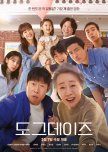
Adopt, don't shop!
Dog Days was a sweet, heartwarming-if predictable-tail of people being made more human by the love of a dog. The sight of four-legged sunshine aka a Golden Retriever, was enough to help me stick with this film through a ruff intro. (I promise to keep the puns to a minimum.)Landlord Min Sang hates dogs, dog poo, and the veterinary clinic renting space in his building. When he’s not threatening to kick Jin Yeong out, he works at a company attempting to land the bid for a new resort going up. Retired architect Min Seo lives alone, her only company her dog Wanda. A delivery boy becomes entwined in her life when she has a health issue. Jeong Ah and Seon Yong have recently adopted a little girl named Ji Yoo. They are concerned with how to make their new family work as Ji Yoo keeps to herself. A band has lost their lead singer and Hyeon his girlfriend when she left for a job in Africa. All Hyeon has left is her Golden Retriever named Sting and her ex-boyfriend Daniel who has visitation rights.
Ostensibly this film highlights the roles dogs play in our lives and the value of adopting them. But surprisingly, they also showed the joy of adopting a human child, something rarely talked about in Korean entertainment (at least positively) as adoption isn’t common for a variety of reasons. Child actress Yoon Chae Na once again convinced me that Korean child actors are the gold standard. She gave a heart tugging performance. Kim Yoon Jin was believable as the mother seeking to connect to the little angel that had come into their lives.
Aside from the adoption story I really enjoyed the aging architect played by Youn Yuh Jung and her relationship with the delivery boy Jin Woo as portrayed by Tang Jun Sang. It was a tropey mentor bit, but well executed. I judged the character Hyeon rather harshly early on when he only grudgingly took the Golden in and made numerous mistakes. Fortunately, they quickly rectified those issues. It’s always a delight to see Kim Seo Hyung in a lighter role and she was sublime as the veterinarian with a heart of gold and questionable hygiene habits.
While the film dipped its paws into doggy melodrama it managed to avoid pandering for a tear fest. There were forced resolutions and too quick personality turnarounds. The best moments were the ones that were organic to the story and felt natural. The humor was generally gentle and the dog poop jokes were kept to a minimum. They did showcase the desperate need for adoption to save dogs lives advocating to adopt not shop. And of course, they also presented how rewarding adopting a child can be. Though I struggled with the first part of the film, I found it to be entertaining overall. Some stories were stronger than others. Could I recommend this film to a dog lover? Pawsitively.
24 July 2026
Trigger warnings: For sensitive dog lovers-Three dog in danger scenes-one illness, one lost pup running down a crowded street, and a euthanasia scene. Unlike another dog film I’ve watched, thankfully no physical abuse of the animals.
Rating note: This would normally be a 7.5 on my rating scale as the beginning was slow, but Sting/Floyd and Wanda won me over, bumping the score up by .5
Was this review helpful to you?
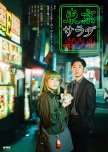
"You don't let go of anyone's hand now"
Tokyo Salad Bowl tackled immigration in Japan and the accompanying racism and discrimination that often arose from it. The heart of the drama was a green haired police officer who used food to connect with people and open doors, paving the way for healing and friendship.Koda Mari has recently transferred to the International Investigation Division where officers deal with crimes involving immigrants. There is a stable of interpreters including Arikino Ryo who can speak Chinese. Neither Ryo nor her new colleagues know what to make of her bright green hair, obsession with discovering new foods, and sunshine personality. They say she picks up the crumbs, small cases that they can’t be bothered with. But the crumbs she gathers often turn into discovering a bakery of wrongdoing. Mari takes a liking to quiet, pessimistic Ryo and cajoles him into helping her with cases, feeding him on a regular basis. As the two work together, Mari comes closer to discovering what drove Ryo from the police force and why he is so withdrawn.
I went into this drama hesitantly as it was based on a manga. Too often I’ve found manga heroines too effervescent with too little brain power. To my surprise, despite her garish green hair and terrible fashion sense, Mari had good cop instincts though she was in desperate need of a self-defense class. She believed that Tokyo was a salad bowl of ethnicities and that everyone deserved to be treated humanely. I was worried when she was chowing down on scorpions and ox penises in the first episode but the dishes became more palatable to me as the drama progressed. And like most female leads in Asian dramas that weigh 90 pounds/40 kg soaking weight she ate her body weight in food daily.
Japan’s dwindling population required a steady influx of foreign workers. Most ended up in low paying or manual labor jobs. Just as the country walked a fine line of wanting and not wanting immigrants, the drama sought to plea for better treatment of foreign workers and also subtly excused racism. It’s not racism---people just don’t trust foreigners, are quick to judge and blame, make snide comments about race, different cultures, customs, and are sometimes abusive towards them. Yeah, that’s racism. It was also telling that the Chinese often had scruffy wild hair and dowdy clothes. Baby steps. Most of the immigrants were shown as hard working and trying to make a better life for themselves and their families. As Mari worked in the police department they also dealt with foreigners who ran afoul of the law. (Important note-as in my country, immigrants commit fewer crimes than native citizens.)
The drama brought to attention the challenges of interpreting and how difficult it can be to translate specifically and for meaning. The language barrier when living in a different country can be daunting and absolutely terrifying if a person ends up in legal difficulty. Trafficking of vulnerable populations was explored though not in depth. Most of the cases were more about community building and understanding people’s needs rather than the actual crimes themselves. The main villain was weakly written and didn’t seem capable of running an international crime ring at such a young age.
Tokyo Salad Bowl was a good analogy for different cultures coming together in one dish. Different peoples bring their unique cuisines giving people strong reasons to bond over food. The drama tweaked the strong desire for conformity with foreign workers, a competent female police officer with shocking green hair, and a gay character. Aside from her ability to seek out the best sustenance in town, Mari’s super power was the ability to really listen and not let go of a hurting person’s hand. Anyone who knows how to care for a suffering person with an offer of Pajamas and tea knows the value of food and friendship. A gentle and entertaining drama about healing, treating people as valuable human beings, and finding the truth.
14 July 2026
Trigger warnings: Smoking. Drinking.
Continuity notes: Mari’s hair changed in intensity from scene to scene as well as her exposed roots. Girl could have used a good wig. I know it’s based on a manga, but when Mari was undercover, I just kept hearing a line from My Cousin Vinny, “Oh yeah, you blend.”
It could go from daylight to nighttime during the course of breakfast.
Was this review helpful to you?
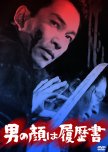
"You don't have the slightest notion of what war is like!"
By a Man’s Face Shall You Know Him tried hard to be a film about the futility of violence yet could only accomplish that task through buckets of blood and a high body count. Set in postwar Japan, instead of the Crips vs The Bloods, it was the Korean gangsters vs…a doctor.Dr. Amamiya recognizes a traffic victim who is rolled into his small clinic. The man’s face causes him to remember a difficult, desperate time from the past. After he returned from the war, Amamiya wanted nothing to do with killing or violence. The only problem being, a Korean gang was determined to take over the street market of which he was the owner. The gang took what they wanted, killed who they wanted, with no consequences from the police or government. Amamiya could be the only thing standing between the people being threatened and the gangsters determined to eliminate them.
The film had flashbacks and flashbacks within flashbacks. Dr. Amamiya had become disillusioned with the government and people in general after realizing he’d been lied to during the war, made worse by the lives he’d taken. He wanted the cycle of violence and death to end even as he was faced with it every day. When his brother came to town on a break from university, the stakes went way up as the way out narrowed.
This film had the look of a lower budget film with the performances hit or miss. There was a great deal of exaggerated acting which could be taxing to watch. Ando Noboru gave a convincing performance as the doctor with a very particular skill set unrelated to the medical field. Coincidentally, in real life, Ando had been a gang leader before he entered the entertainment field. Amamiya’s love interest, Maki, was always covered in sweat and screaming, obsessively clinging to him. Not exactly the epitome of a cool-headed nurse. Of course, the good doctor didn’t mind having a nooner in the clinic which wasn’t particularly professional.
For a film with gangsters, it incorporated more issues with post war societal and political upheaval than I would have expected. What interested me, despite the overt racism toward the Japanese Koreans, was the Korean gang. Japanese Koreans were not often the focus of many Japanese films. The Japanese looked down on the Koreans and the Koreans felt like their time of being dominated was over. Payback was coming. There was no lack of criticism for the war and the repercussions from it. Amamiya was criticized by multiple people for not choosing violence while his brother was considered a hero for confronting the large gang despite his spectacular failure. The yakuza were even too afraid to take on the Korean gang. The film used one of my least favorite tropes with a hero that refused to fight until the body count forced him to. Another issue was that women were not shown in the most flattering light. Maki was a basket case. The writers had the Korean woman Gye do something that lowered my score. For all time, no sane woman asks a man to rape her.
By a Man’s Face Shall You Know Him started out slow paced for a gangster film yet was also deeper than most. I didn’t appreciate the sexploitation and old school machismo acting. However, the bloody ultimate showdown did not disappoint. Though it is flawed, if you enjoy old school gangster flicks, this might be one to try.
26 June 2026
Trigger warnings: Sexual Assault. Sexual situations. Bloody, violent fight using guns and katanas.
Was this review helpful to you?
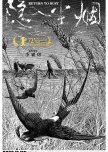
"You were used by others for most of your life, haven't you had enough?"
Return to Dust was a story about Fate bringing two unloved and unwanted middle-aged people together in a poor rural community. Resigned to their lonely and meager existence, an act born out of callousness opened up a new world they’d never dreamed of.Ma You Tie aka Fourth Brother aka Iron Ma is coerced into marrying Cao Gui Ying. Both are past the normal age of marrying. Iron is largely an unpaid worker for his older brother. Gui Ying lives in a shed behind her brother’s house and is regularly beaten. She suffers from a physical disability, infertility, and incontinence which has taken her off the marriage market. The two quietly wed and move into an abandoned house. Together they farm the land and gently take care of each other. Tiny acts of kindness and generosity cause the newlyweds to slowly come out of their shells. They begin to lean on each other, surprised that they could experience companionship and contentment so late in life.
While Iron and Gui Ying showed compassion to people, animals, even plants, such was not the case for the people surrounding them. Their families were neglectful and cruel. The local businessman exploited the old peasants working the land refusing to pay them the money he owed, shorting them when their crops came in, always offering one excuse after another. When it turned out Iron shared the same rare “Panda” blood type of the capitalist patriarch, the farmer was called upon to give the wealthy man regular transfusions. As more villagers abandoned farming and moved to the cities it created vacant homes. The government implemented a new beautification policy offering money for the destruction of those houses. City dwellers returned to grab the cash regardless of who had set up housekeeping in the houses, be it people or swallows. The caring couple had to move ahead of the bulldozers twice, finally resolving to build their own mud brick home. Having spent a lifetime being taken advantage of and never having anything handed to them, Iron and Gui Ying simply took the slights in stride.
Oh, but Butterfly, what was the plot? None really. It was an exquisitely shot and scored slice of life about two outcasts diligently working the land and becoming utterly devoted to each other along the way. The villagers even commented on how Iron doted on his “peculiar” wife. It felt and looked very Zhang Yi Mou’ish. And just like ZYM, the director and film landed in trouble, too. *
Return to Dust was a tender, lowkey love story with two social outcasts that felt deeper and more authentic in comparison to grand passionate romances. Iron and Gui Ying may not have had children but they adored their bell wearing donkey (so did I!) and dutifully looked after their little chicks. No debt was left unpaid. For Iron, “The soil doesn’t despise us,” unfortunately, people weren’t always as reliable.
25 June 2026
Trigger warning: Suicide
*Those darned censors notes:
The film was yanked from being shown in China for reasons unknown. It was later released with an alternate ending. What was so offensive? The peasants were hard working, resourceful, and living a simple life without complaint. Perhaps it was the government’s house destruction policy that ended up harming the most vulnerable. Also, the most impoverished were offered low rent apartment housing. Iron wondered where he would keep his livestock. Illiterate and older, how was he supposed to support himself and eat without access to the land? I learned about the film being pulled when I went looking for answers regarding the ending. The last line of dialogue was contrary to the rest of the film and the previous scenes. Apparently, the original ending was replaced with a more acceptable ending to the censors even though it made no sense.
Was this review helpful to you?


