

 148
148 438
438 16
16 2
2 6
6 3
3 8
8 10
10 3
3 13
13 1
1 1
1 1
1 1
1 2
2 7
7 9
9 5
5 9
9


This review may contain spoilers
"War is hell"
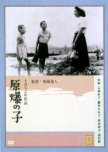
Children of Hiroshima was made seven years after the bombing of Hiroshima, when the wounds were still fresh and the horror still a recent memory. The film showed a scarred city rebuilding, but rubble, blown-out buildings and stripped trees were a visible reminder of the terror that took place on August 6, 1945 at 8:15 a.m. Into this setting four years after the blast, Takako, a kindergarten teacher, visits her family's grave and seeks out the three surviving students from her old class.Takako escorts the audience on a tour of Hiroshima and her reunions give us a glimpse into the different ways people suffered after surviving the blast. She looks up the only three children still alive from her class four years ago. One child shines shoes to help his family, his mother works on a building while his father lies dying from radiation poisoning. A little girl saved by a priest during the bombing, lives in the church but has fallen ill with radiation poisoning. The last child is likely the luckiest. His parents were killed but he still has two older brothers and an older sister. After five years of waiting, the sister whose leg was badly damaged when she had been trapped under rubble is about to be married. Takako's teaching friend is sterile, yet opens her heart and helps other women have babies. And an old family friend, blinded and deeply scarred is reduced to begging on the street and resides in a shack outside of town. His grandson lives in an orphanage, one among many such children.
The story could feel manipulative at times, especially when Takako intruded into private family moments as if only through her eyes could the audience witness the other's misery. While I loved Ifukube Akira's Godzilla scores, his music here was heavy handed as if attempting to elicit an emotional response and felt out of place. I recognized his ponderous marches immediately.
The anti-war theme while important and still timely was bluntly reinforced with each succeeding encounter.
Director Shindo judiciously left out the debates over why the war was started, how many innocents suffered under the Japanese war hammer, and whether the bomb(s) should have even been dropped. I will follow his lead in those matters. But undeniably by showing the cost to people's lives, and the long road to healing, he did give ample examples of why "war is hell" and "the greatest evil". Perhaps not for the Japanese, but for people around the world, this film may have been the first time they'd seen the damage done in Hiroshima not only to the city but to the people. Both Shindo and actress Otowa Nobuko were from Hiroshima, making this film more personal for themselves. As he did with some of the people Takako came across, he also revealed hope for the future, a resilient and generous people, and life beginning anew out of the ruins.
In 1952, the occupation of Japan had just ended and the people were still reeling and learning how to cope and heal from a national tragedy along with post-war self-reflections. A variety of emotions played out in Children of Hiroshima-grief, resentment, hope, love, fear, and anger. When Takako heard a single plane flying above, the memory of the fateful day was triggered, a day with all the normal things people do under a clear blue sky, until a new horror was unleashed upon them. War is hell and the greatest cost is always for the innocents who pay the price.
7/27/23
Was this review helpful to you?
This review may contain spoilers
The title is the best thing about this movie
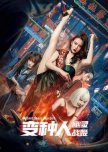
When a sci-fi movie opens quoting Charles Dickens, you might think you're in for an intellectual thriller about gene manipulation. Intelligent writing is something this movie will never be accused of. Bearing the title Mutant Ghost Wargirl, you might also think you are in for some wacky fun or a thriller about a deadly phantom. Disappointingly the movie wasn't much fun or thrilling .I'd like to blame the terrible subtitles as the reason I struggled to understand the story, but bad as they were, poor translations weren't the major problem. Ghost aka Wu Qing Qing is an agent for The International Security Union who goes undercover in The Korean Mystery Crime Organization in order to bring down an illegal gene experimentation lab called Medusa. She ends up being dosed with a gene injection fluid (GIF). An extraction team arrives to break her out, but the bad guys have a demigorgon which slows them down long enough for a bad mutant to kill most of the team and kidnap Ghost's friend. Mysteriously and off-screen, Qing Qing is rescued by a Chinese investigator named Zhou Yang in Korea. For cliched plot reasons, Qing Qing has developed amnesia. She also has super powers due to the GIF and every time the fluid activates further, an increased percentage appears on her arm to reflect the new abilities. Slowly her memories return prompting Qing Qing and Zhou Yang to seek a way to get the secret microchip she stole from the baddies back to her people. Lots of fights ensue with her powers further increasing.
I was quite confused when the movie indicated it was set in 2077 Korea because where Qing Qing woke up the signs were in Chinese and the street décor was decidedly Chinese. With the exception of a couple of "Korean" police officers and a few people in a strange nightclub with its own green haired Joker, everyone spoke Chinese. Later they mentioned it was Chinatown, but with Chinese agents operating in Korea and a giant holographic dragon circling about downtown Incheon it looked more like China had annexed the country. The Joseon styled robots in hanboks who served the Chinese Big Bad were troubling.
The story and editing were choppy with terrible pacing. Story logic must not have been a priority because there were huge lapses in narrative and logic. A romance was shoe-horned in, developing quicker than Ghost's super speed given the whole story took place over a day or two. The sets and lighting looked straight out of Blade Runner without the charm. Most of the acting was sub-par, with the villains being extra cringe worthy. Qing Qing's dominant power was the ability to teleport like Marvel's Nightcrawler into a puff of black smoke, followed only by her ability to spit up gallons of blood. Out of all the Chinese movies and dramas I've watched this movie wins the Buckets O' Blood Award for the most red goo expectorated. Many of the fight scenes relied on Matrix styled slow-mo action with kung fu posing. Or the fights were almost non-existent as Qing Qing and her black smoke moved so quickly you only saw the bodies falling. As often as weapons flew directly toward the camera I wondered if it was originally filmed for 3-D. Wasn't there anything good about this movie you may be asking? The CGI wasn't bad during several fights, but that's all I've got.
The writers for Mutant Ghost Wargirl could have given the movie more meaning by delving deeper into the ethical issues of gene manipulation. Even without confronting the morality of using people as guinea pigs, the messy story could have been cleaned up some if they had better explained key plot points and not make the viewer fill in the enormous narrative gaps like a road crew filling in potholes after an ice storm. What the movie really needed was for a scientist to have developed a Better Acting Injection Fluid and a Make the Story Coherent Injection Fluid, because as it stands the ridiculous title was the most fun thing about the whole movie.
7/15/23
Was this review helpful to you?
This review may contain spoilers
"How many deaths are enough?"
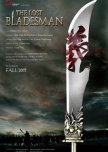
The Lost Bladesman followed part of Guan Yun's epic journey from being Chancellor Cao Cao's prisoner to making his way back to Liu Bei while taking down numerous generals and assassins. I can't judge the film on historical or legendary correctness, only on its entertainment value. The film looked amazing, had several creative and well-choreographed fight scenes featuring Donnie Yen and included Jiang Wen's nuanced portrayal of the inscrutable Cao Cao. Those things were more than enough to keep my attention throughout the film.The film opens with Guan Yun being held prisoner and aiding his injured men. Cao Cao admires Guan's military prowess and seeks to convert him to his side. A man of immense integrity, compassion, and loyalty, Guan Yun largely refused. Guan's only goal was to return Liu Bei's concubine to him who was being held hostage and support his sworn brother. Cao Cao releases him, but his men call upon just about every swordsman in the land to execute Guan on sight. The movie really gets going at this point.
The story was not terribly complex, but a cursory glance at history did help explain a few things that were glossed over for an audience familiar with the tale and characters. I've heard complaints that Donnie Yen didn't look the part. Guan Yun's legend stated that he wielded a 49kg/108lb Green Dragon Crescent Blade, that's like swinging a large child holding an enormous broadsword in battle, not sure who they were going to find who would fit that description. I'm certainly not in the place to judge how a revered legendary character stood up to cultural expectations. I can only offer my opinion how the movie came across as entertainment in my neck of the woods. As the movie played out with numerous fight scenes, Yen did what he does best---fight. His Guan was compassionate and benevolent but he kept being drawn back into bloodshed as he reluctantly faced down the six generals ordered to kill him. Jiang Wen did what he does best---bring a complex character who was thinly written to life. His Cao Cao was the mesmerizing power behind the throne who tried to appear benevolent though many of his actions would say otherwise. Yen and Jiang had great chemistry in their politely adversarial relationship. A half-hearted love story thrown in did not enhance the narrative. The cinematography was nicely done as well as the sets and costumes giving a feeling of authenticity.
If you are looking for historical and mythical accuracy, this may not be the film for you. If you are looking for an entertaining martial arts film with some good performances and a little history added to the mix, this might be for you. I enjoyed The Lost Bladesman more for the fight choreography than for the story. There were several scenes including one in an alley with a reluctant Guan not wanting to kill anyone off the battlefield that were quite exciting. The film did a fairly good job of portraying the man who was a lamb in wolf's clothes and another man who would rather be wrong than be wronged. Both wanted peace, but took different paths to try and reach that unreachable destination. "How many deaths are enough?" History would tell us way too many.
6/16/23
Was this review helpful to you?
This review may contain spoilers
"Hope is within yourself"
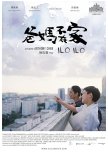
Ilo Ilo is a domestic slice of life film played out in a middle-class family's time of challenges during the financial crisis of the 1990's in Singapore. When the mother hires a Filipino nanny to care for her mischievous son, the move only exasperates an already tenuous situation. The deceptively simple story hides layers of social and familial concerns augmented by a capable cast and an unsentimental approach.Lim Keng Teck tries to hide the fact he was fired from his sales job and is now working as a security guard from his wife Hwee Leng, a clerical worker who spends much of her day typing up termination notices. Their son, Jiale, spends most of his time being disciplined at school which causes headaches for his mother. She decides to hire a Filipino nanny to watch over him with the hopes of him staying out of trouble. Hwee Leng doesn't hide the fact she is suspicious of her nanny, holding onto her passport, and thinks less of her due to her status and background, offering her only the plastic to cup to drink out of. Terry is prepared to deal with her employer's condescending attitude but is unwilling to be bullied by a 10-year-old child which she quickly makes clear to the impish and at times, cruel Jiale.
Hwee Leng could come across as difficult to like. However, upon further examination, she was a pregnant mom who worked long hours all while trying to raise a troubled son. Her jealousy of the nanny as Terry's relationship with Jiale became closer was understandable if not particularly admirable. No one was there to comfort her, and she struggled to give comfort to others. Keng Teck was guilt ridden after he squandered much of their savings in the failing stock market. Though he endured the henpecking of his wife affably most of the time, he did crack and explode as well under the strain. Terry had a baby back home she was trying to provide for by working in a foreign country where she was treated as less than. She was fully capable of deception in order to earn some money on the side, but at heart she was a kind woman who managed to break through Jiale's shell. And it was Jiale who was the crux of this family, the desire to give him a good life, to raise him, to reach him that compelled many of the characters. The little lottery obsessed boy who desperately needed to feel loved and seen, who missed his grandfather, was the emotional center of the story that everyone else orbited.
The financial crisis was manifested through the crashing stocks, a shyster financial guru, suicides, firings, and a general air of desperation around the populace. In this little microcosm we were shown the pressure it put on the family and their relationships to each other. The story skimmed over what appeared to be racial and class disparities, the kind not singular to Singapore. Hidden habits like smoking and drinking, secrets kept from spouses, and typical extended family issues were touched on as well during this time of financial downturn.
Yeo Yan Yan, Chen Tian Wen, and Angeli Bayani made for very believable adults adjusting and adapting to their positions, sometimes in a deeply flawed manner and other times with gentle humor. Koh Jia Ler as the naughty yet fiercely loyal Jiale brought a naturalness and vulnerability to the problematic child.
Despite the title Ilo Ilo, which was the province Terry was from, and despite Terry being one of the most sympathetic characters, the story was not told from her point of view. This was a slice of this family's life and much of her background was left unknown. We saw her struggles, yet in the end it was always going to be about whether this family could pull together during a crisis and overcome their anxieties and shortcomings.
Much as in real life, the mood of this film could swing from tears, to anger, to fear to laughter. I would have preferred for some of the elements of the story to have been expanded on and brought to a close but like many slice of life films, Ilo Ilo doesn't tell us how the story ends, we are left to figure that out for ourselves. We can hope the characters take what they have learned and grow as individuals and strengthen their familial bonds but that is up the viewer in the end to decide. If you are looking for a film about family with all the good and bad that comes along with it, this is a film worth trying.
5/31/23
Was this review helpful to you?
This review may contain spoilers
"A mother who has no right to share the glory of her children"
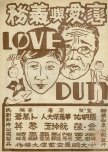
Love and Duty featured another Ruan Ling Yu tragic character who suffered for making a wrong choice. Old films are not forgiving of women who stray so you know going into this story to buckle up and be prepared for a boat load of pain and at two-and-a-half hours, Ruan's character was on a sinking ship of misery.The film covered over two decades in the life of Yang Nei Fan (Ruan Ling Yu) starting when she was a school girl. She and a boy named Li Zu Yi (Jin Yan) begin to have feelings for each other, but before anything can get started her father declares she is to be married to a rich young man in a month. With no say in her own life, she is ignored when she begs her father to not force her to marry at such a young age. The marriage ends up being filled with awkward silences, though intimate enough they have two children. When her son falls into a pond and is rescued by Li the two are excitedly reunited. She invites him to meet her husband which he agrees to. While her husband, Huang Ta Jen, is out with his mistress the two begin to connect emotionally, all being witnessed by the troublesome servant Fox. They begin to spend more and more time together until Li gives her an ultimatum. Either she runs away with him or he kills himself. Because she doesn't have grounds for divorce, she would be abandoning her family illegally. When the time comes for her to leave, Li tells her she can't bring the children which she finds to be devastating.
The affair is covered in all the papers and though the lovers take on new identities it's not long before they are discovered and Li has trouble holding down a job. Meanwhile, Nei Fan becomes pregnant. Tragedy strikes leaving her in an even more precarious position. As time passes the younger generation fatefully becomes entwined leading Nei Fan to make a drastic decision.
Love and Duty was a film thought lost for many decades. A copy of it was discovered in Uruguay in the 1990's and was given to Taiwan and is currently stored at the Taiwan Film and Audiovisual Institute. The copy I watched had one, sometimes two running clocks on the screen as well as the TFAI stamp on the screen. The film is being shared not only for entertainment purposes but also for research and teaching purposes. There was no music accompanying the version I watched.
The performances were for the most part strong, but the acting style felt dated. There was more overacting than I've seen with quality silent films from this era. Ruan Ling Yu was a special actress who sadly took her life at the age of 24. She was quite young here but still conveyed a wide range of emotions first as an effervescent student and then a tired older woman. She also played her grown daughter with Huang.
With some older silent films, the tragic life of a female lead serves as an indictment on society's treatment of women. This story came across as a cautionary tale of what happens when a woman does not do her duty. The audience is repeatedly told that Nei Fan is unforgivable and a sinner with no path to redemption. She is only worthy of heartache, poverty, shame, and pain. "A mother who has no right to share the glory of her children." The film felt longer than 2 ½ hours and could have been trimmed without losing anything important. It was difficult to watch this woman being ostracized throughout much of the film for making a bad life choice. Her husband who spent much of his time with his mistress suffered no ill effects.
Despite it's unforgiving tone, Love and Duty was an interesting historical piece of entertainment and a peek into the troubling moral code of the day regarding women. Ruan Ling Yu didn't star in many films during her short life and many of those have been lost to time. Though not as strong as other films of hers I have seen it was a gift to be able to watch this talented actress in this rescued film.
5/24/23
Was this review helpful to you?
Tony is on fire!
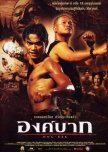
Tony Jaa showed the world the fierce beauty that is Muay Thai in Ong Bak. It helps when watching this movie to recognize that Tony worked without wires, without CGI, and without stunt doubles. Fast, acrobatic, and incredibly limber he did moves that will leave your jaw gaping.Plot? The story scaffolding holding up the film was exceptionally thin. Tony's Ting goes to Bangkok after his village Buddha's head called Ong Bak is stolen by a drug dealer. He meets up with a cousin and his female friend/"sister"/girlfriend who spend their time gambling or fleecing gamblers. The Big Bad loses a ton of money on the fights in his fight club when Ting accidentally becomes involved in them and defeats all comers. Unlike his cousin, Ting doesn't fight for money or gamble, all he wants is the Ong Bak back.
From start to finish, whether it was the villagers racing to the top of a tree or Ting racing through Bangkok leaping over cars, sliding underneath a moving car or flying up a wall (no wires, remember) the action came fast and often. The fight scenes in the club were brutal. There were no holds barred and everything in the room could be used as a weapon. Ting was even hit with a refrigerator! At one point in a different setting, Ting continued to fight with his pants on fire! Most moments of glorious flight ended in an acrobatic dismount. Even the pickiest judge would have given him a 10 for form and style.
I pity the stuntmen who took the hits in this movie, because even with padding there were numerous hits and kicks that were going to leave a mark afterward. Some of the falls were Sammo Hung hitting the ground hard falls.
The director made use of slow-mo as well as showing impressive stunt scenes repeatedly from different angles just in case you missed something spectacular or your eyes refused to believe what they were seeing the first time. Tony trained for several years in Muay Boran, a predecessor to today's Muay Thai, for this movie. To say he was dedicated to his craft would be an understatement.
Grading this movie was tough. Story: C- Acting: C- Cinematography: C Fight scenes/fight choreography: A
Most people know going into a movie like this you aren't going to see great acting or be entertained with a compelling story. This is a pure smash mouth, elbow hitting, shin kicking, pants on fire, good time with one of the most energetic and acrobatically gifted fighters of his time. No wires, no CGI, no stunt doubles. No problem.
5/18/23
Was this review helpful to you?
This review may contain spoilers
"Gossip is a fearful thing"
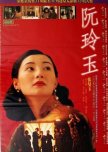
When I watched Ruan Ling Yu in The Goddess I was mesmerized by her performance. It was honestly one of the best performances by an actress I had seen in a long time. Discovering that she had taken her own life at such a young age was crushing. Center Stage was a strange amalgam of documentary and movie about her captivating and tragic life.In one of her best performances, the ethereal Maggie Cheung played Ruan. During an interview she stated she could understand how Ruan must have felt finally going from secondary "wall flower" roles to having serious roles offered to her. Maggie had plenty of ditzy female characters on her resume before this film and afterwards would go on to star in such films as In the Mood for Love and Hero. In much the same way Ruan had suffered from gossip, Maggie also understood the vicious nature of gossip about actors' personal lives
The set-up of the film did not work for me. Ruan was a gifted actress with a sad, yet fascinating life. The back-and-forth between re-enactment and interviews and behind the scenes shots destroyed the rhythm of the story. It was very distracting when the film cut from a disturbing scene straight to an interview with a 90-year-old who knew Ruan. Some of the interviews and speculations did not line up with the timeframe of the story as it was laid out which could make the following scenes confusing. Due to the film's structure, I was always aware that people were acting and it destroyed my emotional connection to what was happening on screen. For me, it would have been far better if they'd shown the interviews after the film along with the behind-the-scenes shots. Having the director yell that he could see Maggie breathing and then show them reshooting the scene and then presenting what was supposed to be a sorrowful funeral felt emotionally false.
When the movie had longer stretches of showing Ruan's story instead of people telling us her story, it was much more meaningful. But just as the joyful or sorrowful moods would crescendo, there would be a startling halt and a cut to the documentary.
Ruan Ling Yu was a stunning actress who lived a tumultuous life, having had three different lovers who contributed to some if not most of her problems. Two of the men were married with multiple mistresses and her first love was an inveterate gambler and womanizer. They cost her dearly financially and personally. Because of the constant tonal shifts in the film there would be no catharsis for the viewer at the end as the gossipy papers and people wrought devastation on her life pushing her into a corner, she saw only one way out of. By the time of the funeral scene, it felt more like a sterile documentary with high-end re-enactments one might find on television.
What kept my attention was Maggie's performance and her insightful interviews. The film also had clips and images from Ruan's films no longer available. I found the business aspects of the film informative, more so when they let the characters show the business dealings instead of the documentary telling about them. There were so many sides of this complicated woman to explore which were not touched on, such as---Why did she always choose cruel, unavailable men? Much of the action took place when Japan had invaded Manchuria causing political and financial upheavals which were barely touched upon.
When Ruan starred in New Women, based on a real actress who had been hounded by the press and committed suicide, it exposed an unflattering and malodorous side of the press. Instead of self-reflection and changing of their ways or going after the men in the film or the studio, they turned on her and hunted her relentlessly, plastering what they wanted to about her private life in their rags. I felt the film let me down with explaining the ex-lover's story and how he was legally tied to her. Born a wealthy man, his family disapproved of Ruan, the reason he gave for not marrying her. He burned through his money gambling, then turned to Ruan to support him. When she tired of dealing with him, she broke it off. They had never been married and yet he sued her for support and later for adultery. The last lawsuit seemed to be the final straw for her along with the cruel gossip.
The film's stuttering style failed to affect me emotionally. Which is a shame because I have been quite curious about this talented woman. Ruan Ling Yu's life was more dramatic and heartbreaking than most of her films. Though Ruan had a couple of female friends, an adopted daughter, and at least one lover at any given time, she seemed utterly alone and vulnerable. She was no match against the power of the poisoned pen and wagging tongues in combination with her devious ex at the young age of 24 or 25, especially during a time of crisis for her country. Dying at the pinnacle of her career caused Ruan Ling Yu to become a screen legend. In her suicide note she wrote that she was not afraid of death. "My only fear is the malicious gossip." Nearly one hundred years later too many young entertainers are still dying because of malicious gossip. Gossip truly is a fearful thing.
5/9/23
Was this review helpful to you?
This review may contain spoilers
"The sword is the soul...Evil mind, evil sword."
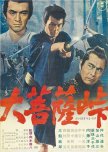
The Sword of Doom opens up a flood gate of ethical and individual responsibility discussions when a samurai with his own code ran afoul of just about everyone else in the movie. Upon close examination, many of the characters deriding Ryunosuke for being a cold-blooded murderer should more closely have examined their own actions. But in the end, with the question of "Am I the jerk?", Ryunosuke should have spent more time on self-reflection.Near the end of the Shogunate different groups were vying for power. Seemingly apart from the political upheavals, a grandfather and granddaughter climb a mountain where there is a Buddhist shrine. As the grandfather is praying for death, Ryunosuke appears and cuts him down. A thief racing by him down the path eludes him and later finds the granddaughter weeping.
Ryunosuke was scheduled to spar with Utsuki Bunnojo. Hama, Utsuki's wife, comes and begs for him to allow her husband to win to save his and the family's reputation and to keep the leadership of the Kogen school intact. Ryunosuke tells her, "A swordsman prizes his skills like a woman prizes her chastity." If she is willing to set aside her pride, he will, too. When her husband finds out she slept with his opponent he hands her a letter of divorce and seeks blood. "This is no match. It's a duel!" proclaims one onlooker. When Utsuki uses a deadly illegal move, Ryunosuke ends the match permanently. Utsuki's clan ambushes him on the way out of town and he slices his way to freedom. Having nowhere else to turn Hama follows him.
After a time, Ryunosuke takes the name Yoshida and joins a group of ronin who help to prop up the Shogunate by assassinating anyone considered an enemy. Bunnojo's brother Hyoma trains at Shimada's school run by Mifune Toshiro. He wants revenge on his brother's death but knows his skills are not nearly good enough to defeat the deadly ronin. Along the way he meets the granddaughter, Omatsu, training at a flower school. The thief with a heart of gold, Shichibei, has cared for her since they met on the mountain.
Yoshida's unshakeable confidence is shaken along the way. That's what happens when you see Mifune Toshiro in action! His vacant gaze falters and fear creeps into his dark eyes. It is one thing to be a ruthless killing machine when you know no one can defeat you, it's quite another when you discover someone with superior skills. Up to this point he might have been able to explain his actions, but he begins to commit murders that cross the line and the invisible guilt cuts into his heart. Eventually, he comes face to face with the consequences of one of his actions and he completely snaps with the guilt manifested visibly.
On the mountain was he simply answering the old man's prayer to die or was he just in the mood to cut someone in half? Though Ryunosuke's actions were despicable when he made the deal with Hama, for him it was a business deal based on his own unflinching code. Completely outside of a normal ethical perspective but perfectly acceptable to him. He would blame her for Bunnojo's death unable to see that his lack of compassion and political foresight set his downfall into motion. No matter how angry and hurt Bunnojo was, he behaved dishonorably during the match and paid the price. His clan was in the wrong for ambushing a single man. At least according to the code of samurai movies, men died in duels all the time. The band of assassins he'd joined also showed that there was no honor among them. A man's character was revealed in and through his sword. Only Shimada fought to remain honorable throughout the film even as he guided Hyoma. Surprisingly, the thief Shichibei showed more honor than many of the samurai. As time went along, Ryunosuke's mental health deteriorated. Never one to show emotion, maniacal grins began to creep onto his face. The ghosts of murders past cried out to him sending him over the blood-soaked edge.
Ryunosuke was not a character you could like or even admire. Nakadai Tatsuya's performance was compelling as Ryunosuke's sanity shattered sending him down a path of no return. The sword fight choreography was better than average for the time, bloodier than average as well. There were a lot of misses but given the number of opponents dancing about that could be forgiven.
The framing and filming of the shots was beautifully done in black and white. The music also fit the mood. At two hours, it could feel long at times, but overall was engaging.
The Sword of Doom was perfectly titled. The blade not only signaled doom to his opponents but to Ryunosuke as well. The film had a Shaw Brothers type ending with a freeze frame during the action. Was it a cliffhanger for further storytelling in a future movie? Many characters still had story left to live. Yet this was probably a perfect ending for the swordsman who had suffered his final break when karma came calling. Not a perfect movie, but an entertaining and action filled samurai film that asked a person to look into their own soul as well as another's for "The sword is the soul. Study the soul to know the sword. Evil mind, evil sword."
5/4/23
Was this review helpful to you?
This review may contain spoilers
"It's easy to cause a problem, but it's difficult to handle one"
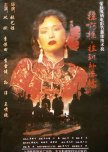
Director Zhang Yi Mou and Gong Li explored the opulent and violent lifestyle of gangsters in the 1930's in Shanghai Triad. The film had many of Zhang's trademarks-lush cinematography, stylish sets and costumes, and moody lighting. He also made subtle criticisms of political power structures without directly criticizing the current regime.Gong Li was gorgeous, expertly styled with luxurious dresses and bold makeup and hair, far removed from her dressed down performances in other Zhang Yi Mou films like Ju Dou. She played Bijou, the old triad boss' mistress. She was the Queen of Shanghai and the queen of this film as well. Most scenes focused on her because the men and the camera could not stay far away from her charismatic aura.
Yet it is not through her eyes we view this story. A fourteen-year-old boy comes to Shanghai to work with his uncle who is one of Boss Tang's men. By virtue of being a Tang, Shuisheng is deemed worthy of being given a job. On his first day he witnesses a drug deal and a murder. His Uncle Lui assigns him to serve the temperamental and cold Bijou. Shuisheng is completely out of his element having never seen a lighter or phone before. The triad has many unwritten rules for behavior that he must learn fast.
Shuisheng rarely speaks yet through his expressive and innocent eyes we are witness to his fear, horror, and contempt for the people around him. Boss Tang believes that a woman's worst problem is not worth his time but a man's smallest one is. Bijou is as much a slave as Shuisheng, regardless of how well dressed and pampered she is.
By Shuisheng's fourth day in Shanghai he is already fleeing the city with the Boss and Bijou after an assassination attempt on the boss' life. They travel to a remote island and are served by a widow, Chihua, and her nine-year-old daughter, Ajiao. At first Bijou does nothing but whine about being bored. Soon she and Shuisheng settle in with the widow and Bijou reveals that she had once been a poor country bumpkin, too. Disturbingly, Boss Tang and his trusted cousin both see in Ajiao, a replacement for the aging Bijou.
Much like Curse of the Golden Flower, by day 7 there would be far fewer people boarding the boat home. Powerful men, regardless of their title or era, tend to be ruthless to those who have shown disloyalty or are no longer of any use. They don't share power or show mercy.
The film was nominated for an Academy Award for Best Cinematography. The cinematography was stunning and not even Zhang's best in my opinion. Shanghai was shown in bright garish light and colors. The island with regular people on it, unaware of the danger around them, were shown in soft muted colors and light. Only Bijou's vivid red lips and flashy clothes stood out in the gentle setting. Gentle setting until it wasn't.
Gangsters were not shown in a romantic way. They were shown as the violent criminals that they were. Bijou could be brash and unlikeable, a country bumpkin who had clawed her way into a more lavish lifestyle. Unfortunately, she was not cunning or lucky, both of which you needed to be to survive and move ahead in the vicious world she lived in. She still had a heart and a conscience which were not the necessary weapons needed to be a triad boss' moll. Shuisheng's innocence was irrevocably destroyed with his survival and soul hanging by a thread. As in other of Zhang's films, there was no fighting the one in power, it was a futile and fatal task.
Shanghai Triad was bleak and relentless, allowing only brief moments of sunshine through the darkness. With the exception of Shuisheng, who was a moldable ball of clay, there was no one to truly cheer for. Nearly every character had a menacing plan. I found the story gripping but also emotionally exhausting. Gong Li's sensual and intense performance was one of her most compelling and a persuasive reason to watch the film. As much as her performance glowed, the film's glimpse into the cruel criminal world though beautifully acted and filmed was about as appealing as the corpses left behind by Boss Tang. For me, this is a film worth watching but I would not have the heart to watch a second time.
5/2/23
Was this review helpful to you?
This review may contain spoilers
The sound of madness
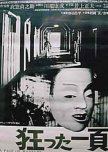
A Page of Madness blurred the lines between sanity and insanity, fantasy and reality and wrapped it all up in a surreal box with a demented bow. A silent movie from 1926 with no intertitles, it could make trying to comprehend the mad hatter's box of discord challenging, yet with stellar performances and an absorbing experimental vibe it is worth making the effort.Director Kawabata was short on money but long on imagination. With the help of the actors who painted sets, took pay cuts, and slept on the floor he was able to finish the film. Due to only having 8 lights to work with, the walls were painted silver to reflect as much light as possible, which also gave the film an otherworldly appearance. Thought lost for nearly 50 years, Kawabata found a copy in 1971. He set new music to it and re-released it. The film is now shorter than the original. While I don't know what scenes are missing, the story seemed fairly complete. There has been debate whether originally a narrator guided the story for the audience or not. I have to admit I would have liked more clarity with the conversations between the father and daughter.
It does help to understand the framing for the story. A retired sailor is working at an asylum as a janitor because his wife is a patient there. When he was away, their child drown, sending his wife's mind down a slippery slope until she was sent to the asylum. It's unclear whether he stays close by due to a sense of loyalty, love, or guilt. Their surviving daughter is engaged to be married and comes to visit her mother. Afterwards the janitor determines to break his wife out of the facility. Whether the reason is he fears his daughter's in-laws would object to the marriage if they found out her mother had been committed or because he can't bear to see his wife behind bars is not spelled out.
The film begins with an elegant dancer on an elaborate stage with a giant spinning ball behind her. Momentarily we discover the stage and costume are all in her mind as she swirls faster and faster to the rhythms of a torrential rainstorm. Kawabata used nearly every camera trick available to him to display the chaotic spirit of the patients' troubled minds. Overlays, sped up frames, side-by-side, upside down shots, elongated faces, and twirling fades, nothing was left out of his bag of tricks. The actors took over where the director left off as they laid bare a wide range of disturbed emotions---vacant stares, mumbling, hysterical laughter, frenzied behavior, and angry outbursts. The combination of film skills and acting made for a fantastical experience as current behavior, memories, hallucinations, self-deception, dreams, and fantasies cut back and forth, eventually blurring the lines between time, reason and madness.
The janitor who was our guide began to show his own mental cracks leaving you wondering if he was real or one of the ghostly figures in the hall and garden. Or was his sanity slowly giving way to madness as well? The inmates appeared to share their delusions on occasion, begging the question…what is real? The patients seemed to see the dancer in her elaborate costume as she entertained them. The object of one of the janitor's violent fantasies bowed to him at the end of the movie as if he was indeed the man's son-in-law just as in the delusion. Objective and subjective views of reality crashed into each other and became inexorably tangled with each passing minute.
Watching the film, I had to wonder about mental institutions at the beginning of the 20th century. How much did isolation, boredom, low expectations, and no real therapy magnify the problems patients were experiencing? Human interactions were kept to a minimum. History shows that many people ended up institutionalized for being different or suffering from depression, postpartum issues, or in the case of women-being difficult.
Circles and round objects were utilized visually several times-the giant spinning ball in the dance sequence, the wife's focal point button, spinning tires, and spinning film frames. Like the twirling circles, sanity and insanity rapidly rotated until illusion and reality overlapped for the fragile yet resilient human psyche and spirit. When the wife refused to leave the security of her barred home, she showed that the mind can be a far more powerful prison than a physical cage.
Like the story itself, I found the film fascinating and infuriating, deceptively simple yet enigmatic. Built around strong performances and creative storytelling, Kawabata's strange experiment succeeded for me.
5/1/23
Was this review helpful to you?
This review may contain spoilers
Where everybody knows ye olden name
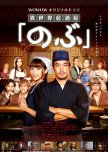
Isekai Izakaya Nobu was a sweet drama featuring a wide variety of Japanese bar foods. It was very similar to the Shinya Shokudo series if the chef had been serving patrons from a medieval world with two moons that never waxed or waned differently.The classically handsome Otani Ryohei as Chef Yazawa and his Girl Friday, Takeda Rena as Senke Shinobu opened Nobu and discovered their door led to an alternate world named Aitelia, where apparently the only thing the locals had to eat was wurst and potatoes. There was a small effort to insert some German words in the first episode, and all of the characters had Germanic or English names. Everyone was badly dressed like they were going to a medieval fair, complete with blonde or red wigs.
The locals were dutifully dazzled by things like clean drinking water, beer on tap, glass mugs, and a chef's knife. More so, they yelled and screamed and emoted with every bite of flavorsome food that was offered to them. I suppose if your entire diet consisted of the same boiled food every day, and hopefully the makers of this drama were not implying that European food was that awful, fried chicken would be a reason to rejoice. They tended to lay it on thick in every episode. Despite it being a decent sandwich, I refuse to believe that discovering an egg salad sandwich was a rapturous and life changing event. Opinions may vary.
The regulars included Hans and Nicklaus, two guards of the city along with their boss, the capable Bertholdt. City worker Gernot enjoyed his Pasta Neopolitan (gonna have to trust the Japanese about spaghetti with ketchup) while the local clergy used whatever excuse he could find to join in with a glass or three of sake. The three warring water guild members became fast friends when Chef showed them the glories of eating eel. Of course, no story is complete without a villain and the head of the city council made an appearance to threaten everyone. Could good food and beer conquer all and save the day and the girl?
As fun as the drama could be, the acting was rather weak and campy. It took some time for the story to gain any traction beyond, "Wow! This is a taste explosion in my mouth! How did I never know that salted fish guts was so amazing!" How or why Nobu crossed worlds was never explained. Most importantly, I'm curious how Chef exchanged the Aitelia money to pay his bills in the real world. Did the beer vendor accept foreign, very foreign, gold coins without asking any questions?
The majority of characters were very likeable and most of the food was appealing. Overall, Nobu was an easy and relaxing watch. To quote Yentl, "And though there's nothing much to challenge your mind here, who cares when the food's so delicious?" Nobu might not be a grand destination, but as a quick trip into a pub to relax and have a tasty meal and conversation, it wasn't a bad diversion.
4/9/23
Was this review helpful to you?
This review may contain spoilers
Monstrously bad
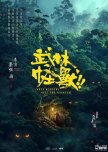
Kung Fu Monster is an uneven comedy that fails with the comedy more often than not. It also fails to live up to its title with very little monster or kung fu.The beginning of the film is all over the place narrative wise, making it very hard to keep up with who is who, especially when some of the faces will never be seen again. To top it off, it's not told chronologically so you just have to go with it until later on when flashbacks explain what happened and to whom, although those events aren't in order either. They leave it to the viewer to figure out what happened. Basically, a group of bandits and rebels gather together to steal the reward for the capture of the Imperial Secret Policeman Si Hai (Louis Koo) who released a furry monster with big eyes that looks a lot like a gremlin from a secret jail because he couldn't train it to be a killer as the evil Eunuch Yehe wanted. He also sprang Bing Bing, the beautiful incarcerated daughter of an executed man. Basically, in for a penny, in for a pound. He's ultimately caught and encased in a coffin to be sent back to the eunuch. Meanwhile, the group of miscreants plan to steal what they think is silver in the coffin by staging a trap at an abandoned inn. All but Bing Bing are furious when it turns out there's no silver, only the wanted policeman. Not a problem, there's a bounty on his head and they are prepared to turn him in. When the furby shows up, I mean monster, now they can collect 30,000 more for it. This being a movie short on logic, of course they change their minds and decide to help, especially when there isn't another choice as the eunuch closes in on them.
There's almost no kung fu, there's a little magic fu, but not much fighting at all. Near the end of the movie there's finally a little monster kung fu, but that's a generous interpretation. So, if you are looking for some good fights, this isn't the movie. They even rip-off the Hulk's funniest scene with Loki from The Avengers movie.
The only thing that actually made me laugh was an officer named Detective White-browed Fei whose white brows were removable. Even when being used as a practice dummy for the gang's knives he was insisting on martial arts decorum. How funny you think the movie is depends on how well you like slapstick and apparently I have a very low tolerance for it. I also have a low tolerance for lots of random events happening just to have something moving the story along.
I found the movie to be too frenetic, jumping from mood to mood. One minute a monster is recklessly charging through the inn, the next there's a romantic dance scene, then death is on the line. There wasn't remotely enough time to develop any of the characters. Most of the actors did the best with what they could for their thinly drawn characters. Zhou Dong Yu gave the most complex performance even though her character was initially very annoying. Louis Koo looked as if he was thinking, "What has happened to my career?" The CGI monster was not the greatest even though it was supposed to be adorable given that it cooed whenever it was onscreen. A "cute" monster doesn’t draw me in unless they give me a reason for it to. It would have also been nice if they'd explained the presence of monsters in the late Ming Dynasty. World building matters.
Kung fu and monsters are two movie genres I enjoy, but this movie was the dumbest and most chaotic movie I've seen in a while. Honestly, the outtakes were better than the movie. Kung Fu Monster should have been fun, but I found myself sympathizing with Louis Koo---someone get me out of here!
3/7/23
Was this review helpful to you?
This review may contain spoilers
"You live, I'll live. You die, I'll die."
The Lady Hermit is a rarity in the kung fu world. Its two main characters are both female fighters. In this movie, Cheng Pei Pei, much like she did in "Crouching Tiger, Hidden Dragon", has to train a headstrong younger female. And also a rarity, even though Lo Lieh was a good guy and training with the two women, it was the women who faced down the Big Bad in the finale instead of leaving it to a man to handle. The main character throughout is actually the one in the title.This is a dream casting for me. I loved the chemistry between Cheng Pei Pei and Lo Lieh in 1968's Golden Sparrow. They still had a good chemistry in this one. Leng Yu Shuang, aka The Lady Hermit, has been recuperating in hiding after nearly dying from the wounds inflicted by The Black Demon (Wang Hsieh) three years earlier. She and Chang Chun have a friendly relationship but he clearly wants something more from the maid at the escort service. Along comes a hot-headed martial artist with a whip, Cui Ping (Shih Szu) who's looking to make a name for herself and also wants the legendary Lady Hermit to train her. The Lady Hermit has to rescue Cui when she ends up surrounded by a sea of sword carrying bad guys. The Black Demon likely had to put a help wanted sign out after Leng finished with them. Cui's actions lead to Leng's whereabouts being known and the two women go on the run. Leng relents and trains Cui and later Chang when he shows up. When Cui sees a close moment between Leng and Chang she storms off in a jealous fit to take on the Black Demon herself. Fortunately for her, Leng and Chang follow her as there are enough baddies for everyone to take on, in the race to reach the Black Demon's lair and the evil martial artist with the ugliest of rodent fingernails.
The Lady Hermit took its time developing the relationships between the three main characters. And though it's said there was a love triangle Chang only had eyes for Leng. Cheng Pei Pei had an intense and graceful charisma as the noble warrior for justice. Her expressive face draws you into her story and makes you believe her. At the ripe old age of twenty-five, Pei Pei was near the end of her tenure with Shaw Brothers, Shih Szu at eighteen was just rising in the ranks. Shih's performance depended on a lot of pouting which could wear thin at times. Lo Lieh was striking in one of his good guy roles before being relegated to villains. It wasn't often he played the romantic lead and was able to utter lines like, "You live, I'll live. You die, I'll die." Wang Hsieh as the Big Bad had little to do until the end when he had to wag his nasty fingernails and battle his fierce feminine rivals.
Though most of the fights were sword-fights or with a whip, people died in a variety of gruesome ways. When Lady Hermit said she wanted an arm, a leg, and a head, she was being literal. Objects like plates and chopsticks became imbedded in people's heads. You'll think about bamboo skewers differently after watching this as well. For 1971, the fights were decently fluid and dynamic.
The sets were top quality for SB, both on the sound stage and outdoor sets. Some SB movies had what were obviously disposable sets suitable for throwing opponents through, these sets were more substantial. A rope bridge was a nice touch especially when you knew someone was going to cut it. The dummies falling into the river below though obvious added depth to the scene. If the falling dummies added depth, a tall temple that had to be climbed added height. Some costumes were better than others. No gold or silver lamé, but the upper tier minions wore badly ornate gold headbands.
The Lady Hermit took the time to develop the three main characters enough for you to care about them and though there was a love interest, it wasn't the focal point of this movie. Like her male counterparts, The Lady Hermit was a lone warrior who liked to be alone. If you are a fan of old martial arts films this is definitely one to try. I enjoyed this film, as much for the chemistry between the characters as for the fighting and in these old films that is almost as rare as a female warrior who is able to fight her own battles and doesn't die a bitter death at the end for breaking with tradition.
3/7/23
Was this review helpful to you?
This review may contain spoilers
"I guess you're smarter than you look"
Big hitter ahjussie, Ma Dong Seok, returned as Detective Ma in this old school smash mouth action film. This time he took on a Big Bad who had been kidnapping and murdering Koreans overseas. Strap into your seat and brace yourself because with Ma at the lever it was going to be one wild ride!The story begins in 2008 after the turmoil of The Outlaws. Detective Ma and his boss, Jeon Ill Man, travel to Vietnam to pick up a Korean crook to bring back home to repatriate. Ma's not buying guilt as his reason to want to return home and before you can throw a 1-2 punch Ma and Jeon end up neck deep in bodies. The blood-soaked path quickly leads to the murderous Kang Hae Sang as the Big Bad in charge. Before long good guys and bad guys are headed back to Korea with the action never slowing down.
Though there are some blood spurtingly, bone crunching, gorey battles, especially when Kang Hae Sang is around, Ma's brand of humor always lightens the mood to keep the movie from becoming too dark. The story is well paced, never allowing your attention to stray. A few familiar faces from the last film return to help Ma out in this one and provide a punching bag when needed.
There are plot holes and some parts of it are ridiculous. Despite that I literally laughed out loud on numerous occasions. It could also be gruesome, I had to close my eyes during one of the more vicious fight scenes as well. Ma Dong Seok is so charismatic that he owns every scene he is in. He is pure joy to watch saunter and put the beat down on baddies. When asked if he wants to split some stolen loot down the middle, without making it sound cringey, he replies, "The middle of who?" Son Seok Koo made for a properly ruthless baddie who never met a person he didn't want to stab. At times he seemed as unstoppable as a T-1000, until he was confronted by a Ma-10,000.
The Roundup might have been predictable, but so is a rollercoaster. I don't mind knowing where it is taking me as long as it gives me some thrills, laughs, and excitement along the way. In this, The Roundup did not disappoint.
2/16/23
Was this review helpful to you?

This review may contain spoilers
"Everyone wants to be with family"
If I thought the original Monster Hunt was a fevered sugar dream, Monster Hunt 2 said, "hold my soda." The first Monster Hunt movie had plenty of death and some monster gore. MH2 replaced the darker elements with more cuteness and bodily function jokes. MH1 threw as many movie themes as they could at the screen to see if something would stick. MH2 decided to not develop or continue most of the mysteries from the first movie and just went with "Ohana means family" to quote Lilo and Stitch.MH2 begins after new couple Song and Huo left baby squid monster Wuba in the Monster Realm for his own good. In their gender reversal of roles, Huo continues to berate Song as the woman ever since he was pregnant with the radish monster. Song, despite his use of his father's sword in the previous film, is still pretty useless in battle and suffering from postpartum depression. Song and Huo have some second thoughts about leaving Wuba, especially after watching a mother monster and her child after their capture by the Monster Hunter Bureau. Even in captivity the family is happy to be together.
Taiwanese actor Tony Yang plays the helpful head of the Monster Hunter Bureau. He confirms that Song's father disappeared 10 years ago and that wraps up everything about that mystery for this movie. I guess they are saving the discovery of the father for the next one. Song and Huo decide to find Wuba using the mystical method of the MHB. Fortunately, the little fanged tooth monster prince is nearby.
They lucked out because after they left the little radish in the monster realm, the monsters had a rousing Bollywood number crashed by bad monsters after Wuba. The little guy ended up on the run and back in the human realm.
You know there's not enough story when the majority of it is spent on veteran actor Tony Leung Chiu Wai instead of the main characters and dangling plot points from the first film. Despite his film pedigree he fully committed to his role as gambling scam artist Tu who uses monsters to help him cheat, often while he wears outlandish disguises. Aside from a long list of creditors and scam victims, he was also troubled by a love interest he owed money to as well. As movie coincidence would have it, a hunted Wuba is saved by BenBen, Tu's monster partner in crime. There were numerous scams and colorful chases through the businesses and towns, leading the story nowhere. At first Tu is only interested in using Wuba to pay off his debts but even a child could see the redemption story coming from a mile away.
Song and Huo are finally reunited with Wuba, Tu seemingly abandons them, and the real villains reveal themselves which will not be a surprise to anyone. Another story that gains no traction in this film is Wubo's royal blood and how he is supposed to unite the human and monster realms. He also doesn't drink blood in this one as he did in the previous film.
The theme that is repeated ad nauseam is that sometimes parents have to go away to better provide or protect their children but that they always miss them. "There's no greater pain than being separated from family." "Everyone wants to be with family." Perhaps it's because some parents have to leave their children to go elsewhere to work to provide for them, but whatever the source, the film makes sure everyone gets the emotional thrust of the writing.
The costumes and sets were well done, looking almost steam punk in design. The CGI was much improved, the strange monsters combined perfectly with the live action and the green screen use was seamless. All the money thrown at this one after the first film raked it in definitely showed up on the screen. The monster realm's lavender covered tall rock formations were beautiful. Also, both Tonys gave a bit of acting gravitas to the film.
MH2 was an extremely colorful, fast paced, bouncing, spinning, spitting, place holder until the 3rd film inevitably comes out and hopefully answers the questions asked in the first film. Aside from reuniting the little human/monster family and possibly adding a couple of new characters, nothing really happened to forward the story. Though gentler in nature that its predecessor, it lacked the sort of impact that would make it memorable. MH2 was a frothy lesson in style over substance and a sinfully sweet exercise in treading cotton candy until the real story shows up.
2/13/23
Was this review helpful to you?


