

 148
148 438
438 16
16 2
2 6
6 3
3 8
8 10
10 3
3 13
13 1
1 1
1 1
1 1
1 2
2 7
7 9
9 5
5 9
9


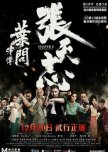
Cheung Tin Chi had been working for Yuen Wah and Tony Jaa as muscle for hire with a code. He earned enough money to open a small store under his apartment. Fate puts him in the path of Julia and Nana who are running away from Tso Sai Kit who runs the local opium den. Cheung protects the women but makes an enemy of Kit. Soon he will be working with Julia’s brother Fu who has a bar that caters to Westerners. He also comes into contact with Kit’s sister who is trying to convert their gang into a legitimate business and Owen Davidson, a giant of a man who runs an upscale restaurant and is a philanthropic businessman or so he would have people believe. Soon Cheung is in a battle for not only the lives but the souls of the people on Bar Street.
Master Z was a by-the-comic-book interpretation of history. Bar Street was pristine and gleaming, far too perfect looking. Cheung’s son even idolized Black Belt/Batman. The villain was bald, white, and enormous, similar to Daredevil’s Kingpin. You know he was a villain because he ate steak which is code for barbaric, I guess. Michelle Yeoh’s complicated Triad boss showed that the Chinese can clean up their own messes when she disarmed her drug dealing brother. But it would take a team effort to defeat the foreigners. The dialogue could be heavy handed and some of the supporting characters weren’t very strong actors but fortunately, Zhang Jin was captivating to watch even if his character was thinly drawn. Michelle Yeoh added some movie star cred to the cast and gravitas to her elegantly lethal character.
Since this was an Ip Man spinoff I expected good fights. Some of them were. Zhang Jin actually practices martial arts so that’s usually a good start. Yuen Woo Ping had to dip back into his Shaw Brothers days and bring out the wires. I don’t mind a little wire-fu, but it has to flow naturally. In a street fight as Cheung and the bad guys flew up and down the buildings awkwardly, all I could think about was the epic building fight from Chocolate (2008) with Jeeja Yanin sans wires. Much of the wire work in Z was not orchestrated well. To quote another superhero, “Jarvis, just skip the spinning rims.” Dave Bautista beating a good guy like he was using a paddle ball was another over the top stunt but showed the big man was a super bad guy. Zhang Jin was fun to watch and his moves were smooth, confident, and fast. And I will never tire of Michelle Yeoh being a badass whether hand-to-hand or with a sword. I wish Tony Jaa had been able to cut loose, but this wasn’t his movie. Kung fu movie alum Yuen Wah made a welcome guest appearance. They had plenty of veterans on screen and the excellent Yuen Shun Yi choreographing the fights. Most were well done except when they completely defied gravity in less than fluid manners.
Master Z was entertaining even when it lacked nuance. Cheung Tin Chi and his new Bar Street family made a competent addition to the Ip Man series. The grand fight between good and evil when Cheung finally regained his mojo was what kung fu and superhero movies are made for, especially when the people bond together around the hero to take back their town.
7 March 2024
Was this review helpful to you?
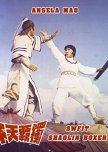
"My sword is getting thirsty"
The Swift Shaolin Boxer, even by 1970’s Taiwanese kung fu standards, was completely bonkers. There were triple crosses, maybe quadruple, I lost count somewhere along the line. And for around 45 minutes I had no idea what was going on and who were the good guys and the bad guys and why it all mattered. The fights were fun though and used a variety of styles, weapons, and accoutrements.Angela Mao worked at an inn that was the headquarters for the bad guys. The translation said rebels, but the rebels were usually the good guys, right? Not when Lo Lieh was the leader and ordering people to be murdered. Whatever their game plan was and it was never disclosed, they were the baddies. The good guys sent Hsieh Hsing and later Wang Kuan Hsiung with letters or lists, something that people were willing to kill for. Ultimately, Barry Chan showed up twenty-five minutes into the movie in a field of flags and began dueling with people. He faced people using swords, staffs, a giant, and kung fu fighting, finally facing Chia Ling. After winning the contest he was allowed to work for the emperor and off to Angela’s inn he goes. Was Angela a bad guy? Was Barry a good guy? The bad guys were terrible at communicating to each other who was on their team because they kept fighting each other.
The fights for the time and place were actually pretty good and for the most part avoided kung fu posing although there were way too many misses. The choreography was over the top though----lots of wire fu, trampoline bouncing, gymnastics, reverse shots, and undercranking. Several people fought in an umbrella labyrinth. Why was there an umbrella labyrinth in the middle of nowhere? Who knows? Not only did the grown-ups fight, but when Wang went into a secret monastic lair in a mountain he had to fight child monks wearing gold sequined outfits with special abilities. Why were their child monks? Who knows? One of my favorite tropes-hopping vampires made an appearance and got the chance to fight, too. There was also a killer flute. Music so bad it kills!
The story became more convoluted and hilarious by the minute, fortunately the fights kept coming. I’m always happy to see Angela Mao and her fierce gaze and quick feet. Barry Chan may not have been the strongest fighter but he acquitted himself well in this movie. And Lo Lieh made every kung fu movie better by being on screen even when he was relegated to only a few minutes at the beginning and then at the end. Did I ever figure out what all the fighting was about? To quote one character, “Who knows?”
4 March 2024
Was this review helpful to you?
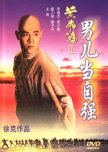
"Who would have thought time was so important?"
Once Upon a Time in China 2 reunited Jet Li, Rosamund Kwan, and director Tsui Hark. Max Mok joined the cast as Leung Foon. This time around Wong Fei Hung had the White Lotus Cult to deal with as well as a deadly Commander all while helping Dr. Sun Yat Sen and his rebellion. And there was a secret list in true traditional kung fu film style!Whether it was led by Lo Lieh in a white wig or Xiong Xin Xin, the White Lotus Cult was always full of crazed and dangerous followers in Kung Fu Land. Based on a real sect, in this iteration, they wanted to rid China of anything remotely Western. You know they were evil because they even threw a Dalmatian dog on the bonfire for being too Western. Wong Fei Hung takes his first train ride to Canton along with 13th Aunt and Leung Foon arriving just in time for the burning and murdering. He also meets Dr. Sun Yat Sen at a medical symposium and befriends him. Along the way they rescue Chinese children who were taking foreign language classes and are on the cult’s hit list. Commander Lan appears to be all helpful and loyal but the audience knows better.
I enjoyed this film better than the first one. The story kept the action and conflict cranked but most importantly we were given two amazing fights between Jet Li and Donnie Yen. Yuen Woo Ping won the HKFA for best Fight Choreography and he earned it. He pushed Jet and Donnie and they excelled. There was wire work to be sure, but these two fast hitters were in their prime and sold every move with fists, kicks, poles, and wet towels. The fight with the cult leader relied too heavily on fantasy wire work, while entertaining, it wasn’t as good as the other two big fights.
The drawbacks for me with this film usually involved Leung Foon. His weird arousal every time he was near 13th Aunt was creepy and I didn’t find him amusing, mostly annoying. I also didn’t need to see three vomiting scenes. Because of the conflation of a cult attack, rebels with a secret list, 13th Aunt wanting WFH to notice her, a British embassy and children to protect as well as a murderous corrupt official to deal with, the story bounced around a lot and also dragged in places.
What drew me to this film and made it enjoyable were the fights between Jet Li and Donnie Yen. Without them the film would have been lackluster. It was fun to watch two kung fu movie legends go against each other in a no holds barred pole and wet towel fight.
2 March 2024
Was this review helpful to you?
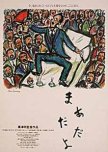
"Not yet!"
At 83, director Kurosawa Akira showed his creative drive was still going strong. However, he didn’t get his wish to die on set behind the camera on this his final film. What he did, was give us a film with a main lead who in many ways stood in for him and his desires and contemplative messages. The film might have been loosely based on Uchida Hyakken’s novel but it felt like watching Kurosawa take his final bow.In 1943 Professor Uchida greets his class and tells them that he is resigning in order to write full-time. His students are devoted to him and tell him they will continue to follow him. They help the professor when he and his wife move into a larger home which later ends up catching fire in an air raid. The couple is relegated to a small shack with a few meager possessions afterwards. The students begin work on a plan to have a better home built for the professor. To boost the professor’s morale when he regrets living the life of a beggar, they hold a birthday party for him called the Not Yet Feast on his 61st birthday. The play on words comes from the game hide and seek when children would yell, “are you ready?” and the response would often be “not yet!” or madadayo. Though provisions were few, the students and professor had a raucous time at the celebration. “Are you ready to die?” “Not yet!”
“Did that just go over their heads?”
Kurosawa’s work came across as uncharacteristically hopeful in this film. The professor was described as pure gold. Eccentric, imaginative, and a prankster, the students loved him. The students were unequivocally kind and devoted to him. Whereas most Kurosawa leads had to face grueling trials in order to have character development, the Professor came fully and nearly perfectly formed. The pessimistic and deeply flawed people were missing as well as the tumultuous inner struggles. Even the students whose names were barely mentioned were deeply kind and loyal. Unlike earlier films with biting social commentary, the historical events in Madadayo were a thin construct that had minimal impact on the characters. The hardships were briefly alluded to and overcome, unlike Kurosawa’s usual criticisms surrounding the war and post war struggles. It was if Kurosawa said, “I’ve already covered that.”
“Congratulations should be short. Eulogies should be long.”
In each of his dwellings, the Professor sat in his doorway and wrote. There were no battles or betrayals, the most tragic event in the film was when a cat went missing. This film focused on the Professor’s interior musings and the interiors of his homes and the banquet halls where the Not Yet Feasts were held. Despite his insistence on an almost hermit-like existence with signs that ranged from “The temple where guests are forbidden” to roughly translated, “Whaddya want?” the Professor was nearly always surrounded by adoring students. When the Professor needed a house, the students made it happen. When the Professor’s cat went missing, they beat the bushes to find the friendly feline. In most Kurosawa films, everyone needed to watch their backs. In Madadayo, it was the nice being nice to the nice, injected with gentle humor and wisdom.
“The flowing river never stops and the water is never the same as before. The bubbles that float in the pools, now vanishing, now forming are not of long duration.”
After I recovered from the shock of realizing that everyone in the film was affectionate and generous to each other, I settled in and enjoyed the story. Kurosawa’s film style veered closer to Ozu’s than his own. Few scenes had his three deep perspective with action going on in the foreground, middle, and background. People were often sitting in a circle on the floor talking. There was a beautifully shot seasonal montage with the small shack going through fall, winter, and spring. The characters could have used improvement. The students’ personalities were never developed and the background wife never received a name. The cat even had a name, but not the wife! No mention was made of what the German language professor wrote that was so popular.
“That will be your calling, the work you put your heart into.”
What Madadayo did give us was different generations respecting and caring for each other. Kurosawa and Uchida were both facing death unflinchingly. This was not the time for fighting, but a time of introspection and peace while also contemplating the legacy of their work. The Professor encouraged the grandchildren of his students to find their treasure and to work hard for it, much as Kurosawa had.
Despite the utter lack of conflict, I enjoyed Madadayo. Every once in a while, I need a film that envelopes me in warmth and laughter. Perhaps that’s what Kurosawa needed as well. I was pleased when I saw Kurosawa’s red glow in the last scene and beautiful, tranquil clouds appeared. Then my eyes welled with tears when I realized it would be the last time for those trademark elements. If someone had asked Kurosawa if he was ready to stop creating or studying film, I think his answer would have been, “Not yet!”
26 February 2024
Was this review helpful to you?
Grab a snack because this show will make you hungry!
Chinese Korean Food might have been a more accurate title than Jjajangmyeon Rhapsody. The two-episode food show with Baek Jong Won not only talked about the spicy black bean noodle dish but also other foods brought over with Chinese immigrants and adapted to Korean tastes.The first episode focused on Jjajangmyeon-how it evolved and became one of the most popular dishes in Korea. A celebratory dish at first, it’s now delivered to pool halls, offices, farm fields, and even boats. Six million bowls of the gooey black delight are sold in Korea every day. If the noodles were lined up end to end they would circle the globe 1 ½ times daily. Originally, a cheap food Chinese laborers cooked it slowly turned into the dish it is today. Chinese “places” as they were called in the 1960’s after a law was passed preventing the Chinese from buying real estate and businesses were quite popular and about the only foreign food available. When the economy accelerated in the 1980’s, Chinese restaurants took advantage of delivery service to expand their clientele.
Baek and other guests showed tips on how to enhance the eating experience. The main rule was to not be embarrassed about your face getting messy from the dark sauce. Different varieties and techniques were explored as well as how to spot an authentic Chinese restaurant. Brief historical moments that influenced where the Chinese settled were also thrown in.
Episode 2 covered Jjamppong. Apparently, one of the great dilemmas in a Chinese restaurant is whether to order Jjajangmyeon or Jjamppong. The evolution of Jjamppong from a mild dish to the torridly hot, “adult” dish was explored. Jjajangmyeon has relatively fewer variations whereas Jjamppong has endless varieties. Foodies take Jjamppong food tours, and new takes on the popular dish and hangover cure are created all the time. Two men have tried 500 Jjamppong places in eight years!
Episode 2 also covered Yaki Udon, Mandu (Korean dumplings), Tangsuyuk (Sweet and sour) and fried rice. Some Chinese immigrants came voluntary, others were voluntold by the Japanese when they occupied the peninsula and needed more laborers at the ports to load up the Korean rice on ships bound for Japan and its army. After the Korean war, Americans shipped large amounts of wheat to Korea which they put to good use in making tasty noodles.
I wish they’d given more credit to the hard-working Chinese immigrants who faced discrimination personally and legally and found a way to succeed. Just as they did in the United States, the Chinese often began restaurants and adapted their food for their new home. The documentary made it seem as if the Koreans’ tastes caused the dishes to be delicious instead of the originators of the food working to make them more palatable for their customers.
I enjoyed watching how different chefs created variations of Jjajangmyeon and Jjamppong, pouring their love and creativity into the popular noodle meals. Jjajangmyeon is a dish that brings happiness as well as satiation and that joy was infectious. If you enjoy food shows, this is one to give a try. Just don’t forget to have a snack nearby.
18 February 2024
Was this review helpful to you?
"Your attitude determines whether you are poison or antidote"
Outrage Coda brought Beat Takeshi’s Outrage trilogy to a fitting finale. Old school yakuza Otomo had been through a lot in the last two films, but he wasn’t through with the Sanno and Hanabishi families. If they’d left him alone, he might have been willing to let bygones be bygones. Too bad the younger yakuza weren’t smart enough to respect their elders, especially when their elder was a no-nonsense killing machine.After the incidents at the end of the previous film, Otomo took powerful fixer Chang up on a job offer and became the boss of his Jeju Island casinos and hotels in South Korea. Otomo and his underling Ichikawa spent their afternoons fishing and hanging out, that is until a Hanabishi yakuza named Hanada showed up. The cocky gangster had unusual sexual proclivities and hurt two of Otomo’s prostitutes, disrespected him, and killed one of his men. The Hanabishi family’s new head was a businessman who mishandled the whole affair with Otomo’s boss, Chang. Nomura, the new boss, was a businessman who’d never been to prison and had no tattoos and lacked the respect of the older executives. He attempted to have Chang murdered as well as ordering Nakata to murder his sworn brother, Nishino. Otomo never needed much of an excuse to go on a murderous rampage and rampage he did, taking revenge on anyone left who wronged him in the last two films and the current one. He made the Valentine’s Day Massacre look like a Sunday school picnic. Retribution thy name is Otomo or “F*ck Off”, whichever you prefer.
The original movie was wall to wall betrayals, torture sessions, and gruesome murders. The second film took the time to develop relationships and explain the treacherous maneuvering. This last film focused on the old guard having had enough of the lack of respect for the code by the younger upstarts. Much of this film focused on Nakata and Nishino’s strategizing in order to stay alive and remove obstacles to their power. This time instead of being everyone’s pawn, Otomo made his list, checked it twice and erased anyone on it. Despite the high body count, it felt lighter in tone than the others. Coda had more humor than the previous two, dark as it was.
Otomo kept to the code until the very end, showing he was a badass who never blinked in the face of death. He and the Habanishi brothers demonstrated why you’d best not underestimate old guys, there’s a reason they were still around in a job where most employees were given the early retirement plan paid out in lead. Outrage Coda wrapped up the trilogy in the only way a yakuza film could be, in blood.
17 February 2024
Was this review helpful to you?
"What are you packing? A toy gun?"
Outrage Beyond is the second in the Outrage trilogy featuring director Beat Takeshi as the ominous yakuza Otomo. In this installment Detective Kataoka is called in to use his connections with the different families to diffuse the Sanno family’s power after they assassinate a police officer.When the Sanno family kills a cop and begins pulling the strings of different politicians, Detective Kataoka goes to work whispering into the ears of disgruntled executives in the Sanno family. The new Sanno head has been ignoring the seniority system and pinching pennies while filling his own coffers. The rival Hanabishi family is reluctant to start a war even with the rumor that Kato killed his previous boss in order to be promoted. Kataoka pulls out his hidden ace when he has former yakuza boss, Otomo, paroled early from prison. So far everyone had been fairly civil in their expensive suits, but made the mistake of going on the offensive with Otomo. It’s all fun and games until someone pulls out the power tools for a good old fashioned gang interrogation.
This film was more about chess moves than gang violence. Like politics, yakuza alliances make strange bed fellows. Both friends and enemies alike betrayed each other. That’s not to say in the final third of the movie that the bodies didn’t start piling up, because they did. As the families went to war, the police sat back and watched. The acting was fairly average for a crime film. Kohinata Fumiyo made for a smarmy and conniving cop who was a little too close to the families. Matsushige Yutaka, Midnight Diner’s hot dog loving yakuza, played the straight laced cop appalled by Kataoka’s deadly methods. Beat Takeshi gave Otomo a world weariness for the yakuza with principles and who was also handy with a power drill. The plot while predictable was interesting though it did tend to drag when the negotiations and puffed chest scenes went on too long.
Outrage Beyond brought plenty of double-crosses, satisfying comeuppances, and even finger mutilation. The big moral of the story is if you want to keep your job as the head of the family, don’t cheap out and not provide a meal for your officers, a well fed exec is a less deadly exec. If you enjoy gangster movies and don’t mind more talking than usual in your crime families, Outrage Beyond is one to give a try.
16 February 2024
Was this review helpful to you?
"Bitterness has its own flavor"
Coffee or Tea was a light hearted comedy about three young men who were at different places in their lives where their dreams were concerned. One had given up on his dreams and life. The second man was enthusiastically ready to bet everything on his dream. The third was swimming in circles with his dream, held back by his relationship with his father. They met up, forged a friendship and business that would guide them all in the same direction and help them each to grow as individuals.Wei Jin Bei is at the end of his rope after his most recent failed business attempt. Unable to sleep, he’s ready to give up on life when effervescent deliveryman Peng Xiu Bing steps in. Peng is going to his remote hometown to begin his own delivery business and takes an extremely reluctant Wei with him. Peng’s village relies on growing tea, but with the depressed prices has lost most of its young people. Peng is determined to reinvigorate the people and town even when he meets with failure. It will take a chance meeting to help turn both his and Wei’s fortunes around.
Peng Yu Chang as Peng was a bright ball of positive sunshine radiating energy on his more dour buddies. Liu Hao Ran played the glum business brains from Beijing transformed by the small village. He often seemed obscured by his floppy hair and large glasses. Yin Fang’s Li Shao Qun had the least development as the rebellious coffee grower who was alienated from his father. The acting wasn’t particularly nuanced, but then again, neither was the story. Along with the business elements there were whimsical animals. What movie doesn't need a talking pig?
Coffee or Tea was a feel good movie about friendship and determination with gentle humor that avoided being cringeworthy for the most part. The film streamlined the story and glossed over the obvious business hurdles as well as the timeline. Most of this could be forgiven as the focus was on the camaraderie of the young men as they healed themselves and their relationships. The film was respectful of traditions and the older generations. At the same time, it also showed that there were times when innovation and new paths must be cut in order to survive as the world evolves. The enduring relationships and new friendships forged proved to be the key to success and reconciliation. While Coffee or Tea could be simplistic and felt low budget, it’s one of those easy movies you can watch if you are looking for a mood lifter.
12 February 2024
Was this review helpful to you?

"Memory, time, and Camembert cheese"
Walang KaParis followed the ups and downs of an artist in Paris. The tropes were strong with this one and the foreshadowing let you know exactly where the story was going if you’ve ever watched a romantic movie before. Still, the actors were likeable enough to enjoy their romance in the City of Lights.JoJo makes his living as a street artist and mime. His unique catch as a painter was to do his work in coffee. He’s haunted by his old paintings of a woman he doesn’t remember. How can he have a heart to share if he can’t remember the one who owns it? One day, a woman named Mary comes up to him and tells him she is the woman in the paintings which he doesn’t believe. She pushes hard for a romance to begin with a reluctant JoJo and for a while it does. Then the real story emerges which is bittersweet. Time would tell if they were fated or destined.
Walang KaParis covered nine years and two continents. Within five minutes I’d figured out the familiar plot. As with other genres, execution is key. This film didn’t add anything new, but the actors had a comfortable rapport with each other, though not sizzling. Each took turns chasing the other and as the song said, “And even if the time doesn’t come that you learn to love me back, just don’t stop me from loving you.”
If you are looking for an easy, cheesy romantic film to watch, you could do worse than Walang KaParis.
8 February 2024
Was this review helpful to you?
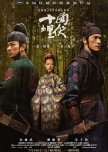
"The wind breezes through without a trace"
House of Flying Daggers was a movie where style over substance wasn’t a failing. Zhang Yi Mou pulled out his magical color palette and bathed the screen with gorgeous deep hues. Beautiful people wore luxurious costumes as they danced, fought, and loved in the kaleidoscope background. This director knows how to hit all my film watching pleasure spots through sight and sound.The plot is fairly simple. With a failing and corrupt government, the underground House of Daggers grew into being. Stealing from the rich and helping the poor while fighting against the crooked officials they’ve earned a target on their backs. Jin and Liu are tasked with bringing down the Daggers’ leader. They suspect the new blind dancer at the Peony Pavilion is the daughter of the recently deceased leader and seek to use her to guide them to the alliance through subterfuge. Jin goes undercover as someone taken with her beauty and breaks her out of jail. The only problem is, “who’s zoomin’ who?”
The thin storyline worked largely due to the commitment of Zhang Zi Yi and Kaneshiro Takeshi in playing adversaries pretending to have fallen for each other, especially when their true feelings begin to trip them up. Their relationship evolves from brutal possession to erotic whispering caresses. Treachery and zealous devotion played out both personally and professionally for a number of people. The twists and turns may not have been earthshattering but they were entertaining. They also showed how little value was put on the lives of the pawns in the game between two powerful forces.
Tony Ching choreographed numerous wire-fu fights with swords and speeding daggers. The battle in the bamboo forest was stunning. Soldiers crawling up and down the verdant trees while also using them as weapons was enthralling. For the most part people were shown full body length in order to observe the intensity of the fights. When the bamboo shatters or impales it was both beautiful and shocking. The singing daggers could bend in flight and bank off of objects to land their targets. While not a fight, Zhang Zi Yi’s dance with the drums was breathtaking and quite memorable. Zhang Jianmin’s dance choreography flowed with power equal to any fight in the film. The percussion ballet was as magnificent as the bamboo one.
Umebayashi Shigeru’s score could be wistful one moment and heart pounding the next. Romantic, playful, traditional and modern, the music enhanced every scene. Zhang’s use of color never ceases to amaze me. Whether in the feminine Peony Pavilion with pink dresses and butterflies or the autumnal trees and falling leaves of the forest, he never neglects the important visual aspects of his films. As mentioned before, the emerald bamboo battle was one of the most iconic scenes from his films.
Mei and Jin’s life and death decisions were made in the sheer elegance and poetry of Zhang’s visual style accompanied by a haunting score. The plot involving both personal and national passions played out in the forests, fields of flowers, and snow. It’s hard to say which was more captivating, I tend to lose my sense of perspective when immersed in Zhang Yi Mou’s world.
3 February 2024
Was this review helpful to you?
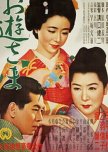
"I never realized how heavy this kimono was"
Love triangles can be problematic, especially when communication isn’t encouraged and everyone is guided by rigid social principles. Two loving sisters ended up in a trap of their own making when society denied them the freedom to make their own choices in Miss Oyu.Shinnosuke has resisted every marital prospect until Shizu’s entourage approaches his house and he falls in love at first sight. The only problem---the woman he fell in love with was Shizu’s older widowed sister, Oyu. Known for her beauty and elegance, Oyu was tied to her late husband’s family and couldn’t leave because she had given birth to the heir. Oyu pushes for Shizu to marry Shinnosuke because she wants to stay near her sister. Before long the three are inseparable. Unknown to Oyu, Shizu announced on her wedding night to her husband that she intended to be married in name only because she knew he loved her sister and her sister loved him. This sisterly sacrifice led to more heartache for all involved, primarily for the sisters.
Director Mizoguchi and cinematographer Miyagawa created a treat for the eyes in black and white. The scenery, sets, and costumes were luxurious. Similar to Kurosawa, he framed his scenes with action in the foreground and background, giving the scenes visual depth and interest. The traditional music haunted the film with melancholy as the characters dealt with their repressed emotions.
Tanaka Kinuyo and Otowa Nobuko were the heart of the film, conveying sisters deeply committed to each. Hori Yuji looked like he just came along for the ride. His immature and passive Shinnosuke barely registered on the screen when the two women were around. Was Oyu truly, passionately, in love with Shinnosuke? As far as the story went, it was difficult to determine what Oyu’s feelings truly were. She kept them neatly tucked. Was she in love? Flattered? Or oblivious to Shinnosuke’s love? When scandal threatened, she set the married couple straight in what their obligations to each other were. What drove Shizu’s need to sacrifice her own happiness and future? What debt could she possibly owe her sister? The writers weren’t telling and the actors weren’t giving many clues either as to why the trio was willing to dance on the edge of a knife where any mistake would lead to devastating scandals and familial reprisals.
Miss Oyu was visually interesting, the three people tragically caught up in a silent triangle of repressed feelings not so much. Tanaka and Otowa did their best to infuse intensity into the story but were confined by the writers and the film's societal norms.
30 January 2024
Was this review helpful to you?
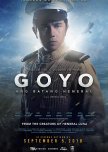
"Why do we always look up and glorify without questions?"
Goyo: The Boy General picked up soon after General Luna was assassinated in the prior film “Heneral Luna”. General Gregorio del Pilar and President Aguinaldo faced another colonizer when the Spanish ceded The Philippines to the Americans. Much of the story took place in Pangasinan during the five months in 1899 when Goyo was stationed there until the fateful battle in the Tirad Pass. I’m always leery of writing a review about another country’s history and revered leaders so this will only be my opinion on the artistic merits of the film.“And what did the Republic do during those five months when its doom was being plotted?”
Over an hour of the film took place when the American forces were quiet and Goyo and his men were hanging out in Pangasinan. Instead of strategizing or training, Goyo spent most of his time trying to romance the lovely and distant Remedios. It scarcely felt like war was looming as there were parades, plays, feasting, and dancing going on much of the time. The people hailed Goyo as a hero due to his past successes against the Spanish. Not everyone loved him for there were those who blamed him and Emilio Aguinaldo for the death of General Luna. Other generals resented his arrogant attitude and Aguinaldo’s favoritism.
“Why are we blindly dependent on heroes?”
The movie didn’t set up any hero worship of Goyo. Using artistic interpretation, The Eagle as he was also known, occasionally had bloody visions from the past and blood-soaked fears for the future along with trembling hands. His military abilities were also sorely tested against the new foe. In one short skirmish with the Americans, sharpshooters picked off his men at an alarming rate causing him to retreat. He was shown on two separate occasions not recognizing gun or cannon fire leaving his people vulnerable. And much of the movie focused on his womanizing. The half of the movie with skinny dipping, women fighting over him, and hero worshipping began to wear thin.
“We don’t need heroes, we need soldiers”
The narration from historical letters showed how ill-prepared they were for war. Most of the soldiers were farmers or laborers. When the Americans advanced, they did so speedily, catching Goyo flat-footed. Lacking in supplies the military and Aguinaldo’s family traveled with little to eat or drink with the Americans hot on their trail. At Tirad Pass, Goyo and his men held the high ground but were unable to capitalize on it for long. Vastly outmanned and outgunned they were quickly overrun yet still able to give President Aguinaldo and the rest of the army time to escape.
The cinematography captured the time and beauty of the country even during the midst of war. The soundtrack elevated the emotional mood of each scene. Actors varied in strength and ability. One thing that stood out was for both countries, many of the soldiers were quite young. The sound could fade in certain scenes making dialogue garbled. But overall, the production values were quite high. The battle at Tirad Pass was especially well shot and choreographed. It’s one of the better Filipino films I’ve watched.
“Self-preservation is the law of God”
The message of the film could be blurred. Much of the film was devoted to Goyo attempting to romance the reluctant Remedio even when his ex-lover strolled into town. It didn’t help his cause that his briefcase was filled with love letters from pining women he’d abandoned. Was it a tragic romance or simply a criticism of the young general? Though the people loved their country and wanted autonomy, the military and Goyo were rarely shown in a positive light. There was no shortage of criticism for del Pilar, Aguinaldo, divisive generals, soldiers who ran away in fear, villagers who refused to help, and those who profited off the Americans. Aguinaldo was especially the target of much ire. Numerous bloody visions hinted that Goyo might not have been emotionally stable. Guilt or simply PTSD for a young man who had seen too much and carried a great burden on his shoulders?
“I’m beginning to believe they are right to call us children”
The narration frequently mentioned that the Filipinos were like children. Lack of solidarity and supplies, military leaders unskilled in strategic thinking, and political self-interest doomed the revolutionaries from the start. Their fight for independence soon became a fight for dignity. Despite the often negative portrayal of the military leaders, many courageous revolutionaries were prepared to die fighting for love of their country and did. It would take another 45 years for their dreams and sacrifices to blossom.
23 January 2024
Was this review helpful to you?
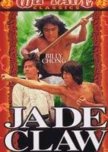
"Tired? Too bad!"
Billy Chong teamed up with Simon Yuen in a thinly disguised Drunken Master/Snake in the Eagle's Shadow copy though lacking the drinking. This time the chosen styles were Shadow Eagle's Claw vs the Double Phoenix Eyes! No secret books or lists, just good old-fashioned revenge for a father's murder.His name was Ah Wen, they killed his father, and they would have several years to prepare to die! Ah Wen knew no kung fu and agreed to work at a dubious kung fu school in exchange for being taught. This male Cinderella never had time to learn kung fu because he was relegated to the never-ending chores in the kitchen. Luckily for him, Chang King Sang, the cook, was secretly a kung fu master who was in hiding from a gang of bad guys. After many “hilarious” encounters, Chang agrees to train Ah Wen. Ah Wen is confronted by the baddies, beaten and questioned, and let loose so that there could be another training montage.
Crystal Fist aka Jade Claw had a paper and worn thin plot. The humor was just as gaunt despite repeated tries to emulate Jackie Chan’s early movies. The strength of the film lie in the training montages and the fights. Three Yuens-Corey, Brandy, and Shun Yi along with Chin Yuet Sang choreographed the fights. The comic relief baddies played by Addy Sung and Brandy Yuen had a cool trick move when they teamed up. Some of the fights and training montages were better than others. The finale when Billy brought his fists to a sword fight was creative. Billy Chong only made around ten kung fu movies in the Golden Age but I always enjoy watching him fight. He was quick and agile and never kept his shirt on for long. Where the movie faltered was in the villain department. Chu Tit Wo was not a formidable or memorable bad guy. Chan’s movies in the same vein had charismatic and high kicking Hwang Jang Lee to bring a proper menace for the good guy to be pitted against. Simon Yuen wore the same scruffy wig and basically played the same character as he did in the other two movies. The wig helped camouflage the stuntman for the more complex and acrobatic moves. I don’t usually compare movies, but when moviemakers go out of their way to copy someone else, it’s going to happen.
Billy Chong brought his mischievous smile and quick moves to play against Simon Yuen’s wise, playful, gray wigged master. Even if his character was a retread from other films, I’m happy after 300+ movies of often being relegated to playing bit parts that the Yuen patriarch finally had a signature role to call his own before his untimely passing one year after this movie came out. Crystal Fist wasn’t a great or even classic kung fu flick but it did have entertaining moments.
2 Jan 2024
Was this review helpful to you?
This review may contain spoilers
Emotionally effecting
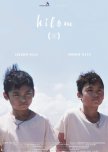
Still was a quietly melodic short film following the lives of twin brothers, Andres and Gael. It showed how children can find joy, peace, and comfort in the smallest of gestures and activities even when confronted with unkindness.Andres and Gael are twin brothers who are tactile and nearly inseparable as they explore the world around them. I could see the constant push-pull in these boys. Separate identities yet close and nearly always together. Despite cruel words from a father and friend, the boys bond remained unbroken. The brothers’ love for each other was great enough to let each one be who they truly were without judgement.
Hilom/Still was short on dialogue and time yet still packed an emotional punch of childhood nostalgia, tenderness, and brotherly resiliency in the loss of trust in those around them.
28 Dec 2023
Was this review helpful to you?
This review may contain spoilers
Drunken style vs Thunderleg!
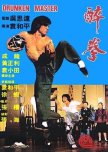
Drunken Master reunited Jackie Chan with much of the cast and crew from Snake in the Eagle’s Shadow from March of the same year. This time Chan played a mischievous Wong Fei Hung who much against his will was forced to be the student of Drunken Master Beggar So/Sam Seed. He was finally motivated to improve his skills and become serious with his training when confronted by Hwang Jang Lee’s Thunderleg!Wong Fei Hung seems to make or find trouble wherever he goes. His exasperated father calls upon Uncle So to train or break the young man before he causes trouble he and the family cannot get out of. At first WFH doesn’t take the training too seriously until he is humiliated by the deadly Thunderleg who considers him unworthy of killing. The requisite training scenes follow along with a couple of test fights before he’s finally able to face Thunderleg in the grand finale.
The beginning of the film dragged with Uncle So only showing up around the 45-minute mark. That’s not to say there weren’t entertaining fights in that time. Chan had a memorable fight with Tino Wong in the market place and then later against his toady in the Wong school. The real highlight was when Wong put the moves on a girl in town and her mom schooled him in kung fu and manners. Linda Lin Ying was a delight to watch sparring with Chan. There were a couple of “comic” scenes and fight scenes that didn’t serve much of a purpose though. The story kicked into gear when Uncle So arrived and showed Wong his weaknesses. A 66-year-old Simon Yuen really found his hallmark role with the drunken master. Still nimble and energetic he held his own against the kung fu clown. Hwang Jang Lee’s Thunderleg was properly menacing and he showed why he was the most feared kicker in Hong Kong. At least he didn’t accidentally kick out one of Chan’s teeth like he did in the previous film!
The best part about movies like this was that there was almost no wire-fu. Utilizing wide angles and long takes you could watch people who actually knew how to do the moves and weren’t faking it with lots of editing and closeups. There was also no kung fu posing. The moves were relatively fast and fluid with each fight showcasing different skills. Yuen Woo Ping and Hsu Hsia provided the fight choreography. Hsu made an appearance as the King of Sticks fighting both Yuen and Chan with, what else, a long stick.
This was not a movie with much plot, not even a secret book or list and nary a rebel to be found. Most people, including myself, don’t worry about the plot much as long as the fights were entertaining and Drunken Master succeeded in that goal. They were well choreographed and shot. Although it had comedic moments it wasn’t over the top slapstick as some kung fu comedies could be. I liked this movie quite a bit better than Snake in the Eagle’s Shadow. While Wong Fei Hung could be cocky and annoying at times, he also faced consequences for his actions propelling him slowly but surely into being a better fighter and human being. Drunken Master ran a little long but the inventive fight sequences by compelling characters more than made up for it.
11/20/23
Was this review helpful to you?


