

 148
148 438
438 16
16 2
2 6
6 3
3 8
8 10
10 3
3 13
13 1
1 1
1 1
1 1
1 2
2 7
7 9
9 5
5 9
9


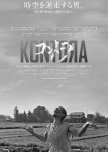
This review may contain spoilers
Not all progress is forward
Shot in black and white Kontora casts a surreal experience over the viewer as a father and daughter seek to heal in the midst of their grief and mend their broken relationship. They are aided by a mysterious mute wanderer who only walks backwards.Sora discovers her recently deceased grandfather's war diary, a journal that details the vicious treatment of student scholars turned soldiers near the end of WWII. He had hidden his "metal arm" deep in the forest and Sora becomes obsessed with finding her grandfather's treasure. Ultimately, she is helped by the mute homeless man and her father.
All three main characters are lonely and lost. Sora seemingly has no friends and only had her grandfather to confide in. Her father has been adrift and bereft since the death of her mother. The vagabond meanders through town in threadbare clothes walking backwards with people staying out of his way. When her father accidentally hits him coming home from a party one night, Sora determines to care for him against her father's wishes.
Sora's cousin, who had failed to become a dancer and returned to town attempted to befriend Sora. Her father, the rich uncle, greedy for more, at first only wanted Sora's house to add to his collection, but after hearing about the "treasure" set his sights on it, further driving a wedge between family members. When the treasure was found the meaning behind Grandpa's words were obvious.
The mute man whether quiet sage or spirit in need of healing, in his own peculiar way helped pull daughter and father together on the quest for the missing treasure. A movie with a smooth glass surface became murkier and more turbulent as the characters dove deeper into their relationships and what they needed. It would take the miracle of working together to fight back to a bright surface.
An odd slice of life movie on coming of age, the power of family and desire for healing, Kontora perhaps ran too long. It could ramble slowly over the roads again and again of the small town and the hills and valleys surrounding Sora's home.
The performances were heartfelt and natural. Newcomer Mase Hidemasa gave an emotional performance as the mute without uttering a word. Marui Wan managed to convey the conflicting emotions of the insolent, independent teenager in search of meaning, relationship, and something beyond the borders of the nearly empty town. The performances were backed up by a forlorn musical score.
Despite a small budget and reportedly being filmed in 10 days, Kontora looked polished and felt meaningful even when it tried a little too hard to be mysterious.
7/25/22
Was this review helpful to you?
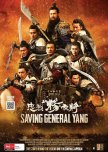
This review may contain spoilers
A man's temperament determines his fate
Saving General Yang is based on the famous story of General Yang Ye and his seven sons during the Song Dynasty. A better than average film that martial arts movie lovers should enjoy.The Yang family's fate was thrown into turmoil when the youngest son killed a rival family's son in a tournament to win the princess' hand in marriage. As the Pan family was demanding justice the Khitan army attacked. Lord Pan was chosen as the supreme commander of the army who took the opportunity to betray General Yang and his men during a vicious battle. Yang was hit with a poison arrow as Pan's troops retreated leaving him and his men at the mercy of the cruel Khitan general Yelu Yuan. Yang and his men were allowed to live in an old ruins setting a trap for his sons. Out of love and loyalty his sons set out with a small band of men to rescue their father. A seer gave their mother a dire warning, "Seven sons will go out, six will come back". Interpreting soothsaying can be tricky.
The cast was huge and with the movie clocking in at a scant 100 minutes there wasn't much time for character development. Director Yu threw in a few flashbacks and enough comments to glean the bare basic characteristics of each brother. The brothers were led by the stalwart eldest, Ekin Cheng. Vic Chou played the supreme archer of the group and Wu Chun played the pivotal 6th brother. Adam Cheng did well as the stoic and loyal general resigned to his fate. Shao Bing gave enough menace to his vengeful general to make him a proper threat. And Bryan Leung ("Beardy!"), familiar to martial arts movie fans, rounded out the male cast as the treacherous Pan Ren Mei. Xu Fan as the General's wife and Ady An as Princess Chai Mei Rong were the small female presence in the movie.
This was not a personality and character driven movie, though stylish, it lacked in substance on occasion. This was bloody battle upon bloody battle as the brothers fought their way into enemy territory and then turned around to fight their way out. A devastating catapult/trebuchet assault and a thrilling archer battle in the tall grass were two of the creative highlights. Even with the modicum of character development I admit to getting choked up in a few scenes.
The costumes, sets, and CGI were all stellar. The battles contained the right amount of gravitas and high stakes. Stephen Tung Wai choreographed some amazing and cruel fight scenes. The brothers were outnumbered in every fight and the choreography showed the brutal reality of close quarters confrontations with sharp weapons complete with heroics and desperation. Wu could lay the family fidelity and heroism on a little thick at times, but given their dire situations and commitment to each other, I could overlook some heavy-handed moments. There were a couple of scenes that didn't work very well, but for the most part the movie flowed and usually at breakneck speed. The OST bordered on over-wrought but for me managed to err more on the side of rousing.
Saving General Yang would have benefited from greater character development, but as a perilous story of 7 brothers facing overwhelming odds to bring their father home, it mostly succeeded. Not everyone will like this movie, but I found it gripping and entertaining.
7/19/22
Was this review helpful to you?
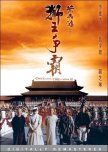
This review may contain spoilers
Wong Fei Hung had to battle a local baddie, a romantic Russian, and dozens of lions all while trying to work out his relationship with 13th Aunt and thwart an assassin. All in a day's work for the martial arts folk hero. This outing for Jet Li's Wong Fei Hung tended to be busy, loud, and unfocused. There were moments of humor and romance, and a few good fights buried within the film.The evil Empress Dowager wanted to impress the foreigners and encourage more martial arts by holding a lion dance competition. Instead of uniting the martial artists they ended up fighting each other in violent dance offs with lions. WFH tried to calm everyone down, but the local oil factory owner kept everyone stirred up. WFH also had to deal with a Russian who had eyes on 13th Aunt. Meanwhile, 13th Aunt worked at getting a marriage proposal out of WFH. She had a cute scene with WFH teaching him some important English words.
If you love violent lion dances, this is the movie for you. There are numerous lion dance fights throughout the movie. The problem with them, is that regardless of all the hidden swords, fire, arrows, and meteor balls, much of the action was hidden under the costumes and giant heads. They ended up in a tangle of costumes and erratic movements.
There were a couple of good fights. Most used quite a bit of wire-fu and advantageous camera angles. Jet Li was in his prime making all the extras distracting. The final lion dance fight was difficult to follow and the climax with the local baddie underwhelming.
Much like the lion dances, the story could be a confusing mess. Jet Li as WFH and Rosamund Kwan as 13th Aunt were fine in their roles. Much of the rest of the cast became lost in the noise.
If you are a fan of this series and Jet Li this is a perfectly watchable movie and much of it was entertaining, especially when Jet fought and we were able to see him fighting. He was quick and talented in his scenes, especially one on an oil slick floor. If you are a fan of vicious lion dances you are in for a real treat, if not, OUATIC 3 might be a letdown.
Was this review helpful to you?

This review may contain spoilers
You can avoid trouble, but you can't avoid fate
Another telling of a Monkey King tale, this time 500 years after the fall of the gods. Wu Kong has been reincarnated into a human form still carrying the revered Bodhi Buddha Relic he swallowed in his monkey incarnation. Be forewarned, Return of Wu Kong is a low budget, poorly told and poorly acted story.Wu Kong, in the form of Shi Sheng, a wanderer who follows his overzealous demon hunting master has no idea of his former life. When the two run afoul of the god Du'er on their way to delivering the relic to the Great Leiyin Temple, Shi Sheng finds himself alone. Shi doesn't know what he is carrying but his diminutive master did. An old traveling companion, Sha Wujing comes to his aid aware he is Wu Kong. He picks up a female demon named Xiao He along the way. A blind Bodhi gives him half of the Monkey King's golden cudgel telling him he needs to find the other half for his memories to return.
Shi Sheng and Sha decide to help some villagers after the sand demons kidnapped a child for their even supper. That story gets set aside when they run into Pigsy, now called Zhu Wuchang. He runs the town where all the fallen gods live as well as the residence of the other half of the golden stick.
If the story to this point wasn't convoluted enough, the writer's said, "hold my beer". I won't spoil anything more, but the story was already messy and turned into a dumpster fire as it went along.
The lack of quality fight choreography showed. Most fight scenes were filmed close up, cut off, blurred and edited with a hacksaw. Or the fights were covered over completely by taking place behind curtains or other items or completely chopped off showing only the results.
This film was obviously low budget. The sets, costumes, and CGI were rudimentary at best. It was at its best when filmed out on the photogenic sand dunes.
Most of the actors were adequate. Louis Fan was the most accomplished actor out of the bunch. He Lan Dou, the actress playing Xiao He, mugged a lot for the camera and it didn't help that her character was written to be either cute or annoying. Most of the characters were vastly underwritten to the point of being akin to photos pinned to a bulletin board.
By the time the final showdown arrived to save the world, I was ready to be put out of my misery. The ending was just as underdeveloped, maybe more so, than the rest of the movie. If you are a Louis Fan fan or a Monkey King completionist, it is watchable-barely. If you've never watched any version of Journey Into the West or any Monkey King movies, this would not be a good one to start with as the makers assumed the viewers would be familiar with the story and glossed over important information. Thankfully, the movie is only 85 minutes long. As the blind sage said, you can avoid trouble but you can't avoid fate, however, you can avoid this movie.
Was this review helpful to you?
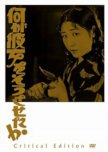
This review may contain spoilers
Life is a path of suffering that leads to death
The old phrase, “If it weren’t for bad luck, I’d have no luck at all,” applied perfectly for poor abandoned and abused Sumiko. Sumiko was thrown from one bad situation to another and another throughout the length of the film.Described as a masterpiece of the proletarian film genre, What Made Her Do It could be a difficult watch. The film was thought completely lost after WWII. A large segment of it was found in The Russian National Film Library during the 1990’s. The first section and last section are lost to the ages, replaced by descriptive title cards.
Young Sumiko was sent to her no good uncle when her father could not find employment and committed suicide unbeknownst to her. Her uncle stole her money and sold her to a circus. She made friends with Shintaro at the circus and they later escaped only to be separated. She ended up in a string of bad situations: a work house, evil employer, work house, evil employer, and ultimately a church home for wayward women which was as bad or worse than any prison.
Every single situation she ended up in was dreadful except for a brief happy one and even it ended in disaster. Exploited, starved, and upbraided, slowly she began to lose her ability to hold in her anger and resentment. When family, the government, and even religion failed her miserably she snapped and the answer came in a blaze of glory when the audience finds out what she did in What Made Her Do It.
What made her do it? The utter failing of society and its brutal treatment of people considered less than. Some may have blamed capitalist society or religion but more often than not, the dark side of human nature for any economic or social level during times of financial collapse or upheaval preys on those considered weaker. In this film, without family or friends, Sumiko had no safety net, no safe shelter from the storm, but she still had enough dignity and fire left to finally take a stand.
Was this review helpful to you?
This review may contain spoilers
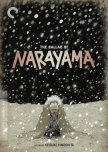
From the moment the film opens with a black clad narrator in front of a curtain you know you are in for a different movie experience. The Ballad of Narayama is a colorful stylized kabuki inspired film that felt more like an elaborate stage play. New backgrounds dropped, scenes faded to black all on a meticulously created stage. A sing song narrator guided the audience through this strange land where the elderly were carried up to the mountaintop to die once they reached the age of 70. The story focused on Orin, a kind, industrious grandmother who was about to turn 70. She set her affairs to order, including finding a wife for her widower son, Tatsuhei. He loved his mother and was in no hurry to carry her up the mountain. His son, Kesakichi, on the other hand, was a greedy, lazy and obviously shortsighted young man who wanted grandma gone. Orin knew that adding to the family meant more mouths to feed bolstering her resolve to do her duty.
The ungrateful grandson created a song about his grandmother and her 33 demon teeth which the villagers picked up on and sang throughout the film. Orin, embarrassed to meet the god on the mountain with a healthy mouth took matters into her own hands.
As gracefully as Orin was facing her end, Mata, an elderly neighbor steadfastly refused to take the journey up the mountain. His family kicked him out cutting him off from their food supply.
Eventually, the new year came. Orin and her son were given the traditional rules.
1) Don’t talk on Narayama
2) Let no one see you leave
3) Never look back once dropping off the family member
Tatsuhei broken-heartedly carried his mother on the arduous journey, spurred on by not only his sense of duty and tradition but also his mother’s resolute silent acceptance leaving him no room to back out of his deadly task.
On top of the mountain the film differentiated from assisted suicide and murder. Splitting hairs when leaving someone to die of starvation and exposure.
The story highlighted group needs and tradition over the individual’s. Tragedy collided with tradition and sorrow with ceremony. Ironically, Orin was the most productive and resourceful member of her family but at 70 she was expected to make the fatal trip.
Every scene in this film was lush and lovingly created. Lighting was used in a variety of manners to highlight the mood and conversations. There were a few close-up shots of the actors but mostly they were seen at a distance as if in a play. Both dialogue and silence were used to good effect. I can’t say I enjoyed the traditional music but it fit the film perfectly.
This film’s style will not be for everyone. It took some adjustment for me to be absorbed. The obvious stage nature worked to keep me at a distance. Yet, the story did resonate as human nature and survival was put on display. The role extreme poverty played in the development of traditions, treatment of the elderly and the nature of a mother’s sacrifice were touched on. The film was beautifully shot yet it felt like there should have been an opening to question whether traditions need to be blindly accepted or perhaps reevaluated at times. It was hard to be too judgmental of the impoverished village when modern societies are not much more merciful to their elderly.
Was this review helpful to you?
This review may contain spoilers
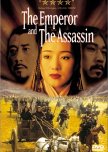
Gong Li’s Lady Zhou was the linchpin between the man who would become China’s first emperor and the assassin who would try to exterminate him. The Emperor and the Assassin is a nearly three hour epic tale of Ying Zheng’s tribulations, some self-created, as he faced the last two states of Zhou and Yan in his bid to unite the states by virtue of annihilating them in battle. He also faced coup attempts from within.
The film was divided into chapters, some more captivating than others. There were times the story meandered and slowed to a lull, others dealt with deadly secrets, battles, and changing loyalties. Even though there were emotional performances by the main actors I found I never cared enough about them as they faced dire consequences.
Gong Li was ethereal as Lady Zhou, the childhood friend and stabilizing force on the emperor who had to come to grips with his increasingly murderous and unstable behavior. Li Xue Jian‘s performance as the emperor came across as more emotionally unhinged than conflicted. Zhang Feng Yi‘s nuanced performance as the stoic assassin had just the right amount of gravitas. Some of the side characters, like Xue Jian’s Ying came across as overwrought.
The sets were high caliber and grand. The costumes tended more toward rustic materials for the majority of characters befitting the ancient times. Numerous extras and war equipment gave the battles a realistic look. The only complaints I have about the cinematography were the harsh yellow casts for most of the film with only a few scenes using strong blue filters to break it up. Lots of smoky backgrounds with the yellow filters tended to wash everything and one out. The editing could be choppy as well in places.
I will leave it up to others to judge the historical correctness the film portrayed. As a work of art it was entertaining for the most part even though I never connected emotionally with any of the characters. The story felt stronger when Gong Li was on screen and weaker when the emperor was weeping and gnashing his teeth. There was enough treachery, angst, and mass deaths to keep it interesting if not emotionally compelling.
Was this review helpful to you?
This review may contain spoilers
It’s not easy to be a nobody
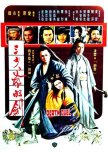
In the martial arts world being #1 means a relentless road to the Death Duel. Whatever you are ranked someone is waiting in the wings to knock you off by any means necessary to move up.The Third Master of the Supreme Sword tired of the daily challenges and blood on his sword and went into hiding as menial labor in a brothel. Nicknamed Hopeless Ah Chi, he and the prostitute Hsiao Li, fell quietly in love but he left after a confrontation with rowdy customers. Coincidentally, Li’s brother and mother took him in. Eventually, she finds him at their home and it looks like for a while Ah Chi can live the contented life of a nobody.
Being that it’s a martial arts movie there are all sorts of people who want a piece of him when rumor spreads that his death notice was premature. Famed swordsman Yen Shih San is determined to know once and for all who is #1. But he will have to get in line as evil clanswoman Chiu Ti wants revenge for The Third Master spurning her.
The body count in Death Duel is staggeringly high. Almost no one is left standing by the end of the movie. Tang Chia’s fights are well done for the time. Most of the fights were filmed at a distance whether for artistic reasons or to cover the use of the stuntmen. I prefer to see the faces of the fighters though that didn’t happen often.
Lo Lieh as his Killer Clans character and Ti Lung in his Magic Blade costume made cameo appearances and showed the young Derek Yee what stage presence means. David Chiang made a cameo near the end of the film as a mad swordsman and Yueh Hua dropped in as an evil doctor. Ku Feng played against type and was the kindly brother of Ah Chi’s love interest. The movie was full of familiar kung fu faces. Yee did an admirable job as the lone swordsman who wanted to be left alone. Ling Yun didn’t have much screen time as the rival but made the best of it.
The movie was filmed on the lot but the settings were all quiet nice and didn’t look like they were meant to be torn down by marauding fighters. The OST fit the mood of the scenes and was quite lovely in comparison to others of the time. The Shaw Brothers’ gold lame costumes made an appearance though most of the costumes were more understated.
The huge cast could be overwhelming at times as fighters appeared out of nowhere to challenge The Third Master. The story itself was straightforward and led directly, albeit over a plethora of bodies, to The Death Duel. Entertaining with a a pleasing cast, Death Duel is worth watching if you are a fan of old martial arts movies. Derek Yee went on to direct the remake in 2016, Sword Master. If you’ve seen that movie this one is well worth your time to see its inspiration.
Was this review helpful to you?
This review may contain spoilers
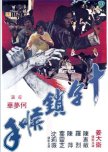
Shaolin Hand Lock is your classic Shaw Brothers kung fu flick. There's a secret deadly kung fu move, revenge, and a Big Bad with all sorts of nasty tricks up his sleeves and shoes in this case. I bumped my rating up .5 because of some of the lovely settings for the scenes shot on location in Thailand, also there was a nice twist at the end.David Chiang with a terrible hairdo played Li Cheng Ying and Chen Ping played his sister Li Meng Ping. Their father was murdered by an old business pal who was hiding more than secret weapons from them. Lo Lieh with a gray wig was the treacherous family friend. Michael Chan lucked out in a role that gave him slightly more to do than his usual hired hand/killer role in these movies. The cast worked hard to elevate a convoluted revenge theme even if they weren't always successful.
Li Cheng Ying traveled to Thailand to take out the assassin who killed his father but found that the man behind the killing was more formidable than he could take on face to face. He finagled his way into being hired as a guard setting himself up in a jealous rivalry for the boss' attention with Chan's Li Kun Shi. Normally, Lo Lieh played characters who were sharp, in this one he came across as fairly dense. At one point, after being attacked several times, he suspected Kun Shi attacked him wearing a bandana over his face when Michael Chan and David Chiang are not built remotely alike, and the assassin had that bad, bad haircut as well. Dude, you just hired the new guy, drew him into your confidence, and now you keep getting attacked when you are all alone? Wake up and smell the kung fu sweat.
The story was thin, but what reduced my entertainment value was Chiang's performance. He came across more as a gloaty bad guy and not an earnest son seeking revenge for the death of his father. Lo Lieh gave a performance he could give in his sleep and in a few scenes looked like he might have been sleep walking. Overall, the acting was satisfactory for this type of movie. There was the ubiquitous nude scene early in the movie, SB couldn't seem to help themselves with these. It wasn't necessary, but at least they used it to come full circle later. The women didn't have much to do, although Chen Ping did have one decent fight. Karen Yip gave an overwrought performance as a blind mother. Shum Lee Mei in her only film role had to play a character who changed sides on a dime, and holy Luke Skywalker/Princess Leia had an uncomfortable moment.
The studio settings were lackluster. What did sparkle were the walks, fights, and running through Thailand. There were also lots of boat chases in the canal. Lots. I guess they were one way to move things along even if it wasn't moving the plot along.
The fights were highly choreographed stopping short of kung fu posing with a little wire work added in. The final fight between the three men was brutal and creative.
Shaolin Hand Lock was an average kung fu movie wrapped in a beautiful Thai bow with a sharp little secret hidden beneath. If you enjoy old kung fu movies this one is watchable. As always, I grade these old niche movies on a curve.
Was this review helpful to you?
This review may contain spoilers
A drowning man will clutch at straws...
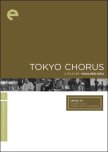
Director Ozu tackles The Depression head on in Tokyo Chorus with his lead character and the man's family. Though a silent film, this quiet slice of life speaks volumes for the economic devastation of the time. The story follows a happy-go-lucky worker in a light-hearted manner with an undercurrent of tragedy.The film begins playfully at a college with the boys being led in a calisthenics drill with Okajima Shinji in the role of class clown much to the drill instructor's chagrin. Soon he is shown as being a dad of three children and working in an insurance office. It's the yearly bonus day and everyone is excited. His son has asked for a bike and Shinji has made a list of what he will buy for his family. As everyone is celebrating bonus day, an older colleague is fired just before retiring and garnering his pension. Shinji stands up for him and is fired, too.
His son throws a fit when his father doesn't come home with a bike and his wife scolds him for not keeping his word. She soon realizes what has happened and comes around and is supportive. This is a pleasant pattern throughout the movie. When the little family is faced with setbacks and challenges, they let themselves hurt for a minute and then do what needs to be done.
Shinji is thrown into the world of the unemployed, the Toyko Chorus, which is substantial, even for a college-educated man with good work experience. Jobs are either not available or he's deemed over-qualified. When the family suffers a mishap, their dire situation is made clear. Shinji takes a job handing out restaurant flyers for his old professor/drill instructor. His wife sees him and is devastated that others will know they have lost their social standing.
Aside from showing the effects of a tragically high unemployment rate, Ozu excels in bringing this family unit to life. The children bicker and throw tantrums like children do, even if the son could be a bit much at times. His wife, Tsuma, may suffer a brief moment of tears or despair but then faces reality and refuses to let her children or husband down by wallowing in them. Shinji's fun-loving smile is often present though watching him closely you see the cracks in his effervescent personality. He's a man willing to suffer a blow to his honor to protect and provide for his family. One poignant scene portrayed this perfectly. After Tsuma's kimonos had to be sold, the family is playing a game on the floor. The children are unaware of the financial and emotional situation assailing their parents and laughing and singing. The parents join in the game initially downcast but let the joyful moment overtake them and bond together.
This film is in dire need of someone lovingly restoring it. Much of it was faded or had salt and pepper pock marks. Though I have seen films in much worse shape from only the 1970's. The music was jaunty and carried the story along, even when not much was going on. Once fully immersed, spoken dialogue wasn't missed much. The actors perfectly portrayed their feelings without resorting to hamminess to show the meaning behind their actions.
In many ways, the film comes full circle at the end, with a wiser, sadder Shinji. This film is not perfect. The first half felt slow to me, barely making any progress. And then like a flower opening we see more sides to the characters as they work together believing things will get better. It was the love of this family that I enjoyed the most about this film. Tokyo Chorus was a sweet film of perseverance never letting itself be swallowed by melodrama. Ozu rarely disappoints, and for me, he didn't with this film either.
Was this review helpful to you?
This review may contain spoilers
If the world is such a romantic place, why are things so difficult for us?
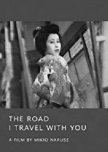
Money or romance? Social position or love? Family or lover? Hope or despair?The Road I Travel with You starts out like a romantic comedy/drama with lilting music driving the conversations. A retired geisha's sons have fallen in love with women above their station. The problem is that their mother has already started matchmaking for them and the young women in their hearts are out of reach due to their families' rejection of them. The young men are not so easily dissuaded when it comes to affairs of the heart. Neither is their mother dissuaded when it comes to their futures and money. What starts out with a hopeful beginning quickly turns dark.
The movie takes place mostly in living rooms with stiff acting and even more stilted dialogue. The film frames and cinematography are not particularly creative or interesting. Overall, this felt like a more clinical version of Romeo and Juliet. The young people are in love and can see nothing past this love. The parents are practical to a fault and want secure financial futures for their children even at the cost of the childrens' happiness. Emotions should have been boiling over, yet everyone remained eerily calm or in the case of the retired geisha completely detached from her sons' reality.
This movie could have been more emotional, more gut wrenching if everyone's feet didn't feel like they were nailed to the floor during scenes and if their emotions reflected the dialogue they spoke. At no point did the young men and women convince me of the depth of their love or despair, making the tragedies that would follow hollow and meaningless to me. I would never try to dissuade anyone from watching this romantic melodrama, but for my experience, this short movie clocking in at 1 hour 9 minutes felt more like 3 hours.
Was this review helpful to you?
This review may contain spoilers
I was born to be cruel you fool!
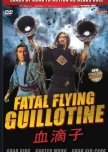
Carter Wong gives mama’s boys a good name when he takes on Chen Sing’s flying guillotine wielding baddie. Decapitations and amputations come steadily at the hands of kung fu’s most bizarre weapon.The plot is thin and has numerous confusing plot developments, many never explained. The basic structure of the story is that Carter must go to the Shaolin monks to borrow a mystical healing handbook to save his ill mother's life. In order to gain access to it he has to fight his way through three levels of shaolin fighters. When he ultimately succeeds, he and the monks are betrayed. In order to retrieve their special book stolen by the 4th Prince who has grand ambitions they are set on a collision course with the master of the guillotines.
The guillotines and other secret weapons as well as hand to hand combat are employed to deadly ends. Some fight scenes are better than others, many including a healthy dose of wire-fu. Carter Wong wasn’t as stiff in this movie as he has been in some. Chen Sing always makes for a compelling bad guy, even in a bedraggled gray wig and beard.
The Fatal Flying Guillotines looked like it had been mostly remastered. Even at that there were scenes which went from clear and wide screen to grainy full screen images. The cinematography was pretty decent for the budget and era. Much of the fighting took place outside in some very nice scenery.
Guillotines kept the action going almost non-stop with double and triple crosses all in the name of gaining the knowledge of the spinning weapons. Many kung fu films suffer from an abrupt ending, and The Fatal Flying Guillotines was no exception, but not as bad as some. Overall, it was an entertaining 1970’s kung fu film, though maybe not the strongest of the guillotine movies.
(March 25, 2026-bumped my score down .5, mainly due to filming issues and the narrative problems. I'd rank it fourth in the 1970's four Guillotine films, right after Jimmy Wang Yu's Master of the Flying Guillotine).
Trigger Warnings: Decapitations and severed limbs, eye gouging. Also, snakes.
Was this review helpful to you?
This review may contain spoilers
Since I cannot marry someone I love, anyone will do
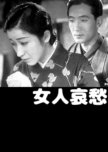
A Woman’s Sorrows sounds like a tragic film but instead it’s a movie about one woman’s self-discovery. Set in 1937 before WW II, some nascent progressive ideals about women’s place in the world and marriage were explored.Hiroko was a shop girl who came from a poor family. Described repeatedly as “conservative and indecisive” she found herself unable to marry the cousin she loved and decided any man her mother chose would be acceptable to marry. She ended up married to a man from a wealthy family but soon discovered she was little more than an unpaid servant and one who worked longer hours than the employed maid. When any task needed to be done “Hiroko” was the first word on the family’s lips. Her husband viewed her as a pretty doll to take out and look at occasionally when he wasn’t partying with his friends after work.
Her sister-in-law, Yoko, married for love, but her husband could not provide for her in the way she was accustomed, and she came home to her family. He refused to give up on Yoko creating conflict by using Hiroko as a messenger.
Both Hiroko and Yoko had to come to terms with what they wanted out of their lives and marriage. Both were bound by the patriarchal system and well-defined roles they were expected to follow even if some of the rules appeared to be bending. For instance, Hiroko’s conservatism was viewed as a mark against her when looking for a match. Her new family loved her submissiveness but did not respect her for it. Yoko, though refusing to become submissive like Hiroko, could not free herself from her perception of what marriage should be and was also trapped.
Hiroko slowly began to understand she was more independent than even she knew herself to be. I have never wanted to stand up and cheer for a Japanese film as I did for this one when Hiroko stood up for herself and her beliefs rejecting the emotionally unfulfilling life she had entered into. I found A Woman’s Sorrows to be surprisingly progressive for a 1937’s film on marriage bolstered by a satisfying ending. For anyone not put off by such an old film I could easily recommend it.
Was this review helpful to you?
This review may contain spoilers
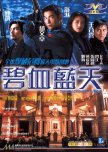
My first inclination if you've found this movie page and are wondering whether to watch this movie is to say, "Run for your life!" or "Do not stop, do not pass go, put this directly into your NI list". But I will try to be slightly more objective than that because someone other than me may want to sit through this because they are a Shu Qi fan. Or perhaps a Vincent Zhao fan. Or you don't care how bad the acting and story are if you can watch some martial arts. Let's start with the story. Vincent Zhao's character is banished to the fictional country of Lavernia (right next to Shirleenia) for saving a plane full of passengers from a high jacker. Ostensibly it's because he didn't follow orders, but I think it's because he emptied an entire magazine into the bad guy and still didn't kill him. Lavernia is a former part of the Soviet Union and there are people sent in chanting they want to return to the USSR. A Japanese cult leader is in town blowing things up and killing people left and right in his desire for a new world order. There's a boat load of Chinese refugees offshore that are starving to death. Oh, and the Minister of Defense is on the take and a gun runner and also in cahoots with the deadly cult leader. Throw into this mix, Shu Qi's character who fled China after being a witness to the violence and carnage in and around Tiananmen Square and is also Zhao's ex-girlfriend and you have one convoluted piece of work.
The propaganda is heavy handed in this film. Shu Qi's character is berated by Zhou's character and just about everybody else throughout the movie for leaving the homeland after witnessing people wounded and dying when the protesters were crushed.
Zhou is a good kicker, but his acting felt bland to me. Even at that it was much better than the rest of the male cast. Shu Qi didn't have much to do but play the pretty damsel in distress. Andrew Lin made the most of his crazed messianic villain. His character seemed especially impervious to bullets, especially after his initial capture when his rescuers sprayed the area with bullets attempting to take out his guards.
There were places in the movie so bad I was laughing but it was hard to keep it up as the ridiculousness of the scenes dragged on. Some of the fights were good, others relied heavily on wire-fu and defying the laws of gravity. I don't mind a little wire-fu outside of fantasy movies, but in a more reality-based story it seemed badly out of place.
The movie ended with an over-wrought climax that had me begging for the final credits. The most positive thing I can say is that the movie is mercifully only 90 minutes long.
Was this review helpful to you?
This review may contain spoilers
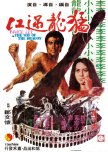
Bruce Lee wrote, directed and starred in Way of the Dragon, taking the crew to Rome to film among the Coliseum ruins. Way of the Dragon begins as more of a comedic story with Bruce as the fish out of water in Rome trying to help with a family business. Nora Miao's restaurant is under attack from a developer who wants her to sell. Bruce's character plays the unstoppable force who can take on an entire army of bad guys. Ultimately, the Big Bad calls in Chuck Norris to rid him of the troublesome new guy.
I found the first half of the movie less than enthralling. Much of it was supposed to be funny but I didn't get the humor, especially a long running gag with Bruce having gastrointestinal distress.
The second half of the movie is pure martial arts magic. Some versions cut out a scene with Bruce taking on a group of thugs with not one set of, but two sets of nunchucks. It also shows why amateurs should not try those tricks at home, which was really funny. The climax of the movie with Bruce fighting Chuck Norris is a classic. Chuck was a legitimate and respected karate champion. Bruce wanted someone who could keep up with him and the fight was highly entertaining. Bruce asked Chuck to gain some weight to make him look more formidable and it would seem to not shave his back hair (chest hair was considered sexy in the 1970's). A cat watching the events played out some of the emotions of the two fighters and the audience.
Bruce Lee was artistry to watch, when he slowed down enough for us to catch even a fraction of his moves. Despite my disappointment with some elements of this film, no actor had a better "I'm through playing around now" look than Bruce had. His intensity was smoldering. The fights in the second half of the movie ran the gamut from fun to tense, to enthralling. If you enjoy martial arts movies, and haven't seen this one, you need to put it on your list. The classic fights in it are not to be missed.
Was this review helpful to you?


