

 123
123 415
415 15
15 2
2 6
6 2
2 7
7 9
9 3
3 12
12 1
1 1
1 1
1 1
1 2
2 4
4 7
7 4
4 9
9


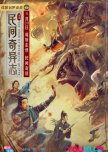
Numerous demon hunters descend on the small town of Baihe, the 100 Demon Town. Friends Tian Jiao and Shui Ling work with inventor Mo Lian Huan. Tian Jiao’s father, herbologist Zi Zhong Bai, joins them as does Shui Ling’s mom, San Niang the expert of Ghost Needles. Buddhist monks Liao Yin and Liao Guo come to help save humanity. And officers Tian Can and Di Que bring the might of the Ministry of Demon Suppression. They amass at Bai Ling Long’s Inn, the owner who possesses foxlike abilities. Two bumbling samurai and 3 vengeful demon sellers also appear at the inn for other reasons. Differences of opinions arise over the dispatching of all demons as some are helpful to humanity. The problem is muddled because Hua Man Teng has turned good Buddhist animals evil against their will.
The first half of the film was slow as the above characters were introduced. Each of their abilities varied from the others. Finally, on the night of the Great Demon Hunt, Man Teng made her dramatic entrance with a cauldron of demonic bats. At that point the fight was on and the body count went up. The CGI creatures and weapons ranged from good to poor as did the different actors’ responses to the CGI creatures and vines. For an epic fight, the low production values diminished my enjoyment. As did the focus on Tian Jiao in the latter part as she wasn’t a very likeable character. I was pleased that there were several competent women warriors instead of the usual one token female. Mika Wang’s evil Man Teng did the best she could as most of the time she was rooted in one place with vines extending from her. In truth, I started this film because Yuen Wah played the herbologist father. He and Yuen Qiu made a fun sparring not-couple couple.
The Book of Mythical Beasts had entertaining moments and several compelling characters. This two-hour movie tried to give sixteen characters screen time with mixed results. So many people on screen at any given moment meant that some were going to be sidelined and the main thrust of the story would be bogged down. And the main thrust of the story was confusing at times. There were good demons, good demons who were forced to be evil, and then evil demons. Some demon hunters differentiated and others did not, calling into question humanity’s propensity for evil as well. The film ended with a new threat to humanity crawling over the mountains so the filmmakers might have other questions they want to raise.
16 October 2024
Was this review helpful to you?
"It's about trying or giving up"
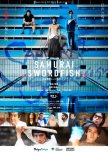
Samurai Swordfish is a heartwarming time traveling samurai story packed into a 25-minute short film. There wasn’t time to fill in a lot of story gaps but most drama and film watchers will know how to fill in the blanks.In 1863, Eisuke and Toramaru are best friends and samurai training partners. Toramaru is selected to the Shogun’s special unit though Eisuke is not as Eisuke is blind. Toramaru asks Eisuke to take care of his son should anything happen to him. One day while training the son, Toramaru’s practice sword with the words, “Knock and it shall be opened unto you” falls into the river and Eisuke goes in to save it. He surfaces in a modern Tokyo pool with no one else there except for coincidentally his great-great-great-grandson Ryusei. Through Ryusei he is introduced to Toramaru’s descendent who is in need of his help in learning the samurai spirit. Taiga was a competitive swimmer until he recently lost his leg in an accident. Eisuke shows him his disability can’t stop him from being a competitor by training with Ryusei and learning how to swim.
The story skipped over Eisuke coming to terms with being in the future-he just accepts it. It skipped over Ryusei and Taiga questioning whether he’s from the past-they just accepted it. The story skipped over the intricacies of learning how to properly swim freestyle-Eisuke seemed to know how. And while the synopsis maintained that Eisuke drown, he never died. As I said, most viewers who have watched time travel dramas/films will understand the steps glossed over due to the lack of time. The central focus was Eisuke’s sense of duty to Toramaru’s descendent, a surrogate for Toramaru’s son. Eisuke was willing to do whatever was needed to help Taiga succeed and regain his spirit. In the process of doing that, he was also helping Ryusei who had given up swimming when Taiga could no longer compete.
This short film could easily have been made into a full-length film. I liked how it highlighted the Paralympics by introducing two medalists who served as motivation for Taiga. Eisuke was able to show Taiga some of the Bushido principles of loyalty, bravery, and honor. Taiga and Ryusei discovered their inner samurai spirits through the efforts of a blind samurai who never gave up. Definitely worth 25 minutes of your time if you are in need of something uplifting.
15 October 2024
Was this review helpful to you?
It's bananas!!!
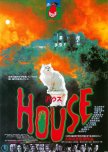
What happens when you add the quirky 1970’s with one of Japan’s quirkiest directors? You get an insanely creative film like House. Obayashi Nobuhiko took old elements that go bump in the night and used surrealistic effects to create something new for the time. When Obayashi is in the driver’s seat, hold on because it is going to be one wild ride!Seven school girls travel to spend some time with Gorgeous’ aunt in her huge mansion on a hill. Gorgeous, Fantasy, Professor, Mac, Kung Fu, Sweet, and Melody descend upon the old woman living in her cobweb infested house. One by one the girls go missing as more and more bizarre incidents begin to take place.
The film started out slow as the girls discussed their plans. Gorgeous discovered her dad was getting remarried which propelled her to make the fateful decision to visit her deceased mother’s sister. When the other girls’ plans fell through, they followed Gorgeous. The train and bus rides had almost picture book backgrounds that were obviously fake. Gorgeous told the sad story of her aunt’s lover being killed during WWII with her aunt vowing she would wait for him forever. The story was told in sepia form with the girls all being able to see it. It did not take long for the nightmare to begin once they crossed the mansion’s threshold. A scary old well, creepy clocks, dusty pianos, luminous chandeliers, a skeleton, and an abundance of cat pictures which might normally make the hair on a person’s neck raise took on deadly proportions as the night went on. Obayashi used the special effects of the day and created a few of his own. The special effects were primitive by today’s standards, but this was before George Lucas took effects a giant step forward with Star Wars. Strangely, as gruesome as some of the scenes were, many came across as grotesquely funny and rarely scary.
When Gorgeous was relating her aunt’s story, she and the other girls seemed almost unfamiliar with WWII and the terrible suffering associated with it. Only 30 years out from the war, the girls lived in a peaceful society completely unaware of the price paid for it. The aunt had been unable to let go of her loss and bitterness. Little by little she began to destroy the oblivious young people chaining them to her pain and insatiable hunger. The film turned on its head two common tropes---A man will save us! An adult will save them! This ravenous haunted house hidden in the fog under a full moon had no mercy on anyone.
House is a hard film to define. It was a horror film with a devilish sense of humor. Obayashi seemed to revel in creating a macabre world of the ghostly realm and the teenagers powerless against the inexorable pull of the inevitable. Experimental, weird, and totally bananas (sorry Togo!), House felt like a bad acid trip that shouldn’t have worked but did. Mostly. Screw black cats, I’ll never look at white cats the same.
15 October 2024
Trigger warnings: Dismemberment, so many body parts. Blood
Was this review helpful to you?
"War is fun when you're winning"
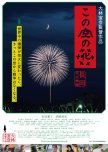
Casting Blossoms to the Sky is an anti-war film that took 2 hours and 30 minutes to try and make its point. Much was made of, “That which fills the gap is imagination.” Thus, characters spoke directly to the audience and ghosts walked about as if that was all very normal. This film was not what I expected after reading the synopsis. The victims of the 2011 earthquake and Fukushima disaster were almost an afterthought. Instead, the majority of screen time was dedicated to the 1945 bombing of Nagaoka a couple of weeks before the end of the war. The premise centered upon how fireworks and bombs are similarly made, both being explosives while one celebrates beauty and the other destroys it.Rieko Endo is a journalist who decides to go to Nagaoka for two reasons. She wants to find why the town opened its doors to refugees from the earthquake/tsunami and nuclear power plant disaster. Her ex-boyfriend also sent her a letter inviting her to a play at his high school. While in Nagaoka she meets numerous people connected to the bombing from 1945 and the making of fireworks.
This is the type of reflection and healing film I would normally love, but I did not love how it was pieced together. Characters speaking to the audience was distracting, though it dissipated as the film went on. There was repetition upon repetition. Some scenes from the bombing and making of the school play were replayed over and over and over and over. It began to dull the instrument of storytelling. The flashbacks almost gave me whiplash. The flashbacks would bounce around 2011, then to the 2006 earthquake, to 18 years ago when Reiko was with her boyfriend, flashbacks to another woman’s breakup, flashbacks to the Boshin War, along with the history of making fireworks and their use in the area, and flashbacks among numerous people and events leading up to, during, and after the Aug. 1, 1945 bombing. The bouncing around and circling back was headache inducing.
“We have nothing to do with war.”
I still have no idea what Rieko was talking about when she kept saying this regarding her broken relationship. The acting was serviceable though Matsuyuki Yasuko did more posing than emoting. All of the ex-boyfriends involved didn’t exactly evoke emotion as there were no interactions with the ex-girlfriends for the most part. Characters spoke fast and earnestly. There were unicycles everywhere, not quite sure what they symbolized. The real and surreal were often intermixed.
You will need a strong stomach for the vivid descriptions of what fire and bombs did to the human body. While I applaud the pacifist agenda, there were times it didn’t come across very realistically. “If they could see us, they wouldn’t bomb us.” The Japanese soldiers could see the civilians in Nanking and had no problem mowing them down. The comfort women were mentioned and then just as quickly dropped. The Japanese soldiers saw them and sexually abused them in every vile way possible. If every gruesome detail had to be described during the bombing repeatedly and in Soviet Union POW camps, maybe the lack of humanity for the other should have been equally described. There were plenty of atrocities to go around. And that would have made the argument stronger. During war, terrible things happen to real people. People with families, friends, jobs, children, and dreams. No one wants to suffer horrible deaths or imprisonment. No one wants to be forced to do things against their will. No one wants to see their town and home destroyed. No one wants to see their children starve to death. Why not treat everyone with respect and work through problems with words? Even if we got rid of bombs people would go back to killing each other the old-fashioned way with guns, swords, arrows, knives, spears, clubs, rocks, and/or fists. The problem lies within us, that thing that must be healed. It’s more important now than ever as we live in a world with diabolical weapons. Director Obayashi already had my attention and concurrence with, “Be friendly to each other.” Would that it were that easy.
“We have to use the pain caused by war for peace.”
The Nagaoka officials tied the fireworks into a healing and memoriam display though it was traumatizing for some of those who lived through the bombing. Many modern veterans of different wars and skirmishes have similar PTSD reactions to fireworks—the fireworks might be pretty but they sound too much like bombs. In 2011 and 2012 there were firework displays honoring both the victims of Nagaoka and Pearl Harbor in both places which was a nice reaching across the ocean in a display of peace.
“There’s Still Time Until a War.”
To stop the war? Or live life to the fullest? Casting Blossoms into the Sky was a bold, imaginative effort to show the horrors of war and why war must be avoided. The film could have been trimmed by an hour and had a stronger impact for me. I began to feel like I was stuck in a death loop watching the same gruesome events over and over again. Instead of convincing me that peace was possible it made me feel that war, like death, is inevitable.
8 October 2024
Was this review helpful to you?

What makes a monster?
Underground Monster’s poster looked like a cute kid’s movie. Don’t you believe it. Older children might be able to watch it but there were some scary creepy crawlies and two-legged monsters as well. This was a movie that couldn’t quite decide whether it wanted to take itself seriously or be a comedy so it threw a little of everything at the wall to see what would stick. It could be hard to tell what stuck with all of the trash heaps lying around.Construction workers digging a new tunnel come across a cave filled with giant piles of trash. It’s not long before they realize the trash is hiding an even more giant monster. Not everyone makes it out of the hole. On the surface and down the road Xiao Jie and his father He Chi are spending time together. He Chi makes his living collecting junk and is divorced from Xiao Jie’s mom. When the construction worker’s truck speeds by, a crate with a large green egg falls out. He Chi picks it up to see if it’s worth anything. Ex-wife Wu Lin Na is waiting at his home and not happy that Xiao Jie is spending time with his dad. Later that evening, the egg hatches and mama monster comes looking for her baby.
The Underground Monster looked like a combination of Disney Mermaid’s Ursala and The Simpson’s Kang. The CGI was okay but not great. They did give the monster a very expressive face, especially after it kidnapped Xiao Jie thinking he was her baby. The bond between the two was endearing. The trash cave became crowded as both parents, a mad scientist with a beard so fake you could see the tape holding it on and his kookier assistant, as well as a group of vengeful construction workers converged with different goals for the protective monster.
The slapstick scientist and assistant ruined the mood of the film for me. While I was happy to see The Snow Monster again and the snow sharks from that movie (Snow Monster 2019), it was not worth the over-the-top acting by the two while the devastated parents played their parts straight as did the murderous tunnel workers.
There were a few cute and emotional scenes in Underground Monster between the child and monster. There were also some disturbing ones. The film drove home the point that humans and their propensity to trash the planet might be the true monsters. They were also the ones who wanted to kill first and ask questions later. The movie reminded me of the song from Beauty and the Beast:
“We don't like
What we don't understand
In fact it scares us
And this monster is mysterious at least
Bring your guns!
Bring your knives!
Save your children and your wives
We'll save our village and our lives
We'll kill the Beast!”
7 October 2024
Was this review helpful to you?
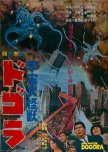
Diamonds are a girl's and space kaiju's best friend!
Toho and Honda Ishiro stepped out of their comfort zone with Dogora. This massive tentacled space monster wasn’t a guy in a rubber suit which was a nice change of pace. As with many of these kaiju films from the 1960’s I was left wanting more monster and less people.An international gang of jewel thieves is blamed for jewel thefts, well, internationally. Trouble is, they only pulled one of the jobs. When they tried stealing diamonds in Tokyo a glowing blob swept them off their feet and melted the vault door. Also involved with diamonds is Dr. Munakata who studies crystalline geometry with the help of his lovely secretary Masayo. On the case of the jewel thefts is Det. Komai. Another player is the shadowy American Mark Jackson who always seems to show up when diamonds or the giant space monster are near. Masayo’s brother is a space scientist who is concerned about satellites that have recently been destroyed. It doesn’t take long, actually it took longer than it should have, for everyone to realize that Dogora was funneling up huge amounts of coal and diamonds from around the world. Dr. Munakata realizes if Dogora is not stopped it will spell Doomsday for the people of Earth when she turns her carbon hunger toward the carbon based people inhabiting the planet.
This film was more cops and robbers than monster flick. While Dogora provided stunning spectacles of destruction, the police and jewel thieves had tunnel vision when it came to the diamonds. Much of Dogora played out like some of the humorous jewel theft movies of the time such as the original Pink Panther and Ocean’s Eleven. Everyone seemed to take another monster in stride. In fact, the police captain told Komai to stop messing around investigating the monster and focus on the human jewel thieves despite the fact that the two were connected.
Special effects director, Tsuburaya Eiji, created something new and beautiful with Dogora. Around the 50-minute mark Dogora showed herself in all her glory, like a glowing jellyfish or cephalopod. She was graceful and ethereal and decidedly deadly as she destroyed Wakato Bridge. Her sparkling amoeba shaped children/minions(?) did her bidding around the world. Reverse tornadoes sent coal, trucks, smokestacks whatever was in the way of her carbon snacks upward. The miniatures were interlaced with real military weapons and people. The ultimate weapon was wackier than in other kaiju films, but at least it wouldn’t destroy the Earth.
All of the performances were good though I was pleased that Robert Dunham was cast as the American as he could speak Japanese fluently instead of being dubbed. He also didn't have to wear the embarrassing costume he had to don for Godzilla vs Megalon. Toho monster regular Koizumi Hiroshi had a small part as a scientist. Bond girl, Wakabayashi Akiko, played a femme fatale in the thieves’ gang who became too greedy for her own good. Handsome Natsuki Yosuke’s Komai made for a great straight man against the quippy Mark Jackson. Yet despite having a strong cast, the heist script was not nearly tight enough and was often repetitive. Despite its faults, the human characters were stronger than in many of these old kaiju films.
I probably rated Dogora too high in comparison to other kaiju flicks from the timeframe. I was just happy to see a more creative monster. The film would have been much better if they’d trusted the balletic decimator to carry the show instead of the bumbling cops and robbers.
5 October 2024
Was this review helpful to you?
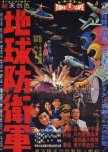
Some aliens can't take the heat
Only a few years after Godzilla stomped through Tokyo and Rodan stirred up trouble, Japan had to deal with aliens. The Mysterians wanted to set up housekeeping on the island and to mate with Earth women. They had a giant robot and destructive ray while the humans had two plucky scientists.Shiraishi Ryoichi is convinced that aliens are lurking in the area around Mt. Fuji. Most of his colleagues think he needs a vacation, until strange events begin to take place in his village. When an underground alien fortress rises up for all to see scientists Adachi Tanjiro and Atsumi Joji realize Ryoichi had been right all along. The Mysterians blew up their own planet during a terrible war and are looking for a new place to hang out. They also need to breed with Earth women because they have been unable to reproduce healthy children on their own since their war. Needless to say, the Earthlings aren’t ready to acquiesce to the Mysterians’ demands and start to work on building a weapon to counter the deadly ray gun the aliens use.
This was another Toho film directed by Honda Ishiro with music by Ifukube Akira. The miniatures and overlays were all well done. This was before many of the miniature towns started looking like cardboard boxes as they stretched the Godzilla franchise out on smaller and smaller budgets. There were also some real-world military weapons and planes interspersed throughout the film. The Mysterians had one of the first big screen TVs, 10 years before Capt. Kirk on the starship Enterprise. Shimura Takashi, famous for his work in Kurosawa Akira films, played in several of these Honda films, this time as the lead scientist. Hirata Akihiko, the hero of the original Godzilla, played a more morally complex character in this film. As with other films in the early years of the Toho monster flicks, there was a moral lesson to be learned. An all out nuclear war would all but ensure humankind's destruction so another way of combating the Mysterians had to be found.
The Mysterians had its moments. I mean, who wouldn’t want to see a giant laser fight in front of Mt. Fuji? Where the film lacked for me were the Mysterians. They were a little too mysterious in their colorful Power Rangers costumes. We never see their faces or hear their diabolical plan for world domination. Most of the film was from the scientists’ point of view and their assumptions that the aliens were up to no good. The film could have also used more of Moguera, the giant robot. For a 1957 sci-fi film, the special effects were sufficient as was the acting, surprisingly. I just needed a little more menace from the creatures who arrived from their blown-up planet via Mars, via the moon.
3 October 2024
Was this review helpful to you?
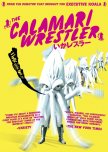
"It will be a tasty fight!"
This is the third film I’ve watched by screenwriter Migita Masakazu and as the old saying goes, “The third time is the charm!” I wasn’t overly impressed with Monster Seafood Wars or Death Kappa. The Calamari Wrestler, however, was a strange and joyful movie about a professional wrestler who had suffered from a terminal illness and miraculously transformed into a giant squid. Could Kanichi regain his title and get his girl back? Let’s get kraken on this review!Professional wrestler, Taguchi, had always been in Iwata Kanichi's shadow until the day Iwata disappeared after being diagnosed with a terminal illness. Three years later Taguchi is the top wrestler and has Iwata’s girl. After winning the championship, a man-sized squid climbs in the ring and snatches the championship belt. It was on like Donkey Kong and the Calamari Wrestler quickly defeated his two-legged foe. Embarrassed at being beaten by a seafood wrestler, Taguchi wanted a re-match and the Calamari wrestler was all for it. The promoters weren’t as thrilled when Calamari refused to throw the next fight.
The first thing that became apparent was that in the land of Gojira and other assorted kaiju, everyone was unperturbed by a dude who had turned into a cephalopod and who didn’t have to stay in water. I squid you not. Calamari shopped at the markets with no one running for their lives. In fact, when the fight was called off, the people rallied around him and pressured the promoters to schedule him a fight with Taguchi. Kanichi’s old girlfriend, Miyako, decided she was still in love with him regardless of his tentacles or maybe because of them. A whole sub-genre of manga came to life (without any gratuitous scenes).
There was an effort at social commentary in this squidiculous film. The promoter believed Calamari represented the chaos of the world and when Taguchi defeated him, it would alleviate public anxiety. Gradually, the public convinced him that by letting Calamari into the ring it showed that a world without prejudice could exist. The people just wanted to see exciting fights regardless of how many legs the opponents had. And soon there were other seafood wrestlers joining Kanichi in the ring.
This felt like a Rocky movie if Rocky was a squid and instead of boxing it was pro-wrestling. Coinsquidentally, Calamari had a Rocky moment right after his fight. There was even a training montage! All of the characters showed their devotion and love for pro wrestling. The film also highlighted the less savory side of the sport, I mean show, with the promoters working every which way to make a buck off the wrestlers and the fan’s desire to see blood in the ring. The special effects were almost nil. You could sea the human legs below the tentacles and squid costume which was actually part of the film’s charm.
Calamari Wrestler wasn’t inkredible but it was entertaining with gentle humor, as gentle as a reverse suplex or powerbomb. The wrestling scenes were hilarious and the final fight had a reveal I didn’t see coming. Normal issues such as love, greed, and national pride played out behind the tentacles and ink. If you enjoy absurd movies and don’t need a pesky thing like logic, this might be one to try.
1 October 2024
Was this review helpful to you?
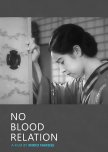
What does it mean to be a mother?
No Blood Relation was the second oldest surviving film from director Naruse Mikio. Like Ozu Yasujiro, many of his early films have been lost to the ravages of time. Based on a novel by Yanagawa Shunyo, Naruse asked the question, “What makes a mother?” Is it biology or nurture? A little girl would be torn between the only mother she’d ever known and the mother who came to town to claim her.Famous actress Tamae Kiyooka returns home to Japan after making her fortune in the United States. First on her list of things to do is to regain custody of the daughter she abandoned as a newborn when she ran off with her lover to pursue her career in Hollywood. Coincidentally, her ex-husband is filing for bankruptcy and being hauled off to jail for reasons related to the downfall of his company. Kiyooka is unaware of how deeply Shegiko and her stepmother love each other. Masako has raised Shegiko as her own with Shegiko never knowing she’s not her biological mother. Kiyooka uses Atsumi’s mother who is disgruntled by their backward step in fortunes to kidnap Shegiko. Neither the little girl nor her stepmother are willing to be separated, but Kiyooka believes she has the moral high ground with the blood relation and is wiling to be patient.
Okada Yoshiko had the difficult job of making Tamae Kiyooka sympathetic. The script didn’t help much but her ability to convey Kiyooka’s sorrow and frustration over her daughter not only not recognizing her, but hating her as well came across wonderfully nuanced. Because Kiyooka remembered her child it never occurred to her that Shigeko would feel no connection to her. The consequences of her choices tumbled on her like a falling spotlight. “Is the bond between mother and child so fragile?” When you’ve put no effort into it for 7 years, yeah, it’s pretty fragile. I found Okada to be a fascinating person. The actress led a complicated life with various lovers culminating with a move to the USSR in 1938. Instead of a happy ending they were jailed and tortured as spies. She was incarcerated for 10 years and her lover died before she ever saw him again. Okada went back to Japan to make a few films in the 1970’s but returned to the Soviet Union not long afterward. Her story would make an intriguing film.
Tsukuba Yukiko as Atsumi Masako gave her character heart and a gentle fierceness as she fought for the daughter she loved. Traditional Masako was shown in contrast to Kiyooka’s modern and Westernized woman. Kiyooka deserted her daughter for a career while Masako began a job to keep her daughter. Oka Joji played the Atsumi’s friend, Kusakabe Masaya. This was a distracting casting choice for me. Nara Shinyo as Atsumi was homely and petite. I couldn’t help shipping handsome and imposing Kusakabe with Masako. Kojima Toshiko was charming as Shegiko, the precious child two mothers fought over. Katsuragi Fumiko played Atsumi’s greedy mother who proved that gold is thicker than blood.
I watched this silent film on the Criterion Channel where the film had an unobtrusive piano accompaniment added. There was significant salt and pepper pocking as well as white lines on some frames. The intertitles were used efficaciously and provided the necessary information needed with one exception. I wasn’t sure why Atsumi was sent to prison. Naruse made several awkward choices with the use of speedy extreme closeups interspersed with choppy shots of people and exteriors. His later work would flow much better. The bumbling brothers felt like they were part of different movie when they were clowning around all while two women fought a devastating battle for the affections and custody of a child.
With no spoken word, compelling performances were a must for silent films. No Blood Relation was fortunate to have quality actors conveying the film’s message. “It’s raising a child, not giving birth to one that makes a woman a mother.” Kiyooka had to learn the difference between love and possession while Masako had to dig deep to fight for the daughter she loved. If you enjoy Naruse’s films this poignant story about maternal love and what constitutes a family is one to try.
23 September 2024
Was this review helpful to you?
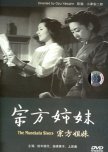
"Being new is all about not getting old"
The Munekata Sisters is an Ozu Yasujiro film based on a novel serialized in a newspaper which gave it a slightly different flavor than the typical Ozu film. There was still his usual battle between a traditional lifestyle and the encroaching modernized world. This time the conflict between old and new took place between two sisters.Energetic Mariko lives with her older sister Setsuko and drunken, sullen, unemployed brother-in-law Mimura. After reading Setsuko’s diary she realizes that her sis is not only in a loveless marriage but lost out on her true love 15 years ago. True love Hiroshi is back in town and Mariko begins spending time with him. While Mariko wants Hiroshi and Setsuko to reunite, her very traditional sister would never consider such a thing.
Tanaka Kinuyo played the mature, well-spoken, dutiful wife in a kimono. Despite the fact that her husband barely gave her the respect the lowliest servant would receive she kept her cool and served him politely. Takamine Hideko turned on her 100-watt smile and injected Mariko with boundless effervescence. Mariko wore high heels, nail polish, and western style clothing and hated old-fashioned things while Setsuko loved visiting gardens and temples. Uehara Ken’s Hiroshi was harder to pin down. He was amiable but not terribly decisive and tended to go with the flow. Dependable Ozu regular, Ryu Chishu played the father but was only in a couple of scenes. The father’s most important advice was for his daughters to be true to themselves whatever that might be. Ozu never was concerned with actor’s ages, Ryu was only 5 years older than his “daughter”, Tanaka. With 15 years between them Tanaka’s relationship with Takamine felt more motherly than sisterly. I kept hoping one of Ozu’s trains would run over Yamamura So’s Mimura. “A wife’s the epitome of stupidity…just a convenient tool. Like a doorbell...The problem is drinking and doing nothing is hard to give up.” I cheered when fearless Mariko stood up for her long-suffering sister. The old ways were simply too deeply ingrained in Setsuko which could be incredibly frustrating for a modern viewer.
The Munekata Sisters stretched Ozu a little out of his comfort zone with more overtly emotional scenes. The comedy worked for the most part with the exception of Mariko’s overused kodan style of storytelling. Still in play were Ozu’s meditative scenes of architecture and a father quietly appreciating a nightingale’s song. Ozu tried to show that both the old and new had value and that fads that changed within a short time were not as important. As Mariko said about she and her sister, “We grew up in two different worlds.” With the ending Ozu provided I’m not sure he made the case for outdated things still being relevant, though the impacted character was true to herself.
9 September 2024
Was this review helpful to you?
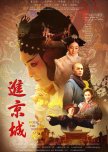
"Devotion to art is like a religious belief"
Hu Mei’s passion project about the nascent Beijing Opera took six years to come to fruition. Not even the studio burning down could thwart her. Enter the Forbidden City was a beautifully shot film that took time to find its footing but once the two singers began to share the spotlight, the “fascination” began.Singer Yue Jiu is betrayed by jealous rivals and banned from the capital for life. In the same city where he is in exile, Run Sheng is facing discrimination because he is an entertainer. Back in the capital, the emperor wants to invite 100 theatrical troupes to The Forbidden City for his 80th birthday but the cost is too prohibitive (17,800 taels of silver per troupe!). If they can pay their own way, the entertainers are welcome to come. Princess Feng attends Run Sheng’s shows and has taken an interest in him as a patron and as a woman. The troupe’s travel plans run into a financial snag until they are offered what they need to appear before the emperor, but for a dangerous tradeoff.
Hu Mei’s movie was lush and color saturated. The costumes were elegant and she often filmed on location which added a realism to the setting. Emotional music swelled in the background, a nice break from the actors’ singing performances. All of these things contributed to a well-made film which was pleasing to soak in. Where the film lapsed for me was the first third of the film. Jiu was the initial character shown so he imprinted on me. After he was quickly kicked out of the capital, the film focused on Run Sheng and the abuse the troupe members took from the locals. This left me wondering what happened to Jiu and where the film was going. Run Sheng’s elopement gobbled up much of the running time and had very little to do with the overall story development except to give him more depth and appear unstable. I also have a complaint that was completely out of Hu Mei’s hands---the official subtitles were white and miniscule. They were difficult, sometimes impossible, to read and a real eyestrain.
The strength of this film lay in showing how the actors worked and practiced. Ma Yi Li as Princess Feng added a feminine element even when she was dressed as a man. She wasn’t strictly fangirling, she had precious tips for the overconfident Run Sheng. Jiu’s complete commitment to his craft bordered on obsession and inspired Run Sheng. Fu Da Long was exceptional as Yue Jiu, whose every movement was graceful and specifically designed. Ma Yi Li is fast becoming a favorite with her striking screen presence, she balanced the princess’ strength and vulnerability with ease.
Enter the Forbidden City was inspired by real stories and events and a treat for the eyes. Though not my culture or history, I enjoyed learning about some of the history of early Beijing Opera. It was also one of the rare times an emperor wasn’t portrayed as a monster or a complete idiot which was refreshing. Please don’t tell me if he was a monster and/or idiot in real life. ^^
27 August 2024
7.25
Was this review helpful to you?
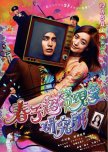
"Do you have a warranty?"
If you are in the mood for something super quirky that looks like it was made on a shoestring budget, search no further, Haruko’s Paranormal Laboratory is here to serve your quirky needs. It felt like writer/director Lisa Takeba brainstormed as many strange things as she could and then strung them all together in a surreal story.Haruko is an odd little duck who has always desperately wanted to have a paranormal adventure. She’s been begging for a UFO to visit her for years especially after her brother was taken up in one. She complains about every show on her 1953 television set. Unseen to her a counter flips over a number for every complaint and curse word she utters. When it hits 10,000 her television turns into a man with a tv on his head and a super dong for other activities. They quickly become sex buddies. After a while he tires of being a house boyfriend doing all the domestic activities and goes out to find a job. Fortunately for him, he speaks 12 languages and lands a couple of teaching jobs on TV and the radio. Haruko works with a sex crazed woman turned “artistic” arsonist. Her next-door neighbor makes sex art out of veggies. The most dedicated TV licenser on the planet makes sure she pays her fees whether the television works like a normal one or becomes a man. There’s an “artistic” masked coin bandit and a Friday the 13th Jason cosplayer who follows her around. She also finds out some kinky news about her father and mother.
I’m sure there was some deeper message and social commentary on feeling socially alienated, the boredom of working a meaningless job, being unable to make your real passion make money (tea stain art?), and only being able to find true love with a television set, but it was a little hard to strain out with all the bizarre paranormal and abnormal people wandering around. If you ever wondered what an R rated Pee Wee Herman’s Playhouse made in Japan might be like, this would come close. Where else could you see a drugged-up television set have a dance-off with a camera?
22 August 2024
Was this review helpful to you?
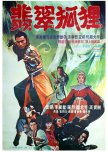
"You didn't capture me, I came looking for you!"
Directed by Kao Pao Shu and written by prolific writer Ni Kuang, The Jade Fox had non-stop action and all sorts of crisscross double cross action. There was also a female villain with a tricked-out war chair. And it wouldn’t be an old school kung fu flick without a secret map!(I’m just going to use the actors’ names for most characters as there are different names floating around). Kao Pao Shu is plotting to take over the kingdom with the help of a secret map. Her main bodyguard is Lo Lieh. Tien “Roc” Peng/The Jade Fox steals the map from her courier. Kao has Lo Lieh deliver an “invitation” at the end of a sword for Nick Cheung Lik to come to Fairy Land. Doris Lung is Lik’s fiancée and she tears up the Jade Fox’s House of Pleasure looking for his pal Lik. In the process of cleaning out the place with her kung fu, she meets the Jade Fox’s other friend, Iron Hand/Eddy Ko and a young prostitute’s son called “Come Again” who was trained in martial arts by a monkey! Whew! Oh, and the Jade Fox’s ex-lover who works for Kao is ordered to bring him to the villainess.
The story bounces around and bodies begin dropping by the dozens as the Jade Fox attempts to track down the head villainess with the aid of Come Again, Doris Lung, and Eddy Ko. Jacky Chen who played an ill-fated hero who unfortunately discovered the deadly traps hidden in Kao Pao Shu’s chair and livery was one of the martial arts directors. He and Chen Mu Chuan had their hands full designing fight choreography for several actors who were not accomplished martial artists. For the most part they succeeded, keeping in mind this was before all the CGI, slow-mo wizardry done now. One of the best and most brutal fights was at the end between two “good” characters. I enjoyed Doris Lung and Eddy Ko’s performances and fight scenes more than I thought I would. Roc Tien wasn’t too wooden and the child character wasn’t overly annoying. Solid wins in this genre.
The story bordered on convoluted but the cast mostly pulled it off when compared to other low budget Taiwanese kung fu films from the time. The biggest detriment to this film was that it needs to be restored. It was quite blurry and zoomed in too much. The only copies I could find were dubbed and the sound wasn’t always great. There were also advertisements showing it was for sale in South Africa during two different scenes in the movie. These later issues were not the fault of the filmmaker so I had to strain all of the distracting later problems out as best I could. My score is probably a little high, even when grading on a curve, but I really enjoyed the bonkers fights at the end as all of the hidden identities and schemes were revealed. As usual, this is only for people who enjoy old kung fu movies, they are definitely a niche genre.
20 August 2024
Was this review helpful to you?
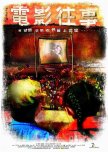
Mao Da Bing is a water delivery boy and in a rush on his bike to make a movie’s showing. He accidentally knocks over some bricks and a young woman clocks him upside the head with a brick and then destroys his bike. At the police station she hands him her keys and tells him to feed her fish by writing on a piece of paper. When he enters her apartment, he sees that it is an ode to film and especially Street Angel with actress Xiao Xuan. He finds her diary and begins to read about her life and how she ended up where she is. As he reads her story, Da Bing also discovers they share a childhood connection.
The flashbacks to Ling Ling and Da Bing’s childhood were sweet and an innocent exploration of friendship and films. Before and after this segment was not as entertaining and contained one too many melodramatic and coincidental moments for me. As a cinephile I can understand the children’s love of film and the role it played before television took over. What I didn’t understand were some of the mom’s inconsistent decisions later in the story. Another mystery for me is what kind of job did Ling Ling have to be able to outfit her apartment like a mini-cinema? Da Bing could barely afford to go to the movies as an adult. They suffered similar situations and Ling Ling’s was compounded by hearing loss.
As much as I wanted to love this film about loving films, outside of the children’s story, the film suffered from too many coincidences and underdeveloped character elements. However, if you can overlook some of those flaws there is still much to be enjoyed in this film about childhood friendship, family, and reconciliation aided by the numerous clips of old Chinese films.
19 August 2024
Was this review helpful to you?
This review may contain spoilers
"Once you join a family, you have to pitch in, right?"
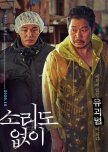
Voice of Silence was an amalgam of different genres with results as mixed as the narrative moods. Shots of bucolic farm land and cornflower blue skies camouflaged empty buildings hiding dark, deadly secrets. The acting and cinematography were excellent, I just can’t say that I thoroughly enjoyed what was supposed to be a heartwarming story of a child in jeopardy.Chang Bok and Kim Tae In both have physical disabilities. Chang Bok walks with a significant limp and Tae In is mute. They live amongst beautiful farmland in peasant shacks selling chicken eggs at the market. In their spare time they clean up crime scenes for a gang. They know where all the bodies are buried because they buried them. Things go sidewise when their boss tells them to take care of a little girl who has been kidnapped. Because the kidnappers accidentally grabbed Cho Hee instead of her brother, the father has been haggling with them, unwilling to pay much for her. Tae In takes her home to his small squalid place he shares with his little sister. Cho Hee befriends Moon Ju and helps to civilize the almost feral girl. Chang Bok takes Cho Hee on their jobs and the child scarcely bats an eye at the bloody business. The more her father holds out the more danger the little girl is in even from her well-meaning caretakers.
It felt like I was supposed to become invested in Tae In and Cho Hee’s relationship as the two seemed to bond. In truth, the only characters I cared about were Cho Hee and Moon Ju. Chang Bok and Tae In may have cared about her to a degree but were also willing to hand her over to child/organ traffickers. Unlike church going Chang Bok, Tae In’s moral compass began to point toward protecting Cho Hee. Yet Tae In was still a criminal. When a police officer investigated Tae In’s property, I was hoping she would find the girl, she certainly didn’t deserve what happened to her.
The most fascinating character to me was Cho Hee. What kind of family did she come from that burying a body and bloody scenes didn’t affect her? The film never told us. At every crisis she processed the information and pinned a placid expression on her face. Regardless of any sympathy she felt toward Tae In she was smart enough to realize how precarious her situation was with the two inept criminals surrounded by sharks. Her family might have been reluctant to have her returned but her fate was a terrible end the longer she stayed where she was.
I’m quite sensitive to child in jeopardy films and despite Tae In having a good heart working at a bad job, Cho Hee was in danger. "Once you join a family, you have to pitch in, right?" Just because they made the child an honorary family member while she was a prisoner didn’t mean that what was planned for her was any less heinous. It didn’t help that the film ended as if the writers ran out of paper when typing out the script and decided they’d gone far enough. Open endings are my least favorite and always feel lazy to me like the writer didn’t want to commit to an ending for fear of angering some part of the audience.
Voice of Silence did not fit neatly into any category. Was it a crime drama? There were plenty of bodies. A comedy? Maybe, I laughed once. Social Commentary? The two inept criminals did seem to be forced to work for the gang due to financial hardships in the rural area. Strange Criminal Slice of Life Buddy film? Probably the closest fit. Mostly, the message that came across was that one day you’re hanging someone on a meat hook, the next day it might be you.
16 August 2024
Was this review helpful to you?


