

 148
148 438
438 16
16 2
2 6
6 3
3 8
8 10
10 3
3 13
13 1
1 1
1 1
1 1
1 2
2 7
7 9
9 5
5 9
9


This review may contain spoilers
Slow, non-linear story, but still engaging
Desert of No Return was a slow paced, non-linear (very non-linear) story about two people in dire financial straits who hooked up one night leading to tragedy. The film felt dragged out by bouncing back and forth in time and telling the story from both main characters' points of view. Soo Eun's story was far more compelling and Ha Yoon Kyung did a superb job bringing her to life.Tae Shik is a divorced father who lives with his mother and can't make ends meet providing for both households. He collects junk from sellers and illegally from abandoned houses. His ex-wife takes every opportunity to denigrate him as well as people on the street. He goes with a friend to a karaoke bar where girls are provided for companionship. Soo Eun wants to own a nail salon but is short of the cash needed. She is in a loving relationship with a female musician and promised to never sleep with the clients during the "second round." Tae Shik and a reluctant Soo Eun end up in a hotel room which sets a terrible chain of events in motion.
Tae Shik was a man incapable of properly handling adversity or confrontation. If there was any effort to make him sympathetic it did not work with me. The more I discovered about him the less I empathized with him. All I learned from the film was that even ahjussis can be deadly dangerous if provoked or steal from you when your back is turned. Soo Eun made a choice she paid for in multiple ways. Though she worked to be a good human being she lost everything due to a desperate decision. The film bounced not only between the two characters' points of view but also back and forth in time which could be confusing.
Tae Shik's story tried to explain his rage which Jo Sung Ha portrayed well. Ha Yoon Kyung brought out Soo Eun's vulnerable side as well as her fierce side. She was beautiful whether made up or sans free of makeup and gave a lovely performance as the doomed young woman. The music was quietly moving though I disagree with her lover, even musicians have to pay their bills.
I didn't particularly enjoy the first part of the film but found myself engrossed in Soo Eun's romance and story. Many synopses made her out to be a prostitute. I don't think one time brands a woman for life. I felt the ending was unsatisfactory, but that could be because I do like my endings tied up with a bow one way or another. Had the rest of the film felt as complete as Soo Eun's story I would have enjoyed it more.
9/19/23
Was this review helpful to you?

This review may contain spoilers
Set in the early 1900's, The Bloody Fists starred Chen Sing and Chen Kuan Tai. Yuen Woo Ping choreographed the fights which meant at least they would be interesting. It was a good thing, because the story wasn't.With a plague descending upon the country the invading Japanese wanted the precious dragon herb grown locally for their own people and to let the Chinese suffer the devastating effects of the illness without their remedy. The villagers in charge of farming and storing it refuse to sell it to the Japanese. A mask wearing Chen Kuan Tai in a terrible wig brings his men to intimidate the village into handing over the dragon herb. Three brothers manage to hold his men off initially. In a kung fu film if there are three brothers, two of them are extraneous and most likely won't see the ending credits. Along with the Yu brothers, Jiang Wu Ke, a notorious robber wanted by the law shows up in town while he's on the run. He falls ill with the plague and is treated with the dragon herb by a mute and his grandfather. By the time he recovers the villagers are either dead or being held hostage by the Japanese. The bad guys didn't quite grasp the whole hostage concept as they kept killing them off or killing the people who knew where the herb was hidden. Offended by the bad guys' violence Jiang decides to take matters into his own hands.
Chen Sing played the good guy in this movie, going against his usual villain type. He did make for a more complex hero than the bland Yu brothers. Chen Kuan Tai didn't come across as a very sinister baddie, but it could have been due to the hilarious wig he was sporting. Evil sidekick San Kaui had owl-like eyebrows while Pak Sha Lik looked like his mustache was made out of electrical tape. Mama Hung and Hao Li Jen who had nearly 600 acting credits between them made their usual supporting appearances.
The story's simple plot coupled with terrible pacing caused the movie to drag terribly. The sets weren't special and the Chinese costumes were standard for kung fu movies regardless of the era they were supposed to take place in. The Japanese costumes were as bad as Kuan Tai's wig. There was an awful rape scene that was gratuitous and completely unnecessary which downgraded the movie for me. Yuen Woo Ping's fight choreography wasn't as polished as it would become but it was entertaining, especially the final fights by the ocean beach. Chen Sing and Chen Kuan Tai had enough charisma to sell it. There was one fight in the dark that was almost impossible to make out much of the action. Trampolines and sped up camera work were both employed throughout.
As bland as the story and characters were, I did enjoy seeing Chen Sing play the good guy. He made his character compelling to watch, a rare feat next to the lackluster cast. The Bloody Fists wasn't an awful 1970's kung fu film, but it wasn't bloody marvelous either.
9/10/23
Was this review helpful to you?
This review may contain spoilers
"A flower once bloomed will hold to the vine, while a bud will fall."
Kurosawa Akira worked on this script but didn't live to film the story. The Sea Is Watching seemed far from his usual comfort zone as it was woman centric and heavy on romance. You'd have to go back to just after WWII to see him tread so heavily into romantic territory. Director Kumai Kei picked up his mantel and made the film, but it felt far from the Kurosawa films most of us are familiar with.The film centers around a brothel and a young prostitute named Oshin. She has a big heart and a bad habit of giving it away to the wrong men. Kikuno is an older prostitute with an older suitor who wants her to come live with him. Stopping her is a violent yakuza lover who thinks he owns her and uses her earnings to pay off bad debts. The young women stick together and support one another through their ups and downs. After a bad romance, Oshin falls hard for a destitute man who is ready to end his life. He will play a key role when a torrential storm churns up the sea and the nearby river sending flood waters toward the town.
The cinematography and sets were beautiful and the colorful kimonos stunning. The acting seemed overwrought at times as the younger thespians weren't as polished as the more experienced actors. Shimizu Misa grounded the young oiran with a more reserved performance.
This film played like a melodramatic slice of life on the wrong side of the bridge as the women dealt with the caste system, love, heartache and dangerous clients. The middle bogged down making an already long film feel longer. However, the ending gave the film the emotional weight it desperately needed when one person showed the true samurai spirit in a moment of love and sacrifice with the pure-heart of a warrior.
9/9/23
Was this review helpful to you?
This review may contain spoilers
Sometimes brave people can bring about change
As the Tibetan antelope numbers rapidly decreased from one million to around 10,000 in the 1990's, men from the Kekexili area formed the Mountain Patrol to deter poachers from the area. Based on a true story, in the nearly lawless, desolate land the patrol had no one to rely on but themselves. Outmanned and outgunned by the ruthless poachers they would have to be resolute in their convictions in the unforgiving terrain to save the endangered animals…and themselves.A Beijing journalist with a Tibetan father, Gu Ya, succeeds in imbedding himself with the Mountain Patrol. Their leader, battle hardened Ri Tae, accepts him with the hope a story could bring more help to their cause. The patrol is mourning the loss of one of their own who was murdered recently by the poachers. Gu Ya scarcely has time to unpack his bag before the men head out on patrol to track down the murderers. Along the way they cover barren desert and forbidding mountains. Gu Ya discovers how harshly they interrogate witnesses and suspects, especially after they come across nearly 500 hundred dead and peltless antelope. The patrol reverently stacks the carcasses and burns them with a funeral rite. The small band of men have to resort to selling the pelts they discover to pay for medical care and supplies.
The patrol was decimated by illness and death. The earth reminded them that despite their noble cause, they were vulnerable in spaces without food and water, where snowstorms could erupt in a moment, and quicksand could swallow a man in a matter of seconds. The desert and blizzard winds mercilessly erased all traces that a person had ever been there. Ri Tae was a man possessed with catching the murdering poachers which endangered not only himself but also his men as they ran low on food and fuel. Tibetan actor Duo Bu Jie was perfect as the patrol leader who was relentless in his pursuit of his enemy and also loved his men and the land.
Mountain Patrol could be disturbing with scenes of animals being butchered with numerous carcasses and bullet ridden pelts. Yet it also featured beautiful and stark landscapes. Director Lu Chuan filmed on location where the events were said to have happened in a land so remote a person's steps could be the first footsteps there since the dawn of time. The soundtrack was emotionally haunting, perfectly accenting a scene without intruding. The story was gut wrenching as the men with "dirty hands and pure hearts" suffered devastating losses. Yet their losses for a cause they believed in did bring about change. After their stories became published the government designated the land a natural preserve and the antelope population has steadily increased. Lu Chuan never fully answered what compelled these men to risk their lives in service to the graceful animals, but the world is a slightly better place because they did.
9/1/23
Was this review helpful to you?
This review may contain spoilers
"Beauty co-exists with its wounds"
If a person wrote a love letter to Taiwan extolling its people, land, food, and history it might look like A Thousand Goodnights. An adopted daughter sought to finish her father's rail trip of exploration and found an unfinished story needing reconciliation. Later in the drama the journey diverted off the main itinerary into melodramatic territory stranding passengers hoping for more scenic destinations yet still continued the search for meaning between generations and what constituted home.Kindly Station Master Tai Chia He took an abandoned little girl, Tai Tien Ching, home and raised her as his own along with his daughter, Tai Tien Yu. On the day of his retirement, Cheng No, a young man he had corresponded with through the years returned to Taiwan. Chia He set out the next day on his long awaited rail journey complete with itinerary in hand. When Chia He unexpectedly died Tien Ching and Cheng No decided to finish his trip for him. Along the way they discovered relationships that needed healing-a first love, a birding club, an old friend's birthday party gathering, and a child who needed a family and desired to be a station master.
New friends were made and new family members discovered and romance blossomed along the way. The drama dealt with healing the sins of the past and the problems of the present. It covered a multitude of issues-infidelity, lost parents, dementia, plagiarism, gambling and the trials of becoming an idol. The older generation learned from the younger generation as the younger generation learned from the older generation.
I loved seeing the beauty of Taiwan and learning about some of its history. The rail travels were my favorite part. The healing message and reconciliations were heartwarming if a little too simple. As one character said, "I really miss those days when we traveled together." Me, too, buddy. The story lost some of its magic when it veered off course.
The biggest problem I had was the female lead, Tien Ching. As one character asked her, "Were you born to be exploited?" She was terribly bland and being an artist could not be used as a substitute for actual interesting characteristics. She mumbled quite often and had trouble standing up for herself which led to people taking advantage of her. The actress who played her was limited to pursing her lips and darting her eyes around to convey emotion. Her every movement looked staged and awkward and very rigid in comparison to some of the more natural performances around her.
Overall, A Thousand Goodnights conveyed the value of handing down our stories from generation to generation as well as expanding the friendships to the next generation. Most family and friendship problems were handled respectfully and with compassion. The characters also found the value in home and family and not letting past family heartaches determine how they would treat each other in the present. This charming drama showed not only the beauty of Taiwan and her people, but also how we are all tied to the earth and to each other.
5/31/23
Was this review helpful to you?
This review may contain spoilers
Samurai daddy take your kid to work day
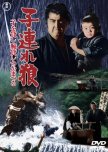
Lone Wolf and Cub: Sword of Vengeance was the first in a series of movies about a disgraced ronin caring for his baby son while seeking revenge on the people who murdered his wife and framed him for treason. This ronin of few words left a trail of spurting arteries along with piles of limbs and decapitated heads.Ogami Itto was the honored executioner for the Shogun until one day the treacherous Yagyu clan decided they wanted his position for their clan. They murdered his wife and set him up on treason charges. The wily swordsman not only escaped the executioner's blade but won his freedom as long as he stayed out of Edo. Pushing a secret weapon laden baby cart, he had a sign reading "Sword for Hire" and "Son for Hire." No longer using his feared name, he and his son were now known as the Lone Wolf and Cub. An assassination job took him to a hot spring in a mountain village being terrorized by bandits. Playing a sheep looking after his lamb he found himself among captured travelers. It didn't take a fortune teller to know what the fate of the bandits would ultimately be.
Ogami had his own code of righteousness formed by his job and his responsibility to his son. It meant when he saw a woman being raped and her father murdered that he didn't step in, which didn't exactly grant him a halo. Nor did it stop him from servicing a prostitute in front of crowd in order to "save" her. A man's gotta do what a man's gotta do. Like other 1970's movies, there was plenty of sexploitation. Had they toned down the naked women and sexual violence I would have enjoyed this movie more.
This film felt like they were setting the table for more courses to come. I was surprised how quickly the movie was over and how little happened in the present as there was copious use of flashbacks. Wakayama Tomisaburo was an accomplished martial artist and his skill showed during the fights. At least the fights I could watch when I wasn't closing my eyes during the severing of limbs and buckets o' blood spewing everywhere.
Lone Wolf and Cub reminded me of the Mandalorian only with more blood and flying body parts. Ogami's son could have given Baby Yoda a run for his money in the cute kid with a lethal daddy department . If you can overlook the '70s sexploitation and are in the market for an old school gore fest samurai with a baby who is also seeking revenge film, this is it.
8/31/23
Was this review helpful to you?
This review may contain spoilers
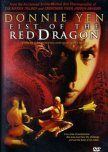
Wong Fei Hung once again fights opium dealers, this time in Heroes of Heroes, with a little help from Beggar So. An evil opium smoking and opium dealing prince found himself overextended when he managed to make enemies of both men even with the vicious Red Lotus gang backing him up.Special Commissioner Lin asks for Wong Fei Hung's help in cleaning up the city when the Emperor declares an opium ban. So Chai from the wealthy So family is bamboozled by Prince Barac into siding with him on the opium issue. The Prince is not only addicted to opium but stands to lose a fortune if its banned. When the prince hooks the young So on opium, Wong Fei Hung steps in to rescue the promising fighter. The two kung fu legends will have to work together to bring down the prince and free the city from the grip of opium addiction and dealers.
The first fifty minutes of this film were narratively scattered and filled with slapstick comedy. I found it tedious and underwhelming. When the secondary characters stopped hogging the limelight and So and WFH stepped up with their fists and kicks in the second half the movie turned for the better.
Wang Jue made for a very bland Wong Fei Hung. Donnie Yen was much more interesting as the young Beggar So discovering his destiny. Hung Yan Yan/Xiong XinXin succeeded in making the sinister Prince someone who was difficult to defeat. Fennie Yuen started out as the intrepid princess reporter with her camera, but quickly became a damsel in distress. Ng Man Tat and Sheila Chan were mainly used as comic relief, really bad comic relief.
The fights, especially in the second half were entertaining. There was a lot of wire-work and sped up camera action, but also some nice hand and foot work. Donnie was young, fast, and limber. I always enjoy watching him fight. The Yuen clan choreographed interesting fights using weapons, scenery, tiger, crane, and drunken fist styles of kung fu.
If you love 1990's slapstick comedy complete with goofy prosthetic teeth, you're in for a treat. If you're like me and just don't get it, but do enjoy old kung fu movies, be patient and wait until around the 50-minute mark and the fun will begin.
8/27/23
Was this review helpful to you?

This review may contain spoilers
Watch only if you have a strong stomach
In the 1970's movies and television dug into the occult and often mixed it with a little sexploitation. Black Magic was one of those movies. The movie boasted a strong Shaw Brothers cast-Ti Lung, Lo Lieh, Tien Ni, Ku Feng and Lily Li. It also had a host of slimy creatures. You'd need a strong stomach to watch it.Ku Feng played the Black Magic magician with a laughable gray wig. Lo Lieh loved Tien Ni's money so he needed her to fall in love with him. Tien Ni was in love with Ti Lung's body and needed him to fall in love with her. Ku Feng wanted to sleep with Tien Ni. Finally, Ti Lung and Lily Li had a wholesome love that was definitely going to get messed up by all the lust and greed in the air. The Black Magic started flowing and nobody ended up with exactly what they desired. Fortunately, Ku Wen Chung played a good priest who helped sort things out by the end.
There were plenty of dead bodies, nude bodies (some writer had a fetish about women expressing breast milk), snakes, worms, centipedes and other vile bits. I'd have to include Ti Lung's horrible wig among the scary objects. The only thing that caused me to rate this as high as I did was the hilarious finale where good and evil fought it out with cheap 1970's special effects and sound effects on top of a building scaffold. I watched it on my quest to see all of Lo Lieh's movies. Other than that, I couldn't recommend unless you enjoy films with all of the above.
8/26/23
Was this review helpful to you?
The Blob moved quicker than this slow paced movie
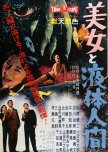
H-Man, in this case H-Men, was another film cautioning against the use of atomic weapons. Similar to The Blob, slow moving ooey-gooey creatures that can also glow green dissolve anyone in their path.
The film begins with a drug heist gone wrong when the chief gangster disappears leaving his clothes behind. Enter an earnest young scientist who tries to convince the police that the gangster didn't run away---he was dissolved. The police refuse to believe him and concentrate on tailing the gangster's lover who is a singer in a club. After the dissolved bodies start puddling all over town, they realize they are dealing with the consequences of radioactive experiments.
The sci-fi part of the movie was well done for a story about giant molasses-moving blobs of radioactive goo that dissolve people but not their clothes. The tedious gangster part of the film about finding a block of missing heroin slowed the movie down making the blobs seem quick in comparison. As with some Godzilla movies, the monstrous blobs had most of their screen time in the last segment of the movie leaving the rest to the boring humans.
I enjoy a good creature feature, but the movie needs to feature the creature and not women in skimpy outfits singing in a club or cardboard characters wandering around aimlessly looking for gangsters or puddles of goo. Green Glowing Blobby-7.5/10 Bland Gangster Noir-4/10
8/24/23
Was this review helpful to you?
This review may contain spoilers
"Every time you lose something, you have to discover another piece of yourself"
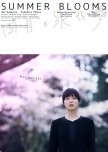
Summer Blooms was a gauzy slow journey through a young woman's grief and guilt. Hatsumi's life froze in one moment in spring, not looking back and not moving forward. A series of events jarred her loose from her self-imposed exile compelling her to face the truth of her life and the death of her ex-boyfriend.Hatsumi works part-time in a soba noodle shop, listens to the radio, and floats through her days. We're told her boyfriend had died three years ago in the spring, an event that upended her world. She gave up teaching and for the most part, living. Whether it was sorrow over the loss of a great love or something else we don't know. The noodle shop owner is retiring and closing the shop ending her tenure there. An old student attempting to make it as a jazz singer drops into her life. The energetic, kooky young woman shakes up her mundane routine. With the restaurant closing, a customer who had eaten there every day just to see her, finally works up the courage to speak to her. He wants more from her, but she seems reticent to go out with him. A pregnant ex-colleague asks her to substitute for her while she is on maternity leave, pressuring her to make a decision. And more dramatically, the deceased ex-boyfriend's last letter to her shows up at her door step.
After three years of existing, she decides to confront the past and travels to the town where her boyfriend's parents live. Here her truth comes out as well as the reason for his death. To be honest, I'd figured it out early on, but the movie takes us well into the last act before it shares these revelations. I found his letter to be self-serving and it seemed she did as well. It turns out it was one of many he'd written her, with her not responding to them. In the end she wrote him a letter that helped her move from spring to summer.
Asakura Aki was perfect for playing a reserved young woman with a fake smile. She gave us tiny glimpses into the pain beneath and through the former student Kaede, flashes of the fierceness she was capable of displaying. Kawasaki Yuriko as Kaede gave just the right balance of youthful bravura and frightened homeless waif with an abusive boyfriend. She also supplied a clue that Hatsumi's ex-boyfriend might not have been mentally well-balanced. Miura Takahiro's Totaro, the craftsman in love with her, was rather bland and something of a red flag with his behaviors.
Summer Blooms was a light exploration of Hatsumi's grief and guilt and her withdrawal from the world. It took a collision of circumstances to finally force her to face her monotonous life and the reason for it. Due to the reason for her seclusion, I was expecting more of a moment of emotional discovery and more revelations to the audience for why she felt she needed to suffer so much. What led to the fateful moment that crystallized her life in seclusion? In the end, it felt like the movie was skipping stones on the shallow surface of her life and only briefly touching on the real reason behind her actions when the stone sank below the waves. Though the film attempted to show how one young woman responded to loss and finally worked through it, the story lacked the depth to have a proper conversation and left many pertinent elements of her previous relationship unknown.
8/14/23
Was this review helpful to you?
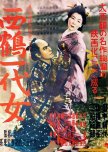
"What's immoral about a man and woman falling in love?"
Director Mizoguchi Kenji precariously balanced The Life of Oharu on the edge of a knife, while touching on melodrama, never slipped off into base sentimentality. His heroine, Oharu, faced degradation after degradation as a woman during the Edo period of Japan. Bound by tradition and gender, with little autonomy, her life was one of hardship created by roles she could not break out of.Teenage Oharu was in love with a young retainer played by Mifune Toshiro. Katsunosuke refuses to give up on her because of his lower class, believing rank and money don't mean happiness, one has to marry for love. When they are caught in flagrante delicto, she and her parents are banished from Kyoto and the court, a far easier punishment than the lowly man who loved her. As fate would have it in Edo, Lord Matsudaira needs a concubine because his wife is barren. Without a second thought for Oharu, her father sells her to the lord. She blesses the lord with a son, but when the ruler is deemed as becoming weaker for spending too much time in bed with her, she is shown the door with basically the clothes on her back.
Her father sells her to a courtesan house where her attitude gets her thrown out. He then sells her as a maid to a couple, but when they discover her background, the wife becomes jealous and the husband wants "favors." After leaving that household, her parents find her a husband who doesn't care about her background and for a brief time she is happy. But that happiness turns to tragedy and once again she is on the street even lower than before. A group of old prostitutes take her in and set her up as a common prostitute, not an easy or profitable proposition at her age. When fate seems to smile on her it is only to turn the knife. But this cruel last twist strangely leads to a path that brings her peace.
Tanaka Kinuyo at the age of 43 took part in the grand tradition of actresses too old for their role playing a teenager. Her father was played by Sugai Ichiro and her mother who was played by Matsuura Tsukie were both only two years older than she was in real life! The role took her well into middle age, with the prostitutes complaining that you can't make a fifty-year-old woman look twenty. Tanaka may not have had a teenager's youth but she still brought a resiliency and grace to the role even as Oharu's life deteriorated. Mifune Toshiro's role as the retainer in love with her was brief and filled with criticism of classism and advocation for personal choice in something as important as marriage.
Mizoguchi often focused on the plight of women in his pictures. When he was young, his sister was sold to a geisha house because his father had gone into debt. That same sister would later take he and his brother in and pay for their schooling and help him find jobs. His criticism of women being sold and the damage it did to their lives was stinging.
Oharu made one choice for herself, the love for the young retainer and that ended in utter disaster because such a union was unacceptable to society. After that, her life choices were determined by others, for their desires and benefits. When it was found out she had been a courtesan, it meant she was fair game and men took advantage of that. When she was dismissed by the daimyo, there was no compensation for her loss of status, nor when her husband died did she receive anything, it went to his family. She was a woman without power, without status, and without her own agency. Her father sold her three times, as a concubine, a courtesan, and then as a maid. With the brief exceptions of Katsunosuke and her husband, Oharu's dignity and happiness held little to no value to the men who came into her life. There was no guilt in selling her or casting her callously aside. Mizoguchi didn't dwell on the vile acts, he simply pointed them out---repeatedly. Men were the only ones who truly mattered, especially men of power, and they were myopically and self-centeredly exercising their rights. Oharu never wailed at her fate, she simply kept as much dignity as she could as she faced torment after torment. Only at the end, when she made a choice that kept her in control of her own body did she came into her own. What might have been seen as a loss by others, actually freed her for the first time and let her spirit sore.
Mizoguchi resisted an emotionally manipulative, overwrought soundtrack for this sorrowful story. Instead of a swelling impassioned score to highlight the current emotional crisis at hand, stark, traditional Japanese tunes were used, whether it was background music, Buddhist chants, or a beggar on the street playing. He often distanced the audience from Oharu's pain by having her partially cover her face. The beleaguered woman was also recurrently shown from the back so that we didn't see the wounded emotions on her face. The story enacted around her told us of her shame, grief, and anger. Oharu's circumstances were also hidden from other characters in the film. The people who derided her were blind to the depth of her pain and her despair at being powerless to fight the system that held no compassion for her.
The Life of Oharu could be repetitive but also contained an element of truth. In the 17th century, a woman once "ruined", lost her status and value making her vulnerable and leaving her with few alternatives. Oharu's real courage was in surviving and ultimately finding an escape route that freed her from the cruel cage society and family had trapped her in.
7/26/23
Was this review helpful to you?
This review may contain spoilers
The window of opportunity has opened
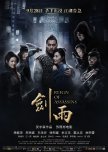
Reign of Assassins is a good old-fashioned wuxia. Though lacking the artistic flair of Ang Lee and Zhang Yi Mou, it had more than enough exciting sword action and compelling acting to set it well above average. With assassins around every corner, hidden identities, and a little romance thrown in, ROA delivered.Very minor spoilers:
The Dark Stone gang murders an official and his son in order to possess the remains of legendary monk Bodhi which are rumored to make the one in possession of them the ruler of the martial world as well as the source to miraculous healing. One of the assassins, Shi Yu, escapes with the remains and goes on the run with most of the assassin world searching for her. A soon to be monk named Wisdom helps her hide and they fall in love. He also gives her valuable information about the weaknesses of her Water Shedding sword technique. From her experience with him, she determines to turn over a new leaf. She visits Dr. Li who gives her a new face and identity. The freshly named Zeng Jing sets up a shop in town and soon falls in love with the local courier, Jiang Ah Sheng. He's a kind-hearted, clumsy, gentle man who seemingly couldn't hurt a fly. But the course of true love never runs smoothly and soon The Dark Stone gang and other contenders for the remains arrive in town when her secret identity is revealed.
This film might not have worked as well if Michelle Yeoh had not played Zeng Jing. She gave a complexity to the role that made her magnetic to watch. She and Jung Woo Sung had nice chemistry together and made for a believable couple. The Dark Stone gang was comprised of an eclectic group of killers. The Wheel King wore an obvious fake moustache and had personal reasons for wanting the remains. There was also an older assassin who was a magician, an assassin who used darts and had a loving wife at home, and a promiscuous and blood lusting new recruit who had murdered her fiancé and his family. Director Su Chao Pin took his time developing the characters and their complicated relationships which gave greater stakes to the fights and more fire to the vengeful surprises as they unfolded.
The fight choreography was creative and highly entertaining. Swords tore through the air so quickly, the action could be hard to follow. Wire-fu was used without making it the focal point and there were no Matrix slow-motion moves too often overused in films. Michelle Yeoh as always convincingly displayed a graceful dexterity with weapons and a dancer's flexibility with her kung fu moves. Korean actor, Jung Woo Sung acquitted himself well when it came his time to participate in the action.
This film embodied the important aspects of a good wuxia-revenge, quality fights, a little romance, and a satisfying redemption arch. Most of all, Reign of Assassins featured a captivating female swordswoman who evolved as a character and was allowed to fight her own battles. Michelle Yeoh once again demonstrated why she is the queen of martial arts movies.
7/19/23
Was this review helpful to you?
This review may contain spoilers
What's love got to do with it?
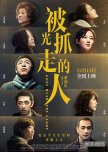
Gone with the Light was a thoughtful meditation on what romantic love is and the extent to which we need it in our lives. What happens when an inexplicable beam of light judges your relationship and love as inadequate? Do you examine yourself and your life? Or do you make excuses and justifications? Do you accept that you must live without love?One spring morning a beam of light causes a fraction of the people from the planet to disappear. The story focuses on three people left behind, Wu Wen Xue, a teacher who has been married for nearly 20 years; Lin Nan, an officer worker in the process of divorcing her philandering husband; and Kuai Zi, a small-time hoodlum who says he doesn't believe in love but is desperately searching for his partner in crime. Though not connected their paths do inadvertently cross at times.
"It's only us who can define our love." Wu is the emotional heart of the film as he wrestles with his stale marriage and the discrimination he faces at work for being morally suspicious as one left behind. Wu becomes desperate to prove he and his wife love each other even sinking to buying photoshopped pictures and a fake train ticket showing she was out of town during the beam which explains why they weren't taken together. Initially, he tries to save face during an increasingly unstable social order but soon he is forced to confront the reality that his marriage wasn't working and was built on convenient lies, both his and hers. Huang Bo gave a lovely nuanced performance that strengthened the emotional depth of the film.
"You take in my trash and treat it as treasure." Li Nan is confronted by her husband's mistress when he disappears. The two women begin their odyssey of discovering who he truly loved and disappeared with. Along the way they discover more about themselves and their feelings for the man they shared. They also uncovered parts of his life hitherto unknown, finding neither had truly understood him.
"We're all the same. We don't have love." Kaui Zi was the least developed character, someone who eschewed loved but whose desperation in finding his partner hinted more than a little at a same sex love, at least on his part. Through him we see another man who killed his wife for putting green onions in his stir-fry, an obvious demonstration that she hadn't loved him which is why they didn't disappear.
"It's already proved there's no love." A young woman whose parents refused to let her marry the guy she was in love with watched them disappear during a heated argument. The father had numerous mistresses and the mother was an inveterate gambler and neither ever showed any love toward the other. What is true love?
The light beam was never explained, which is okay, because the story was about the human response not the initial supernatural action. As one character stated, "Love is sci-fi enough." No one truly knew why the people disappeared or if it was even a good thing, but the ones left behind felt envious and ashamed, often sinking into despair. Even when the government eventually refuted the true love entanglement cause, people still felt as if their relationships and their lives had been judged as loveless. Many of the people taken were in affairs or unhealthy relationships, yet people always want what they don't have. For the people who took advantage of the gift of being rejected it gave them the chance to evaluate themselves and their relationships.
Love can be exciting, messy, complicated, pedestrian, and gently satisfying. Other times it is elusive as smoke. People find and cultivate what gives them meaning. The light beam caused those who were left behind to examine what it is they wanted, what might be missing from their relationships, and what responsibility they owned in that. Gone With the Light was a quiet reflection on love and relationships anchored by strong performances. My favorite scene was the last one. It is often during the routine and mundane where we find love, comfort, and even forgiveness. What is true love? Something you have to define for yourself. This film will not be for everyone, but if this is your type of film, you might find a hidden gem.
"The light won't give us an answer. It's a test, a projection of oneself to let us truly face ourselves and then move on in our lives."
7/14/23
Was this review helpful to you?
This review may contain spoilers
"I don't understand"
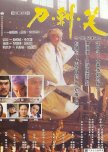
The Three Swordsmen had an excellent cast-Andy Lau, Brigitte Lin, and Elvis Tsui as the titular swordsmen. And that's pretty much it. I have watched a number of old kung fu movies with convoluted plots, but this one took the cake. When a character made the comment, "I don't understand," I wanted to say, you and me both dude.Andy Lau played "Smiling Sam"/Siu Sam Siu one of the three best swordsmen in the country. He was tied with "Blade" Wham Dao (Elvis Tsui) whose skills had earned him a place commanding the military. Most perplexing was Brigitte Lin as Ming Kim/Ming Jian who was not cross-dressing but actually playing a married man with a child and dubbed with a man's voice. Siu was framed for theft, rape, and murder. And that's about as much as I can tell you. He steals a man's wife. Falls in love with someone else. Ming helps him out or so he says. Wham discerns that something else is afoot, but palace and other politics preclude him from investigating the case as he would wish.
The fights were ridiculously dreadful. The director enjoyed filming too close or at odd angles obscuring much of the action. Yuen Bun and Tony Leung Siu Hung could usually be counted on for entertaining fight choreography, not in this film. The wire work and light body super leaping were comically bad. There was an awkward duel in the trees and over water predating CTHD and Hero, but were a prime example of how valuable good direction and cinematography are. Siu had his Invisible Whirlwind technique which belonged on a Saturday morning kids' show. He could also decapitate and disarm opponents with his clothes. One woman like a white-haired witch could defeat opponents with her hair. She even paused during a fight to breast feed her child.
The film was not pleasing to look at, the framing and cinematography were subpar. The pacing was erratic. And seriously, why would they dub Brigitte Lin of all people with a man's voice? It didn't appear to be done satirically. You know a story is confusing when characters have to stop and repeatedly dump pages of complicated and baffling exposition on the audience. It also felt like half the cast was playing the movie for laughs, especially Lau. Lin and Tsui were deadly serious along with a few other characters. I wondered if two writers wrote different parts of the story separately and then tried to do a mash-up of them.
The Three Swordsmen could have been so bad it was good. I found it so bad as to be annoying. The only good thing about the movie is that it was only 86 minutes long.
6/26/23
Was this review helpful to you?
This review may contain spoilers
"Everyday is Sunday for me"
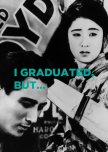
I Graduated But... is a film fragment and all that is left of Ozu's 100-minute original film. Sadly, the majority of Japanese films from this era were lost or destroyed. Interestingly enough the basic framework of the story survived and was shown here in just eleven minutes.Noboko has graduated and the only job he is offered is as a receptionist. Feeling the job is beneath him he turns it down but lies to his mother and fiancée saying that he is now employed. His mother visits with his fiancée in tow and evidently he and Machiko married soon thereafter. He finally has to admit to his wife that he is unemployed and spends his time playing with kids in an empty lot. Not long after he asks his wife where she has been all day and she admits she took a job at a bar so that they could make ends meet. Seeing her work and how men react to her, he strikes out again to find employment. He returns to accept the job as receptionist, willing to take any job offered. "Evidently, you have discovered the realities of life."
This film showed the nascent style Ozu would become famous for including shooting from the mat. Despite its short length the story encapsulated a complete tale. Whether the theme was difficulty finding a job as in other Ozu films from this time or difficulties between a mother and son or the lies about employment the spouses told each other, the film promised an engaging peek into one couple's marriage. The story had a nice symmetry to it with the beginning and the ending occurring at a job interview for the same company. The film tantalized me and also saddened me because the other 89 minutes are lost. I quite enjoyed the positive vibe to the film and would have liked to have seen the story fleshed out. I Graduated But... might whet your appetite for a full meal leaving you frustrated, but I'm grateful we had this delicious amuse bouche to savor.
6/19/23
Was this review helpful to you?


