

 148
148 438
438 16
16 2
2 6
6 3
3 8
8 10
10 3
3 13
13 1
1 1
1 1
1 1
1 2
2 7
7 9
9 5
5 9
9


This review may contain spoilers
I will give up kindness in order to fight for justice
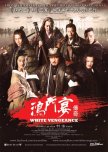
White Vengeance gives an epic look to the story of Liu Bang and Xiang Yu as they struggle to see who will ultimately wear the crown after rebelling against the Qin Dynasty.Despite the gorgeous, colorful costumes, grand battle scenes, excellent cinematography and strong cast, White Vengeance could never figure out what the focus of the movie was. Was it the bromance gone wrong between the two men determined to become the next emperor? Was it a love story? Or a love triangle? Was it a bromance between the the two advisors to the opposing sides? The beginning of the film was particularly vexing as the focus jumped back and forth between characters and also time jumping leaving the viewer with no clear ground to stand on and making it hard to find their bearing in the story. If you are completely unfamiliar with this this historical event, it may be even more confusing. If you are familiar with the history, you may be upset with the obvious artistic liberties taken.
The famous banquet contained few of the historic events. If the beginning of the movie was confusing and moved too rapidly, the ending dragged and was quite anticlimactic. The changes to Xiang's and Yu Ji's story didn't move me, in fact, the changes caused me to roll my eyes. Director Lee couldn't seem to decide if Xiang Yu was an evil emperor wanna be or a tragic romantic hero. Liu Bang came across as having almost no agency of his own and being completely dependent on others until he made the quick jump to pathologically paranoid.
Feng Shao Feng played Xiang Yu and did a fine job, but lacked the fiery presence for a renowned warrior. Leon Lai's subdued performance lacked the cunning edge of the future emperor. Zhang Hanyu as Zhang Liang and Anthony Wong as Fan Zeng, the two strategists behind the big men gave the most compelling performances. Their two characters were the most interesting as well. Liu Yi Fei was the woman passed back and forth between the two leaders with little to do.
With the exception of a few wuxia style scenes that did not fit comfortably into a movie based on historical events, the fights and battles scenes were well choreographed. The CGI enhanced armies played well, with only a few glitches.
The look of White Vengeance was exceptional. However, WV's erratic focus and underdeveloped main characters took away from my enjoyment worsened by the creative license taken with the historical events.
8/12/22
Was this review helpful to you?
This review may contain spoilers
All my effort is rewarded with a slap!
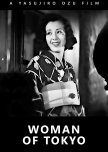
Director Ozu tread over common 1930's cinema ground in this film. Once again, a strong woman who sacrifices all for her family and the fear of unemployment loom during a time of economic crisis and cultural upheaval.Woman of Tokyo managed to pack a fair amount of tragedy into its scant 47 minutes length. Chikako worked an office job during the day and told her brother, Ryoichi, she helped with translations for a professor at night. She paid all of the bills and her brother's tuition as well as giving him spending money. Ryoichi's world turned upside down when he found out that his sister was actually working as a prostitute at night leading to tragic consequences. Chikako only desired for her brother to graduate so that he would have a stronger chance of landing a job, something he was unable to appreciate.
My reaction to this film might have been better if so many of these early films didn't focus on women becoming prostitutes to provide for their men, whether husbands, children or brothers and then bearing the brunt of abuse from those men and society. In a world where male unemployment was high and job opportunities were scarce for women, the women still did what was necessary to feed and shelter their families sometimes voluntarily, sometimes not. And in the case of Woman of Tokyo, like many other cinema sisters, put their brothers through school. This film would have fared better with me if Chikako had ever set her brother down and explained the facts of life to him and the reality of their situation. He lived a carefree life going to school, hanging out with his friends and with his girlfriend while his sister worked day and night to provide for him. His pocket money for entertainment came at the sacrifice of her body and shame. The police were also investigating her as a "dangerous person". To bear his reproach and scorn and society's as well seemed absurd. Women's pride always seemed to take a backseat to providing for their fragile men. I know it was a different day and time, different culture and a time of transition but this film hit my feminist's rant button as I watched it.
As always, Ozu put together an aesthetically pleasing film. A teapot as it boiled and steamed and then calmed followed much of the mood of the film. The version I watched had no sound. Tanaka Kinuyo, as the girlfriend who spills the gossip and Egawa Ureo as the thoughtless brother have shown up in other Ozu films and always do a good job even in this film where they are given little time to develop their characters. Okada Yoshiko's performance varied as she played the sweet dutiful sister sending her brother off to school in the morning and warmly welcoming a customer in the evening. I wish Ozu would have let us see into her feelings and motivations more instead of leaving her largely silent and stalwart.
If you are a fan of Ozu's films or silent films, Woman of Tokyo is worth seeing, even if it feels the theme may be redundant to some of his and other directors' works from this time.
8/6/22
Was this review helpful to you?
This review may contain spoilers
Do not excel, do not fail
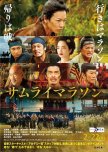
Samurai Marathon is based loosely on a true story in 1855 around the time the Americans came calling in their "black ships." A local lord decides he needs to toughen up the men in his village who have been accustomed to peace by having any man under 50 compete in a 36 mile grueling marathon. Trouble began when the resident ninja spy mistakenly sent word to the Shogun that the lord was planning rebellion misunderstanding that it was a drill. Oops! The town of Annaka still holds a race in honor of the samurais' run.Samurai Marathon is one of those movies you have to be patient with. It starts off slow, very slow, with a multitude of characters introduced with barely enough time to register faces and motivations, certainly not enough time to care about many of them. Satoh Takeru plays the super secret ninja spy who makes the error and then spends the movie trying to clean up his mistake. Komatsu Nana portrays a princess who just wants to be an artist and has no inclination to marry the man her father is setting her up with. And that guy would be Tsujimura Heikuro, played by Moriyama Mirai, a character that straddles morality. The local lord promises a wish to the first man across the finish line and Heikuro is determined to be that guy by hook or by crook. Other colorful, but not very memorable characters fill out the race roster.
The movie finally gets some traction at the halfway mark when the race has begun and the disparate groups face off against each other. There are several fierce sword battles. Director Bernard Rose, no stranger to horror, included some particularly gruesome decapitations. An assassin with a six-shooter increases the menace. Seriously people, a serpentine exit is the best strategy, don't run away in a straight line!
With a cast this large and unwieldy, the acting was fine. Even with the few weaker performances, the characters scarcely have enough time on screen running for you to notice. The first half of the movie was disjointed and could be confusing racing from character to character. The pacing was uneven at best until it finally hit its stride. I will say that in the opening scene when Danny Huston as Commodore Perry makes an appearance, I thought he would play more into the story. When this actor shows up in a movie you know it's time to hide the jewelry and the women and children, he always plays a baddie. For the most part, short of introducing the handguns, he provided little reason to take up screen time.
Samurai Marathon is not a bad way to spend your time if you can make it through the first hour and still be engaged. By the time the mud covered motley crew of runners dragged into the castle I was rooting for them, well, most of them.
8/5/22
Was this review helpful to you?
This review may contain spoilers
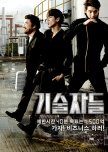
As an episode of the television show Leverage, The Con Artists would have been an average episode without any character development. As a stand alone movie, it failed to deliver the fun adrenaline rush a heist movie should give. Full disclosure I like Kim Woo Bin. Sadly, his performance, for me, lacked the sex appeal and energy required for the leader of the con artists. This movie almost solely focused on his character, Ji Hyuk, putting a lot of responsibility on his shoulders. The other two members of the team were relegated to comic relief and subterfuge. Ko Chang Seok made the most of his role, but it felt like he was there simply to give credibility to Ji Hyuk. Lee Hyun Wu as the hacker didn't have enough to do to make me care about his character. Kim Yeong Cheol as the villain lacked the menacing presence to be threatening. All of the police were cardboard bland and lent little to the story. The characters overall were thinly drawn, even Ji Hyuk which left me unable to connect with or invest in any of them. The FL Jo Yoon Hee was thrown into the mix as an ill conceived love interest. The romance had no development and just felt thrust into the story like, "wouldn't any woman instantly fall in love with KWB?"
The plot twists could be seen from a mile/km away, it wanted to be more clever than it was. The OST felt generic and uninspired. Basic is the word that comes to mind when I try to describe the plot. It's a heist movie, there should be biting humor, a certain cool factor, and a sense of urgency to the unfolding plot. Instead of a rollercoaster ride I got a merry-go-round.
There was never any sense of danger or excitement, the Con Artists was a perfectly fine tv episode, but could not measure up to the plethora of heist movies on the market. Sorry, KWB, I'm still rooting for you.
7/22/22
Was this review helpful to you?
This review may contain spoilers
Martial Arts Movie meets Sandals and Sword Movie!
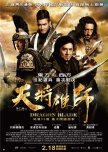
In what could be the bloodiest Afterschool Special ever, Jackie Chan and John Cusack bring two disparate societies together briefly and peacefully in BCE China along The Silk Road.Chan played Huo An, the captain in charge of the Silk Road Protection Squad who believed in all races and cultures living peacefully and equally together along the Silk Road. His crew only used their swords and abilities for defense. Cusack was the Roman general Lucious on the run with his men and with his young, blind charge Publius. Adrien Brody as Tiberius was the Evil brother who blinded his younger brother and murdered their father to gain his father's position, even though I'm not sure that was the correct procedure for becoming a consul.
Huo's crew was framed as gold smugglers and exiled to hard labor at the Wild Geese Gate where prisoners were tasked with rebuilding the city's defensive walls. Lucius and his weary, hungry men happened upon the city and determined to fight their way in. Huo met Lucius and they did battle, interrupted by a sandstorm. The next thing you know everyone was sitting around a campfire, holding hands and singing Kum Bah Yah. In exchange for room and board the Romans helped the prisoners rebuild the wall. The friendships were enhanced by a dance-off of military techniques and then a sing-off of national songs. Of course, the peace couldn't last because the merciless Tiberius and his 100,000 troops was on his way to create havoc.
Director Lee created a beautiful and epic movie visually. The sets, costumes, and scenery were lavish. The story, however, was heavy handed, with choppy editing, and beyond a couple of performances lacking in strong acting. Lee's overuses of flashbacks and flashforwards to try and tie the stories together and create emotional depth simply cut the momentum of the story and felt repetitive and manipulative. Without spoiling anything there were lapses in logic that left me adrift at times in the film. Also, while I am all for peace and understanding for all people, the movie's idealistic message lacked depth and any sort of realism. All of the talks of peace ended in one of the bloodiest battle scenes you'll see. Few characters walked away alive or unscathed. And there was a scene with killer eagles flying in that will make you think of the Hobbit's Battle of Five Armies. The Eagles! All of which was impressive, given that historically speaking the Roman Empire hadn't been officially created at the time this movie was supposed to have taken place. No one had any problems communicating with 36 different nations using the Silk Road, plus the Romans and Parthians.
As for the acting, John Cusack acted like he was lost for most of the movie. Jackie Chan walked around with a beatific smile or look that seemed misplaced in a movie with not only alliances but plenty of betrayals and backstabbing. Adrien Brody overacted, chewing up the scenery as much as John Cusack underacted looking for a place to take a nap. Most of the rest of the cast were serviceable to really dreadful.
The fight scenes, choreographed by Chan, were for the most part entertaining. The earlier fights were creative as you would expect from him, even if he's slowed down, understandably at the age of 60. The final no holds or swords barred battles were blood gushing and could be difficult to watch. There was also an over reliance on slow-mo action scenes that didn't always work to best effect. I wish the squad that carried their throwing swords had remembered them because they were only used in one fight.
Overall, I love the idea of a pacifist message just not the uneven implementation. With an overwrought film score and constant hammering of the movie's theme even in the face of contradictory and gorey violence, somehow the message of all men are brothers felt lost. There were simply too many detriments to this big budget film to highly recommend. Though parts of it were entertaining and it was an interesting concept to mash two film genres together, even if historically inaccurate, the ultimate execution was deeply flawed.
Was this review helpful to you?
This review may contain spoilers
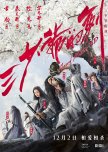
Derek Yee returned to direct the remake of Death Duel, the movie he starred in as a twenty-year-old in 1977. Peter Ho starred as the tattooed face swordsman with only one challenger left to fight before he died. Kenny Lin followed the trope of the disgruntled swordsman who refused to fight any more, gaining the name Useless Chi. This is one of my least favorite tropes because the swordsman/fighter waits until innocents are killed before deciding to stand up and take care of business.
The Sword Master felt like an old school kung fu flick only with better special effects and grander scale fights. The sets and costumes were all beautiful and believable. The characters could have been fleshed out more but for a wuxia they accomplished what they needed to.
Norman Chu who was in the original made a return as a clan leader in this one. There weren’t any good or bad clans, they were all pretty disreputable making it hard to root for anyone except the innocent civilians.
The Sword Master was not the best of its kind but it was an entertaining wire-fu wuxia with quality fights, a little romance and a bittersweet bromance. Worth checking out for a fresh take on an old classic.
Was this review helpful to you?

This review may contain spoilers
Tokyo, a city of culture…a capital of debauchery
Tokyo March is a film fragment and thus difficult to rate. Originally 75-100 minutes long it now clocks in at a scant 27 minutes.After orphaned Michiyo was laid off from her factory job her uncle wanted her to become a “geisha” like her mother to help support the family. The translation geisha was probably incorrect as it seemed she needed no training and was expected to sleep with men as well as entertain rowdy crowds.
She met Fujimoto, his son Yoshiki and Yoshiki’s best friend, Sakuma, during their visits. Each of the men fell in love with her. Papa Fujimoto discovered a secret bordering on Greek tragedy that set off an emotional bomb in the group.
An early Japanese melodrama, with a relatively complete beginning, middle, and end the 27 minutes were a worthwhile watch to see the director’s take on social and gender issues. I would like to have seen the completed work to hopefully better understand the characters’ emotions and why they were as devoted as they appeared to be.
The acting was fine for the most part though there was some hammy overacting by a couple of actors. Instead of just dialogue printed there was also some narrative content though I don’t know if that was done by a later party. The original music was missing as well.
Tokyo March was a quick and entertaining watch. The opening scene is badly damaged but most of the rest is discernible.
Was this review helpful to you?
This review may contain spoilers
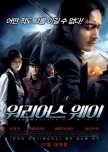
Ninjas and cowboys and clowns, oh my! The Warrior’s Way is a comic book colored Western Wuxia mash up. Jang Dong Gun is the mysterious man in black, the world’s best swordsman. After wiping out a rival clan he spares the last member, a baby girl. His clan declares him a traitor and starts hunting him down. He travels to America and settles into the nearly ghost town of Lode, a town being reclaimed day by day to the endless desert. The town is populated with an assortment of outcasts including a carnival troupe. A young woman with a past played by Kate Bosworth helps him to learn how to live an ordinary life while she has him teach her how to use a sword. She is seeking revenge against the dastardly ex-confederate colonel who killed her family.
Of course, peace doesn’t last long and eventually it’s a three-way fight between assassins, the Colonel’s gang, and the townspeople.
The movie is heavily stylized to the point it often looks artificial. The color saturation, slow-mo, and green screen effects work at times and not so much in others. You’re always aware it’s on a studio lot.
The music ranges from the Sailor’s Hornpipe ( how did they not have a Pop-Eye cameo!) to spaghetti Western inspired music to opera.
Jang had enough presence to pull off the almost silent assassin learning to acclimate to his new life. Bosworth’s Annie Get Your Gun, er, Sword felt over the top in some scenes. Geoffrey Rush as the town drunk with a secret was almost unrecognizable for much of the movie. There wasn’t much scenery left after Danny Huston finished chewing on it as the Big Bad. Old school Hong Kong kung fu star Ti Lung lent some cool cred as the head of Jang’s clan.
The action scenes were all fast and bloody. The three way fight pulled out all the stops to render a high body count. For those who are squeamish there was spurting blood and a few dismemberments.
The story is what let me down. The focus of the degenerate colonel seeking out women to rape is a trope I wish would crawl into a corner to die. Aside from that the second act felt plodding, even clumsy at times. The good hearted carnival folk with life lessons to share trope felt stale as well. The storyline was disjointed, never truly unifying into a smoothly told tale.
The Warrior’s Way was limited but entertaining. This colorful movie with stylish sword fights led by the man with “a warrior’s body and the heart of a priest” was a perfectly fine afternoon watch. But like a carnival ride it could give you whiplash as it jolted you from comedy to violent cowboy wuxia to heart warming redemption story and back again.
Was this review helpful to you?
The Knife of Devil's Roaring and Soul Missing
3 people found this review helpful
This review may contain spoilers
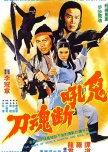
Dorian “Flash Legs” Tan and Doris Lung team up to take down the murderous Devil’s Swordsman. All they need is the Sunshine Sword and to find out the identity of the masked swordsman. The Devil’s Swordsman was killed two decades ago but has reappeared and is assassinating the heads of the tribes who brought him down with his hypnotizing sword. Discord and distrust reign as everyone is blaming Lung’s Maple Leaf tribe. There were double crosses and hidden identities. Unfortunately, the pacing was slow and very talkie for a kung fu flick making this 90 minute movie feel more like 2 hours.
As with most of these Taiwanese martial arts movies much of it was shot outdoors from the opening fight to the ending one.
The movie would have benefited from more flash legs and less talk. Dorian and Doris delivered in their fight scenes. Lo Lieh played an ill-fated fighter. The movie could have used more of him, too. The fight scenes were passable with lots of trampoline work.
The version I watched was badly faded and cropped on the sides which cut much of the fight scenes off. Like many of these old kung fu films, when the last fight ends so does the movie.
I watched this under the title of Thunder Blade and Lightning Foot. Under any name it’s an average at best film from this era.
Was this review helpful to you?
This review may contain spoilers
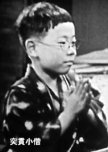
A kidnapper gets more than he bargained for when he lures “A Straightforward Boy” to his lair by buying him treats and toys. This is one of director Ozu’s earliest films of which part is missing. It was still a funny film more slapstick in nature than his later films. This one played broader and more like some American silent films I’ve watched. Ozu’s silent films always struck me more as talkies but with placards.
This short film had some cute moments given the topic of kidnapping. The little boy tormented his kidnappers to the point they wanted to return him but they couldn’t seem to shake free of him.
Saito Tatsuo played one of the silly kidnappers. He was in some of Ozu’s more famous films. The actor who played the precocious little boy, Aoki Tomio, worked alongside Saito as father and son in the Ozu film “ I Was Born, But…” only three years later.
The version I watched had no music which wasn’t a problem for me. Depending on when the music was added to some of these silent films it can be more distracting than mood making.
A lighthearted quick watch, just short of 14 minutes it’s worth giving a try if you enjoy this director’s films.
Was this review helpful to you?
This review may contain spoilers
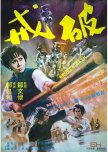
My name is Liu Chieh Lien, you killed my father, prepare to die!
Angela Mao kicked and punched her way through this movie with the grace and agility her fans have come to expect. Her character Liu Chieh Lien was merciless to her opponents and the men she had sworn vengeance against. Born with a violent rage in her heart due to her mother's dying wish after giving birth that her daughter would seek revenge for her parents' demise, Liu was too ferocious for the Buddhist temple where she grew up and just ferocious enough to be a match for the four men who determined the course of her life. Along the way, she teamed up with Bruce Leung's undercover agent. She didn't really need his help as she was more than capable of a deadly rampage all on her own.Yuen Woo Ping with the help of Hsu Hsia choreographed the fights and it showed. A few were slightly slow but stopped short of kung fu posing. Given that many of the fights involved a large group it was understandable. Angela was quick and agile enough to keep up with every kick and step they designed for her. Her rapid-fire kicks are always a treat to watch! Baddies had better beware when she glared at them. The fighters used a variety of weapons and styles, scorpions were even featured! This movie included a long list of talented stuntmen and bit players from the era making the fights extra special. Sammo Hung even had a non-speaking role as a knife wielding baddie. Bruce Leung did a superb job in his fights, though it highlighted Michael Chan's less sophisticated fighting style when they faced off.
The story was a typical kung fu revenge trope aided by Angela's fiery presence and the cast of superlative kung fu stuntmen and supporting characters. The major flaws were that the story started slowly as the mother entered prison and slogged through the backstory. Once Angela was grownup and causing a ruckus at the temple, the story kicked into high gear. And as with many of these movies, the ending was quite abrupt. There was also a gratuitous nude scene in the flashbacks which was not warranted.
The location scenes were beautiful with sets and costumes of a higher standard than many movies from this time frame. You could tell they spent more money than usual to showcase this story, and Angela deserved it. If I sound like a fan, I am. Angela Mao was beautiful and fierce, elevating many of the mediocre movies she was in.
This movie had its flaws, but Angela and the cast were not among them. Fast paced, dark, and brutal once the rampage started, Broken Oath was an entertaining kung fu movie to experience.
Was this review helpful to you?
This review may contain spoilers
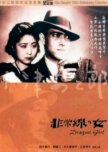
Dragnet Girl is a mostly bloodless noir film featuring a gangster and his moll who were not nearly as bad as they thought they were.Joji is a washed-up boxer who turned to crime to make his living. Tokiko is his good time loving moll able to run scams on her own. Her target is the boss' son who keeps hitting on her at the office where she works her daytime job. Joji doesn't like the fact the boss is giving her jewelry, more importantly what she might be doing to earn the jewelry.
The characters come fast and furious, with almost no printed dialogue to help keep track. A young boxer, Hiroshi, tries to impress Joji at the boxing gym so that he can hire on with the stylish crook. So far life is good for Joji and Tokiko until he brings the kid aboard. Hiroshi's sister who works in a record store, complete with RCA's dog Victor cocking his head throughout the store, takes exception to her brother foregoing school to go down a dark path. Dressed in traditional garb she goes to Joji and begs him to turn her brother away. Joji takes an immediate liking to her, and it causes him to reflect on how he's living his life. Tokiko finds out about his desire for Kazuko and hunts the sister down with blood in her eye. Then as fate would have it, she too is charmed by Kazuko. And like Joji develops a sudden desire to go straight and live right. The last half of the film ramps up the tension and suspense in the storyline.
Director Ozu and cinematographer Shigehara Hideo made great use of light and shadow. Whether it was the shadows cast by the workers walking into the office, or faces and rooms half hid by shadow, they developed a proper noir film atmosphere. They highlighted everyday objects and architecture into beautiful composite frames. Outliers Joji and Tokiko were stylishly dressed in 1930's Western clothes. Sweet Kazuko, on the other hand, was always dressed and coifed traditionally. There was no music at all in the version I watched. Ozu did such fine work immersing the viewer into this world, that even though the film was silent you could almost hear the clacking of typewriter keys or a gun firing.
Oka Joji did a superb job showing Joji as dapper and invincible, then unravelling to a dejected and tormented man. Tanaka Kinuyo played the tough moll with a hidden heart of gold to perfection. Mizukubo Sumiko was given little to do as Kazuko except to float into and out of frame when needed and in brief moments, beg for her brother. Kazuko 's main role was to be the catalyst for Joji's and Tokiko's character development, with scant left over for the dutiful sister.
Dragnet Girl was an entertaining silent gangster film as it did not follow the mold of so many other crime movies. Ultimately, for me, it felt a little flat. The skill was there, the camera shots were lovely, and the actors did their jobs well. In the end, I remained unconvinced that quiet Kazuko could turn the two criminals lives upside-down like she did. I would definitely recommend this to anyone who enjoys old movies or old gangster movies as beauty is in the eye of the beholder when it comes to this genre of film.
Was this review helpful to you?
This review may contain spoilers
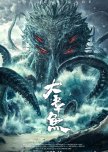
It's big! It's tentacled! It's BIG OCTOPUS! Big Octopus was a Chinese attempt at Kaiju. It succeeded in some ways and failed in others.Life for a restaurant owner was turned upside down when he hauled in a strangely cute octopus. Of course, his love interest was a scientist, and she rather ominously told him he must never sell the octopus for any price. It didn't take long for the evil biogenetic mogul to show up offering money. A camouflage wearing commando unit was shown killing off people in a compound and then headed to the restaurant. More dangerous than either gun toting group, was when Big Mama Octopus discovered her baby was with the humans. Somehow the people involved had never learned the number one rule in nature---
never mess with a baby animal because the mama might be nearby. Big Mama Octopus was not having it and tore the joint up as her tentacles rampaged across the beach and restaurant in search of her baby. Fun fact, her tentacles were extra-sensory. With one touch she could tell that a woman was pregnant and left her alone. Motherly courtesy, I guess.
Before long, everyone ended up on an island where a WWII bunker was hidden. The Big Bad Businessman's grandfather had run experiments with the Nazis back in the 1940's and Big Mama Octopus was the result. The girlfriend scientist and the hapless restaurateur ended up along for the ride as well as the Killer Commando Unit. Big Mama Octopus sent her infinitely long tentacles through the underground corridor killing bad guys left and right, at least whoever was left after the Killer Commandos did their work.
Big Octopus had more story and better acting than most kaiju films. There was romance, discussion on the ethics of bioengineering, and a little comedy. The storytelling wasn't great though, it lacked consistency and felt like certain parts had been edited out. It was also infinitely bloodier than the older kaiju movies. The Commando unit delighted in head shots. Big Mama Octopus impaled and dismembered various "red shirts". The acting was stronger, but that was a low bar to begin with. I wouldn't go so far as to say the acting was exceptional, more along the lines of adequate for the genre. The production values, with the exception of the CGI, were good, and as a 2020 movie they should have been.
The biggest problem with this movie was that it failed in the number one rule of kaiju movies---show the monster! With the exception of a couple of shots, the body of the octopus was never shown. The bad CGI tentacles received plenty of screen time. It would be like only seeing the dirty toenails of Godzilla as he stomped through town but never seeing the whole monster.
As a guilty pleasure popcorn movie, it was fine. If you enjoy kaiju movies, it's one worth trying out if you don't mind the lack of money shots for the Big Octopus.
Was this review helpful to you?

This review may contain spoilers
If I stay where I am, I don't know how much farther I'll fall
Osaka Elegy was a difficult film for me to rate. It attempted to reveal how men with money have power over women and even men with no money still exerted power over the women in their lives. Ayako, the female lead, did the wrong thing for the right reason in order to help the men in her life, only to suffer mightily for her selflessness.Asai, the owner of a pharmaceutical company received no respect from his wife, nor did he give her any. He was verbally abusive of his female servants. At work he lusted after a young phone operator, Ayako. Initially, she rebuked his advances. She wanted to marry her noncommittal boyfriend and reached out to him for help. He was unable or unwilling to assist her family.
When her father was threatened with jail because of his embezzlement of 300 yen, she gave in and had an affair with Asai to pay off her father's debt. She would also pay off her brother's tuition. Neither man showed any gratitude, rebuffing her instead. Things went from bad to worse, eventually she was abandoned by all the men in her life showing her just how much their loyalty was worth.
Yamada Isuzu made a wonderful, conflicted heroine. She knew her father was inept and unkind, but still could not resist helping him by foregoing her dignity and reputation. Once ensconced as a mistress she began to forge her own limited power, a power dependent on the generosity of a more powerful man. Constantly rebelling against the label of a woman suffering from the "illness of delinquency" Ayako struggled to keep what dignity she could even when publicly humiliated. From shy telephone operator to a woman fiercely fighting for her future, from joy to utter despair, hopelessness to a tiny ray of hope, Yamada played out a wide array of emotions.
The film suffers from age, fading or blurry at times. Even with the shaky and blurred shots, there were many lovely and creative scenes. At times the camera gave the viewer distance literally and figuratively from the characters, at others it sat as a cold observer, intimately close to the destruction of trust and love.
Whether director Mizoguchi made this film as an indictment on the precarious situation of poor women or simply an observation of the women in the world around him, what played out was the price for not having power of one's own. Punishment awaited the woman stepping outside of conservative values even by the same unscrupulous people who turned her toward the dark to make their lives easier or more pleasurable.
Was this review helpful to you?
This review may contain spoilers
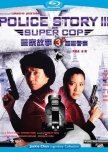
Super Cop is supposed to refer to Jackie Chan’s character in this movie but could just have easily been referring to Michelle Yeoh’s character.Jackie Chan’s Chan Ka Kui from the previous Police Story films goes to China and teams up with Michelle Yeoh’s Captain Yang Chien Hua to go undercover and break Yuen Wah’s bad guy out of prison and join his brother’s (Kenneth Tsang) drug gang in order to take out the Big Bad. After being accepted into the gang, they all go to Malaysia and meet up with Lo Lieh’s drug general. Lots of shooting and things blowing up ensue. They also have to bust Tsang’s missus out of jail before she is executed because she’s the only one who knows the number to the Swiss bank account where a fortune in drug money is stashed. Along the way, they run into Chan’s tour guide girlfriend (Maggie Cheung) who blows his cover because she is the dumbest girlfriend in cinema history.
The plot isn’t very strong or consistent. Most people don’t watch Chan’s movies for the plot anyway. The action is slightly different in some places because it relies more on guns and explosions. If you enjoy Chan’s comedy schtick, it’s dialed back here, but should be still enough to satisfy you. As always, the draw to his movies are the insanely dangerous stunts he performs mostly himself. Super Cop is not short on them. The bonus is that Michelle Yeoh performs most of her own death-defying stunts as well.
Chan gave his usual manic performance, though he didn’t mug as hard for the camera in this one. Michelle Yeoh’s gravitas made an excellent foil for him to play against and there was never any question that it was a partnership of equals. The two had good screen chemistry with Yeoh nearly stealing the show. It was hard to watch the talented Maggie Cheung play the jealous dim-witted girlfriend. Yuen Wah and Kenneth Tsang made excellent bad guys. One of my favorite old kung fu stars, Lo Lieh, made a brief appearance as a general supplying the drugs to the different cartels.
I would like to have seen more hand-to-hand combat, but what there was played out well, no surprise with Yeoh and Chan. The stunts were quite good with Jackie dangling from a helicopter over Kuala Lumpur and Michelle Yeoh landing a motorcycle onto a train. Rumor has it that the stuntman who initially attempted it broke his leg trying the stunt. Michelle Yeoh was able to land the scary jump herself.
Fans of Jackie Chan or Michelle Yeoh movies should be satisfied with Super Cop. The two martial arts stars bring enough daring action and excitement to help overlook the flaws in this film.
17 April 2022
edit--I liked this movie better than Police Story 1 which was graded on my pre-1990's curve so I went ahead and bumped this up to an 8 on the curve because the stunts were just as amazing and the cast was stronger. It also didn't have the 30 minute lull in the middle of the film. 25 March 2024
Was this review helpful to you?


