

 19
19 38
38 8
8 1
1 1
1 1
1 1
1 1
1 6
6 2
2 3
3 1
1 1
1 1
1 3
3 1
1 3
3


This review may contain spoilers
Blood Makes Kings, Sins Make Ghosts
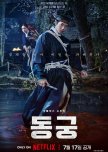
In a kingdom where the dead refuse to stay silent, Gu Cheon, a ghost slayer who walks between worlds, and Saeng Gang, a court lady cursed to hear the voices of restless spirits, are pulled into the East Palace, where something ancient and sinister has taken root. As buried secrets claw their way to the surface, the two find themselves trapped in a danse macabre of vengeful ghosts, royal conspiracies, and an evil lurking behind the throne. Some palaces are built on stone. This one is built on secrets.At its core, The East Palace is a reminder that the past is never truly buried. Every hidden sin casts a longer shadow, every act of cruelty leaves a debt unpaid, and karma always finds its way home. As Gu Cheon and Saeng Gang unravel the palace's darkest secrets, they slowly realize that the most terrifying monsters are not always the spirits seeking revenge, but the people who gave them a reason to return in the first place.
The premise itself is not groundbreaking. It explores ideas that have appeared in other productions, and I even caught similarities to Stranger Things. Personally, I never saw that as a problem. Rather than trying to reinvent the wheel, The East Palace takes familiar concepts and dresses them in hanboks, palace intrigue, and Korean folklore, creating an atmosphere that feels distinct enough to stand on its own. One of the things I appreciated most was how accessible it is. The drama introduces different kinds of 귀 (gwi), explaining what each spirit is, how it comes to exist, the dangers it poses, and how it can be dealt with. Even if you know very little about Korean ghost folklore, the storytelling makes it easy to follow without feeling like a history lesson.
The Realm of Gwi was another fascinating addition. This blood red spirit world where vengeful ghosts dwell felt like a twisted mirror dimension, and I could not help but think of Stranger Things' Upside Down. The mechanics behind Gu Cheon's ghost slaying also made things more interesting. To fight spirits in the Realm of Gwi, he has to temporarily die first. Only after finishing his mission can he return to life, assuming nothing goes wrong. It is a simple concept, but it gives every journey into that realm a genuine sense of risk.
Gu Cheon left the biggest impression on me precisely because he is far from perfect. The drama never tries to paint him as an untouchable, effortlessly cool hero. Instead, he is afraid of dying, sarcastic, lazy, and constantly acts like he wants to avoid responsibility, even though he almost always ends up doing the right thing anyway. Those contradictions make him feel incredibly human and surprisingly relatable. Nam Joo Hyuk portrayed him with the right balance of emotional vulnerability and unintentional comedy. While he has proven many times that he can excel as the stoic, composed lead, I genuinely think these sarcastic, slightly lazy, and deeply human characters are where he shines the brightest. I watched this drama because of him, and I stayed because of him.
The only thing that oddly distracted me was how muscular he looked in hanbok. Don't get me wrong, the man has one of the finest oppa physiques out there and I fully appreciate it. Somehow, though, his modern, athletic build felt slightly out of place in traditional royal clothing. Maybe it is the tailoring, maybe it is just me. One thing I also kept wondering throughout the drama was whether Gu Cheon could actually fight in the real world. Inside the Realm of Gwi, he slices through spirits with confidence. Outside of it, he often looks like someone who would lose a fistfight against an ordinary person.
Saeng Gang turned out to be exactly the partner Gu Cheon needed. While he handles the supernatural threats, she investigates palace politics, buried truths, and generations of resentment. She is the one constantly putting scattered puzzle pieces together, especially when Gu Cheon's laziness threatens to derail the investigation. I appreciated that the drama never reduced her to a damsel waiting to be rescued or a female lead whose only role is to emotionally support the hero. She actively moves the story forward and even throws herself into danger to save Gu Cheon. Despite her courage and competence, the drama still allows her moments of vulnerability. Beneath everything, she remains a daughter longing for warmth and family. Roh Yoon Seo portrayed those different sides of Saeng Gang beautifully, and her expressions always felt natural for the character.
The Emperor ended up being one of the drama's most compelling characters. He constantly pulled me in different directions. At first, I thought he was simply another ruthless king who built his empire on blood. Then I saw moments that suggested he genuinely wanted to become a wise ruler. Then he massacred innocent sick people, and I immediately went back to seeing him as a monster. Then more secrets surfaced, revealing layers upon layers of guilt, regret, and impossible choices. He became neither hero nor villain, but someone permanently trapped in the grey space between the two. He loved his children, yet his love was shaped by the same violence that built his throne. Realizing that his son had followed the same bloody path broke him, leading him to make another horrifying decision because he believed there only needed to be one emperor stained by fratricide. Cho Seung Woo was phenomenal. I never once questioned his performance.
The supporting cast was equally dependable, although I do wish the Crown Prince had been explored much further. Kwak Dong Yeon is an actor who thrives when given a substantial character arc, whether he is playing someone kind or someone terrifying. Here, however, the drama barely scratches the surface. We only get fragments of his relationship with the Emperor before he becomes the primary akgwi. As the central evil spirit, he never quite felt intimidating enough. Instead of becoming a memorable final obstacle, he often came across like an NPC enemy waiting for the protagonist to defeat. I genuinely think the limited episode count worked against the character. Either he needed much more development, or the role should have gone to someone whose screen presence alone could create a stronger sense of menace.
Visually, The East Palace is gorgeous. The entire production has an artistic quality that constantly pulled me into its world. There were several moments where I found myself wondering how the writers and visual directors even came up with some of these ideas. That said, the visual effects are not flawless. Certain CGI shots were noticeably artificial, and the final battle relied so heavily on green screen that it unintentionally became more comical than exciting. Thankfully, the soundtrack helped maintain the atmosphere. One particular background track stood out so much that I actually tried searching for it after finishing the episode.
I also went into this drama with certain expectations because I heard the writer also wrote The Guest, which remains my favorite Korean horror drama. Unfortunately, despite all the ghosts and supernatural elements, The East Palace never actually scared me. Even as someone who scares quite easily, the jump scares barely landed, and most of the ghosts were more interesting than frightening. Ironically, my favorite supernatural creature was not scary at all. Ggeomeoksali completely stole every scene it appeared in. This tiny gwimae looked like a haunted little Labubu and instantly became my favorite character. If they ever release an official plushie, I will probably be first in line.
As the story approaches its conclusion, the drama reveals twists upon twists, uncovering generations of buried sins, painful truths, and karma finally demanding repayment. It was genuinely enjoyable to piece everything together, although I do wish those revelations had been given a little more room to breathe. The ending maintained a steady pace from beginning to end. It was neither anticlimactic nor the explosive climax I had imagined. Instead, it left me sitting there, quietly replaying everything in my head. The final moments provide enough answers to feel satisfying while leaving behind just enough lingering questions to keep the story alive after the credits roll.
In the end, The East Palace is an entertaining and surprisingly digestible supernatural sageuk. It may not redefine the genre or deliver unforgettable horror, but it succeeds in building an atmospheric world where ghosts, guilt, and palace politics intertwine naturally. It is immersive, visually striking, easy to follow, and anchored by characters who carry both the emotional weight and the mystery. Sometimes, that is more than enough. After all, the scariest ghosts are often the ones born from human hands.
Was this review helpful to you?
The Joy Is Real
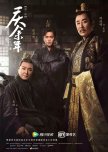
Joy of Life came into my life at a strangely perfect time, right after I walked out of a scholarship interview that did not go the way I hoped. I was not expecting much, but somehow this drama lived up to its title in the most literal sense. It brought me joy. Not in an overwhelming or dramatic way, but in a steady, satisfying flow that kept me grounded while constantly surprising me. It feels rare to find a drama that is this witty, this fresh, and this confident in its storytelling. More often than not, I found myself shaking my head in admiration, thinking, “okay, that was smart.”The story opens with a young man who regrets a life he barely got to live, only to be reborn as Fan Xian in a completely different era, carrying memories of the 21st century. What follows is not just a typical rebirth narrative, but something that plays out like a carefully constructed puzzle. Raised in Danzhou under the watchful care of his grandmother, trained by the mysterious Wuzhu and the terrifying yet oddly endearing Fei Jie, Fan Xian grows up equipped with skills and knowledge that make him stand out a little too much. When he finally heads to the capital, expecting a comfortable life, reality hits quickly. Assassination attempts, political marriages, inherited power, and dangerous secrets all crash into his world at once. From there, the story never really slows down, yet it never feels overwhelming either. It is layered, but light on its feet.
At the center of it all is Fan Xian, easily one of the most memorable characters I have seen in a costume drama. There is something so refreshing about how he is written. He is sharp, skeptical, and occasionally chaotic, yet grounded by a strong moral compass and unwavering loyalty to the people he loves. His modern perspective allows him to question traditions and authority in ways that feel both bold and oddly satisfying. The way he casually avoids kneeling in a rigid royal court says a lot about who he is, which is why the one moment he does kneel carries so much weight. He is clever enough to navigate political schemes, skilled enough to survive physical threats, and lucky enough to have people who would step in for him when needed. Watching him never feels stressful. It feels reassuring, like you know he will find a way, even if that way is completely unorthodox.
Zhang Ruoyun deserves a lot of credit for bringing Fan Xian to life. This was my first time watching him, and he made an immediate impression. His comedic timing is effortless, and his expressions land perfectly without feeling exaggerated. He knows exactly when to be playful and when to pull things back for emotional moments. There is a natural charm in his performance that makes everything feel believable. He does not just act as Fan Xian, he becomes him in a way that feels seamless.
Beyond its main character, the writing itself is where the drama truly shines. The premise might not sound entirely new, but the execution feels incredibly original. It treats time and memory almost like a quiet scientific riddle, something closer to a cosmic physics problem than a simple plot device. The drama does not overexplain. It trusts the audience to follow along, dropping hints here and there while focusing on Fan Xian’s journey. Sometimes I had to rewind a scene or two, but once things clicked, they really clicked. The balance between humor and politics is especially impressive. The comedy never feels forced, and the political intrigue never feels too dense. Hidden motives, shifting alliances, and unexpected twists are all presented in a way that is easy to digest yet still impactful. Some twists genuinely made me pause and think, wow, that runs deeper than I expected.
The supporting cast adds even more depth to the story, particularly the three father figures in Fan Xian’s life. Chen Daoming as the Emperor and Wu Gang as Chen Ping Ping both carry an undeniable presence. The Emperor feels unpredictable and quietly terrifying, while Chen Ping Ping, confined to a wheelchair, commands attention in a completely different way. Their interactions with Fan Xian are fascinating because they blur the line between care and manipulation. Fan Jian, on the other hand, offers a more traditional form of warmth and protection, grounding Fan Xian in something that feels genuine and familial. The contrast between these three dynamics adds so much texture to the story.
Other characters leave strong impressions in their own ways. Wuzhu remains a mystery that lingers in the background, making every appearance feel significant. Fei Jie stands out as both a harsh teacher and a deeply caring figure, someone who expresses love in the most unconventional ways. His quiet admission of seeing Fan Xian as a son is one of the more emotional moments in the drama. Lin Wan Er, while likable at times, can be frustrating with her hesitation and internal conflicts, though she never becomes an obstacle to Fan Xian’s path. The Fan family dynamic is another highlight. From the fiercely loyal Fan Ruo Ruo to the initially cautious but eventually caring stepmother and brother, their relationships evolve in a way that feels natural and rewarding.
What ties everything together is the production itself. The use of modern-style background music in a historical setting should not work as well as it does, but here, it feels just right. The entire drama has a certain sparkle to it, like champagne. It is light, smooth, and quietly celebratory without losing its depth. Even smaller characters and background moments feel thoughtfully executed, adding to the overall immersion.
By the time I reached the end, I realized I could not easily pick a single favorite aspect. It is everything working together, the character, the writing, the humor, the quiet philosophical undertones, that makes this drama so memorable. Joy of Life is something I would return to without hesitation, especially on days when I need a reminder that stories can still feel this alive.
Was this review helpful to you?
This review may contain spoilers
Everlasting Longing, Everlasting Stabbing
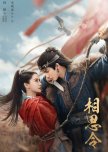
To the world of Yannan and beyond, Jun Qi Luo exists as Jun Fei Fan, the so called illegitimate son of the Jun family in an era where women were expected to be decorative, not decisive. Hidden behind this male persona is a creative genius who single handedly keeps her family business alive, thriving, and shockingly ahead of its time through ingenious inventions and machines that even modern viewers pause to admire. Her work not only supports her family but also strengthens her king, turning Jun Fei Fan into a name known far and wide. Then there's Xuan Lie, a royal general from the unstable land of Beixuan, driven by two goals. Uncovering the truth behind his parents’ murder and winning the Wolf Lord competition to unite the clans and restore peace. Believing Jun Fei Fan holds key information, he sets out to capture him, completely unaware of the truth behind the name. When their paths collide through kidnapping, misunderstandings, sharp tongues, and clashing motives, sparks slowly ignite. As secrets pile up and enemies lurk on both sides, love grows alongside danger. But when Jun Qi Luo’s identity is finally exposed, will it bring them closer or tear them apart for good?Now here is the thing. Everlasting Longing had ingredients that should have cooked up something amazing. Political intrigue, cross dressing genius heroine, tribal conflicts, tragic backstories, and slow burn chemistry. On paper, this drama had main dish energy. In execution, it somehow managed to serve chaos with a side of frustration.
One thing I genuinely enjoyed was the visual presentation of Jun Qi Luo’s business. The 3D render of her operation, the sets filled with tools and mechanical contraptions, and the way the machines were shown working felt oddly satisfying. I do not even know what the proper term for it is, but watching those systems function scratched a very specific itch. It made her genius feel tangible and grounded, and for a moment, I believed I was watching a capable woman holding an empire together with her mind alone.
Unfortunately, that belief did not survive the acting. No offense intended, but from the very start, Angela Baby pulled me out of the story. Jun Qi Luo was written as a fierce, intelligent, independent baddie, and the writing itself was not bad. The problem was the delivery. The performance lacked weight, depth, and emotional conviction. Instead of commanding the screen, she often felt stiff and detached. I kept wishing the role had been given to another actress who could embody both the sharp intellect and the emotional complexity this character needed.
Then there is Xuan Lie, who was supposedly a strong contender for the next Wolf Lord. Keyword being supposedly. Unlike Angela Baby, Song Wei Long had the look and delivered what he had to deliver. Unfortunately, he was a victim to poor character writing. For the first half of the drama, he spends an impressive amount of time getting hurt, stabbed, poisoned, stabbed again, and emotionally wrecked, often by Jun Qi Luo herself. And after every injury, he bounced right back into lovesick puppy mode. Where was his brain. Where was his dignity. Where was that burning revenge for his parents. At one point, he even got stabbed on purpose just to stop her from leaving. That is not devotion. That is a very questionable life choice. And if that was not enough, he later takes an arrow for her too. At some point, it stopped being tragic and started feeling unintentionally comedic.
The script did not help. It felt like the writer had the memory span of a goldfish. The logic did not flow. Characters survived fatal wounds overnight and woke up the next morning glowing like they were ready to win a championship match. Honestly, there were clues that hints Xuan Lie's lack of importance to Jun Qi Luo. And yet, nothing clicked. He remained blissfully unaware that, at that point, he meant very little to her. Even if we assume Jun Qi Luo loved Xuan Lie, which is debatable, the relationship was painfully one sided. She manipulated him at every turn and never once truly chose him. She faked her death, returned to her hometown, and resumed her life while he was left drowning in grief. She never made an effort for him. Not once. Meanwhile, he spent the entire drama chasing her affection like it was oxygen.
While some episodes did give me hope and I thought maybe the story was finding its footing. Not long after, something just promptly crushed that optimism. An example was how Jun Qi Luo decided to protect the person who harmed Xuan Lie and threatens to end herself if anyone harmed him. Xuan Lie, in turn, ordered his soldiers to lower their weapons, soldiers who had just watched their comrades die, all because his love interest was having an emotional breakdown over the man who tried to murder him. Make it make sense. And somehow, in the very next sequence, they both ended up in bed together. She had just threatened to die for another man and now they were suddenly sharing a bed. So all those soldiers died for this. Incredible. The ensemble characters, although most times annoying, definitely added flavor to the drama though. Ensemble characters' relationship was cute and seeing them was like taking a break from our main couple's chaotic relationship.
By the time the drama reached its conclusion, I felt nothing but exhaustion. The ending did not feel earned or meaningful. It was just another rushed attempt to wrap up a story that never fully knew what it wanted to be. Everlasting Longing was filled with wasted potential, inconsistent writing, and a romance that felt more tragic for the wrong reasons. For me, this was not a tale of longing that lingered. It was a reminder that great concepts alone are not enough to carry a drama home.
Was this review helpful to you?
Love at First Lie
Liu Mian Tang, the sharp minded and decisive first lord of Yang Shan, once stood as a symbol of justice, leading her people to punish evil and protect the innocent. Fate, however, had other plans. After being gravely injured by opposing forces, she was rescued by Cui Xing Zhou, the Prince of Huai Yang. When she finally woke up, her memories of Yang Shan were gone, and in a twist of destiny, she mistook Cui Xing Zhou for her husband, Cui Jiu, simply because of their shared surname. What follows is a tangled web of mistaken identities, hidden truths, and emotional endurance, all leading to one big question: when the truth inevitably comes out, can they face it honestly and survive the consequences?Now, confession time. I am a certified memory loss plot hater. I usually run the other way the moment amnesia shows up. So imagine my surprise when I finished all 40 episodes of Are You the One without needing a single break. That alone deserves a slow clap. The drama opens strong, instantly showcasing the fierceness of both leads. Liu Mian Tang shoots an arrow at Cui Xing Zhou, and he catches it mid air. If that is not a literal Cupid arrow moment, I do not know what is. The tension was sharp, the energy crackled, and I was immediately seated.
Then comes the amnesia. Liu Mian Tang wakes up injured and mistakes Cui Xing Zhou as her husband Cui Jiu, all because of a surname coincidence. The critic in me was ready to nitpick how easily she accepted this stranger. But Wang Chu Ran’s portrayal of a confused woman who just woke up with no memories was so natural that my complaints quietly packed their bags and left. What did annoy me, though, was Cui Xing Zhou taking advantage of the situation and claiming the husband role. Ethically questionable, morally grey, and yes, very annoying. Still, instead of dropping the drama, I found myself weirdly excited to see how deep this mess would go and secretly hoped karma would come knocking once he fell for real.
Almost half of the drama lives in the fake marriage era, and surprisingly, it works. What started as Cui Xing Zhou’s calculated move to keep the enemy close slowly transformed into something far more personal. Liu Mian Tang’s sincerity chipped away at his walls, and the marriage shifted from strategy to attachment. That said, watching him grow increasingly shameless while keeping up the lie tested my patience. From an amnesia hater’s point of view, it was frustrating. Liu Mian Tang’s early trust also got on my nerves, yet again, it felt so organic that I could not fully fault her. It was one of those situations where you want to complain, but your heart says no.
Let’s talk acting. Zhang Wan Yi is undeniably solid, especially in his aloof and restrained moments. But comedy? That was not his strongest suit here. His comedic beats felt a bit stiff and slow, almost like the timing was always half a second late. Wang Chu Ran, on the other hand, carried the lighter moments effortlessly. Her expressions were fluid, her delivery natural, and her emotional shifts easy to read. She made Liu Mian Tang feel alive, whether confused, gentle, or quietly observant.
When the memories finally returned and the truth exploded into the open, that was peak Are You the One for me. The stab scene was dramatic, maybe too dramatic, and definitely sudden. But did it satisfy me? Absolutely. From a storytelling realism standpoint, it was over the top. From my personal grudge against taken advantage amnesia plots, it felt well deserved. What followed, however, tested my patience again. Liu Mian Tang did leave and tried to reclaim her life, but the distance did not last long before Cui Xing Zhou reentered the picture as a full time yearner. At that point, I seriously considered pausing the drama, but curiosity won.
As the story progressed, I could not help but notice how Liu Mian Tang’s earlier charisma slowly faded. The skilled fighter with impressive archery felt sidelined, making me question if she was really as formidable as the opening episodes promised. She did get more action scenes towards the end, but they were not enough to fully restore that baddie energy. It felt like she was constantly on the verge of reclaiming her strength but kept stumbling before truly shining. Cui Xing Zhou also lost his sharp edge, transforming from a powerful schemer into a man driven mostly by regret and longing.
The supporting cast did not leave a deep impression on me, but they added enough flavor to keep the world feeling alive. And of course, this drama gifted us the iconic “Fujun” and “Aye, Furen” exchange, which alone has secured its place in C-drama pop culture. While Are You the One did not earn a spot on my personal recommendation list, I genuinely enjoyed the journey. For a drama centered on amnesia, that says a lot.
Was this review helpful to you?
Ctrl + Love
Li Xun is the kind of brilliant, arrogant coding prodigy who couldn’t care less about fitting into college norms, and that attitude quickly puts him at odds with everyone around him. Zhu Yun is a warm, well-behaved girl who believes in rules, routines, and doing things the “right” way. Their worlds collide, and despite being unsettled by Li Xun’s rebellious streak, Zhu Yun finds herself irresistibly pulled into his orbit. Just as their connection begins to deepen, a devastating turning point crashes into their lives, forcing them apart and putting their fragile romance through a brutal test.Lighter & Princess is one of those dramas that slowly pulls you in, then refuses to let go. The opening is admittedly a bit unhurried, but the story doesn’t linger too long before reuniting Li Xun and Zhu Yun, which immediately grounds the narrative emotionally. Once their paths cross again, the drama finds its footing and begins unfolding with surprising depth.
Visually, this drama deserves serious praise. The styling does a fantastic job distinguishing timelines without being over-the-top. From college to their mid-twenties, Li Xun and Zhu Yun’s appearances subtly evolve in ways that reflect who they’ve become. It’s especially effective with Li Xun, whose sharper, more guarded look mirrors his emotional walls, while Zhu Yun’s styling reflects her quiet growth into someone more self-assured. These details add to the storytelling rather than distracting from it.
What truly elevates Lighter & Princess, though, is its characters. For an idol drama, the writing goes far deeper than expected. Li Xun isn’t a typical genius who succeeds effortlessly. His brilliance is paired with relentless effort, stubborn pride, and real consequences, including prison time, which is rare for the genre. He’s rough, domineering at times, emotionally guarded, but that sharpness often masks a deeply kind and loyal heart. Ironically, his biggest flaw might be how much he trusts. His faith in people like Gao Jian Hong, despite obvious red flags, speaks to his decency, even if it leads to painful betrayal. Gao Jian Hong himself is a frustratingly pathetic character, and while he’s infuriating to watch, he serves as a stark contrast to Li Xun’s sincerity. Watching Li Xun's journey, especially how he slowly softens, is one of the drama’s biggest strengths.
Zhu Yun is just as compelling. She’s not the fragile, passive female lead waiting to be rescued. While she has lived under her mother’s control for most of her life, she knows who she is and what she believes in. She takes charge, makes difficult decisions, and isn’t afraid to get her hands dirty. Unlike many female leads who shy away from using their background or privilege, Zhu Yun acknowledges what she has and uses it decisively when her team is in trouble. Her courage shows not through loud rebellion, but through consistent action. She steps out of her comfort zone for Li Xun, protects him, challenges him, and gives him a kind of care he’s never really had. Also, her relationship with her mother can be suffocating and frustrating to watch, especially given how controlling it is, but that tension makes her quiet acts of rebellion feel meaningful. In contrast, her relationship with her father is genuinely heartwarming, particularly moments where he subtly shields her, like during New Year.
Li Xun and Zhu Yun's romance is where the drama truly shines. The pacing is deliberate, and thankfully so. They don’t fall into instant sweetness. They bicker, clash, and misunderstand each other before slowly learning how the other thinks and feels. That slow burn is what makes the payoff so satisfying, allowing the audience to enjoy the humor of their bickering, the tension beneath their growing care, and eventually the heart-fluttering moments when that care becomes impossible to hide. Their affection builds quietly, through small gestures and lingering looks, until it becomes undeniable. Episodes 15 and 16 are especially memorable. Their affection is subtle but loud. Moments like Zhu Yun’s first hug and Li Xun instinctively caressing her head carry more emotional weight than any dramatic confession could. The way Zhu Yun looks at Li Xun while he rewrites code feels like silent devotion, while his softened gaze toward her says everything about trust and commitment. Even the scene where he repeatedly asks “why” when she invites him to join the competition doesn’t feel domineering so much as him wanting to understand her heart better.
Li Xun’s jealousy moments add a surprising softness to his character. Beneath the cold exterior is someone deeply insecure about love, and watching him spiral over Zhu Yun’s admirer is both funny and endearing. His way of expressing care can be rough, even domineering, but it’s clear that this is how he gives attention to those he holds close. Zhu Yun understands this, meeting him at his pace instead of trying to change him. That mutual understanding makes their connection feel natural and earned.
Despite their bickering, Li Xun treats Zhu Yun like a princess in his own understated way. Whether it’s sneaking practice questions into a game he made for her, showing up sick just to see her on New Year, or delivering the iconic “did it for love” confession, his love is quiet but intentional. Zhu Yun, on the other hand, loves through action. She steps out of her comfort zone, becomes rebellious in the healthiest way, and offers Li Xun protection, care, and constant presence, things he has rarely experienced.
Once they officially get together, their relationship feels incredibly real. Their dating era is filled with skinship, teasing, clinginess, and playful banter that doesn’t feel scripted. Li Xun’s love language leans heavily toward physical affection, while Zhu Yun expresses hers through constant care and acts of service. The scene where they discuss the company name stands out, especially with Li Xun teasing Zhu Yun’s English pronunciation, a moment that feels less like acting and more like genuine affection slipping through. The three-year time skip is handled with warmth and intention. Rather than feeling like lost time, it feels as though their emotional clock paused and resumed when they reunited.
That said, the drama isn’t without flaws. Li Xun’s sudden closeness with Ren Di feels abrupt. One moment we’re watching Ren Di perform with her band, and the next Li Xun is investing in her and speaking like an old friend. A few teaser scenes or earlier interactions would have made that bond feel more organic. Another miss is how some emotional beats don’t land as strongly as they should. Li Xun’s reaction to learning about Zhu Yun’s struggles during his time in prison feels oddly restrained. Considering how strongly he reacts to jealousy, his relatively muted response to her depression lessens what could have been a powerful emotional payoff. His injury arc also suffers from inconsistent writing, shifting from something serious to something almost nonexistent as the story progresses. From a technical standpoint, there are minor production slips as well, such as an unsmooth camera movement toward the end of episode 35, something noticeable especially if you pay attention to filming details. These moments are noticeable, but they don’t significantly impact the viewing experience.
The ending leaves a bittersweet impression. Most characters receive closure, and the final scene brings everyone together in a warm, celebratory moment that marks Li Xun and Zhu Yun’s new beginning. However, the wrap-up feels slightly rushed, and Zhu Yun’s unresolved relationship with her mother lingers. Still, the emotional journey as a whole feels complete.
In the end, Lighter & Princess is more than just a romance. It’s a story about growth, timing, resilience, and choosing someone even when it’s difficult. It has its flaws, but its sincerity, layered characters, and emotionally grounded love story make it unforgettable. When it ends, it leaves behind that quiet emptiness reserved for stories that felt a little too real.
Was this review helpful to you?
No Wonder It's a Cult Classic!
Just like its title, Love Between Fairy and Devil follows the story of a weak flower fairy named Orchid, who accidentally entered the Haotian Matrix where she encountered the infamous Moon Supreme, Dongfang Qing Cang. Legend says he became an emotionless monster in order to wield the great power of the hellfire and take control of the Moon Tribe as the Moon Supreme. As Orchid and Dongfang Qing Cang spend time and work together, fire melts and love sprouts teaching them what it means to sacrifice for love.Love Between Fairy and Devil was the first Xianxia drama that I was able to be fully engrossed in and finish without ever forcing myself to do so. Before this, I had no interest in Xianxia dramas due to its profound fantasy qualities and thought it was hard to digest. I did give it a try once but found myself cringing so hard and was unable to continue watching that previous drama. After being recommended and seeing the many compliments this drama has, I decided to give it a try and ended up watching this in one sitting.
This drama adopts the popular "enemies to lovers", "I changed you", and "he fell first, he fell harder" tropes, blended with imaginative and fantastical qualities of magic, immortality, and the realm of Gods, fairies, and spirits. Despite the depth of the story, this drama remains easy and entertaining to watch making you blush and absorbed to see how it all unfolds. Although there were some logic gaps, this show did a great job at balancing its sillier bits with its more heartfelt core.
As a naive, kindhearted, and compassionate flower fairy, Orchid has always been nice to everyone including Dongfang Qing Cang, whom at first she thought was just a regular prisoner. Due to their unintentional connection, the emotionless Dongfang Qing Cang was able feel emotions through the expressive Orchid. This was a dilemma for Dongfang Qing Cang in the beginning as he would love to get rid of Orchid yet couldn't because of their connection. To prevent Orchid from having emotional outbursts, the cold Dongfang Qing Cang would try everything he can to make Orchid happy like cooking for her, comforting her, even helping her win the tournament that will supposedly get her closer to Chang Heng, all so she could be happy. This was especially cute considering the Moon Supreme's cold and emotionless exterior, and how he learns to be soft for Orchid (and himself). Not to mention, since he also feels pain whenever Orchid gets hurt, Dongfang Qing Cang also protects Orchid from any danger she was in. Although he meant it menacingly, the way he protected her paired with his unwavering gaze, makes Orchid thinks he likes her. Despite initially feeling annoyed and his attempts to sever their connection, he grew to like how those emotions feel and enjoyed Orchid's presence. It's funny to see how Dongfang Qing Cang is this powerful, dark, evil lord yet Orchid treats him casually like some puppy.
The good things doesn't stop there! As someone who gets exhausted over body swapping plots, I was worried about the presence of that plot in this drama. Fortunately, the body swap antics always ended just before I started to get anxious and weary. This was definitely one of the reasons why I like this drama! The character development in this drama was also well-written. From the start, we can see how Dongfang Qing Cang's character went from being this arrogant, regal, and unfeeling Moon Supreme, who eventually warms up and learns compassion. Orchid was also well-written as a selfless, cheerful, kindhearted, and rather dim fairy who was able to care for everyone, even those who wronged her. She never feared Dongfang Qing Cang, even after knowing his real identity. Orchid's personality remain constant throughout the drama. The way she treats and softens the cold Moon Supreme was definitely something to anticipate when watching this drama. It was also interesting to see how her thoughts and decisions matures after falling in love with Dongfang Qing Cang.
Casting Dylan Wang and Esther Yu for the roles of Dongfang Qing Cang and Orchid, respectively, was the right decision. Dylan Wang exudes the charisma and demeanor befitting for the role of the infamous Moon Supreme. His sharp facial features imposes the cold aloof of Dongfang Qing Cang's character. He did a great job with his cold expressions, deep gaze, and soft smirks, which made his character appealing even as a supposedly ruthless lord who wouldn't think twice about killing. That is not to say that he is only good with his cold expressions and aloof demeanor, but he also did a great job at showing the softer qualities as well. His puppy eyes were scene stealers when he started to fall in love and also when he body swapped with Orchid. It was almost comical to see how this emotionless lord would pull a 180 and turn into this, almost like, stray puppy.
Esther Yu was also magnificent as Orchid. Not only was she awfully cute but she was great at portraying the dim, cheerful, selfless, and compassionate fairy Orchid. Her cuteness comes off natural and not forced. On top of that, her visuals were befitting for the role of Orchid. Her cheeks imposes a soft and friendly allure to her character, and her eyes and lips were almost doll-like, perfect for the role of fairies. Not to mention her voice. The high pitched tone was just enough to support her role as our cute and dim fairy Orchid without coming off as too annoying. Aside from her portrayal as Orchid, she also did a great job with her character transformation in the later parts of the drama where she exudes charisma, elegance, maturity, restraint, and poise, which is a contrast to her personality as Orchid.
Aside from the two main characters, they also did well with the casting of the other characters. Zhang Linghe definitely caught my eye whenever he's on screen. His charisma as Chang Heng was overflowing and his mischievousness as Xiao Run was also fascinating! No wonder he started to make his breakthrough after this. In addition to the great casting, this drama was also well-produced with its beautiful set, CGIs, and most importantly, iconic OST.
The set or CGI in this drama was beautiful and dreamy, befitting for a drama filled with Gods, fairies, spirits, and devils. Although there are some parts that I think could have been done better in terms of CGI, it was enough to say that everything felt almost natural and not cringey. The costumes and hairstyle were 50/50. They definitely did a great job with the fairies costume and hairstyle, as well as Dongfang Qing Cang's. However, I wish they could have done Chang Heng's outfit better. I also find Dongfang Xun Feng's hairstyle funny so that is something worth changing. Although it was not perfect, I do think that the overall look and visuals of this drama was iconic and beautiful enough for me to compliment it. Now, I have to give an honorary mention to the OSTs, particularly Farewell Love by Faye. I've heard it a lot of times in social media platforms and it wasn't until I watch this drama that I realize that song is an OST for Love Between Fairy and Devil.
In conclusion, this drama easily made it to the top of my recommended list for Xianxia dramas. It is a drama that will introduce you to the world of Xianxia genre. Despite the depth of the story and theme, Love Between Fairy and Devil is a Xianxia drama that is easy to digest and entertaining to watch. The plot was not draggy and they did a great job at blending its sillier bits with its more heartfelt core, leaving you a lasting impact!
Was this review helpful to you?
Second Time’s the Charm
At 27, Zhong Xiao Xiao gets an unexpected second chance at being 17 when a class reunion and an old DV recording somehow send her back to high school. There is one particularly strange catch: time only seems to move normally when she is around Xu Yang, the aloof academic star she once had a crush on. As she gets closer to him, the supposedly untouchable genius gradually reveals a softer side, and fate makes things even more interesting when Xu Yang ends up under the same roof as her. From there, it is a familiar mix of youth drama, awkward situations, buried secrets, and second chances.The biggest thing to know about Back to Seventeen is that it is best watched with your brain switched off and logic politely left at the door. The time travel premise is easily the elephant in the room. Xiao Xiao travels back because of the DV, but the why and how are never properly explained. Time apparently just decided to do its own thing, and we are expected to accept it. The ending follows the same philosophy. It is pretty, neat, and almost fairy-tale-like, but it does not bother too much with explaining the mechanics behind what happened. If I stopped to question it, I could probably write an entire thesis on the plot holes. Instead, I chose peace.
Thankfully, the drama does not really need its time travel mechanics to work as a fluffy youth drama. Once the story settles into high school life, it becomes a familiar and easy watch. The themes are nothing particularly groundbreaking, touching on friendship, romance, growing up, regrets, and the things we may only understand properly with hindsight. There is some depth and conflict here and there, but the drama mostly scratches the surface rather than digging deep enough to leave a lasting impression. It feels more like a light snack than a full meal, which is not necessarily a bad thing.
The characters also follow the classic Chinese high school drama formula. You have the bubbly girl and the cold academic boy, essentially sunshine and midnight rain in human form. Xiao Xiao is more interesting to me because she is technically 27 while inhabiting her 17-year-old self. I liked that the drama actually lets this maturity show instead of making her completely revert to teenage brain. She is not easily smitten, she sees 17-year-old Xu Yang as exactly what he is, a boy, and there are little details that remind us she has already lived another decade. Even her drinking occasionally feel like a funny reminder that she is not quite the teenager everyone else thinks she is. Honestly, mature Zhang Miao Yi suits me more.
Zhang Miao Yi is very much in her comfort zone as Xiao Xiao, carrying the bubbly and straightforward side of the character naturally. I did, however, find myself wondering why Xiao Xiao still wore the exact same dress to the reunion despite knowing, or at least dreaming, that she would end up looking like one of the waitresses. At 27, surely that should have triggered at least a tiny wardrobe crisis.
Fang Xiao Dong is cute as Xu Yang, and his aloofness works well. His quieter expressions and cold exterior fit the character, although his smiles and more cheerful moments sometimes look a little robotic. Still, the chemistry between the leads works. It is not explosive or the kind that makes you stare at the screen in disbelief, but the script gives them enough moments to establish a believable connection. The romance is fluffy without becoming unbearably fluffy, which I appreciated.
The supporting characters mostly stay in their lanes. The narrative is very much centered on Xiao Xiao and Xu Yang, while everyone else remains part of the supporting cast rather than getting extensive individual arcs. Given the drama's short runtime, I think this was a sensible choice. There simply is not enough time to build an entire ecosystem of characters without making the story feel even more rushed.
Visually, Back to Seventeen looks exactly like the kind of youth drama you would expect it to be, and I mean that as a compliment. The color grading is fresh, bright, and easy on the eyes, while the composition and camera angles are decent. The OST and background music also fit the youthful atmosphere nicely. There were a few sound effects that occasionally pulled me out of a scene, but thankfully not enough to become a serious annoyance.
By the time the ending arrived, I had already made peace with the drama's approach to logic, so I simply accepted it for what it was. It is essentially the frosting on the cupcake: pretty, sweet, and designed to leave you with a pleasant feeling rather than answers. It gives you the textbook fairytale ending and expects you not to ask too many questions about how we got there. Fair enough.
Overall, Back to Seventeen is a nice, short, fluffy watch that works best when you are looking for something uncomplicated. It is not a drama I would recommend for someone searching for a deeply layered time travel story or characters that will haunt their thoughts long after the credits roll. But if you need something light to squeeze in between heavier dramas, during spare time, or even while life is busy, this one does the job. Just remember: brains off, logic off, enjoy the cupcake.
Was this review helpful to you?
A Feast for the Eyes, Not Quite for the Soul
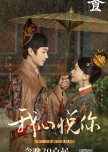
Royal Feast serves itself as a gentle stroll through the Ming dynasty, following Yao Zi Jin, a determined young woman who enters the palace as a lowly kitchen maid and slowly climbs the culinary ladder. Her journey is seasoned with friendship, ambition, and a slow-burn romance with Prince Zhu Zhan Ji. On paper, it sounds like a rich, layered dish. In execution, it feels more like comfort food. Warm, pleasant, but not particularly memorable. The drama blends kitchen competitions, palace politics, and romance, though it leans heavily on aesthetics and atmosphere rather than narrative depth.For fans of Story of Yanxi Palace, this almost feels like a long-awaited alternate universe where Wei Ying Luo and Fuca Fu Heng finally get their happy ending. Watching Wu Jin Yan and Xu Kai reunite as Zi Jin and Zhan Ji carries a certain nostalgic charm, like revisiting an old flame in a different lifetime. Their chemistry is still there, soft and familiar, though the writing does not always give them enough substance to truly shine.
The pacing of the story is noticeably slow, yet paradoxically rushed where it matters. Conflicts arise only to be resolved quickly, often without lasting consequences. The kitchen competitions and schemes start off with promise but rarely escalate into anything truly gripping. At times, the tension feels more like a gentle simmer than a rolling boil. Even when the stakes involve poison or sabotage, the impact feels muted. What consistently steals the spotlight instead are the food sequences, lovingly shot and almost poetic in their presentation. If this drama had a main character, it might just be the cuisine itself.
The same can be said about the political side of the story. The drama spans three emperors, presenting a family dynamic between grandfather, father, and son that is quietly engaging. The grandfather’s favor toward the grandson, the father’s lingering insecurities, it all hints at a deeper emotional core. Yet the storytelling treats these developments more like a historical summary than a fully realized drama. The stakes never quite reach the intensity one might expect from a palace setting, especially for viewers accustomed to heavier, more intricate historical narratives.
Character writing is where the drama feels most conflicted. Yao Zi Jin herself is both compelling and frustrating. Her determination to remain independent and avoid becoming a concubine is admirable, and those moments where she firmly holds her ground are satisfying. At the same time, her push and pull dynamic with Zhan Ji often borders on contradictory. She seeks his attention yet retreats when things become serious, creating a cycle that feels less like romantic tension and more like emotional indecision. Wu Jin Yan delivers the role with her usual flair, though her slightly coquettish mannerisms may not land for everyone.
Zhu Zhan Ji, on the other hand, feels surprisingly muted. He is kind, capable, and very much a green flag, but lacks the commanding presence one might expect from a prince. His willingness to let Zi Jin go for her happiness is admirable, yet his consistent inability to actively protect or support her becomes frustrating. Compared to Xu Kai’s charismatic turn as Fuca Fu Heng, this portrayal feels like a dimmed version of what could have been.
The supporting characters add to the sense of inconsistency. You Yi Fan starts off intriguing as a manipulative figure operating behind the scenes, but his motivations remain frustratingly vague. His feelings for Zi Jin, his ambitions, and even his end goals all feel scattered, leaving his character more confusing than compelling. Similarly, Su Yue Hua’s jealousy-driven actions lack proper foundation. Her shifting motivations, from friendship envy to professional rivalry, are never fully explored, making her come across as more erratic than threatening.
One bright spot in the character lineup is Yin Zi Ping. Her arc feels the most coherent and grounded. Starting from a place of desperation, she grows into a loyal and vibrant friend, bringing both energy and emotional clarity to the story. Her journey feels earned, and her personality remains consistent throughout, which is more than can be said for many others.
Despite its narrative shortcomings, Royal Feast excels in its visual presentation. The cinematography embraces warm, earthy tones that give the drama a cozy, almost autumn-like ambiance. The sets, costumes, and color grading work in harmony to create a visually soothing experience. And of course, the food. Every dish is presented with such care that it almost becomes a sensory experience, making you wish you could reach through the screen for a taste.
In the end, Royal Feast feels like a palate cleanser. It is not the most flavorful or complex dish in the genre, but it has its moments of quiet enjoyment. It can be slow, occasionally frustrating, and at times underwhelming, yet still oddly watchable. Think of it as that cup of coffee between heavier meals. Not the highlight of the day, but something you sip through anyway, sometimes even at 3x speed, just to enjoy the warmth.
Was this review helpful to you?
Luo and Behold: Family Drama Unfolds
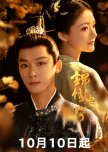
If family drama were a chessboard, Luo Yi Ning would be the quiet player moving pieces while everyone else is busy arguing over the rules. Born as the first daughter of an official yet treated like an afterthought, Yi Ning grows up under the shadow of her father’s favored concubine. With the unexpected support of her estranged half brother Luo Shen Yuan, she returns to the Luo household and steps into a maze of schemes, secrets, and long buried grudges. As she digs deeper into the mystery surrounding her mother’s death, truths begin to unravel, including one that changes everything. Yi Ning is not who she thought she was, and neither is her bond with Shen Yuan. What starts as sibling loyalty slowly blurs into something more, setting the stage for a romance that is as complicated as the family they are trying to survive.Going into this drama, I could not help but notice how strongly it echoes The Story of Ming Lan. From the mistreated daughter trope to the ever scheming household politics, even down to Yi Ning’s mother being named Gu Min Lan, the resemblance is hard to miss. That said, this drama feels like a lighter, more snackable version. It does not carry the same emotional weight or lasting depth, but it makes up for it by being easy to binge. Revenge is still sweet, the female lead is still clever, and the family drama is still messy in the most watchable way.
That binge factor is honestly one of its biggest strengths. I flew through the episodes like it was a bag of chips I did not mean to finish in one sitting. But the more I watched, the more I felt the story pacing leaned a bit too heavily on the Luo household arc. A large chunk of the drama is dedicated to Yi Ning navigating the Luo family and building her dynamic with Shen Yuan as siblings. While I understand the intention to flesh out the family intrigue, it came at the cost of other relationships that had so much potential. Her time with the Wei family, especially with Duke Ying, felt like a missed opportunity. That side of the story carried warmth and a sense of belonging that Yi Ning had been deprived of her entire life, yet it only appeared briefly near the end. It almost felt unfair that just as she found that sense of home, the story quickly moved her back into the Luo family through marriage.
The romance itself is… complicated, and not always in a good way. Shen Yuan finds out fairly early that he and Yi Ning are not actually siblings, and from that point on, his feelings start to make more sense. Yi Ning, on the other hand, finds out much later in the story. I find it quite a pity how the transition from sibling bond to romantic love is surprisingly smooth, almost too smooth. There is barely any awkwardness, barely any pause, just a quick “my heart flutters now” and we move on. It made me wonder if there really is a thin line between familial affection and romantic feelings, or if the drama simply skipped a few emotional steps along the way. I also wish we had seen more of Shen Yuan’s feelings before that revelation, because his expressions earlier on felt a bit too ambiguous for comfort.
Speaking of Shen Yuan, Zhang Wan Yi delivers exactly what I expected. He is reliable, subtle, and knows how to convey emotions with the smallest changes in expression. His comedic timing also sneaks in at the right moments, adding a bit of charm to an otherwise reserved character. Shen Yuan himself is the definition of quietly impressive. Smart, skilled in martial arts, and secretly successful, he is basically the full package. What stood out to me the most is his selflessness. Even after learning the truth about Yi Ning’s identity, he keeps it hidden to protect her, even if it risks losing her. Thankfully, the writers avoided turning him into an overly possessive character, which made his love feel more grounded. I just wish we got more interactions between him and Duke Ying, because that father in law dynamic had so much comedic potential.
On the other hand, Ci Sha as Lu Jia Xue completely stole my attention. There is something refreshingly raw about his presence. He does not have that polished idol look, and that actually works in his favor. He feels real, grounded, and carries a commanding aura that makes every scene he is in feel tense. Jia Xue is a fascinating character. Not quite a red flag, not quite a green flag, more like a very confusing shade of grey. His love for Yi Ning is genuine, but his methods are questionable, sometimes crossing into unsettling territory. That infamous wedding chamber setup definitely tipped into obsession territory. Still, he brought a level of unpredictability that kept me hooked. Every time he appeared, I felt like something was about to go very right or very wrong.
What frustrated me, though, is how his relationship with Yi Ning was handled. Their entire fallout hinges on a misunderstanding, and for a character as intelligent as Yi Ning, her reaction feels inconsistent. She refuses to hear him out, avoids him, and immediately assumes the worst. Yet with Shen Yuan, she offers endless trust and patience, always giving him the benefit of the doubt. The contrast is jarring. Jia Xue was her first love, the one who stood by her during her loneliest moments, yet their story is brushed aside rather quickly. Without proper closure, it becomes hard to fully invest in her eventual relationship with Shen Yuan. It all starts to feel a bit too formula driven, like the script already decided who endgame should be and forced everything else to fall in line.
Ren Min’s portrayal of Yi Ning sits somewhere in the middle for me. Her acting is definitely still a work in progress. As Yi Ning, there are moments where she shines, especially when the character is being calculating and composed within the Luo household. But there are also scenes that feel awkward or flat, like her fainting scene which honestly made me pause and question what I just watched. Her character also feels inconsistent. She can be patient and strategic one moment, then impulsive and immature the next, especially in her interactions with Jia Xue. I also wish the drama explored her business skills more instead of just telling us she is good at it. Show me the spreadsheets, the negotiations, the girlboss moments please.
Visually, the drama keeps things simple. The cinematography and sets do their job but do not leave much of an impression. The CGI is noticeably obvious at times, and overall, the production feels a bit low budget. It does not ruin the experience, but it definitely does not elevate it either.
The ending tries to go big with twists and dramatic reveals, but it felt more like a drama inside a drama. I had already guessed the big ruse, so the final confrontation did not hit as hard as it probably intended. Some moments even leaned into unintentional comedy, especially with how certain reveals were executed. Jia Xue’s ending, in particular, felt anticlimactic, and Yi Ning’s reaction left me more amused than emotional. Still, I have to give credit where it is due. The final scene, with both the Luo and Wei families coming together to celebrate the birth of Yi Ning and Shen Yuan’s son, was genuinely heartwarming. It gave a sense of closure that the rest of the finale struggled to deliver.
At the end of the day, this drama is not groundbreaking, and it definitely has its fair share of flaws and logic gaps. But it is entertaining, addictive, and easy to watch. It is the kind of show you start casually and suddenly realize you are ten episodes deep at 3 a.m. thinking, just one more. And honestly, sometimes that is exactly what you need.
Was this review helpful to you?
If Time Could Reply
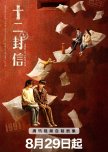
It follows the mysterious and emotional journey of Tang Yi Xun and his lover, Ye Hai Tang. When Hai Tang vanishes without warning, Yi Xun discovers a letter waiting in a mailbox. He writes back and realizes they are not only separated by distance but also by time. Across twelve letters spanning thirty five years, their connection endures as they search for truth and hope, weaving together love, longing, and the challenges of fate.From the title alone, Twelve Letters already whispers a warning: prepare tissues, and maybe a backup box too. The story wastes no time pulling you into its melancholic embrace. We open on a haunting image of a girl in 1991 Meiwan Town, stumbling through dim alleys just to send a letter to a bright red mailbox. Fast forward to 2026 in Beixing City, and we see a stubborn old man waiting in the cold beside a mailbox just like it, clinging to memories that feel like they are slipping through his fingers. That contrast alone hit me like an emotional uppercut. When he disappears, Yu Nian is drawn into the mystery, teaming up with Shen Cheng to trace the truth behind their parents’ past. Add in a ginger cat, a vivid red postbox, and twelve letters acting as threads through time, and suddenly you are in a race not just against time, but against fate itself.
The drama builds its world with a nostalgic, almost sepia toned sadness. Meiwan Town feels heavy with longing, where hope flickers but never fully settles. In this setting, we meet Tang Yi Xun, a young debt collector who somehow manages to be both rough around the edges and oddly principled. His life collides with Ye Hai Tang, a girl hardened by a neglectful father and a life that never gave her a fair start. Their first encounters are messy, charged, and tinged with misunderstanding, but also magnetic. When the first mysterious letter appears, their connection begins to transcend logic, weaving a bond that feels both magical and inevitable.
What truly elevates this drama is the acting. Zhou Yi Ran and Wang Ying Lu did not just play Yi Xun and Hai Tang, they became them. Wang Ying Lu delivers Hai Tang’s pain with such raw intensity that it almost feels intrusive to watch, like you are witnessing something too real, too private. Her anger, her vulnerability, her breaking points all land with frightening authenticity. On the other hand, Zhou Yi Ran brings a quieter kind of intensity. Yi Xun’s steadfast love and the small, genuine happiness he finds in Hai Tang’s presence create a balance that makes their relationship feel complete. Together, they light up the screen with a chemistry that feels unbreakable, which only makes everything that follows hurt even more.
The narrative dances between 1991 and 2026, and yes, you do need to pay attention unless you want your brain to go “404 timeline not found.” Thankfully, the color grading does a great job of guiding you through each era, and even if you momentarily lose track, the story gently pulls you back in. Yu Nian and Shen Cheng act as our guides through this emotional labyrinth, but make no mistake, this is Yi Xun and Hai Tang’s story at its core.
Not every character is easy to love. Ye Yi Bo had me grinding my teeth every time he appeared, truly the human equivalent of a mosquito you cannot swat. Tan Xin also tested my patience with her loud assumptions, especially towards Li Cha Dong, who clearly deserved at least a chance to explain himself. And while I adored Yi Xun, I have to admit his noble, righteous decisions made me want to yell at the screen. Sometimes love needs sacrifice, yes, but sometimes it just needs you to stay.
Despite all the emotional chaos, or maybe because of it, I found myself tearing up in almost every episode. This drama does not just aim for your heartstrings, it grabs them and plays a full symphony. By the time we reach the finale, especially that climactic scene by the beach, I was completely hooked, holding my breath as everything unfolded. The ending and even the credits felt like a gentle release after all the built up anguish, offering a sense of closure that was both satisfying and deeply moving.
Twelve Letters is the kind of story that lingers. It is bittersweet, immersive, and unapologetically emotional. The kind that makes you sit in silence after the final episode, staring into space, wondering if love really can transcend time, or if some connections are simply written in the stars… and the mailbox.
Was this review helpful to you?
This review may contain spoilers
Silk Sleeves, Steel Spine
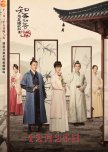
Set in the Northern Song dynasty, The Story of Ming Lan follows Sheng Ming Lan, the unfavored sixth daughter born to a concubine in an official’s household. After losing her mother at a painfully young age, she is raised by her wise grandmother and quickly learns that survival in the Sheng family requires more than obedience. It requires strategy. Hiding her intelligence behind a quiet and unassuming facade, Ming Lan grows up navigating a household where affection is scarce and schemes are plentiful. Her path crosses with Gu Ting Ye, the blunt and rebellious second son of a marquis family who seems to lose everything despite being born with every advantage. Together, through careful calculations and daring gambits, they climb the social ladder and seek justice against those who wronged them.Right from episode one, we are thrown into the Sheng household circus. Husband afraid of wife. Concubine sabotaging mistress. Sisters plotting. In laws bickering. The chaos never clocks out. Watching young Ming Lan maneuver through this battlefield at only eight years old was both impressive and heartbreaking. Her mother’s death scene still lives rent free in my mind. A sabotaged childbirth, missing midwives, no adults around, an eight year old running everywhere for help. The frustration, the helplessness, the rage. I felt all of it. When her mother bled to death along with the unborn baby, something in Ming Lan died too. That was the moment she truly understood her mother’s warning about hiding her brilliance. Liu Chu Tian did a commendable job as little Ming Lan. Yes, you could see the child actor wandering focus in her eyes, but she delivered the devastation well enough to squeeze out my tears.
The early pacing was wild in the best way. I blinked and four episodes were gone. The family trees though? A full time puzzle. Gu Ting Ye’s lineage had me pausing and rewinding like I was studying for a civil service exam. Between the Gu family, the Bai family, and the Qi connections, I needed a whiteboard. Eventually I understood that Qi Heng is a distant nephew through complicated marriage ties, but let us just say this drama does not hold your hand when it comes to aristocratic genealogy.
When the characters grew up, the tone shifted. The pace slowed but the emotional stakes deepened. I actually appreciated that Ming Lan and Gu Ting Ye did not immediately spark into romance upon reunion. Instead, we get Qi Heng’s tender and sincere admiration first. Qi Heng was soft, devoted, and brave in his own sheltered way. Watching him lock himself up and refuse food to protest his mother was both romantic and slightly dramatic in a teenage rebellion way. Still, when Ming Lan finally admitted that if he moves forward she will move forward too, my heart did a little flip.
Let us talk about the men. At one point I was ready to start an anti Gu Ting Ye club. A mistress, two children, questionable life choices. Zhu Man Niang’s coquettish energy set off every alarm bell. I kept asking how a supposedly intelligent man fell for such obvious manipulation. Then there is He Hong Wen, sweet and gentle, bringing food like a walking green flag. I almost boarded the He Hong Wen ship. But as Ming Lan wisely said, marriage is about whether you can tolerate someone’s weakness for decades. His excessive kindness could easily become a liability. Qi Heng had heart but lacked the ruthlessness to survive political storms. Slowly and almost against my will, I realized Gu Ting Ye, flaws and all, matched Ming Lan’s steel core best.
The drama shines brightest when Ming Lan unleashes her brain. Her debate scene in class was a mic drop moment. Her polo match was pure girl boss energy even if the CGI horse looked like it came from a video game cutscene. And episodes 32 and 33? Chef’s kiss. Her long planned revenge against Lin Qin Shuang and Mo Lan was strategic brilliance. Watching Mo Lan’s own scheming backfire was deeply therapeutic. Karma delivered with elegance.
One of my favorite relationships is between Ming Lan and her grandmother, played beautifully by Cao Cui Fen. Their bond is the emotional spine of the story. The grandmother’s apology for failing to seek justice for Ming Lan’s mother hit hard. It was quiet, sincere, and full of regret. In a house full of conditional love, this was unconditional.
Marriage between Ming Lan and Gu Ting Ye evolves from calculated alliance to genuine partnership. They complement each other. He charges forward. She fortifies the rear. I love that Ming Lan never loses herself in marriage. She respects him but does not dissolve into him. When she finally shows jealousy, Gu Ting Ye’s barely contained glee was unexpectedly adorable. Their dynamic grows, layer by layer, especially after he saves her and their newborn son. That reunion felt symbolic. Her walls cracked. Trust began to bloom.
Production wise, this drama is lush. The sets are detailed, the color grading consistent, and even background soldiers commit to their fight scenes. It feels expensive and meticulous. The only hiccups for me were some obvious CGI during polo and one brief camera shift that my industry trained eyes caught. Minor dents in an otherwise polished armor.
The second half becomes more politically heavy and slightly jumpy in pacing. Certain transitions feel skipped, as if the drama expects us to fill in blanks. The court trial arc involving the emperor did feel dramatic, but the eventual reveal of a larger scheme made narrative sense. Still, I wish some villain endings, especially Madam Qin’s, had more bite. For someone so cunning, her exit felt too quick.
Despite my constant side eyeing of Gu Ting Ye and my emotional rollercoaster with the love triangle, I could not stop watching. Seventy three episodes flew by. I laughed, I ranted, I celebrated revenge like it was a sport. Most importantly, I admired Ming Lan. She is not loud but she is powerful. Not reckless but brave. Not blindly romantic but deeply loyal once trust is earned.
Overall, this is a richly layered family saga about survival, resilience, and choosing a partner whose flaws you can live with. It is messy, dramatic, sometimes frustrating, but utterly addictive. If palace intrigue, domestic warfare, and a quietly brilliant heroine sound like your cup of tea, then consider yourself warned. Once you enter the Sheng household, there is no peaceful exit.
Was this review helpful to you?
Romance at 3.0x Speed
Les Belles opens with a splash, literally. Luo Ling Yu, once a noble lady now down on her luck, journeys to Jianye with her little sister to seek refuge. Along the way, she rescues a destitute man named Lu Yun. In a twist worthy of fate’s sense of humor, she later forces him to jump overboard to protect her reputation. What she does not know is that this pitiful man is actually the third young master of the powerful Lu family. Determined to secure a stable future, Luo Ling Yu sets her sights on winning his favor, only to be blocked at every turn. He sees through her schemes, exposes her carefully laid plans, and watches her flounder. Yet the moment she considers choosing someone else, he suddenly decides she is not going anywhere. Ah, pride and prejudice, Jianye edition.At first glance, this drama is like a beautifully wrapped gift. The set design is pretty, the costumes are easy on the eyes, and the whole atmosphere feels pastel and polished. You walk in thinking you are about to enjoy a refined historical romance. Then the plot holes start waving at you like surprise guests who were never on the invitation list.
The writing, unfortunately, is messy. The story moves at a relatively fast pace, which should be a good thing. Instead, it often sacrifices logic and depth for speed. One day there is an explosion, Lu Yun is buried under piles of snow, and the next thing we know, one month later he is completely fine. War gets wrapped up as if someone clicked “skip cutscene.” Emotional arcs that should simmer and stew are microwaved. Even the long abandoned wealth of Luo Ling Yu’s father looks suspiciously spotless, as if a cleaning crew has been on standby for years. Dust and spider webs apparently do not exist in this universe.
Character motivations also float around without anchors. Fan Qing Chen’s obsession with Luo Ling Yu feels dramatic, but where did it come from? What triggered it? The drama does not really say. It just hands us his fixation and expects us to nod along. And do not even get me started on the scene where he places her cage in the middle of a snowy field. It was meant to be intense and poetic. Instead, it felt like a theatrical photoshoot gone rogue. When Luo Ling Yu’s ankle manacles conveniently loosen at the perfect moment, allowing her to escape and kill him, I could only whisper, “How convenient.”
The romance is another rollercoaster. First Luo Ling Yu chases Lu Yun. Then Lu Yun chases Luo Ling Yu. Back and forth, push and pull, like a never ending game of tag. At some point, I got tired just watching them. The jealousy was fun in small doses, especially whenever Prince Heng Yang appeared. I genuinely wanted more scenes of Prince Heng Yang and Luo Ling Yu interacting without Lu Yun successfully sabotaging their time together. Prince Chang Yi and even Lu Xuan also had more visual chemistry with her in my opinion. I will be honest, I did not find Lu Yun attractive enough as the male lead. He is smart, skilled in martial arts, and written as this strategic genius, but he feels more like a delicate pretty boy here. Ironically, I found him far more charming in A Journey to Love. In this drama, I sometimes wished Luo Ling Yu would pick literally anyone else.
Speaking of the men, their dating skills are almost comically bad. Watching them pursue Luo Ling Yu can be painfully cringe. Grand gestures with zero finesse. Schemes with the subtlety of a drum solo. It is like a masterclass in how not to court a lady.
That said, not everything is doom and gloom. Luo Yun Hua, the little sister, is an absolute ray of sunshine. Her voice, her cheeks, her presence, everything about her is adorable. She steals scenes effortlessly and leaves you wanting more. The drama also features a mix of young actors who are clearly still growing into their craft, alongside seasoned senior actors who bring gravitas and stability. The contrast is noticeable, but it also adds a certain charm.
I do appreciate that the royal family here is refreshingly decent. The emperor and princes are not cartoonishly corrupt. They do not force marriages and actually give women a way out when they refuse. The emperor understanding his sons is oddly heartwarming. In a landscape where palace politics usually means backstabbing galore, this felt like a nice change of pace.
When Luo Ling Yu and Lu Yun finally get together and assemble their team of young bloods to investigate and prove his father’s innocence, the pacing picks up again. The idea is promising. However, the execution leans heavily into exaggerated role playing scenes that are meant to be humorous but feel more like children playing detective. I appreciate the attempt at levity, but it often lands in secondhand embarrassment territory.
By the final stretch, I will confess something. I finished this drama thanks to WeTV’s heroic 3.0x speed. Without that button, I might still be stuck in Jianye. There are simply too many illogical and cringe moments sprinkled all the way to the end.
In the end, Les Belles is a very light nonsense drama. It is pretty to look at, occasionally entertaining, and filled with youthful energy. But if you are searching for airtight logic, layered motivations, and a romance that does not feel like cardio, you may need to lower your expectations. Watch it for the fluff, stay for Luo Yun Hua’s cuteness, and maybe keep your finger close to the fast forward button.
Was this review helpful to you?
Tangled in Silk and Feelings
Set in the glittering yet cutthroat world of the Tang Dynasty, Brocade Odyssey follows Ji Ying Ying of the Huanhua Dyeing Workshop, whose life is anything but smooth silk. Separated from her childhood sweetheart Zhao Xiu Yuan when he is forced into another marriage, Ji Ying Ying must navigate heartbreak alongside the dangerous politics of Yizhou’s brocade industry. Then there is Yang Jing Lan, the nobleman’s son with a teasing smile and a strong sense of justice. What begins as a rocky partnership slowly unravels into something deeper. But when Cheng Feng Ze, the White King of Nanzhao, covets Ji Ying Ying’s dyeing secrets and kidnaps her, it is Yang Jing Lan who rises to defend Yizhou, defeat the enemy, and fight for the woman who has quietly woven herself into his heart.I went into Brocade Odyssey with zero expectations. My only motivation was my growing interest in Zheng Ye Cheng after seeing him in other dramas. I did not know a single thing about Tang dynasty brocade, and to be honest, I did not think I would care. Yet from the very first episodes, I found myself entertained. Not because of the technicalities of dyeing threads, but because of the people holding those threads together.
Ji Ying Ying is exactly my type of heroine. I have a soft spot for main characters with a dark or traumatic past, and she delivers. After tragedy strikes her family, she does not crumble. Instead, she steps up. As a young unmarried woman, she becomes the pillar of her household, leading her mother and older brother out of adversity. She runs the family brocade business and later takes on a leadership role in Yizhou’s brocade society. Persistent, resilient, dependable, and fiercely independent, she carries herself with a quiet authority that never feels forced. This was my first time watching Tan Song Yun, and I admit I was initially skeptical as she does not possess that allure and looks capable of attracting multiple suitors but nevertheless, she won me over quickly. She captures Ji Ying Ying’s youthful charm while embodying her maturity and responsibility. There is a grounded energy to her performance that makes you believe this young woman could truly command a room full of seasoned businessmen.
And then we have Yang Jing Lan. Played by Zheng Ye Cheng, he ticks every box of a swoon worthy male lead. Manly. Mature. Dependable. Martial arts skills that make fight scenes actually exciting. But what makes him truly charismatic is his duality. He is responsible and righteous, yet mischievous and playful. He teases Ji Ying Ying, jokes around, but when it is time to get serious, he stands firm like a well rooted pine tree.
What I love most about their relationship is the balance. They are allies first. Even though Yang Jing Lan clearly develops feelings early on, he respects that Ji Ying Ying is betrothed to Zhao Xiu Yuan. So he chooses to stand by her as a partner in navigating conspiracies within Yizhou’s brocade industry. Their dynamic feels like best friends slowly falling in love. Equal parts banter and heart to heart conversations. Most importantly, Jing Lan respects Ying Ying. Not just as a woman he loves, but as a person, a businesswoman, and an equal. He does not cage her. He does not get irrationally jealous when she interacts with other men. He simply warns her to be cautious of suspicious characters and quietly protects her from the shadows. When he tells her that if she is willing, he will slowly get closer to her, I melted. And when her rather annoying mother tells him to back off, he does so with heartbreaking dignity. His reflection that as allies he could die protecting her, but as lovers he must live well to stay by her side forever, lives rent free in my head.
That said, I did not love the circumstances leading to their marriage. Ji Ying Ying was cornered from all sides, and marrying into the Yang family felt more like survival than romance. Yang Jing Lan stepping in to take his brother’s place, despite loving her sincerely, left me conflicted. Yes, they love each other. Yes, they want to be together. But the timing felt off, like fate shoved them forward before they were fully ready. It is one of those situations where you whisper, this could have been more beautiful if it happened differently.
Visually and performance wise, the cast complements each other well. I found it interesting that Ji Ying Ying is essentially orbited by three men, each representing different paths and choices. Zhao Xiu Yuan’s arc, especially alongside Niu Wu Niang, was frustrating but necessary. It neatly dismantles his past with Ji Ying Ying and lets regret settle in. Cheng Feng Ze, the so called White King, is a hypocrite wrapped in obsession. Pathetic, yes, but strangely entertaining to watch. Beyond romance, I truly enjoyed the bond between Ji Ying Ying, Yu Ling Long, and the people of Yizhou’s brocade society. Their camaraderie felt sincere and warm, like threads woven tightly together. It is refreshing to see friendships and professional alliances given meaningful screen time.
Plot wise, the drama started strong. The business politics, emotional tension, and character development were engaging. However, around the last stretch, in the Nanzhao arc, things became chaotic. The tone shifted, and I found myself watching with a sense of gloom and anxiety. The story was not necessarily bad, but it lost some of its earlier finesse. And that one unnecessary death near the end still irritates me.
Even so, Brocade Odyssey turned out to be a surprisingly entertaining watch. I may not walk away as an expert in Tang dynasty textiles, but I certainly enjoyed watching Ji Ying Ying weave her destiny, command a business empire, and unintentionally capture the hearts of three very different men. Sometimes, that is more than enough to keep you hooked.
Was this review helpful to you?
Witch Way to Justice
Wandering physician Ye Ping An arrives in Chang’an carrying more than just her medical kit. Tied to a long buried and secretive case, she quickly becomes the talk of the city, accused of using mystical healing methods that border on witchcraft. While fear spreads about her ability to read minds and manipulate emotions, the ambitious magistrate Yuan Shao Cheng sees an opportunity. A murder soon points all fingers at Ye Ping An. Is she merely a convenient scapegoat, or the quiet mastermind orchestrating a long game of revenge? By the time the accusation lands, her first move has already been made.From the very first episode, the drama wraps itself in an eerie aura. A “witch” in the Tang Dynasty is already a deliciously dangerous concept, and Kill My Sins leans into that darkness with confidence. The streets of Chang’an feel heavy with suspicion, and so did I as a viewer. Every glance felt loaded. Every conversation felt like a chess move.
The core mystery revolves around Ye Ping An’s so called “sins.” The drama teases us with fragments of flashbacks, never giving too much, just enough to keep curiosity on life support. At first, all I knew was that it involved a woman. The details were vague, almost frustratingly so. But when the full truth was finally revealed, it hit with surprising emotional weight. It was not an obvious crime, not something black and white. It was layered, tragic, and deeply personal. In that moment, her guilt, her thirst for revenge, and her self destructive tendencies all made sense. No wonder she wanted to kill her sins. She has been living inside them all along.
Ye Ping An is not your typical heroine. She is complex, calculating, and morally gray. A wandering physician who specializes in mental health and hypnosis, she is branded a witch because society fears what it does not understand. She reads people too well. She knows exactly which emotional thread to pull. Watching her turn what should be a death sentence into a strategic advantage is both terrifying and impressive. She is highly intelligent, always ten steps ahead, and unafraid of pain or torture. In fact, she often seems more at ease in prison than in freedom, which says a lot about the punishment she believes she deserves.
There is also something perpetually tipsy about her presence. Even when sober, her eyes carry a haze, as if she is walking through memories no one else can see. With guilt that deep, how could anyone stand tall and clear headed? I am not usually a fan of Liu Shi Shi, but she truly delivered here. She captured that fragile balance between cold manipulation and buried trauma beautifully.
Opposite her is Yuan Shao Cheng, the low born magistrate with sky high ambitions. His struggle is different but just as compelling. No matter how capable he is, his birth keeps him from receiving the respect he deserves. Power, to him, is not just desire but survival. He wants to do what is right, yet his hunger to rise often clouds his decisions. At times he appears selfish, but I understood him. I saw the frustration behind his choices. He is a man fighting both the system and himself.
Their relationship is a slow burn in the purest sense. The chemistry is there, subtle but undeniable. Still, I appreciate that the drama chose not to drown their story in romance. Both of them are carrying mountains on their backs. A full blown romance trope would have felt misplaced. As close confidants, they make sense. It feels realistic and earned, not forced for fan service.
Wu An Kang is someone I wish we had seen more of. Zheng Ye Cheng is ridiculously charismatic here. His action scenes were sharp, and his interactions with Ye Ping An added another layer of intrigue. Interestingly, he was the only character I never felt suspicious of. In a drama where everyone seems like they could be hiding a dagger behind their smile, that is saying something.
If there is one thing that left me slightly unsatisfied, it was the ending. After such an intricate web of schemes and emotional buildup, the conclusion felt a bit anticlimactic. I personally wished justice had been served more directly, without Ye Ping An resorting to faking her death. After everything, I wanted a resolution that felt less like smoke and mirrors.
That said, Kill My Sins was a gripping ride. It is a drama that makes you question every character, reexamine every motive, and sit with uncomfortable truths about guilt, revenge, and societal judgment. Dark, clever, and character driven, it kept me hooked. In the end, it may not have been perfect, but it was definitely unforgettable.
Was this review helpful to you?
Saving Your Crush 101
Park Seong A lives a double life. By day, she is a regular high school student trying to survive classes and teenage chaos. By night, she becomes Fairy Cheon Ji, a well known shaman who reads fortunes, predicts futures, and helps clients with illnesses and lingering worries, all while keeping her identity hidden behind a partially covered face. One night, a boy named Bae Gyeon U walks into her shrine with his grandmother, and Seong A falls for him at first sight. That flutter quickly turns into dread when she sees his fate. He is destined to die soon. As if destiny enjoys being dramatic, Gyeon U transfers into her class the very next day. Faced with the cruel timing of fate, Seong A makes a bold decision. She will do everything she can to save the boy she likes, even if it means challenging the heavens themselves.The drama kicks off on a playful note, following Seong A as she hilariously juggles homework by day and shaman duties by night. Watching her switch between a school uniform and ritual robes feels like a coming of age story with a supernatural twist. Just when things feel light and cozy, the mood tilts slightly darker with Gyeon U’s upside down entrance, but the gloom never overstays its welcome. Seong A’s bubbly, lovestruck energy swoops in like a ray of sunshine after midnight rain, keeping the tone bright and comforting.
Once Seong A learns about Gyeon U’s fate, it becomes oddly adorable watching her go full guardian mode, desperately trying to prevent the unspeakable from happening to her crush. Meanwhile, Gyeon U does what emotionally guarded boys do best and pushes her away at every turn. Their dynamic feels like soft chaos, with Seong A persistently closing the distance and Gyeon U slowly, reluctantly learning how to trust again. This push and pull is where the drama truly shines. The chemistry between Cho Yi Hyun and Choo Young Woo is its biggest strength. The bubbly girl and cold guy trope could have been tired, but they make it feel fresh and sincere. I had more than a few fangirl moments watching them share the screen.
What I appreciated most about Seong A is that she never felt immature or annoyingly naive. Despite her bright personality, she carries a quiet wisdom, likely shaped by her life as a shaman. She has this natural protector aura that makes you want to lean on her and believe that things will be okay. Gyeon U, on the other hand, is a walking bundle of unresolved trauma. Haunted by past experiences and burdened by a dark aura that harms those around him, his emotional walls make sense. I admit I am weak for the girl who slowly tears down the guy’s walls trope, and this drama knew exactly how to serve it.
Just when the main romance risks becoming a little too comfortable, Pyo Ji Ho steps in and saves the day. As Seong A’s best friend, confidant, and secret admirer, he adds warmth and balance to the story. I was genuinely happy that he did not end up as a bitter third wheel but instead became the couple’s biggest supporter. His growing friendship with the lonely Gyeon U was unexpectedly wholesome. Cha Kang Yoon fit this role perfectly, turning Ji Ho into the kind of sad boy turned bestie you cannot help but root for.
Unfortunately, the drama stumbles a bit in its second half. The introduction of Bongsu shifts the story into darker and more complicated territory. While the show remains relatively light and easy to digest despite the heavier shamanic concepts, Bongsu’s storyline drags on far longer than necessary. What frustrated me most is how it almost completely sidelined Gyeon U’s fated death, which felt like the true core of the drama. Bongsu himself is a tragic character born from trauma and regret. His first appearance intrigued me, then slowly made me anxious, and eventually left me feeling pity. Still, sympathy aside, his arc would have worked much better as a shorter subplot. The only truly blessed gift from this storyline was Seong A and Gyeon U sleeping side by side, which was painfully cute. Sadly, the resolution of Bongsu’s plot felt far too easy for something that took so much screen time, leaving me shaking my head more than once.
Yeom Hwa is another character who constantly kept my nerves on edge. Her mysterious and dark allure initially made her fascinating, the kind of character who makes you brace yourself for disaster. When her motivations and past were finally revealed, I understood her pain, but I still could not bring myself to like her. Tragic backstory or not, she remained unsettling and frustrating until the end.
The ending itself was fine. Not spectacular, not disastrous. We definitely could have had more, and honestly, we deserved more. Still, it wrapped things up well enough to leave me satisfied. Head Over Heels is a charming mix of romance, destiny, and supernatural flair, carried by strong chemistry and heartfelt moments, even if it trips a little on its own ambition along the way.
Was this review helpful to you?


