


An interesting film, but hard to fully understand
The Great Flood is a film that left me with a strong feeling of emptiness and confusion. While watching, I didn't understand everything right away, and even at the end, I felt like I only partially understood the film. Despite this, I can't say it was bad, but it was definitely different from what I expected.The film is very confusing and requires a lot of attention to detail. The explanations are there, but they aren't immediate, and this makes it difficult to watch. I often felt like the film was deliberately trying to confuse the viewer, using a cold and distant atmosphere.
An-na struck me as a very human and fragile figure, a mother trying to do the right thing in an impossible situation.
In my opinion, the film is about humanity collapsing, but receiving a second chance thanks to artificial intelligence. It's not just a disaster movie, but a reflection on the future, on the extinction of humanity, and on the extreme choices people make to survive.
The ending left me even more confused, and I admit I was also a little disappointed. From the trailer and the title, I expected a major natural disaster, but instead I found a much more philosophical film, tied to the theme of artificial intelligence.
I would recommend The Great Flood to those who love sci-fi films, which are symbolic and full of hidden details. I wouldn't recommend it to those looking for an action film or a classic disaster film.
My rating is 6/10: the beginning had piqued my interest, but the general confusion prevented me from fully appreciating it.
Was this review helpful to you?

Am I romantic? Nope! Do I believe in love? Also nope! But this was so sweet and lovely and simply makes me want to believe in true love and that it exists.
The two leads were great, I don't know who they are but they were sweet.
It's very short so I can't really say anything without spoiling it, but you will finish it feeling warm inside despite being relatively sad, it still so sweet ~~
02/01
Was this review helpful to you?

A Message On A Desk, A Love Mix Up - and the best surprise of a teen movie!
I am currently on a Japanese teen movie streak. It started out from a moment of nostalgia but obviously now I am traveling down the rabbit hole. Momentum still ongoing. Huh. 🤷🏻♀️ 🤣🤣🤣And I am a bit giddy at the moment by how good this movie was! (The level of wow reminds me of “10 Things, I Hate About You”)
Yes. It has all the stereotypical elements of a run of the mill teenage romance.
But perfectly executed with warmth, depth and wit. The main characters are all flawed but oh so relatable and easy to love.
While predictable, the storyline still has some unexpected twists towards the ending and delivers some underlying wisdom without being in the face about it.
Fluffy. Wholesome. Entertaining. Likable. Excellent music choices to strengthen the vibe of the story part or even bring the plot to the next stage. How the songs got used reminded me of “Perks of Being A Wallflower” (Great movie, too).
This teen romance deserves its high rating.
Highly recommended! 🍿🍿🍿🍿🍿
Was this review helpful to you?
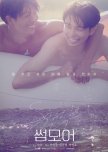
This review may contain spoilers
A Gentle Love Found by Chance
“Some More” is a gentle, heartfelt short film that proves you don’t need drama or spice to tell a meaningful love story. The simple setup—two men meeting by chance when a city boy cycling injures his leg and finds help at a quiet countryside farm—quickly blossoms into something warm and sincere. Their discovery that they’re both gay feels natural, and the sweet, innocent flirting that follows is full of soft glances and genuine connection. I loved how the film leaned into tenderness rather than intensity, letting the romance grow at its own pace. As the city boy heals and prepares to return to his life, I was nervous the story would end on an uncertain, open note—but the final scene completely eased that fear. Seeing him return, backpack in hand, strongly hints that what they shared was more than a fleeting moment. The supportive cousin was also a lovely touch, quietly affirming and kind throughout. Overall, “Some More” is pure sweetness—soft, hopeful, and quietly romantic in the best way.Was this review helpful to you?

Tony Leung and Shu Qi
“You can mess with me, but not my hair.” — Tony Leung’s iconic line came back, and it was still as charming. It’s always nice to watch a chill funny Tony Leung.This movie also featured one of my beloved actresses, Shu Qi. She was gorgeous as usual in this movie. And the scene where she disguised as a man was perfectly charming.
The plot was basically the same as the original movie, just with different characters as the same roles. Although it still had its moments, I found this one less entertaining than Tokyo Raiders. It’s probably because the storyline was already nothing new, and the fighting scenes also weren’t as good. I think I prefer Ekin Cheng as Tony Leung’s partner. I think they made a better duo. I didn’t feel any found family or partnership vibe among the duo or between Lin and the Korean girls who worked under him. And this was the most entertaining thing about the original movie.
—————-
By the way, this is my first movie of 2026. Happy New Year! 🎉 Let's leave all the bad things behind in 2025 and may we all be blessed with good health, good fortune, and only happiness and great films in this new year. Cheers to 2026! 🥂I wish all the best things to everyone in this universe. ❤️
Was this review helpful to you?
Although the trailer and title suggest a conventional disaster film (in the style of 2012 or The Day After Tomorrow), the work is actually an existentialist science fiction thriller that uses a "time loop" to explore artificial intelligence.
1. Synopsis and the Big Twist
The plot begins with An-na (played by the excellent Kim Da-mi), an AI researcher, desperately trying to save her son Ja-in from an apartment building being submerged by an apocalyptic tsunami. She receives help from Hee-jo (Park Hae-soo, from Round 6), a security agent with mysterious motivations.
The Twist (Mild Spoiler): The film reveals that the disaster we are witnessing is not immediate physical reality, but rather a computer simulation repeated thousands of times. An-na's research aims to "teach" real human emotions to an AI so that humanity's consciousness can be preserved in synthetic bodies after Earth's extinction.
2. Strengths: The Visual and Technical Spectacle
Aquatic Realism: The work with practical effects and CGI is impressive. The feeling of claustrophobia inside the flooded building and the force of the water are palpable and distressing. Performances: Kim Da-mi carries the emotional weight of the film, delivering an exhausted yet resilient performance that keeps the audience engaged, even when the plot becomes confusing.
Genre Innovation: Director Kim Byung-woo defies expectations by transforming an action film into a philosophical meditation on what makes us human (the "emotional engine").
3. Criticism and Controversy
The film's reception was mixed due to its complexity:
"Bait and Switch": Many viewers felt misled by the marketing, expecting a linear survival film and receiving a dense plot about transhumanism and time loops.
Fragmented Narrative: The repetitive structure (the loop) can be tiring. The film demands total attention to detail to understand which "version" of the simulation we are in.
Scientism vs. Emotion: Critics point out that, in its effort to appear intellectually profound, the script sometimes loses the simple emotional connection that the disaster subgenre usually offers.
Expectation vs. Reality
What the trailer promises What the film delivers
Global disaster film Psychological thriller in a confined location
Fight against nature Fight against human obsolescence
Frenetic action Cerebral and repetitive science fiction
Final Verdict
"Daehongsu" is a film for those who enjoy complex science fiction like Interstellar or Dark. If you're only looking for adrenaline and collapsing buildings, you might be disappointed by the second half. It's a film about memory and the human capacity to love, even when the world (or the code) is crumbling.
Interesting Note: The film ends with a post-credits scene that suggests the fate of "New Humanity" in space, raising ethical debates about whether AI clones can truly replace the human race.
Was this review helpful to you?
Not just a flood movie
The Great Flood (2025) begins as a high-stakes disaster film, throwing you into a city overwhelmed by massive flooding and impossible odds. The tension is constant, the visuals are striking, and the emotional core—centered on survival, sacrifice, and human connection—keeps you deeply invested. As the story unfolds, it slowly reveals a smarter, more ambitious side, weaving in unexpected sci-fi elements that reframe what you’re watching without giving everything away. By the end, it’s no longer just about escaping the flood, but about memory, humanity, and what we’re willing to do to protect the future. It’s the kind of movie that surprises you, makes you think, and stays with you after the screen goes dark.Was this review helpful to you?

This review may contain spoilers
Revelations: The Thin Line Between Guilt and Excuse
Revelations is a gripping Korean psychological thriller that kept me hooked with its tense atmosphere and complex characters. I appreciated how the film explores human guilt, the tendency to rationalize our actions, and the moral choices people face under pressure.But Revelations is more than just a crime story; it is, beyond a simple film, a sharp critique of human greed.
At the center of the film is the criminal Kwon Yang-rae, who, beyond his role as an antagonist, is primarily treated as a projection for our two main characters. For the pastor, he represents a kind of “revelation” and divine calling, while for the detective, he is the source of her deep suffering and guilt. In this sense, he serves as a personification of excuse.
Meanwhile, the young A-yeong clearly represents a return to reality. Here, we are confronted with two completely different perspectives: for Seong Min-chan, the girl symbolizes his job loss and his “disobedience” to God, whereas for Lee Yeon-hui, she embodies the possibility of ending her guilt. She is the element of the film that forces each character to face the consequences of their actions.
From the very beginning, the film establishes strong symbolism: A-yeong fleeing from a threatening man represents the human tendency to constantly seek excuses. This pursuit can be read as a metaphor: youth still seems spared from guilt and greed. However, later in the film, we understand that this moral justification is inevitable.
Ultimately, the final confrontation clearly demonstrates that the need to justify our actions is not eternal. It only takes one choice to break free: the choice to face the truth. The final scene distinctly portrays two completely different personalities: one who remains in ignorance and prefers to try to escape her guilt, and the other who confronts her own “demons” and is finally freed from all culpability.
In fact, the film does not suggest that we are all doomed, but rather that we can always find a way out, as long as we accept the truth as it is.
Finally, I would like to add that I do not believe Revelations critiques faith or an “obsession” with God. I genuinely think it should be seen differently: here, faith highlights our human need to avoid facing our guilt. Religion is just one of many excuses used to show how much we seek to justify our actions in order to absolve ourselves of responsibility.
Thank you for reading :)
Was this review helpful to you?
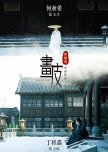
Painted Skin: The Guo Jingming Edition
1 people found this review helpful
A Hauntingly Beautiful Story of Love and Sacrifice
This drama examines what it is to be human and the inner workings of emotions and existence. It is ethereal, with foreboding and tense tones that beautifully capture love, the aching need for companionship, and self-sacrifice. It is well-executed and the cast performance matches its caliber. I recommend this to all Guo Jingming fans and to anyone wanting to watch something short and with feeling.Was this review helpful to you?

This review may contain spoilers
I love dancing, so I knew I’d fall for this movie, I just didn’t realize how much. To me, you listen to music with your soul and dance with your heart. A great dancer doesn’t just move to the beat, they feel the music, as if every cell in their body is a note being played through the dance. And that’s exactly what the movie is about: love, but in a broader sense. Not just romantic love between two people, but also the act of feeling, of surrendering to emotions you can’t control.I don’t see Shinya Sugiki and Shinya Suzuki as opposites. In fact, they’re more alike than they realize. Both are professional dancers who’ve dedicated their lives to the dance, which is at the core of their identities. And while they emphasize different sides of dance, Sugiki prioritizing strict technique over emotion, and Suzuki prioritizing desire and emotion over rigid technique, they’re still two sides of the same coin. That similarity is what makes their relationship so magnetic and what kept me glued to the screen. Each sees in the other both a reflection and a contrast.
They also recognize in each other a silent pain they both carry. I wish we knew more about their backstories, what shaped them into who they are. Suzuki says he can’t stand lies or betrayal. Who lied to him? Who betrayed him? Could that explain his arrogance and disdain for elegance, finesse, competitions, and audiences? At one point, Fusako says Sugiki believes he has to suffer to grow stronger. What happened to make him become the “grim reaper,” killing off all his feelings just to be stronger and successful? I don’t think it’s simply because of his failed relationship with Liana.
As for the romance, I’ve always seen Sugiki and Suzuki’s relationship like a moth drawn to a flame. They’ve always felt this magnetic, irresistible pull toward each other, an admiration that was almost impossible to control. And working together turned that admiration into something deeper: love. When Sugiki danced with Liana, it was forced by the competition committee. But when he invited Suzuki to dance, that was a true declaration of love. He chose Suzuki, and in a way, crossed that line and lost himself. It was also a declaration of love for dance itself, where both of them allowed themselves to feel everything, together with the audience.
At first, the audience’s applause was hesitant and confused, but as they kept dancing, Sugiki overwhelmed by emotion, Suzuki more restrained and technical, the applause grew louder and louder. With each performance, they showed what they could achieve if they let go of their fears and insecurities, the things holding them back from what they truly wanted. That’s my favorite scene in the whole movie.
Takeuchi Ryoma and Machida Keita’s performances were absolutely phenomenal. The two-hour film flies by thanks to them. Not to take away from the rest of the cast, who were flawless, but honestly, the movie could’ve been just Ryoma and Keita and it still would’ve been amazing. Their chemistry is out of this world. If Ryoma’s hips had me hypnotized, Keita’s eyes had me completely captivated. He conveyed everything: admiration, love, pain, doubt... all hidden beneath Sugiki’s rigid, cold exterior. Netflix nailed the production, and the soundtrack was fantastic.
I desperately need a sequel, a mini-series, a special episode, anything. I’m not picky. The story of Shinya Sugiki and Shinya Suzuki cannot end here.
I know this isn’t a film for everyone, but if you allow yourself to feel the passion, you’ll be swept away by this beautiful story. Highly recommended!!
Was this review helpful to you?
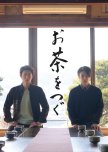
This has no business touching my heart like that
This was so beautiful... So beautiful.The story is very simple and touching, and the two leads done great job, specially Akisawa Kentaro, he plays a deaf character and he managed to express all his emotions perfectly.
I don't know why this isn't popular! It's one of the best Japanese short movies I've ever seen.
Short, simple, heartwarming and beautiful.
Highly recommended ~~
Was this review helpful to you?

Interesting But Short Film
I was interested in this film because one of the actresses, Sun Mei Lin, has a supporting role in the 2025 hit series Speed and Love.” This was a short, 12 min film, about two women in a relationship discussing marriage as they are preparing to attend someone else’s wedding. There is no soundtrack and only the two characters in the film which is kind of documentary in style with a “breaking the fourth wall” element. The film was interesting but I don’t know if I would watch it again. The ending was kind of abrupt and left me wanting more. This film was difficult to find but streams for free on GagaOOLala.Was this review helpful to you?
Normalilla
Vaya fumada de película me ha parecido al principio, no entendía absolutamente nada. Después me ha quedado claro que los humanos no saben quedarse quietos y siempre quieren experimentar con cosas que no deberían.Me ha gustado saber de algunos personajes que han salido al principio, me han dado un poco de pena eso si, pero ha estado bien conocer su historia.
En fin, que al principio estaba más perdida que un pulpo y un garaje y al final no ha estado tan mal y me ha acabado gustado, está bien para pasar la tarde.
Was this review helpful to you?
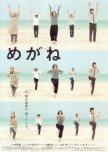
Nothing is ever explained -- why is is so cool to ride on the lady's tricycle that even the student who has just arrived knows about it? Does the school teacher ever teach? Why does the guest house owner not remove the wheel of the tricycle when he checks for punctures in the tire? (That last one hurt to watch.) And what about that other hotel? Nothing is connected, even though it seems to want to be until the last minute. This is not simplicity, this is faked depth.
It did have its surreal moments, with the hotel where guests worked on the vegetable fields or how the woman pulled her heavy suitcase along the sandy beach -- but these moments were far and inbetween.
I don't really have anything else to say, the film deeply annoyed me. *And* it bored me to tears.
If you want to see a cool film set on an Okinawan island, go watch "Nabbie's Love".
Edit to add: This film has won the Manfred Salzberger priye at the 2008 Berlinale and was a nominee for the "World Cinema - Dramatic" categegory of the Sundance festival, so there are certainly people who think the film is excellent. And as you can see from Elisheva's comment below, there are viewers who like the film. Please don't follow other opinions, make up your own.
Was this review helpful to you?
This review may contain spoilers
An important story, but disappointing plot...
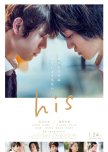
I think stories like these are important to tell, but this was still a difficult plot to endure. The movie was very realistic in some ways and very socially critical. The homophobia (internalized and not) and insecurities are ripe in this one. The legal battle was stressful to watch (which I think is good and showcases a lot of Japanese attitudes on gay topics)... But, in the end, I'm very disappointed that the woman who hit her own child and neglected her during the custody battles to the point that she was found wandering by the police... that sort of person won custody. It's realistic that most women, even the abusive ones, will get custody of children over a man.. but I'm angry Nagisa didn't fight at all. I understand he didn't want to drag his ex-wife while she's vulnerable, but the real vulnerable one is the child. This is evident by how her whole personality changes when she's living with her mom in the aftermath.Nagisa is a very selfish character, which is fine (those sorts of people need to be represented too).. but the whole time I felt bad for both his partners-- especially Shun, who he left behind because of his internalized homophobia and returned to when he had no other options. The "romance" between them didn't feel good or healthy to me. Shun felt like was a second choice and was generally an afterthought in this 2 hour long movie.
TL;DR Good plot but unsatisfying (yet realistic?) ending/results of divorce. I am choosing to believe that the reason for them revisiting Shun and Nagisa at the end is to transfer the custody.
Was this review helpful to you?


