

This review may contain spoilers
For me it' a good story but suddenly why did they break up suddenly after dating then after military service of ml I thought that call of ml they be together forever but a twist that the fl had a wedding he invited the ml to her wedding so sad that they don't end up together....please your next drama Dahyun with a happy ending please🥹More drama for Dahyun please😭 Was this review helpful to you?
Beautiful and sad.
This is a very nice movie about true friedship. The story is very good and takes several twists to keep it interesting.The cast did a good job and the visual were ok.
I cried several times, so keep a box of tissues at hand. I really recommend watching tis movie, you will not be sorry.
Was this review helpful to you?
lacks the charm
they lost the charm that the other versions had.the interactions between the ml and fl were so limited, they barely had time to connect and fall in love. they made the ml more 'heroic' and less quirky and the fl a side character instead of the headstrong girl. fl had clear dreams and aspirations in other movies while here they are just reducing her to a love interest.
the lack of connection between the leads helps with the ending, in the other versions it feels painful but here it makes sense.
its very telling abt korean culture with the changes they made. in the other versions the fl's friend is pretty but here they tried to make her as unflattering as possible. also the chubby friend was the one who goes behind the fl and actually dates her but here it the handsome rich guy
good debut by dahyun even though she does not have much to work with
Was this review helpful to you?
"Widows grow flowers"
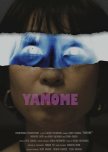
The Widow aka Yamome is a short film that has won several film festival awards. The poster and the awards intrigued me. I thought there would be a cruel or vengeful twist to the short. Instead, I was left wondering if I'd missed something.Oohara Tokio plays Tanai Tomoko, a forty-year-old widow. She believes that widows can't be alone and need a man so she joins a dating site. The woman might want to find a hobby, make friends, or join a club. Instead, she meets Higuchi Satoshi who is 15 years her junior. He's handsome, charming, and has no problem letting her pay for their meals. Because Tanai is a bad drunk, she refrains from drinking on their dates. She buys him gifts and he suggests they move in together. Things take a downward turn from there.
Again, based on the poster, I was ready for the knives to come out. Instead I found the ending tepid at best. The short films it was up against, must not have been very strong. To quote Tanai, I wasn't angry or sad, just disappointed.
13 May 2025
Spoilery comments below---
The following comments are spoilery, if you are spoiler sensitive, please skip---
This short film was perplexing to me because Tanai never smiled and remained rigid through her dates. You would never know that she was serious enough to buy an apartment for them. Or gullible enough to hand over her various forms of identification to a man she'd only known for a few months. Higuchi spent their dinners talking about himself and taking phone calls---red flag warning signs. When Tanai realized she'd been had, she didn't get angry or sad. She wouldn't sue Higuchi because she didn't want him to hate her, after all, "Men will be men." For the love of Pete, that attitude was ridiculous and horribly outdated. She was 40, not 104. In the end, this came across as a Public Service Announcement warning widows about "commercial daters". I can only hope during the final scene when she did drink it meant she was going to give as well as she got to the next man and really cut loose.
Was this review helpful to you?
A Quiet Reflection on Fleeting Connection
The Morning After is a short yet emotionally layered film that explores intimacy, detachment, and the unexpected weight of casual encounters. Set in the post-pandemic haze, the story follows Tien and Jay—two men who meet once a year for a physical connection that somehow feels both familiar and distant.The 16-minute runtime works in the film’s favor, keeping things intimate and focused. The chemistry between the leads is understated but convincing, and the dialogue feels natural, even when loaded with unspoken tension. The heart attack incident acts as a quiet but powerful turning point, forcing Tien—and the viewer—to reevaluate the meaning of their yearly ritual.
Visually, it’s minimalistic, but the cinematography captures a sense of quiet isolation that mirrors the characters’ emotional states. While it doesn’t break new ground in terms of narrative, it effectively captures a very specific kind of relationship—one shaped by habit, vulnerability, and the things left unsaid.
Overall, The Morning After is a contemplative watch that lingers after it ends. It might not be for everyone, but if you enjoy subtle storytelling and emotional nuance, it’s worth your time.
Was this review helpful to you?
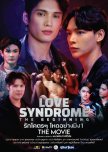
A Dark Journey into Trauma, Revenge, and Unexpected Love
Love Syndrome: The New Beginning is a gripping film that explores the complex and often painful dynamics of abuse, guilt, and redemption. The story follows Itt, who orchestrates a harmful plan against Day's younger brother, Night. In retaliation, Day inflicts severe emotional and physical abuse on Itt, using the situation to control and manipulate him. Despite this, both characters begin to develop complicated feelings for each other, raising the question of whether love can emerge from such a toxic foundation.The performances from the lead actors are strong, with the tension between Itt and Day feeling palpable and raw. The film effectively captures the emotional turmoil and vulnerability of its characters, offering a nuanced look at how trauma can intertwine with affection in unhealthy ways.
While the film deals with heavy themes of abuse and manipulation, it’s a thought-provoking exploration of how human connection can evolve in the darkest circumstances. The pacing, cinematography, and soundtrack all contribute to the intense atmosphere, adding depth to the emotional landscape of the film.
Unfortunately, the director passed away a couple of months before the movie’s release, and it seems there won’t be a sequel to explore the characters further. It’s a tragic loss for the industry, as the potential for more from this story was evident.
Overall, Love Syndrome: The New Beginning is a challenging but compelling watch. If you’re ready to dive into its difficult themes, it’s definitely worth the experience. I’d rate it 8/10.
Was this review helpful to you?
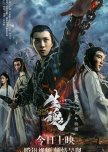
This review may contain spoilers
The OOC ruined everything
Sizhui is one of my favorites, but here he’s completely OOC."You are the most wicked person in her eyes, Xiao Qing will never forgive you", "Those innocent people in Fufeng Town you killed will not forgive you, and even if you die you can't wash your sin" ??? Sizhui would never say something like that, let’s be serious.
This is the same person who has seen with his own eyes that the world isn’t just black and white, someone who is even friends with Jin Ling (who’s practically the descendant of the people who massacred his family), HIM seriously?
I was like, "pls Wen Ning kick his ass"
AND his parents are literally Wangxian- I just can’t picture Sizhui saying stuff like that. Even setting aside the education he received from LWJ, he has the fuc*ing WWX as his father. The damn Yiling Patriarch.
I mean, if he says those kinds of things, then he’s being a hypocrite, honestly T_T
Rip Sizhui with common sense (I still love you outside of this movie, my bby)
Was this review helpful to you?
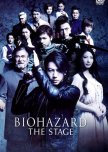
It's camp, it's stupid, and I love it.
You'll get almost exactly what you're looking for. Resident Evil stupid goodness that has real 'American' named characters and many many twists that just do a lot to you.The choreography is pretty spectacular and honestly the best part of the whole thing, the hand-to-hand fighting was great and had so much action going on. Tyler was a pretty amazing character, and I ended up very much enjoying it just to keep going for him. He makes it very worthwhile if you want anything serious out of it. At the end of the day, though, it's just as campy and silly as the games before it, and you'll have a great time all the same. Random backflips out of nowhere, good characters to enjoy, you'll have a blast.
I have a lot I can say against it also, like the fact that it had *WAY* too many characters than it knew what to do with. A number of them didn't really serve any purpose and it made me quite sad that they didn't do anything with it.
Honestly, don't go in thinking you're going to get something incredibly deep, it'll never be that. Just have fun and watch the fellas beat up zombies.
Was this review helpful to you?

Comedy with a Deep Touch: A Journey Through Identity and Dignity
While the film presents itself as a light-hearted comedy, it explores several meaningful themes:Social identity: How we judge people based on their appearance or gender, and how some are forced to play roles that don’t reflect who they truly are just to get a chance.
Personal dignity: The struggle to regain self-worth after loss.
Society’s double standards: How the same person can be treated differently simply because they "look" different.
Overall rating:
7.5/10
An entertaining film, clever in its message, and emotionally impactful without being overwhelming. It’s the kind of movie that makes you laugh—and then makes you think.
Was this review helpful to you?
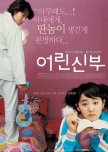
This did not age well.. ?
This is not the worst Kdrama I’ve watched, but boy.. was it hard to get through..Aside from the main theme being a 16 yr old high school student marrying a 23 yr old playboy, there were other issues as well..
The way the family accepted their daughter being married off at 16 was crazy.. at least wait til she’s not a minor! The manipulation by grandpa was not cool and showed zero care for the feelings, life goals, or thoughts of the couple..
The storyline would have been much more believable if they got married with the understanding that he would stay abroad doing whatever it was he was doing before, and she would finish high school and graduate college. Then he comes back to Korea, after they’ve both had a taste of life (without stunting her childhood, and he could hopefully become mature enough for a committed relationship) Then it seems like they would have a fighting chance, with no regret later in their marriage for the things they gave up while fulfilling grandpa’s wishes..
This is not a re-watch for me..
Was this review helpful to you?
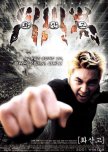
Live action manga with great action and baby Jang Hyuk, Shin Min Ah and Gong Hyo Jin
It took me a long time to see this because it's hard to find but the Blueray version finally turned up on Internet Archive. It's hella fun and deserves a higher rating than 6.7. The film looks great thanks to high contrast color grading that makes it look like a live action manga. The action is silly and so is the acting but it's deliberate and you just have to let your brain go into neutral and enjoy the ride. It's fun to see very young Jang Hyuk, Shin Min Ah and Gong Hyo Jin. The action scenes were mostly done with wire work and practical effects which look amazing but were dangerous for the actors. JH was knocked unconscious during filming and you can see it happen in the behind the scenes video: https://youtu.be/jrxfzO4Q_wIThe Internet Archive also has the 2004 MTV edit of the film with voice overs by Method Man, Snoop Dawg and a lot of other hip hop artists. Unfortunately it's not as fun as it should be because Andre 3000 does a terrible job voicing Jang Hyuk's character. Better to stick with the original.
Was this review helpful to you?
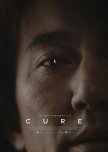
It's historical and an absolute must watch for psycological horror fans.
I'm going to keep my review spoiler-free for the reason that you *absolutely* must not have any spoilers going in, it's so much better without, I can't understate that enough.Cure is an absolutely fantastic film, and it's aged incredibly well, despite it being 28 years old as of me writing this. It's shot so spectacularly, there is so much to take in, so much great imagery, it'll be a very good experience.
It's very much for an audience that can go in with an open mind and not expect specific things going in, you need to just let it run its course, and experience it. Make sure you do it in a mind where you can sit down and think about it too, you want to focus on every bit of it you can. I mostly say this because it's a film where you can interpret many different things from it, and you'll want to come to your own conclusion.
The only criticism I would ever give it is that there is a little bit of a lack of a "definitive ending" that one would like, but the way it happens is also satisfying.
I just generally recommend it a lot, and I hope you have as much fun as I did with it.
Was this review helpful to you?
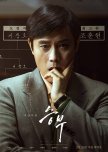
The Match – When the Hand that Teaches is Outplayed by the Stone that Learns
There’s something inherently poetic—tragic even—about the idea of surpassing your teacher. The Match is not just about the ancient board game of Go, it’s about obsession, pride, legacy, and the heartbreaking silence that comes when the student doesn't just learn from the master—but eclipses him. And in doing so, rewrites history. Set against the flickering cigarette-lit haze of 1980s-90s Korea, The Match tells the real-life story of Go legend Cho Hun-hyun and his disciple-turned-rival Lee Chang-ho. But don’t mistake this for a mere sports biopic. This is a psychological battleground where the 361 points on a Go board become a metaphor for life’s unrelenting choices, regrets, and invisible victories.Let’s be clear: you can watch this film without knowing Go—but if you do understand the basics, even just the concept of territory and handicap stones, this film transforms. What looks like an intense stare-down over a grid becomes a chess match of philosophies. What feels like a silent moment becomes screaming tension. The beauty of The Match is how it embeds Go's complexity into its characters. Cho Hun-hyun (Lee Byung-hun) is flamboyant, fast, a man of patterns who treats Go like war and the board like a battlefield. His stone placements are aggressive, demanding, and psychological—he wins as much with his gaze and timing as he does with strategy.
Then there’s Lee Chang-ho (Yoo Ah-in), nicknamed the Stone Buddha for good reason. If Cho is thunder, Chang-ho is water. He doesn’t clash. He surrounds. Slowly. Silently. With patience so terrifying, you don’t realize you’ve lost until he’s already claimed your territory. Watching their styles clash is watching fire versus stone—and stone doesn’t blink.
Let’s talk Lee Byung-hun. There are actors, and then there are storms dressed in human skin. His portrayal of Cho Hun-hyun is haunting, especially in the latter half when the pride of a mentor gives way to the agony of irrelevance. Lee Byung-hun delivers a tour de force performance as Cho Hun-hyun, a man whose pride shines brighter than his title belts. From the moment he spots the young Lee Chang-ho in an amateur tournament, there’s a glint in his eye—not just recognition of talent, but of legacy. He sees in the boy not only the future of the game, but his own chance at immortality. Their early interactions hum with a near-paternal warmth, and you almost believe it’ll all end in mutual respect and quiet dignity. But Go is a war game dressed up in silence, and pride doesn’t go down without a scream.
Watching Cho's descent after his protégé’s betrayal is nothing short of mesmerizing. There’s one particularly unforgettable moment—blink and you’ll miss it—where Cho clutches a Go stone so tightly that it cracks his fingernail. No words, no monologue, no theatrics. Just pure, undiluted anguish squeezed into a thumb. That kind of visual storytelling, raw and unflinching, speaks louder than any confession ever could. It’s the heartbreak of a man whose legacy has turned against him—and who suddenly has no idea who he is without it.
And opposite him, Yoo Ah-in gives us a chilling, surgical portrayal of Lee Chang-ho—a boy prodigy turned stone-faced killer on the board. It’s eerie how much his performance mirrors the real-life “Stone Buddha” persona of the actual Lee Chang-ho. He moves like he’s made of fog, untouchable and unbothered. No glares, no smack talk, no inner turmoil visible to the outside world. During their matches, while Cho plays like a flamethrower—loud, fast, aggressive—Chang-ho plays like water finding cracks in your walls. He waits. He wraps around you. And by the time you realize you're drowning, it’s already over. That contrast in their playstyles bleeds beautifully into their personalities: one man shouting at the world to remember his name, the other erasing it with a quiet smile. A child prodigy raised in the art of war, who doesn’t engage in his mentor’s fireworks. He doesn't flinch, doesn't taunt, doesn't respond. And somehow, that hurts more than any betrayal. Their chemistry is not fiery—it’s gravitational. One pushes, the other pulls. The emotional tide is constant.
Even if you’ve never touched a Go board in your life, there’s enough drama in The Match to pull you in. But for Go players? This is rich, layered dessert. The film doesn’t spoon-feed the mechanics of Go, but it showcases the psychological nuance behind every stone. You see it in their posture, their eyes, their silence. You understand the weight of each move not because the movie explains it, but because it makes you feel it. That alone is a feat.
And yet, despite all its strengths, The Match left me wanting more. Clocking in at just under two hours, it feels frustratingly short—like someone folded a 12-episode drama into a 2-hour movie and hoped we wouldn’t notice. The first half builds beautifully: the mentorship, the fame, the rising tension. But the second half? It rushes through the emotional climax like someone skipping chapters in a book. Cho Hun-hyun’s descent into despair deserved more screen time, especially when you’ve got someone like Lee Byung-hun at the helm. We needed to see his world fall apart—not just be told it did.
Likewise, the film tells us Lee Chang-ho struggled with guilt and loneliness after defeating his teacher, but never shows it. It’s mentioned in passing by a side character and never explored. That robbed Yoo Ah-in of deeper emotional beats and made Chang-ho feel more like a cold enigma than a fully fleshed-out human. You can argue it fits his stoic persona, sure—but in a movie that’s all about emotional damage dressed in Go stones, it feels like a missed opportunity.
Then there’s the matter of the soundtrack—or lack thereof. For a film this emotionally charged, the OST is shockingly forgettable. No themes that haunt you after the credits roll. No musical punch to elevate the heartbreak. It’s not that the background music is bad—it’s just... there. Like wallpaper. And in a drama like this, where subtle glances and cracked fingernails carry the emotional weight of bombs, a strong score could’ve made all the difference.
And perhaps this is just the Go nerd in me talking, but I wish we saw more matches. I get it—this is a film, not a Go documentary—but there’s a certain magic in the game that The Match only gives us in slivers. I didn’t want melodrama between matches—I wanted drama through the matches. Every time the camera pulled away from the board too early, I sighed like a player watching an unfinished game.
Verdict:
The Match is not about winning. It’s about what you lose in order to win. It's about the tragedy of being a stepping stone in someone else's greatness—and how even that has a kind of dignity, if you let it. It’s the quiet surrender of a teacher who realizes that the game was never about the records, the fame, or the trophies—it was about the board itself.
For anyone with even a passing love for Go, this is a rare and respectful homage. For everyone else, it’s still a solid psychological drama anchored by powerhouse performances. It won’t give you fireworks. But it’ll hand you a single black stone, press it into your palm, and say:
“Now what will you do with this?”
A slower burn than most Korean dramas or biopics, but if you’re willing to sit with it—really sit with it—you’ll find a story that captures the ache of being both a creator and a casualty of your own legacy.
Score: 7/10
Was this review helpful to you?
The best sports movie of all time
The attention to details in its storytelling is just extremely delicate, not solely focusing on the game or the legacy itself but rather the story about the characters and the human relationships surrounding them, every action and consequence while becoming a pro player as their life career, and to see things and life lessons out of the outcome of win and lose. It's just so well made in every department, the cinematography and the sound design, that insane acting performances, really, there is no other sports movie that could top this one, it is really that great.Was this review helpful to you?

Great actors in a tokusatsu? Why not?
I have not read any of the manga nor seen either season of the anime, and so I cannot speak the faithfulness of the adaptation or the film's consistency with the rest of the franchise.The film is an all-ages dive into the human body from the POV of blood cells where the red cells transport oxygen and CO2 and various other cells fight off injury, illness and the occasional inconvenient bowel movement. The bad guys are infections and stray mutations played as OTT as any villain in every afternoon television tokusatsu from Kamen Rider on. And so the question naturally arises: is this film worth seeking out if you're over the age of, say, 10?
For me the answer is an unequivocal yes largely because the casting and the performances elevate the material substantially. Look. They cast Nagano Mei AND Ashida Mana. Based on everything they've ever been in you know their characters will be crying. In this film Nagano is a red blood cell in Ashida's body. In the first two acts, Nagano's character is new on the job and never knows her way around; frequently straying into unsafe places where she is inevitably saved by a white blood cell played by a brooding and cool Satoh Takeru. The film to that point is a light action comedy.
However, the stakes are raised significantly in the final third of the film, and the performances both within and outside the bodies get darker and more real. I do think the film walks the line of how to address illness and death extremely well, and you will be perfectly safe watching it with kids. I must particularly shout out Fukase Satoshi as the final boss for bringing some depth to his performance that gives Nagano and Satoh something to work with that's a bit more real than your usual tokusatsu villain.
Abe Sadawo is along for the ride as Ashida's single, out-of-shape and overworked father and raising the question of just how many times he will play Ashida's father. He brings his usual comedic flare, and easily keeps up with Ashida and Nagano when the film turns darker.
The special effects, huge crowd sequences and fight scenes are all top notch as these things go. The environments inside the body are all creative and fun while still providing a solid metaphorical understanding of how cells in the body work to resist illness, fight infections and heal.
All in all, Cells At Work! is a quality live-action adaptation and an enjoyable way to spend a couple of hours.
Was this review helpful to you?


