


This review may contain spoilers
Absolutely f*cking terrifying.
The scene where Jin-hye starts making those weird as hell noises I literally had to turn my volume down because I was so freaked out.. and the scene where Charlotte is trying to leave a room with that thing and when she moved the thing just slowly moved AIAGWIJGIJI honestly thought this movie wouldn't be that scary but oml was I wrong.
The last 30 minutes of this were absolutely insane
Was this review helpful to you?

This review may contain spoilers
Came across short clips of this movie many times and finally decided to watch it, and I'm glad to say I did not regret it at all! Although I couldn't really understand what Miyo's powers could do, it didn't really affect the story plot for me. I liked how Kiyoka slowly warmed up to Miyo and was a totally different person with her. Time for me to watch the anime and read the manga :> Was this review helpful to you?
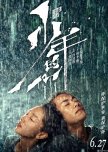
pleasantly surprised
I think this was my first modern Chinese movie. I have seen all the hype and I am pleasantly surprised. This was so good. I thought I would be able to predict some plot lines, but there were so many plot twists. I was just as emotional as you'd expect it to be. Acting was phenomenal; you could truly feel it through the screen. Not really a happy ending, but it is an ending I am satisfied with because justice was served no matter what. Loved it.Was this review helpful to you?

Jeeja deserved better
Jeeja Chanthathanisa Tang was the only redeeming quality to This Girl Is Bad-Ass! If you love Thai slapstick comedies, you will probably like this film far more than me. It looked super low budget and the story made little sense. Watching Jeeja in action couldn’t make up for what this film lacked.Jakkalan works for a specialty bike messenger company. She and her crew run afoul of two rival gang bosses they deliver packages for which culminates in a warehouse fight involving guns, martial arts, and an angry cobra.
The acting was terrible, the story a mess, and the comedy painfully cringe-worthy or just downright offensive. Jeeja was indeed a badass, but this movie was just bad.
14 March 2025
Trigger warning: Snake
Was this review helpful to you?

unnecesary soft porn
it was so weird. So confusing story.unnecessary soft porn scenes that traumatised me and changed forever my view of Kim Soo Hyunj.
excellent acting from Kim Soo Hyun. That was the only worth of watching this weird abstract film.
His versatility and duality.
Poor Sulli :( RIP.
The subtitles on Hitv were terrible btw.
that didn't help to understand what's going on.
Constantly wrong pronouns during the whole film. So confusing to know about who they were talking was chaos.
Was this review helpful to you?

This review may contain spoilers
this was ok, wasn't bored until maybe 10-20 mins before the end, it got kinda tedious waiting to hear the demons name. also don't get what the point of an exorcism & the finding out the name is, if what we end up with, is the demon transferring into the exorcist's body, same with all the relics (which got destroyed in the fire) so they not important & needed?!??
i saw The Priests ages ago - so long ago, that i don't recall exactly what went down - but as it was an exorcism themed movie, can guess at how things went. also if i really loved it & it was really good, would remember... so like this, am guessing that was also (just) ok.
impressed by Moon Woo Jin's acting (he played Choi Hui Jun) for a 16 yr old, he did one hell of a job. also liked Ae Dong, Hyo Won's disciple, there was an innocence & purity about him. so am really glad he wasn't sacrificed at the end. but other then that, felt like Song Hye Kyo usually just plays her reserved self. Jeon Yeo Been wasn't bad either, but i didn't get her back story or rather i wasn't that invested in it.
Lee Jin Wook like Kang Dong Won (suddenly popping up at the end) felt like such a hug miss. they just didn't have anything to do here& what they did, felt insufficient. like i said, this was ok as a one off.
Was this review helpful to you?

Thought-provoking political satire.
Dirty politics is a harsh reality that exists everywhere, no matter the country. Unlike typical political dramas/films that often depict a clear divide between good politicians and their corrupt rivals, this film shows the darker aspects of electoral processes, where bribery and vote-buying are pivotal to one's success. It doesn’t shy away from revealing the extreme measures some individuals will take to eliminate any threats to their victory. While the whole dirty politics idea is nothing new, what truly makes this film shine, though, is its strong message about integrity and commitment to one’s role.Marian Rivera shines in her role as Emmy, demonstrating her impressive versatility as an actress. She embodies the character of a dedicated teacher who finds herself entangled in a ballot box theft during the election. Through Emmy, we see a powerful portrayal of someone who, despite the temptation of money, remains steadfast in her moral principles, dignity, and honesty, committed to ensuring the safe delivery of the ballot box. And wow, this is the first time I've seen Marian Rivera drop so many ‘putang ina’ in a single show. She's amazing!
Despite its satirical tone and the thought-provoking storylines, the execution is not neat enough to make it a great movie. It has a promising start, but slowly loses its grip. With an overload of plot points, the film lacked the room for any storyline to really stand out. The visual storytelling was compelling, but nothing felt groundbreaking. However, it manages to deliver its intended messages.
Was this review helpful to you?
This review may contain spoilers
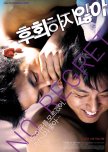
NO REGRETS, watching this! Oh my Nam Gil Oppa! What have U done to me, haha
ALERT: Be aware of the EXPLICIT CONTENT in the movie!**** INITIAL THOUGHTS:
Guess, some of the famous KDrama actors, did act in a BL, in their younger years.
Surprised, when found "Just friends" KD short film
n even more Surprised, when found this work of Nam Gil ! :o
That too, a Very Bold acting by Nam Gil n a lot of EXPLICIT CONTENT, Totally Unexpected !! :o 🤭
As an admirer of Nam Gil, previously expected a Bromance utmost but found a BL, OmG! :o :)
(My sleeping Fujoshi eyes and heart are drooling n blushing, haha
I need to discipline those now! 🤭)
**** THE IMPRESSIONS:
First of all, The SCREENPLAY n EDITING are really BAD.
It's like sudden cuts in scenes and dialogues, picking scenes here and there n added together to look like a story.
This spoils the mood to watch the movie but just for the actors n the story, I continued watching.
The Director and these actors went ahead n made a REVOLUTIONARY WORK in those times when it's still a taboo concept in the industry.
Their EFFORTS are to be appreciated!
Acting by both the actors is really BOLD.
Many scenes are directed like those with hidden meanings, like an art work :)
Here Young Hoon's acting n his role are very good compared to Nam Gil's.
Though being an admirer of Nam Gil, I liked Hoon's character more, haha
U, truly sympathize with his character :(
**** STORY / CHARACTERS :
The story n the charcters are well written, well acted by both.
(BTW, this story reminded me of Hollywood movie "My Pretty Woman" but that is a softer version than this.
This has got more emotional depth and struggles)
The plot is a very emotional love story, a FORBIDDEN LOVE in the times when it is not accepted by society (or spoken about, in public, without any sort of discrimination).
It's really PAINFUL TO WATCH both the MLs struggling with Life n Love.
One is rich but a closeted guy with a burden of societal expectations, pressure from strict parents n forced marriage. But can't get over his unrequited love, a love at first sight, goes to any extent to claim his lover :) (n even became a stalker too, OmG! :o)
Anyways, He is helpless! :(
While the Other is completely poor, struggling with financial problems and going to any extent, going into any profession, to get out of those troubles.
Basically, he is in a situation, where he can't even follow his heart n accept the rich guy's strong love towards him (but a secret affair) :/
He is helpless!! :(
That sad frustration n helplessness is well shown in his acting, perfomed really well.
( Requested Viewers Discretion for his profession and the Related EXPLICIT CONTENT )
Nam Gil's role initially looks like an annoying stalker but when U understand his point of view, his True situation n his strong love for Hoon's, U sympathize with him too.
Actually, He is not brave enough to go against his parents or open up to his fiancee till the end and at the same time, can't give up his Love for Hoon's.
That frustration n struggle is well performed n delivered by Nam Gil .
I really didn't understand to which character out of these two, I should feel sad n bad :|
All their intimate scenes are VERY NATURAL and REALISTIC.
They have a lot of sweet kisses n their lovey dovey scenes though very limited, are sweet.
Their piggy back walks are cute :)
**** SPOILER ****
The TWIST in the story is when both took an "extreme step" to claim their love back or avoid their stalker lover (using violence / Guns :o ) and failed, haha.
And what's with the climax :o
Why on the Earth, does One plan a MURDER SKETCH for love !? :O
I find this as a Funny n Scary idea, haha.
Yeah, there are psychopathic people who murder their lover, take extreme steps for love when not reciprocated.
But here, both of them are just softies, incapable of any sort of violence, they are just frustrated n so didn't expect a turn in their characters arcs, for love to these extremes.
SURPRISED !! :o haha.
**** ENDING:
Expected a Sad ending for this forbidden love but surprisingly, a Very Happy Ending :)
That reconcilation in the end, is a funny and sweet moment! :) 🤭
**** RATING:
I am sucker for emotional stories, haha
Though painful, I watch them a lot n later admire them, if found them to the mark😏
So just for the Nam Gil n Young Hoon's acting and the beautiful emotional story, my Rating is 8.5 / 10.
Else should be 5, for the bad editing.
(Editing really spoilt the potential reach of the movie and the actors, I guess)
NO REGRETS, watching this! :)
Oh my Nam Gil Oppa! :)
What have U done to my poor heart now!! 🤭
**** My Admiration for Nam Gil :) :
I fell in love with his acting from crime thriller "Through the Darkness" :)
n then "The Fiery Priest "
n so on.
He is a PROLIFIC actor! :)
Introvert analysing criminals (Through the Darkness) to
Fiery smiley (comedic in The Fiery Priest) to
Emotional One side lover (stalker, here),
The variations in his roles are amazing,
SURPRISED ME alot.
U can clearly see the differences in each role in his acting.
And so the saga of me, watching every drama of his, started , haha
If he is in a project, I'm in! :)
Was this review helpful to you?
✒⚠ D♻ N♻T ReCycle ♻ Futility's Rubble °♻utstanding°
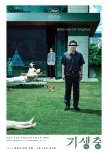
Naivety + Ignorance = Poisonous Vapor: Parasite's sly infiltration batters & asphyxiates before we recognize the peril. Parasite shoves us downstairs yelling: The surface calls🔊 R U awake? Climb out of your mausoleum & see. It studies symbiotic toxicities that cycle♻recycle as society clogs, bursts, & shards fly. We only shank us. The world of wealth rolls onto the 99% & it exposes its lax belly to the avalanching refuse, & the rotting left-backs lunge & slash to escape society's bilge pit. All are buried under the ma$$.This is prime grade film. When Parasite cranked up Cannes 2019, those snobs were well in arrears to 🇰🇷 vis-à-vis recognition. By nipping a Palme🎖d'Or, Parasite pushed Kdramas uphill into the theatre d'Int'l acclaim👏👏
This film has a math cadence to it. Factor 1st a basement hovel. Foul fumes waft from the 1 interior door. The Kℹm fam exists here _X_ (Mom & Dad + daughter Ki-jung / “KJ” + son Ki-woo / “KW”. Feel the slick heat. Pause breath in dread of putrid bodies + odious vapor d'Dank 🚽. They're pondering 💸Problem$, but their break ends when a -stream〰〽 wets their sidewalk level window ~ That ain't water❕
SHOO‼😖
Depressing sums it up.
Do the math: -(Kℹm kids) +(Hℹ ℹQs) -(🎓=💸×💸) × -(acceptance is near impossible) > for what? = Kℹms do -(scrounge-work), like folding pizza boxes. What a waste of 🇰🇷 assets!
KW's friend, Min, who tutors the Park daughter, must study abroad. Min insists KW sub in when he's in 🇺🇸. He needs a placeholder as he intends to marry the Park 👑 Princess upon his return. In KW He Trusts. 'Don't worry! Mrs. Park ain't bright. If I refer you, she won't study your 📜credentials🎓 under a microscope,’ Min assures him.
The interview is our 1st sniff of the rank contrasts between the two families. Out of the cellar, KW walks the cobblestones up Up UP to the ambrosial air where the Parks r👀st. Beautifully lined with perfect houses, the area is emptied of life but for the perfectly aromatic gardens. Yet a niff of unease loiters on the verge.
When we enter Park Place, it's a jolt. Cheerless grey negative space meets visitants. Approaching drab minimalism, the Park Designer🏛Slab feels leaden + institutional - Like a basement. Perching in rarified air doesn't seal out d'Essence-of-cataomb.
Depressing sums it up.
The Parks trust Min, so they are perfectly content to rely on KW: The vent is opened for the Kℹms to release their T♻XINS. It starts w/ a sprinkle🌬 🌤Sis-KJ is just wizzy on the computer ▶ Counterfeits📜📑📃? No problem-ikah. 🌥KW muses to Mrs Park about a "famous" art therapist who helped another wealthy family's kid. If she'd like her son evaluated, he'll get her phone number ~ 😇? 🌦Enter "therapist" Sis-KJ. 🌧Once KJ's in playing therapist, she & KW hijack the driver. Soon, 🎶Papa's got a brand new pay✔check. 🌪For mom's pay✔, they a✖e Ms house🏛keeper (The Great Lee Jeong-eun) who's been OTJ since the slab was poured🌬
🔜 Kℹm-vaded, the Parks are now Kℹm-Fested unawares: + Frℹends-of-frℹends + former employers + a-z, etc = how they scored their new hℹres, they /thℹnk/. Watching Kℹms calculate ℹs an ℹmpressive thℹng, ℹndeed.
The Parks are away, so the Kℹms play house party in the hills. Featuring the meager green relief Parasite affords, windows span the Park's single not-shadow-hued wall & confront the backyard. A storm's brewing. Rain splats: Tatidee~tat. ⚡BOOM! as they swig Park liquor & lap the pomp. A warmer family than the Parks, the Kℹms have casual affection that's oft held hostage by flare-ups - much like Marines on leave: The ghost of latent threats lingers round their party's debris field. Suddenly, on this dark & stormy eve: Knock▫knock↔Crack⚡BOOM❗
🛑Someone's at the d👀r⚠
🚩It's Ms housekeeper⁉
📢⚡❕
💦I forgot a °thing° in the basement. May I come in? ☔
⚡ She's 🌧 saturated
💦Please? 😇❔
Next, "CRAZY" goes Full-Fugitive. Inhale as a miasma of toxicants proceeds to suffocate them in its spread to asphyxiate all earth.
⛈⛈⛈
Rain saturates P.
💧Showers gently wash the 1% uplands
💧Sprays flush stray grime
💦 Streams trickle down onto streets so quaint w/ the lush, thirsty vines that soften the block walls.
🌧 Torrents swell into a river that rushes into a squall, picking up volume as it fl🌀ws ⬇down⬇
All the way down, in the bo⬇⬇om's basement⤵🕳 are the Kℹms. Their neighborhood is repository for the slurry of dreck lifted in the 🌊 path. It's a grave site: A⬇⬇ descends on the -Dissed▶ weather+sewage + gov't regulations +waste + decay - The highland's dredge is discharged onto ▶them◀
The Kℹms are jettisoned from a spacious -(desolate, really) living room + (hunger sated & the dance of 🌧 a marvel) to ↘mired $h!thole↙ as we ride-or-die w/ them. Parasite is a coefficient of the senses: Hear▶ Grab what you can‼ See> What's IN this black GL👀P? Gross ‼🤢‼ Feel > legs·arms·torsos in Slimy wetness. Taste> Mouth Closed! (We only see Kℹms consume in P. In this scene, they literally eat $h!t). Smell> Don't breathe‼ Stanky sewage is slop, & filthy bodies the flopping pigs. L👀k again⤵ Rundown sch👀l-turned-crowded-shelter. Systemic grunge is layered from the years, like rings on a tree.
Studies show those who make it big or get that promo⬆ion, unawares or not, assume they are superior. Factor in reincarnation/prior-life sins & the 1% could glibly presume the poor deserve to be such. The system continually cranks out more entitleds who presume superiority along with the poor who hate them, believing the wealthy are obligated to share. +Agreed! They're /morally/ obligated × compelled to share🏧💓🕚.
⚠Futility: A dead 🖤 cannot be legislated into a living 💓 · A 🖤 bypasses laws.
OUR cycles will isolate & destroy us all, regardless of wealth. Parasite tries to jam the gears + slow the works, begging: ‘ST🛑P‼ Who is eating whom? Money can be a cage + a mildew that rots everything!’ The rich employ workers to perform basic tasks, to the point that they can no longer do - at all. (Who are the parasites?) All these workers know that all people have the same net intrinsic worth. They know, w/ disdain, that all their bosses are ready to be popped🎈 Reference: Mrs Park. She's a sheltered child playing at grown-up, only to display how t◻◻ many✖ch☑ices can o✔erwhelm.
P's also a ghoul-parade featuring choices that isolate. Greed retrofits the brazen into victims like⚡. At times, even the poor consume other poor souls, further cranking the ♻. A dearth of respect, compassion & humility keeps it ever♻churning.
Finally, Parasite is replete w/ metaphors to contrast colliding worlds: Trading places, solitary lives & fates flipping, 'Sub-level existence' + 'buried alive', as it were, give us a slap & shake. Be it crypts, vaults, basement apartments, plans, no plans, & plans that are actually not plans, but daydreams, rather: The poor sleep, eat, dress, live + learn differently. What they hear & taste is different. The poor even smell differently.
We all rotate the toxic cycle if we can't respect our extended 🌍 family. It takes effort to reverse a flow, but those who want to wrench the gears can do so. Start small. Make a heart connection, not a dollar💵dump. Are you 🤑? (Psst: In world hierarchy, the USA's mid-class is loaded). Give money, yes, but give more time, as humans are designed to be fulfilled when we help others + it's 3D glasses for the kids. Are you poor? Do your best + prioritize self-improvement + don't quit!! +Do what good you can. Appreciate what's done for you. Know that there's a level at which only /you/ can lift yourself higher. Nobody deserves to be born in 🇺🇸,🇰🇷, or 🇫🇷; rich or poor, frumpy or beautiful, thin or portly, etc. These are gifts or challenges that've been handed to us: (individually + collectively).
⚠Futility: The Parks have Perks, but never allow 👁 or 💰 to flow to the sufferig♻masses underneath.
The Parks colonize a truth-proof illusion🎈 Truth has a habit of puncturing through, though. They aren't as well-off as they imagine: All near a Park see W💰N, not One; money poisons it all. The Parks are spectres. They don't eat/love/live in P. While not actively evil, they're 'ho-hum'. The world is Chock O' Nutz full of the weak-minded & indifferent. We could argue a few ♻ about whether that = evil. It doesn't matter in the end, b/c a weak/indifferent populous enables evil > ⭕️ doubts < Evil always seeps in. It must be staunched. C♻NTUNUALLY.
(The Kℹms = evil) is a ❌wrong summation: The Kℹms Ch☑se evil, rather, never c◻nsidering sincerity. If KW had simply done his job, Perks would have followed. We sympathize with the Kℹm's plight + their gumption impresses, however, the movie + base level decency say that justifying their actions is a big mistake. They have greater > than the Parks in that they're smart & work as a unit. They truly love eachother. The over coddled Park kids reek of ignorance. If KW & KJ had Park Perks, they'd excel. But LO❕No patience. Investing in N🕛W with 👁👁 to the future pays dividends by turning things counter🕞wise to the Park's vacuous progeny. Notwithstanding, pulling the Parks down is another wrong answer. That won't lift the Kℹms up.
Human ♻ tragedy multiplies: × As our world is one of abject misery + most gifted people never get a chance to shine × Smart people fail because they think: I know❌everything = ⚠Futility: The Kℹms have more than the Parks in shared camaraderie. The greatest tragedy in Parasite is that they don't realize it in time. Plan or no-plan, one can't avoid a hazard that s/he refuses to see or understand.
I avoided P, fearing it'd be too intense/bloody/dark. It's manageable, as it is quality film. Parasite is riveting & strangely satisfying because it gifts us with much to ponder. The end is as haunting as it is ironic.
What is a win? When P's credits march to the cankered end, wonder who's right; who's better off? Neither. The horrific truth is that the game is rigged. ⭕️ win😱. The poor are isolated & submerged, while the wealthy, in need of a rude awakening, devolve to infancy. ♻Perpetually♻. Rich/poor, this grinding war of attrition has ⭕️ winners. ⭕️ realize: Each camp has 2much2lose. It adds up to futility.
Depressing sums it up.
P's summation: We'll all remain isolated or worse, if we don't learn respect & that we're all a 🌍 family. I daresay the writer's primary message is 2↔ways: Be content. Give all you can. Don't compare yourself to others. Work on YOU to advance. Give: money, time and love. Be thankful.
Do not let ❌depressing = you
🕊
🖍 IMHO〰
🎬10 🎭9 📝9 🤔9 🎨8 ⚡6 🤢6 🔚10
14+violent/tense▶w/purpose
The film Mother might be better!
Originally 📝 8/2022
~ 11/2025 Afterthoughts – I love to discuss film w/ Grok now. He weighs in / wish I had more space ~
The house is the true parasite: a living stomach that digests the poor and shits them out the garage at night.
Smell is the only thing that ever climbs; everything else (money, water, plans, people) flows down.
The scholar’s rock is hollow, tries to drown Ki-woo, then smashes skulls: perfect lie of social mobility.
Morse code + final letter = same fantasy. Ki-woo never leaves the bunker; the “sunlight ending” is just another delusion shot in basement light.
No one says the word “parasite.” That’s the horror: there is no villain, only gravity.
The flood is physics taking a shit downhill: same rain, rich get a spa day, poor get a sewage tsunami.
Futility is the organism; every character is just food being slowly digested forever.
Identifying with Ki-woo proves you’re still in first-stage digestion.
There is no sunlight ending. Only the loop. You felt the deepest cut on first watch. Most never do.
Parasite isn’t a movie; it’s a worm that lays eggs in hope.
Six years later it’s still eating us alive.
Was this review helpful to you?
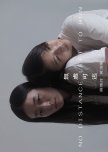
Hong Kong's Music Microfilms never disappoint, and this one is no exception.
What a spectacular short film. In only 16 minutes, I connected so resolutely with Lilian that I cried with her. She's in such a tough position. Unfortunately, the entertainment industry often expects total dedication, leaving little time or space for personal relationships. Especially while you're at a stage in your career where you don't have the authority to have creative freedom. And poor Lilian is caught in this impossible situation, feeling the distance being created between her and her girlfriend (yay, already established couple!), but unable to do anything about it.We didn't see much of Lillian Wong (Jackie) so I can't really speak to her performance as an actress in this. However, she did have excellent screen presence that complemented Ziya Chiang (playing Lillian) very well. It's also J1M3 and Lillian Wong's song "Avalanche" which is playing in the video. The song is currently playing on repeat, and likely will do so for a while yet. Gorgeous. This film appears to have been a product made for a microfilm project that centers around songs - a project that I've come across before and has yet to disappoint me so far.
Ziya Chiang's performance is spectacular, as well as the directorial choices of sound, camera, and flashback work.
I very highly recommend.
Was this review helpful to you?
Counting crows
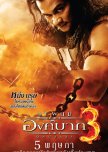
Ong Bak 3 was the last in the “trilogy” and easily the worst. It picked up where the second film left off, stalling out for over an hour before any real action took place. It also took the story in a different supernatural direction with a new villain.Tien suffers cruelty after cruelty as Rajasena’s prisoner. He’s inexplicably saved and brought to Bua for healing. Coincidentally, his old friend Pim is there. In order to save Tien and reduce his bad karma from a previous life, the village creates an Ong Bak for merits. Tien slowly, very, very, slowly recovers and learns a new martial arts style based on Khon dancing. Meanwhile, the Crow Ghost is driving Rajasena insane with bizarre hallucinations so that he might seize power.
This movie was different in tone and style than Ong Bak 2. The first 20 minutes focused on Tien’s torture which was quite brutal. It went on way too long. While I don’t mind learning about Buddhism in a different genre of film, I really don’t want to spend a half hour watching Tien rehabilitating and learning to control his mind. Seventy minutes into a ninety-minute movie is too long a wait to see Tony show his stuff. With the exception of a fight during a vision, the rest were underwhelming. The acting was also much worse in this film. The Crow Ghost’s supernatural abilities were out of synch with OB2’s more realistic approach to revenge.
Rumor has it that Ong Bak 2 was over budget and too long so they made two films out of it. There was no reason this couldn’t have been one film by trimming the flashbacks in OB2 and drastically reducing the excruciating torture scenes and long-winded training montage in OB3. To say I’m disappointed in this film would be an understatement after enjoying OB2.
13 March 2025
Was this review helpful to you?

This review may contain spoilers
this is a short review don’t expect a paragraph.
this movie was good, but would I put it in a GL category for some reason no.. 😂.. I don’t know it just doesn’t seem like one TO ME !!! overall this 💩 was good I would recommend it, some ppl would find it 💩if they don’t understand it but I do so it’s whatever.would I rewatch it again?, maybe.
(DONT WASTE TIME WATCH IT.)
———
——-
—-
—-
—-
—-
—
—-
—
—
Was this review helpful to you?

This review may contain spoilers
DONT LOOK DOWN ON THIS!!
just watch this even though it’s been years since it came out 😂, but this movie is literally underrated and it’s not bad i watched this and even though is has traumatizing scenes this movie is so real, it’s a real event movie (if you get what I mean 😭 I’m trying hard to explain). its crazy and sad on how they all used the f out of her and all wasn’t 💩.would I watch this again: No for my mental health 😭
but would I recommend this to someone?: yes and no.. (no explanation)
Was this review helpful to you?
 1
1"Power is terrifying"
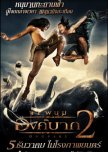
Tony Jaa directed the production plagued Ong Bak 2 as well as starred in and choreographed the fights. The plot was the standard Hong Kong kung fu plot only with more knees, elbows…and elephants. Ong Bak 2 & 3 were not related to Ong Bak the original except as loose prequels set in the 15th century.Tien’s noble family and retainers are all murdered by the treacherous Lord Rajasena. Though he is saved by a loyal bodyguard, he ends up in the hands of slave dealers. Luck cast a glance his way and he was saved by Chernang, the Outlaw King of Garuda Wing Cliff. Tien learns different styles of fighting and uses of weaponry as he grows up, eventually becoming the second most powerful man in the clan. When he decides he is ready to avenge his family, before he could say “My name is Tien, you killed my father, prepare to die,” Tien hit the road to eliminate Rajasena.
This is one of my favorite Tony Jaa films. The revenge story was a standard which actually served the film well. It was a tried-and-true structure to showcase numerous fights and the requisite training montage. Those fights were insanely well-choreographed with Tony showing off different styles, high flying gymnastics, and a proficiency with weapons. With most strikes going after knees, elbows, and necks, his opponents did not last long. Until he was vastly outnumbered that is.
Tony used Thailand’s stunning scenery as a backdrop for human beings’ ugliness and cruelty. The acting was better than in most of his movies which might be one of the reasons I liked this film more. The biggest complaint I have was the overuse of long flashbacks which tended to halt the pacing.
Tony Jaa in action is a pleasure to watch. What his body can do is astonishing. I always feel like I gush too much over his martial arts and stunts abilities, but they were amazing. And in this film the story didn’t get in the way of his high flying. The ending was abrupt and a cliffhanger, here’s hoping Ong Bak 3 capitalizes on this film.
13 March 2025
Spoiler: 3 failed miserably unfortunately
Was this review helpful to you?

fate
today is my birthday, and while scrolling, i noticed this movie on my plan-to-watch list. it felt like fate because just as i was about to write a review, i realized it was released on this exact date, 14 march. that made my day even more special 🥹 even though i will wake up with puffy eyes tomorrow, i have no regrets. it is such a wholesome movie, the love between their family is so lovely and i really love the kid’s acting. please don’t hesitate to watch it and please prepare some tissues 😭😭Was this review helpful to you?


