
 Editorials


This review may contain spoilers
The prequel was one of the best romance dramas, balancing heartfelt romance without sacrificing the characters’ personal growth and ambitions. So now, let’s see how Ethan and Joy’s story continues… The story picks up in the spring of 2020. Ethan travels from Hong Kong to Calgary, Canada, to reunite with Joy, who is working hard to build a life there. Deeply in love, Ethan eventually proposes to her. However, their happiness is soon disrupted when the global COVID-19 pandemic strikes, locking down borders and bringing the world to a standstill.
Ethan gets stranded in Canada. With no way back and no income, he moves in with Joy. The pressure starts building fast. His bar in Hong Kong goes bankrupt while he’s away, leaving him with nothing. He takes on low-paying, menial jobs just to survive. A year later, tragedy strikes again—he finds out his father has contracted COVID-19 back home. He rushes back, but arrives too late. His father passes away before they can say goodbye.
Overwhelmed by grief, loneliness, and financial ruin, Ethan makes a terrible mistake—he has a one-night stand. Joy finds out during a video call. Heartbroken, she breaks off the engagement. Their relationship collapses, and both are left in pain.
Three years have passed. The world slowly recovers from the pandemic. Joy is now working at a nursing care facility in Canada, fully focused on her lifelong dream: passing the exams to become a registered nurse in the United States.
One day, while picking up a friend at the airport, she unexpectedly runs into Ethan—and Jhim. They’ve both come to Canada looking for fresh opportunities. Through a series of awkward, unplanned encounters, Joy and Ethan are thrown back into each other’s lives.
In order to help Ethan secure long-term residency in Canada—and perhaps to deal with her own unresolved feelings—Joy proposes a crazy arrangement: they will live together and pretend to be common-law partners for a year. Ethan agrees.
As time passes, Joy begins to notice how much Ethan has changed. He has become more mature, humble, and selfless, even volunteering at her nursing home. Eventually, Joy learns from Jhim what Ethan truly went through during the three years they spent apart.
As they navigate their unresolved feelings, bittersweet news arrives: Joy’s application to move to the United States has finally been approved. Her dream is within reach. Heartbroken but unwilling to stand in the way of her lifelong dream again, Ethan quietly accepts the possibility that this may truly be their final goodbye.
So, what happens next?
Will Joy leave for the U.S., chasing the future she’s worked so hard for?
Or will she choose love—and stay?
That's pretty much the story without giving anymore spoilers.
What I like:
+ Once again, one of the best romance movies….
+ The chemistry between Alden Richards & Kathryn Bernardo is still on fire…
+ Still happy to see how close-knit the Filipino immigrant community is. Even while living far away from home, they continue to support, comfort, and stand by each other like one big family.
+ Happy with the ending… We finally really get the ending between Joy & Ethan…
Overall if you're really a romance junkie like me, this one the movie you need to watch. Haha…
Was this review helpful to you?

Bad start, great emotions
This movie starts off pretty bad, low quality and a feel of cringe that had me questioning why I started it in the first place. But as the minutes went by the story and acting developed the moments of second hand embarrassment and cringe subsided and I got to witness a one of the most beautiful cryers and deliveries of emotion from a young male lead I had seen in a while and ended up thinking hey this is kind of cute.I am not sure I care much about the message in this nor the idea of becoming a star for someone else but that said it was not a bad watch just mind the first 30 minutes or so...
Was this review helpful to you?
This review may contain spoilers
Forgiveness
This movie struck a chord that few films ever manage to hit. This is a one-time watch — not because it entertains in the traditional sense, but because it portrays the concept of forgiveness with a brutal honesty that stays with you long after the credits roll.The Dark Side of Forgiveness
What makes this film so powerful is that it doesn't romanticize forgiveness. Instead, it asks the uncomfortable question: What if your forgiveness only encourages the other person to repeat their behavior? The guilt and confusion that haunt the one who forgives — especially after losing someone close — is portrayed not as nobility, but as another form of torment. It's a perspective rarely seen in mainstream cinema, and it hits hard.
The film also captures a painful truth about the people we love the most: they can bloom us with unlimited love one moment and treat us as if we don't exist the next. They disregard our identity, our pain, our very existence — and somehow, we're still expected to understand.
Ji Min's Story — A Soul Murdered, Not a Body
Ji Min's character is the heartbeat of this film, and what she endures is nothing short of horrifying. The beating she receives is inexcusable — and wrong is wrong. It doesn't depend on gender, experience, or authority. She didn't deserve any of it.
What's even more disturbing is how the people around her justify the abuse. "It was for her own good" — a phrase that should never be used to excuse violence. The film makes it clear: this isn't discipline. This is a murder of her soul. Even though Ji Min achieves and excels in every aspect of life afterward, she will always remain hurt. That wound doesn't heal just because you succeed.
And then there's the way people misread her — the assumption that because she talks a certain way, she must be "asking for it." That's not her fault. That's a reaction to the treatment she received. Her mother always taking her father's side, even when he is obviously wrong, is a betrayal within a betrayal. And when they asks her to ask for forgiveness? that's another level of cruelty.
Her brother and others who stood by and participated in the silence — were they genuinely right, or were they simply cowards, terrified that if they stood up for her, they'd be treated the same way? And the worst part? Even while being scared for themselves, they still had the audacity to ask her for understanding.
The Main Lead — Understandable, Yet Unsettling
The main lead's emotions are completely understandable. She was in despair, confused, questioning whether she did the right thing. That inner turmoil is portrayed with remarkable accuracy. However, the fact that she forgives the culprit without an apology is genuinely unsettling. It leaves you with a knot in your stomach — because it mirrors what so many real-life victims are pressured into doing.
The Priests — The Real Villains?
This is where the film becomes truly alarming. The priests' approach to forgiveness is not compassion — it's manipulation. They race to make people forgive as quickly as possible, without ever trying to understand the victim's family's perspective. It feels like they're not on the side of justice; they're on the side of the culprit.
The victims' families are clearly saying, "The culprit hasn't repented." And yet the priests keep pushing the victims to "understand and forgive." These sessions should be held with the culprits — to make them realize the weight of their actions — not weaponized against the people who were destroyed by them.
No Neat Ending — And That's the Point
The movie doesn't wrap up neatly, and I believe that's entirely intentional. The director wanted the audience to focus on the message, not the plot. And the message is delivered loud and clear:
Even if you forgive someone, it's not guaranteed they will behave well.
True forgiveness, the film suggests, should only come when you genuinely want it — for your own peace, or for Allah's sake — with zero expectations from the other side. Both are incredibly difficult to achieve. And if you're unable to forgive? Don't do it for society. Don't do it for anyone else.
Final Verdict
This isn't a movie that gives you answers. It gives you questions — and those questions are the kind that keep you up at night. It challenges everything we've been taught about forgiveness, family, and justice. If you're looking for a film that doesn't sugarcoat the ugly truths of human relationships, this is it.
Watch it. Feel it. And think about it — because this message needs to be heard.
Was this review helpful to you?

This review may contain spoilers
Better than the drama adaptation when it comes to plot flow
My review is based on comparison between the drama and the movie as I've already watched half of the drama.- Acting - I think both are good. Both give different vibes while the drama chen is more feminine and damsel is distress vibed the movie chen is more masculine
- Plot flow - i really think the movie did a good job with the flow cz in the drama there were things I'd be confused with like how the brother never tells him about the letter/message, chen hating lu for silly reason like he didn't tell me, the dad not being unnecessarily abusive, the in laws not being exes, lu stopping and not raping chen when he said he didn't love him. The plot had a flow in the movie like for an action there was a reaction and it went on which was not the case in the drama. In the drama chen just kept getting sudden episodes of "i can't be with lu". The characters were not very intense and written in moderation here which i also something i liked.
I do get people who recommended me to watch the movie cz i agree.
Was this review helpful to you?
 1
1"You must be brave. Bravery is all we have."
A Foggy Tale took place in 1953 Taiwan during the period of the White Terror. The story focused on a young girl traveling from her rural community to Taipei to retrieve her beloved brother’s body after he was executed for his ideas. The trek was harrowing as she faced numerous challenges in her desire to bring her brother home.Huang Chih Yue has been secretly bringing food and water to her brother Yun who has been hiding in the sugar cane fields. He gives her his watch, telling her that with it she can travel forward in time and imagine better days when the going gets too rough. The young artist is chased down, arrested, and later executed. Yue is determined to bring his body home instead of letting the government dump it in a mass grave. When she arrives alone in Taipei she is overwhelmed by the sheer size of it. She’s quickly set upon by traffickers, but luckily enough rescued by a rough and ready pedicab driver. The two make an awkward pair and whether Chao Kung Tao is there as a helper or to help fleece her remains to be seen.
Caitlin Fang and Will Or gave strong performances as the odd couple scrambling to keep putting one foot in front of the other on a broken beam. This film was primarily Yue’s and Caitlin’s, following the young girl’s trials in the complete unknown of Taipei. Aside from navigating the large city under martial law populated with human traffickers and thieves, Yue’s primary obstacle was money. The fees for retrieving the body of an executed prisoner were astronomical for a poor girl from Chiayi. Yue also had no plans for how she would pay to transport Yun home. All she had was her bravery and perseverance. Chao’s interventions were at times beneficial and at others disastrous. He had an interesting skill set. Chao had been a soldier and learned to curse in several languages and dialects during his time in the military. A skill he frequently displayed. He also had a traumatic past having run afoul of the KMT merely by army associations. Terrifying agent Fan Chun dropped by on occasion to menace Chao and to try and gather information from his former prisoner on wanted men.
MDL currently has 9m88 listed as a lead, but she was in the film less than 30 minutes if you are a fan and wanted to watch this for her. She played Yue’s older and absent sister, Chiu Hsiu Hsia. Due to the family’s poverty, Hsiu Hsia had been adopted out as a child to a family in Taipei. 9m88 was given a three-minute song and dance routine on her introduction which seemed to be overkill for the supporting character, especially since she wasn’t seen again until near the end of the film. I don’t know the name of the actor who played the Robin Hood styled thief, Kao Chin Chung, Kao’s brief appearances were welcome levity in the film.
The film glanced over much of the terror that went on with the KMT despite the number of people who had been killed in the film by the secret police. Money was extorted and/or confiscated, especially by the police. Poverty was omnipresent in the rural and urban areas. Sometimes a finger was all a person could afford to pay for in regards to their deceased loved one. Chao was so broke he could only buy one cigarette at a time. Scarce jobs were lost at the whisper of an agent looking for a person. Yet food was still shared and grace offered.
If I have one complaint it’s that the flow of the story could be stilted at times with characters on the periphery distracting from Yue and Chao’s narrative trajectory and making the film unnecessarily longer.
A Foggy Tale contained moments that were tense, heartwarming, heartbreaking, and gently humorous. The unlikely alliance of Yue and Chao strengthened Yue’s resolve and brought out the bravery in Chao he believed he’d lost. Sparks of human kindness gave glimpses of light in the grim darkness all around. Friends and random strangers rendered unexpected support in a sea of people doing whatever it took to survive and get ahead. And nestled in Yue’s quest were her brother’s words of hope that in the future there would be peace. That there would be a day where people would not be killed for their ideas. Unlike Yun’s watch, time could not be sped up, Yue had to face what lie before her one minute at a time with most of that time used well.
(8.25 rounded up to an 8.5)
29 May 2026
Awards note: A Foggy Tale won the Golden Horse Award for Best Narrative Feature (2025)
Housekeeping note: This was my 100th review for 2026
Cutie Pie note: If you are a Tseng Jing Hua fan, despite being on the poster, he is primarily shown in a few flashbacks
Was this review helpful to you?
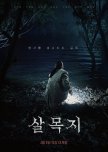
This review may contain spoilers
There are some flames where the smoke is........
Let's be honest. This was hyped up well before release because of KHY still riding high from Lovely Runner. The same thing was done for Tale of the No Tailed and the results are kind of in the same vicinity.........but........and let me be clear, this was NOT the dumpster fire that drama was~Gone was the lack of chemistry, very poor acting, and the interest in viewing the next episode. We got to see a KHY minus the machine gun speech that her fans consider a major part of her *charm* in addition to her beauty. I'm am NOT her fan but I felt the serious and realistic and fearful KHY who took time to think about decisions and whatnot was pretty good to take in. With no bs love story anywhere to be found, she and the cast fed off each others performances in most of the scenes rather well and I liked it~
A nice freaky little soundtrack with well placed CGI and great makeup for the *monsters* and that's where my praise stops. The story hits you, or doesn't hit you you could say, with disjointed scenes and explanations that made no sense, it was very difficult to follow but the ending was predictable because illusions played heavily into horror factor of the film. There's potential for another film but if it's going to be successful, it really needs to go lore heavy to have a better impact~
The film is ok, the visuals and sounds make it worth seeing via a theatre. If the story had been cleaned up some, I think it could easily have been a 9/10~
Was this review helpful to you?

Cherry Magic! Thirty Years of Virginity Can Make You a Wizard?!: The Movie
0 people found this review helpful
This review may contain spoilers
More of the drama
If you love the drama you’ll love the movie, it feels like a long episode of the tv show. I’m glad that their story finally ends and has a good and satisfying ending. It still has issues like the second couple still not being my favourite and no kisses between the leads but otherwise it’s amazing. There’s parts like coming out to the workplace that I would’ve wanted but they didn’t have enough time to explore.Was this review helpful to you?
This review may contain spoilers
I actually liked it
Wow that was good and actually scary! Although the whole movie was predictable it was still a fun watch. Love me some horror. I don't like the "He's dead" plot line though. Felt cheap. Loved Da Ah and Jae Chan's role, been waiting to see them again a while.it's a 5/10 but Da Ah and Jae Chan made it a 6/10
Was this review helpful to you?
This review may contain spoilers
A bit disappointing, considering the stir it caused...
I was very excited to see this film as I am very keen on Lee Jong Won and Kim Jun Han and folklore based horrors.Unfortunately, I left the screening quite disappointed. The actors delivered solid performances ,no complaints whatsoever. Especially, Kim Jun Han character was creepy and had this unsettling vibe surrounding him. I'm not going into much detail but the film was marred with red herrings, unimpressive water ghosts and chaotic and inconsistent writing-basically,lazy storytelling.
There were no rules,rituals or folklore based survival tactics. The film's world building was inconsistent, everything appeared to be an illusion after the sunset (and even before -another fallacy),just being in the close proximity guarantee your death. Having Gyo-sik's body already sitting in a real-world morgue in the hospital while his clone roamed the lake completely shattered the movie's timeline and violated the idea of the soul exchange according to the Korean folklore (escape from the lake is Mulgwishin Jakjeon (Water Ghost Tactic): they must actively lure, trick, or drag a living human down into the water to take their place).It was also very puzzling that the crew knew that the senior DP was missing after visiting the place, choose to ignore the reservoir bad lore and refused to implement any safety measures.
To think this film generated so much noise and hype doesn't inspire confidence, and it was commercialised more effectively than it was crafted.It was done well enough to make a stir and make so many people go to the theatre yet quality of film does not support it. My expectations were shattered.
There are some good jumpscares though,clever use of diegetic ambient noise and the atmospehere was thick and unsettling.I felt their terror, their ability to escape was non negotiable. Classic B-rated flick I would say,nothing novel ,no solutions or set rules to escape,no coherent narrative .They were simply doomed the moment they stepped into the lake/reservoir area and stayed after the sunset.
I am rating it 6.5/10 as the director abandoned consistent folklore logic for a generic, mindless "kill-them-all" doom and gloom ending. I think Exhuma deserves all the accolades as all events ,rituals,folklore and mythology behind it were very well researched and implemented. I understand that not everything should be logically explained in the horror genre but in the case of Salmokji it was kind of a let down.
'To be continued' gives me some hope that another film will explain the idea behind everything and gives some reason to the inconsistencies. It can be salvaged pretty well.
Was this review helpful to you?
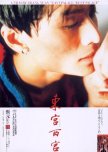
This is Queer ART!!
This Director, writers and actors responsible for East Palace, West Palace (1996) perfectly dramatise what it means to be queer, what it means to not just confront but to understand masculinity as a gay man, and its also a treatise on exactly how much joy, authenticity and humanity masculinity strips from men.Beautiful, artistic, violent, poignant and hopeful all describe this pathbreaking film, said to be the first mainstream Chinese production that is explicit about same-sex struggles - both within and against society and family, but also the most painful and bitter struggle that takes place within oneself.
One of the most striking scenes is A’Lan’s recounting to Officer Xiao Shi of his first time with another man, when he discovered masculinity and what it was like to be ‘the girl having sex with the boy’. This cognitive distortion that is gender performance of masculinity, far more than his sexuality, is what defines and distorts his relationship with sexual desire and his desperate pursuit of love with other men on these blighted terms.
One thing East Palace, West Palace is *not* about is “authoritarian Chinese” state repression or some kind of uniquely Chinese way of doing down the gays or any of the knee jerk McCarthyist insufferable western review points that infest this space 🙄. We know this, because we can picture the same exact scenes of cruising, police harassment and entrapment, as well as the internalisation of harmful, high risk community practices in every single country on the planet even today - including in countries with legal provision for same-sex marriage and other formal rights-based policies.
I also highly recommend this LetterBox review that delves into the film’s main gender politics of how being sexually desired but having to access sexual pleasure through that gendered prism corrupts our understanding of intimacy and ‘love’: https://letterboxd.com/kariso/film/east-palace-west-palace/
The tenderness, the brutality, the honesty with which he confesses to how much he wants - no, needs to give himself to masculine power has shaped A’Lan’s whole life, frustrated his happiness and cemented his constant loneliness. His collision with Police Officer Xiao Shi is therefore no chance meeting for *either man* and that coming together of one closeted and in-denial, and the other fatalistic but resigned in acceptance of a future of thrilling self-abnegation, is ultimately a potentially life changing event for both men.
Bravo to this queer team of artists!
Was this review helpful to you?
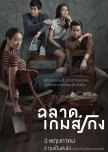
The original version
I have been wanting to watch *Bad Genius* since it came out. From the trailer, I knew it would be great, and I was right. The story resonated with me as a straight-A student; I could really relate to the main female lead. I understood the unfairness of having to work hard for my achievements while wealthy kids seem to get everything handed to them. I must admit, I wish I had the cleverness to use my academic skills to make money like she did hahahahah . Beyond the humor, it's an excellent movie, and there are several remakes from other countries, including a Thai drama version. However, this is the original, and I highly recommend watching it before exploring any other adaptations.Was this review helpful to you?

This review may contain spoilers
Good music, average production/design, decent acting, mediocre CGI, poor editing, incredibly stupid story. I want some sort of marker added to every story that doesn't have a happy ending so that I don't waste my time. Once the storyline got untwisted and I realized what was going on, I finished the movie on 2x speed. I'm tipping back and forth between having upleasant thoughts towards the writer and feeling sad for the kind of life they must have lived to create something like this. Pay attention to the last sentence of the film description and you'll get a pretty clear indication of where this is headed. There are other made-for-tv movies out there. Don't punish yourself with this one.
Was this review helpful to you?

Starts as it means to go on.
May 2026A very violent, sometimes darkly amusing, gripping film.
JDY is certainly a diverse actress, and acting in some very adult productions in the past, certainly hasn't harmed her career, or pigeon-holed her
For a 50-year old actress (at the time of film's release), I think she looks amazing.
I liked her character in this; independent, never played the victim, and whilst shaped by her childhood, it didn't affect her own role as a mother... her daughter being her world, although balancing her 'profession' with a normal life, was always going to be challenging!
I felt, after watching, that rising to the top and standing out in this field, even with the financial gains, was not worth the isolation, which was a result of being the one successors wanted to topple to prove their worth and become the best.
Relationships felt fleeting and friendships superficial. Family, frankly, became a potential weakness, weapon for opponents, or leverage opportunity.
Esom's character in this (Cha Min Hui), was loathsome, and she seemed to play her with relish!
It seems the family profession might be continued, too.
Mixed characters, pretty fast paced, and very watchable.
Was this review helpful to you?
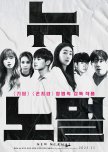
A Quietly Disturbing Look at Modern Life
New Normal is an interesting, if somewhat uneven, film that follows the lives of six different people, with each story unfolding through chapter-style storytelling. This structure works well because it gradually offers insight into each character’s life while emphasizing how disconnected people can be from one another, even while living side by side in the same world.One of the film’s strongest aspects is its cinematography and overall presentation. The way the movie is shot reinforces its central theme: everyone appears to be living ordinary, routine lives on the surface, yet there are darker and more complicated events happening beyond what others can see. That sense of hidden reality creates an unsettling atmosphere throughout the film.
The ending, however, is where the movie becomes more divisive. It takes a very nuanced and ambiguous approach, which makes the story feel intentionally unresolved. While the final revelations and the group chat sequence provide enough context to understand why certain individuals were being targeted, the film leaves many questions unanswered. Not seeing the aftermath or consequences of those events may frustrate some viewers, especially since no one is truly held accountable and life seemingly continues as normal.
At the same time, that unresolved feeling appears to be deliberate. New Normal leans heavily into the idea that real life rarely provides complete closure or easy answers. People move on, mysteries remain unsolved, and the world continues regardless. Whether that approach feels thought-provoking or unsatisfying will likely depend on the viewer.
Overall, I neither loved nor disliked the film. It presents some compelling ideas and creates an effective atmosphere, even if its storytelling choices do not always fully land. One thing that stood out, intentionally or not, was the soundtrack, which often felt strangely placed and unexpectedly comedic at times.
Was this review helpful to you?

The Men Scolded the Woman Who Bothered Me
3 people found this review helpful
Samsung Commercial
The title “The Men Scolded the Woman Who Bothered Me” is both a spoiler and complete summary of this short web film/Samsung commercial. I would say “men” and “woman” was stretching things as most behaved like high school students instead of employees at a major company.Ji Hie’s first day at work doesn’t go well when she returns a wallet to a stranger on the street. The stranger accuses her of stealing the 50,000 won that had been in the wallet. Joo Hyun tells her off and then goes to work and gossips with the other members of his team, including Joo Mi who used to bully Ji Hie mercilessly in high school. Sure enough, Ji Hie walks in and is introduced as the newest member of the team. Joo Mi thinks she can pick up where she left off torturing Ji Hie, but will everyone buy her victim performance?
The film contained a long product placement for Samsung in the middle of the short film. The end credits were also all about their Galaxy products. I’m not against companies making short films that feature their products, the Philippines’ Jollibee famously makes very touching short film commercials. This commercial, on the other hand, was completely graceless. The acting was below average and the bullying storyline was clumsily handled. At one point, in order to highlight a Galaxy product and resolve a conflict, they stepped into absurdity. Everyone was pretty to look at and Samsung was the focal point so it probably succeeded in its goals despite appearing very amateurish. However, I just found myself rolling my eyes at the denouement, completely uninspired to purchase their high-tech equipment. Better luck next time Samsung, maybe get Jollibee on the phone and see who they use to make their commercials.
28 May 2026
Was this review helpful to you?


