

This review may contain spoilers
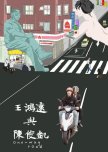
Story: Two friends on a motorbike because one is jobless and the other left his things at his ex-girlfriend’s place. With this plot, I really do not expect much of a story. Acting/Cast: Middling as this was supposed to be an LGBTQ story but the way the two actors portray it, they could just be friends. I could not even feel the pining.
Music: Bland at best.
Rewatch Value: Nah.
Overall: This short film tries to be artistic and profound but fails in execution. Although we are supposed to believe that one MC is in love with the other who is oblivious to his friend’s feelings, but the portrayal leaves so much to be desired. All we see is one trudging up a mountain just following whatever the other says, and coming down without accomplishing anything. It’s like taking a trip to the department store but coming up empty-handed.
Was this review helpful to you?
This review may contain spoilers
Story: Cat and Dog are actually people and not animals who chase each other around: one seeks pleasure outside of his supposedly-committed relationship, while the other seeks stability, but neither really getting what they wanted. Acting/Cast: No acting prowess to speak of, but what can you expect from an adult entertainer.
Music: Nothing to write home about.
Rewatch Value: If only to figure out the logistics of how two men can fit in a small bath tub.
Overall: The film poses the question whether a “carnal connection can transcend into love?” And for me, the film does not answer this hypothetical query, and only serves to be gratuitous and self-indulgent.
Was this review helpful to you?
This review may contain spoilers
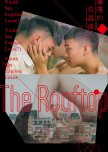
Story: A teenage boy suffers from panic attacks every time his girlfriend wants to be intimate. He is not sure whether the reaction comes from his distaste of girls’ bodies or something else, as he finds himself being fascinated with a naked boy lounging on the rooftop. But almost the same thing happens when the other boy tries to touch him. The short film presents a backstory of trauma suffered by the MC at the hands of his father, but it was unclear whether the father sexually abused his son, or whether the boy was being punished for having impure thoughts and acts of pleasure are heavily reprimanded. Acting/Cast: Mediocre at best.
Music: Mediocre at best.
Rewatch Value: If only to analyze why the MC hyperventilates with the thought of impeding physical contact as there maybe differing interpretations.
Overall: The film leaves a lot for improvement, and poses more questions than answers, like how brazen are the two boys cuddling almost naked a few feet from another group of boys ogling at girls. Or how the girls, knowing that they were being spied on, still tried to put on a show in the hopes of catching the perverts in the act. The inclusion of this latter part seemed off-tangent and unnecessary in such a short film. At the end, nothing is resolved but only offer up more confusion.
Was this review helpful to you?
This review may contain spoilers
"Some swords are useless no matter how you polish them"
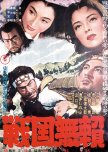
Sword for Hire AKA Vagabonds in a Country at War told the tale of three samurai who survived the destruction of their castle and where they ended up afterwards. Two intersecting love triangles formed with one man at the point complicated matters between the former allies. It is important to note that the surviving print is missing 30 minutes, so while you may see running times of 2 hours 15 minutes listed, at present, the film is only 1 hour and 45 minutes long. It is also badly faded and degraded making some scenes difficult to see.Mifune Toshiro as Hakate, Mikuni Rentaro as Jurota/Jurata, and Ichikawa Danshiro III as Yaheiji are facing imminent death when opposing forces are set to overrun their castle. Jurota abandons the fight taking Hakate's love, Kano, with him as cover. Hakate escapes during the fighting even though he is badly wounded. Yaheiji is captured but is able to overpower his captor and also escapes. Jurota joins another army hoping to make a name for himself. Hakate is rescued by the female bandit Oryo and nursed back to health. Yaheiji becomes the leader of another band of bandits. Hakate once more is on the run when it looks like he killed Oryo's father. He joins a competing army to Jurota's. Put that all in a blender and the characters start mixing, and falling in love, and just missing each other or running into one another. It becomes a complicated mess of human emotions.
Sword for Hire was entertaining but came across as a low budget samurai movie. The sets made the scale of the film quite small. Kurosawa Akira was credited as one of the writers, but there seems to be some debate as to how much he contributed.
Of all the characters, I was at first intrigued by Shirley Yamaguchi's Oryo. She was fierce and flamboyant but quickly devolved into the stereotypical obsessive and hysterical female character from this time period. Asaji Shinobu's Kano was the typical cardboard female character who could have been played by anyone. I enjoyed seeing Shimura Takashi as an inn/restaurant owner who gave completely ignored advice and snippets of wisdom to Jurota. When you could make him out through the foggy weather and foggy film, Mifune Toshiro looked sublime. Ichikawa made for a rough and tumble "rock" with a heart of gold. Mikuni was relegated to the braggart and self-serving character of Jurota, the "useless sword" Shimura's character spoke of.
I'm not sure where the missing minutes were from as there was a proper beginning, middle, and ending to the film. The story didn't feel strong enough to add 30 more minutes of flabby middle to it, or perhaps it would have enthralled me. Maybe the added scenes would have filled out the love triangles/pentagram/hexagram (these rotating couples are beyond my geometric skills) that ultimately seemed pointless in this version as the women only had eyes for Hakate. There wasn't enough fighting for a good civil war film or enough loving for a romance which left this Sword for Hire without a buyer.
7/3/23
Was this review helpful to you?
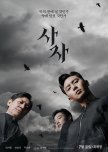
YOU HAVE TO WATCH THIS
If you don't want to regret, watch it, you can watch it with you friends group or family, it's great unique story and exciting scenes ✨Guys it's "park seo joon" , it's gonna be great of course 😭 🤯
............................................................................................
.............................................................................................................................................................................................................................................................................................................................................................................................................................................................................
Was this review helpful to you?
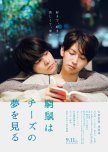
"To Truly Love Someone, Is For Them To Become Your Only Exception"
The Cornered Mouse Dreams of Cheese is a beautifully melancholic movie that is very artistic. Everything feels very deliberate from the choice of lighting down to the clothing color choice. And it all comes together into this intricate web and it just draws you in. It's not a movie that leaves you smiling at the end, but rather one that leaves you silently pensive.This truly is a dark and gritty movie. The characters are deeply flawed human beings engaging in a toxic relationship and that relationship is not romanticized like it is in so many other BLs. On the one hand, you have Otomo Kyoichi who, despite being married has engaged in repeated affairs and has no real understanding of what love is. And on the other hand, you have Imagase Wataru who has been in love with Otomo for some 8 years, since their university days. Neither character has very many redeeming traits. Otomo can't remain faithful to anyone, is deeply selfish, cold, cruel even. He's manipulative and remorseless at times. And Imagase is a study in unrequited love, but the kind of love where there's not really a reason, you just love them. Because why would he love Otomo with the way he treats Imagase? But he does love him, not that it's in any way healthy. It's the kind of love that he's willing to do anything for a chance, even blackmail or stalking. And also under that love is a level of fear and paranoia that eats away at him until he breaks.
The character development achieved is very impressive, particularly with Otomo's character. It's a natural progression that feels well done and organic, not at all forced. His journey is not an easy or pleasant one, but it is a necessary one for him to grow and become a person capable of loving and being loved. Imagase's development is less overt, though no less powerful. His is a battle with self, the yearning to stay while also knowing that it's time to let go. The pacing in general of the movie is practically perfect. No scene feels extra or out of place, it all just flows together seamlessly.
The acting is absolutely phenomenal. Okura Tadayoshi had the challenge of playing Otomo who's fairly reserved, but the beauty of his acting was the sheer subtlety of it. Even if his face wasn't necessarily displaying a specific emotion, you could see wheels turning in his head. And Narita Ryo, oh my goodness, did he pull at heartstrings. Between the scenes where he breaks down, the beach scene, and the ending, he just broke my heart. He also has some of the best lines of the movie and he delivers them beautifully.
Yes, there is nudity in this movie, no full frontal, and several NSFW scenes, but I would not classify them as pornographic. They are tastefully done and they play a key role in revealing the development of the characters' relationship and emotions. If such scenes are off-putting to you, this is not a movie you should be watching.
I said this was a movie about flawed human beings and part of what gives it so much depth is that very nearly every single character in it is flawed, some more so than others. It doesn't try to rationalize or over explain, they simply are. I think there's a certain beauty in that rawness and lack of perfection. Theirs isn't a relationship to aspire to, but it feels real, more real than the pretty fairytales so many of us watch. But in the end there is a hopefulness, I think, however fragile, that they can rise above their flaws to create something beautiful.
Was this review helpful to you?
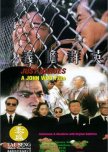
Solid if lacking
Just Heroes is far from John Woo's finest hour, but even then there's a lot to love about this minor classic, with Woo's trademarked heroic bloodshed coming out in full force during the finale. Commissioned by Tsui Hark to raise retirement money for a broke Chang Cheh, John Woo's main influence and tutor, Cheh then spent said money on making another film instead. Woo only directed about 60% of this and his style is plainly obvious when compared to the 40% helmed by Wu Ma. It's the kind of film that desperately needs another 20-30 minutes to let all its ideas flow, it feels rushed which doesn't surprise me given how quickly it was thrown together, the pedestrian script could have done with some tightening up. Despite this, Just Heroes boasts a funky musical score, some great performances from David Chiang, Danny Lee and a young Stephen Chow and is packed full of intrigue even in a routine-like mob world with elements that feel like they belong to a Takeshi Kitano yakuza thriller.Was this review helpful to you?
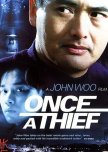
You can see why Woo was hired for Mission: Impossible
John Woo's penultimate film before his emigration to America and produced during his two masterpieces of Bullet in the Head and Hard Boiled, Once a Thief is certainly more laid back than the two films it's sandwiched between which leaves it in an odd position. It's a loving send-up of the 50s globe-trotting capers with Woo's signature explosive style of hi-octane action, a nice mix of a playful, romantic love triangle between childhood friends in a relentless pursuit of impossible dreams and exuberant slapstick comedy (the wheelchair dance is truly kino). It's the sort of film atypical of Hollywood at the time and no wonder he was chosen to helm the best instalment of the first three Mission Impossible films, just a shame he didn't bring Chow Yun-fat along for the ride.Was this review helpful to you?
Controversial Woo is Good Woo
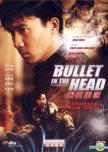
Released during John Woo's so-called "Golden Period", Bullet in the Head is easily Woo's most personal and bluntest film that he himself financed single handily. While hits like The Killer solidified his bromantic style of filmmaking, Bullet turns it on its head. It's a disturbing masterpiece that he rewrote as a reaction to the June Fourth Incident and it doesn't pull any of its punches. Even opening the film to "I'm a Believer" doesn't prepare you for the sheer masterclass that is about to unfold. I really wish his original 3-hour cut would grace our screens one day, but even in its truncated form, Bullet in the Head is sheer perfection.Was this review helpful to you?
Woo at his finest
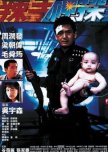
Unquestionably the crowning jewel of John Woo's filmography, Hard Boiled is a film that doesn't have anything to prove and Woo's last hurrah to the industry that brought him lasting vitality as a filmmaker. Mayhem has never looked better. So many films owe their origins to this movie and Woo himself, his shootouts are a ballet; his firebombings are poetry. And while he lets the body count get away from him, he constantly fascinates, through a combination of chaos and an excruciating control over what we're allowed to see.Boasting some of the finest action sequences ever filmed and beautiful emotional resonance Hard Boiled is a powerful thriller that hits hard in more ways than one. It's the very definition of an action masterpiece; Heroic Bloodshed that only Woo could deliver, give him a gun, he's Superman. But give the man two and he's a God.
Was this review helpful to you?
Fun if uninspired sequel
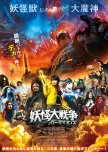
Takashi Miike's loose and belated sequel to The Great Yokai War, Guardians is much more of the same, so if you liked the previous adventure, you'd like this. It's made for kids so accessibility is a key factor to its appeal, meaning there's not much meat to its story beyond your standard hero's journey, but just because it's more kid-friendly doesn't mean it lacks a lot of wacky, and sometimes downright disturbing, imagery courtesy of the Yokai themselves which are brilliantly realised (both east and west alike). Miike even managed to bring back our great guardian god Daimajin for an extended cameo which put a big smile on my face knowing he was originally lined up to direct a film reboot in the late 2000s. Fox-Faced Woman also was 😳.While there's certainly a lot of love and creativity put into this movie, I can't deny like the previous film, it certainly has its faults. The child-friendly tone does its story no favours, especially in the final act where you'd normally find Miike going hell for leather, it falters. The overreliance on CG like the last, has dated the film extremely quickly although Japan has never really had the best of results with this technology. Regardless, for what it's worth, The Great Yokai War –Guardians– is a fun romp but extremely subdued Miike which is saying a lot.
Was this review helpful to you?
 1
1We will feast on the enemies flesh and drink their blood.
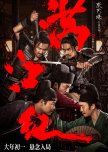
Full River Red is an ancient dark comedy whodunit set in Song dynasty. It is Zhang Yimou's most commercially successful movie to date That is no reason to dislike it. For Zhang Yimou never fails to stun with the sheer brilliance of his cinematic vision and his ability to provoke and capture profound human emotions. It is his narrative style that tends to be weighed down by illogical, at times exaggerated plot points and inconsistent characterisations that rarely does justice to his incisive camera language. While there are traces of these habits, this twisty, stab-happy mystery is the tightest plot I have seen from him in years.As much as the critical political and societal undertones of Zhang's earlier works discomfited the Chinese government, his recent works are now accused of pandering to government propaganda. Every Western film critic has remarked upon the movie's jingoist note with a sense of unease. The Chinese title Mǎnjiānghóng/满江红 or crimson river sets the tone from the start. This eponymous poem attributed to patriot Yue Fei is ubiquitous; it spoke to me even before I could understand its prose. People's hero Yue Fei was a revered Song general who relentlessly defended his homeland against the invading Jurchens. He was betrayed by the enemy within, a jianchen/奸臣 treacherous official Qin Hui who goes on to be prime minister. What happened to Yue Fei is one of history's terrible injustices, one that still resonates eight hundred years later. The common people appeased their deep sense of sorrow and thirst for justice by deep frying dough sticks in oil yóu zhá guǐ/油炸鬼 or deep fried guǐ/ 鬼 or devil, which in Cantonese is a homonym for Hui/Kuai/桧 in Qin Hui. When I was a kid, my dad used to rant about the dastardly Qin Hui every time we bit into his favorite crispy fried dough sticks.
The movie opens four years after the unjust death of Yue Fei. A Jin envoy is murdered on the eve of his meeting with Prime Minister Qin Hui. The important missive he carried is missing. The unfortunate night patrol is put under the knife as heads must roll for this diplomatic disaster. Desperate to buy time, corporal Zhang Da convinces Deputy Commander Sun Jun that he may be of value in solving the case. They make some small progress and are given two hours by Qin Hui himself to recover the missing missive. Thus begins a high-strung, knives drawn chase through the serpentine military compound as they question unreliable witnesses and fend off duplicitous officials vying to get their nefarious hands on the missing letter.
In a departure from Zhang Yimou's signature, bombastic color drenched cinematic style, the palette is muted, somber and haunting in its clean lines and simple, gorgeous grey toned soberness. There is a sense of profound gravitas that overhangs the thrill and suspense of unraveling the conspiracy at hand. The pacing is start stop as the narrative slows down enough to allow important plot points to soak in only to pick up again to the tune of a clattering amalgamation of hip-hop and Chinese folk music as they race through the complex to pin down the next clue. The body-count piles up as suspects are dispatched suddenly and brutally with dark humor that is as sharp as the knife play. I won't spoil the ending other than to say it is wildly, enormously satisfying and yet it still respects history.
In terms of the cast, it really doesn't get better than this. I was surprised by Shen Teng and Jackson Yi's chemistry and how humorously they convey just the right mix of conflict, mistrust and empathy. I must applaud both Lei Jiayin and Zhang Yi for taking on roles outside their comfort zone. I could see that Lei Jiayin absolutely relished playing the vilest most hated villain in Chinese history. While far from the monster of my childhood imagination, his Qin Hui is still a wicked, cunning creature but also realistic, mortal and even almost human. To me, the memorable highlight of the drama was to watch one of China's very best actors recite the titular poem. Yes it is a very patriotic poem but its message is universal - everyone loves their country for better or worse and will defend it with every ounce of their being. This is the one time that Zhang Yimou's famous digressions is actually fitting and gives a deeper meaning to the story. The movie's big message is also universal; that there are some truths that must be revealed at whatever cost.
This movie hits all the right buttons for me - a dark comedy conspiracy thriller with a touch of wild history around characters that set my imagination and sense of right and wrong afire as a child. It smacks of Zhang Yimou's hallmark provocative brilliance with small flaws and is one of the rare times I enjoyed his storytelling almost as much as his visual composition style. This is an 8.5/10.0 for me.
Full River Red (follows the toned down movie translation):
My last words reflect my thoughts
Full river red
My hair bristles with anger
I lean against the rail
The rain has stopped
Looking at the sky
I let out a cry
Emotions well up in my chest
My achievements in the past are merely dust
I fought bravely with the clouds and the moon
Don't wait
When your hair turns grey you can only regret
The national shame has not been avenged
When can my hatred be wiped away
Riding war chariots we will tumble the Helan Mountains
We will feast on the enemies flesh and drink their blood
When we recover our lost lands
We will satisfy people's demands
Was this review helpful to you?
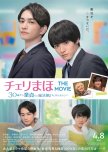
Cherry Magic! Thirty Years of Virginity Can Make You a Wizard?!: The Movie
0 people found this review helpful
A welcome end to a beloved series
With eager anticipation from devoted fans, the long-awaited movie that continues the beloved series has finally arrived, and it delivers on many fronts. Seamlessly picking up where the series left off, the film provides a satisfying extension to the story of Kurosawa and Adachi, capturing the essence of their unique relationship and the challenges they face. It truly serves as a welcome addition to the series that fans have grown to adore.The narrative starts with Kurosawa and Adachi happily together, planning their future after the series' memorable finale, where they overcame Adachi's fear of losing Kurosawa without his magical powers. However, their harmonious existence takes an unexpected turn when Adachi receives news of his transfer to another office. Skepticism arises, but with Kurosawa's unwavering support and encouragement, Adachi musters the courage to make a life-altering decision. The movie predominantly revolves around the pivotal choices these two characters must make together, not only to sustain their relationship but also to propel it forward.
The film's greatest strength lies in the remarkable portrayal of the two main characters by their respective actors. Akaso Eiji flawlessly captures Adachi's timidness and lack of self-assurance, allowing viewers to empathize with his journey of personal growth and self-discovery. Throughout the movie, we witness Adachi gradually stepping out of his shell and developing into a more confident individual, demonstrating authentic character development. Machida Keita's portrayal of Kurosawa is equally captivating, showcasing his charm and handsomeness while also highlighting his deepening love for Adachi. As Kurosawa embraces vulnerability and Adachi expresses his emotions more openly, we witness the genuine growth of their relationship.
While the storyline may not break new ground, the exceptional performances by the actors elevate the movie and make it a worthy continuation of the series. Akaso Eiji and Machida Keita breathe life into their characters, infusing them with depth, nuance, and undeniable chemistry. It is through their heartfelt performances that the movie shines, capturing the hearts of viewers and allowing them to witness the genuine evolution of a relationship.
In conclusion, for those who have enjoyed the series, this movie serves as a fitting and much-anticipated conclusion. It is a heartwarming journey that showcases the exceptional talents of the actors and portrays the authentic growth of a relationship. Whether you were captivated by the series' charm or drawn to the characters' endearing dynamics, this film is a must-watch, as it provides closure and continues to tug at the heartstrings of fans. Prepare to be moved by the exceptional performances and be reminded once again of the power of love and personal growth.
Was this review helpful to you?
This review may contain spoilers
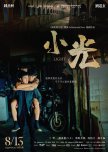
Troubled individual finds potential heeling in Love
Light a deeply troubled and disapointed individual, abused and raped, turns into hustling for a living, Too often this is a reality, more for the social "underdogs", those spit out by a brutal materialistic world/society than with upper class members. Falling without a net can be deadly. But prostitution, highly criminalized in most societies is one last net to fall in. But as being criminialized a most dangerous one. His name gives a hint for his future!Shuo, the undercover policeman, is thankfully not described as hetero, his being gay is thankfully to be seen in the beginning ... A reflection of the moved forward into 21st century Taiwanese society? I guess yes. And as a gay man, loving cinema, I am thankful for.
The story shows the difficulties and troubles in such a relation between a white knight, Shuo, and the beaten up (in more than 1 meaning) Light. It is starting dark and sinister. With no hope to escape ... But is Light willing to escape? It seemed not ... And Shuo showed forgiving based on real love.
A heart warming story rising out of the mud and darkness of streetlife in a criminal surounding. Yes it can happen ... especially when no drugs are playing a vital role.
The acting was realistic and good, they showed a good research propr to the filming. The directors work / lead must have been with compassion and the aim for a good story to be told. A mission? I would not say! The film was made professional and showed within 44min what can be shown too in an epic length of 1,5hs to 2hs ...
Worth rewatching, with the possibility to become a LGBTQIA+ film classic ... it should only be know and recognized by a wider audience.
Was this review helpful to you?
This review may contain spoilers
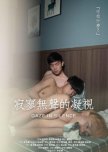
Story: A slut meets a stalker. It looks like somebody really wanted to tell this story enough to make a short film out of it, but since there’s nothing much to go by, just throw in some weird sex. Whelp, apparently that was good enough of a plot (but we know it ain’t). Acting/Cast: Looks like they picked randos on the street, or maybe these actors volunteered for their 14 minutes of fame, or rather obscurity.
Music: Didn’t even notice, but maybe they should the background noise to “creepy”
Rewatch Value: Sure, if you wanted to see pasty white skin or the improper use of cuffs.
Overall: Probably the moral lesson it wants to impart is not to dismiss stalkers, as they may actually save you from rapists. It’s like yay! But really, no.
Was this review helpful to you?


