

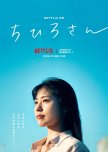
This review may contain spoilers
You're wonderful just as you are regardless of what planet you come from
Call Me Chihiro reminded me of Mary Poppins, if Mary Poppins had been an ex-sex worker. Like a warm breeze on a cloudy day, Chihiro brought kindness and healing to the people she came across whether it was a mischievous little boy or an ant helpless on its back. Short on plot and long on healing human interactions this film is one you experience with your heart, not your mind.Chihiro works at a Bento shop handing out warmth and food often with a gentle sense of humor. She makes friends with a small boy whose mother works nights, a high school girl whose father is at a minimum verbally abusive, a homeless man, and the blind woman married to the Bento boss. Despite her work background she never hides it from any of the people she helps. We don't know much about her except that she had a painful childhood and a traumatic experience that caused her to flee her massage parlor job.
Even though Chihiro helps the abused and downtrodden, she cannot always feel the warmth she gives. Without a second thought she buries the dead-both human and animal-afterwards taking a shower and then eating ramen. With her trans friend she explains that if love is about owning and being owned she wants no part of it. She reaches out to others yet cannot bring herself to truly feel and be open.
This film was filled with sweet, touching moments showing how kindness and healing are passed on. As the circle of people she has thrown a life vest of acceptance to begin to interact and support each, the story feels stronger and more interconnected. Yet as profoundly as Chihiro touched others she was filled with an "air of loneliness" and trying hard to run away from it; though near the end, the sun began to break through the clouds in her eyes.
One of my favorite parts of this movie is when Chihiro tells the high schooler about a client she had. He believed that people were actually aliens in human suits. The reason people don't get along is because everyone is from different planets. She and the high schooler always have their eyes open for someone who might be from their planet. What she really wants is for someone to validate her feelings and see her worth. When she thinks she's finally found someone from her planet it clearly touches her that this person thinks she is wonderful just as she is, even if she can't see that in herself.
Call Me Chihiro is a film for when you need a feel good story that doesn't require much brain power. Watching these disparate people begin to find a sense of belonging and someone who cares about them was heartwarming. It may also motivate you to see others beyond their physical appearance and faults and to discover how far one good deed can spread.
2/23/23
Was this review helpful to you?
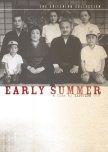
This review may contain spoilers
"It's like when you look for something all over the place & then find it right in front of you."
In Early Summer a family faces a time of transition and growth as the twenty-eight-year-old daughter's unmarried status seems to reach a crisis point with everyone wanting her married off, even her boss plays matchmaker! This poor "old maid" seems quite happy enough working, hanging out with her friends, and helping her family, but society norms being what they were, she understands her time of being single is fast running out.Ozu slowly takes his time setting up the characters and family dynamics in his usual aesthetic manner. The plot is not complex but the relationships are. Noriko is the "old maid" and seems fairly nonplussed when her boss tries to match her with an older friend of his. Her authoritarian brother, Koichi, jumps at the chance for her to be married to a wealthy older man. Noriko's mother and sister-in-law express their doubts about the match when they hear the man is forty. Koichi shuts them down saying that at Noriko's age, beggars can't be choosers.
When Koichi's two young sons run away after an argument with their father and can't be found, Noriko goes to a neighbor whose widowed son and small daughter live with her. The son, Kenkichi, goes with Noriko to help her find the boys off-screen. Kenkichi is a doctor and is later offered a promotion from his boss, Koichi, at a provincial hospital. Noriko takes a farewell gift to his house and before she leaves, she and Kenkichi's mother have arranged for her and Kenkichi to be married without his or her parents' knowledge or permission! How terribly forward and untraditional! Kenkichi is delighted, her parents not so much. "She acts like she grew up all by herself." Even though the family knows and respects Kenkichi, he's not wealthy and worst of all, he already has a child. Noriko loves the little girl and can't understand what the problem is.
The father goes to the store and has to wait for a train to pass by. Just like his teapot, trains play a big part in most of Ozu's films. Subconsciously, we know that trains are either taking people to somewhere or away from somewhere. Here the movement within the family is spurred by Noriko making a decision for herself, she's not only moving physically away from her family, but also away from the family's sphere of influence. The father realizes his family is transforming and that the train will soon be taking his daughter away as much as he would love for his family to stay together.
Always hesitant to show much romance, Ozu finally lets Noriko give voice to why she made what looked like a rash decision.
She admits her long standing feelings for Kenkichi. He's someone she trusts and knows she will be happy with. Her best friend reveals to Noriko that what she's talking about is love. Noriko doesn't always come across as the sharpest knife in the drawer with her perma-smile and sunny disposition, but even she knew that marrying a man who had been resolutely a bachelor until forty might make for a difficult relationship no matter how much money he had. Better to clip coupons and work on a blended family as a stepmother with someone she cares for than to be on unequal footing with an older stranger.
"It's like when you look for something all over the place, and you find it was right in front of you all along."
The acting in this film was uneven for me. It was interesting seeing Ozu regular Ryu as the older brother with jet black hair. Two years after this film, he would play an elderly father role with the actress who played the mother in this film in Tokyo Story. In Tokyo Twilight he played Hara's father! I have a love-hate relationship with Hara Setsuko. When she's given the chance to show a range of emotions, I find her compelling. I have a more difficult time when no matter what happens on screen, whether she's been offered congratulations or told she has six months to live she responds with the same smiling face. It can feel like a mask hiding the character's true emotions and I would like to see the depth of the character played out more.
Single, childless Ozu has more than once had two young brothers in his films, Good Morning and I Was Born…But, come to mind. In the films I've seen thus far, and also in this one, the boys are very disrespectful, selfish, and throw fits on a regular basis. Maybe it's because the kids always seem cooped up in the house like the caged birds in this film that they go stir crazy. More than likely, it's how someone who is childless sees children, but I find the children in his films can cross the line from delightfully realistic to incredibly annoying. There was a some of both in this film.
Unlike some of Ozu's older films where tradition must be maintained in the family and with fear of modern influences damaging the familial structure, Noriko is not punished for making her own decision regarding her future. No train runs her down nor is there a disaster to her reputation. I found this different direction with more sympathy toward the young people by the director a breath of fresh air.
Just like the sunny, carefree days of summer seem as if they will last forever, we know fall is around the corner. It doesn't mean the end of the world but it is a time of transition, even as Noriko's family had to accept that change is inevitable. Life is always in flux and families have to be flexible. Much like the family portrait taken in the film with the parents and their children and grandchildren, the last photo is only of the parents. In time, most parents will see their children move out to make lives of their own and be left by themselves with a much quieter house.
After Noriko is wed, again off-screen, and her brother and his family have moved due to his job, her parents talk about their lives. The father laments, "I wish we could live together forever, but that's impossible." On reflection they realize that they have lived a good life and raised their children well. They have earned their, if not happy, at least pleasant and contented ending.
2/23/23
Was this review helpful to you?
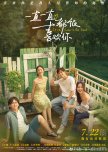
This one got to me!
This is a slow (in a good way), simple and beautiful story. I'll start with the bottom line - it's been quite a while since I've cried watching something, and I cried a couple of times during this movie. I was swept into the story and could feel the nervousness of the female lead, but she wasn't portrayed as a loser at all. The meeting of the leads was shown in a good way, and I was rooting for them from the start. Wu Nien Hsuan as Yi Bin and Zhou Yi Ram as Tong Zhi Liao were perfectly cast. I could feel sparks between the two from the beginning. I was torn, I wanted to find out what happened, but I also wanted it to go on and on. It was a lovely journey of discovery and spoke to lost chances and regrets. The story line of the old lady and her regrets mirrored the lead couple perfectly.Normally, I struggle with Chinese dramas, the episodic ones are normally too drawn out for me, and the movies often don't give me enough time to invest in the characters. add to that my problems with dubbing and overacting, you'll see my dilemma. This movie was, quite simply, a hidden gem. I happened upon it quite by accident. The script is good, and the acting is understated. There are no over-the-top characters, and they are all likeable in their own way. No love triangles, and there wasn't much time spent on any of the secondary characters, other than the old lady, so we really got to know the main couple.
I might watch it again, if only to get lost in the story once again. The ending is ambiguous, and I think that's for the viewer to decide what they want to happen. I choose to go the happily-ever-after route.
I can happily and unapologetically recommend this movie!
Was this review helpful to you?

A good enough movie to watch
This movie is also available on Prime Video if you want to watch. This movie has a fine story line and it is interesting. It isn't rated much good on Amazon Prime Video but I kinda see why. The sound of guns didn't sound realistic. Very underrated American actors and I find that some of their acting was not excellent. The only acting that seemed real to me is the male lead and Heo Sung-tae's character Kwan Sung Woo. It can be rewatchable for me but only to see Heo Sung-tae's and male lead's good acting. I'm thinking the technology could be done slightly differently as well. The movie is very underrated as well but I think it's also due to these reasons of mine as well.Was this review helpful to you?
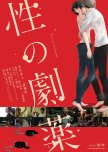
This review may contain spoilers
So good.....
8/10. One of my favorite Gay Series....omg this was hardcore. What was i looking at anyway haha xD...????????...The acting was way too good...was that even acting...???? The lovescenes were too sexy...... O_OI didn't understand the ending so well. Had Yoda taken drugs in the beginning ? And in the End no more ? Stopped Makoto Yoda taking drugs towards the end ??? Am i right ?
Did Yoda also give Se*drugs to Makoto?
Negative:
1. In the end, I wanted the Lovescene to be a bit wilder.
2. Not enough Kisses. I wished for more. Because i love this Couple so much. Rip.
Positive:
1. Story was interesting.
2. Acting was Perfect
3. The Main Characters. I love them as a Couple. *-*
4. Music
5. The Lovescenes was Really Hardcore.
6. Iam very happy that the two are a couple. Searched and found.
Was this review helpful to you?
This review may contain spoilers
Left In The Dark
Wow, this movie left me with all the conflicting feelings and thoughts. I decided to watch it solely because of Fluke since he is such a strong actor. I don't necessarily love everything he is in, but even if the movie/drama isn't great, his acting is pretty much guaranteed to be solid and a highlight which was the case here. He is definitely the silver lining in this movie and I would actually say the acting is in general. The actors were all pretty solid, but Fluke definitely stood out.The premise here was really interesting and had a lot of potential, but the problem, I felt, was that there was a lot left unclarified. I, like others, initially wondered if Night was a hallucination or figment of Wine's imagination, someone he created to help him cope after Tee never showed up to that building and he just kind of snapped. The problem with that though, I realized, was that Night and Wine did go out into public that one time and were seen by someone and interacted with him which, to me, knocks that theory out. So, if he is real, then what exactly is Night. He's not a vampire in the traditional sense, he seems to be a human being who requires human blood to survive. So was this some kind of disease? Has he been dealing with this his whole life? Why did they never think to seek medical treatment? For something that's pretty central to the story, nothing is explained about it. I also felt like more background was needed on Wine. Why was he the way that he was? He seemed damage, beyond the heartbreak that Tee caused and Boy's manipulation. Why was he so desperate to be loved? I found it a bit disappointing how surface level all the characters were, but especially him.
The story also felt rushed in terms of the relationships. We see Wine jump from man to man. The fact that he knew nothing about Night and was immediately ready to have sex with him made me think he was maybe a sex addict. But, no, we're expected to believe that in an incredibly short space of time, he's fallen so deeply in love with Night that he is willing to kidnap his ex-lovers in order to get the blood Night needs to live. Again, it feels rushed and implausible. With Wine's history, I didn't necessarily believe that he truly loved Night. And with Night being an amnesiac, I didn't really believe that he loved Wine either, certainly not initially since it didn't even seem like he fully understood what he was saying. This was the biggest issue for me because that's the core of the film, how far will you go to save the one you love. There needed to be way more set up for that and those parts needed to be drawn out to see the relationship develop if it was to be believable for Wine especially to have felt the depth of love required for his actions.
I did, however, enjoy Wine's descent into madness, if you will. Fluke plays the role brilliantly. You gradually start to realize that his love for Night isn't so much love as it is obsession and he truly is willing to do whatever it takes to keep Night to himself and preserve what they have. I also found Tee and Boy's reactions to being kidnapped really fascinating because it showed their true colors and how they truly felt about Wine. Tee, who really did love Wine despite his previous proclamations that he didn't, fought him initially, then stopped. He told him he loved him repeatedly, even when Wine refused to believe him anymore. Boy, on the other hand, who always seemed to view Wine more as a possession than as a person, raged at Wine for using him and cussed him out until Wine put an end to him. Their relationship was one of manipulation on both sides, however, due to his age, the power dynamic was definitely in Boy's favor and it was pretty clear that Wine was just doing what he had to do to get what he needed.
I found the ending to be equal parts stupid, lacking explanation and interesting. I found Night throwing himself away eye rolling frankly. It felt out of place. I could see the meaning in that particular spot because that's where they found the guitar, but still, I wasn't a fan. I wanted a little more information as to why exactly Wine was arrested. Did Tee end up telling the police after all, was Boy's body found, or what exactly transpired there? Not a huge deal, I just like details. I found the open ending though, to be interesting. I tend to prefer my endings all tied up with a neat bow, but there was something about that last shot of the guitar sitting in the cell that I really liked. Personally, I take it as both Night and Wine committing suicide. Aside from, again, Night appearing to throw himself away, he's obviously not willing to hurt anyone to feed himself so he's going to die of starvation anyway. And after losing Night, I think that would be the final straw for Wine. I view him seeing Night in the cell as a hallucination and the abandoned guitar as a sign that he's killed himself. If you're an optimist, I suppose you could also see it as they've escaped together and left the guitar behind, but based on the vibe of the rest of the movie, I'm kind of doubting it.
Ultimately, its not a god awful movie, it just doesn't live up to its potential. I think with some tweaks it could have been far superior to what it is, but unfortunately as it is, it feels pretty mediocre. The highlight is definitely the acting. I'm not going to tell anyone to avoid watching it, it's less than two hours long and I wouldn't say its a waste of time, but don't go in expecting a cinematic masterpiece.
Was this review helpful to you?
This review may contain spoilers
"It's like a bucket of sand poured over my head"
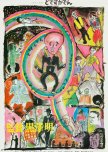
During Japan's economic boom period, Kurosawa Akira made a film about those who did not benefit from it, living on the fringes of society within or next to a large trash heap. Dodeskaden was his first film in color and he took full advantage of it with brightly painted backdrops and buildings. The colors did not translate into the drab, tragic lives of the people who lived there, as they continued moving in endless circles unable to escape their meager existence.The film begins and ends with teenage Rokuchan and his mother as they chant their Buddhist mantra. The mentally challenged teenage boy believes himself to be a streetcar operator and each day he goes out to his imaginary streetcar and runs his routes through the shanty town. As he "drives" along, he calls out "Dodeskaden", the sound a trolley makes. Out of all of the characters, his full imaginary life might actually be the happiest. Other characters are not so lucky, an overworked niece becomes a victim of rape, a man who saw something he shouldn't have walks around unspeaking with dead eyes, a father and son live in a car with the son begging for their food in town when they need it, and a man with a distinctive facial tic has to put up with a harridan for a wife. For comic measure two day worker drunks swap wives and the viciously gossipy Greek chorus of woman who gather around the water pump give their commentary throughout. A man who makes hairbrushes has a wife who has given him five children with a sixth on the way with none of them being his. And lastly there is the old village saint who tries to help where he can.
Kurosawa has vilified the upper classes and their consumerism in other films. In this one he shows the plight of society's outcasts. Much like The Lower Depths, he doesn't make the characters sympathetic for the most part, only the youngest and most vulnerable who suffer bitter fates. Most of the characters don't truly interact, only tied together by proximity.
While Kurosawa's skill shows through as well as the actors, I can't say I particularly liked this film. Justice hides her face. Redemption is but a dream. And hope is so far in the distance that most people live their lives in resignation to their lots. With the exception of dutiful Rokuchan's mother, women are portrayed as harpies and harlots, completely untrustworthy and for the most part interchangeable. The men are given much broader range from mentally ill to lazy to drunkards to industrious to kindly generous to wise old sage.
With all the drudgery and tragedy, a few moments of quiet and joy exist even when only in the imagination. There are beautiful surreal paintings of the house the father and son build together in their minds while starving in the car. Rokuchan's drawings of streetcars on every surface in their hut and his imaginary world are quite vivid. The wise sage tricks a suicidal man into wanting to live and stuns a burglar in his house with generosity. Those gentle moments are few and far between.
Despite Kurosawa's skill behind the camera and the general resilience of the people living on the outside of society, the flat, negative portrayal of women, and the relentless negativity dragged this film down for me. To quote one of the characters, "It's like a bucket of sand poured over my head."
2/22/23
Was this review helpful to you?

Must Watch
Unlocked" is an intense thriller that will keep you on the edge of your seat from beginning to end. The movie's fast-paced will keep you engaged throughout, with plenty of twists and turns.One of the standout elements of "Unlocked" is its direction. The film's pacing is also expertly crafted, with the tension steadily building throughout the film until it reaches a stunning climax.
The cast of "Unlocked" is also excellent, delivering a compelling performance.
Overall, "Unlocked" is a wonderful movie that I highly recommend. The direction is top-notch, the acting is superb, and the plot is thrilling and engaging. If you're a fan of thriller movies, this one is definitely worth a watch.
Was this review helpful to you?
Below average plot/characters; terrific ambience and cinematography
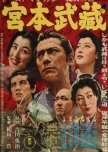
What an interesting film trilogy to review. In fact, I feel it is easier to regard this as one film with three parts, separately released. Consider this as one cumulative review for Samurai I, II, and III (I won't provide any plot spoilers).The story takes place in the 17th century Japan. It is after the Battle of Sekigahara. Our titular character, Mushashi, leaves the small village life seeking fame as a warrior. Musashi eventually becomes a ronin, a wandering samurai, and we accompany this character on his adventures. The plot is fictional, but the character of Musashi Miyamoto is a true historical figure.
First off, I will say that I enjoyed this film, have seen it twice, and look forward to a rewatch down the road. However, it is a subpar film in terms of plot, character, acting, and music. Plot is especially laughable. The action scenes, in particular, are uninspiring and lacking. Characters present as unbelievable, one-dimensional, and some even as pathetic. Even for Toshiro Mifune, a titan in film, this is not one of his stronger performances. The only music I can recall is one heroic sounding theme that is repackaged over and over throughout the film. The dialogue, as well, is unremarkable.
The two female leads, Otsu and Akemi, are strangely compelling despite narrow character design (and even mediocre acting); compelling as in I found myself rooting for both characters. In many films portraying historical women in Japan, say in the role of geisha or romantic intrigue, I find these characters to be flat. Perhaps the presentation of Otsu and Akemi as outgoing and forward was a refreshment and something to look forward to on some level.
So, why did I enjoy this sub-par film and why would I rewatch it again?
Ambience. I suspect the film has many historical inaccuracies, but I could grasp a distinct and coherent ambience not easily felt in other period films. If you've seen many historical asian dramas, especially K-drama or C-drama, it is as if all of the historical eras over a millennia are presented in the same visual way - same court costumes, hats, sets, gardens, castles, etc. It gets tiresome seeing the same 'historical image' over and over. With the Samurai Trilogy, the film looked and felt as if it might be more like the 1600s rather than 1800s. Even though the film plot and aesthetics are fictional, the coherent ambience helped suspend my belief; I could believe I was watching people in 1600s Japan.
The natural scenery in this film was prominent and alive. Mountains, rivers, trees, rice fields, grassy meadows, etc., all looked full and wonderful. It was like being enclosed in the romantic nature and space of 17th century Japan. And for that feeling alone, I would venture back to watch this film from time to time without taking the film craft aspect too seriously.
Was this review helpful to you?
Quality relationships are the biggest impact on happiness
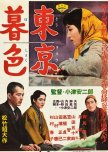
Tokyo Twilight (1957) was Ozu's last film in black and white. It is a family drama and is regarded as one of Ozu's darkest films. This is a film worth watching if you've already seen a few Ozu films and want to be 'completist' in your Ozu viewing. Otherwise, as a stand alone film selection, I don't recommend it for most folks.Considering the seasonal themes of many Ozu films, Tokyo Twilight features snow, so we are firmly in the season of Winter.
The issue for me, isn't so much the dark themes and plot outcomes, but rather having difficulty accepting Akiko - the distraught daughter who seems to have no luck in life. In some ways, I felt the character's presentation wasn't believable and, as a result, had difficulty empathizing with this character. The two Ozu films that I've seen the actress, Arima Ineko, star in, I was irritated with her characters including Akiko. Ms. Arima's characters present overwhelmingly as stubborn, impatient, and lacking in social skill and regard for others. Perhaps that was intended by Ozu, or perhaps, it was overacted to some extent. In any event, the filmgoer is supposed to feel for Akiko, who has no close relationships to lean on for true support.
Setsuko Hara, on the other hand, plays the depressed older sister role of Takako. She was terrific to watch in this film, and I gained a greater appreciation of her skills after being accustomed to her bubbly, smiling, 'pure' daughter roles in other Ozu films. The subtle sorrow that Ms. Hara projects in Tokyo Twilight is convincing and masterful.
Ozu films can, as an overall style or scheme, be not too explicit about plot. There are ellipses or gaps in the plot. This leaves some of the story plot or character feelings open to interpretation. For many Ozu films, this works well; viewers intuit characters' thoughts and feelings because they're so real and relatable that we don't need image or word to confirm what's going on. However, in Tokyo Twilight, these gaps in plot are more confusing, on average, than other films. It might take some 'studying' after watching the film to come to a full understanding of the plot and themes. I suspect many viewers are not willing to do that, which is why I, again, only recommend this film for the Ozu 'completist'.
Was this review helpful to you?
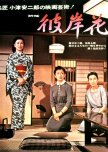
Exploring the gap between Parent and Child
Equinox flower (1958) was Ozu's 48th film (of 53) and his first feature film in color. As with all Ozu films, Equinox Flower is a family drama.This film focuses on an upper middle class family in conflict; that is the daughter's decision to choose a marriage partner without consulting parents and a parent's view they should be involved in the decision. It might seem filmgoers would automatically side with the daughter in this story, but many will sympathize with the old-fashioned father to a certain extent. If this topic interests you, do watch the film and be aware of your perceptions, thoughts, feelings, and judgments.
One side note, is that the title, "Equinox flower", is also the common name of an Asian lily - Lycoris radiata; it is also called 'red spider lily', 'red magic lily', and 'corpse flower'. It is a beautiful red flower (look it up online!). This flower blooms in August-September, close to the Autumn Equinox. The flower has some cultural relevance to death. Consider what element(s) of the film may symbolically link to this flower. Does it represent the decay/death of a parent-child relationship when the child marries and becomes 'independent' from parent?
This film primarily explores the gap or 'conflicts' in perception that parents and children have of one another. The following 2 script selections represent that gap.
Says one Mother to another mother:
I'm doing all I can,
but Yukiko (the speaker's adult daughter) just keeps telling me
to leave her alone and not bother her.
Children are so ungrateful.
Our children are the same.
It must be the same everywhere.
Says one adult daughter to another adult daughter (--):
I envy you, Setsuko.
Your parents aren't like my mother.
They're so understanding.
--I wouldn't be so sure of that.
They're not like Mom at all.
She always goes on and on
and never gets to the point.
--She has an interesting way of talking.
Yeah, too interesting, if you ask me.
Setsuko, we should team up.
--What do you mean?
You help me
when my mother's being unreasonable,
and I'll do the same for you.
Was this review helpful to you?
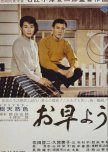
Ozu's most accessible film; a great first film to start with
Yasujiro Ozu, along with his writing buddy, Kogo Noda, collaborated on 27 films. Ozu, alone, made 53 feature films. Good Morning was Ozu's 49th film, and 2nd film in color. This is one of his 'later' films.Good Morning (1959) is easily one of the most accessible films for the new Ozu filmgoer. It is in audio, color, and, at 94 min. run time, very digestible. Compared to other Ozu films, it feels less 'heavy', quicker in pace, and is visually stimulating; older Ozu films (especially the black and white films) have a more static visual presentation. There's lots of explicit and implicit comedy in Good Morning, and the music is more 'modern' compared to earlier films. Furthermore, Good Morning leans heavily on the performance of children, including a cute young child who does an incredible acting job. There's something to like in this film for everyone. This is a fine film to watch for a family with children.
As with all Ozu films, this is a family drama. The plot and themes cover the dynamics of an upper middle class household (father, mother and their two young sons). The film also explores the dynamics of neighborhood relations and intergenerational dynamics. The challenges of raising children are explored as are the differences in socioeconomic statuses of neighbors. Compared to many other Ozu films, which focus on adult characters, Good Morning features well-developed children characters. The children actors in this film, in fact, steal the show.
The portrayal of happy-go-lucky children in Good morning, may be a symbolic decision. In 1959, Japan would have had young children (age 1-15) with little to no living memory of WWII. Instead, the children of Good Morning are concerned with television, watching sumo and baseball, and having fun with friends. The adult parents, conversely, are consumed with work and rebuilding the nation from its WWII defeat; they seem too busy to be strict with their children for long, giving in to demands for consumer pleasures.
While this film may not be as 'emotional' or as 'deep' as other Ozu films, it is still a very thought provoking film. For myself, personally, this film made me want to read more about Japan's modern history.
Good morning is a very good place to start for the first-time Ozu filmgoer and is appropriate for children of middle-school reading ability.
Was this review helpful to you?
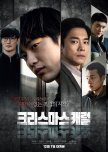
Love all cast are men
I am impressed that the all cast are men because it shows that also men can be a victim.I am amazed also that the characters show different types of men in this movie.
I wish that I can find a movie like this, something similar to this genre.
All I can say is great great great great great great great great great great great great great great great great great great great great great great great great great great great great great great great great great great great great great great great great great great
Was this review helpful to you?
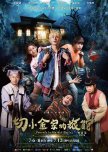
definitely more of a comedy than a horror
This movie is really goofy from like the minute it starts all the way until the end credits scenes. It made me laugh so many times; there's really funny physical humor, lots of great one-liners, the makeup in several scenes made me giggle, and the actors were just amazing with pulling off fear and hilarity. Honestly, with the story, I could guess a lot of it (tho admittedly the Truth of it all did surprise me) which isn't a bad thing, but I think with a different cast it would've been a lot more boring. The three boys as well as the grandparents and "Little Suzuki" were perfect in their roles.The music was fine, I didn't really feel that moved by it either to laughter or anything else. Another criticism I had is that sometimes the really emotional scenes feel out of left field, or aren't given more than a few seconds to hit before it was already moving on. I enjoyed anyway, but I did notice it and it was a little distracting. Also, while I am queer and a lot of the gay jokes were funny, I wish it could've been handled maybe a little differently. Idk I have mixed feelings about that aspect.
General rewatch value is probably higher than I rated it for myself, because once you know the ending it would def be fun to look back and see all the hints. But personally idk if I'll be rewatching, at least not any time soon. Maybe when I need a pick me up.
Worth a watch for sure, but don't go into this expecting a horror--you will only find a comedy.
Was this review helpful to you?
This review may contain spoilers
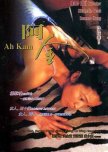
Despite Michelle Yeoh's best efforts, this stunt fell flat
The Stunt Woman starring Michelle Yeoh started out strong giving the audience a behind the scenes look at the grueling and dangerous life of stunt women and men. Then it lost its way and stumbled down a confusing path that not even the graceful Yeoh could save it from.Michelle played Ah Kam, a stunt woman who through determination finds a job working for Master Tung's (Sammo Hung) stunt company. She quickly becomes one of the stunt family after showing her fearlessness and skill. Paco Yick and Mang Hoi, real life stuntmen and stunt directors, were part of Tung's crew. The film touched on the Triads who were involved with movie making during this time. If the film had stayed focused on the nomadic and precarious life of the stuntmen in Hong Kong, especially before CGI and improved safety conditions, this could have been a fascinating story. Instead, Ah Kam falls in love and becomes a manager of her lover's Karaoke bar. When this falls apart she heads back to her true love, working in the movies. Tragedy awaits her and the crew. The next thing you know she's playing surrogate mother to Tung's wild child son.
Perhaps parts of the story had to be re-written after Michelle suffered a calamitous fall, injuring her back. They actually showed footage of her jump from a bridge onto a truck and her having to be tenderly carried off afterwards, which paramedics should probably have been doing. Or maybe director Ann Hui was trying to show three different traditional eras in a woman's life-singlehood, being a couple, being a mom. Whatever the motivation, the story was all over the place in the second and third acts. A major death happened practically off screen, losing much of the emotional impact. Some story elements were vague at best, others were simply dropped.
Michelle Yeoh did her best with what they gave her as did Sammo Hung. They had a nice professional chemistry together. It was fun to see numerous stuntmen have the chance to show their skills as real characters. Kent Cheng and Richard Ng made guest appearances rounding out the cast nicely. The only drawback in the acting department was the child character. Ah Long was a thoroughly unlikeable kid who only partially redeemed himself.
There were a few fight scenes, but much like some of the stunts, they were filmed from a distance or too close, making the action blurry. With Yeoh and the stunt crew, it seemed as if there should have been much better, clearer shots for us to enjoy.
The movie started out strong and ended with a whimper, a terrible waste of kung fu legendary talent. The film did cause Michelle Yeoh to reconsider some of her movie choices which led to a James Bond film and Crouching Tiger, Hidden Dragon which helped to cement her status internationally. So in the end, this uneven film was useful after all.
2/21/23
Was this review helpful to you?


