

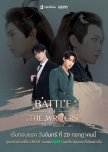
Good Everything but the Story
TutorYim are surely one of a kind pair in this industry. They have an amazing chemistry and a flawless acting perfomance. They're beautiful, talented and such good professionals. Even the side characters had great performances. The production, overall, was also quite stunning! Such creative ways to portray many scenarios! But, when it comes to the backbone of any narrative, the storyline, what in the world is happening? Personally, I enjoy carefree, creative narratives, but this is just chaotic. At some point, I started to think that the real Battle of The Writers was happening in the script team of the show. Bad idea followed by a bad idea and even worse idea. Of course, some things were enjoyable! Truly must give TutorYim the credits for making the few enjoyable moments enjoyable though. The ending, for instance, was quite touching. Also were their moments as children. But, overall... Wow. I think there were just too many things happening at the same time. I truly hope TutorYim get to star a show that can fully match to their potential. They're an amazing couple! The visual effects were surprisingly good, the footage montage, the editing. Visually flawless. In the other hand, I guess I'll never forget P'Jao Samut's dubbed-audio. The budget for everything was there, except for a writer. Which is funny considering the amount of writers portrayed in the show. Well: no hate at all! I got to end the twelve episodes without much issue. It's just that I believe that, if the storyline and the narrative were more solid and well-organized, this would've been such an amazing show. Shout out to everyone!Was this review helpful to you?

This review may contain spoilers
Dropped at episode 10
The reason I'm reviewing this despite dropping it early, is because I spoiled it for myself and looked into the whole drama plot, which ultimately made me decide not to continue.I really wanted to enjoy Love Has Fireworks because it had that nostalgic 2020–2022 C-drama vibe, and the comedy was genuinely enjoyable. The leads' bickering and chemistry were probably the best part of the drama. However, I feel like comedy was carrying the entire show.
My biggest issue is the pacing, the drama has 36 episodes but the main couple only get together in episode 34, which imo is too dragged. By episode 10, Li Yifei had already admitted to his best friend that he had fallen for the landlady, so knowing that their relationship development takes that long completely put me off. In addition, Li Yifei and Qian Fei were cute, but sometimes their interactions felt overly childish and unrealistic. I also heard the story relies heavily on exes and misunderstandings later on, which is something I personally dislike.
The side couples also didn't help. Dangyu and Jun Cheng's dynamic felt extremely weird to me, especially Jun Cheng's behaviour, and I couldn't understand why they received so much screen time. Jingjing and Lu Ze also didn't interest me, especially the ring misunderstanding, which made their whole entire relationship seem extremely unhealthy. Additionally, jingjing seemed too controlling at some point which was quite annoying.
Overall, it had potential, but the pacing and unnecessary drama made me lose interest. Also, I still can't believe the production team looked at one of the exes' AI-looking crap and thought it was acceptable to release it because I genuinely couldn't take those scenes seriously. 😭
Was this review helpful to you?

This review may contain spoilers
Underrated drama of 2026, A found family
Road to success is a drama that I've come to love. I didn't have big expectations or anticipation in the beginning when I first heard of this drama last year. I watched it when it was released and didn't expect to love it as much as I did.Road to Success is a drama that depicts healing, trauma and coming-of-age stories. It has many storylines that could at least pique your curiosity, but the problem is that with many, the storylines are bound to get wrapped up quickly and badly. Such as the mysterious person who dragged the team back together in the beginning. It gets its focus for a few episodes but then completely goes forgotten; then it was only addressed by the time the 2nd half came around. We never actually get to learn whether Wen Chengye's dad accepts him as a part of the soccer team and how he's treating him after that. The thing is that we never do get to learn if LWX's parents have accepted her decision; they only get chased away by Wang Fa's dad.
Also, we never did get much focus on LWX's perpetrator who caused her to drop out. The main lead rather found the person easily then took him down. They forget about it to focus on the students' storyline, then they finally decide to wrap it up by the end and it doesn't leave much emotional impact because it happens too fast and easily. It shows that 32 episodes may not have been enough, it also kinda shows during the ending as well.
Besides that, I really did love the message this drama was incorporating about mental health, women's rights, and coming-of-age struggles as a teenager. We don't talk enough about just how much we struggle with our mental health, especially when it's women's mental health. How easy and damaging it is for one single rumour to ruin a woman's life. In the drama, the court scene really stood out to me when the female lead finally dares to face her perpetrator. She referenced a case of a female student in university who graduated and dyed her hair pink for graduation. She received a lot of hate from Chinese netizens simply because they deemed her hair to be unruly and improper.
I find it funny just how they timed it perfectly with the World Cup lol and ended at the same time the World Cup did.
I really came to love how LWX was there for her students, so I kinda wish I had an adult like her in my life haha. I really loved LWX's character, because she wasn't afraid to still live, to not give up. She stood up for her students and became the adult they needed in that moment. The found family trope really touches my heart, honestly.
I loved how Wang Fa became the safety net that will catch LWX no matter how many times she tries to fall. The chemistry between them was really cute and natural; sadly, we didn't get to see much of it due to how the romance was sidelined for the majority of the drama, being like the 3rd most important plot.
I found it interesting how Esther once revealed that her acting coach told her to choose characters more like herself, and I can definitely see the resemblance between her and LWX; it breaks my heart knowing that she faced such hate that made her probably feel a lot of negative emotion like LWX did. Im glad, honestly, because she really is venturing out more from the script her ex-company made her choose, and I hope it showcases more of her acting range through these projects and helps her grow.
When it comes to the acting, it wasn't bad. Esther delivered a nice performance, and so did Chen Jingke, but I gotta say CJK's lips really distracted me, like not romantically; it felt like he was meowing sometimes lol. One of the problems I had with this drama in the beginning was how I felt like I was seeing Esther Yu and not exactly LWX sometimes. I guess it's due to the styling that made me feel like I was watching Esther Yu.
Really such a beautiful found family story about healing and coming of age. I found it cute as well how Esther reunited with her former bandmate Chloe Xie in this drama and they are childhood friends in the story, not to mention how Esther's name, Yu Shuxin and Lin Wanxing both have the word star in them, which I found was a cute coincidence as well.
I gotta say that Victor Ma really nails these comedic characters so well! He was so funny lol. Whenever they were snacking in the beginning, I got so jealous and hungry lol; it looked so delicious as well. I gotta say, with the amount of times Esther promoted the Wakuku dolls, I think in this drama it made me tempted to also get one lol.
I would recommend checking this out if you want a more emotion-driven plot, but it's understandable why people would find it boring and not to their taste.
Was this review helpful to you?

filming style and cinematography feel so fresh and unique compared to other historical dramas
Overall, a great watch with high rewatch value!The filming style feels very fresh and unique compared to other dramas. The title, music, graphics, and costumes are super cool, and the actors did a great job. The story is super thrilling to follow, though every case ends on a sad note. The only small downside is that some scene cuts felt a bit jumpy.
Loved it and really looking forward to Season 2!
Was this review helpful to you?
This review may contain spoilers
perhaps not dazzling enough but it certainly “sparkle”, “glimmers” and “glows” … ?
I decided to watch this drama because a reviewer said that it was a “natural” drama that was very “slice of life” and not something over the top and overly dramatic and crazy. Well, I enjoyed this drama enough! ☺️ I think 8.5/10 is fair because I think it’s better than average.What I Liked:
- FL was very natural in her acting. ML was very good too. They had chemistry.
- The supporting cast acted well too. The mothers and sons were cute. Their camaraderie seemed very believable and thus, very enviable.
- I liked that FL wasn’t a pushover. She had her own mind and she was practical. Once she understood her circumstances and her limitations, she adapted, she pivoted and she continued to try her utmost. I liked what she said about trying not to have regrets in life. However, if there are regrets, accept them and move forward as well as possible. She also talked about making her best possible decisions / moves within what was possible.
- I liked how they continued to lift each other up and to continue to live their best lives possible despite the many obstacles - both big and small setbacks. In life, we certainly face many trials and tribulations. And, we need to continue to push forward or perhaps, creep forward because time and tide wait for no one and the sun also rises. We need to keep on going albeit slowly and despite our pain.
- Ending was happy which I always like. I look forward to happy endings because they give me hope for real life happy endings.
What I Didn’t Like:
- I hated Cao Ping and his sister. Luckily, they “reformed”.
- The perverted man with no morals.
- Rather senseless fight scenes. (Luckily, the FL would usually appear to get them to stop fighting.)
Overall, I think it’s a modern drama which deserves a watch. It is very watchable. Some parts are motivational / inspirational. 💪🏼🫰🏼🙏🏼🤭
Was this review helpful to you?
Something I Won't Mind Watching All Over Again
A hidden gem among the new cdramas of 2026! Sure there are some slow build up but guess what? The drama just has enough of it's materials to keep me hooked until the next episode! And please for us who depend on the subtitles, we would love better translations, wonderful acting too, Definitely recommended but watch it on Youtube instead, it has better subtitles.Great job to the cast and crew, Costume, make-up and set are not bad, they made do and did a fantastic job.
Was this review helpful to you?
Marvellous
I was trying to watch this movie since its release in Cannes and as the saying goes, "When there's a will, there's a way". I finally made it, and it totally surpassed my wildest expectations.I'm in awe. Conceptual, innovative, visually stunning, complex, with multi-layered narratives and three subjects very close to me: Cinema, Chinese history in the 20th century, and Buddhism. Also, an ode to art and cinema as a collective dream, as a form of exploration in a society that worships technology and pure rationality. On top of all that, there's the sheer mastery of the film's technical language. I honestly have no words.
The dream/illusion is obviously the main theme, no matter from what perspective you approach it. One of the things that, in my opinion, makes this movie truly a masterpiece is that, besides its compelling cinematic language, it has several layers and multiple meanings that allow you to enjoy it regardless of whether you grasp one, two, or more of them, or of the interpretations you give them. To talk about it would be endless, and it would indeed require a discussion. I'm still processing everything I've seen.
This is the second time I've come across an audiovisual project structured around Buddhism while simultaneously exploring other, similar narratives or related themes. Coincidentally, or perhaps not, both were Chinese and released in 2025.
To watch and rewatch many times, for whatever reason you choose. ..if you like/are familiar or interested in at least one of the subjects mentioned above.
Wow, simply Wow.
Was this review helpful to you?
❤️ My All-Time Favourite Rom-Com K-Drama ❤️
As a 24-year-old guy who has been watching K-dramas for many years, I can confidently say that See You at Work Tomorrow completely stole my heart. From the very first episode to the finale, it delivered everything I love about a romantic comedy without ever losing its charm. The balance between heartfelt romance, genuine laughter, emotional moments, and lovable characters made every episode something I looked forward to. It reminded me why I fell in love with K-dramas in the first place, and by the end I was left with that bittersweet feeling of not wanting to say goodbye.Seo In-guk once again proved why he's one of my favourite handsome Korean actors. He has this effortless charisma that makes every scene enjoyable, and he looked incredibly handsome throughout the entire drama. Whether the story called for comedy, romance, or emotional depth, he handled every moment perfectly. Park Ji-hyun was absolutely stunning from beginning to end, and her performance was equally outstanding. She brought so much warmth, charm, and personality to her character, and her chemistry with Seo In-guk felt completely natural. Watching the two of them together was easily one of the biggest highlights of the series.
The supporting cast also deserves a lot of praise because everyone played their roles so well, making the world feel alive and believable. The writing kept me smiling, laughing, and emotionally invested without relying on unnecessary drama. The pacing felt smooth, the cinematography was beautiful, and the soundtrack fit every scene perfectly. This is one of those comfort dramas that I know I'll happily revisit whenever I need something that simply makes me feel good.
Without giving away any spoilers, See You at Work Tomorrow has become my most memorable romantic comedies I've ever watched. Along with Boyfriend on Demand, it now stands as my most favourite rom-coms that I have ever seen. As someone who's spent years watching countless K-dramas, that's not something I say lightly. This series gave me laughter, warmth, unforgettable chemistry, made me cry and also characters I'll remember for a long time. I loved every minute of it, and I couldn't recommend it more to anyone looking for a genuinely heartwarming romantic comedy.
Was this review helpful to you?
MUST WATCH
new comfort drama, i love he yu and i love how the portrayed huayong, he was a breath of fresh air in the middle of all other male leads. Xihe was also such a strong character, which is rare to see in a drama as in they always have some type of weakness. I LOVE THEM BOTH I DONT KNOW WHAT TO DO NOW THAT I FINISHED THIS😭😭😭 It’s such a fun watch, no boring episodes (except for the last few that i watched in 2x lol) all the side characters are well thought, i love them all.Was this review helpful to you?
Not bad, but not good
Overall, this kdrama was good, but there was a bit flaws that could have been fixed like the ending, where the father did the illegal stuff for the daughter, which is illegal and not allowed that didn’t make sense at all. The pot kept getting long and boring, and then suddenly was randomly cut short. It’s not bad but not good. It could’ve been fixed, but it didn’t so it could have been fixedWas this review helpful to you?
Style Over Substance, But Still Worth Watching
Perfect Crown is definitely a good drama, and I genuinely enjoyed my time with it. One of its biggest strengths is its cast, with Ui carrying much of the comedy through a consistently charismatic and entertaining performance. The humor lands well throughout the series, making it an easy and enjoyable watch.The production values are equally impressive. The costumes are gorgeous, and the series does a great job blending the elegance of the monarchy with a modern corporate world filled with luxury cars and contemporary aesthetics. The OST deserves special mention as well, effortlessly shifting between majestic themes and modern tracks that perfectly complement the show's unique atmosphere.
Where Perfect Crown falls short is in its storytelling. While the comedy consistently delivers, the more dramatic moments rarely have the emotional impact they aim for. The male lead also feels somewhat underdeveloped. Beyond his role in the romance, there isn't enough exploration of his character to make him truly memorable.
The story also plays things a little too safe. The antagonists are easy to hate, but never quite threatening enough to create genuine tension. Likewise, the familiar K-drama formula ~ including a love triangle (or perhaps more accurately, a love rectangle) ~ makes parts of the plot feel predictable.
The 12-episode format doesn't always help either... With such a large cast, several characters and storylines end up feeling underused despite their potential (some of them completely disappearing after some time). A few more episodes, or simply a tighter focus, could have given these arcs more room to breathe. The action scenes are another weak point, often lacking credibility (though I admit I'm particularly picky when it comes to that) and reducing the impact of key moments.
Despite these flaws, I'd still recommend Perfect Crown. It's a polished, well-acted production with strong performances, beautiful visuals, and a somewhat unique blend of royal elegance and modern style. While the story doesn't fully capitalize on all of its ideas, it's an entertaining drama that's well worth watching.
Was this review helpful to you?
This review may contain spoilers
Very confusing and messed up!!
Please note that it's EXTREMELY s*xually explicit. I was shocked at the opening scene.***** [ minor spoilers only ] *****
This movie left me very confused, i didn't get anything out of it, what's the message delivered? even the story itself wasn't clear at all, it almost felt like there was no story to even start with. Also the movie got boring from mid to the end. It was mostly yong joon trying to find a job, jae sung chasing him, and straight up p*rn.
Some of the stuff that confused me was: why was yong joon that mad at jae sung? ( at first i thought it was bec jae sung got married but by his reaction when tae kyu mentioned that, it seemed like it was made up by yong joon to hide the fact that they were together and he just went along with it), who the hell were the abusive father and the one eyed kid? And if the father was abusive why would the kid do what he did at the end? Aside from all these confusions and flaws in the story, the characters weren't okay, both jae sung and tae kyu obsessing over yong joon, tae kyu literally threatening to hurt himself if yong joon doesn't choose him like wtf?! Tae kyu character in general was werid, at first i thought he was yong joon's younger brother or something, he is needy, selfish, childish and possessive., jae sung character was also weird but not as messed up as tae kyu, he followed yong joon everywhere like a stalker and didn't have a full normal human conversation with him although he had many opportunities to do so? And the last scene was really werid like why is he still staying at that house? And oh boy let's not talk about that terrible messed up ending.
Yeah that movie didn't make any sense honestly, although it got me at first and made me think it had potentials. Overall, i don't recommend anyone to waste their time watching this unless you wanna watch some hot uncensored s*x scenes.
Was this review helpful to you?
All the drunkenness was a def turnoff
this story had the potential to be a lighthearted, romantic comedy with some good medical intrigue and sub plots, but the fact that they go out almost every single night and get completely drunk, everyone from parents to kids and then somehow stumble home and show up for work the next day to do important work was exhausting and boring. On top of that their goofball drunkenness was over the top and hard to watch.there were certain elements of the story that made me laugh out loud for sure and at times the main couple was very endearing. And so were the second leads. My biggest complaint was the constant drinking and drunkenness, and the terrible acting while drunk. It ruined what could have been a good show.
Was this review helpful to you?
A heartfelt drama with great performances that deserved tighter writing.
i actually ended up liking Namib more than i expected, but i also get why it’s been pretty divisive.the biggest strength is definitely the acting. the leads carried so many scenes with really subtle performances, and they made even the quieter moments feel emotional. the drama wasn’t trying to be super fast-paced or packed with shocking twists, which i appreciated, but i do think it dragged in the middle. there were a few episodes where it felt like the story was just going in circles instead of moving forward.
i also liked that it focused more on people’s insecurities, dreams, and second chances rather than making everything overly dramatic. when it hit emotionally, it really hit. some conversations stayed with me long after i finished the episode.
that said… i wish the writing had been tighter. there were storylines that felt underdeveloped, and a few side characters had a lot of potential but never really got the depth they deserved. sometimes it felt like the drama wanted to say something profound but didn’t fully commit to exploring those ideas.
the pacing is honestly gonna be the deciding factor for most people. if you’re expecting a plot-heavy drama, you’ll probably get bored. if you’re okay with something slower and more character-driven, you’ll probably appreciate it a lot more.
overall, i don’t think this is a masterpiece, but i also don’t think it deserves the amount of criticism i’ve seen. it’s one of those dramas that’s more about the journey than the destination. flawed? definitely. forgettable? not really. it has enough heart to make me glad i watched it, even if i walked away wishing it had reached its full potential.
Was this review helpful to you?
KOREA HAS ENTERED THE GAME!
Ladies and Gentlemen, Korea has finally entered the grown up BL ring! no more dead fish kisses and gentle emotions! The story was fantastic, for such a short drama, they had an enormous amount of action and storyline. The acting was top-notch, the chemistry was off the freaking chart! I freaking highly highly recommend this, and it'll definitely be on my rewatch list! but on a sad note, I can no longer accept the past Korean BLs as they were, I must insist that they move forward from this point! 🤔Was this review helpful to you?


