

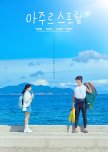
Quiet, charming short series about finding yourself in the sea
I've seen other films or shows involving free-divers (ama or haenyeo), but Azure Spring features diving more centrally, with plenty of underwater footage where it's clear the main cast are diving.Another selling point for me is that there's also lots of footage of food preparation, including gathering seafood, vegetables from a community garden, etc. and cooking in a traditional pot.
I really like the calm, poetic tone of the series, which has a deep undercurrent of melancholy and darkness but doesn't sink into it. Instead it floats near the surface, hopeful, poignant, and gently funny.
The characters are sufficiently compelling and likable. And I like that it's only 6 30-minute episodes, which felt perfect.
Really my only complaint is a CGI cat inserted needlessly into various shots. It's technically well rendered but the stiff animations are distracting and it really doesn't add anything, so it's hard to understand why they spent money and effort on it.
Was this review helpful to you?
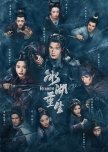
Don't pay attention to the negative reviews, and give this a try !
I don't often write reviews but I feel like this drama receives a ton of criticism and I honestly don't understand why.The acting, the production, the storyline, it is honestly a banger and while I was a bit confused at the beginning, after episode 3 or 4 I was ALL in.
The plot isn't complicated, you just have to pay attention and maybe we are all getting a bit too used to very straightforward plots without any twists but I really enjoyed Rebirth because it was non linear and full of surprises. There were a lot of characters and storylines but I really liked that, it was never boring! Often I feel like 40 episodes drama have filler episodes but it's not the case at all, in fact I wished some of the latter episodes were a bit longer because there was definitely other things to explore (I'm going to keep the review spoiler-free but I wanted more information on the different kingdoms after the big battle).
I loved Lin Yunrui's interpretation of Zhuge Yue, he was restrained but emoting so well at the same time that even with a slight change of expression, we could understand the character. He really is an amazing actor!
I also really loved Zhang Kang Le's interpretion of Yan Xun, he was probably the most interesting character to me because his character develops a lot during the show. This actor is very very promising and I cannot wait to see what he does next!
Finally Huangyang Tian Tian's acting was also quite good, my only complaint is that she's a bit too young to depict a general, even with the styling and the makeup, she looked liked a child is some scenes. But her acting is impressive and I hope that last year's earring scandal won't ruin her career because she has a ton of potential.
Music wise, the show was amazing, I found myself listening to the soundtrack A TON while watching the show!
So, please, if you're intrigued by the show, WATCH THIS, don't even look at the MDL average note !!
Was this review helpful to you?
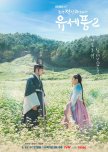
Poong, the Joseon Psychiatrist Season 2
0 people found this review helpful
This is your sign to visit Gye soo clinic's psychiatrist, again!
If you've completed s1 and wondering whether to watch s2 or if you're wondering whether to start this drama at all, well, you definitely should. (It's best to start from s1 though)But after finishing s1, the first 2,3 episodes might feel a bit frustrating due to that specific character, but she is also a patient, thus we must be patient and listen to her side of the story as well.
The story was well paced, building up to a neat and well deserved happy ending. This drama became surprisingly heartfelt for me. I absolutely love Yoo se yeob, played by Kim min jae (Dali and the cocky prince), and i personally think saeguk attire suits him best. It's my first te seeing the FL but I loved her too. Gye ji han was amazing, he was played by the talented kim sang kyung (Memories of murder, Crowned clown) and I will get to him in a moment. First let me list the aspects of this which I especially enjoyed.
Love story - it's about two wounded souls healing each other and becoming their best versions. They have everything, great chemistry with heart fluttering scenes that made me grin from ear to ear, and emotional depth that will make one genuinely root for them. They are two beautiful and interesting individuals in their own rights. And their story is like a stream flowing through many obstacles, only making it stronger and adding to its beauty. Our ML, Yoo se yeob or poong, is just the right amount of clingy and mature. It is very admirable how he recognizes the skills of his lady Seo eun woo and encourages her to go out into the world and make a name for herself, thus provinng herself and earning her own freedom. I was definitely impressed by how they dealt head on with all the problems that were thrown their way, without trying to hide or run away.
Found family done right- the gye soo clinic family is all made up of people rescued by its owner physician Gye ji han. From Ip bun, lady namhae, jan gun and granny to yoo se yeob and his manservant man bok and lady seo eun woo. I usually don't like to watch this many side characters but all of their interactions felt very genuine. I found myself laughing out loud watching their chaos and ended up caring, worrying and loving each and everyone one of them. They all had distinct personalities and scenes were a real pleasure to watch.
Gye ji han - he became such an endearing character but i don't know how to describe him. First he appears to be that father figure who give a bit of wisdom to the leads and provide some comic relief. Well he does that, but he's so much more. He is witty, smart, funny and wise. I will miss his sharp words and manner of speaking with those gestures and expressions.
And man talk about annoying villains.. Thought we were done with them after s1, but here they come one after another.. But the finale is very satisfying as they redeemed those who were deserving and sent off others as they so deserved, for their crimes against our leads and also for getting on my nerves so much.
All in all wonderful drama, would recommend to everyone!
Was this review helpful to you?
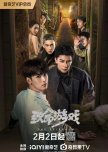
It's a must watch
I recently came across this series as I was looking for something to make me forget the real world and submerge into it. When I started I was not so sure but since I liked the genre so I thought of giving it a try. But as I started watching I couldn't stop myself from watching it more and more. The characters selection and the games storyline was top notch. Each character had depth and unique. They all showed the signs of human emotion layered in multiple shells. Especially the bond between the lead actors was something that I kept longing for until the end. Sadly, at the end the drama left me with an empty heart of why it had to end this way, why he had to grow old. I couldn't stop myself of wanting more, of the characters. Their bonds, the tension and more of it to keep growing. The drama kept me hooked for sure but the ending I really wanted it to end in reality and not in VR. I really wish I could change the ending, because the drama was so good. And it's rare to find dramas as such.Was this review helpful to you?
Too short for it to become any good
YouTube playlist link: https://www.youtube.com/playlist?list=PLNd7BhdAz80qVJk7itfRXCdPNMTvPAVYdThings I liked:
1. Funny/silly moments.
2. Side characters.
3. Beautiful views.
4. Good acting.
5. The idea they had for the plot. The whole idea of the main characters switching their bodies was interesting and exciting, but they definitely did not have enough time to make the whole thing actually good.
Things I disliked:
1. Almost no chemistry between the main characters.
2. Everything is happening way to fast due to how short this series is.
Overall it was a nice and funny watch for the most part, but there wasn't much time for the main characters to open up more and have a genuine connection, in my opinion.
Was this review helpful to you?
Premium Rom-com Indeed
Yumi’s Cells season 3 feels warm, comforting, and so real. it still has the same funny and emotional charm, but this time yumi feels more mature and stronger.the cells are honestly still the best part — cute, chaotic, and way too relatable. they make every emotion feel more alive, from love and happiness to anxiety and overthinking.
yumi and soonrok’s story feels soft and natural. their chemistry is calm, comforting, and full of understanding instead of unnecessary drama.
overall, yumi’s cells 3 feels like more than just a romance drama. it’s a story about growing up, healing, and slowly finding happiness. funny, emotional, and comforting at the same time.
last but not least, thank you Kim Goeun for bringing Kim Yumi to life so perfectly. Gonna miss Yumi and her cells so much!
Was this review helpful to you?
Great Period Drama
This series has romance, political intrigue, sweet humour, and great acting from the cast. I usually like a series that can keep me watching for the next episode. This is one of these. I have my favorites, Love Like the Galaxy, Joy of Life 1 & 2, Lost You Forever, 1 & 2, Sword Snow Stride, Secret of Three Kindoms, Nirvana in Fire, and this is another one.I do have to mention that after many episodes this series becomes a drama with inside women jealousy and outside male jealousy that rather dampens the fun of it.
Was this review helpful to you?
This review may contain spoilers
Perfect Crown arrives as a romantic comedy on the surface, but beneath its polished royal aesthetic lies a character-driven narrative that thrives on emotional restraint, symbolic progression, and the gradual unfolding of intimacy between its leads. While it may not reinvent the romcom genre, it succeeds in refining familiar tropes through execution, chemistry, and emotional pacing.At its core, the drama is anchored by its central relationship between Hui Ju and Grand Prince Ian. Rather than relying on instant romance or overt melodrama, the story builds their connection through layered interactions, situational tension, and emotional withholding. This slow-burn approach is arguably one of the drama’s greatest strengths. The relationship does not feel externally manufactured; instead, it evolves organically through shared experiences, conflict resolution, and emotional recognition.
Hui Ju’s character arc is particularly noteworthy. She begins the series as a highly ambitious, self-sufficient woman defined by control, intellect, and emotional guardedness. Her evolution, however, is not framed as a loss of strength but a redefinition of it. The drama carefully dismantles her emotional barriers not through weakness, but through choice. Her vulnerability becomes an act of agency rather than submission, especially in the latter half of the series where her priorities shift from ambition-driven survival to emotionally driven protection. This transformation is one of the most compelling aspects of the narrative because it is neither abrupt nor idealized; it is earned through cumulative emotional weight.
Grand Prince Ian, on the other hand, represents restraint as both identity and burden. His characterization leans heavily into emotional suppression, strategic thinking, and internal conflict. He is not written as a traditionally expressive male lead, which led to some polarized reception. However, this restraint is intentional and thematically aligned with his narrative position. His arc revolves around power that is deliberately unused, authority that is morally complicated, and a man constantly balancing duty against desire. The subtlety in his performance style is therefore not a limitation, but a structural choice that aligns with his psychological framing.
Where the drama excels most significantly is in its romantic chemistry. IU and Byeon Wooseok deliver a pairing that relies less on explicit confession and more on visual communication, silence, and microexpression. Their dynamic thrives in subtext—glances held too long, pauses that carry meaning, and physical distance that gradually collapses over time. This kind of chemistry is difficult to manufacture artificially and becomes one of the primary emotional engines of the series. It is also what elevates otherwise familiar romcom beats into something more immersive.
From a production standpoint, Perfect Crown demonstrates strong visual cohesion. The cinematography emphasizes symmetry, framing, and tonal softness, reinforcing the fairytale-like interpretation of its royal setting. Costume design also plays a symbolic role, particularly in Hui Ju’s wardrobe progression. The transition from bold, statement-heavy outfits to more refined, structured silhouettes mirrors her internal shift from self-protective ambition to relational grounding. Similarly, the subtle coordination between the leads’ styling reinforces their emotional alignment without needing explicit dialogue.
The supporting cast also contributes meaningfully to the narrative structure. The younger monarch figure adds emotional contrast and moral grounding, while the Queen Mother’s presence introduces controlled tension and thematic weight regarding legacy and power dynamics. Even secondary characters, though limited in screen time, serve functional roles in reinforcing the central themes of duty, loyalty, and emotional cost.
However, the drama is not without its limitations. At times, the writing leans on familiar romcom and palace-drama conventions without fully subverting them. Certain political conflicts resolve more conveniently than expected, and some narrative threads feel secondary to the romance rather than fully integrated into the broader world-building. Additionally, viewers seeking tightly structured political intrigue or high-stakes realism may find the tonal balance uneven.
There is also the question of pacing consistency. While the emotional arc is generally well-maintained, certain mid-to-late episodes prioritize relationship progression over narrative expansion, which may reduce tension for viewers more invested in plot complexity than emotional payoff.
A particularly compelling dimension of the drama emerges in how Hui Ju functions as the true catalyst of Ian’s transformation. While Ian is positioned within the narrative as a figure of restraint, power, and internal conflict, it is Hui Ju who ultimately becomes the force that redefines his direction. Her presence does not merely soften him—it redirects him. Ian’s so-called “revolution” is not political in the traditional sense; it is emotional and existential. Everything he refrains from becoming, everything he chooses to endure rather than conquer, is shaped by the meaning Hui Ju holds in his life. In many ways, she is not just his love interest but the axis upon which his decisions pivot. His revolution is not about overthrowing systems, but about choosing her within them.
Despite these critiques, the emotional core of Perfect Crown remains remarkably intact. Its success lies not in structural innovation, but in emotional clarity. The drama knows exactly what it wants to be—a romantic narrative centered on transformation through love—and commits to that identity without excessive deviation.
Ultimately, what lingers most is not the political framework or plot mechanics, but the emotional journey of its characters. The idea that Ian’s revolution, both literal and metaphorical, is intrinsically tied to Hui Ju reframes the entire narrative as one of emotional devotion rather than power acquisition. Love, in this context, is not ornamental—it is catalytic.
FINAL THOUGHTS
Perfect Crown may not be flawless, but it remains cohesive in intent, emotionally resonant in execution, and deeply memorable in its character portrayal. A special appreciation goes to IU and Byeon Wooseok for their exceptional performances as Hui Ju and Grand Prince Ian—their chemistry and emotional depth served as the true emotional anchor of the entire drama. I also extend my sincere gratitude to the supporting cast for their meaningful contributions in enriching the story’s world and emotional texture. Overall, Perfect Crown is not just a drama I enjoyed—it is one I find myself certain I will return to, time and time again, whenever I wish to relive its warmth, romance, and emotional impact.
Was this review helpful to you?
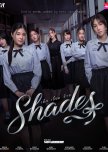
A masterpiece took my heart all
Shades the seriesThis series is a complete masterpiece, reminding me that how much i enjoyed every single episode. Honestly i had very high hope for it from the very beginning and I'm glad it didn't disappointed me at all.
I truly feel very sad abt what happened to Nalin. Her bitch gf really is a Monster, how can she even kiss her again, when She's getting married. Does she even know what does expectation from a gf mean? Nalin forever waited for her and got paid by abounded by gf. She's really a monster and a bitch.
I really hope to see Nano's story a bit more, It's still uncleared. Honestly in this point i understand why we're getting another season. I'm very glad for this. This series really took my heart all. And I'm very glad to give it my all. All these characters are my favorite. I really wish to watch sisha fall verg badly not after what She's keep doing to my kids. I'm very awaited for next episode but hear it, I'm very down for this one. After Clairebell this one already took my heart. I'm feeling very baddas to saying it.
Was this review helpful to you?
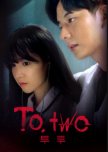
This review may contain spoilers
confused
start is good got hookedi saved this thinking it's romance but now I saw genre it wasn't romance but thriller, psychological etc, even if it isn't romance it's still not good or satisfying in anyway ? people's taste is so bad these days rating this 10?
first FML makes app because of crush ,boy ends up finding out starts making money, and both come together because of this
if you are type main leads should be main screen time than quit this because the villians, victims side characters story is shown more later
a girls gets dragged into this and she lied to blend in with rich and they bullied her and later they said she died ? i don't understand if she did or not ?
ml is stupid enough to stop FML from deleting the app ? is there second season? we were left hanging though? it ended in middle? the story suddenly shifted at end with the mainleads starting new life next year of school? whatever? just what was this ?
that kiss scene also felt unnecessary if drama focus is social life, bullying etc
FML because of ml saves the villian I should say ? and story just ends wtf ?
Was this review helpful to you?
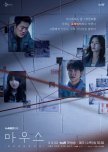
This review may contain spoilers
MONSTERR
Mouse is literally 10/10 no debat 😭 this drama messed with my brain SO BAD anjir. dari awal aku udh bikin teori sana sini yg menurutku udh paling make sense, eh ternyata tetep kena prank semua 💀 tiap 1 case belum selesai langsung muncul another problem yg ternyata nyambung lagi, jadi selama nonton tuh otak dipaksa kerja terus buat nyari hubungan semuanya. AND THE PLOT TWIST??? Jung Ba-reum bener bener insane 😭 aku kira dia berubah gara gara transplant otak Sung Yo-han doang, ternyata HE WAS THE REAL MONSTER THIS WHOLE TIME??? anjir lah 😭 tapi at the same time aku kasian banget sama dia karena dia keliatan genuinely trying to be a normal human but he just can’t, makanya tiap liat dia tuh rasanya campur aduk between takut, kesel, sama sedih 💀 dan yg bikin drama ini makin gokil tuh dari awal kita sengaja digiring buat suspicious ke Yo Han terus, jadi bukan penontonnya yg ga pinter nebak, emng kita di gaslight penulisnya ajg 😭 yg paling parah tuh pas semua puzzle mulai nyatu satu satu… literally bikin bengong sendiri sambil mikir “ANJIR JADI SELAMA INI GITU???” 💀 tebakan aku yg bener cuma soal OZ sama sekretaris kementrian presiden, sisanya bener bener mindblowing semua 😭Was this review helpful to you?
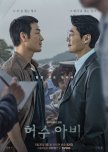
This review may contain spoilers
a saga of delayed justice and shattered innocence
There are crime dramas that want to uncover who the killer is.And then there are dramas that understand that was never the most important part of the story.
This one belongs entirely to the second group.
Inspired by the real Hwaseong murders, the series uses a criminal investigation to talk about guilt, abuse of power, and the lives destroyed when a system chooses to protect itself before protecting innocent people.
The result is a dark, emotionally exhausting thriller that’s impossible to forget.
At first, it seems to follow a familiar structure:
a veteran detective, an ambitious prosecutor, and a serial murder case that comes back to haunt everyone decades later.
But it quickly becomes clear that the focus was never just about finding the culprit.
The story follows Tae joo, an investigator still trapped by the mistakes of the past as he revisits a case that ruined countless lives. Alongside him is Si young, a prosecutor willing to sacrifice anything to achieve results.What makes it interesting is that neither of them becomes a hero or a villain. Both carry guilt, frustration, and an almost desperate need to justify their own choices.
And that makes everything even heavier.
Much like Memories of Murder, the series is inspired by the Hwaseong murders that took place between 1986 and 1991.
For decades, the case became a symbol of police failure in South Korea. The real criminal was only identified in 2019, and before that, an innocent man spent years in prison after being tortured into confessing to a crime he never committed.
That tragedy becomes the emotional foundation of the entire story.
Because the drama has no interest in turning the killer into a fascinating figure. The focus is on the victims, the families, and the people destroyed by the investigation itself.Comparisons to Memories of Murder are inevitable, but the two works follow very different paths.
Bong Joon ho’s film was created while the case was still unsolved. There’s a constant feeling of helplessness and emptiness throughout it.
This story, however, takes place after the real killer has already been identified.
So the mystery stops being “who did this?” and becomes:
“How many lives were destroyed before the truth finally came out?”
The narrative trades suspense for guilt. Curiosity for pain. And it works incredibly well because of that.
⏩ Park Hae soo delivers an outstanding performance as Tae joo.
The character feels emotionally broken at all times, like someone carrying decades of regret without ever being able to move forward. It’s a quiet performance, but incredibly intense in its smallest details.
⏩ Lee Hee joon is also excellent as Cha Si young. The character could have easily become just “the corrupt politician,” but the actor portrays something far more disturbing: a man who genuinely believes the ends justify any means.
⏩ Kwak Sun young serves as the moral conscience of the story, constantly pushing the characters toward questions no one wants to answer.
The most terrifying aspect is realizing that the injustice is never treated as a simple accident.
The police wanted quick answers. The higher ups wanted stability. The media wanted someone to blame. And someone had to pay the price.
The innocent man who was imprisoned doesn’t feel like an isolated mistake. He feels like the inevitable consequence of an entire system functioning exactly the way it was designed to.
The structure jumping between 1988 and 2019 reinforces this idea constantly: the past never truly disappears. It survives through guilt, trauma, and silence.
Park Joon woo’s direction contributes enormously to the atmosphere.
Everything feels cold, exhausted, and uncomfortable. Even simple scenes carry a constant tension.
There’s also an interesting contrast between the two timelines:
1988 feels chaotic and suffocating. 2019 feels quiet, but haunted.
As if no one ever truly managed to move on.
This is not an easy drama to watch.
It’s slow at times, emotionally heavy, and completely uninterested in offering comfort to the audience.
But that’s exactly why it works so well.More than a crime thriller, the series is about collective guilt, institutional violence, and the human cost of turning justice into spectacle.
And when it ends, the feeling it leaves behind isn’t satisfaction.
It’s emptiness.
Fun fact: during the real investigation, the police placed scarecrows at the crime scenes with notes threatening the killer if he didn’t turn himself in. He never did. The scarecrows rotted away. The case remained unsolved for thirty years.
Was this review helpful to you?
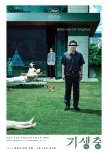
A Clever, Unclichéd Look at Social Class
Parasite is an engaging movie with a great pace. The beginning of the story is pretty standard—it isn't too slow or too fast. While it didn't necessarily keep me on my toes, it still kept me curious about what would happen next.What I liked most was the clever setup. It was fascinating to watch how the poor family smartly infiltrated the wealthy household. Because they clearly have real skills, it makes me wonder why they were still so poor. Is it because the system prevents poor people from climbing higher up the social ladder? On the other hand, the rich family was gullible. Were they rich simply because of luck?
For me, the most memorable scene is when the mother, Chung-sook, profoundly points out that the wealthy family isn't just "rich but still nice," but rather, "they are nice because they are rich." It’s a great commentary on how the social system works and how kindness can be a luxury. The ending has a great twist—a moment where harsh reality destroys a hopeful illusion. I gave it an 8/10 because it's a smart, unique story, even if it didn't completely blow me away.
Was this review helpful to you?
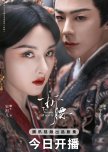
Great enemies to lovers drama.
A very well-done Romance plot, and the political part of it is very engaging, but there were many moments that I, as a viewer not used to political settings, did not understand. The strategies were not explained very well at several points, and the time skips towards the last few episodes were jarring. While I'm aware that these journeys on horseback and in carriages take months, still... especially the scenes of Manman's pregnancy being so rushed that she gave birth in the same or the very next episode after the news 😭Regardless of these minor setbacks, the characterisation is top notch!! I was so happy to see that the characters ACTUALLY grow and change over the course of time.
The Wei generals were lovely supporting characters. Oftentimes, they were the ones bringing life to the scene. So sad that the most cheerful character, Wei Liang, got the worst ending 😢
Wei Shao and Qiao Man's relationship progress was SO SO GOOD. In these historical dramas, we usually see soft and weak female leads. It's nice to see someone so feminine and delicate still stand her ground and be so fierce. Best FMC, for real.
I really wish we'd gotten at least one more episode to see the aftermath of the battle once the villains are dead, and the Wei family reunited. I would have loved to see Wei Shao interact with his daughter for the first time... I feel like he would have been hesitant at first, not knowing how to hold her or play with her because he's always been surrounded by boys, but 😭 she would have her father wrapped around her little finger in no time.
Overall a very good drama, though the ending was quite choppy 🫶
Was this review helpful to you?
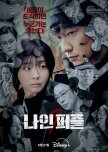
Every Puzzle Piece Leads Back to the Past
Nine Puzzles opens with a chilling mystery that immediately pulls you in. Yoon E-na, an orphan living with her uncle, returns home one night to find him brutally murdered. Traumatised by the horror, she loses fragments of her memory and undergoes psychological therapy. But Detective Kim Han Saem is unconvinced. He suspects that E-na herself is the killer, hiding behind supposed amnesia — yet without evidence, he can do nothing.Years later, E-na reappears in an unexpected role: a criminal profiler working for the police. Outspoken, sharp, and disturbingly perceptive, she quickly proves herself brilliant at reading crime scenes and human behaviour. Fate then forces her to work alongside Han Saem again when the owner of an upscale bar is murdered.
What begins as a single homicide slowly unravels into something far darker.
With every new murder, E-na mysteriously receives another puzzle piece — matching the one she picked up years ago in the blood-soaked house where her uncle died. Is a serial killer orchestrating everything? Is someone sending her messages? Or is the answer buried inside the memories she still cannot fully recover?
That is where the drama becomes addictive. Every episode raises more questions than answers. Why are these murders happening? Are the victims connected? Is the killer someone close to E-na? One of the senior officers? Someone who has been hiding in plain sight all along?
The atmosphere is thick with paranoia. E-na constantly feels watched, as though someone is tracking her every movement. Even the audience begins to feel uneasy for her, especially because she still lives alone in the very house where her uncle was murdered. The tension becomes suffocating — you start wondering not only who the killer is, but whether E-na herself is destined to become one of the victims in this chain of nine murders.
What makes the story especially compelling is that even E-na cannot fully trust herself. There are moments where she genuinely wonders whether she might have killed her uncle after all. The line between victim, witness, and suspect becomes dangerously blurred.
The investigation also slowly peels back layers of a long-buried past, exposing corruption, greed, and dark secrets that refuse to stay buried. Every revelation reshapes your suspicions. Just when you think you know where the story is heading, another twist changes everything.
I watched the drama dubbed in English on Disney+. While dubbing made it easier to follow the complex plot, hearing English dialogue over Korean performances felt slightly unnatural at times. E-na’s deliberately child-like voice was occasionally irritating given that she is already an adult, though I still preferred it over subtitles which often races pass too fast.
When the killer was finally revealed, the drama achieved something unusual — instead of pure hatred, I felt a degree of sympathy. Deep down, many viewers may even feel that some victims deserved their fate because of how corrupt and morally rotten they were. Yet the drama never fully justifies vigilantism, constantly reminding us that personal vengeance and justice are not the same thing.
For entertainment value, this drama scores highly. The plot is tightly woven, suspenseful, and full of psychological tension. Despite its dark subject matter, the cinematography prevents the series from becoming visually dreary or emotionally oppressive. That balance works well for me, because when a drama becomes too relentlessly bleak or suffocating, I usually find myself skipping scenes — or dropping the series altogether. It is the kind of thriller that keeps you guessing, keeps you uneasy, and most dangerously of all — keeps you clicking “next episode.”
Was this review helpful to you?


