


A Drama You’ll Wish You Could Watch Again for the First Time
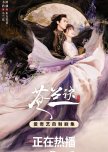
This drama is one of those rare gems that makes you wish you could erase your memory just to watch it again for the very first time.The cast was perfection — every glance, every line delivered with such emotion that it felt like they were living those moments, not acting them. The OST wrapped itself around the story like a heartbeat, amplifying every tender scene and every heartbreak until you were completely immersed.
The plot had everything: palace intrigue, betrayal, redemption, and a romance so beautifully written it felt timeless. The romance wasn’t just love; it was destiny unfolding in front of us, the kind of connection that makes your heart ache and soar at the same time.
By the end, I was left with that bittersweet feeling — grateful for the journey, but longing to relive it all over again. The Pursuit of Jade isn’t just a drama, it’s an experience, and one that will stay with me for a long time.
Was this review helpful to you?
This review may contain spoilers
A Beautiful Shell, Hollow Within
Honestly, Love Between Fairy and Devil is gorgeous to look at, but the story drives me crazy. The female lead is unbearably naïve—she doesn’t think, doesn’t grow, and feels like she was written just to be “cute.” If they wanted her that innocent, they should’ve given her the vibe of a ten‑year‑old fairy, not an immortal who’s supposed to carry weight in the plot.The side characters? Their brains are basically props. They’re introduced with potential but never used meaningfully. And don’t get me started on the power imbalance—some characters are so overpowered it kills any suspense.
The whole show is painted in black and white: good vs evil, love vs hate. There are no grey areas, no layered backstories, no foreshadowed betrayals to keep us guessing. Even the kiss‑based power swap feels like a cheap gimmick instead of a creative fantasy mechanic.
Yes, it’s pretty. Yes, the romance has its moments. But if you’re looking for depth, complexity, or characters who feel alive, this drama just doesn’t deliver. It’s a hollow spectacle—beautiful on the outside, frustrating on the inside.
Was this review helpful to you?
This review may contain spoilers
Ashes To Crown (2026) — Review
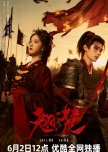
From the very first episode, (Ashes to Crown) establishes itself as a compelling historical drama centered on agency, resilience, and the intricate dance of power. What lingers most powerfully, however, is not just the sweeping political landscape but the deeply realized characters who drive every twist and revelation. As someone who dove into this series with high expectations from its source material, I found myself completely invested in the journeys of its leads and the supporting ensemble. This is a drama that rewards careful viewing, particularly through its nuanced character work.At the heart of the story is Chu Zhao, portrayed with remarkable intensity and precision by Chen Duling. In her second life, Chu Zhao emerges as a force of calculated determination. No longer the trusting young woman from her previous existence who paid dearly for misplaced faith, she navigates the treacherous court with a sharpness that is both admirable and chilling. Duling’s performance captures the layers beneath Chu Zhao’s composed exterior the lingering trauma of betrayal, the fierce protectiveness toward her family and nation, and the quiet moments of vulnerability that humanize her ambition. She is clever, bold, and unafraid to make morally complex decisions when the stakes demand it. Watching her orchestrate moves against those who once manipulated her fate feels cathartic, yet the actress ensures we never lose sight of the personal cost. Chu Zhao does not simply react; she anticipates, adapts, and reshapes the board. Her growth from a pawn refusing her role to a central player in the realm’s defense is portrayed with such authenticity that it becomes the emotional anchor of the series.
What makes Chu Zhao particularly engaging is how the drama allows her intelligence and agency to shine without softening her edges for broader appeal. She gets her hands dirty, forms strategic alliances, and bears the weight of leadership in a world that would prefer women in more passive positions. Duling brings a commanding presence to these scenes, whether in tense court confrontations or quieter moments of reflection. Her portrayal elevates Chu Zhao into one of the most memorable female leads in recent historical dramas a woman who seizes destiny rather than waiting for it to unfold.
Equally compelling is Xie Yanlai, brought to life by Zhou Yiran. Starting as an illegitimate son constrained by his family’s expectations and societal barriers, Xie Yanlai’s arc is one of quiet transformation. Yiran excels at conveying the character’s initial restraint and underlying strength. His scenes with Chu Zhao crackle with tension and evolving trust, revealing a man who finds purpose and light through their partnership. From his beginnings in the Imperial Guard, his steady rise is earned through loyalty, skill, and an unyielding sense of justice. The drama thoughtfully explores his internal conflicts the pull between personal ambition and broader duty, the scars of his past, and the way Chu Zhao’s influence helps him transcend limitations others imposed. Yiran’s subtle expressions and physicality make Xie Yanlai’s growth deeply satisfying; he is not an instant hero but a man who builds his path with determination and integrity.
The chemistry between Chen Duling and Zhou Yiran is electric and multifaceted. Their interactions blend intellectual sparring, mutual respect, and a budding emotional connection that feels organic within the high stakes environment. Rather than relying on overt romance, the series lets their bond develop through shared purpose and vulnerability. Moments where Xie Yanlai opens up or stands resolutely beside Chu Zhao highlight a partnership built on equality and strength something that adds genuine warmth amid the political intrigue. Their dynamic is one of the drama’s greatest strengths, offering respite and motivation without overshadowing the larger narrative.
The supporting cast further enriches the character tapestry. Characters like Xiao Xun embody calculated menace, serving as formidable foils that test the protagonists’ resolve. His schemes force Chu Zhao and Xie Yanlai to confront difficult choices, adding layers of moral complexity. The drama excels at giving these figures distinct motivations and arcs, avoiding one dimensional portrayals. Even secondary figures who aid or oppose the leads feel purposeful, contributing to the sense of a living, breathing court where every alliance carries weight.
One aspect I particularly appreciate is how the series balances character development with the broader themes of loyalty, redemption, and national defense. Chu Zhao’s experiences in her past life inform her every decision, creating opportunities for reflective storytelling that deepen our understanding of her drive. Similarly, Xie Yanlai’s journey from obscurity to general defending the borders is intertwined with personal growth and the evolving relationship with Chu Zhao. These threads make the political maneuvers feel personal and consequential. The action sequences, especially those involving military strategy and battlefield presence, showcase the characters’ growth in tangible ways Chu Zhao’s strategic mind and Xie Yanlai’s prowess complement each other beautifully.
Visually and production wise, the drama maintains a high standard that supports the character focused narrative. Costumes and settings evoke the era with elegance and authenticity, allowing performances to take center stage. The pacing keeps the intrigue engaging across its episodes, with enough revelations and shifts in power to maintain momentum while allowing space for character moments to breathe.
In the end, (Ashes to Crown) stands out for its commitment to strong, multifaceted characters who drive a story of empowerment and partnership. Chu Zhao’s unyielding spirit and Xie Yanlai’s steadfast rise, brought to vivid life by exceptional performances, make this a deeply satisfying watch. It celebrates decisive action, the forging of meaningful bonds amid chaos, and the courage to rewrite one’s path. For anyone drawn to historical tales where individuals shape history rather than merely endure it, this drama delivers with heart, intelligence, and memorable depth. I finished it feeling enriched by the characters’ journeys and eager to revisit key moments.
While I understand that opinions on this series may vary and that not everyone will rate it as highly as I do, my experience watching it from beginning to end was genuinely meaningful and memorable. I would definitely recommend giving it a chance, especially if you enjoy character driven historical dramas with strong leads who actively shape their own paths.
Was this review helpful to you?
the comfort drama i didn't know i needed..
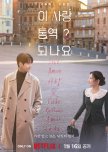
Not every love story needs a dramatic fate, a tragic past, or a world-ending conflict. Sometimes, all it needs is two people trying to understand each other.That's exactly what Can This Love Be Translated? does.
At the center of the story is Ju Ho-jin (Kim Seon-ho), a multilingual interpreter who can understand almost every language in the world. Except, perhaps, his own emotions. Opposite him is Cha Mu-hee (Go Youn-jung), a global superstar who appears confident and untouchable but carries her own loneliness behind the spotlight.
What I loved most about this drama is that it feels like a warm conversation after a long day. It's not trying to shock you every episode. Instead, it quietly wraps around you like a blanket. The misunderstandings aren't frustrating; they're human. The romance isn't rushed; it unfolds naturally through conversations, silences, and the effort to truly listen.
Kim Seon-ho is effortlessly charming as Ho-jin. He brings a sense of calm to the character that makes every scene feel comforting. His subtle expressions often say more than pages of dialogue ever could. Meanwhile, Go Youn-jung shines as Mu-hee, balancing elegance, vulnerability, and humor perfectly. Together, they create a chemistry that feels less like a whirlwind romance and more like finding someone who finally understands you.
And that's where the drama truly excels. Despite being surrounded by different languages, countries, and cultures, its message is incredibly simple: understanding someone is one of the purest forms of love.
There are dramas that make your heart race, and then there are dramas that make your heart feel at home. Can This Love Be Translated? belongs to the latter.
It's the kind of drama that doesn't just entertain you, it comforts you. Long after the final episode, you'll remember the quiet moments, the soft smiles, and the feeling that maybe being understood is the greatest love language of all.
Was this review helpful to you?
some dramas stay with you long after they end..
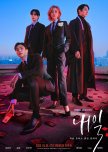
Some dramas entertain, some make you cry, and then there are dramas like Tomorrow that leave a permanent mark on your heart. Based on the popular webtoon, Tomorrow follows Choi Jun-woong, a struggling job seeker who accidentally becomes half-human and half-spirit after an unexpected incident. He is recruited by a special Crisis Management Team of grim reapers whose mission is not to guide the dead, but to save people who are on the verge of ending their lives.At first glance, Tomorrow may seem like another fantasy drama involving the afterlife, but it quickly proves to be much more than that. The series tackles heavy subjects such as depression, loneliness, bullying, domestic abuse, trauma, PTSD, discrimination, and grief with remarkable sensitivity. Rather than focusing on death, the drama ultimately becomes a story about choosing life and finding hope even in the darkest moments.
The strongest aspect of Tomorrow is undoubtedly its characters. Kim Hee-sun delivers a phenomenal performance as Koo Ryeon, the fierce and charismatic leader of the Crisis Management Team. Beneath her cold exterior lies a deeply emotional character whose own story becomes one of the most heartbreaking parts of the drama. She commands every scene she appears in and effortlessly balances strength, pain, and compassion.
Rowoon shines as Choi Jun-woong, bringing warmth, sincerity, and optimism to the series. His growth throughout the drama feels natural and believable, making him the perfect emotional bridge between the audience and the supernatural world. His empathy and determination remind viewers why kindness matters.
Meanwhile, Lee Soo-hyuk delivers an understated yet powerful performance as Park Joong-gil. Initially appearing cold and rigid, his character slowly reveals hidden layers that add emotional depth to the story. The tension and history between him and Koo Ryeon create one of the drama's most compelling subplots.
What truly sets Tomorrow apart is its episodic storytelling. Nearly every episode introduces a new individual struggling with their own pain, allowing the drama to explore different aspects of mental health and human suffering. Many of these stories are inspired by real-life societal issues, making them incredibly relatable and difficult to forget. Some episodes will leave you angry, others devastated, and a few surprisingly hopeful.
Visually, the drama strikes an excellent balance between fantasy and reality. The sleek depiction of the afterlife contrasts beautifully with the raw and grounded stories of ordinary people. The cinematography, soundtrack, and emotional performances work together to create scenes that linger in your mind long after the credits roll.
Despite dealing with dark themes, Tomorrow never feels hopeless. Its central message is that every life has value, and that even when people feel completely alone, there is always a reason to keep moving forward. The drama doesn't offer simplistic solutions to complex problems, but it does offer understanding, empathy, and comfort.
Tomorrow is not an easy watch. It is emotional, heartbreaking, and sometimes difficult to get through because of how realistic its stories feel. However, that is precisely what makes it so powerful. It is a drama that encourages compassion, not only for others but also for ourselves.
Tomorrow is more than just a fantasy K-drama. It is a deeply human story about pain, healing, second chances, and hope. With outstanding performances from Kim Hee-sun, Rowoon, Lee Soo-hyuk, and the entire cast, it stands as one of the most meaningful and emotionally impactful Korean dramas ever made.
Was this review helpful to you?
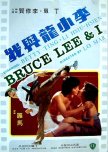
Pure exploitative vindication
Pure exploitative vindication. Possibly one of the worst pieces of shit I've ever had the displeasure of viewing, Bruceploitation was already a subgenre I had a huge discomfort with, but Bruce Lee and I has taken that to a whole different level. An intimate portrait of Betty Ting Pei's illicit love affair with Bruce Lee, told from the perspective of the world's neediest sympathy sponge, it's a downright sickening production. Cheap at every turn, it's a sleazy mix of gossip, melodrama and outright fabrication; every scene is designed to exploit Lee's fame rather than celebrate what made him such a magnetic screen presence in the first place. It's only really worth a vague glance to see Danny Lee as Bruce Lee; other than that, we'd be better off burning every available copy. I feel no sympathy for Betty.Was this review helpful to you?
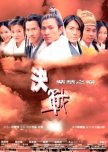
Old-school wuxia comedy with a glossy post-handover makeover
An old-school wuxia comedy with a glossy post-handover makeover, The Duel bounces between political conspiracies, mistaken identities, romance, comedy and increasingly absurd action sequences with enough CGI and star power to light up Victoria Harbour. It's less like a straight martial arts film than a variety show built around the promise of a sword fight that never comes. It's very much a hybrid effort, and the comedy is ill at ease with the heavy drama that occurs later on, but credit to Director Andrew Lau because, for the most part, the film is utterly gorgeous with plenty of soft colour and wonderful scale. The uneven silliness and fluid fight choreography are ultimately a victim of the incomprehensible editing, and unfortunately, it all kind of falls apart when paired with the comedic writings of Wong Jing and the hyper robotic leading performance from Nick Cheung, looking fairly ridiculous with dreadlocks and a pencil moustache. He lacks a well-defined comic persona, coming across as more annoying than entertaining, but here his presence is strangely welcome as it looks like he is at least enjoying lampooning the straight-faced drama. Andy Lau is always a welcome presence, and I kinda love Vicki Zhao, but, for the most part, The Duel is a rather middling but glossy affair. Messy, overstuffed, but reminiscent of other early nineties wuxia comedies.Was this review helpful to you?
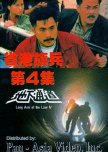
Fear, hope and disillusionment
A sequel from an entirely different genre and taking the gritty bleakness of the series into overdrive, Long Arm of the Law IV is cut from a completely different cloth, abandoning the robbery-centred plots of earlier instalments and instead acting as a highly incendiary response to the Tiananmen Square massacre. There's a reason this hasn't seen a re-release since its VCD, one I ultimately imagine is down to a narrative based on Operation Yellowbird, the extremely bold use of footage of the Tiananmen Square protests, and it's far from subtle recreations of the events with a horrifically high body count to boot. Rather than thriving on momentum and carefully orchestrated chaos, Director Michael Mak instead goes for restless, messy but ultimately ambitious storytelling, and I respect him for that. It's an exceptionally bold piece of filmmaking, even if it feels as if they've had to make a compromise to avoid the Category III rating. There's a genuine sense of displacement and uncertainty, portraying characters caught between political realities and the false promise of escape. Hong Kong is no longer the glamorous refuge it might appear to be from across the border; it's another hostile landscape where survival comes at a cost. The action scenes are effective, though they're not the main attraction. What lingers is the atmosphere, the paranoia, the exhaustion and the sense that every character is running toward a future that may not exist. Bolstered by some outstanding performances and Joseph Chan's incredible music, Long Arm of the Law IV remains a highly compelling action thriller, not because it delivers bigger action or higher stakes than its predecessors, but because it captures fear, hope and disillusionment with a brutal honesty, ending the saga on a deeply pessimistic note.Was this review helpful to you?
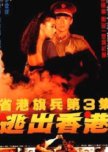
Commercial action spectacle over gritty realism
The first two Long Arm of the Law films built their reputation on grit and desperation, with their criminals trapped by circumstance. Long Arm of the Law III takes a drastically different route. It's bigger, louder and far more of a star vehicle that certainly plays to Andy Lau's strengths as both a charismatic hero and romantic leading man. Although it loses the vicious edge, it remains a strong piece of engaging melodrama where one moment it’s a tragic romance about displaced migrants chasing a better future; the next it’s a brutal crime thriller packed with betrayals, gunfights and ruthless gangsters. It sits in a sort of unhappy middle ground where it’s too romanticised to be a full-blown neo-noir, not quite a heroic bloodshed and too glossy to be a hard-edged crime thriller. However, returning director Michael Mak still delivers plenty of grit and determination; his action sequences are excellent, with a climactic stretch, in particular, offering a barrage of bullets, double-crosses, and body counts that feel determined to top everything that came before it with a heist final heist that feels straight out of the Michael Mann playbook. The trade-off is that some of the social realism and bleakness of the earlier films gets diluted with the script occasionally relying on coincidence, broad villainy and emotional manipulation. Yet there's something undeniably entertaining about the film’s emotional excesses, an energetic slice of Hong Kong cinema in its heroic-bloodshed prime. Lau's charisma undoubtedly helps sell the film, but equally is his wonderfully goofy relationship with Elizabeth Lee. The rest of the performances are all pretty great, with highlights from Elvis Tsui, Kirk Wong, Max Mok and a pre-Liu Kang Robin Shou. Although it very much feels like the point where the series fully embraced commercial action spectacle over gritty realism, Long Arm of the Law III is a wonderfully messy and violent slice of fun.Was this review helpful to you?
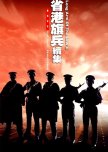
Fighting fire with fire
Fighting fire with fire, although it never quite escapes the shadow of the original, Long Arm of the Law II is a slicker but no less brutal follow-up that's just as tense, cynical and morally corrosive. It's dog-eat-dog, where violence is simply a routine fact of survival, self-preservation takes precedence when you're in over your head, stuck in increasingly dangerous limbo, where neither fully criminals nor fully accepted by the authorities they serve. It all feels like a decidedly glossier affair, losing the raw unpredictability but retaining the dirty, pessimistic attitudes; it feels lived-in and authentic, aided by some wonderful location shooting and a visual style that often resembles reportage more than conventional genre filmmaking, but with Michael Mak taking over directing duties, it doesn't stop the film from being almost as breathtaking as its predecessor. Shootouts are messy, brutal affairs; panic and desperation are the de facto settings when everything goes wrong. Yes, it does occasionally rely on overly familiar undercover-cop conventions, with the storyline getting a little muddled in the middle due to a surfeit of subplots, but the film delivers absolutely thrilling firepower amid all its barbarity, even stopping for a karaoke number. The cast, led by Alex Man, Elvis Tsui and Ben Lam, gives the film much of its emotional weight, teaching us the ultimate lesson when it comes to being an undercover cop: it sucks, it contributes wonderfully to the film's sense of realism and desperation. Their characters, fish out of water introduced into a capitalist society, this time with a touch more levity, are not idealised heroes but trapped men trying to navigate systems that view them as expendable. Complimented by the usual Hong Kong lax standards when it comes to stunt safety and a fantastic musical score, Long Arm of the Law II is a gritty, unsentimental and relentlessly tense concoction of bombastic firepower and fallout that's certainly not for the fainthearted.Was this review helpful to you?
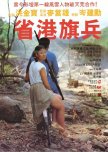
Brutally visceral
Brutally visceral from beginning to bloody end, Long Arm of the Law speaks volumes about its people and society, exploring how Mainland Chinese in the Bamboo Curtain era desperately desired better opportunities in the colonial-ruled Hong Kong, even if it came at the cost of losing their lives. Everyone has their own personal issues to work through, but this isn't a feel-good, fuzzy film about redemption and ultimate reconciliation. The characters are stymied or even undone by their disassociation with Hong Kong; their success and/or failure hinges on who they are. In the end, they don't affect the situation; it affects them. Every decision pushes the gang deeper into danger, and every attempt to regain control only accelerates their downfall. They are not glamorous antiheroes, but poor, opportunistic men chasing a fantasy of quick wealth, observed with a mixture of sympathy and brutal honesty. Arriving just shy of the heroic bloodshed boom that would soon dominate the landscape, many of the genre's defining traits are already here: desperate criminals, fractured loyalties, explosive violence and a city that seems determined to grind everyone down. Seriously, how on earth has Johnny Mak only ever directed this?! He paints Hong Kong not as a neon playground but as a crowded, chaotic landscape filled with cramped apartments, back alleys, cheap hotels and criminal middlemen. Favouring confusion, panic, and sudden eruptions of violence where gunfights are messy and frightening, while chases feel improvised and desperate. It's utterly mesmerising. Above all, the casting is the major key; from top to bottom, the actors are mainly amateurs, but their performances are starkly real, no doubt helped by the improvisational attitude to some scenes that lend them all a beautiful authenticity. There are no heroes here. There's only a society that loses. A tense, cynical, and deeply atmospheric portrait of men chasing a dream that was doomed from the start, few films feel as raw, influential, or unsettling as Long Arm of the Law.Was this review helpful to you?
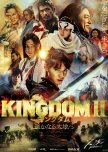
Sadly less camp than the first movie
This second part of the Kingdom series was sorely lacking in the camp department, except right near the end with our beloved Lipgloss Ouki and Pretty Face Emperor.If you enjoy well choreographed battle scenes, then this is a great watch. I, on the other hand, am mostly here for theatrical flamboyance.
I hope to be better satisfied with the third film in the series. Fingers crossed.
Was this review helpful to you?
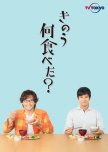
BL + cooking = a dopamine hit
A mature BL that focuses on lighthearted and wholesome storytelling. It’s funny, comforting, and full of flavor as it portrays the everyday lives of two grown men in a loving relationship. The series also touches on the stereotypes and prejudices that queer people often face in society. While the execution isn’t overly dramatic, it still delivers its message effectively and highlights the importance of educating people that gay couples live their lives just like anyone else.The only thing I felt was missing was a bit more intimacy between the main couple. As I mentioned earlier, the show prioritizes its feel-good atmosphere, but a part of me still wished we could have seen at least one kiss between them.
One of my favorite aspects of the series is the cooking. Every episode presents a variety of dishes and cooking segments that are incredibly enjoyable to watch. I love the way Shiro narrates each recipe step by step. His smile adds an extra layer of warmth and charm to the experience. He looks especially handsome whenever he’s happy. There was also an episode where Shiro got sick, and Kenji had to take over the cooking duties. His approach was both hilarious and completely in character, making for one of the funniest moments in the series.
Speaking of comedy, the double-date scenes were always a highlight. Gilbert Wataru’s presence was incredibly entertaining, especially whenever Kenji appeared, and the two started competing over whose partner was better. Their playful rivalry never failed to make me laugh.
Overall, I thoroughly enjoyed this BL and the characters it gave us. Both leads were beautifully portrayed, with distinctive and memorable personalities that made them even more lovable. The series is chaotically fun at times, but more importantly, it offers a calm, comforting, and refreshingly mature depiction of love between two adult gay men.
Was this review helpful to you?
This review may contain spoilers
The cast is fabulous and they executed the plot perfectly.It is a nice happy ending story although, I felt there's a subtle element lacking that prevents it from being a perfect ten.
There wasn't a need for the secretary to be so wish washy, she could have just chosen a side and stuck with it, writers please.
Was this review helpful to you?
Visuals and great story
★★★★★ 5/5Love in the Clouds is everything I hope for in a xianxia romance and one of the most captivating Chinese dramas I have watched in recent years. From its breathtaking cinematography to its emotionally rich storytelling, this drama delivers a near-perfect blend of fantasy, romance, intrigue, and visual spectacle. Adapted from the novel Ru Qing Yun, the series follows the complex relationship between Ming Yi and Ji Bozai, two characters brought together by deception, fate, and ultimately an unforgettable love story.
The greatest strength of the drama is undoubtedly its lead couple. The chemistry between Hou Minghao and Lu Yuxiao is exceptional from beginning to end. Every glance, every emotional confrontation, and every romantic moment feels natural and convincing. Their relationship develops with a perfect balance of tension, tenderness, humor, and heartbreak, making it impossible not to become emotionally invested in their journey. They are not only visually stunning together but also manage to bring depth and vulnerability to their characters that elevates the entire story. Community discussions frequently highlighted how visually striking and compelling the pairing was on screen.
Visually, Love in the Clouds is absolutely gorgeous. The costume design, color palette, lighting, and world-building create a dreamlike atmosphere that perfectly suits the fantasy setting. Every frame feels carefully crafted, from the grand celestial landscapes to the intimate character moments. The production team clearly invested significant effort into creating a world that feels immersive and magical, and the result is one of the most beautiful xianxia dramas in recent memory.
The drama also excels emotionally. While it contains many of the beloved tropes that fans of the genre enjoy, it never feels shallow. Beneath the fantasy elements is a story about trust, sacrifice, identity, and the difficult choices people make for those they love. The emotional scenes carry real weight, and several moments left a lasting impression long after the episodes ended. The soundtrack further enhances these emotions, complementing both the romantic and tragic aspects of the story with remarkable effectiveness.
What impressed me most was how effortlessly the drama balances multiple tones. It can be playful and charming one moment, then deeply moving and heartbreaking the next. The pacing keeps the story engaging throughout, and the central mystery surrounding the characters’ hidden motives adds an extra layer of intrigue to the romance.
Above all, Love in the Clouds succeeds because it understands the heart of what makes a great romance. It is not just about two beautiful people falling in love; it is about two wounded souls learning to trust each other in a world filled with secrets, danger, and impossible odds. By the time the story reaches its emotional peaks, the audience has become completely invested in their happiness.
For anyone who loves xianxia dramas, fantasy romance, stunning visuals, and a lead couple with incredible chemistry, Love in the Clouds is an easy recommendation. It is beautiful, emotional, addictive, and unforgettable. A true 5/5 experience and one of the standout Chinese dramas of 2025.
Was this review helpful to you?


