

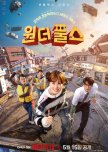
A força da imperfeição: O verdadeiro heroísmo nasce das nossas maiores falhas
Os WONDERfools acerta em cheio ao resgatar a atmosfera nostálgica do final de 1999 para contar uma história de heróis que está longe de seguir a fórmula tradicional de Hollywood. Em vez de salvadores impecáveis e imbatíveis, a série nos apresenta a personagens comuns, cheios de problemas cotidianos e com habilidades sobrenaturais completamente instáveis e defeituosas.O grande mérito da produção é usar a fantasia e o mistério dos desaparecimentos como pano de fundo para discutir algo muito mais profundo: a vulnerabilidade humana. Eun Chae Ni e seus vizinhos mostram que o verdadeiro valor não está em ter um poder perfeito, mas na coragem de agir e proteger a comunidade mesmo quando tudo parece jogar contra. A dinâmica do grupo, que ganha um contraste excelente com a chegada do metódico Lee Un Jeong , traz um equilíbrio perfeito entre o humor leve, a aventura e o drama psicológico criado pelo enigmático Ha Un Do.
A direção de Yoo In Shik consegue equilibrar a tensão do apocalipse iminente da virada do milênio com o calor das relações humanas. É uma obra que diverte e, ao mesmo tempo, deixa a reflexão de que não precisamos ser perfeitos ou extraordinários para fazer a diferença na vida das pessoas ao nosso redor.
Comentários
Uma mistura brilhante de comédia, mistério e nostalgia. O elenco entrega uma química absurda que faz você torcer por aquele grupo de "imperfeitos" desde o primeiro episódio. Uma das grandes surpresas do ano!
¿Te ha parecido útil esta reseña?
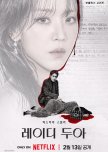
O preço da embalagem: Quando a busca pelo luxo consome a própria identidade
A Arte de Sarah entrega muito mais do que um simples mistério policial de "quem matou?".A produção usa a investigação do detetive Park Mu Gyeong como um fio condutor para desabar um castelo de cartas construído sobre aparências, vaidade e a necessidade desesperada de validação no mercado de luxo.
O que mais brilha na narrativa é a construção psicológica da Sarah Kim. Ela não é apenas uma personagem que mente; ela se torna a própria mentira para sobreviver e dominar um ambiente elitista. Isso nos faz refletir diretamente sobre o mundo atual: até que ponto as pessoas estão dispostas a performar uma vida perfeita, moldando nomes, origens e status, só para serem aceitas?
A série acerta em cheio ao mostrar que a obsessão por marcas e poder pode apagar quem a pessoa realmente é por dentro.
O ritmo do roteiro é ágil e o elenco entrega atuações magnéticas, sustentando o suspense a cada nova camada que o detetive descobre. Se você procura um suspense psicológico que, além de prender a atenção, deixa um questionamento incômodo sobre as máscaras sociais que usamos todos os dias, essa produção é indispensável.
Comentários
Uma excelente escolha da Netflix para debater a superficialidade moderna sob a ótica de um thriller policial impecável. Vale cada minuto pelo choque de realidade que a trama propõe.
¿Te ha parecido útil esta reseña?
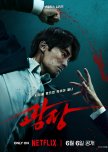
Greedy
The story is about a two big gangs on Korea messing up with a wrong guy. The guy want to take revenge after knowing that his brother died and those two big gangs is the suspect. The problem is that the guy is very strong and everyone know it since 11 years ago... That's where the story become interesting...*Lot of blood, make sure that you're not afraid against blood...
¿Te ha parecido útil esta reseña?
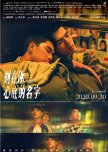
Sometimes the happiest scenes never happen. But we still need to believe they can.
I'm pretty sure this movie was supposed to make me sob my soul out, but that is not what happened. It broke my heart into a million pieces. It emotionally destroyed me. I will be thinking about this movie for a very, very long time. But did I sob? No. I didn't sob because this was like a very slow heart attack. I think that's the best way I can describe it. It was a two-hour movie and throughout the entire movie, it was just a slow and steady sense of dread. Even in the beginning when the scenes were happy and joyful, you could tell that something horrible and sad and heavy was coming up because the environment, the tension was always there. And maybe because I know the history of the movie and I knew what to be prepared for, but overall, the foreboding sense of dread was very, very strong.What really got to me was the last 10 to 15 minutes because after going through a whole, like, two hours of pain and suffering and a little bit of joy, but mainly pain and suffering, we get somewhat of a closure. I personally wouldn't call it a happy ending. It's a very sad ending, to be very fair, but it gives you hope. It's not even a hopeful ending, but it still gives you hope that maybe one day, time fixes everything, that you do get to be happy, that maybe life corrects itself. It is how you interpret it. And those 10 minutes of the two main characters having just such a pure connection, it wasn't a romantic scene, no, but it was two good friends coming together yet again. And that is what broke me. And for the first time, I experienced the situation or scenario of almost sobbing, but not really. Like, I had silent tears pouring out of my eyes because my heart was healing itself in a very, very slow process.
The thing that broke me the most was remembering that this was based on a real life, and this whole story was based on the director's real life. Because I'd known about this movie for a very long time, and I had forgotten this fact. So when I finished the movie and I tried to go and do some, just look at the cast and directors and stuff, I come upon this fact. And this is when I find out for the first time that the last ten minutes of the movie, the one scene in the movie that actually made me, made my emotions cross the line of crying, was a scene that never happened in real life. It's so painful to imagine that all of this is based on a real story, and just the last ten minutes of joy did not even happen because the director never got to meet his buddy ever again. The story ended when they were last together. That's the end. But the director was generous enough to give us somewhat of a happy scene at the end. Just to remind us that yeah, love exists and maybe you can move on and everything heals with time. But in reality, that's not what happened to him. And that was the saddest fact about this whole movie.
There's a lot of wonderful dialogues that are in the movie, but my personal favorite one is "if being queer takes you to hell, then send me there, maybe people there will understand me better". As somebody part of the LGBT community, I constantly make jokes about the fact that I'm going to hell because I'm gay and that's where I'll end up. But I say it both cynically and comedically at the same time, because I do find it funny that people who love so purely can go to hell. I just don't ever understand the concept because love is a very pure thing and at the same time, I do understand how religion plays a role here. I do get it. So this dialogue was like a knife to the heart. It's funny, but at the same time, if I do end up in hell, just because I love somebody of the same gender, it's a relief to think that, yeah, there will be other people who will understand me better, that I won't be alone, even in hell.
I really appreciate the director giving some form of hope at the end. Even though they did not get it in their own life, they choose to give it to other people, and that itself shows you how loved and pure they are, and not a sinner because they're gay. They will go to heaven and so will everyone go loves with a pure heart.
¿Te ha parecido útil esta reseña?
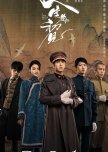
A Love Never Lost: An Underrated Historical Drama.
The story begins right after the Boxer Rebellion and introduces the political landscape of China and the decline of the Qing Dynasty, with a constant sense of dissatisfaction and an impending rebellion. In an effort to modernize, the Qing government sends a group of promising young men to study at a military school in Japan.Among them are the aristocrat Liang Xiang, the revolutionary Yang Kaizhi, and the soldier Li Renjun. During the journey, they meet the revolutionary Wu Tianbai and the merchant's daughter Shuhong. Throughout this period, they build relationships, develop their skills, and prepare themselves without knowing exactly when the revolution will erupt. These five characters ultimately represent different ideas and approaches to saving China.
One of the series' greatest strengths is its ability to subvert expectations. The character who seems destined to become the hero often is not, while seemingly secondary characters grow into much more important roles. The story takes its time, with nothing changing overnight, allowing us to gradually witness the rise of revolutionary sentiment as historical events continuously reshape the characters' lives. Everyone feels genuinely human, with both strengths and flaws. There are no completely right or completely wrong characters.
Another aspect that stands out is the exceptionally high production value. The costumes, sets, and overall atmosphere, especially during the early episodes set in Japan, are beautiful and highly convincing. You can almost feel the texture of the world around the characters, as if you've been transported back to that era.
The series does an excellent job portraying the experience of Chinese students living in Japan and facing discrimination, the gap between China and the foreign powers of the time, and the development of a revolutionary spirit aimed at protecting the country, even if each character pursues that goal in a different way.
Shuhong's life is particularly difficult. Despite being highly capable and charismatic, she finds herself caught between two deeply flawed men. One is a lazy womanizer, while the other initially appears kind but ultimately embodies the elitist mindset that the revolution seeks to dismantle. Through her story, the series effectively highlights the challenges women faced and the limited role society assigned to them, regardless of the political beliefs or ideals men claimed to support.
Around the middle of the series, the students return to China and begin rising through the ranks, gradually becoming key players in the revolutionary movement and/or the new army. The show portrays rampant corruption within both the military and the imperial court, to the point where it has become normalized. This creates significant conflicts, especially for Liang Xiang, who cannot be bribed yet continues to support the existing system. Kaizhi advances through the military thanks to his talent and charisma, but his true role in the revolution remains uncertain for much of the story. Meanwhile, Tianbai begins manufacturing bombs and organizing attacks, greatly increasing the tension. The deaths of Empress Dowager Cixi and the emperor push the country even closer to civil war and bring the main characters toward an inevitable confrontation.
The gradual transformation of the main characters, as well as several supporting characters, is handled with remarkable subtlety and consistency throughout the series. These changes can be seen not only in their personalities and decisions, but also in the way they speak, dress, and even in their physical appearance, including their hairstyles and facial hair.
In the final part of the story, the revolution finally begins. All the bureaucracy, imperial nepotism, and widespread incompetence that the series has been building toward are fully exposed. It is exciting to watch cities fall to the rebels and the empire slowly crumble while every character is forced to choose a side.
Even when events seem to be moving in a positive direction, the series makes it clear that this does not necessarily guarantee a happy ending for everyone.
A Love Never Lost is a powerful historical drama filled with complex characters, political intrigue, and personal conflicts, making it well worth watching.
¿Te ha parecido útil esta reseña?
This review may contain spoilers
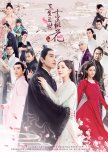
Eternal love é um bom drama, mas eu esperava mais dele .Quando Bai Qian virou mortal eu quase parei de assistir te tanta raiva da protagonista e o Ye Hua foi muito fraco em questão de defender ela. Como o Céu Celestial jogou toda a responsabilidade nela despois que o Ye Huo ter sacrificando o seu espírito pra selar o sino foi muito difícil de aceitar , principalmente tudo que eles fizeram com ela quando era mortal, sem contar que ele era o príncipe herdeiro praticamente deixar o reino em paz era a obrigação dele. Até que o drama é bom apesar de achar que eu o casal principal não tiveram muita química, Também há muita enrolação durante todo o dorama. A história teve 58 episódios e mesmo assim ainda faltou algumas coisas a ser explorada por exemplo eu gostaria de ver a Bai Quian como rainha . Eu não veria de novo e indicaria ele para as pessoas que tem muita paciência até porque eternal love é um clássico e continua sendo um bom drama e vale a pena ser visto pelo menos uma vez na vida. ¿Te ha parecido útil esta reseña?
This review may contain spoilers
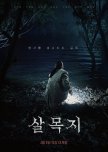
I can make a better horror story around a wet wipe
I've sat through some proper garbage horror, but at least those movies tried to explain where the damn spirits came from. This one just gave a sketchy ah grandma for that.It's like the director looked at the script and said 'backstory? Flashbacks? Plot? Nah, too much work.' Half the movie is just random spooky shit happening with zero explanation and the rest is people dying.
The lead looks terrified of water but there is no explanation whatsoever. None of the characters had any character. From the first scene I knew all of them were dying in the most mid ways possible.
Easily one of the most personality-less horror movies I've ever seen. I have nothing to look forward to, but I really hope they explain stuff in the to be continued part.
¿Te ha parecido útil esta reseña?
This review may contain spoilers
Great Romcom But Disappointing Ending
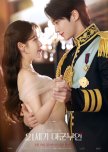
This was a swoon worthy, kicking your feet, hiding your face while peeking through your fingers K-drama with a healthy dose of fun and hilarious moments. For the most part, the story was well written, the characters complex with interesting dynamics in their relationships. The actors did a phenomenal job and the chemistry was off the chain.I have 2 major gripes, however, and could not in good conscience score it a perfect 10.
1. They took us on quite a ride for 11 episodes to attain the Crown, only to abolish it in the final episode. Not only was this rushed, it was not a pleasant surprise to know we were rooting for his success when all he wanted was to end it. It left me feeling unfulfilled because not only was attaining the crown quite simple all along, his reasons for not ascending the throne didn't line up with what he was saying all along. I think the writers missed a huge opportunity to make him a better monarch by allowing him to effect proper change by abolishing outdated rules that caused previous Kings to live unhappy lives.
2. Making Prime Minister Min the villain to the degree they did was horrendous. He almost became unrecognisable. We know unrequited love can drive a man mad but his plan made no sense were it to become successful. All it did was push the woman he loved away from him, cost him a second friendship and a legacy he worked hard to accomplish following in his father's footsteps. He went downhill so hard and so fast that I got whiplash.
¿Te ha parecido útil esta reseña?
Maybe my expectations were too high.
It was a fun watch, but it could have been better. Although it was necessary for the plot, a 6-year-old king wasn’t very relatable for me.At few scenes IU's acting felt like too much, although she is my favourite. And I loved the duo Choi Hyeon and Do Hye Jeong. Allover good for one time watch.
¿Te ha parecido útil esta reseña?
This review may contain spoilers
The story follows Chi Yue (CY), a fierce and talented modern-day martial arts actress whose life is turned upside down when she suddenly transmigrates into a script. She awakens in the body of a young widow in the Li family of ancient Xikong Town. Not only is she now responsible for three stepchildren who fear and resent her because of the previous owner’s cruel behavior, but she is also surrounded by greedy relatives eager to exploit her vulnerable position and seize the family’s remaining assets. With her husband recently dead under suspicious circumstances, CY must quickly adapt to a society that offers little protection to widows, relying on her sharp wit, modern knowledge, and martial arts skills to survive. Rather than surrendering to her circumstances, CY decides to take control of her own destiny. Using her modern knowledge and practical survival skills, she improves the family’s situation by hunting, creating braised dishes from wild game, and brewing wine to sell in town. Using simple but effective business strategies like food tastings and discounts, she slowly builds a successful winery and tavern—a growing source of income and independence.
Just as importantly, she works to rebuild her relationship with her stepchildren. Instead of ruling through fear, she shows patience, care, and genuine affection. She pays attention to each child: teaching the eldest son survival and hunting skills, encouraging the second daughter to study and value education, and gently nurturing the youngest, who gradually becomes attached to her. Slowly, their walls come down, and trust begins to grow.
Meanwhile, Ji Hong (JH) arrives in Xikong to prepare for the imperial examination. As the nephew of the village chief, he plans to stay at his uncle’s home. But Li Cui, CY’s late husband’s sister, mistakes him for a common thug and tries to use him in a scheme against CY. Instead, JH becomes intrigued by CY after witnessing how fearless and unconventional she is compared to other women in the village.
JH & CY soon became friends. Though seen as a studious scholar, JH is actually more passionate about inventions and craftsmanship than passing exams. However, due to family expectations and filial duty, he continues preparing for the imperial examination. CY is one of the first people who truly sees him—not just the role he’s forced to play—and supports his real dreams without judgment.
Over time, JH becomes CY’s closest ally. He helps her investigate the truth behind her husband’s death, supports her business, protects her during dangerous moments, and gradually builds a bond with the children.
But one question remains…. How will CY return to her original world?
That's pretty much the story without giving anymore spoilers.
This is one of the best & complete stories for short drama. Unfortunately for me, this is not really unavailable on YouTube, so I have to search in piracy web…
But if you have limited time to watch, this can be one of the choices for you…
¿Te ha parecido útil esta reseña?
This review may contain spoilers
Un inno all’amore puro e limpido incastonato tra le pieghe della Storia
“Sotto l’albero di Biancospino” - film cinese del 2010 diretto da Zhang Yimou - è un’opera di straordinaria intimità e purezza espressiva, un racconto stilisticamente sobrio e di grande forza comunicativa. La pellicola rinuncia volutamente ad ogni artificio o spettacolarizzazione visiva, scegliendo di affidarsi al potere della sottrazione, del silenzio e di un contesto rurale autentico e toccante. Il risultato è semplicemente disarmante, interamente focalizzato sull'esplorazione del sentimento amoroso nella sua declinazione più limpida, capace di toccare le corde più profonde dello spettatore attraverso la forza dei dettagli e delle emozioni messe a nudo.LA STORIA - Ambientato nella Cina degli anni '70, durante gli ultimi sprazzi della Rivoluzione Culturale, il film segue le vicende della giovane studentessa Jing Qiu, interpretata da una straordinaria Zhou Dong Yu, che di recente ho avuto modo di scoprire e ammirare anche in un’altra pellicola a dir poco sublime (Better days). Inviata in un remoto villaggio di montagna per un programma di rieducazione attraverso il lavoro nei campi, Jing Qiu porta sulle spalle il peso di un'infamia politica: la sua famiglia è rigidamente monitorata e la madre è ridotta a lavori degradanti dopo che il marito è stato imprigionato con l’accusa di essere un capitalista. In questo clima di costante sospetto e oppressione sociale, l'esistenza di Jing Qiu si incrocia con quella di Lao San – interpretato da un Shawn Dou - un giovane speleologo dall'animo nobile, il cui padre occupa una posizione militare di rilievo, ma la cui madre si è tolta la vita dopo essere stata bollata come dissidente. Tra i due nasce un legame clandestino, fatto di fugaci incontri rubati e promesse silenziose. Il fulcro emotivo del film risiede proprio nella rappresentazione dell’amore puro: la relazione tra i due protagonisti si sviluppa in totale controtendenza rispetto ai canoni del melodramma contemporaneo, facendo leva esclusivamente su piccoli gesti quotidiani, sguardi pudici e una cavalleria protettiva d'altri tempi.
Il tragico epilogo, in cui l'ombra della leucemia – probabilmente legata ad un avvelenamento da metalli pesanti - si abbatte implacabile sul destino dei due innamorati, conduce lo spettatore verso una delle conclusioni più strazianti del cinema sentimentale moderno. La drammatica trasformazione di Lao San, che passa dall'essere un giovane vibrante all'ombra sbiadita di se stesso su un letto d'ospedale, è un vero e proprio colpo al cuore. La sequenza finale, con Jing Qiu che invoca disperatamente il suo nome di fronte a quell’unica fotografia di loro due incollata sul soffitto affinché lui possa vederla fino all'ultimo istante, spezza ogni tensione nello spettatore, dando sfogo a un’intensa emozione liberatoria.
RECITAZIONE - Per quanto riguarda il cast, i protagonisti offrono una prova davvero di alto livello: Shawn Dou, con il suo sorriso incredibilmente radioso e gli occhi carichi di una giovinezza pulita, dà vita a un personaggio indimenticabile: un ragazzo che incarna la devozione assoluta, capace di frenare i propri impulsi nel profondo rispetto dei tempi e della vulnerabilità della sua amata. Dall'altra parte, Zhou Dong Yu offre una performance magistrale per sfumature e controllo, restituendo con delicatezza millimetrica il passaggio dall'esitazione timorosa alla determinazione di un sentimento totalizzante. E’ un’attrice di un’espressività straordinaria che – non so come – non avevo ancora avuto modo di conoscere e che davvero mi stupisce sia per talento – tra l’altro ai tempi di questo film era appena diciottenne - sia per i ruoli interpretati: curiosa di scoprire il resto della sua filmografia, al momento per quanto mi riguarda conta due lavori davvero di spessore, ben più impegnativi delle molte commedie intrise di banalità.
ASPETTI TECNICI - Il film si distingue per una messinscena volutamente sommessa. La fotografia di Zhao Xiao Ding abbandona i colori saturi per abbracciare una palette cromatica più spenta, dominata da toni terreni e luci naturali che conferiscono al mondo rurale un aspetto vissuto, autentico e pervaso da una dolce malinconia. Peculiare è l’uso frequente di cartelli testuali inseriti tra le scene per esplicitare i passaggi temporali; una scelta didascalica che dona alla pellicola una cadenza quasi letteraria, come se lo spettatore stesse sfogliando le pagine ingiallite di un vecchio diario privato.
In conclusione, una pellicola sublime che portà in sé un animo poetico calato in un contesto di grande contrasto, il che lo traduce ancor più in un inno a un romanticismo pulito e perduto che dimostra come il vero amore non abbia bisogno di eccessi per risplendere eterno, protetto per sempre sotto i rami di un biancospino. Una visione davvero più che consigliata, per quanto anche dolorosa. Solitamente rifuggo i finali tragici, ma in certe – rare – occasioni lo strappo alla regola diventa qualcosa di doveroso. E questa è una di quelle.
¿Te ha parecido útil esta reseña?
This review may contain spoilers
Heavy but worth it
A splendid watch. This 34 episodic drama really has it all.Starting with the story - time travel plus heavy on politics and power struggles. It begins within the family and grows all the way to national level. Conspiracies, hidden agendas and motives, murders for having your way. The story is well paced for most of the parts, except it does become sort of slow when it's highlighting political aspects and abusive authorities. Overall, I think the story unfolded very beautifully, adding unexpected twists. One can never know who turns good or bad, who is friend or foe. Characters had good developments; their stories having a lot of substance and depth. They all pull you in, whether you hate them or love them. That being said, the negative characters really get on your nerve 😬 I could find myself getting extremely worked up over a few! But I prefer that over feeling disconnected. It showed that I was truly invested in the story. Even if I am not a big fan of these heavy power struggles, it's truly a good story. A scene that really stood out and blew my mind was discovering the letter at the Duke's house. Honestly, it was because of that scene, I realised the letter had so much significance. Because other than that, I'm not sure if that letter moved mountains. It did help, I agree. But that scene? Mind-blowing! The anticipation was well built and you'll find your heart racing! Beautiful!
The cast was definitely a great selection. Meng Ziyi (love her from 'The Untamed!') and Li Yunrui as the main leads make a wonderful onscreen pair, standing out for their portrayal of such strong characters. You would basically become a family member of theirs, hoping just good happens to them. Both actors do an amazing job. Their chemistry was good too. Other than the main leads, I'd say the most iconic of all the cast would be the antagonists. EVERY SINGLE ONE OF THEM! Such talent to get on your nerves 😂 I seriously won't forget Wang Yingxue played by Zhang Meng, Wei Tingzhen played by Bai Qinglin, Song Han played by Yan An, and Su Yan played by Shangqi for a long time. They have pissed me off that much 🙄 Next would be the emperor potrayed by Tan Kai and Jiang Meisun potrayed by Zhang Chenghe. They really stood out and touched my heart. Their brotherhood and the constant clips of their bond in the past, I found myself moved to tears every now and then. The eunuch Wang too, I loved that guy too. Dou Zhao's father was honestly a very fickle person, but you could sympathize with him. It was well potrayed by Ji Chenmu. Really loved the Dou Zhao's grandma; she's a true anchor, a very consistent loving character. I really loved the letter scene. Even if a small role, Zeng Ziye potrayed Qi Xia so well 👍 Finally, Little Song Mo's actor Shi Hengyi was a really good and most importantly an adorable one.
Music wise, I don't think there's too much standing out, but osts and background music were good.
Drawbacks wise, it's maybe the same as the plus points. The heavy political background and constant power dynamics run the story as much as it pulls it down. If you are a fan of these topics, you would love this. Since I can't digest too much of it, it felt just a bit dragged sometimes, especially the scenes of Dou Ming at her in laws. Then I'd say, it's closer to an ick than boring. So many characters were inconsistent, you could never tell who was going to turn bad. And once they do, from then till the leads realise they are negative, uhh! The frustration of their pretence pisses you off. This drama is an emotional rollercoaster! Another thing I'd say, I wanted more fight scenes or martial arts. I felt it lacked that, the adrenaline of blades.
Rewatch wise, I wouldn't rewatch. Not because it's bad. But it's too long and as much as I was involved in the story, I am not attached to any character. I just wanted the dust to settle so I could get out. They deserve happiness and so do I 😂 so I don't want to see them struggle again. Betrayals and injustice were all too heavy on me! But this is what happens with all the heavy stories I feel. The story might be good and you would want to rewatch, but it's all the same torture and pain again. And this drama doesn't have THAT big of an impact on me, enough to push me into going through all of the pain again. But yes! I would surely recommend it for a good, long watch. It's worth watching! Hope you like it as much as I did & maybe even more!
¿Te ha parecido útil esta reseña?
¿Te ha parecido útil esta reseña?
This review may contain spoilers
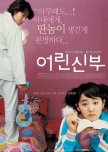
My Little Bride is a film built around a question it never answers.
The premise is simple: a 15-year-old girl is forced to marry an older man because of a promise made by their grandparents years ago.What surprised me is not the age difference itself, but how little the story actually needs it.
If the heroine were a university student, the plot would remain almost unchanged. She could still be in love with the baseball player. He could still have romantic interests of his own. They could still be trapped in a marriage neither of them wants.
The film spends a great deal of time watching them live together, share a house, and navigate married life. Yet it never provides a convincing reason why the heroine specifically has to be a high school student.
The same problem applies to the marriage itself. There is no inheritance, no family business, no meaningful consequence attached to refusing it. The entire plot rests on the stubbornness of a grandfather, which feels surprisingly weak for a story built entirely around that decision.
This is why I found myself questioning the premise more than enjoying the comedy. The film relies heavily on a situation that attracts attention, but never fully justifies it within the narrative.
The strangest thing about My Little Bride is that the more you analyze it, the less you need the bride to be "little."
A very memorable premise supported by a surprisingly fragile foundation.
¿Te ha parecido útil esta reseña?
Becoming a Cooking Soldier Legend
A 5 usuarios les ha parecido útil esta reseña
THAT OG KDRAMA HUMOUR IS BACK!!!!
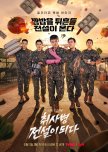
Legend of the Kitchen Soldier is a comedy K-drama that's definitely worth checking out.The premise alone is captivating: a young man enlists in the military only to find himself working in the kitchen. But here's the twist – he starts seeing a game interface that gives him kitchen quests, recipes, and even abilities, turning him into the ultimate kitchen soldier. It's a fun idea, especially if you love game elements.
What really shines through is the food. As a food lover, watching the protagonist create and learn new recipes is a treat. But the real showstopper is the comedy. This show has that perfect sitcom-style humor – silly, genuinely well-written, and often surprising. It's the kind of comedy that makes you laugh out loud and wonder who even came up with it. The entire cast has fantastic comic timing, making every scene a delight.
Beyond the laughs, Legend of the Kitchen Soldier also manages to deliver moments of comfort and emotion, particularly through the male lead, Park Jihoon. His acting is incredible, especially his "eye acting," conveying so much emotion with just a glance. You really root for his character as he navigates loss, supports his family, discovers his passion for cooking, and finds friendship and a sense of belonging. Even the supporting characters are interesting and add to the overall enjoyment of the show. It's a great blend of comedy, heart, amazing acting, and delicious food shots.
¿Te ha parecido útil esta reseña?


