


Miseinen: Mijukuna Oretachi wa Bukiyo ni Shinkochu
A 4 usuarios les ha parecido útil esta reseña
Spell and rainbow
Spell and rainbowI remember that in Journalism Techniques, one of the Journalism subjects, the teacher told us to write imaginary interviews with personalities from the field of science, culture, art, sports, politics... who, due to various circumstances, could not be interviewed, since whether due to death, distance, etc.
I will try to return to my old classes for this subject.
In the Japanese BL series 'Miseinen Mijukuna Oretachi wa Bukiyo ni Shinkochu', Jin has emerged as a memorable leading character admired by the audience. His identity as a model high school student who has the purpose of living life as a spectator, his melancholic and lonely character, his desire to break molds and get ahead on a journey of self-discovery and acceptance, have captured the attention of viewers, who value their authenticity, talent and bravery.
Motojima Junsei, the actor who plays Minase Jin, has demonstrated a remarkable ability to portray this complex character. At only 19 years old, he has forged a solid career in the television and film fields.
In film he has stood out for playing Ichinose Hotaro / Kamen Rider Gotchard in the 'Kamen Rider Gotchard' universe, while on television he appeared in productions such as 'Hayabusa Shobodan', 'Kamen Rider Geats' and 'Shigatsu no Tokyo wa...'. In the latter, a 2023 BL series, he played the young Yagami Ryunosuke. The actor confesses that all his works have forged his ability to tackle challenging roles with depth and authenticity.
We talked about Jin and the Japanese BL series with Motojima Junsei in an exclusive interview for CinemaBL.
AA— How would you define Jin?
MJ— Jin is originality, love, honesty, magic, light... As an actor, I consider him to be the most beautiful character I have had to play on television so far. He is a model student. Studious. Work hard. His priority is to have his own house and his own car in the future. He knows that the only way to achieve his dreams is to go to a top university. He is fine with his repetitive daily routine of school and studying. He is an honor student who is indifferent to others, and has been living his school life avoiding any interaction with class troublemakers, especially Hirukawa Haruki. Jin is a fascinating young man who takes the viewer from hatred to love and becomes one of the pillars of the plot. Although he projects an image of absolute control over his life and his environment, he hides deep emotions and vulnerabilities.
AA—And Haruki is…?
MJ—Haruki, a character played with high marks by Kamimura Kenshin, a talented actor with solid experience in film and television, is my companion on a journey in which we will both discover and accept our true identity. Jin has been raised to hate people like Haruki. But Haruki, unintentionally, enters her life, which in a way, is perfect. This is the trigger for the series. One day, while Jin is taking a shortcut through a troubled neighborhood to return home, he sees Haruki, his classmate. Since he is not the type of person Jin would mix with, considering him, due to the upbringing received by his absent mother, the type of individual who grows up to become a criminal, Jin tries to continue on his way, until he discovers that Haruki is receiving a beating from his father.
"Something in Jin tells him that this is not his problem, that he should have nothing to do with Haruki. But at the same time a voice inside him screams that it is inevitable that their paths will cross... I would say that feeling of boredom that Jin has, it is Haruki who needs to get rid of him. Finally, they begin to relate.
AA— Why do you think the public begins to empathize with Haruki and stop seeing him as the villain of the story?
MJ— Haruki's character grows from the connection with Jin. In truth, they both grow as people. Both Haruki and Jin, who has the best values in the series, let go of the anti-values they carry and incorporate new, very positive values. When Haruki is around Jin he becomes a different person. He is talkative, attentive, talks about his taste in movies, shares secrets never revealed to others about what he likes or doesn't like about movies, about his life... Jin's father is a film director. This connects you even more by having another topic of conversation.
"Haruki is always prepared to give Jin his world. He cannot contain what boils in him, what overflows him, but everything will be step by step until he gets rid of the mists of doubt about the unknown, from fear of family, to school, to society in general that tells you that loving a person of the same gender is not correct, it is prohibited, it is illegal. Step by step, it will be like that, until the paths converge. Deep down, they are very similar. After discovering the secret of Haruki, the two quickly become intimate. This relationship, sad but beautiful, is what the series narrates."
AA— What strikes Jin about Haruki?
MJ— His vulnerability, his true “self,” so different from how he had represented it in his head. After witnessing the domestic violence carried out by his father, Jin manages to understand that the bruises on his face are not from the fights that he considered would cause them. As he tries to walk away, from his mind he cannot get the image of the Haruki he saw, so different from the one at school... Haruki is truly, like him, a tender, lonely and lost boy. They both come from different origins. Both had different types of education or upbringing. On the other hand, Haruki suffers from the marginalization to which he is subjected by his fellow students due to his reputation as a violent boy, his attitude of rebellion and disobedience towards teachers...
AA— In your opinion, what is the message that is transmitted to the viewer through this character?
MJ— Before answering that question, let me tell you that the events narrated in the webtoon "Our Youth", by Hi Nun, the original manhwa and which the series adapts for television, take place in South Korea between 2009 and 2014. In 'Miseinen Mijukuna Oretachi wa Bukiyo ni Shinkochu' is set, of course, in Japan and in 2018. Multiple details were changed slightly to match with Japanese reality, but ultimately the series captures the spirit of the original work, which is the romance of two teenagers set in a country where youth is marked by violence and loneliness, while, figuratively speaking, everyone They float in a rough sea where no one expects them to engage with each other.
"Now, my message with Jin is that a better world is possible, where people are respected and each person's sexual preference is not an important factor. Sexual preference is a personal issue that only concerns the person and not He should belittle or devalue anyone, much less humiliate. His sexual identity does not define his personality; what really define Jin is his values and feelings.
"I would like the public to reflect that sexual preference should not be a reason for humiliation, mistreatment or exclusion. People should be valued for their human quality, which is the most important thing. I think these stories should be represented more on television, although it will not be an easy battle, since Japanese youth have lived for decades in a society guided by homophobia, patriarchy and heteronormativity. However, as these stories are incorporated into the media and our culture, the japanese will leave becoming familiar with them, as long as they are given the right treatment. A change is needed because the world needs to be better and people need to love and respect each other.
The series seeks to demonstrate that while some people can overcome their suffering and move forward in life, others allow themselves to be consumed by it."
AA— How much did the character of Haruki contribute to the realization of your role?
MJ— Working with Kenshin was wonderful. He is an actor who offers all his knowledge. He is attentive and takes care of all the details of his performance and that of others. He is very protective of everyone around him. Sharing a scene with him was very comfortable. There were never any problems or disagreements between us.
"Whenever we could contribute something to the characters we did it, we sat down and tried to explain the reasons for Jin's rejection of Haruki when he tried to kiss him, his love for Jin, his father's abuse... which undoubtedly made our performances much more convincing. We did the casting together, but we already knew each other through mutual friends who introduced us at one of their performances with the vocal dance group "One N' Only", to which Kenshin belongs. And then we met in the premiere of the BL series 'Ossan's Love Returns', in January of this year, in which he plays Hao, one of the secondary characters. We have been friends since then, since before filming began. This has also served to enhance the chemistry, the close bond established between the two."
We left the conversation for a few moments. You cannot not answer the incoming call. I turn off my phone, while I hear, nearby, the voice of Motojima Junsei who, from his phone, agrees with a producer to finalize details to star in another BL series.
This is the moment when I let my thoughts escape: Where, if not from love, do those kisses come from that one tries to steal from the other? At what moments do their words and laughter grant us their elf? Where, if not from love, do doubts emerge, the confusion of one feeling rejected, but not despised, by the other? Where, if not from love, is the hurried heartbeat, as if it wanted to escape from the chest of the one who rejected the kisses? Where do they come from, if not from love, those ideas that vividly express that one cannot live away from the other, no matter how much one tries to keep the walls around him high?
Laughing, he returns to his solid armchair in front of me. We continue:
AA— How has the public reception been? Have you received any feedback that surprised you?
MJ— I remember that, while I was recording the series, I was talking with my friends, and one of them told me: "You know that there will be many people who will love you and many people who will hate you, who will make war on you." I answered yes, that I was prepared for that and that I wanted to play the character. I was aware that this could happen.
"Really, the response from the public has been, for me, surprising, with a capital letter. I never imagined that Jin would receive so many acceptances, and I am very happy about it. The message I wanted to convey has arrived. People have stopped seeing a boy in love with another boy to begin to see a man with an immense inner world and enviable human qualities. This has surprised me and made me very happy and I hope that, throughout the series, this perception will change keep.
"On the other hand, making harassment visible is important. It is necessary to promote a culture of peaceful coexistence and respect for diversity in all its expressions: sexual identity, origin, skin color, social status, physical and intellectual abilities, ideology... "
AA—In terms of the evolution of the character, what can we expect from Jin in the next episodes?
MJ— As for the next chapters and Jin's evolution, I can't tell you much, because otherwise Shibata Keisuke and Makino Masaru, the directors, will gut me. Ha ha ha. I can tell you about both of them that they fight against harassment and bullying, a complex phenomenon that affects emotional and academic well-being at all levels of education and throughout society. About the character, I can only say that he is not going to disappoint the audience. Jin will remain true to himself. That's all I can say.
AA—Finally, how would you describe the current and future state of Japanese BL series?
MJ— “Boys’ Love” is in good health. The genre has captured the hearts of millions of fans around the world. It quickly jumped from the initial Japanese manga and anime to dozens of annual series and films. Not only in Japan. Other Asian countries, such as Thailand, China, Taiwan, Vietnam, South Korea, the Philippines, among others, film productions of this content. The proliferation of the genre has given rise to a rich and diverse range of productions that celebrate love. It is a phenomenon that combines romance, drama and culture in a unique and charming way.
"But what is fundamental is their cultural and social impact. BL series not only offer entertainment; they also play a crucial role in the visibility and acceptance of LGBT+ relationships in Japan and throughout Asia. By portraying stories of love and struggle that resonate with For many people, these series foster greater understanding and empathy towards sexual and gender diversity. In addition, BL has created a global community of fans who manage to connect and share their love for these stories, breaking cultural and geographical barriers.
"Or at least that's how I understand it. One more step towards diversity and hopefully, these stories will be standardized in the rest of the markets."
While, already at home, days later, I watch the next episode of the series, I think about the last words of Motojima Junsei: "BL series provoke a kind of enchantment in millions of human beings in the world. It is as if the director, screenwriters, actors and others involved, like magicians, will pronounce a magical spell that encourages the majority to entertain, to fight for the rights of LGBT+ people.
¿Te ha parecido útil esta reseña?

Ella de Día, Otra de Noche
A 0 usuarios les ha parecido útil esta reseña
Tenia años sin reírme tanto con un drama....
Tenia años sin reírme tanto... y sin llorar con un drama. Al principio no estaba muy convencida, los actores no me parecían muy atractivos y hay que admitirlo, muchas veces es la principal razón por la cual vemos un drama, por que la protagonista es super linda o el protagonista es de en sueño. PERO debo confesar que soy fan de este tipo de temática: cambio de cuerpo, cambio de tiempo-espacio o viajes en el tiempo, algo que sea fuera de lo normal y que se preste para situaciones de comedia.El drama me atrapo, termine amando a la protagonista, y aunque definitivamente se pudo aprovechar mucho mejor y hubo momentos en que no tenia mucho sentido el plot, hay que pensar que... ESTAN CAMBIANDO DE CUERPO!!! ¿Por que lo demás tendría sentido?
El plot twist del villano me sorprendió, no lo venia venir, la temática de los crímenes mantiene el drama interesante, y el desarrollo de la protagonista es bueno, me pareció un personaje muy maduro y directo el cual disfrute mucho de acompañar durante el desarrollo de la historia.
¿Se los recomiendo? SI, es diferente, es divertido, ¡¡Y AME LA CANCION DEL OPENING!! Que también fue utilizada en situaciones chistosas, cada que empezaba me hacia reír.
¿Te ha parecido útil esta reseña?
Weak conflict that does not serve as a solid argument for a story of false courtship
'Single All the Way' (2021) is an American film directed by Michael Mayer and starring a couple of two gay boys – Peter (Michael Urie) and Nick (Philemon Chambers). Peter, desperately seeking to avoid his family's judgment given his eternally single status, convinces his best friend Nick to pretend that they are in a relationship and accompany him during the Christmas festivities.For its part, 'The Proposal' (2009), an American film directed by Anne Fletcher and scripted by Peter Chiarelli, tells the story of Margaret Tate (Sandra Bullock), a Canadian editor-in-chief of a large publishing house in New York, who that no one at work can stand her. A problem that grows because you need to have a VISA to remain in the United States. For this reason, she decides to ask her assistant Andrew Paxton (Ryan Reynolds) to marry her to achieve this (manipulating him with the idea that she will publish the book he wants).
In the South Korean BL series 'Nobleman Ryu's Wedding' there is not a courtship, but a fake marriage. In place of the beautiful bride, who disappeared the day before the wedding due to her hatred for political marriages, Ryu Ho Seon marries Choi Hwa Jin, her brother. The deceived nobleman tries to reverse the marriage, but ends up accepting his "wife's" proposal to wait a few days until the lost young woman reappears and she takes her place without anyone suspecting, thereby avoiding a scandal that could be the ruin of the two families.
Of course, in these two films and the series, farce will give way to true love.
These are solid arguments why these people have to, at their convenience, fake a fake romance. These are three of the many examples of stories that share this premise. They are valid to present my points of view that I will explain later.
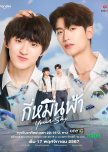
After directing 'Battle of the Writers', 'To Be Continued', 'Naughty Babe' and 'Friend Forever', Klaryder Nathawat Piyanonpong, a Thai director with more mistakes than successes in his work, returns to the screens with the series 'Your Sky', the adaptation of a romantic comedy of the same name that, with a script by Wannapa Lertkultanon ('Bed Friend'), and Jungjing Wanna Kortunyavat ('I Feel You Linger in the Air'), tells us a story of false courtship.
The premise of 'Your Sky' isn't really original. Teerak Rak Niran, played by Kong Kongpob Jirojmontri, in his first leading role, and known for appearing in a supporting role in 'Naughty Babe', is a naive first-year university student. Oh (Mike Chinnarat Siriphongchawalit) pursues Teerak with the hope that he will agree to be her boyfriend and will not hesitate to use even deception to achieve it.
To prevent this from happening, Teerak relies on his inseparable friends Type (Patji Jirachart Buspavanich), PunLee (By Suppakarn Jirachotikul) and Joy (In Inthira Sae-sieo).
But through a ruse, Oh manages to deceive Teerak and two of his loyal followers. Then, to the viewer's delight, fate intervenes, and Muenfah, a character played by Thomas Teetut Chungmanirat, comes into action, also in his first leading role after playing secondary characters in several BL, such as 'Bed Friend' and 'The Middleman's Love'. The actor plays PunLee's older brother and a popular senior on campus.
The two young people will make the decision to pretend to be a couple to stop Oh's machinations. Teerak and Muenfah will live a story about a fake love that could lead to something real and genuine between two opposites who, although they don't want it, attract each other. Does it sound familiar to you?
What begins as a fake love could become a great couple when they have to pretend in front of family, friends and, above all, Oh, until they realize that they have more in common than they thought, as reflected in the synopsis.
Time together will make them see that, although it may not seem like it, they are made for each other.
I must confess that, while I did not advance more than 10 minutes into the first episode of 'Battle of the Writers', 'Naughty Babe' and 'Friend Forever', and 'To Be Continued' was a great disappointment for me as the series avoids addressing the internalized homophobia suffered by one of its protagonists and in this way resorts to an easy way to avoid the problems of self-understanding and self-acceptance of the character's homosexuality, I enjoy 'Your Sky', even being too simple to make a lasting impression.
Now, there are some issues that do not convince me about the premise of the series.
Oh is shown to be a gallant and kind young college student to both Teerak and the rest of the students. Apparently, he enjoys prestige, has the respect and admiration of friends and fellow students. He has public meetings with Teerak and in spaces where only the two of them meet, such as the locker room in the university bathrooms. At no time does he show signs of being possessive, violent, irritable... He smiles friendly while looking into the eyes of his interlocutor. Evidence empathy and kindness. So,
-What reasons do Teerak's sister and friends have for demonizing Oh, declaring him "untrustworthy" and trying to prevent them from even talking to each other in public places?
- Could you foresee that Oh has a hidden agenda to cause harm to Teerak?
-If they have prior knowledge of machinations on Oh's part to deceive Teerak and cause him harm, why have they not reported it to the relevant authorities?
- How can an attentive, gallant young man who gives flowers and chocolates to his lover in a plan of conquest in one scene, in the next scene, be able to use deception to get Teerak and two of his friends drunk to offend him?
- And now, after knowing that Teerak and Muenfah are dating, will Oh deny it and continue her attempts to conquer him?
- On the other hand, everything seems to indicate, from his actions/reactions, that Muenfah is in love. If so, why not confess your feelings? Why use a false courtship to approach him?
- This weak conflict could very well be solved not with a false courtship, but with Teerak telling Oh that he sees him as a friend and not a boyfriend. If, because you are so naive and shy, you don't dare to tell him face to face, you can very well use a text message, smoke signals, and even carrier pigeons. But I suggest you do it like anyone does today: looking him in the eyes and saying it at point-blank range.
True or not, dear reader?
Something just doesn't convince me here. The reason why the two protagonists have to fake a romance is forced. The creators could have been more coherent and designed another scenario and other reasons to justify the procedure.
Although it is full of clichés and does not present great incentives, the first episode showed that the public can expect candid moments from the story of Teerak and Muenfah that manage to bring a knowing smile to the viewer. The series is worth watching if only to see Teerak's silly, naive laugh and the attractive actors who play Muenfah, Real and PunLee.
The forced plot does not take away from the magic of a leading couple, which has good chemistry.
Furthermore, the series tries to provide an easy answer to the most hackneyed question of all time: Can love be born from lies?
In parallel, the series tells the story of a second BL couple, that of Real (Auau Thanaphum Sestasittikul) and Hia (Save Worapong Walor). Both also rock the role of secondary couple. They really catch my attention. Very good chemistry. The dynamic of a boy in love with his best friend and a boy who doesn't know anything is cute. It is a relationship that begins to form and flourish along with the main one. The production company should give the actors the opportunity to be the main couple in another dramatized boys love in the future.
And while the story of Real and Hia the second was developing, a new secondary couple belatedly appears, made up of Punlee and Chlaijai (TeeTee Wanpichit Nimitparkpoon), his college classmate. In fact, everything indicates that this couple was not initially conceived, since this last actor, in his artistic debut, but known as a competitor in the role model contest for young people "To Be Number One Idol 12" does not appear in the credits until the fifth episode, and does not appear on screen until episode 8.
These secondary stories are important: while the main protagonists will be chaotic, carry the weight of the plot and have the maximum focus of the viewer's attention, the secondary ones will give us some calm with their cute and passionate romance.
But I personally think Auau and Save, and Punlee and Chlaijai having less screen time than the main couple benefits the series as a whole more, because they get the most out of their scenes. Especially this last couple for emerging almost at the end of the series. Sometimes showing less will make one pay more attention to the few scenes shown, if they are carefully thought out and executed. Their performances make me love the series in general.
Something that also catches my attention, both in this and other Thai BL series, is that most of the characters are either queer or allies. That in a Thai university, a country that, despite its growing openness towards LGBT+ issues in recent years, continues to deny the right to equal marriage at a time when the series was filmed, and does not yet have a government policy to protect homosexuals, lesbians and other people from said community of harassment and discrimination, and there is not a single harassing student or teacher, nor a single homophobe (who serves as a denunciation of discrimination and homophobia), is something truly suspicious.
Seeing Teerak's father watching a BL series on his mobile phone, even ignoring that his son is a queer young man, inquiring about these types of television products and then rejecting his son's homosexual relationship, is something illusory, beyond a truth: in Thailand, as in any other heteronormative and patriarchal society, there are parents who respect their children's right to love whoever they want.
In this sense, as I enjoyed series like the British 'Heartstopper', based on the four-volume graphic novel by Alice Oseman, for its realism, in which Charlie Spring (Joe Lock) and Nick Nelson (Kit Connor), who have a beautiful and supportive group of queer friends, they fight homophobes daily, even if they are members of their own family. And this is happening in Britain, a country much more open to LGBT+ relationships than Thailand.
Surely some will say that this is a BL and they are not interested in it being realistic or lacking the truth, and its light and sweet tone is enough that if I want to watch dramas I would go somewhere else.
The tone of the story is rounded out by a luxury cast that elevates the dramatic and comic moments of 'Your Sky'.
Duu Sanya Kunakorn ('Good Doctor', 2024) plays Teerak's father, a man who intensely loves his son and his sister, Babe (Morakot Liu). Chumpanee Sopitnapa ('Luead Khon Kon Jang', 2018) is Teerak's mother here, a woman who pampers her youngest son. Tanthasatien Pol ('Lord Lai Mungkorn', 2006), and Koy Narumon Phongsupap ('Only Boo!', 2024), play Muenfah's parents; Phiao Duangjai Hiransri ('#HATETAG', 2021) steps into the shoes of Oh's mother, a manipulative woman who will take advantage of her social position and influence to ally herself with her son and try to take revenge on Muenfah for "having stolen her boyfriend." Oh", and Tonnam Piamchon Damrongsunthornchai ('Make Money', 2020), plays Dom, Babe's loving boyfriend.
All of them, and other talented actors and actresses, seek, together with the protagonists, to develop an imperfect story that continues an important path in favor of representation and diversity.
¿Te ha parecido útil esta reseña?
"The song of the heart" and the fairy tale
Film and television have told stories in which human beings become animals. In 'The Lobster', 2015, a film by Yorgos Lanthimos ('The Favorite', 'Poor Creatures'), one of the most original voices of the new Greek cinema, brings in this work, which sparked great discussion after winning the Jury in Cannes, David, played by a great Colin Farrell, in his mandatory stay in a hotel full of singles where he has to find a partner with whom he shares something in common within 45 days or he will be transformed into an animal by choice, as happened to his brother who was turned into a dog and is now in his care.The script of this film, which provoked very mixed reviews, but whose originality was never discussed, was awarded the ARTE International Award for Best CineMart Project 2013 at the 42nd edition of the Rotterdam International Film Festival. The reader will remember that, set in a dystopian near future, the film tells a love story, where the search for a romantic partner is a matter of life or death.
Asian teledramaturgy is not far behind. In 'A Good Day to Be a Dog', a South Korean fantasy rom-com, actress Park Gyu Young ('Celebrity') plays a woman who is cursed to transform into a dog when she kisses a man. A math teacher will come to his aid, the only person who can undo his curse, but who is afraid of dogs due to a traumatic event that he no longer remembers.
But what if the story were reversed? What if, instead of humans becoming wild creatures, the latter were the ones who would transmute their short, small wings, and their clumsy gait on land and their elegance under water, for two feet, useful upper joints, and the ability to walk upright? If instead of people becoming agile and skilled predators, like most felines, these were the ones who would transform their bodies equipped with powerful claws and teeth into individuals with scant fur and a capacity for inventiveness and intelligence, which distinguishes them from the rest of the higher animals?
But why does it seem like I'm talking about penguins and black panthers?
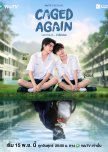
Well, because these animals transform into human beings is Potae Anusara Korsamphan's proposal in 'Caged Again', a romantic and fantastic comedy with an LGBT+ theme with a very original premise and charming character dynamics. Yes, it's true: Disney has previously told us stories about fish and mermaids that become humans, but I'm not aware of any stories about seabirds and big cats transformed into people, much less in non-animated fiction. Although it is also affirmative that we have a giant white teddy bear who, miraculously, turns into a young man.
This absurd comedy, a very stimulating and highly symbolic rarity, follows Junior, a young penguin with the ability to listen to and understand human language, who, transformed into a young boy, flees the zoo in search of achieving his ultimate goal: traveling to the North Pole. However, he will be trapped once again in a mysterious male boarding school. In it, he meets Sun, a quiet and reserved black panther who has also taken human form and after being betrayed by someone he trusted, he no longer seeks to have new friends until he meets Junior. For Sun, the former penguin is the best and only true friend he has ever had in his life. They will both live incredible adventures and maybe…, maybe they will find something more.
In their adventures, Sun and Junior will meet the boyfriends Nat (Arm Sappanyoo Panatkool) and Ton (Apiwat Porsche Apiwatsayree), a couple of BL actors already known to the public for playing Jaonan / "Nan" and Sippakorn in the 2022 drama 'Ai Long Nhai'. Both will welcome the boys under their roof.
Such a plot seems impossible to develop without falling into ridicule, but the debut Thai director shows that, by taking reality to its extremes, as a good comedy does, she manages to illustrate her interest in making her declaration of principles about the possibility that beings Humans and animals can live together in harmony.
As a curiosity, just the day after the premiere of the series, on Saturday, November 16, more than 200 monkeys escaped from a cage at the municipal animal center located in the Thai town of Lop Buri, dozens of kilometers north of Bangkok, to invade the surrounding streets, climb onto the roofs, enter a police station and some homes. The only thing missing, to match this fact with the plot, was that the macaques, before escaping, had had the capacity to transform into humans.
In the main roles of the series that tells an unconventional love story, which mixes elements of magic, fantasy, adventure and teenage romance, are actors Ben Benjamin Greenwell, in his acting debut, as Sun, and Jay Sorathon Chaloemlapsombutis ('I Will Knock You'), like Junior, who manage with their performance to put the audience in intense reflection about freedom, love and the beauty of life. Both actors share a natural and electrifying chemistry that brings a tender and refreshing vibe to the series.
After watching the first five episodes of the 10 that the series has, we can make some preliminary assessments: not only will we find these two animals converted into humans. We will have a monkey transformed into a student named Jodd (Jaonine Jiraphat Sodjam) who will walk not from branch to branch, but from adventure to adventure, helping his friends, especially June, who is being chased by members of an illegal trafficking gang of wildlife, and a learned owl who is very intelligent, but needs to gain discipline, who will also support the rest of his schoolmates and whose name is Jeng (Nokia Chinnawat Phattharathanachot).
Sun and Junior will have an ally in the centuries-old goddess (Panpan Yeeyee) who can only be seen by those who are not human, and who will also enter human bodies to help the animals turned into people.
The fact of not having a high budget is one of the reasons to highlight the music, the beautiful cinematography, the production design and the impressive special effects, which give authenticity to the elements of fantasy and magic.
On the other hand, the costume design and set design allow us to enhance the fascinating world created to put the characters in it.
Cleverly, the series plays with the idea of the predator that is always trying to catch its prey, and a prey that instead of fearing feels safe around the predator. But also with other concepts, such as the panther as a symbol of bravery and the energy of the night, as an allegory of courage, valor and power.
A panther has transformed into a young man. And there we see Sun showing the wild, stealthy and solitary nature of one of these mammals climbed in the trees, from which it also stalks its prey.
The scriptwriters did not miss anything: Thamuya Thasananukulkij, Krongkanok Ruetaimas and Supoj Norrabud always kept in mind the panthers' love of swimming.
We can see that it is a very fierce and aggressive spirit animal towards enemies in its constant confrontation with Nam. It seems that for Sun, the character played by Jeng Chotipat Suthadsanasoung, a young actor whom we have seen in the BL series 'The Trainee ' and 'Fish Upon the Sky', is a spotted hyena with whom he will compete for food, shelter and to protect Junior.
In the same way, as an animal of power we distinguish Sun as a being that helps us not fear the darkness, but rather see it as an ally from whom we can learn great powers and lessons.
Junior's character is just amazing. And the choice of the actor to play him helps greatly in this. Like all penguins, they can swim at high speeds. Friendly, faithful and inclusive, Junior accepts the friendship of those who approach him.
Intelligent, with excellent orientation skills, he can join any academic club he puts his mind to.
In my opinion, the creators chose the penguin and the panther out of all the animals to make them the protagonist of a BL because this feline, as an animal totem, is a symbol of protection and power; for being respected as true martial artists of the animal world.
The panther is synonymous with superhuman strength, speed, reflexes, agility, endurance, durability, healing and senses. There is a belief that whoever has the panther as their totem will have the blessing of a fierce and aggressive totem. Likewise, because it is associated with the sun, and solar vitality in some cultures; for its ability to stealthily follow its prey for hours until the perfect moment to strike; for its ability to guide people through challenges and provide strength in difficult times. The stealthy and solitary nature of the black panther is considered a representation of inner strength and the ability to navigate life's obstacles with grace and resilience.
And these qualities will have to be demonstrated by Sun around Junior throughout the series.
While the penguin is the favorite because these seabirds have a love story that has made everyone who knows them fall in love, never better said. The way he courts the penguin and the commitment he shows has made him a symbol of fidelity and love in nature.
'Caged Again' shows that when it comes to love, communication and fidelity, penguins are excellent teachers, and can teach human beings how to live as a couple. They are a symbol of deep love and loyalty. They signify a lasting commitment and a lasting union between two people. They have only one partner for life, so they are known for their loyalty and fidelity in love.
Penguins can communicate and express love through their unique and distinctive vocalizations. These vocalizations are so special that they are often called "the song of the heart" as they represent the love and togetherness of these couples.
It may be very strange for some people, especially because of its very concept, but if you can get past that there is a series with very interesting humor and romance, and a story that will provoke mixed thoughts in the public.
¿Te ha parecido útil esta reseña?

Adorable... mas no la mas memorable...
Esta es la historia de dos mejores amigos de la infancia, uno que se fue a vivir a Francia y el otro quedo en Tailandia y su reencuentro. La historia gira en el regreso de a Tailandia de Theo y de encontrar un "admirador" secreto con el que esta compartiendo mensajes mediante un libro, y deberá averiguar quien es el verdadero entre 4 chicos que dicen ser Enchante. Junto a su amigo Akk, buscara quien es realmente el verdadero entre ellos.Me acabo de ver esta serie, en su momento cuando se estaba emitiendo no la vi, pero en estos días me dio ganas de verla.
La verdad es que la historia es simple, pero adorable, fue el primer trabajo de Fort y Book como ship, y yo que conozco su trabajo actual, debo decir que han mejorado muchísimo su actuación en los últimos años, ojo, no quiere decir que actuaron mal aquí, pero si se compara con otros trabajos de ellos, puedo decir que han mejorado.
La historia en si es simple, y en cierto punto pensé que era total mente predecible, no se si fui la única, que no espero quien era en realidad Enchante que tanto busca, al inicio pensé que sabia quien era, y pues me equivoque . Me reí a momentos y la verdad es una historia tierna que te la puedes tirar en un solo fin de semana (como hice yo) es linda y la musica me encanta, me enamore de este OST desde que lo escuche en el 2022, sin ver la serie, y ahora que la vi, la seguiré amando porque es muy buena.
Es una serie para ver si no quieres grandes dramas y la quieres pasar bien y relajarte un momento, al menos para mi fue adictiva, porque la verdad, me puse a verla un sábado y ya la había terminado el domingo. No creo que sea la serie mas memorable, pero solo el tiempo me dirá, si lo fue o no, ya que las series con las que no conecto se terminan olvidando, asi que solo el tiempo me dirá si fue memorable para mi.
Seguiré ansiando ver mas trabajo de este ship.
¿Te ha parecido útil esta reseña?
Love on the menu or menu without love?
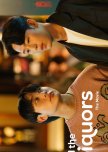
Han Ji Yoo likes to eat and drink. Unlike his friend and roommate Park Ji Ha (Jeong Ho Gyun), Ji Yoo drinks to forget his sorrows. Recently, his boyfriend broke up with him and working on the marketing team of a soju production company, called Pai Syn Tang Liquors, even helps to get free samples of the distilled drink native to Korea and preferred by the youth of that country made at base of rice, potato, wheat, barley, sweet potato or dangmil, among other ingredients.One day, the extroverted young man must fulfill an assignment from his work team to find an up-and-coming chef to partner with to help promote the company.
In this way, Ji Yoo returns to the restaurant owned by the handsome and talented chef Park Ki Hoon and from which he was expelled for asking to be served soju. His mission is to convince him to be the chef of an advertising campaign.
But how do you get a chef who meets the proposed requirements when he hates alcohol and refuses not only to sell alcoholic beverages in his restaurant, but also expels customers who try to smuggle liquor into the restaurant? How could such an introverted person, with stage fright, who refuses to give interviews and does not even have social networks because he does not like dealing with others, appear on television programs and become an idol?
Han Ji Yoo's pleas to Park Ki Hoon to consider the company's proposal will be fruitless, which could even be very useful to promote his own establishment in the face of negative publicity from dissatisfied customers who cannot have drinks in his restaurant.
Han Ji Yoo refuses to take no for an answer, so she takes a part-time job at the restaurant in an attempt to get to know Park Ki Hoon better and find a way to finally get him to agree to work with her agency who runs the risk of being fired if he cannot convince the chef.
As the men begin to get to know each other, they develop feelings for each other. Hence, from the first moments in the relationship of the two protagonists, a powerful question arises: could love be on the menu?
On these budgets is built 'All the Liquors', the South Korean Movie directed by Kim Jin Yeol ('Individual Circumstances'), which fails to satisfy me for, among other reasons, despite showing Ji Yoo as an understanding and willing person to support Ki Hoo in overcoming his anxieties and internal conflicts, his character fails to achieve true character growth.
Likewise, the trauma due to which Ki Hoon rejects the consumption of alcoholic beverages takes too long to be explained, while the story does not fully explore the changes that have occurred in the character to suddenly not only allow the consumption of alcohol in his restaurant, but also to consume it himself.
I don't find it appropriate to start the plot with the breakup of Ji Yoo and her boyfriend. It is a scene that provides no tension or any usefulness to the development of the plot. Apart from being one more reason for the character to need to consume alcoholic beverages, this character never appears again, nor does he have any weight in the story. It only serves so that from the beginning we have the information that Ji Yoo is gay, which is laughable to say the least because as viewers we already know that the intention is to narrate a homosexual romance and that Ji Yoo is one of the members of the leading couple.
But the main problem lies in the fact that the promise of a romance does not burn and the story fails to show the passion between the two boys and reach the climax.
Despite a coherent, easy-to-follow story and cozy love scenes that tantalize the audience, the narrative is slow to develop and loses momentum rather than gaining it. The initial romantic sparks are extinguished in the ending with the waves of the sea where the protagonists go, while we left want to witness an attractive romantic relationship in which deep feelings are expressed and the audience is able to convince themselves that they are seeing two people in love.
The lack of chemistry and convincing romantic development between the protagonists manages to disappoint me.
Both Ji Yoo, played by Kim Joon Hyung, and Ki Hoon, the character assumed by Won Do Hyun, fail to act convincingly in accordance with the feelings and emotions we expect from them. They give us only a very superficial relationship, while the slight potential at the beginning disappears as does the tender love story that tepidly forges.
Like dishes prepared without seasoning, the story lacks flavor and fails to excite the public.
Is the weak romance due to the fact that South Korean idols receive rejection from the homophobic, patriarchal and heteronormative South Korean society and, especially, from their fans if they star in BL dramatized films, as has happened on other occasions?
Won Do Hyun is a debut actor in this role, and after this role he has never officially been in front of the cameras again. For his part, Kim Joon Hyung does have a longer career in the acting scene of the Asian nation, even being the protagonist of the films 'Streamer' (2023) and 'The Education' (2020), and appearing in several series as an actor guest or secondary character after 'All the Liquors'.
But aren't other actors who have convincingly starred in boys' love stories and are produced annually in South Korea at equal risk of being despised by fans? Or do Won Do Hyun and Kim Joon Hyung have no prejudices when playing homosexual characters but they will have qualms about being tender and loving on screen? Will the obstacle to the development of a passionate romance fall on the script by newcomer Kim Hoy Joon?
Or will these mistakes have served Kim Jin Yeol well? It may very well be like that, because in 'Individual Circumstances', a love series between boys released in 2024, the year after 'All the Liquors', its protagonists, Ha Yeon Woo, played by Han Jeong Wan, and Seong Woo Jae, a character who comes to life through actor JunQ, builds an emotional bond with more passion and love and both clearly show that they are in love with each other.
The truth is that the absence of seduction, the lack of romance, which also lacks ardent kisses, passionate glances, sublime gestures, convinces me that both characters are just close friends or were sitting in an intermediate space between close friends and more than friends. The lukewarm connection between the protagonists contributes to the lack of seduction in the romance.
Many find the secondary couple more attractive, composed of Choi Wan (Bae Shi Jun), Ki Hoon's assistant at the restaurant, and Kim Yu A (Han Da Sol), the deputy boss of the company where Ji Yoo works. How to value a BL product when the heterosexual couple has greater potential? Aren't these arguments for the work being condemned to oblivion?
With so many BL content productions, many of them South Korean-made, the technical and artistic teams should have taken their work more seriously to convince the demanding public.
This is not a completely disappointing production. One can still laugh and dream of sitting at Ji Yoo and Ki Hoon's table, tasting delicious dishes and drinking bottle after bottle of soju, but their story, without spirit, fails to move me.
Despite showing handsome actors and actresses, 'All the Liquors' is an artistically weak exponent of BL, whose main success lies in the fact that, luckily, it is only about an hour and a half long.
So now I can answer: love is not on the menu. The menu lacks love.
¿Te ha parecido útil esta reseña?
This review may contain spoilers
Lo bueno si breve...
... ¿dos veces bueno?La historia es corta a más no poder, muy cute y la actuación no está mal. ¿Aportará algo a tu vida? No. ¿Tienen que aportar algo a tu vida los BLs? Ya eso lo valoras tú. A mí me basta que me den ganas de que llegue un día para ver el siguiente episodio.
Qué guapo es Yubin, por favor. Que le den más papeles ya. Pero ya, de ayer.
¿Te ha parecido útil esta reseña?

Un romance dulce y con gran química
Si estás buscando una historia simple pero con personajes entrañables esta es la series que deberías ver.Al principio es la historia típica de de romance de oficina de jefe y empleada, pero a a medida que avanza la historia te va enganchando.
El personaje femenino al principio comete errores como abogada ya que es aprendiz pero luego madura mucho.
Pareja con gran química, y que se apoya mutuamente,
Personajes secundarios muy graciosos.
Un drama para relajarte y y enamorarte de las escenas entre los protagonistas
El novio perfecto(Qian Heng al principio es más serio y pero cuando comienza el romance con la protagonista es lo más dulce del mundo ,su sonrisa me da mil años de vida.
La madre de Qian Heng ,la mejor suegra del mundo ( su personaje es tan gracioso)
¿Te ha parecido útil esta reseña?
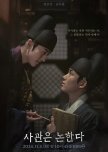
Drama Special Season 15: The Officer Discusses
A 1 usuarios les ha parecido útil esta reseña
Rewrite history and historical truth
The trick of rewriting history and leaving what is not appropriate in the landfill is old: the United States lost the war in Vietnam, but years later it had its 'Rambo', capable of single-handedly winning another vengeful invasion and thus giving comfort to the nostalgic.Another example of rewriting history was pouring rivers of ink in the American newspapers of the time to blame Cuba and Spain for the blowing up of the North American battleship Maine, on February 15, 1898, with the aim of suing and pressuring the North American government to that he decided to intervene militarily in Cuba and rob the Cubans of their independence and sovereignty.
In fact, the Maine had arrived at the Havana port on January 25 of that year, with the excuse of making a "friendly visit", although, given the tension that existed between the United States and Spain, it was evident that the presence of the ship It was nothing more than one more in the chain of pressures that the North American government had been exerting on the Spanish government in what clearly constituted preparation for intervention, with annexationist and expansionist objectives, in the war that the Cubans were waging against the regime Hispanic colonial.
Let us also not forget how Western historians, especially German, British and American, began to rewrite history to detract from the Red Army and the Soviet Union in the defeat of fascism, and overvalue the intervention of the Western allies, which, although important, was not transcendental for the final victory against Hitler's Germany.
In truth, this war was won from fascism thanks, mostly, to the military and human effort of the U.S.S.R. and its people, who put twenty-eight million victims in the balance of death. However, this objective data is based, among many other reasons, on the fact that more than 70% of Nazi losses occurred on the Eastern Front and that it was the Soviet army that brought the German machine to its knees.
When the Allies landed in Normandy, back in June 1944, the Soviets were already advancing unstoppably towards the heart of the German Reich after defeating the Germans in the Battles of Moscow, Stalingrad and the Kursk Arch, decisive in ensuring a radical turn in the evolution of World War II. Even without Western intervention, Berlin would have fallen anyway and the Soviets would have even liberated Paris or Rome.
In the effort to manipulate history, Western historians forget that Winston Churchill himself, who at that time was the Prime Minister of Great Britain, wrote that "it was precisely the Russian Red Army that took the guts out of the war machine." Hitlerian", or the statement of Dwight Eisenhower, Commander in Chief of North American troops in Europe and future President of the United States, who was forced to publicly declare that "the great deeds of the Soviet Army during the war against Germany They aroused the admiration of the whole world.
I think about the above while watching 'Special: Drama Special Season 15: The Officer Discusses', written by Sudocrean Im Eui Jung ('Love According to Law', 2022).
Based on real events, this excellent work of the historical, dramatic and family genre, tells us, in terms of a relationship of friendship, murders and palace intrigues, how the Crown Prince Yi San (Nam Da Reum), summons the historians of Joseon to eliminate from the annals collected in the "Diary of the Royal Secretariat" the events related to the death of his father, Crown Prince Sado, who was murdered by his own father, King Yeongjo (played by actor Jo Han Chul), who was the twenty-first king of the Korean Joseon Dynasty (reigned October 16, 1724 – April 22, 1776), and by Lady Hyegyeong.
Aware that history can be manipulated if one has the means and capabilities to do so and, above all, if one who writes it in a real and objective manner is silenced, in order to ascend to the throne and consolidate his reign, Yi San, who reigned with the name of Jeongjo of Joseon (October 28, 1752 - August 18, 1800), and was the twenty-second ruler of the Joseon dynasty of Korea (1776-1800), he did not hesitate to assassinate anyone who opposed him in his efforts to try to clear the name of his father, who was considered incapable and weak.
History remembers that on the day Jeongjo finally assumed the throne, after the death of his grandfather, he looked at everyone present in the royal hall and said: "I am the son of the late Crown Prince Sado...". These words were considered a warning to those complicit in his father's death.
During the stage prior to his coronation, characterized by the chaos generated by the murder of his father on the orders of his own grandfather, King Yeongjo, who made the decision influenced by politicians opposed to the crown prince, Yi San demanded that the kingdom's historians Comply with your order.
However, Nam Yeo Gang (Tang Jun Sang), a young historian who in his childhood was sent to the Palace to keep the future king company, and with whom he develops a strong friendship since childhood, refuses to obey him and will seek to prevent the crown prince carry out his unhistorical plans.
When Yi San assures that by eliminating what happened from the annals he intends to refound the nation so that a new State can emerge, the historian Nam responds: "By erasing History, in what way will your Joseon be new?" This is the work of historians: in short, to study, describe, analyze, capture the past in writing, and protect the historical truth.
I would like to finally highlight the performances of the children Lee Chun Moo as Crown Prince Yi San [Young] and Choi Ye Chan as Nam Yeo Gang [Young].
¿Te ha parecido útil esta reseña?

Bokura no Micro na Shuumatsu
A 1 usuarios les ha parecido útil esta reseña
This review may contain spoilers
Una joya escondida
Me encontré con esta serie por casualidad y me ha encantado. Una historia de amor compleja, nos da el marco para instalar el verdadero sentido de esta serie: invitarnos a una reflexión muy profunda sobre el sentido de la vida. "Todos hemos deseado morir en algún momento", es una frase que aparece en la historia y que resuena en el fondo del corazón. Esta serie nos muestra un viaje sobre el encuentro inesperado con el sentido de la existencia, el deseo y la ilusión, en un contexto donde todo aparece irremediablemente perdido. Es una reflexión sobre la decisión de morir, sobre la angustia que nos puede presentar la vida y sobre la sobrevivencia. De verdad, es preciosa. Con actuaciones muy buenas, con un guión potente y una OST muy precisa, ha sido un agrado verla.¿Te ha parecido útil esta reseña?
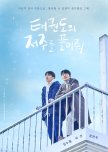
Let Free the Curse of Taekwondo
A 0 usuarios les ha parecido útil esta reseña
This review may contain spoilers
Rompedora
Let Free the Curse of Taekwondo es una de estas series que coge tu corazón y lo destroza en tantos pedacitos que ya no puedes volver a reconstruirlo.Con unos personajes complejos, profundamente humanos, que demuestran cuán fácil todo puede ir por el camino equivocado en la vida y qué consecuencias esto tiene.
Tanto Nurim como Seon son grandes actores y sus personajes son creíbles, incomprensibles a ratos, llenos de aristas y poliédricos.
Juyeong es una green flag, pero tremenda dependencia emocional...
Quiero más, la verdad.
¿Te ha parecido útil esta reseña?
This review may contain spoilers
Exigirle más sería hasta injusto
Las producciones que se saltan el ban chino y consiguen salir publicadas, aunque sea en formatos tan reducidos como esta, se merecen todos mis respetos.Ahora bien, es lo que es. Una producción limitada con un concepto al que ya nos tienen acostumbradas este tipo de formatos.
Saltarse tabúes, replanteárselos...
Un poco más de lo mismo.
¿Te ha parecido útil esta reseña?

Un gran personaje secundario, a quién le permitieron brillar.
Dong Jae, lo amé desde que lo vi en Stranger, es un personaje que interpreta la condición humana muy bien, quizas no es el mejor show del mundo, pero si se merece su 9/10, se desallora en el mismo mundo de Stranger y nuestro protagonista sabe lucirla de forma increible, si de verdad de gusto su persona en las 2 temporadas anteriores, te RECOMIENDO al MIL que lo veas, es una gran historia, entrenida y bien escrita y actuada.¿Te ha parecido útil esta reseña?
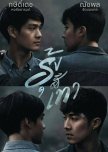
"Death" as a synonym for misfortune for LGBT+ people in a society without laws to protect them?
He's not part of the vanguard of Thai BL drama writers and directors, but Boonyawat Thongtong knows how to film and how to tell. He was able to demonstrate it in the specials 'Views of Love: Love from the Sea Level', 'Views of Love: Heart Land' and 'Auto-Focused Love', all from 2016.That's why some mistakes, terrible, bitter, hurt in the framework of the script, the way the story is woven together and in tying up its loose ends, as well as the staging of 'Grey Raibow', a BL drama filmed that same year, about all when he seemed to have conquered the task, which would reach, no doubt, quotas of excellence. In fact, he has not been behind the cameras since then.
Despite the performances, the work in the editing room and the photographic work, already in the final stages, a series that from the first scene runs like honey on a flake, powerfully drawing the attention of the viewer who screams euphorically with passion and delight, The script throws into the ring some ideas that do not have a development and justification, which I will comment on later.
'Grey Rainbow' tell us a classic love romance between two boys, best friends. However, what sets it apart is the fact that it explores themes that other Thai BL dramas ignore or do not address in such depth, such as the process of self-discovery, coming out, the problems faced by the LGBT community in that country due to not having laws that protect them, homophobia, family dynamics and parents' acceptance of their children's sexual orientation, especially if we take into account that it was released in 2016 when these issues were considered much more taboo than they still are today.
The series introduces us to Nuea (Rattanamongkol Nutchapon), an energetic and outgoing university student, and Porsche (Hongladaromp Kasidej), a sensitive and introverted young man, who for two years has secretly developed feelings for his dorm and study partner.
After the first two episodes we have a well-established couple in love. Nuea has also discovered his sexuality after being exposed to Jane, his girlfriend, who has been suspecting for some time that Nuea's feelings for his friend are more than those of a simple friend, and after leaving the period that he himself calls of "confusion", in a beautiful, tender and moving scene of a Thai boxing match, in a ring, culminates with a kiss and Nuea's confession of love to Porsche. By then, the sexual tension between the two had already reached unimaginable levels.
From the third episode onwards, the series gains in nuances: here we see Nuea living and working in the family resort, in the mountains of Chiang Mai, in a picturesque and paradisiacal setting with an elephant sanctuary as a background. Porsche arrives there after leaving his home in Bangkok after arguing with his father about his desire not to practice law.
The elephant sanctuary is the perfect place for Nuer and Porsche to rekindle their romance after graduating from university. The scene of correspondence between the two boys is beautiful through small love notes written on a paper plane that, at night, were sent to both sides of a terrace where they both slept to be as close as possible, given the impossibility to occupy the same bedroom so as not to raise suspicions about their secret relationship.
This will also be the moment when Nuea's parents learn about the relationship between the two young people. Once the initial surprise of rejection of their child's sexual orientation has been assimilated, parents show love for their child and accept him as he is, always keeping his happiness and that of the new member of the family as a priority. His emotions seem genuine, realistic.
Now, there are several points that fail to convince me and I would like to present:
1- Jane's arrival at the elephant sanctuary: it is true that her presence seeks to provide drama and tension by putting a new test to the couple who have just begun to even talk about marriage, when same-sex weddings are still illegal in Thailand even today. The important thing is that the objective of its late incorporation is to fulfill one of the struggles of the members of the LGBT+ community and present in the series: the possibility that two people of the same gender can adopt children. Jane dies, and this makes it possible for Nuea and Porsche to adopt their daughter. But how could they legalize adoption? Today she is a girl, but tomorrow, when she grows up and tries to look for a job, or a position at a university, or tries to get a driver's license or a marriage license, how can she proceed if she does not have legal documents to do so?
2- At one point, Nuea asks Jane: "Is the girl yours and...' daughter?". Why are you asking this question? Do you suspect it could be his? Is she trying to determine if it is from Watt, the young man with whom Jane begins an affair after separating from Nuea, or from another man? What good would it do for him to know if Jane had other relationships besides the one she knew with Watt? Do you want to tell us that he had sexual relations with Jane? It may well be: they are both young, they are in a dating relationship, they share many hours a day together, but nothing indicates that their bond includes sex: they live in separate residences, their meetings are in the middle of the university or public spaces... Anyway, the scope and reasons for this question are not understandable.
3- The series touches on another complex and tricky topic: corruption and how rich businessmen violate the laws. In this sense, Sam, a businessman who has a business near the Nuea properties, tries to obstruct a public river for his benefit, which also flows through the properties of Nuea's parents and where the elephants bathe and are exhibited to tourists. And although Porsche, as legal advisor of the hotel complex, directs the steps seeking justice, which leads him to suffer a homophobic attack, there is no conclusive closure on this issue.
4- Interesting to see how Nuea cross-dressers as a woman, to imitate Jane and thus ensure that the girl does not cry in the absence of her mother. Cross-dressing is a topic rarely covered in Thai BL series, and the actor is also convincing when representing this facet of his character.
5- Nuea's refusal to continue her relationship with Porsche to avoid suffering for his mother. Although he seems to soon forget about the issue, Nuea is not consistent with the struggle of the majority of homosexuals when it comes to facing this problem. Days before, he himself was in this dilemma, because initially his parents, when they found out about his sexuality, did not accept it. What would have happened if Porsche told you the same thing?
6- Porsche's father was reluctant to accept his son's homosexuality. It is true, he remained firm and the mother collaborated by telling her husband that if she maintained her position she would stay with Porsche, implying that she was willing to leave the marital home, but soon we see the father accepting his son, without living that arduous and difficult process of acceptance, especially for a homophobic person who hides behind shame in the face of "what will they say." Of course, he will tell Porsche that it is still too early to take Nuea to Bangkok.
7- I would have liked a happy ending, let's say, a happy and timely closing in the moments when the two boys took their wedding photos, recounting emotional moments that reflect the romance of the protagonists. However, the director and screenwriter choose to kill Nuea. If his death is physical, as everything seems to indicate, I would have liked it to have been much more dramatic, moving and profound, and not through a snap of his fingers on Posrche's part, as if he knew in advance that he was going to die, to freeze the image while Nuea collapsed and died in the middle of her wedding; and another snap of the finger to restart filming while family members and those present throw themselves at the young man's lifeless body.
8- But Nuea's death can be symbolic, and in this way it connects with the supreme objective of the series: to denounce the lack of a law that protects Thai LGBT+ people. In this sense, Nuea's death would represent the death of the members of this human group as they do not have real protection against the harassment and discrimination of a heteronormative, patriarchal and homophobic society.
9- I am not fluent in the Thai language, but while the final credits are rolling, a text may mention that Nuea suffers from a health problem, which caused her death; but for the purposes of the script, this element is not taken into account or incorporated. Therefore, the sequence is not dramatically valid. We will always have in contrast to a young man of about 25 years old, healthy, strong, vigorous, who never had a toothache, who meets his death on the happiest day of his life. I would only explain it to myself, with difficulty, if, I repeat, his death were symbolic: "death" as a synonym for misfortune, misfortune, is the end of LGBT+ people as long as they do not find support in society through laws that protect and grant them the same rights as non-LGBT+ people.
Therefore, the main problem with 'Grey Rainbow' is that we never understand Nuea's death. It is not organic how they tell us. This is due, in large part, to the notable deficiencies in the composition at the writing level.
Despite all these mistakes, the series is recommended.
¿Te ha parecido útil esta reseña?
Algo bello sin historia
Lo bueno:En el aspecto visual fue disfrutadle, bello incluso, la secuencia de escenas borrosas con voz en off me agrado.
La música destacó más que los diálogos.
Lo malo:
Llevaba menos de 6 minutos y me había aburrido. Sentí que no tenía historia, solo entendí que se llevaba mal con su padre y le gustaba el espacio.
Con la escasa información que nos dieron, puedo formarme una idea de que tal vez él se sentía encerrado, sofocado por su ambiente y el trabajo de un astronauta en el amplio espacio era un seno para él. Trama que no me parece mala, pero parece inexistente. De hecho, hasta se me hace irrelevante la historia entre los dos protagonistas.
Constitución:
Lo resumo como una secuencia de imágenes, con apariciones de voz en off, una presentación, sin clímax o cierre.
¿Te ha parecido útil esta reseña?


