

This review may contain spoilers
THE ULTIMATE FEELS
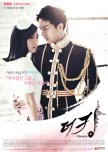
It's been too long that I enjoyed a drama as this much. I feel too much for this. AND I AM WATCHING THIS IN THE YEAR OF 2026, FOURTEEN YEARS AFTER IT HAS AIRED.First of all a FUCKIN BADASS female lead. I really loved how she stayed till the end. She was consistent throughout.(well except the fact that she was a little off written in first some episodes- like how she just trusts Lee Jae Ha very easily and is kinda easily manipulatable for a North Korean SPECIAL FORCE CAPTIAN?). But ma girl came through, even till the last episode where she was ready to shoot him and planning an escape while kidnapped. SHE IS A DIVA AND THATS THE END OF DISCUSSION.PERIOD.
Now, to our king- I mean Yea Comrade Lee, he was very much irritable at first. OMG, I just wished to smash his head onto a wall at times. -ALSO YOU DON'T FUCKIN PLAY WITH ONES EMOTIONS AND FEELING, YOU PRICK. Okay ignoring the initial him, the latter him was chef's kiss. He has an insane character development and I'm here for it. BUT also, he felt off written at times- like he was said to be someone with great IQ and all, but he acted very childish sometimes. I think I kinda expected more from him, but yeahh whatever he was, he was realestic and great.
Talking of the story- I didn't even know a 20 episode drama could end this easily. Personally, this drama did NOT drag at any parts. It was THE perfect pace for me. It wasn't rushed nor was it lagged. The story unfolded in the way I loved. I loved how characters developed over time. And mostly the VILLIAN. First time in history I'm seeing a villain with an actual brain. Also, special mention to his torture methods, because that is as realistic as things can get. What I felt this drama had difference compared to others was in the 19th episode, I mean after catching John Mayar, the story actually continued. My boy, I totally didn't expect it because in dramas usually that would be the last episode and everything is good and happy, bye bye. But here, it showed his influence after he was arrested- because he had the money AND power. He was bailed out- yeahh that is realistic and I loved the drama for it.
Now, moving on to why this wen from 10 to 9.5 -*SPOLIER**SPOLIER* THE DEATH OF CAPTAIN EUN. Yeah, I am soo very disappointed because of his death. I wanted him to be happy. I wanted him to live. He had endured through that much trauma just to die?? No, bro you didn't deserve that death, idc you shoud've been alive and become the princess's bf. That was a shitty AF move and I HATE THAT. Also sometimes someone dying is okay, like the former king and queen who just died.. but the problem was the Eun Shi Gyun dying was totally unnecessary and I stand by it. Yeah, and also because of some inconsistency I felt both for the king's and Hang Ah's character in the beginning, that's the only reason we went down .5 .
And finally just wanted to say this drama for me had the perfect amount of all mixes for me, romance, comedy, politics, king x officer, princess x bodyguard. And, the realism as well - how Asians are treated on a global level, the racial discrimination, the political imbalance, historical differences for ally's of different countries and all also resonated deeply with me. To me, it was written well and with great consideration. But, I am not very literate on history between countries so idk how much of it was actually correct.
Was this review helpful to you?
This review may contain spoilers
A CROWN THAT ALMOST FIT
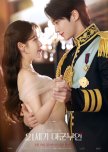
Let me start with the thing this drama absolutely nails: the central romance. Hee-joo and Yi Ahn are genuinely compelling together in a way that is hard to manufacture. Their dynamic works because it is built on two people who understand each other on a specific frequency that nobody else around them does. Yi Ahn spent his entire life being told to make himself smaller. Hee-joo spent her entire life being told she would never be big enough regardless of what she achieved. They recognized that shared wound in each other without either one having to spell it out and that recognition is the engine of everything.What I love most is that the drama does not make her fall for him because he is a prince or because he is beautiful, though he is both. She falls for him because he is the first person who genuinely sees her. Not her money, not her ambition, not her scandal value. Her. And he falls for her because she is the first person who ever told him to stop bending. That is real and it is earned.
The writing for their individual scenes is some of the best romantic drama writing I have seen in a while. When Yi Ahn confesses that the kiss was not a moment of weakness but a deliberate choice because it was her specifically, when he tells her he does not want to trap her in a marriage she did not choose freely, when she shows up to pull him out of a dinner with his awful sister-in-law because she reached her limit watching that woman grind him down, those moments are constructed with real intelligence. They do not talk around each other. They are almost startlingly honest for a drama pairing and that directness makes every loaded scene between them hit harder.
IU is extraordinary in this role. She plays Hee-joo's confidence as armor so precisely that the moments when that armor slips land like a fist to the chest. The scene where Yi Ahn simply asks if she is okay after her confrontation with her father and her face just crumbles, not into tears but into something rawer and more complicated, that is elite acting. She makes you feel every year of Hee-joo's life in one expression. Her comedic timing is also immaculate. She is genuinely funny in a way that never undermines the emotional weight of the character.
Byun Woo-seok is doing something quieter and harder than it looks. Playing a man who has been conditioned from childhood to suppress every reaction means the performance lives in the margins. The micro-expressions, the barely concealed smiles, the way his whole posture changes when Hee-joo is near versus when he is performing his regent duties. When he finally gets to let Yi Ahn fall apart, like the hospital scene where he runs to her room and clings to her in tears, the payoff is enormous precisely because of how carefully he built the restraint that preceded it.
Gong Seung-yeon as Yi-rang is one of the most compelling things in this drama. She is required to carry a villainous arc with genuine psychological complexity and she does it with extraordinary control. Every scene where she is plotting is fascinating. Every scene where her son or Yi Ahn gets through to her humanity is devastating. Her final turn toward accountability, kneeling before Yi Ahn and handing over evidence against her own father, is earned in a way that makes you feel the full weight of everything she sacrificed and destroyed to get to this point.
Noh Sang-hyun as Jung-woo is doing the most interesting work in the show in the second half, even though the writing does not always serve him. He plays the deterioration of a man who spent fifteen years believing he was principled while actually just being passive, and the moment those two things stop being compatible for him is genuinely chilling to watch. The final confrontation between him and Yi Ahn in the room after his exposure is one of the best scenes in the drama. Just two people who genuinely cared about each other, now irreparably broken, with nothing left between them but the truth.
The premise of a fictional constitutional monarchy with lingering Joseon era class structures is imaginative and visually beautiful. Watching palace rituals and court hierarchies collide with social media coverage, product placements, baseball games, and contract marriages creates a specific comedic texture that the drama leans into well. The mixing of traditional hanbok silhouettes with modern suiting, the royal archery tournament as a school exhibition, the hopae used to summon help during a palace interrogation, it all works aesthetically and tonally for the kind of drama this wants to be.
Where it falters is in the follow through. The drama establishes a world with enormous potential for social commentary, the absurdity of class systems persisting into the 21st century, what it costs real people to maintain ceremonial prestige, the specific ways aristocratic thinking warps human relationships, and then mostly uses it as backdrop rather than subject. The conversations that should happen about why this system exists and who it actually benefits keep getting interrupted by the next kidnapping attempt or palace fire. And by the time Yi Ahn actually abolishes the monarchy at the end, the groundwork for why the people would vote for that had not been laid carefully enough to make it land with the weight it deserved.
This is a drama that works better when you stop expecting it to be a genuine political critique and accept it as a fairytale romance that happens to wear alternate history clothing. The moment you make that adjustment, the remaining flaws become much more manageable.
________________
The central OTP is genuinely one of my favorite drama pairings in recent memory. Their chemistry is electric but it is also built on something substantial. Watching them figure out each other in real time, the way she learns that underneath his rigidity is a man who was just never allowed to be anything else, the way he learns that underneath her aggression is a girl who was never given a reason to be anything else, is the best thing this drama does.
The archery callback that runs throughout the entire series is some of the best visual storytelling in the drama. Their first meeting on the range at night, his deliberate loss at the exhibition to spare his father's ego but at the cost of hers, her finally understanding years later why he did it and what it meant, his proposal using the dried flower from that original match. Every time archery surfaces it adds another layer. That is craft.
The side couple of Hyeon and Hye-jung is genuinely delightful. Hyeon is adorkably smitten in a way that is sweet rather than cloying and Hye-jung's gradual noticing of him is handled with just enough restraint to feel real. Their bus stop scene in the final stretch is one of the most purely enjoyable moments in the last run of episodes. They deserved every second of their happy ending.
The costumes deserve their own paragraph. Yi Ahn's suits with their traditional construction details and closure elements are some of the most thoughtfully designed garments I have seen in a contemporary drama. They communicate everything about who he is without a word of dialogue. A man caught between two worlds, formal but not rigid, traditional but not retrograde, always slightly set apart from everyone around him. The attention given to his wardrobe is obvious and appreciated.
The OST is strong throughout. The use of different ballads to track each man's feelings for Hee-joo is a genuinely clever structural choice and the songs themselves are consistently beautiful. WOODZ's Everglow for Jung-woo's unrequited longing, the unnamed ballad linked to Yi Ahn's quiet devotion, and the Sam Kim track on the yacht that finally starts to close the gap between them emotionally. The music does real storytelling work in this drama.
Tae-joo and Da-young were a surprise. I expected them to be the standard obstacle sibling pairing and instead they became one of the most genuinely funny and unexpectedly warm elements of the whole show. Tae-joo stepping up for Hee-joo at the press conference, Da-young encouraging him to be even more aggressive about it, both of them playing cupid for the OTP with varying degrees of self-interested motives. Their evolution from antagonists to something approaching family is one of the cleaner arcs in the drama.
________________
Yi-rang is simultaneously one of the most fascinating and most frustrating aspects of this drama. Gong Seung-yeon plays her with such specificity and depth that I kept wanting the writing to give her more, and it kept pulling back just as things got interesting. Her backstory of being married to a man who never wanted the throne and consequently never wanted her, of building a life around an institution that depended on her sacrificing any personal happiness, is genuinely tragic. The revelation that she had feelings for Yi Ahn before her arranged marriage to his brother adds a layer of devastating irony to everything she has done since.
But the drama also makes her commit actual murder in the first half and then essentially lets her off with a redemption arc in the second, which requires some agility on the viewer's part to accept. I can accept it because Gong Seung-yeon earns it through sheer force of performance. Her son confronting her with what he overheard the night his father died is the most affecting scene in the entire drama and watching her finally choose Yi Yoon over her father's ambitions lands because the actress has been building to that choice for twelve episodes. But the writing gets her there unevenly.
The monarchy abolition ending is conceptually right but executionally rushed. If the drama had spent more time earlier establishing what the monarchy actually meant to ordinary people in this world, the vote to dissolve it would have felt like a genuine culmination. Instead it arrives quickly, passes easily, and we cut to a time jump before the consequences have been meaningfully explored. What happened to all the people whose livelihoods depended on the Crown? What does the former grand prince actually do now with his life beyond attempting to cook? The epilogue is warm and lovely but it is answering questions about our leads at the expense of questions about their world.
Hee-joo and her father never fully resolved for me despite the drama's attempts. Jo Seung-yeon's natural warmth as an actor keeps bleeding into a role that the writing insists is still deeply ambivalent and the result is a character whose trajectory I cannot quite believe. Did he always love her quietly from a distance and just express it terribly? Or is his late protectiveness genuinely calculating? The drama wants both readings to be true simultaneously and does not quite have the space to earn that complexity. The slow thaw at the end is the right call but I needed more of their early history to feel it properly.
________________
Jung-woo's villain turn is the single biggest structural problem in this drama and I need to say that directly. Not because the choice is impossible to believe in a character sense but because of the proportion of the final stretch that gets consumed by it. By turning him into an active antagonist aligned with Sung-won and attempting to lure Yi Ahn to his death, the drama suddenly has to dedicate enormous amounts of screentime to building him as a credible threat and resolving that threat. Time that should have gone to literally anything else.
He had fifteen years. Fifteen years to say something, do something, be something to Hee-joo beyond a patient and supportive orbit. His prolonged inaction is the primary source of his own unhappiness and the drama knows this and articulates it clearly. But that understanding does not justify the leap to attempted murder. It also does not justify how quickly it all unravels. For a man established as one of the shrewdest political operators in the country, being caught on a recording admitting everything because Yi-rang held one conversation with him is an embarrassingly dumb ending for a character who deserved something more complicated.
What the drama really needed was for Sung-won to remain the sole antagonist in the final act and for Jung-woo to struggle privately with his feelings while still choosing Yi Ahn and Hee-joo because that is who he fundamentally is. A Jung-woo who aches and still does the right thing would have been devastating and beautiful. The one we got is just tragic in the wrong direction.
The palace fire count in this drama needs to be discussed seriously. Three fires in three years in a palace that apparently stores its fire suppression equipment as decorative bowls of water. The national cultural heritage landmark burns repeatedly and the response is people running with buckets. By the third fire the audience has lost the ability to treat it as dramatic because the drama itself has refused to treat the previous two as anything worth following up on. This is a writing problem dressed up as an aesthetic choice.
Hee-joo's mother is introduced as a plot hole and exits as a plot hole. She abandoned her daughter at her father's doorstep when Hee-joo was ten and is never seen or heard from again. Not during Hee-joo's royal wedding. Not during the national controversy surrounding her. Not during the monarchy abolition. A woman who left her child with a man who did not want her just vanished from the narrative entirely and the drama does not even acknowledge the gap.
________________
Perfect Crown is a drama that contains a genuinely great romance inside a show that is not quite great enough to deserve it. The central pairing of Hee-joo and Yi Ahn is the kind of OTP that you keep thinking about after the credits roll because the writers understood why they worked together at the level of psychology and complementary wound, not just surface compatibility. IU and Byun Woo-seok brought real emotional intelligence to characters whose relationship is built on honesty in a genre that usually traffics in misunderstanding. That alone makes this worth watching.
But. The drama also has a premise it never fully committed to exploring, a villain trajectory for its second male lead that derails the final act, multiple murder mysteries it raised and abandoned, and approximately three fires in a palace with no sprinkler system. These are not small things. They are the difference between a drama you remember fondly and a drama you remember as the one that could have been something special.
The ending they chose for Yi Ahn and Hee-joo is right. Not in the throne room wearing crowns, but at a baseball game wearing team jerseys, caught on the kiss cam, completely free. That is the story this was always supposed to be. I just wish the twelve episodes surrounding that ending had been constructed with the same clarity of purpose.
If you are here for the romance, the chemistry, the stunning production design, and two leads with genuine emotional intelligence navigating a fairytale setup, this delivers fully. If you need your political intrigue to resolve cleanly, your mysteries to be solved, and your secondary characters to be used well throughout rather than just periodically, you will leave frustrated.
Was this review helpful to you?
Stupid Prince
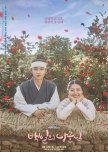
100 Days My Prince was such a charming and emotional drama that balanced romance, comedy, mystery, and political tension beautifully. What made this drama stand out was how naturally it moved between lighthearted moments and heartbreaking emotional scenes without feeling forced.The story of Crown Prince Lee Yul losing his memory and living as an ordinary man was both funny and touching. Watching someone who was once cold, strict, and distant struggle with everyday village life created so many hilarious moments. But beneath the comedy was also a lonely man carrying years of pain, pressure, and emotional scars from palace life.
The relationship between Lee Yul and Hong Shim was one of the strongest parts of the drama. Their chemistry felt natural, warm, and comforting. Hong Shim was not a weak female lead waiting to be rescued. She was intelligent, independent, outspoken, and emotionally strong, which made her relationship with Lee Yul feel balanced. Together, they slowly healed each other without even realizing it.
D.O.’s performance was honestly one of the highlights of the drama. He perfectly balanced the prince’s cold personality with the awkward innocence of someone trying to survive village life without his memories. Nam Ji Hyun also brought warmth and emotion to Hong Shim, making her easy to love and sympathize with.
The drama also handled palace politics surprisingly well. Behind the romance and humor was a darker story about corruption, betrayal, survival, and the burden of power. Several characters carried hidden pain and difficult choices, which gave the story more emotional depth than expected.
Visually, the drama was beautiful. The cinematography, traditional clothing, village scenery, and soundtrack all created a peaceful and emotional atmosphere that fit the story perfectly.
What made 100 Days My Prince memorable was how comforting it felt. Even during sad or tense moments, the drama never lost its warmth and heart. It’s a story about love, identity, healing, and finding happiness in the simplest moments with the people who truly care for you.
By the end, it leaves you smiling, emotional, and missing the characters long after the final episode ends.
Was this review helpful to you?
The stupidest series i have ever watched
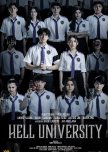
The story feels stupid, the acting is stupid, most of the dialogues are stupid. The characters are somehow dumb. And wtf is even wrong with the female lead. Plus how are they so calm even after experiencing a almost deadly night? The humor they try to put between is also cringe and lame.Wtf am i even watching? The female lead is the dumbest one i must say, she trying to get secret information from other student by yelling in front of bunch of other students. Also it says bloody night or whatever but somehow they are fighting like an 8 year kids. This series is a joke and the fact that it has 18 episode is so freaking stupid.
Who ever produced this must be filthy rich and didnt know where to spend all their money. Its actually cringe and embarassing.
Was this review helpful to you?
This review may contain spoilers
A quiet drama that stayed with me
“We Are All Trying Here” felt comforting in the most natural way possible. At first I kept wondering how they would carry the story till the end because it felt so simple and quiet, and my brain started making theories about the watch and everything. But somehow the drama just pulls you into everyday life naturally.There isn’t even a single kiss scene, yet the love between them overflowed in every interaction. Honestly, some scenes felt more intimate than actual romance dramas.
The chemistry between Koo Kyo-hwan and Go Youn-jung was amazing — silly, constantly yapping boy meets quiet introvert listener girl. Their dynamic felt so human instead of scripted.
What I loved most was the emotional realism. They supported each other exactly when they needed it most. The “cry for help” line still stays with me.
The drama is very calm with minimal fighting. Sometimes you hear only the voices of the characters and soft background sounds, which made everything feel even more real. The OST was used only when necessary and every track felt soothing. The opening song was beautiful too.
“If you want to run away together, I’ll run away with you.
If you want to live in hiding forever, I’ll hide with you.
I like that.”
One scene that will stay in my head forever is when Dong-man hugs Eun-ah while she’s wearing that oversized sweater. Somehow it felt hotter and more intimate than a kiss scene. Another memorable line was Eun-ah asking, “Are we human beings better?” during the early episodes.
This drama won’t be for people looking for constant action or typical rom-com tropes. But if you love slow slice-of-life stories that quietly heal you while breaking your heart a little, this is a hidden gem.
I genuinely don’t understand why it’s sitting around 8.3 ratings because this was easily a 10/10 for me. While everyone was busy watching bigger trending dramas, this one felt underrated and special.”
Was this review helpful to you?
First impression
YouTube link: https://www.youtube.com/playlist?list=PLszepnkojZI76sf0RYGPm5m5JfLRhlpmIEpisode 1:
I'm obsessed. It is so cute, definitely a new comfort series.
Incredible cinematography, great acting.
It's just so good, I can't believe it. I really had no expectations, but oh my god, it is just perfect.
I haven't seen Almond and Progress in action before, but I can say that they are really great together.
I am also insanely excited for KenPaul, they are also super sweet and cute. They really deserve their own series, but that's another separate discussion.
Episode 2:
The main characters' chemistry is something else; I love the innocence of their relationship and love how sweet and naive our main Ko is.
Paul, as always, is a cute little sunshine, his smile melts my heart.
I'm super invested and excited for the future episodes.
Episode 3-5:
Don't have much to say, except for how good everything is. Good acting, beautiful cinematography, great chemistry—everything is just perfect.
Episode 6:
The series continues to be great, I love all of the cute and sweet moments. It is so comforting; I can say with confidence that so far that's a BL series of the year for me, especially when it comes to all of the GMMTV series from this year.
I do have some suspicions about Ko Song's parents. I don't want to accuse them, but from what I've seen so far, I get a feeling that they might be slightly homophobic or at least against Ko Song dating at all, since they are quite strict, especially his father. But of course I can't be too sure right now.
Cannot wait for the future episodes!
Was this review helpful to you?
Good for Short Drama
A Lover in the Mortal World was one of those dramas that slowly pulls you into its world and then refuses to let go. From the beautiful cinematography to the emotional storytelling, the drama balanced romance, war, sacrifice, and loyalty in a way that felt both heartbreaking and meaningful.What I loved most was the relationship between Han Yunling and Xiao Chi. Their love was not childish or rushed. It was built through trust, shared pain, danger, and standing beside each other during chaos and war. Even in their quiet moments, you could feel how deeply connected they were. Their chemistry felt natural and emotional instead of forced.
Han Yunling was such a strong female lead. She was intelligent, calm, compassionate, and carried the heavy burden of restoring her family’s name while hiding her own pain. Xiao Chi, beneath his strength and title as a general, showed loyalty, tenderness, and emotional depth that made his character even more attractive. Together they felt like equals fighting against fate and political schemes.
The drama also did an excellent job showing how power struggles and hidden truths can destroy innocent people. Every victory came with sacrifice, and many scenes carried a feeling of sadness even during happy moments because you knew danger was always waiting around the corner.
Visually, the drama was beautiful. The costumes, battle scenes, lighting, and emotional close-ups made many scenes feel almost poetic. The soundtrack added even more emotion and made several moments unforgettable.
What made this drama stand out was how emotional and human it felt. It wasn’t only about romance — it was about surviving betrayal, protecting the people you love, and trying to hold onto kindness in a cruel world.
By the end, A Lover in the Mortal World left a lingering sadness and warmth at the same time. It’s the kind of drama that makes you miss the characters after it’s over and keeps certain scenes replaying in your mind long afterward.
Was this review helpful to you?
Could be longer.
Firstly, I'm a huge fan of IU and her dramas. As usual, her acting was great and other actors did a phenomenal job too. Music was kinda new and was very nicely placed. The story had alot of potential and it felt like they just cut the script into half lol. there were so many unanswered questions. Most of the scenes were left unattended after the event took place. I think it should be a solid 16 episode kdrama and 12 episodes aren't enough. also, I think the 2nd male lead turning into a villain was very forced.Was this review helpful to you?
Well written Storyline
Watching Scarlet Heart Ryeo was honestly an emotional rollercoaster from beginning to end. What started as a beautiful story filled with humor, friendship, romance, and unforgettable moments slowly turned into one of the saddest and most heartbreaking dramas I’ve ever watched.The drama did an amazing job showing how power, revenge, loyalty, and love can destroy people little by little. Every prince had his own pain and struggles, which made it impossible to truly hate any of them completely. Wang So especially stood out to me. Beneath his cold and feared appearance was someone desperate to be loved and accepted. Watching his relationship with Hae Soo grow felt beautiful, but also tragic because from the beginning it almost felt like fate would never allow them peace.
The acting was incredible, especially during the emotional scenes. You could feel the heartbreak, jealousy, loneliness, and regret through the screen. Lee Joon Gi gave such a powerful performance that many scenes stayed in my mind long after the drama ended. IU also portrayed Hae Soo’s emotional exhaustion and sorrow very well as she became trapped between love, politics, and survival.
What made this drama unforgettable was how realistic the emotions felt. It showed how people can change when consumed by power, fear, or revenge. Characters who once laughed together slowly became enemies, suspicious of one another, and broken by the throne. Some deaths and betrayals were so painful they felt almost impossible to recover from as a viewer.
The ending was devastating and left an emptiness that few dramas manage to create. Even after it ended, I kept thinking about the characters and wishing things could have been different for them. Scarlet Heart Ryeo is not just a romance drama — it is a story about love found too late, people destroyed by fate, and the painful cost of power.
It is truly one of the most emotional and unforgettable Korean dramas ever made.
Was this review helpful to you?
Beautiful Drama!
Awwww beautiful. I like seeing IU in dramas and such a lovely pair with Byeon Woo Seok.IU character was just cute and hilarious and Byeon Woo Seok with scoffs LOL.
I love the comedy elements of this drama, made it more fun to watch.
Oh and the prime minister? I wish they showed more of his ending.
At the end of it, they are both happy and love that for them
Was this review helpful to you?
This review may contain spoilers
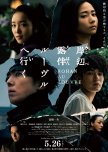
Rohan stuff is always interesting
So Rohan decides to come to France to the Louvre museum because the Japanese needs some excuse to go to Paris because they’re obsessed with French stuff, let’s just be honest. So Rohan has some kind of history with this black painting, and the lady that he knew at his grandmother‘s rental house who has really black hair. In the past, they had a weird exchange where he was trying to draw his manga and ended up drawing this black haired lady, but the lady saw his drawing and stabbed it with a pair of scissors, so that didn’t go very well. Many years later, Rohan, who I imagine was scarred by that experience ends up paying for this black painting that is supposed to be so incredibly black and so-called evil which was referenced by this black haired woman in the past. There are a lot of details that I don’t really understand which have to do with paintings and duplicates and originals and some artists that was smuggling originals behind duplicates and hiding them in some storage underneath the museum. The scene that really came alive was when this black painting was revealed in some storage basement area of the museum. This reveal of the painting that Rohan has been looking for in some form creates a kind of hallucination of people’s past sins and so they start seeing those past sins come alive. But the lesson should only be about remorse so I don’t understand why it needs to be so scary. Then there’s some strange flashback about this black haired lady and the man you married, who happens to be another version of Rohan – it’s like a double act of Takahashi in his half shaven ponytailed glory. So black haired lady gets really sick and somehow stumbles upon this really black tree sap from the sacred tree and starts harvesting it so that her double act Rohan like ponytail husband can paint a better picture than his dad who is supposed to somehow save his wife since she got sick. Well as he starts painting the trees, SAP seems to engulf the entire scene and it’s power. I don’t think the tree itself is evil, but rather it is the use of it and its powers and its sap for human purposes that felt corrupted. So back in the present moment, where everybody is being turned crazy by this black haired painting at the museum, Rohan decides to do a Heaven’s door on himself and write down forget everything which is a great thing for any main character to do in any show. I’m surprised he didn’t forget everything, including how to talk or walk. But somehow everything resolves into a nice little package at the end and everybody goes home happy.Was this review helpful to you?

Kishibe Rohan wa Ugokanai: Mo Hitotsu no Mitsuryo Kaigan
1 people found this review helpful
This review may contain spoilers
… Okaaay?
For some reason they decided to make a separate dedicated episode for a conversation between Rohan’s editor lady and the partner of Chef Tonio while the two are off getting themselves killed hunting down abandoned in some dangerous part of the sea. The two women are happily and quietly chatting over tea while the two men are having a near death experience at the sea lol. The episode is like 11 minutes long, but for some reason they felt the need to make it into a separate episode. Well I still watched because.. Rohan and stuffWas this review helpful to you?
This review may contain spoilers
Fascinating
I really enjoyed this episode. It’s very mysterious and has all this wonderful aesthetic. It’s beautiful to look at and interesting to watch. So this guy Chef Tonio from Italy lands in Japan and mysteriously opens up this one table restaurant with no menu. Rohan and his side kick Izumi (is that her name?) show up and they have an experience of a lifetime. Tonio studies their hands and finds the exact ailments in their body and spirit. Then he prepares just the right dish for each of them. Then they start to experience .. things. Healing things! Izumi’s eyes explode with tears as she drinks the amazingly tasty water- turns out her eyes are healing from the lack of sleep. That scene almost reminded me of Alice in Wonderland where Alice starts crying and flooding the place. Then her old cavity tooth is discarded and a new one grows in in the spot! At first it’s hard to tell if this Chef Tonio guy was an evil mastermind or just an altruistic soul trying to help people. Turns out it’s the latter. But his handsomeness and mannerisms make him seem fishy. I’m surprised Rohan didn’t do a Heaven’s Door on him, but instead joins him in a poaching exercise after Chef talks about how his partner is dying with a grapefruit size turbot in her head and needs the healing powers of the Abalone, in the same way he uses poison from other plants and animals to heal them through his cuisine. Rohan believes in him so they both go for a poaching trip and almost get poached themselves. Why Chef Tonio insists on wearing his ridiculous chef hat while on the poaching mission where they’re supposed to be invisible, is beyond me. But since he’s handsome and his Japanese and acting is decent compared to the other white foreigners in J dramas, I’ll give him a pass. So back to poaching. While they’re both getting devoured and killed by Abalones, Rohan does the most badass Heaven’s Door on an Octopus and tells it to devour the Abalones that are about to kill him and Chef Tonio. So they repay the octopus the favor and use it in their next dish (which happens to have plenty of abalone healing properties after eating so much of it).I found this episode interesting because it’s about food but more specifically, a magical healing power behind food and the love that comes through it all. Bravo!
Was this review helpful to you?
Where Madness Moves Like Poetry
It’s simply a masterpiece. Every actor absolutely delivered their role perfectly — I genuinely couldn’t find a single weak performance in the entire cast. The dialogue writing was beautiful; every conversation felt like poetry in motion, filled with emotion, meaning, and depth.The only reason I’m giving it a 9.5 instead of a perfect 10 is because I wanted a little more from the aftermath and ending. One extra episode to fully breathe in the consequences and emotions would have made it flawless for me. Other than that, it’s truly a 10/10 masterpiece that stays with you long after it ends.
Was this review helpful to you?

This review may contain spoilers
Still interesting
This third season of Thus Spoke Kishibe Rohan is still interesting but less so compared to the previous two seasons.The first episode is about how this shadow self of Rohan has somehow overtaken his life for the past 3 months and has been leading a double life behind his back. Then he finds on of his characters that has four eyeballs instead of three as originally planned. This pisses Rohan off to no end. He tries to find a way to reverse the weird shadow man curse and manages to do so with the help of this shadow mistress lady (played by Furukawa Kotone who is another cast member of Nagi’s Long Vacation and plays a similar mistress role).
The second episode is about this kid, a fan of Rohan’s manga Pink Dark Boywho becomes obsessed with this idea around Rohan’s three eyeball character that now has four eyeballs due to the shadow self and stuff from the previous episode. Well the kid stalks Rohan and keeps challenging him to a game of Rock-Paper-Scissors. He loses the first time but then manages to win a couple of rounds and seems to be leaching onto Rohan’s powers which becomes very annoying. Finally after clawing his way back from this terribly unnecessary game Rohan wins the game and regains his powers. This was the more interesting episode of the two, but I think they are both related in that the same weird spirits from the mountain are messing with Rohan using these characters.
I find it refreshing how this series can handle all this dark, violent, adult material without visually compromising the integrity of the drama- they don’t show unnecessary violence or physical relationships and it somehow works.
Was this review helpful to you?


