

Was this review helpful to you?
This review may contain spoilers
Not Every Ending Needs a Miracle
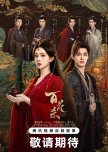
I have to admit, the opening of this drama is, unfortunately, the drama's weakest point. The first 15 minutes felt like the drama was testing my comprehension skills. The abrupt transitions between the female leads were difficult to follow, and the drama did very little to explain what was actually happening. As a viewer, I had to go online just to make sense of it. Was it a soul swap? A doppelgänger? A rebirth revenge story? Time travel? The opening throws several possibilities at you without giving enough context, making it unnecessarily confusing. However, if you're tempted to drop it because of the confusing start, I'd recommend sticking with it. Once the story settles, everything gradually falls into place.At its core, Blossoms of Power is a reverse harem disguised as a palace political drama. Every prince wants Shen Xihe's hand in marriage, not simply because of who she is, but because marrying her means securing the allegiance of the powerful Northwest Army, giving any prince a significant military and political advantage in the race for the throne. Things become complicated as Shen Xihe carries the soul of Gu Qingzhi, the former wife of the Fifth Prince, Chang Qing. Gu Qingzhi came from a once-prominent family that was tragically wiped out because of palace conspiracies.
After Speed and Love, I knew I wanted to see more of He Yu, and thankfully, he didn't disappoint. The Crown Prince is an incredibly layered character who constantly conceals his true intentions behind a calm, fragile exterior. He Yu excels at portraying that contrast, effortlessly shifting between a sickly prince worthy of sympathy and a brilliant strategist capable of outmaneuvering everyone around him. Whenever the situation demands it, he can also become ruthless, calculating, and surprisingly intimidating. His seamless transitions between warmth and ruthlessness make the character all the more compelling. One of the drama's funniest running gags is how the Crown Prince shamelessly weaponizes his illness to get away with almost everything. Watching him conveniently become "too sick" whenever it benefited his plans is both hilarious and oddly brilliant. My favorite part of his character is that despite being capable of outsmarting the entire royal court, the Crown Prince completely loses his composure whenever it comes to Shen Xihe. Behind all that brilliance is a man who's hopelessly, unapologetically whipped. He shamelessly uses every scheme, every excuse, and every opportunity just to get a little closer to her.
The Crown Princess, on the other hand, is the complete opposite. Shen Xihe is naturally reserved, emotionally guarded, and often ruthless when making decisions. Scarred by Gu Qingzhi's tragic past, she doesn't believe in love as much as she believes in security. More than romance, she values someone capable of protecting both her and her family. Because of that, the romance develops at a slow burn. They're at their best when they're plotting together, anticipating each other's moves, and quietly dismantling their enemies' schemes. Watching two equally intelligent people complement one another is incredibly satisfying.
Then there's Xiao Changqing, arguably the most tragic and pitiful second male lead in the drama. His obsession with the lingering shadow of Gu Qingzhi often borders on unsettling, especially in the way he projects those feelings onto Shen Xihe. Yet it's difficult to completely resent him since you could understand that his actions stem from past regret and guilt. His brotherhood with the Ninth Prince, Chang Ying, is another highlight of the drama. Ironically, I found Xiao Changqing's final farewell to Shen Xihe even more heartbreaking than the Crown Prince's death itself.
I have a love-hate relationship with the ending. As unpopular as it may sound, I actually preferred the story to end with the Crown Prince's death. It's incredibly rare to see a drama dedicate four full episodes to the aftermath of a main character's death, and I genuinely appreciated that choice. Those episodes beautifully illustrate just how devoted the Crown Prince was, carefully arranging everything to ensure Shen Xihe would be safe and capable of standing on her own after he was gone. To me, that bittersweet farewell already felt complete.
After all that emotional closure and a peaceful ending, I couldn't understand why the drama chose to add one final twist. Reviving the Crown Prince without explaining how he survived undermined the emotional weight of everything that came before. It felt like the drama didn't trust its own ending. Even more confusing was the sudden reappearance of Yun Hai, the Crown Prince's personal imperial physician, now with gray hair as though decades had passed, despite the story suggesting only about five years had gone by. Personally, I think the drama would have been even stronger had it embraced its bittersweet ending. Episode 36 (as final episode) had already answered the story's biggest questions, from the tragic truth behind the Crown Prince's poisoning to the motives of the villains. His death didn't feel unnecessarily tragic, it felt like life. Not every story needs a happy ending by sparing its hero.
Was this review helpful to you?
Funny, Romantic, and a Surprising First Kiss…
I love love the first episode haha! This is going to be a fun watch for sure!I like the plot, it’s quite unique and honestly I’ve always wanted to watch a cop X cop romance and this one is just that.
If you are down for a light interesting watch, then you better check this out ASAP.
You won’t hate it!
Was this review helpful to you?

Reunion from Hell to Purgatory
The drama does the general setup for a dramatic reunion of adult high school classmates at a restaurant in the countryside. After a dramatic start, the drama struggles to find a consistent tone or character development. The story is so preoccupied with the past, the characters regress with it. The very serious subject matter of death and bullying are dealt with in a somewhat juvenile way. Even the complex emotions surrounding years of built up tension in adults are resolved and addressed in an after school special kind of way. The characters seem to end up in some type of real life purgatory where they basically acknowledge faults from their past but stops short of true atonement.The acting was fine for the script. But the story and direction became a bit erratic and couldn’t settle on a tone. The music was okay. I think it was a glaringly low budget production.
5/10
Was this review helpful to you?
WHITEWASHED, SHALLOW, overly simple, meaningless. Not a kdrama but Kwood. No com. Almost no rom
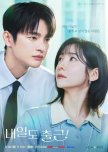
This is such a shallow and bland series. It is not a kdrama, but Kwood. It is labeled as rom com but there is NO com and honestly there is no rom either, except a little bit for second leads. First leads are two very shallow cowards. ML behaves like a robot, and FL behaves like a middle school teenagerThe drama is whitewashed sterile neutral so that it does not piss off any audience and it is easy to understand even for dummies.
In other words, it is completely watered down so that no flavor is left.
Sure, it is "safe" and "politically correct" but it is BLAND BLAND BLAND BORING BORING BORING
There is almost no meaningful deep dialogues that change people and resolve issues and problems. Two unhealed adults are so isolated in their own little world that they seem like they are floating in outer space. The sequence of gray scenes, gray scenery, stationary and unexpressive actors. Very Western, very Hwood, very * S H A L L O W * and thus BORING TO DEATH.
Like we are watching a senior home where people are deaf and demented so they never interact, move, express their feelings, talk to each other. THERE IS ALMOST NO DEEP TALKING WITH EACH OTHER nor deep self reflection.
We never see ML reflecting and changing. We see FL doing stupid things. Neither one communicaates and both keep secrets. .
It is totally lacking the sophistication, depth, humor, satire, jestering, social commentary, community work, self introspection, character growth, deep dialogues, and community growth that is the signature of all real kdramas.
The poker faced , mostly stationary ML and his unwavering dedication to FL is just BORING TO DEATH, and the immature flakey FL is just disgusting sexism - of all things that are characteristic of kdramas, only that one rare fault of kdramas, the sexist portrayal of an immature loser women, was kept.
I switched to watch old kdramas such as It's OK That's Love. Once I finish watching iconic old kdramas I havent seen yet, there might be nothing left to watch.
Was this review helpful to you?
This review may contain spoilers
He disfrutado bastante de este cdrama...
... pero DÓNDE ESTÁ EL FINAL!????La mayoría de historias secundarias quedan cerradas, pero cómo puede ser que la principal se quede así?
Qué pasa con Wufeng? Qué pasa con Yun Weishan?
Exijo una segunda parte.
Was this review helpful to you?
The plot is too simple
The plot is too simple, even there are much to play with when the room is allowed people from different time to communicate. My most favorite movie with similar plot it Blumhouse's Don't Let Go (2019). That story is just a movie, very short actually. The format of Love in Time is serial, not episodic series. By the length, they are allowed make this show more complex and more interesting. They did not make it. I do not know if the plot was from some novel or re-make of some old show, and I just try to guess that the pre- and production team were not allowed to change the plot.Was this review helpful to you?
This review may contain spoilers
family drama
It's basically a family drama filled with palace/kichen politics. Every prince seems to be lovesick, and that obsession makes them all look incompetent. The female lead is the only emotionally intelligent character she knows exactly where, how much, and why to invest her emotions, which makes her stand out.The male lead is also well-written and likable.The fantasy tag feels unnecessary because there isn't really anything particularly fantasy-driven about the story. The second male lead's obsession with the female lead is completely ridiculous and overdone. The emperor's greed is what ultimately destroys his entire family.
The male lead's return is never properly explained, which feels like a major plot hole. On the bright side, the bonus episode is really cute and leaves the story on a pleasant note.
The romance between the main leads was definitely one of the strongest parts of the drama. Their chemistry was enjoyable to watch, and I was genuinely invested in their relationship from beginning to end.
The drama starts off really strong and gives the impression that it will focus on a serious struggle for the throne, filled with political intrigue and power plays. However, as the story progresses, it shifts into more of a romantic, jealousy-filled family drama instead.
There are also a few cute bromance moments sprinkled throughout, which add some charm to the story. Overall, it's a good watch if you're looking for a romance-driven family drama, but if you're expecting an intense political thriller centered on the battle for the throne, you may end up disappointed.
Was this review helpful to you?

This review may contain spoilers
A Breezy Watch
While not groundbreaking, this drama was cute and comforting. It doesn't really take itself too seriously, and the pacing wasn't bad either.It's a story about an actress who hits rock bottom after an abuse-of-power controversy, and a therapist with a dead father.
I was a little worried about how it would pan out in the beginning, because it was paced like it had 12 episodes, so it didn't feel rushed--in the beginning.
Just as I suspected, during the last episode and a half-ish, I felt like it was really trying to rush its story, to wrap up all the plot lines they had built up, so it kinda just dropped.
Even the end felt a little pointless, like why break them up if they get back together not even 5 minutes later?? But eh, I wasn't expecting this to be a masterpiece anyway, just a fun timepass.
The actors did a good job; they just didn't have much chemistry. It was nice to see Kang Min Ah in a lead role to, i hope she gets more with better scripts.
Overall, it was good for what it was. It was short, didn't try to go out of its way to have a lot going on, and was cute and comforting.
Was this review helpful to you?

This review may contain spoilers
Much more well balanced than I expected!
I went in blind like I didn’t even look at the poster that deeply, I just saw an edit of a cute baby with 2 dads and I clicked play. Imagine my face when the show opens with a magic mike dance! But I think they balanced the realistic dangers and positives of a host, also the sad reality of parents pushing their children into it, with the horror of sex & human trafficking mixed into the story. But also portraying really good and supportive people in the industry that help those who really need money. Wayu is such a sweetheart that anyone will root for him. His outlook on life feels so real, but he’s also someone who falls in love quickly like in fairy tales. Krit is totally opposite, who has super tall walls due to his upbringing and job. I wish they focused more on the scrutiny he would endure as a policeman dating a former-host. I felt the story focused more on his family than society.They gelled so well as characters as well as actors, the chemistry is there! But those long ass boxers under a sexy cat costume was a BIG NO! Come on Wayu!!!
Kinda bummed that Up played someone who doesn’t emote that much cuz his earlier work shows he can be SO expressive. But his action scenes were good! Wish we had more of his storyline.
The host bar storyline was amazing, I really liked all the characters and the dances were so so good!
The dad changing his mindset in the last epi felt rushed but him changing due to Singto felt so real cuz HOW CAN YOU HATE THAT CUTE LIL BABY 🥺 This show def has rewatch value, especially the first 3/4th. I ain’t rewatching that breakup scene (they acted so good but was it necessary?)
Was this review helpful to you?
This review may contain spoilers
Shameless Xiao Hua Yong and Calculating Shen Xi He make the cutest couple!!
I want to start by saying that I had been waiting for this drama for months, literally ever since it was announced to be produced, and I am glad to say that it didn't disappoint! In terms of what I really liked, I thoroughly enjoyed the chemistry; He Yu and Meng Zi Yi truly outdid themselves in their characters. Their acting, their emotion, especially the electric chemistry they created on screen was incredible. Watching XHY fall in love literally in episode 1, thus dropping cheesy, shameless lines for the rest of the show, and watching SXH's cold heat slowly thaw until she was absolutely whipped for him too was the cutest thing to watch on screen. Additionally, I wanted especially bring up Meng Zi Yi's acting because she truly was able to bring to life a smart, calculating FL. SXH was literally aura farming the entire show, and Meng Zi Yi truly made her feel powerful and intelligent. Also the this is one of the rare instances where I completely fall in love with the second lead couple; they were just so cute!Overall I would say the plot is decent, but I think what truly let this drama down were the last few episodes. Honestly, I am so tried of this faking your death thing in cdramas, it doesn't make sense and doesn't do anything for the plot. I literally think the writers only did this faked death thing for XHY because they wanted SXH to aura farm, and rule, becoming literally the most powerful person in the country because it was her dream, but it honestly didn't make sense logically. I understand that it may have been to force the fifth prince's and his mother's hand, but as we saw, he never wanted to hurt SXH, so I don't know why the writers did this. It would make more sense if XHY got treated, with SXH by his side, and then once his father died, he could become the emperor, not some newly born child. When XHY came back, I was too distracted by the fact that if he is back who is going to be the emperor, because their child can't really be an emperor if his father is alive, that's not how the chinese monarchy works, but just removing this child emperor who already did so much like changing the name of the reigning era and granting general amnesty wouldn't make sense either. This loophole really dulled down the sweetness of the special episode because I just sat there thinking what mess have the writers created?!
Overall, it was a decent drama, I would give this a watch afterall the beginning episodes truly made it worth it!
Was this review helpful to you?
This review may contain spoilers
Two Hearts Gave Her Everything, But Only One Was Destined to Stay
"Blossoms of Power" is the kind of drama that leaves you thinking about its characters long after the final episode. It is a story filled with love, sacrifice, ambition, betrayal, and the painful reality that sometimes, no matter how much you give someone, love is not something you can earn.What I loved most about the drama was the male lead. He is honestly such a lovely character. I especially appreciated the way he never hesitated to express his love for the female lead. He loved her openly, sincerely, and without playing unnecessary games. Even more beautiful was the fact that he was always willing to give without expecting anything in return. His love never felt like a transaction. He didn't love her because he wanted something from her; he simply loved her because she was the person he chose to love.
But for me, the second male lead was perhaps the most heartbreaking character in the entire drama.
I sEe him as the unlucky version of the male lead. Both men were willing to give everything to the female lead. Both loved her deeply. Both wanted to protect her and see her happy. The difference was simply that one of them was the male lead... and the other wasn't.
Of course, I understand why some people might criticize the second male lead and say that he should have let go. Maybe he should have walked away, started a new chapter, and become the main character of his own story. But honestly, I can't bring myself to hate him for not being able to do that.
What exactly did he do wrong?
He never truly wanted to possess the female lead. He never demanded that she return his feelings. He never asked her to love him just because he loved her. He simply couldn't stop loving her. And I don't think it's easy to just "give up" when you love someone that deeply.
Some people may call what he felt obsession.
I call it true love.
Perhaps it was painful. Perhaps it was foolish. Perhaps he should have learned to let go. But love has never been a completely rational thing. Sometimes you know you should walk away, yet your heart refuses to move. And that is exactly what made his character so tragic to me. He gave everything, knowing deep down that he might never receive the one thing he truly wanted.
The villains also deserve praise for being genuinely despicable. I actually hated them, and I mean that as a compliment. A good villain should make you angry. They should make you want to see them defeated. The villains in *Blossoms of Power* succeeded in doing exactly that. They were not characters I could sympathize with or excuse, and sometimes that is precisely what makes a villain memorable.
That said, the drama was not perfect.
One thing that genuinely bothered me was the handling of the Empress Dowager. I still feel like her ending was not explained clearly enough. Did she lose her mind? Did she die? What exactly happened to her? I felt that the drama should have given us a clearer explanation instead of leaving her fate so uncertain. It wasn't enough to ruin the drama for me, but it was definitely one of the moments where I felt the story could have done better.
Still, these are relatively minor complaints compared to everything the drama managed to accomplish.
At its heart, "Blossoms of Power" is a story about people who love, sacrifice, and lose. It reminds us that two people can love the same person with equal sincerity, yet only one can be chosen. It reminds us that being a good person doesn't guarantee that you will get the ending you deserve. And perhaps most painfully, it reminds us that sometimes the person who loves you the most is not necessarily the person you will love in return.
For me, the most tragic character was not the one who lost love.
It was the one who had so much love to give, but was never given the chance to become the person someone chose.
And maybe that's why the second male lead stayed in my mind.
Because sometimes, the saddest love stories are not about love that was betrayed.
They're about love that was genuine, unconditional, and true...
but simply came too late, went to the wrong person, or was never meant to be returned.
Overall, "Blossoms of Power" is a drama I genuinely enjoyed. It has characters that made me feel, villains that made me angry, romance that made me smile, and tragedy that made me think. It may not be perfect, but it is a story that manages to leave an emotional mark and sometimes, that's what makes a drama worth remembering.
Was this review helpful to you?
This review may contain spoilers
Deng Kai is ? I couldn’t wait to binge
This just released and I binged all 11 episodes! I love the story so far. This is the first drama I see where the character straight out admits she is reborn and thinks that the prince is also reborn. It makes it interesting because now she is scheming with two allies. And the bad guys are getting quick consequences not dragged out like in most dramas. The episodes fly by at 10 minutes each.Was this review helpful to you?
A Strong Beginning That Lost Its Way, But Still Worth the Watch
Blossoms of Power was a drama that started off on a really strong note.Huayong was such a lovable and shameless male lead. His confidence, wit, and playful personality made every scene entertaining. Xihe's calm, nonchalant nature balanced with huayong's personality perfectly, and Meng Ziyi did a wonderful job portraying her quiet strength.
The real highlights of the drama for me were Bu Shulin and Cui Jin Bai. Every time they appeared, they stole the scene. Bu Shulin was easily my favorite character, alongside Shen Yingruo. Both of them had strong personalities, memorable moments, and felt incredibly genuine. I also absolutely loved the sisterhood between Xihe and Shulin—it was warm, supportive, and one of the most heartfelt relationships in the drama.
Unfortunately, the drama started losing its momentum around Episode 21, or more noticeably after the wedding. For nearly 7–8 episodes, the crown prince's investigation was barely mentioned. It felt like the plot wandered away from its original direction. Thankfully, things finally picked up again around Episodes 32.
One of my biggest disappointments was a ship that never sailed: Prince Lie and Shen Yingruo. They looked so adorable together and had such sweet chemistry despite their limited interactions. I genuinely hope the actors get cast as the main couple in another drama someday.
The supporting cast was another strength of the series. Most characters had distinct personalities, and even side relationships were enjoyable to watch. The costumes, cinematography, and soundtrack beautifully complemented the historical setting, making many scenes visually memorable.
One thing I wished was that they could have shown us how Huayong survived and who saved him. But nevertheless, I was happy that he was alive.
Overall, despite its uneven pacing in the middle, Blossoms of Power remained an enjoyable watch with strong performances, likable characters, touching friendships, and satisfying political twists toward the end. It wasn't perfect, but it was definitely worth watching.
Was this review helpful to you?

This review may contain spoilers
Masterpiece drama
Where do I even start?First off, Esther Yu absolutely blew me away. I’m not usually her biggest fan—I watch her dramas, but she’s never been one of my favorite actresses. That said, this is easily the best performance I’ve seen from her. She was absolutely perfect in this role.
Chen Jingke was also phenomenal. I’ve only seen him in two other dramas, but I believe this is his strongest performance so far. And I always love seeing Victor Ma in a drama. He has a way of bringing just the right amount of comedy to lighten the mood without taking away from the emotional moments.
I’ll share more of my thoughts below for anyone who doesn’t mind spoilers!
⚠️ Spoilers Ahead
This drama was a little triggering for me, as it deals with topics such as suicide, child abuse and neglect, mental illness, and trauma. Because of that, I had to watch it in smaller increments.
Wang Fa is the biggest green flag. I absolutely adored his character. He honestly reminded me of my own husband in the way he treated Lin Wan Xing. He protected and cared for her without trying to “fix” her. He knew when to encourage her forward and when to simply step back and let her process things on her own. As someone living with CPTSD, that kind of patience and understanding is exactly what we need from a partner. He was incredibly patient, compassionate, and supportive, and I loved every minute of it.
Lin Wan Xing… I saw so much of myself in her. I admired how she refused to let her trauma define her or keep her from moving forward. Watching her, Wang Fa, and the children slowly heal together was one of the most beautiful parts of this story. The storyline involving her grandparents absolutely broke my heart. I also found myself relating to both what her parents put her through and to several of the children’s experiences for personal reasons.
Wen Cheng Ye was my favorite student in the entire show. He was just a young boy who had been deeply misunderstood and mistreated. I completely understood why he behaved the way he did at the beginning. Watching his father treat him like he was Harry Potter—locking him in that tiny room—was devastating and brought back some painful memories of my own. Seeing him finally stand up to his father, with the rest of the group standing beside him, was one of the most satisfying moments in the drama.
Fu Xin Shu was another favorite of mine. I loved the bromance between him and Wen Cheng Ye, even though they had their rough patch. His mother was absolutely awful, and my heart broke for everything he endured.
I absolutely loved the rest of the team as well. Every one of the students was wonderfully written and had meaningful character development. I simply found myself resonating more deeply with Wen Cheng Ye and Fu Xin Shu because parts of their stories hit especially close to home. That didn’t make me care about the others any less—I was rooting for every single one of them by the end.
Overall, I think Road to Success is a beautiful healing drama, but it’s also one that can be deeply triggering. It explores trauma, grief, and recovery with a great deal of heart. I mention my own experience only to encourage others with psychological trauma to approach this show with care. Despite the difficult subject matter, I truly believe it’s a masterpiece and one of the most emotionally rewarding dramas I’ve watched. Will 1000% rewatch this drama!
Was this review helpful to you?


