

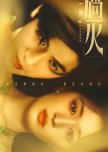
The creative choices...INSANE
Like many others, this was one of my most highly anticipated of the year. And like many others, I ended up being really disappointed.Let’s start with the good: the fashion looks great, and the physical sets look pretty immersive as well. We’ll get into bad CGI later, but when they’re actually filming around props and sets, everything looks decent. I really like the second chance romance and the revenge premise; there’s a really interesting story here, it’s just buried under all the other problems.
Now, for the bad. The acting is…questionable. I’ve seen both of these actors in other things and I know they’re capable of emoting, but the facial expressions and line delivery in this show feel unnecessarily dramatic and the dubbing never matches; dialogue is always delivered with the same loud, emotionless, intonation. There are moments where I can feel the chemistry between the leads (see Ep. 2 where ML sees FL for the first time) but other than that I wasn’t really sold on the romance at all due to the lack of build-up and wishy-washiness.
The plot is really choppy and the pacing is really weird; we’re jumping from one scene to the next without any sort of logical progression and without any time for the plot to breathe. There are time jumps all over the place and I’m never sure how long they are until they randomly say it in conversation. There is one big time jump in the last quarter of the show that introduces several tropes that I just dislike on principle, and it sort of just rehashes the exact same relationship dynamics all over again. The ending is confusing and unsatisfying.
Which brings me to the ugly; the editing choices in this show are just utterly BIZARRE. The rapid pacing and jumping from one scene to the next is emphasized by the fact that the music never stops. EVER. Seriously. There are moments where up to THREE different OSTs are strung together, back-to-back, sometimes within the same conversation. It’s insane. Sometimes the characters are just having a normal conversation and there is crazy violin playing going on the entire time.
Visually, the rapid zooms on character faces does the opposite of what’s intended, making scenes feel funny instead of serious and dramatic. There are some scenes that just should’ve been filmed from different angles to avoid weird reflections or cuts, or fights/slaps where we can clearly see that the characters were standing super far from each other and didn’t make contact at all. There are moments where the CGI is really bad and you can tell the actors aren’t interacting with their surroundings correctly. Zhang Ling-he is belly-flopping into a pond. Wang Chu-ran is floating vertically out of an airplane.
I feel like I also have to mention the AI intro. I’m glad they received enough backlash and changed it; it boggles my mind that they said it was supposed to “help viewers quickly grasp the protagonists' emotional backstory.” You had the actors on set and actual footage?? Put something together?? The new intro showed that they could and it would be even more effective storytelling. I hope IQIYI keeps receiving criticism for leaning into AI; I’m seeing more and more of it pop up in their drama intros, and viewers deserve better. My favorite, never-skip intros are the ones with adorable scenes, great songs, or really beautiful art.
In conclusion, I’m sad that this turned out the way it was because there’s a really interesting story here with actual high-stakes and consequences, and I grieve the show we could’ve gotten. “Provoke” is a similar premise and it’s a short drama, but it’s one I actually enjoyed if anyone is looking for something similar.
Was this review helpful to you?
all's well that ends well,
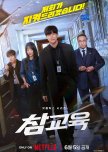
If you like taxi driver 1/2/3 or study group or Brave Citizen, then you should definitely watch this drama—you'll enjoy it.i like very much Jin Ki Joo character. I truly attach to the coordination and mutual connection among Choi Gang Seok ,Na Hwa Jin & Im Han Rim—the 'Grand Master', the 'Master', and the 'Disciple'. However, from a screenplay perspective, the romantic relationship between Han Rim and Giun Dai is not particularly praiseworthy. although I don't know what will happen in the upcoming season. Ultimately, all's well that ends well, and this is truly a good drama; the supporting characters performed exceptionally well despite their limited screen time.
Was this review helpful to you?
★The WonderPEAKS★
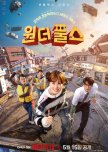
10 out of mf 10. I am so glad i started watching this, first of all lets give a round of applause to the director, the screenwriter and the whole production team because they were able to effortlessly gravitate between different genres throughout the series. This series also has a perfect ratio between action, fantasy, comedy, romance and drama (and by that i mean it has a favorable amount of each). This drama will make you laugh uncontrollably, be absolutely invested in the story and make you a little emotional in some parts which is why i love it because throughout 1 episode it effortlessly transitions through these emotions, for example if you just watched a really sad scene the next few scenes are absolutely hilarious that make you recover from that serious topic but the transition between those 2 are soooo goddamn smooth that it doesn't feel forced or like a "here damn". other than this all of the characters are so charming and amazing and wonderful they have so much depth and UGHHH i just love this drama and we realllllyyyyy need a new season. if this has been in your watch list for a while, JUST WATCH IT! you wont regret it at all i promise. the friendship dynamic in this made me feel very cozy and homely and their interactions just feel like one big hug to the viewer. i finished it yesterday and i miss it so much! (ALSO THE ACTING IN THIS IS ABSOLUTELY OUTSTANDING)Was this review helpful to you?
A story with strong themes, which didn't reach its full potential
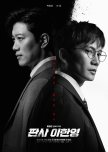
The Judge Returns was a drama that caught my attention the moment I read its synopsis. I have developed a keen interest to series about law and judicial system so it goes without saying that I decided to give this one a go.The series' start was very strong. The first two episodes were a very good setup for Han Young's backstory and eventual development. From the get-go, we get introduced to a cold judge, who delivers "justice" based on money instead of the law and ethics. We witness him at his lowest in terms of morality and yet, when his eventual death followed, I couldn't help but pity him and wish for his growth in the second chance he got to redeem himself.
This was the first time I watched Ji Sung and I can already tell that he's about to become one of my most favourite actors. He embodied Han Young and he made sure to steal the spotlight every time he appeared on the screen. You could see the fire in Han Young's eyes and his thirst for justice and fair punishment. Han Young's charismatic, charming and yet cunning personality was encapsulated perfectly by Ji Sung. I loved the way he changed his body language and the tone of his voice based on the characters Han Young interacted with, adding more layers to the various dynamics.
Park Hee Son as Kang Sin Jin was an absolute gem, from a visual and acting point. He owned this role and the authority he radiated in his scenes was unmatched. Sin Jin was a multilayered character and Hee Son did a magnificent job portraying his polarizing morality. His micro expressions andsubtle movements made Jin Sin more intimidating and unpredictable and it showed why he had so much influence. His chemistry with Ji Sung was one of the strongest aspects in the drama, emphasizing the ongoing silent battle between Han Young and Sin Jin, their scenes together were so exciting to watch and the build-up to their final confrontation made me eager to watch more.
The rest of the cast was very modest, some performances being more remarkable than others but overall, everyone delivered what was expected of them. I especially loved Tae Won Seok's role as Jeong Ho, Han Young's friend. I watched The Judge Returns before watching Bloodhounds and I couldn't believe that the ruthless bloodhound who made Woo Jin and Gun Woo's lives a hell shared the same actor with a kindhearted and supportive CEO. His versatility was very impressive and although his role wasn't very demanding in terms of emotional delivery, he stole the show whenever he would appear on screen, bringing a breath of fresh air.
The ongoing battle between good vs evil is the most prominent and yet the most complex theme in the drama. Instead of a simplified presentation of the judicial system, the writers highlighted the complexity that lays behind the scenes. There's the famous quote about justice being blind. Everyone is equal before the law and justice is ought to be served regardless of financial power, status or connections. While both sides in the drama strive for this, the means they utilize clash, resulting to a battle of deception.
On the one hand, Han Young, in search of atonment and redemption, is ready to do whatever is possible in order to ensure justice and apply the law fairly. On the other hand, Sin Jin, in pursuit of justice, bended the law and utilized power and money, thus betraying his initial goal for a justice system that will protect everyone equally. Both sides, in theory, fought for the same future, where no one will be treated unfairly. But the methods they used couldn't be any more different and thus, a great dilemma was present. Are we supposed to fight injustice with injustice? Or should we have faith in law?
While I appreciate the drama for its ambitious premise and although I recognise its qualities, unfortunately, once I was done with it, I realized that my feelings weren't as strong compared to my initial reception.
The first half always had me at the edge of my seat, I was looking forward to Han Young's redemption and his confrontation with Sin Jin. At the same time, I enjoyed the domestic moments between him and his friends, which toned down the hectic political aspects and left room for more humane interactions and bonds. The blend between comedy, action and slice-of-life was handled very well in the beginning and kept my interest more than alive.
Alas, in the middle of the road, my feelings for The Judge Returns started to change.
Once the series reached its second half, I noticed that my interest had started declining. I didn't rush to keep up with the released episodes and my attention was deteriorating in some parts. In the end, I decided to put the drama on hold and I put it off for 5 months. Now, putting a drama on hold is by no means an indicator of its quality, but once I resumed it, I understood why it failed to keep my attention.
I love slow paced stories. In fact, the majority of my favourite books, movies and series are slow paced. But while The Judge Return's pacing was not an issue for me at first, in the second half, I found the plot dragging to the point I almost considered skipping some scenes. There were some moments which felt like fillers to me and I wished that instead of them, we would get something that would contribute to the development of the characters and the story. One can handle only so many dialogues between corrupted men. The last two episodes in particular were very hard for me to watch and I almost felt relieved when I reached the end.
Aside from that, the scenes started to feel disjointed, which contributed to the slow pacing. One moment something dramatic would happen and then, the setting would change to something else. Which yes, it can work in terms of narrative but it became predictable and annoying because it ruined the flaw.
A pet peeve of mine regarding the technical aspects was the soundtrack. In thrillers, I prefer it when the soundtrack evokes some emotions and is used to create a suitable atmosphere. But in The Judge Returns, I found the usage of the main theme, particularly the opening, to be used in random moments, thus making the scenes less serious and anticlimactic. I am aware of the fact that soundtracks do not make or break a series but when it fails to deliver the best result, it can affect the viewing experience.
In addition, there were issues with the writing of some characters. Yoo See Hee started off strongly and I was looking forward to see her development both individualy and with Han Young, considering their relationship in their previous life. However, while the character was promising and while Oh Se Young did a good job portraying See Hee, the writing was underwhelming. I found her to be too dependent on Han Young and it would have been nice if the writers had explored her feelings outside of their relationship. There was room for more development and in the end, while I felt proud of her progression, I was left with a lackluster impression. Moreover, the subtle romance between See Hee and Han Young left me unmoved, I was eager to welcome it if done well but in the end, it was done poorly (not that I blame the actors, of course).
But my biggest grip was the way Kim Jina's character was written. Seriously, what was that? You have her being marketed as a main character and yet there were supporting characters which had more screen time than her. And no, I will not listen to any arguments about her being important to the story even with less screen time. A main character is supposed to be a main character and it's a shame she got sidelined. Won Jina was great and I'm sad I didn't get to see her full potential because of the way her character got treated by the script.
Another aspect that could have been handled better was Han Young and Sin Jin's relationship. It would have been interesting if we had seen more of them as "partners" because it would have added more impact to Han Young's betrayal and Sin Jin's broken trust. The scenes we got were definitely magnetic, albeit too few in my opinion. It would have also been nice if they had more exchanges of their different viewpoints (in a subtle way of course, since Han Young couldn't reveal his true beliefs). A bigger debate between them would have added more food for thought compared to what we got in the end.
The Judge Returns doesn't try to offer to the audience a utopian dream of a fair world and a justice system based on equality. Unfortunately, no justice system can be equal and accessible to everyone, at least with the current social standards. But it tries to show that it's still worth fighting for law no matter what. We shouldn't be what we sought to destroy in the name of "justice". What we should do is try to be better humans by helping those who are in need for help.
I definitely recommend The Judge Returns to people who like law series or Jisung's fans. But I don't think it's that profound to not miss it, if it's not under your randar. There are better series in my opinion which tackle similar themes in a better way, such as Pro Bono, a kdrama which became one of my favourites. I definitely do not regret watching The Judge Return but it's a pity it didn't reach its full potential in terms of writing.
Was this review helpful to you?
This review may contain spoilers
For Mature Audience
1. BEFORE I ADDRESS THE DRAMA, I JUST WANT TO PUT IT OUT THERE THAT PEOPLE CAN'T THINK FOR THEMSELVES: Why do people rely heavily on negative comments online instead of watching the drama first in order to judge it? Second, too many POJ shippers coming to bash the drama as well as people who wants to see POJ in a "republican drama." Very immature and delusional behaviors. You can't expect to see glitz and glamour as well as "easy to understand" characters in a republican story plot, therefore be mature enough to watch or don't watch PERIOD. I'm so tired of seeing all the immature rants and complaints. Third, if you think OVERDO is bad, then you haven't seen "republican dramas." This era had always been dramatic and heavy to watch because it is during war times and dark times. If you want me to recommend a drama worser, then go watch "War of Flames," loves the actors, but plot was messy and unbearable.2. PRODUCTION, ACTING, & STORYLINE: There are definitely way worser production than OVERDO, so it was unnecessary for people to spread hate. Two, the acting was superb on all ends. No matter it was the main or supporting cast. I will dive into Wang Churan's character since she is getting the most hate. Ren Susu was never meant to be this happy, jolly, easygoing character, therefore I am lost at people wanting her to be expressive and lively. She is meant to be cold, mono, and expressionless because she only knows "revenge, pain, suffering, and misfortunes." As you can see, there are times she gave in to Qingyi because she wants to let go, and on the other hand, she has a duty to revenge her parents and everyone she loved. She's an orphan, guys, she literally doesn't have anyone other than Qingyi therefore her pain is immense. Which brings me to the next point, because she knows she can't let go of her revenge, she protects Qingyi from her dangerous life by pushing him away therefore he does not get caught in the misfortunes. Because that man loves her and WILL DIE FOR HER. Also did everyone forget the fact that Qingyu tried to separate Ren Susu from Qingyi by pushing her to kill Li Rhongzhang knowing she was on a suicide mission?? Yes exactly, that's why Ren Susu does not want Qingyi involved in her life, because Qingyu also wanted her dead and gone from Qingyi. Third, storyline was decently written, it was just fast paced therefore we didn't spend a lot of time watching character development. If you understood then you understood, if you didn't then go back and rewatch it. Also if you've watched the BTS, you can see that there was so much more acting and emotions done behind the scenes, but because of limited episodes, a lot of scenes were cut short. As for ZLH, he nailed his character as expected. Qingyi made every scene emotional and painful because he is so selfless when it comes to Ren Susu.
3. Overall, I think it's evident, we need another ZLH and WCR drama with a more loving storyline. Because these two are not only power visuals, but they need a better script to bring their potentials to the screen.
Was this review helpful to you?
This review may contain spoilers
Strong start and predictable ending
I thought The Shadow Sovereign was just okay. It started off strong but the story became predictable as the episodes went on and I found myself getting bored toward the end. If you are into passionate romance there are a few memorable kissing scenes, but after that, the relationship doesn't develop much further.The biggest highlight for me was the chemistry between the female lead and the second male lead. Their interactions were far more captivating than the main couple's and I really wish they had been given more screen time and a deeper storyline. The OST music hit the spot.
It was heartbreaking to see how everything unfolded. The second male lead's death by suicide felt especially tragic because he never truly got the chance to reconcile with the female lead. I also felt that the female lead remained so focused on the first male lead and getting justice that their relationship never received the emotional closure it deserved. The emperor's downfall also felt like karma for what he had done to the female lead's mother.
The acting was solid, the chemistry between the second male lead and female lead kept me invested, but the predictable plot and underdeveloped relationships made it less memorable than I had hoped.
Was this review helpful to you?
This review may contain spoilers
Let's start with the abject truth, that I have already rewatched this several times or turned it on to go to sleep. It's already become a comfort food. lolNow for the critical explanation:
1. The music choices are immaculate. The sound engineering also deserves praise with the subtle and detailed enhancement of the scenes. Even the title song is, imo, the best BL title song I've heard.
2. The story, while not exactly true to the novel, is perfectly told. I think the right choices were made as far as what to include, what to leave out and what to alter slightly. But nothing deviated from the original heart of the story, which is that two men fall in love while playing the roles of two men who fall in love. And our inability to tell what's real and what's not is exactly aligned with theirs as it progresses. The script is thoughtful and all of the characters feel believable, and in some ways likeable, even the "protagonists". The pacing is perfect. There's no fat on the story but it isn't rushed either. I found myself unable to predict as easily as I normally can with BLs what exactly was going to happen in the next episode.
3. The casting is A+, especially Zhang Zhun, Zhen Xin and Director Chen. Director Chen is hilarious and genuine. The main leads are beautiful and meticulous actors. The subtleties of the choices they made moving in and out of their "true selves" vs their characters was so well done. Side note: They are both pretty criers. And lastly, their chemistry was outstanding. Again it felt genuine and lived in, without needing to go to the extremes of nudity and saliva dripping off of their kisses, the implication of their intimacy was just as effective.
So with that, I really have no notes and this is currently ranked as my #1 BL. Bravo!
And in case you haven't looked, the director is only 27!
Was this review helpful to you?
I had fun watching this series
What a fun ride this drama was! It deserves way more love than it's getting.The chemistry between the two leads was incredible, and they portrayed their characters so naturally. Their performances honestly felt like those of A-list actors.
The funniest part? I was so invested in the mystery that I literally choked watching Episode 4. 😭😂
Even though the ending felt a bit rushed, every episode was worth watching, and I enjoyed every minute of it.
Now I need more mystery-romance dramas like this. I know there are plenty of mystery dramas out there, but romance is usually just a side plot. This one gave me the perfect balance of mystery and romance, exactly what I was looking for, even it's short ,I had fun watching it
I'm giving this series overall 10 even though ending felt rushed because it's satisfies me.it maybe it's depend on individual,but I'm being honest ,this series made me completely worth watching
Was this review helpful to you?

great series
A really great series; it makes me more motivated to exercise.Really cool, and The acting is just as impressive.
Don't forget to watch it legally to show respect for the cast and everyone who worked hard on this project.
You can watch it on YouTube; don't forget to leave a nice comment and give it as many likes as possible.
Focus on boosting engagement for posts about the series on YouTube, TikTok, and X rather than uploading spoilers, okay? And don't forget to keep pushing the hashtags so the series gains wider recognition.
Was this review helpful to you?
This review may contain spoilers
Characters looking mismatched
i was disappointed seeing the cast . The boss character doesn't give off the strong, confident boss vibe that the story requires.The second male lead also don't look enough for the role as idol , he looks so ugly wtf on earth idol looks like this 😭😭 which makes the casting feel mismatched. Also chemistry between main leads being mismatch,this is my overall first impression
Was this review helpful to you?
This review may contain spoilers
An absolute rollercoaster
One of the most anticipated dramas of 2026, it gave me everything I didn't know I needed. A story that was unapologetically and uncompromisingly melo. A cast so beautiful in costumes so outstanding. Emotive and fantastic acting, giving the actors the chance to show their acting range and skills. It had everything.Now to be honest, this is a 9.5 drama to me. I am rating it a perfect 10 to combat antis. This series got a disproportionate amount of hate from antis, bots, people who were looking for reasons not to like it, and people who came into it with expectations for a series that this show clearly wasn't going to be. Now some of the criticism is valid: there was very heavy use of AI (honeslty expected at this point with cdramas), and there was some pretty stilted cinematography in the early episodes. It did not warrant the level of hate it got however.
This show is a melodrama - comparable to some short youtube series dramas. But it stuck to its guns and told a story.
Story:
The story centers on our ML MRQY, the youngest son of a warlord family who was switched a birth and returned to his family around age 12. He is the abused son, the one that everyone hates and blames for everything. This is a common theme throughout the series as he constantly gets blamed for other people's decisions. His life gets derailed after taking the blame for a murder committed by his girlfriend, our FL RSS, and going to prison for 3 years. RSS is a girl on a mission to stop human trafficking and avenge her sisters from the orphanage she grew up in after her family was murdered. She kills one of the traffickers, and (fakes) her death (at the time she was trying to die it just didn't stick). Ultimately, she returns and takes on a new identity as one of her deceased sister's who had a powerful family to continue her quest for revenge. In her quest, she becomes engaged to her ex-boyfriend's brother/ our ML (who believed she was dead for the last 3 years after she shot herself in front of him and fell out of a train)'s older brother.
Over the course of the show, the two have a push and pull relationship, in love but hate each other. In my opinion, MRQY is the only one who has any valid reason for resentment, but he is also the one who is an absolute simp for the FL and yearns for her way to much to ever play hard to get. Meanwhile, FL has way too much trauma to ever let herself just be happy and is constantly sabotaging her relationship with him, even as she simultaneously gives him mixed messages that she does love him.
So as you can see, this show is complicated. We are on a rollercoaster of emotion. It is absolutely melo. People are making emotional, ridiculous decisions left and right, back and forth, up and down. It's insanity. In the background of all this are the politics of republic warlord violence typical for the era and war that show that ultimately, this era was full of chaos and that for there to be any resolution, sacrifice needs to be made.
The ending is a massive wtf that also feels right because to be honest how else was it going to end... a happily ever after.?Unlikely with everything that happened and with these two. We could hope, especially for their son, but unlikely.
Characters/Actors:
MRQY is a walking talking green flag covered in a red flag. He's got the biggest heart and the biggest obsessive streak, and trauma that packs a punch. Abused as a child, abandoned and loathed by two families, replaced by another boy by those same families, the only girl he ever loved shot herself in front of him, used him for murder, his only aspiration to become a doctor was destroyed after being tortured, and his family continues to use him while hating him and constantly berating him. The girl he loves is constantly chosing his brothers, playing into his inferority complex and feelings of inadequacy. And all the while, he'll continue to love her and put himself in harms way for her. He'll pursue justice so people won't be hurt like he was, he'll be prickly but he'll stand up for others.
Zhang Linghe plays MRQY perfectly. He is able to showcase a phenominal range of emotions and action in this role. I think this role gave him the most opportunity to showcase his skill (we even got some comedy with that bellyflop). I admit that I put this show on by to watch list because of ZLH and was keeping up with the filming Reuters when it was in production in 2025 because of ZLH. But even though the bias is massive, I was not disappointed. ZLH delivered a great performance.
RSS is a walking red flag full stop, and I standby almost all her decisions (almost all because I do not standby the baby concealment or pretending to have a relationship with LBZ because that stupid cruel and horrible for no reason at all). She's got vendettas lining up down the block, and is gaslight gatekeep girlbossing her way through life. She was horribly abused with other children when she was young after her family's tragic death, she holds the weight of responsibility for her friends/sisters lives especially after one died saving her, and she has survivor's guilt preventing her from letting herself truly be happy for even a moment or stop chasing after revenge. She has a terrible habit of making decisions for those she loves to protect them, and can be cruel as a result. She also loves fiercely and will pursue justice and vengence with obsession to destroy everything else in her life.
Wan Chu Ran played an outsanding character. She portrayed the decisiveness and determination of RSS, she made us frustrated with her decisions when watching the show for romance, but gave us reason to admire the character when the show gave us action and revenge. It is impossible to hate the character as the reason for her decisions are clear, but it is likewise impossible to truly hope these characters end up together when one (RSS) keeps hurting the other. Nevertheless, you hope, because WCR gives you those flickers of love, the emotion and expression that shows that every decision is hurting RSS too. You hope that she can heal, you hope that she will live a happy life, but at the same time, part of you knows that it is impossible.
Cinematography
I'm not mad about it. I know a lot of people had a lot to say about the camera editing, and the lighting. But honestly, it wasn't bad for me, it didn't take me out. Maybe the pretty faces kept me distracted.
I'm not even going to bother talking about the AI...
Rewatch value:
Yes. This was a good show, I am going to watch a million edits of the characters and I'm going to rewatch this many times because the action was great, the drama was amazing and it kept me entertained.
Was this review helpful to you?
Amazing
Glad I persisted with this show and didn’t listen to the negative reviews. The acting was top notch and nice to see zhang linghe in a different role. Loved the drama and emotion. I have never written a review however seeing the reviews I decided to write one. Yes the 1st few episodes were bit silly but the show just got better and better. So happy I stuck with the show.Was this review helpful to you?
This review may contain spoilers
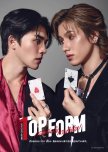
You can't convince me that was JUST acting
The chemistry?!!!I was genuinely blown away by the harmony between Smart and Boom. The tension. The teasing. The emotions. Are these guys seriously able to cry on command?! The eye contact, the breathing, every little gesture... these actors are unbelievably talented.
Every intimate scene felt so sincere and, once again, so perfectly in sync that it just makes your heart race.
I don't think it's possible to write a review about TopForm without mentioning the honey scene because... LORD. I have never seen anything that sexy in my life.
It's absolutely worth the hype. The cinematography is stunning, but more importantly, what unfolds on screen feels so raw and genuine that it's honestly overwhelming to watch. And once again, I refuse to believe this is just acting. The actors are simply too good for me to believe they were only acting !
For the story itself, I'd say it had a lot of potential during the first few episodes... right until that grumpy old man from Sigma started showing up every five minutes with his homophobic attitude, always at the worst possible moment, just to ruin whatever little bit of peace the characters had managed to find, without ever giving us a truly convincing reason.
I also feel like the supporting characters are... just there. You can tell the director wanted to give them some kind of backstory, but none of them ever feel fully developed, so they end up lacking depth.
Then again... can we really blame them when the two leads spend the entire drama absolutely devouring each other with their eyes and delivering such an incredible performance?
Overall, I'd say I had a really good time watching TopForm.
Sure, I found it a little slow at times, but Smart and Boom's performance alone is more than enough to keep you watching until the very end. What begins as a love story on stage slowly becomes something much more intimate, proving that the most beautiful love stories are often the ones lived far away from the spotlight. <3
Was this review helpful to you?
A powerful sense of comfort and nostalgia
Our Generation offers a deeply nostalgic and emotional exploration of youth, friendship, and the bittersweet transition into adulthood. At the heart of this narrative is the relationship between Lin Yingtao, played with remarkable warmth and expressive depth by Zhao Jinmai, and Jiang Qiaoxi, portrayed by Zhang Linghe as a reserved and heavily burdened young man. Zhao Jinmai acts as the emotional anchor of the series, masterfully showcasing her character's growth from a bubbly, empathetic girl into a mature woman navigating societal expectations and personal hardships. The palpable chemistry between the two leads elevates the script, turning simple everyday interactions, school struggles, and letters into poignant milestones of young love.However, the drama is not without its creative flaws, particularly as the characters branch out into their college and adult eras. There is a noticeable shift in pacing during the later narrative arcs, such as the segments set in Hong Kong, where the storytelling begins to feel fragmented and the emotional progression becomes overly strained. While Zhang Linghe conveys his character’s inner turmoil and trauma quite well, the narrative choice to keep his experiences somewhat hidden from the audience occasionally dulls the narrative momentum and creates an unnecessarily rocky path to reconciliation. Furthermore, the final episodes suffer from a rushed execution, leaving several compelling subplots regarding the supporting characters feeling somewhat neglected and incomplete. Despite these structural missteps in its final third, Our Generation remains a beautifully shot, atmospheric series that succeeds in evoking a powerful sense of comfort and nostalgia. It stands out as a thoughtful youth ensemble piece that, while imperfect in its pacing, is thoroughly redeemed by the grounded performances of its main cast and its tender portrayal of enduring love.
Was this review helpful to you?
This review may contain spoilers
Great Cast, Terrible Execution
I went into this drama with very high expectations, primarily because I absolutely love Meng Zi Yi and He Yu from their previous romantic works with different on screen partners. Sadly, it didn’t work.Blossoms of Power has all the ingredients to be a really great drama. The story follows Gu Qingzhi, a woman who dies and is transported into the body of an entirely different noblewoman named Shen Xihe. Armed with this new identity, Shen Xihe journeys to the imperial capital to marry one of the princes.
Upon her arrival, she immediately crosses paths with her old husband from her past life, Xiao Changqing, while simultaneously navigating intense attention from all other princes, including the brilliant Crown Prince, Xiao Huayong, who has been pretending to be weak all his life, but secretly knows martial arts and has a whole network of spies.
I mean, what’s not to love?
Reincarnation? Check.
Crown Prince with a secret identity? Check.
Multiple brothers fighting over one woman? Check.
Strong female lead? Check.
But oh my God, what a mess... I haven’t been so frustrated watching a historical drama in a very long time.
While Blossoms of Power features a large, interesting cast of characters with an excellent supporting lineup, and obviously amazing leading couple, the writing is completely uneven. Half the time, it is entirely unclear where the story is actually going. The pacing is off. In places it’s so fast that it’s clear a lot has been cut away for screen. Some of the key scenes and important reveals needed to be seen not just talked about. In other places, the pace is extremely slow and dragged down by scenes that didn’t need to be so long, or plotlines that lead absolutely nowhere. The show spends stretches of episodes hyper-focused on one specific issue, completely forgets about everything else, and then randomly pivots.
Worse, the writers completely abandon intriguing setups. For instance, they spent time building a dynamic between Xiao Changying and Shen Yingruo only for it to vanish. If the writers did not intend to continue with their storyline, they should have cut those scenes out and included the ones that actually needed to be there.
By the end of the show, it is glaringly obvious that the writers simply forgot about multiple storylines and characters, leaving them completely dropped without a single word of explanation. On the contrary, some of the characters that did not spend a lot of time on screen and their storylines were completed earlier in the drama, were given longer scenes that made no sense and wasted screen time. For example, Second Prince or Fourth Prince had bland storylines. Their death scenes should have been cut in half. At least.
Let’s talk about romance now.
The romance between Shen Xihe and Xiao Huayong is a massive slow-burn that ultimately feels somewhat unbelievable in certain parts. Shen Xihe remains extremely cold for three-quarters of the drama, only to suddenly realize she fell for Xiao Huayong out of nowhere. Don’t get me wrong. I did like the romantic tension. I think the biggest mistake here is the fact that writers dragged on her cold shoulder era for too many episodes. I deeply wish her character started to warm up much earlier in the timeline, so this emotional shift in her doesn’t feel too sudden.
Furthermore, the romantic chemistry wasn’t what I expected. They are both incredibly fine actors, and I know for a fact that they both can pull off intimacy beautifully. Having seen He Yu’s work with Esther in Speed and Love, I was incredibly excited to see what he and Meng Zi Yi can give us. Additionally, I really liked Meng Zi Yi in Blossom.
However, she felt detached in some intimate scenes. They both had some good kissing scenes, but also some were not so good. No, I don’t mean to say that the romance is done poorly. On the contrary, I think the romance was still done very well. I kept watching because of the romance. But I think Xiao Huayong was the highlight of the show, mostly because he was the only character that brought comedic relief to the drama during his pursuit of Shen Xihe. However, I still think that none of the attributes writers gave him at the beginning of the show like his hidden martial arts skills or his hidden identity were utilized to the full potential in the show. Writers kind of screwed up because instead of letting the character reveal his true self with the flair—because there was so much fuss made about keeping it secret—they just let it all fizzle out. Which leaves me with the question why introduce Xiao Huayong secret identity at all? He could have remained a sick Crown Prince, and that would have been enough for the kind of story we received.
Before I move on to the last part, I want to add that the female lead is an absolute badass here. That’s one thing that I truly liked about the drama. Additionally, the relationship between the lead couple is interesting. I like that he allows her be herself without tying her down. Relationships between all the brothers and all the sisters are nuanced and written well. However…
A Final Insult of an Ending
The absolute worst part of the drama is the final arc. Xiao Huayong completely disappears for the last four episodes of the series. Well because he dies. Then, in the final two minutes of the drama, he suddenly shows up out of nowhere with absolutely no explanation as to how, why, or where he was, and if this is even true, or if she’s seen another dream.
Frankly, this ending pissed me off. If he was alive the whole time, he essentially left Shen Xihe alone in a den of vipers to fend entirely for herself. This was such a letdown. While the drama has decent production value, a great main cast, and a solid premise, the execution is an absolute mess that leaves you completely unsatisfied.
I actually had to go online and look up some information about the original novel. Yes, I understand why writers chose not to include what he did during those four years of absence. But I think that viewers who don’t have a chance to read source material deserve better than to scour the Internet for answers.
Would I recommend this drama? Probably if you like any of the actors, or while you’re waiting for something with a much better storyline. But I wouldn’t expect anything extraordinary or well written just because the cast and the production are high-end.
I additionally I did not like music at all. This drama has this typical dramatic old school depressing music score that invokes a feeling of doom in me.
Was this review helpful to you?


