

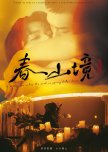
A Winter Sun Wakes the Wind in Spring Hills' Dream
0 people found this review helpful
A healing, slow-burn romance
It is a heartfelt story about shedding your armor, rediscovering your identity, and finding the courage to protect true love against the harsh scrutiny of the entertainment industry.The primary strength of this drama lies in its breathtaking cinematic artistry. The show treats the remote, misty tea mountains of Yunnan not merely as a background, but as a living character.
The sweeping green landscapes, soft natural lighting, and rich focus on traditional tea-making culture create an incredibly immersive, comforting atmosphere.
For anyone looking for a thoughtful, visually stunning, and emotionally resonant romance, this series sets a new gold standard.
Was this review helpful to you?
This review may contain spoilers
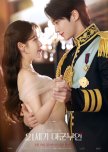
Given the True Nature of Royalty, no fairy tale was expected
My rating: 10/10Review
I actually delayed watching The Perfect Crown because I had seen several reviews mentioning that certain story decisions made the ending disappointing. Then I kept seeing it appear on "best of" lists, and my curiosity finally got the better of me. I decided that even if it didn't end the way I would have preferred, I was going to give it a chance. I'm really glad I did.
This drama was incredibly entertaining from beginning to end. I loved the characters, and the premise of a Korean monarchy surviving into modern times was such an intriguing "what if" scenario. It wasn't just a romance. It blended mystery, political intrigue, humor, and a surprising amount of action into a story that always felt engaging.
There were also elements that reminded me of the Princess Diana era of the British royal family. While the situations were obviously fictional, the exploration of public expectations, royal duty, media attention, and the burden of status felt surprisingly grounded. The series also explored class distinctions and privilege in thoughtful ways without ever allowing those heavier themes to overwhelm the pacing. It managed to ask meaningful questions while still remaining an enjoyable romantic drama.
Another strength was its characters. Most weren't written to be morally ambiguous simply for the sake of appearing complex. Instead, they grew naturally in both positive and negative directions as life shaped their decisions. That made them feel more believable because people aren't static. They evolve based on the choices they make and the experiences they endure.
I can certainly understand why some viewers disagreed with one of the drama's biggest story decisions, but for me it never diminished the overall experience. Other reviewers were often divided over the ending, while many praised the performances, chemistry, and unique premise. I ultimately fell firmly into the latter camp.
This is a drama I'll happily watch again someday. If someone else had it on, I'd gladly sit down and watch it with them, and I would recommend it to anyone who enjoys romance, political intrigue, mystery, fantasy, or modern fairy tales.
Spoilers
The biggest point of criticism I saw from other reviewers—and the reason I delayed watching this for so long—was the decision to dissolve the monarchy. So many people seemed disappointed that Prince I-an wanted to abolish the crown that I assumed it would completely undermine the fairy-tale quality of the story.
Instead, I found it to be one of the most logical and noble decisions in the entire drama.
The series spends so much time exposing the darker side of royalty. It isn't just about beautiful palaces and elegant ceremonies. It shows how power, status, and privilege attract greed. Not just greed for money, but greed for influence, recognition, and authority. History is full of examples of people willing to betray, exile, or even kill family members for a crown. The drama explores that reality exceptionally well.
Being one of the "good" royals often means carrying enormous responsibility while enjoying very few of the benefits. At the same time, the entire structure inherently creates social classes where some people are viewed as superior simply because of birth. I-an had experienced firsthand how destructive that system could become. To me, a character like him was never going to preserve it simply because tradition demanded it. Dissolving the monarchy wasn't abandoning the fairy tale—it was the natural conclusion of everything the story had been building toward.
My only real disappointment was that I wish we had spent just a little more time with Hui-ju (female lead) and I-an (male lead) as queen and king before everything changed.
It almost felt like watching someone climb a mountain only for the story to end just as they reached the summit. I wanted a little more emotional payoff. I wanted to see Hui-ju enjoy that position for a while after everything she endured. Maybe that's a little bit of social revenge on my part, but I wanted to see her finally have the authority to dismiss the people who had looked down on her throughout the series. I especially would have enjoyed seeing her outrank the Queen Mother, even if only briefly.
The epilogue showed enough of their future together that I was satisfied with where they ended up. My only small disappointment involved the modern interpretation of their happily-ever-after.
I wasn't particularly thrilled that I-an became a house husband while Hui-ju returned to being almost entirely career-focused. To me, it leaned back into the modern "girl boss" trend where the successful woman is so consumed by work that they still haven't started a family while her husband quietly waits for her attention. That simply isn't my favorite type of ending.
Personally, I would have preferred to see them become more of a true partnership. Maybe I-an could have taken on an important role within the company so they worked together as equals. I like relationships where both partners contribute in different but equally meaningful ways. I think that would have better reflected how much they had both sacrificed throughout the story.
I also really appreciated that Hui-ju and her brother ultimately reconciled. Their relationship could have easily remained bitter, but instead they both experienced meaningful growth. Likewise, I was happy that her father ultimately proved to be a genuinely loving father despite the complicated circumstances surrounding their family.
The only aspect that left me wanting a little more was Hui-ju's overall character arc. I-an gave up virtually everything—not only for her, but for the future he believed was right. Meanwhile, Hui-ju ultimately returned to being the same intensely career-driven person she had been at the beginning of the series. While she certainly grew emotionally and learned to trust others, I don't think her priorities evolved quite as much as his did.
Even so, these are relatively minor criticisms in what I thought was an outstanding drama. None of them came close to diminishing my enjoyment. The romance was compelling, the political intrigue remained engaging, the mystery kept me invested, and the characters were genuinely enjoyable to spend time with. For me, The Perfect Crown delivered exactly what I hoped it would—and even surprised me in a few places along the way.
Was this review helpful to you?
Literally a hidden gem
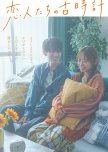
Japanese vertical drama distributers need better PR/Marketing departments because I'm convinced the only reason I found this was because I'm a freak that crawls the internet looking for all the interesting projects my oshis have been in. I was shocked to discover that several of the vertical drama apps are downloadable internationally, have proper English subtitles, and are fairly generous with their free offerings - if you've been into Japanese content for awhile, you KNOW how rare that is. The FOD Shorts app where this drama is available also has the best catalog from the ones I've sampled so far and isn't full of the brainrot slop that's generally associated with vertical dramas.This was the first vertical drama I've ever completed, and maybe it set the bar too high, but I was pleasantly surprised by the quality, from the cinematography to the performances. Of course, given the format, the story and characters weren't super deep or complex, which kept me from rating it higher, but I think keeping things simple worked to its benefit. The relationship between the main couple, Ryo and Natsu, was built up nicely with all its ups and downs and was very believable thanks to the great chemistry between Higuchi Kouhei and Kyoka. I almost wish we could've seen this pair in a full drama with wider distribution (or maybe a movie?), but I also think part of the reason it was so effective was because the short clip format of vertical dramas allows them to cut the fat and not linger long enough for the audience to be bored or start to see the shortcomings. I also think because my expectation of vertical dramas was so low coming into it, this having decent production value with "reputable" actors gave me a more favorable impression overall. Still, highly recommend for people looking for a well-made, realistic love story with the bonus of seeing Higuchi Kouhei's face <3
Was this review helpful to you?
This review may contain spoilers
Overhate and Overhype at the same time.
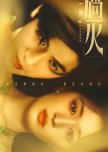
This drama generated a lot of early hype. The teasers, pre-release photos, gorgeous costumes, and early plot hints created incredibly high expectations. The Republican era visuals looked stunning, and the cast seemed perfectly chosen for their roles.After waiting for months for this drama to finally air, I ended up feeling disappointed. Putting aside the AI-generated opening sequence. Even though an opening is the first impression of any drama, especially one that so many fans were eagerly anticipating, I found the story itself to be the biggest letdown.
To be honest, I think the drama has managed to keep a lot of its viewers thanks to Zhang Linghe's popularity after The Pursuit of Jade. I was already struggling to continue after the first 10 episodes, but I kept watching because I wanted to see if it would eventually prove the haters critics wrong and become better in the second half.
But sadly the overall pacing and storytelling style felt more like a short drama than a large scale Republican era production. Important plot developments happened too quickly, while other scenes dragged on without adding much to the story.
Because of that, I think it's best to watch this drama with moderate expectations and simply enjoy the parts that work for you. If some scenes feel slow or fail to hold your attention, there's nothing wrong with skipping ahead. Fans of the main lead actors like me will probably still find plenty to enjoy, as both of them deliver solid performances and look absolutely stunning on screen.
I'm a fan of both Wang Churan and Zhang Linghe, which honestly makes this disappointment even bigger. Their acting is good, but in my opinion, a weak script prevents them from showing their full potential. I don't mind the ending where the male lead sacrifices his life for his country. In fact, I thought it was a meaningful and fitting conclusion for his character. My issue is everything that came before it.
For some reason, I never felt the chemistry between the two leads. I didn't truly believe they loved each other enough to make the sacrifices the story asked of them. Their relationship looked beautiful visually, but emotionally it never convinced me.
I also feel that Wang Churan once again chose a role that didn't showcase her strengths, similar to LHF. In many of her previous dramas, she completely captivated me with both her performance and charisma, but here I found myself appreciating her visuals more than her character. As for Zhang Linghe, he's as handsome and charismatic as ever, and I sincerely hope he gets more diverse roles in the future with stronger scripts that allow his talent to shine.
Was this review helpful to you?
This review may contain spoilers
MESSY, but worth it to the end.
The entire plot was a mess from beginning to end. The story was so painful, so torturous to watch. It was a sh*tshow after another. The ML and FL's lives were extremely cruel. Yet, as bad as it was, this drama was so alluring. I found myself not able to drop it, but instead, I was literally waiting for more. I wanted to believe that there was hope. Hope that it would get better soon. It doesn't.The last 5 episodes were when it felt like a normal drama/storyline again. LOL. The ending was not as we all had hoped for. The alternative universe at the end was truly needed. It helped heal a part of me. It wasn't a satisfying ending, but it wasn't the worst either. I'm glad they gave us that what-if ending.
The most ironic to me was the people who MLs was trying to fight throughout the whole story turned out to be not so bad after all. This show had so much misunderstandings which led to all this drama.
I’m glad they didn’t turn Li Boze evil. He was seriously the last hope for us all.
Overall, this drama would be a 7 for me. Acting was very good from all of them. Would I rewatch it? Hard no. Not because it is bad, but because my heart can't go through this mess again. Not sure what the writer had in mind when writing the script, but DAMN. WT* haha!
Was this review helpful to you?
Not very good
OMG, i expected more of a production of Strongberry, but this was not good at all.The story was boring and silly. The sounds and some of the music irritated at some points. The visuals were the best thing of the whole series.
The acting of Kim Yong Sol and Choi Dong Ho was terrible, that endless grin of Choi Dong Ho anoyed me so much! Son Byeong Hoon did ok.
The mains had no chemistry but the kisses were good.
A big dissapointment.
Was this review helpful to you?
Not even the cast could save this
The main issue with this drama—and the aspect most open to criticism—has been the consistently poor use of AI, which creates a sense of low quality. It wasn't just the terrible intro they had to change; the entire series constantly featured images that were clearly AI-generated.On top of that, a dramatic story that seemed to have potential ended up relying on many excessively exaggerated scenes, giving the impression that you were watching a short-form drama. It didn't help at all in connecting with a story that carries such heavy emotional weight. That sort of thing works fine for rom-coms or series with a more lighthearted tone, but certainly not for this one.
It really saddens me because I was so looking forward to the series for the cast—I love both leads. But between the AI and the terrible script, even they couldn't help the show fly by for me. I'll be waiting for another series featuring the two of them where they can actually give a proper performance.
Was this review helpful to you?
This review may contain spoilers
Toxic but addictive
I think we can separate the relationships in this drama into three main categories:
1. The brotherhood of the three male leads
2. The romance of the male leads
3. The parents
Number 1. The brotherhood, which I believe was amazing, complex, and real. They love each other no matter what. They fight, they act rebellious, but at the end of the day, even after a big fight, they never act against each other. Sometimes they do something wrong, but they can forgive each other for their mistakes. I LITERALLY LOVE IT!
Specifically after Qingyu's death—it is truly tragic but necessary for Qingyi's development. He finally understands that he must grow up and be responsible for his actions. There is no one he can trust to clean up after him anymore. He loses everything after his brother's death and forces himself to build a real family in the end.
Number 2. The romance
Two completely toxic and obsessive romances, and the only one between Ms. Ye and Qingyu was a little bit better. Susu is a traumatized woman, stuck in the past, blinded by revenge. A completely inappropriate girl for a relationship—and a dumb Qingyi completely blinded by love! He repeatedly puts himself in danger and, more interestingly, never gives up. Such a toxic couple.
And the third couple, which is based on doubt and never trusting each other until death.
The only nearly healthy couple ended in death at the verge of reaching happiness.
Number 3. Parenting
I thought there were two completely schizophrenic parents. What was that really? I think the Mourong lady is not normal. If they wanted to show a woman with a mental disorder, it would be better to show that she had problems with all three, not just Qingyi. She really cared about blood and inheritance but loved BZ—you know, it's a contradiction. I would prefer a woman completely diagnosed with schizophrenia after her husband's death, not healthy in some aspects.
The character of Li's father is a black box to me—I never understood him at all! So I prefer not talking about it.
Generally
I liked the show, but the storyline has some logical gaps. The acting of the entire cast was perfect, and the character development is acceptable to me, so I decide to give it a score of 9 for the general package, not just parts.
Was this review helpful to you?
This review may contain spoilers
So much more could have been done with the story
I mainly started this drama because of the two leads. I genuinely enjoy watching their work. I first became familiar with Zhang Ling He through "The Princess Royal" and thought his acting was excellent, so I wanted to see more of his projects. Wang Chu Ran caught my attention in "Are You the One", where I really enjoyed her performance and the way she conveys emotions on screen — especially impressive considering how many dramas I’ve seen with weak acting.The supporting cast was also strong, and overall I felt the acting and casting were one of the drama’s biggest strengths. The chemistry between the two leads was amazing, and I truly hope they reunite in another project.
However, despite the great cast, the drama fell short in several major areas, which unfortunately led to the actors receiving unfair hate. These are the main issues I felt held the drama back:
1. The Sad and Confusing Ending -
From what I understand, the original author is known for tragic stories, but I really wish the drama had chosen a different direction. The ending killed almost every character, and I would have preferred a happy ending for the main couple in the actual timeline we followed from the beginning — not just in a parallel universe.
The parallel universe concept was a nice touch, but it didn’t make up for how unclear the real ending was. For example, I didn’t even realize Qing Yi died until I went online and read an article explaining it. The emotional impact was lost because the storytelling was confusing, and the execution of the tragedy felt messy rather than meaningful.
2. Killing Off Everyone / Rushed Pacing -
After Qing Yi’s return, the drama suddenly became extremely fast‑paced, as if it was rushing to wrap up every remaining plot point. It would have been much better if the story had taken its time early on to set things up properly, then slowly addressed the conflicts instead of cramming everything into the end. And honestly — they killed off EVERYONE!! I get that Republican‑era dramas tend to be more dramatic, but this was excessive. Almost every character the audience becomes attached to ends up dead. One or two deaths can make sense, maybe even three, but wiping out nearly the entire cast just leaves a bitter taste. Some deaths, like Qing Yi’s subordinate, felt completely unnecessary.
3. Lack of Emotional Bond With the Child / Family Issues -
From the beginning, many family members — especially Qing Yi’s biological mother — were written as one‑dimensional, which explains why both leads grew up the way they did. I accepted that. But because they experienced so much neglect, I expected the story to show them building a healthier relationship with their own child, Le’an.
After Qing Yi’s return, I wanted to see him spend more time with his son and try to win his heart. It’s unrealistic for an adult to suddenly say, “I’m not your uncle, I’m your father,” and have the child accept it instantly. The drama missed a huge opportunity to show a meaningful father‑son bond developing.
As for Susu, her constant emotional push‑and‑pull and her revenge-driven choices were frustrating, even though I understand what the story was trying to portray. Still, after Qing Yi returned, I wish she had shown more affection and finally told him she loved him — something he had been longing to hear since the beginning.
Conclusion -
The story was clearly meant to be a tragedy, but it fell short in many areas. The hate the actors are receiving is unfair, because the issues came from the writing and production choices, not their performances. If the script had allowed it, the cast could have delivered much stronger romantic and emotional moments.
As someone unfamiliar with the original novel, I found the drama disappointing despite its beautiful visuals, strong acting, and even some great OSTs. I truly hope the main couple reunites in a future project where they can fully showcase their talent — something this drama didn’t allow them to do.
Was this review helpful to you?

Be on Cloud DELIVERED AGAIN
everything was phenomenally done. The acting from ALL of the actors were incredible everyone did their parts. I was able to feel the emotions w the characters. The cinematography was perfect and the music set the mood of specific scenes perfectly.emotionally i was a wreck after watching this. its so heartbreaking knowing that back then people had to endure this and even worse . Its definitely one of those series where after ur done watching u just ponder on life .
but i want to compliment everyone's acting because they TOLD this story and oh im feeling to cry again watching this was it was such a masterpiece
Was this review helpful to you?
Overdo: Too Much Pain, Too Little Payoff
Honestly, Overdo was not an enjoyable drama for me. Even though the drama had a cast with actors who have already shown strong performances in other projects, the story itself was full of flaws. The plot felt weak, overly negative, and emotionally exhausting. Many events happened in a way that felt forced rather than natural, and instead of creating meaningful tension, the drama often relied too much on sadness, stress, misunderstandings, and darkness.One of my biggest disappointments was the role given to Wang Churan. I personally think she shines much more in lively, clever, warm, and charming characters. In dramas like How Dare You, Are You the One, and Love Has Fireworks, her roles suited her much better. Those characters allowed her to show a fun, bright, energetic, witty, brave, loving, and kind side. She has a natural charm when she plays characters who are emotionally expressive, smart, playful, and full of life.
That is why Susu felt like such a poor fit for her. Susu was written as a dark, depressed, and emotionally heavy character who kept making wrong decisions. Instead of feeling deep or tragic in a meaningful way, her actions often became frustrating to watch. Her so-called love and care sometimes felt suffocating rather than touching, and her choices often caused pain for the person she loved. This made it very hard for me to connect with her character or support the romance.
Wang Churan is a talented actress, but this role did not highlight her strengths. In her better roles, she can be funny, smart, brave, sweet, and emotionally engaging. Here, however, the writing forced her into a gloomy and exhausting character who lacked the warmth and spark that usually make her so enjoyable to watch. It felt like the drama took away the qualities that make her stand out and replaced them with constant sadness and poor decisions.
I was also disappointed with the role given to Zhang Linghe. He has already shown in dramas like Pursuit of Jade and Story of Kunning Palace that he can handle strong, charismatic, and emotionally layered characters very well. In Pursuit of Jade, his performance had charm, intensity, and a natural heroic presence that suited him much better. He was able to show both strength and emotional depth, and his character felt far more engaging and believable.
In Story of Kuning Palace, he was even more impressive. His role had power, intelligence, emotional restraint, and a captivating kind of darkness. That character allowed him to show his strong screen presence and the kind of quiet intensity that makes his performances memorable. These roles fit him because they gave him complex, purposeful characters with emotional tension.
However, in Overdo, the character Murong Qingyi did not suit him at all. Compared to his previous roles, this character lacked impact, charm, and proper development. Instead of giving him a role that could show his strengths, the drama placed him in a poorly written character that felt flat and frustrating. Zhang Linghe is at his best when his characters have intelligence, emotional tension, dignity, and depth, but Murong Qingyi did not have enough of those qualities.
Another major issue was the writing. The story was full of plot holes and unnatural conflicts. The negative events felt excessive and sometimes unrealistic, as if the drama was trying too hard to be painful and dramatic. But darkness alone does not make a story deep. Without strong logic, believable character development, and emotional balance, it only becomes tiring.
The ending made everything worse. Instead of giving the story a satisfying or meaningful conclusion, it ended with a heavy feeling of sadness, frustration, and resentment. After watching so many stressful and painful events, the final impression was not emotional depth, but disappointment.
Overall, Overdo had potential because of its cast, but the weak writing, overly dark atmosphere, frustrating characters, and unnatural conflicts made it a disappointing watch for me. I would rather remember Wang Churan from her bright, clever, and lovable roles in How Dare You, Are You the One, and Love Has Fireworks, and Zhang Linghe from his much stronger performances in Pursuit of Jade and Story of Kunning Palace.
Rating: 4/10
Mostly for the actors, because the writing really did them no favors.
Was this review helpful to you?
Believe in miracles!
This was a great series, about living in despair and regret and dealing with it. But also how to overcome painful things and being able to move on. There were some goo life lessons in this series.Good production, visuals and music.
Good acting, Seto Toshiki did extremely well with all the emotions.
The mains had great chemistry, good kisses and NC scenes.
I highly recommend watching this.
Was this review helpful to you?
This review may contain spoilers
Hometown Cha-Cha-Cha: If Comfort Had a Hometown, It Would Be Gongjin
Hometown Cha-Cha-Cha is one of my favourite dramas of all time. It is the show I return to whenever I need comfort—something warm enough to quiet the mind and make an ordinary day feel a little lighter. I have watched it several times, yet Gongjin still welcomes me as though I never left. If I had to describe this drama in one word, it would be home.The story follows Yoon Hye-jin, a successful Seoul dentist whose life takes an unexpected turn. After visiting the idyllic seaside village of Gongjin on her late mother’s birthday, she impulsively decides to open a dental clinic there. That decision brings her into the orbit of Hong Du-sik, better known as Chief Hong—a charming jack-of-all-trades who appears whenever someone in the village needs help. They seem like complete opposites, but their repeated encounters slowly develop into affection.
The premise is simple, and that simplicity is one of the drama’s greatest strengths. Instead of relying on constant twists, the screenplay finds meaning in daily life: meals shared with neighbours, arguments that disappear as quickly as they begin, village gossip, unexpected kindness and the memories people leave behind. It explores family, financial hardship, grief, honesty in relationships and the difficult question of what it truly means to be happy.
Most importantly, the supporting characters are never treated as background decoration. Every resident of Gongjin has a distinct personality, personal struggle and emotional arc. Their stories are meaningful, funny and sometimes heartbreaking, while their gradual development gives the community a genuine sense of life. Gongjin does not feel like a set built around the leading couple—it feels like a place that existed before they arrived and will continue after the final episode.
That sense of community was especially relatable to me. Everyone knows everyone else’s business. Rumours travel quickly, quarrels happen over the smallest matters, and privacy is almost impossible. Yet when someone is struggling, the entire village quietly appears. The elders are treated with affection and respect, the children are allowed to have their own personalities, and even minor characters are given moments that matter. Anyone who has lived in a small community will recognise this strange combination of irritation, intimacy and unconditional care.
Kim Seon-ho, one of my favourite Korean actors, gives Chief Hong a wonderfully natural presence. He never needs exaggerated styling or dramatic gestures to command attention. His relaxed body language, expressive eyes and excellent comic timing make Du-sik effortlessly charming. At the same time, he allows small cracks to appear beneath the character’s cheerful exterior, gradually revealing the guilt and unresolved trauma that Du-sik has been carrying. His smile draws people towards him, but it is the sadness behind it that gives the performance its emotional depth.
Shin Min-a is equally well cast as Yoon Hye-jin. She makes Hye-jin’s pride, awkwardness and occasional childishness feel endearing rather than irritating. Her cute expressions rarely feel forced because they grow naturally from the character. More importantly, she convincingly portrays Hye-jin’s transformation from a guarded outsider into someone who learns to understand—and eventually belong to—the community around her.
The chemistry between Shin Min-a and Kim Seon-ho is one of the drama’s greatest pleasures. Hye-jin and Du-sik have contrasting personalities, but their differences create warmth rather than constant hostility. Their romance is built through small gestures, teasing conversations, quiet concern and moments in which they learn to be emotionally honest with one another. They match each other’s energy beautifully, making even their ordinary meetings memorable.
There is a second-lead romantic thread involving Ji Seong-hyeon, but the drama avoids turning it into a toxic or manipulative rivalry. Instead, the characters largely behave like adults. Misunderstandings are not dragged out simply to manufacture conflict, and the romance remains rooted in communication, patience and mutual respect.
The drama also knows how to become deeply emotional without abandoning its warmth. Gam-ri’s death is particularly difficult to watch. Her final moments and the handwritten letter she leaves behind are handled with tenderness and restraint. The sequence is painful, but it never feels emotionally exploitative. It becomes a reflection on grief, memory and the quiet ways in which a person continues to live through those who loved them.
Yu Je-won’s direction maintains an admirable balance between romance, comedy and heavier emotional material. The screenplay has a large ensemble to manage, yet the central relationship rarely disappears beneath the supporting stories. A few stretches do meander, particularly when the narrative pauses to spend more time with the villagers, but those moments also deepen our connection with Gongjin. Even when the plot slows down, the atmosphere remains inviting.
The cinematography strengthens that atmosphere beautifully. The fishing harbour, market, boats, beaches, restaurants and narrow village streets create a convincing visual identity. The camera does not present the seaside merely as a picturesque tourist destination; it shows it as a working community. Scenes such as Hye-jin and Du-sik running through the rain, the electricity returning to her home, and the characters gathering by the beach remain especially memorable.
The visual design is equally thoughtful. The costumes and makeup feel natural and appropriate for the setting. Chief Hong never needs flashy clothing to appear attractive—his simplicity is part of the character’s appeal. Hye-jin’s expensive heels, contrasted with Du-sik’s practical bathroom slippers, cleverly establish their different worlds before the dialogue needs to explain them. As the characters grow closer, their visual differences also begin to feel less like barriers and more like complementary parts of the relationship.
The music carries the same gentle quality as the rest of the drama. Its soft, comforting soundtrack brings calm to the quieter scenes, while the background score supports the comedy and emotion without overpowering the performances. The music does not demand attention; it settles naturally into the world of Gongjin and becomes part of its rhythm.
Although Hometown Cha-Cha-Cha is primarily a romantic comedy, it contains a remarkably broad emotional palette. It is funny, romantic, respectful and occasionally devastating. It explores sacrifice, loneliness, friendship, family and forgiveness without losing its essential warmth. Managing so many characters and emotional threads could easily have made the main narrative feel messy, but the drama largely keeps them in harmony.
The final episodes reveal that Du-sik’s trauma is connected not to stock fraud, but to a disastrous investment, financial loss, an investor’s suicide attempt and the death of Du-sik’s friend. The storyline is ultimately about guilt, responsibility and learning to forgive oneself. It is one of the drama’s darkest elements, but it explains why Du-sik has spent so much of his life helping everyone except himself.
The ending provides emotional closure for Du-sik, Hye-jin and most of the residents. Hye-jin and Du-sik announce their plans to marry and take their wedding photographs, although an actual wedding ceremony is not shown. Gam-ri’s letter offers Du-sik permission to grieve, while the final moments allow the rest of Gongjin to remain part of the story rather than reducing the finale to the leading couple alone.
My only criticism is that a few scenes occasionally felt unnecessary and could have been shortened without affecting the main narrative. However, these moments may have been included to develop the supporting characters and give the ensemble room to breathe. They also prevent the drama from focusing too heavily on the leading couple, which can sometimes make even a good romance feel repetitive. Although the pacing slows in places, it never seriously weakens my enjoyment of the drama.
Some dramas entertain us for sixteen episodes and disappear as soon as the screen goes dark. Hometown Cha-Cha-Cha stays. It reminds us that happiness can be found in ordinary moments, that healing rarely happens alone, and that home is not always the place where we began—it can also be the place where people finally learn to understand us.
Was this review helpful to you?
This review may contain spoilers
He's as driven by revenge as she is
Everyone dropping it early is missing the crucial crucial crucial point that this show is more about REVENGE than LOVE. By episode 11 you'll learn why Qingyi wants revenge on the Huos just as much as Susu, and why this is actually his main motivation.You might say, it's Susu's fault this all happened to him. Well, you'll realize why he ultimately holds the Huos responsible. Sure, Susu started the chain of events and dropped him, so obviously he's angry at her, but she also didn't torture him for multiple years, in addition to stealing his future, and taking away everything that made him a healer instead of a killer.
Specifically, Qingyi too is more motivated by the desire for revenge against the Huos than love for Susu, which is why what seems like simping behavior initially doesn't make sense, and his love for her as his main motivation doesn't convey to the audience.
Sure, Susu's quest for revenge even if it meant using him as a pawn set off the chain of events for him, but it was the Huo's that he ultimately holds responsible.
Plus, he understands Susu: he too is so consumed by revenge that it trumps all else, and he's even willing to use her, too, to achieve it.
Because he understands that he is essentially no different from her, and they are bound by this thing that supersedes and in fact destroyed the innocent life with room for the love they could have had, he can't help but sympathize with her, and even yearn for and mourne what they could have had.
Was this review helpful to you?
This review may contain spoilers
Sweet and Fluffy Second Chance Until it Wasn't!
I am in two minds about this drama because there is so much to like but I also had to scratch my head and wonder what the writers were thinking towards the end. I watched this right after Road to Success for Chen Jing Ke, and fortunately I loved him in this role just as much. However, once we get to EP 20 with the six year time jump forward, the plot starts to tank. You've been warned!What Worked
The Second-Chance Growth & Mindset: The core premise shines because the female lead actively uses her second chance to break old cycles. She stays fiercely focused on her career goals, refuses to fall into the trap of becoming boy-obsessed, and successfully achieves her ambitions. She is determined! She even helps her parents and brother make better choices. I enjoyed her character arc and acting.
The Green-Flag Romance & Context: Coming straight to this show after watching Chen Jing Ke as a green-flag man in Road to Success, his appeal carried right over. His arc in this drama transitions seamlessly from a guiding presence to a deeply devoted romantic partner who always wants what is best for her. Their dynamic is full of mutual support, strong advocacy for one another, and we get genuinely sweet & tender moments plus good kisses!
Comparing Chen Jing Ke's Green-Flag Roles:
In Summit of Our Youth (The Intellectual Protector/Mentor): His dynamic with the female lead is heavily shaped by their shared intellect and his careful boundaries. Neither is aware that the other has also been reborn after the elevator incident, so he thinks she's an 18-year-old freshman (although she is secretly carrying a 28-year-old mindset). So his energy manifests as supreme restraint and watchful mentorship at first as he helps her prepare for the college exam. They both end up attending the same college, where he studies as a Ph.D. candidate and they work in the same lab building autonomous cars using AI. He protects her future, checks her when she gets ahead of herself, and holds a strict emotional line out of respect—right up until the walls come down. Once he realizes they are on this rebirth journey together, we see their relationship continue to deepen in mutual care and respect. Being together doesn't mean she forgets her goals--she continues to strive and he is right there by her side cheering her on!
In Road to Success (The Steadfast Partner-in-Trench): Playing Wang Fa and working alongside a sharp Ph.D. student (played by Esther Yu) to rebuild a high school football/soccer program creates a different kind of trench-warfare camaraderie. Because they are working side-by-side as peers tackling a chaotic, high-pressure environment, his introverted nature turns into quiet, unwavering reliability. He doesn't need or use grand, loud gestures; instead, his romance is built on shared labor, silent understanding, and being a steady, immovable pillar when she faces setbacks.
The Core Consistency: In both roles, he avoids the toxic, reactive push-and-pull typical of drama leads. Whether he's exercising intense academic restraint or offering quiet solidarity on a sports field, his version of a boyfriend is always someone who provides absolute safety and emotional consistency.
Charming Character Dynamics & Highlights: Chen Jing Ke brings an irresistible mix of tech-nerd, highly intellectual, awkward yet sweet appeal, and masculinity—highlighted memorably when he effortlessly princess-carries her in the rain after she gets lost on their camping trip. Plus, his shower scene is an undeniable bonus!
The Supporting Cast MVP: His female cousin is the blueprint of a powerhouse career woman. Her sharp directness and practical advice are crucial in helping the male lead get his act together and navigate his feelings for the female lead.
What Didn't Work: Spoiler alert!!
The Unhinged Thriller Turn: Around episode 20, the show takes a bizarre nosedive into a nonsensical kidnapping thriller arc. Turning her relatively harmless ex-boyfriend into a cartoonish villain—complete with a coworker acting as an out-of-character accomplice just to frame the male lead—felt completely unearned and sluggish.
The "It Was All a Dream" Ending: Resetting the entire timeline right at the finish line by revealing she was just in a 10-day coma undermines the weight of the journey. The writer should have stuck to what worked from the start: focusing purely on a smart, mature, and supportive couple building their future together without resorting to lazy plot devices.
Final Verdict
Despite the baffling writing choices near the end, the strong chemistry, healthy partnership dynamics, and satisfying character growth make it an entertaining watch. Just be ready to fast-forward through the late-game narrative detours or just skip the last three episodes or the last 10 minutes of the last episode! The middle of the last episode gives us cute couple time after surviving the bizarre arc with her ex, so don't miss that. I am looking forward to watching more of Chen Jing Ke's work!
Was this review helpful to you?


