

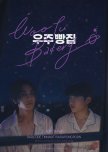
Wooju Bakery: Years of Waiting for Almost Nothing
*Wooju Bakery* was honestly one of the most disappointing series I have watched.
After all the delays, uncertainty, and years of waiting, I expected at least a decent story or an entertaining romance. Instead, the final result felt cheap, childish, confusing, and unfinished. The alien-and-bakery concept could have worked as a silly romantic comedy, but the writing did almost nothing interesting with it.
The plot was weak, the comedy was embarrassing, the romance had very little development, and the acting often felt awkward. I do not blame the cast entirely because the script and direction gave them very little to work with, but almost nothing in the series felt convincing.
One of the most exhausting parts was the constant switching between Korean, Thai, and English. Multilingual dialogue can be interesting when handled naturally, but here it made many conversations feel disconnected and difficult to follow. At times, it seemed as though the characters were barely communicating with each other.
The editing and production also felt strangely incomplete. Scenes moved awkwardly, emotional moments had no impact, and the entire series looked like an old troubled project that was finally released simply because too much time and money had already been spent on it.
The biggest problem is that the long delay created expectations the series could never meet. After waiting for so long, viewers were given a weak story, poor character development, little chemistry, and almost no satisfying payoff.
Overall, *Wooju Bakery* was not merely disappointing because of the delays. It was simply a bad series on its own: poorly written, badly edited, emotionally empty, and far too dependent on the popularity of its actors.
**Rating: 3/10**
Was this review helpful to you?
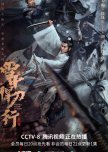
I blame the director.
I blame the director. It's his responsibility to direct the emotions and motivations more realistically, and the pacing of each scene should have been better, especially the action scenes.The plot is passable, although Xu Xiao is like an oracle who knows everything in advance, making it hard for viewers to root for the protagonist.
The pacing of each scene is terrible. The action scenes are just characters standing and swinging their arms using special effects; there's no impressive fighting style or martial arts. The composition of the action scenes is poor. For example, in episodes 26-27, when Cao Changqing is about to kill Xu Feng Nian, Yu Youwei suddenly shouts to stop him without even stepping in. Cao Changqing suddenly changes his mind about killing Xu Feng Nian, acting dazed and not even throwing a punch. It's unrealistic. How could the director create a scene like that? Doesn't he see how bad it is? Besides this scene, there are many other scenes where the characters' motivations and emotions lack realism. The camera angles and dialogue pacing in the action scenes are strange, awkward, and inconsistent.
This is an action series that will make you feel sleepy.
I previously watched "Joy of Life" starring Zhang Ruoyun. He performed very well, and the action scenes were good, so I had high expectations for this series because the screenwriter is Wang Juan and the lead actor is Zhang Ruoyun.
I was disappointed.
Was this review helpful to you?
This review may contain spoilers
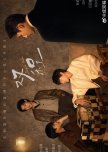
I don't recommend this series at all
The characters were portrayed exceptionally well. I felt exactly what the audience was supposed to feel toward each character—anger, sympathy, happiness, and frustration—which shows how strong the performances were. The old actors, in particular, did an excellent job. I also appreciated how the actors' appearances changed with each time jump. It made the passage of time feel convincing and helped sell the story's decade-long timeline.Because the story spans more than ten years, the drama often feels much longer than its 12 episodes. At times, it even feels like multiple seasons compressed into one. A conflict appears, the characters resolve it, and then another major conflict immediately takes its place. While this keeps the story moving, it also makes the narrative feel repetitive and somewhat exhausting.
The resolution is one of the show's weakest aspects. Instead of resolving conflicts through meaningful character growth or confrontation, the story often removes its antagonists by killing them. It feels less like the characters overcome their problems and more like the writers simply eliminate them. While this works for external villains, it creates a problem when the final conflict shifts toward the protagonist's psychological struggles.
I actually liked how the series gradually built up the protagonist's mental health issues. Looking back, the signs were already present in the very first episode. However, I don't think the execution was successful. The show ends up treating the mental illness almost like another antagonist to be defeated. Unlike the previous villains, though, mental illness cannot simply be "killed" or removed, making the ending feel less satisfying.
Another issue I had was how the series seemed to attribute many of the protagonist's toxic behaviors to his mental illness. Rather than holding him accountable and allowing him to grow, it sometimes feels as though the story uses his condition to justify his actions. As a result, his character development feels incomplete, since meaningful personal change is often replaced with explanation instead of accountability.
I also wasn't a fan of how the supporting cast changed with nearly every time jump. Each new stage of the protagonists' lives introduces an entirely new circle of friends while discarding the previous one. This constant reset made it difficult to become attached to the supporting characters and further contributed to the feeling that I was watching several different seasons instead of a single continuous series.
Overall, Double Helix features excellent performances, convincing time progression, and emotionally engaging characters. However, its repetitive conflict structure, reliance on killing antagonists to resolve problems, inconsistent handling of mental health, and constantly changing supporting cast prevent it from reaching its full potential.
Was this review helpful to you?

I didn't like the actresses before, but now I'm interested in all the actors in this film.
This story is different from other stories. It is very captivating. The acting of both the main character and the supporting character is very good, so it is a good story to watch. I especially like Zhan Linghe. He is more and more charming than before. He also goes well with Tian Xiwei.I like his previous movies even more.No matter how many times I watch this movie, it never gets boring.I want to see more stories we do together.May you achieve many more successes.🐦🔥🐦🔥🐦🔥❤️❤️❤️❤️💕💕💕💕Was this review helpful to you?
This review may contain spoilers
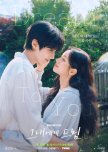
A story about dreams and first love (how long did it last? 4 episodes?, unfortunately)
Dream To You tells the story of Ju Yi-jae, a fearless teenager, dreamed of becoming a filmmaker and loved shooting short films. Her classmate, Woo Soo-bin, was a diligent, obedient student with no personal ambitions. Soo-bin was inspired by Yi-jae's tenacity, and a friendship blossomed between them, eventually leading to romance. However, after the university entrance exams, Soo-bin disappeared when his family, who had always planned his life, sent him to study abroad. Now in their thirties, they lead very different lives and unexpectedly reunite. Yi-jae is a struggling journalist, disillusioned with life and feeling she has fallen into mediocrity, while Soo-bin is an award-winning film director. He decides to help her rediscover her spark, but she remains resentful of what happened in the past.This drama tells the typical story of reuniting with first love, but it does so in a way that captivated me. Although the plot has been seen countless times, the first few episodes were the best. I don't remember ever enjoying the first few episodes so much. The plot, the characters, the flashbacks—everything was wonderful. But, unfortunately, the story takes an unexpected turn. It seems that ENA makes all its dramas captivating in the first few episodes and then ruins the rest, so I should consider not watching any more dramas from this channel. All that drew me in, and the reason I was looking forward to it after seeing the trailers, was a first-love story, the kind we all want to experience. But I don't understand how the series gradually forgot that purpose. The feeling of freshness disappeared to the point that sometimes I didn't even remember they were each other's first love. They seemed like two people who met and simply fell in love without that idea of first love. Scenes I was really looking forward to... In the end, they felt bland, not like in the trailers that excited me so much I wanted to see them. The kissing scenes felt a bit empty without that emotional impact. The point I was definitely hoping for was that they would become a couple, but in the end, I felt nothing. Ha-na's mother is simply a monster. I don't see any chemistry between the secondary couple, to be honest. From the beginning, I was rooting for the leads. Another problem is the changes the characters underwent. Woo Soo-bin went from being simply charming to losing all his charm. Ju Yi-jae went from being such an energetic fighter, which is what captivated me about her, to losing all of that. Their wonderful chemistry was affected by that unstable plot, which is sad. I was hoping to see Baek Seong-cheol again because his characters captivated me, but this one didn't, and that hairstyle doesn't suit him at all. It seems the producers of ENA... love having the irritating ex appear in every show on this channel, and there's absolutely no need for him to be there. It was supposed to be exciting to see them make their movie, but in the end, I liked the one they made about their past better; it felt better because now they don't seem to be making any progress at all. The third couple is one of the worst you'll ever see; she just used him for fun, and that's it, and the poor guy was supposedly in love. The series introduces so many subplots that there's no screen time left for the main characters, and these subplots are pure filler and barely developed. As for clichés, this series uses several, and I'm not just talking about the first romantic reunion, but also: abusive parents, the protagonist who goes abroad and leaves his partner (who surely returns and they live happily ever after), the ex who comes back and is just a nuisance, and above all, that stupid breakup: who comes up with that in a serious drama?
3.709
The drama uses somewhat repetitive characters, seen in other dramas. Speaking of the secondary characters, the lead couple had good chemistry that could have been perfect were it not for a weak script. A sincere question: in the towns depicted in ENA dramas, are there only elderly people? Were our protagonists the only young ones?
Here is my analysis of the main characters:
Woo Soo-bin (Hwang In-yeop): A brilliant film director. After spending his adolescence immersed in the world created by his parents and his twenties breaking free from his shell and running fiercely, he finally achieved his dream of becoming a film director. After a spectacular debut with his first feature film, which swept international festivals, he returns to Korea to reunite with his first love, the person who instilled the dream in him and with whom he promised to make films.
I must say that Hwang In-yeop's acting surprised me. I didn't think he could create such a charismatic character, so different from his role in True Beauty. Unfortunately, his character gradually loses its charm and ends up being quite meh. In the romantic scenes, there was hardly any emotion. Even so, he did a good job, as I feel it was all about the character and not his actual acting skills.
Ju Yi-jae (Lee Hye-ri): A journalist struggling to make a living, gifted with passion and talent. She was a fearless teenager driven by a dream, and later a twenty-something frustrated by harsh reality; now she lives in an existential void, like so many other anonymous people.
This is my first time seeing Hye-ri, and I loved her, but just like with Hwang In-yeop, her character gradually loses all her energy and charisma, and that drive she had in the first two episodes. But I think she's a good actress.
Shim Yu-geon (Baek Seong-cheol): an aspiring actor who still gets nervous in front of the camera.
I was looking forward to seeing Baek Seong-cheol again, but his character disappointed me. I didn't like him as much as in his other projects; he was too selfish, and that haircut just didn't suit him. The chemistry with Ha-na was simply nonexistent.
Oh Ha-na (Lee Yeol-eum): A rising star.
I didn't dislike her character, but she was pretty meh, to be honest. But all in all, good work.
This drama missed many opportunities with its characters. They were introduced and then left flat. The third couple was simply filler. What happened to Yu-geon's father? What about Soo-bin's father and his divorce? They never showed Gu-yeon in high school. What about Ha-na's mother and her relationship with her children? Everything was left incomplete.
The OST isn't extraordinary, but there are some songs I liked, including "Beyond The Dream" (a gem), "Sailing Back To You," and "My Everything." The rest just weren't to my taste.
Would I watch it again? I think if I do, it'll be for the first two episodes, but if I had to choose, I wouldn't watch it again, honestly.
In short, Dream To You is a drama about first loves and dreams, which unfortunately suffers from so many poorly developed subplots that the main storyline gets sidelined and underdeveloped, leaving many things unresolved. Even so, I enjoyed the first few episodes and they inspired me to want to experience my first love (although I already did, but not in the way I wanted, since I couldn't do anything with her, but she still brought some light to my life, even if it was from afar) :( . Overall, I'd give it a 7.5/10. It could have been one of my favorite dramas, but due to a lack of ideas, it fell into the same old patterns.
Despite all this, I didn't hate the drama, but it did get boring in parts. I'm disappointed.
THANKS FOR READING
Was this review helpful to you?
This review may contain spoilers
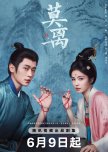
Beautiful, Addictive, and Emotionally Complex, but Weaker Toward the End
While I was watching The First Jasmine, I was completely immersed. It was the kind of drama that constantly made me curious about what would happen next, and I became so attached to its world and characters that I felt strangely empty after finishing it. Perhaps binge-watching intensified that feeling, but I also think the final few episodes were genuinely underwhelming compared with everything that came before them.For me, the first thirty episodes were the strongest part of the drama. I loved Ye Li and Xi Yao’s marriage era, the political intrigue, the revenge storyline, and the way Ye Li moved through the story while secretly pursuing her plans. Their divorce arc genuinely broke my heart, but it was also incredibly well executed. The moment Xi Yao discovered how ill she was, along with the eventual revelation of what had happened on the mountain, was one of the emotional peaks of the entire drama. Everything leading up to that point felt intense, layered, and deeply engaging.
Ye Li is easily one of the most fascinating female characters I have encountered in a historical drama. She is deeply broken, psychologically complicated, and filled with layers that are gradually uncovered throughout the story. Her trauma, anger, determination, and self-destructive tendencies made her unpredictable and compelling. Bai Lu gave one of her strongest performances here. She portrayed Ye Li’s pain and emotional instability with so much depth that I could not look away. Her acting was immaculate, particularly during the heavier and more heartbreaking moments.
However, Ye Li gradually seemed to lose some of her spark toward the end. The revengeful, determined energy that made her so intriguing began to fade, and even though the final confrontation should have been her defining moment, it did not carry the emotional impact I expected. After such a memorable portrayal of her trauma, the conclusion to her revenge felt strangely muted. The revenge plot did not provide enough closure or transformation, especially considering how much of the drama had been built around it.
I also loved Xi Yao, particularly during the first half of the drama. It was refreshing to see Cheng Lei play a vulnerable and physically broken character rather than the powerful, commanding roles I usually associate him with. His performance while Xi Yao was confined to the wheelchair was incredible, and his quiet pain, loyalty, and emotional restraint were beautifully portrayed. He also looked amazing with the grey hair; that entire look was such a refreshing change for him.
Unfortunately, Xi Yao became increasingly sidelined as the story progressed. He was no less a victim of what had happened, so I strongly felt that he deserved to be involved in the final confrontation. I understand allowing the heroine to lead the finale of a female-centered revenge story, but completely pushing the male lead aside made the ending feel incomplete. His character had so much emotional depth and potential, yet the drama gradually reduced his importance. Even during the war sequences, we barely saw him fight, which felt like another wasted opportunity, especially because Cheng Lei is so good in action scenes.
The relationship between Ye Li and Xi Yao was essential to the story, even though the drama was never romance-centered. Their love helped both of them heal. Ye Li did not simply recover on her own; through Xi Yao, she found someone who remained beside her, while she also helped him rediscover his will to live. Their connection was therefore more than a romantic subplot—it was part of both characters’ emotional journeys. That is why I was disappointed when the drama gradually moved away not only from their romantic scenes, but from the healing relationship itself.
I actually enjoyed the slow-burn romance for most of the drama. Their love was gentle, warm, supportive, and often unspoken rather than passionate or electric. They sometimes gave me the feeling of an older married couple, and I do not necessarily mean that negatively. Their affection came through in the quiet gestures, particularly from Xi Yao, who carried much of the romantic side of the relationship. Ye Li was written as emotionally closed off and could sometimes feel like a block of wood when it came to expressing affection, so most of the direct romantic gestures came from him.
The problem was not the lack of kissing or intimate scenes. The drama worked perfectly well without them. My issue was the way so many promising moments between the couple were abruptly cut short. Just as a scene began building emotional closeness or chemistry, it would suddenly move elsewhere. The romance constantly felt within reach but never fully explored. The actors did have a warm spark, particularly earlier in the drama, but the script and editing did not allow that chemistry to develop naturally. By the end, it felt as though the connection had faded—not because the relationship itself lacked potential, but because the drama kept taking time away from it.
Their dynamic was also weakened by Ye Li constantly acting behind Xi Yao’s back. They shared the same enemies, goals, and ambitions, yet they continued walking toward those goals separately. Even when Xi Yao understood what she was doing, Ye Li rarely chose to place her trust in him and work openly beside him. I would have preferred to see them combine their strengths and pursue their shared goal together rather than repeatedly taking different roads toward the same destination.
I also think some viewers misunderstood Xi Yao’s decision to leave her. He needed to be hurt and broken by Ye Li before he could truly understand her pain and ultimately help her heal. His actions make more sense when viewed through the emotional complexity of both characters rather than simply as a romantic betrayal. With characters this complicated, criticism and differing interpretations are inevitable, but that complexity is also one of the drama’s greatest strengths.
Beyond the leads, the drama introduced many interesting characters and storylines that never reached their full potential. Han Mingxi seemed as though he would play a more consequential role, and his interactions with Ye Ying had so much entertaining potential. Mo Jingli was perhaps the greatest missed opportunity. He was intelligent, cunning, and morally layered—a man pursuing what he believed was a just cause through questionable methods. Yet the narrative gradually diminished his motivations, intelligence, and overall importance as it approached the finale.
This became the drama’s biggest weakness: it tried to handle too many themes, characters, and conflicts without properly completing all of them. Many characters initially appeared to possess genuine agency and complexity, only to be pushed into familiar tropes or sidelined when the story needed to conclude. The ending closed several plotlines and was technically happy, but it did not feel like a proper emotional goodbye. We barely saw the main couple together, Xi Yao was largely absent, and even Ye Li no longer felt fully present in her own story. After spending so much time with them, I wanted a conclusion that allowed their relationship and individual journeys to breathe.
Visually, however, the drama is absolutely stunning. The costumes are beautifully designed, the cinematography is gorgeous, and the entire production is rich, colorful, and vibrant. The styling, sets, and use of color created a world that was consistently beautiful to look at.
The music deserves even more praise. This drama has one of the best and most memorable soundtracks I have heard. I do not mean only the OST songs, although those are also beautifully done—the background score itself is phenomenal. The music elevates the tension, heartbreak, mystery, and emotional weight of so many scenes. It remained in my mind long after the drama ended, and it is easily one of the strongest aspects of the entire production. Honestly, well done.
Despite my frustrations with the final stretch, The First Jasmine contains so many memorable scenes, complex characters, and excellent performances. It is an unusual mixture of revenge, politics, trauma, healing, and subtle romance. I would not recommend watching it solely for the romance, because the relationship supports the story rather than carrying it. Those expecting a highly passionate or intimacy-heavy romance may be disappointed. However, anyone interested in a compelling storyline, emotionally damaged characters, stellar acting, and a beautifully produced historical drama will find plenty to appreciate.
The ending may not have delivered everything the earlier episodes promised, but the journey was still exciting, emotionally absorbing, and different from the typical romance-focused historical drama. Despite its flaws, I would definitely recommend it.
Was this review helpful to you?
This review may contain spoilers
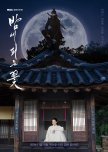
Knight Flower (2024) is a great thrilling Korean comedy set during historical times with ML: Lee Jong Won (as Park Su Ho) and FL: Lee Ha Nee (as Cho Yeo Hwa) in the leading couple role. This is a star studded drama with fantastic performances, writing and editing, music. choreography, costumes, and direction. The chemistry among the cast was remarkable and, even though there were no romantic scenes between the leading couple, one can see and feel their growing likeness and respect for each other. There is great storytelling between the present time and the events from 15 years prior that links 3 families and the royal palace to bring about a story of palace intrigues, pursue of justice, and a fated and heart fluttering love story. Overall, this drama is excellent and entertaining; enjoy it!SPOILER ALERT:
For romance seekers, the drama might get 9 stars because the romance was beautiful but toned down without intimate scenes.
Was this review helpful to you?
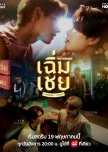
TutorYim’s Off-the-Charts Chemistry Wasted on a Plotless Mess
Tutor and Yim are a stunningly gorgeous pair, and because of them, I had massive expectations going into this. The first episode absolutely hooked me—the chemistry was there, the settings were beautiful, and the color grading was gorgeous. Unfortunately, it went downhill fast after that.There is essentially no plot. If you asked me what this show is about, I couldn’t tell you other than "two people meet and run a restaurant together." While I liked the quirky, unserious vibe at first, it often crossed the line into cringe. The editing was incredibly jarring, cutting from one scene to another with zero flow.
The only saving grace was Tutor and Yim's off-the-charts chemistry, but even that was underutilized. The romance scenes felt short and underwhelming. I ended up skipping through almost every episode just to see their scenes—I was simultaneously interested in them and completely uninterested in the actual show. Watch it for the visuals, but keep your fast-forward button handy.
Was this review helpful to you?
This review may contain spoilers
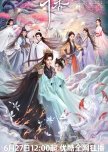
Good and Evil Through the Tragedy of Choice
Waiting for a drama to premiere is an act of faith, and my journey with this one was a test of patience. At first glance, the storytelling felt muddled, a puzzle with pieces that didn't quite seem to fit. It wasn’t until the narrative settled into the familiar rhythm of the academy that it truly found its footing, building a genuinely compelling momentum. If I had to draw a line, the first half of the drama was a solid, engaging watch. The second half, however, wasn’t as satisfying; it stumbled where it should have soared. And yet, even in its imperfection, the final episodes held moments that resonated with a quiet power, leaving a bittersweet taste that lingers longer than a more polished, forgettable finale.
Having seen other adaptations of this author’s work, I was prepared for a certain formula. I tried not to make comparisons, but the echoes were impossible to ignore. The drama leans heavily on familiar, even overused, tropes: the immature and childish female lead who eventually matures, the enemy-to-lovers dynamic, and a collection of obsessed, psychopathic male characters who blur the line between antagonist and outright villain. I had hoped that the second male lead, Ji Tongzhou, would be a complex antagonist rather than a full-blown villain, but the story took a darker, more definitive path—a common tragedy in these sprawling cultivation tales.
What truly anchors this story, however, and what saved it from being a simple trope-fest, is its core theme. Beneath the flashy CGI and frantic pacing lies a poignant exploration of nature versus nurture, of birth versus choice. The drama masterfully deconstructs the very foundation of its world. Everyone speaks in hushed tones of a past catastrophe, a great war between immortals and demons. The elders, draped in the robes of sages, indoctrinate a new generation to hate a faction branded as evil by birth and origin. But the truth they so carefully conceal is far more damning: the sages were never truly sages, and the devils were never born evil.
This hypocrisy is the engine of the drama’s tragedy. The so-called righteous immortals, led by the sanctimonious Cui Xuan, are driven by greed and a hunger for power they mask as divine justice. Cui Xuan’s secret prison, the Xiaoqian World, where he drains the life force of demon spirits to fuel his own cultivation, is a more horrifying evil than any act committed by the demon clan in the show. He didn't just kill Qing Cheng (Wu Gen), the master who chose love and redemption over transcendence; he betrayed the very essence of their brotherhood, exploiting his trust to imprison and eventually murder him. This act of intimate betrayal is the true face of "righteousness" in this world, a far cry from the "evil by birth" he projects onto the demon clan.
At the heart of this conflict stands Lei Xiuyuan, the demon lord Ye Cha. He has every conceivable reason to become the monster the world insists he is. He is born under a curse that forces him to consume the very personification of life, Jianmu (Jiang Lifei), or suffer a soul-shredding death. He is hunted, blackmailed, and manipulated by a scoundrel like Zhen Yunzi, who uses his dying brother Lu Shanhua as a puppet. The world, including the woman he loves, is a constant crucible encouraging him to embrace his inherent darkness. His fight is not just against external enemies, but against his own cursed nature, which drives him to uncontrollably hunger for the very scent of Jiang Lifei’s life force.
And yet, his defining act is defiance. His greatest strength isn't his terrifying demonic power, but his unflinching choice to be good. His iconic line, "Xin zhi suo xiang cai shi xuan ze" (What the heart desires is the true choice), isn't just a slogan; it's his life's thesis. It’s the mantra he clings to when resisting the soul-corrupting magic, when refusing to harm Jiang Lifei even to save himself, and when ultimately sacrificing his life to shatter her chains and set her free. He is a character who embodies the drama’s soul: a person born to be a villain, given every justification for villainy, who instead uses his power to protect the world that despises him. His internal battle is far more compelling than any external sword fight.
Juxtaposed against him is Ji Tongzhou’s downfall, which is a perfect, tragic foil. Unlike Lei Xiuyuan, who resists his cursed bloodline, Ji Tongzhou is consumed by a self-created one: his obsessive love for Jiang Lifei. He starts as a loyal friend but spirals into a demon of his own making, cloaking his possessiveness and ambition in the language of protection. He doesn't need a curse to absorb Jianmu's power; he does it out of a chilling sense of entitlement. His moral decay is so complete that he murders his oldest friends, in a fit of rage after being confronted with his own hypocrisy. In the end, he’s a hollow figure, painting portraits of a woman who will never love him, having destroyed every genuine connection he ever had. His tragedy isn’t his love; it’s his choice to let that love fester into a tyrannical need to possess, turning him into the very monster he claimed to fight.
Jiang Lifei, too, evolves from a source of frustration to a pillar of strength. Her initial childishness is grating, but her journey is one of painful awakening. She learns that the world her master Qing Cheng wanted to protect is full of wolves in sheep’s clothing. Her most powerful moments are when she sheds her naivete, like when she mocks the assembled immortals at her public trial, brilliantly exposing Cui Xuan’s plot to enslave them all with her trap-like chains. Her decision to stand against the sea calamity at the end, not as a sacrifice to a cruel world but as a fulfilment of her master’s dream, completes her arc from a naive girl to a self-possessed woman who understands that true power is not in one's origin but in the sacrifice one is willing to make.
Sadly, this beautiful, thematically rich narrative is trapped in a flawed vessel. The acting is inconsistent, often failing to carry the heavy emotional weight of the plot. But the real villain of the production is the post-production work. The CGI and editing are, to put it bluntly, a hot mess. At times, the garish graphic effects were so blinding that I nearly dropped the drama. The editing gives the show a frantic, breathless pace, butchering scenes that should have been given time to breathe and resonate emotionally, leaving the viewer feeling pummeled rather than moved.
It’s a story that understands that the most profound monsters are not born in the netherworld but in the secret chambers of a hypocrite’s heart, and the truest hero is the one who conquers the monster within himself.
Was this review helpful to you?

Healing each other
It was a sweet story about 2 people healing each other. The visuals were good, the music was beautiful. The story was ok, but didn't feel complete. The production was messy. A big filming mistake in episode 2. He ordered an iced americano, but the server gave him a metal mug for hot coffee and it was empty...The acting was ok. There was a bit chemistry, the kisses were ok thanx to Kim Beom Gyu. It's such a shame when one actor gives his all with kissing and the other hardly moves his mouth...
Was this review helpful to you?

This review may contain spoilers
Comedy From Afar, A Tragedy Up Close
Tan Jian Ci does a phenomenal job in his portrayal of the ML and manages to turn a crabby, dislike-able ML into someone kinda cute. Don't get me wrong, TJC carried the drama and without him, this easily could have been an angsty melodrama. He has a natural talent for comedy and tongue-in-cheek moments. If it weren't for him, I most likely would have dropped the drama.But please, let's be serious. The ML is a love that I don't wish upon anyone. Who else would want a crabby, sarcastic, sometimes downright rude good-for-nothing that cannot wash dishes, cook, clean, or do laundry and thinks the whole world runs around him. It might give viewers a little PTSD because we all know someone like this, but they often are not some conglomerate group's heir.
From afar, it's a comedy but up close, it's a tragedy. The poor FL who was on track to being a trad wife gets dumped by her fiance for a rich girl and her earnesty taking care of him and his whole family is thought of as suffocating. But because she was so set on being a trad wife, FL gave up a lot of career opportunities. Not only does she end up broke from buying a marital home by herself, she also has no job prospects and is taken advantage of multiple times by many different people. As the author would have it, the ML comes in and saves the day every time something happens. He loans her money, teaches her how to navigate work, diffuses or resolves plots against her, and eventually gives her a job (multiple times). It is safe to say that without ML, FL would have been cannon fodder and likely would have just been another unfortunate scapegoat. Unfortunately, she is also accompanied by several well-meaning but troublesome friends who don't always make the situation better and only add to the situation.
Needless to say, my issues lie with the script and characters but not the actors themselves. Wang Chu Ran does a great job in this drama because she manages to balance the fine line between drama, comedy, and tragedy. It's just TJC blows the entire cast out of the water in this one because he quite literally dominates the screen. In short, it's a male-saviour drama where the ML saves the damsel in distress. While it's not outright misogynistic, there are enough red flags for you to not love it and rewatch it later.
Red Flags (not an inclusive list):
- The streamer/front desk/dancer friend x the stalkerish gamer couple = No, just no. Completely omitting them would have made the drama better
- The random mini break ups the main couple goes through followed by reconciliation without changing any behaviors
- The last minute selling of the house because the ex's mom is sick (bro, there's literally no obligation to do anything for them anymore)
Was this review helpful to you?
This review may contain spoilers
I’m literally crying laughing ? dynamic duo of the year already!
Okay, so I randomly picked up this drama because I love Ji Sung, and Oh My God, I’ve only watched the first two episodes and I am already obsessed! My stomach genuinely hurts from laughing so much. If you need something light, super funny, and chaotic for the weekend, this is IT.The whole plot is just so wild and unhinged. You have this ex-gangster boss who decides the best way to steal 10 billion won is by becoming the president of an apartment complex. Like, who even thinks of that?! But the real gold is the "fake family" setup.The fake wedding scene in episode 1 had me rolling on the floor. Ji Sung and Ha Yoon-kyung have this weird, bickering chemistry that just works so well. One minute they are faking a romantic moment with a thumb-kiss, and the next minute they are arguing like they’ve been trapped in a toxic marriage for 50 years. Ha Yoon-kyung is such a breath of fresh air here—she’s so chaotic and money-minded, I love her character already.And Ji Sung? The man never misses. He looks so intimidating but then does the goofiest things while dealing with the nosy apartment aunties and grandpas. The entire neighborhood is full of weird, shady, and hilarious people, which makes the whole vibe feel like a complete madhouse.It honestly reminds me a bit of The Fiery Priest or Vincenzo vibes where it's a crime/heist story but the comedy is just turned up to 100.Only two episodes in, but I'm 100% hooked. If they keep up this exact energy and comedy timing, this is easily going to be one of my favorite watches this year. Go watch it right now, you won't regret it!Was this review helpful to you?
This review may contain spoilers
I'm hooked!!! (Past Tense)
This show had the best intro episodes I've seen in a while! wow so, so, so perfectly done.I have with just 2 episodes watched the perfect understanding of who these characters are, the mains and support too and so far it's good!! So good in fact that I'm scared of how the 10 next episodes are going to keep this up. Is it going to be this good for all 12? Is it going to slowly go downhill and end up being trash? Somewhere in the middle, maybe? Probably?
I don't know, I truly hope that it keeps going this well, but I've been disappointed too many times before to be confident that it will. For now it's a 10/10 and I cannot wait to watch more.
I am so into this drama! episodes 3-4 were just as good as the first two episodes , I'm so happy with how the story is developing and how the characters interact with each other.
The plot is nothing new, we pretty much can tell what is going to happen next but the chemistry between the actors is so fantastic and the acting is so good that in my opinion it is worth watching 100%. There's still plenty of time to mess it up so I'm not going to say that this is the best drama ever or whatever but, so far so good and still a 10/10 for me.
Well, it happened, my expectations for this drama have dropped one the one end, Hana's mom sucks!! I might hate her more than I do Soobin's dad so that gives me a good villain to hate, but I jae has become an annoyance for me I don't dislike her but she's making it really hard for me to root for her.
I'm updating my rating to an even 8.0 and I am treating the Hana and Yugeon pairing as the main plotline because honestly it's the better plot and their chemistry is fire!
I know not to get my hopes up and yet I do every single time, episode 8 felt like a waste of time most of it spent on the annoying "Jelous for absolutely no reason" trope, it would've been so much better if it focused on the scandal and more Hana and Yugeon instead. I didn't care much for third couple as that plot thread felt completely removed from the story and now that it's somewhat integrated I don't care at all. There are only 2 episodes left to go and I'm just hoping that it ends well for Hana, I thought I was going to hate her when she was first introduced and she became the best characters in the entire series, I absolutely adore her.
I was hooked! they had me excited and hopeful for a 10/10 drama, but they lost me. I came here today to watch the final two episodes and as soon as I clicked on episode 11 I regretted waiting until today because it meant I had 2 more hours of this instead of one. I am utterly disappointed, the ending was fine same old same old, what started as a possible 10 for me ended as a very generous 6.
Was this review helpful to you?
🌟 What Makes It Special
1. A Poetic Exploration of Grief and Connection
Rather than relying on cheap melodramatic tropes, Beyond Goodbye treats its supernatural premise (cellular memory) with incredible gentleness and maturity. It’s not just a romance; it’s a profound meditation on how we process loss and whether the essence of a person can truly survive after they are gone.
2. Spellbinding Performances
The chemistry between the lead actors is the beating heart of the show:
Kasumi Arimura (as Saeko) delivers a masterclass in quiet, devastating grief. You feel every ounce of her longing and confusion.
Kentaro Sakaguchi (as Naruse) brilliantly navigates the complex, jarring experience of a man caught between his own identity and the foreign emotions taking over his body.
3. Breathtaking Visuals and Atmosphere
Set against the stunning, snowy landscapes of Hokkaido and the vibrant streets of Hawaii, the cinematography is nothing short of cinematic. The contrast between the cold, serene environments and the warm, aching emotions of the characters makes every frame look like a painting.
4. A Soulful Soundtrack
The music, featuring a hauntingly beautiful theme song by Hikaru Utada, perfectly mirrors the melancholic yet hopeful tone of the series. It gently pulls at your heartstrings without feeling manipulative.
8.5/10
"A breathtakingly sad, yet incredibly comforting watch."
Beyond Goodbye is a masterpiece of modern Japanese television. It takes a premise that could easily have felt cheesy and elevates it into a deeply respectful, visually gorgeous, and emotionally raw story about love's endurance. It’s a must-watch for anyone who appreciates a mature, deeply felt romantic drama.
Was this review helpful to you?
Good plot!
This was a good crime BL with a good plot.The fight scenes were good! It had good visuals and the music was good enough for the drama.
Kim Kyung Min wasn't really convincing as a cop. But the overall acting was very good.
The mains had good chemistry and the kisses were good.
I recommend watching.
Was this review helpful to you?


