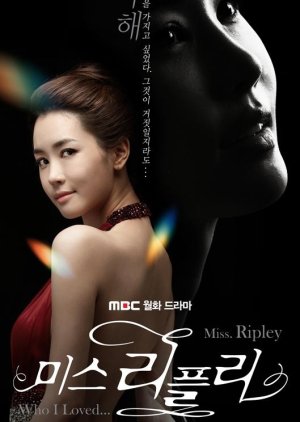
Both female protagonists want a higher social status since they've experienced abandonment when they were kids. They both lie and act in accordance to what they want to get

The fact that these 2 dramas have pretty much nothing in common. The only thing in common is that no matter how despicable the main female is I just can't seem to hate her. And same goes for 2nd female lead too. In both dramas I also dislike the male cast except that one cutie. In CS it's Taecyeon's chara and in MR it's Micky's chara. They're the reason why you just want to finish the drama.
Plus the dramas itself are quite similar in the aspect that they're so difficult to marathon. At least for me.
Plus the dramas itself are quite similar in the aspect that they're so difficult to marathon. At least for me.

Yuchun stars in both dramas as almost the same character: a cute sensible guy with Korean father and Japanese mother, he inherits a business with hotels..he falls for a woman who comes from Japan..
I strongly recommend both of them!! They're both worth watching~!!
I strongly recommend both of them!! They're both worth watching~!!


Miss Ripley and Dear X are similar because both focus on ambitious women who reinvent themselves through lies and manipulation to escape painful pasts. Jang Mi-ri in Miss Ripley fabricates her background and qualifications to gain wealth and status, while Baek Ah-jin in Dear X carefully crafts false personas and manipulates others to achieve fame and success. Both protagonists are driven by a desire to leave behind lives marked by trauma, neglect, and insecurity.
Another key similarity is that their traumatic childhoods shape many of their decisions. Rather than trusting others, both women learn to rely on deception as a survival tool. As they rise in society, they become increasingly trapped by the very lies that helped them succeed, causing harm to the people around them and damaging genuine relationships.
Both stories also feature men who fall in love with the protagonists, often seeing them as kind or vulnerable women. However, Mi-ri and Ah-jin frequently use these relationships to further their goals, making love secondary to ambition. This creates emotional conflict as their personal and professional lives become more entangled.
Ultimately, both Miss Ripley and Dear X explore the consequences of building a life on deception. The main difference is that Miss Ripley is a melodrama centered on fraud and social climbing, while Dear X is a darker psychological thriller that examines manipulation, fame, and emotional detachment in greater depth.
Another key similarity is that their traumatic childhoods shape many of their decisions. Rather than trusting others, both women learn to rely on deception as a survival tool. As they rise in society, they become increasingly trapped by the very lies that helped them succeed, causing harm to the people around them and damaging genuine relationships.
Both stories also feature men who fall in love with the protagonists, often seeing them as kind or vulnerable women. However, Mi-ri and Ah-jin frequently use these relationships to further their goals, making love secondary to ambition. This creates emotional conflict as their personal and professional lives become more entangled.
Ultimately, both Miss Ripley and Dear X explore the consequences of building a life on deception. The main difference is that Miss Ripley is a melodrama centered on fraud and social climbing, while Dear X is a darker psychological thriller that examines manipulation, fame, and emotional detachment in greater depth.

Miss Ripley and The Art of Sarah are similar because both center on women who reinvent themselves through deception to escape difficult pasts and achieve wealth, status, and success. Jang Mi-ri in Miss Ripley fabricates her background and qualifications, while Sarah Kim in The Art of Sarah creates an entirely new identity to gain entry into elite social circles.
Both stories explore social climbing, ambition, and the consequences of living a lie. The protagonists come from troubled backgrounds and become increasingly dependent on their false identities as they rise in society. Their actions often hurt the people around them, but their struggles and motivations make them more tragic anti-heroines than outright villains.
The main difference is that Miss Ripley is a melodrama focused on romance and personal downfall, while The Art of Sarah is a mystery thriller that places greater emphasis on identity, manipulation, and suspense. Overall, both stories examine how far someone is willing to go to escape their past and create a better life for themselves.
Both stories explore social climbing, ambition, and the consequences of living a lie. The protagonists come from troubled backgrounds and become increasingly dependent on their false identities as they rise in society. Their actions often hurt the people around them, but their struggles and motivations make them more tragic anti-heroines than outright villains.
The main difference is that Miss Ripley is a melodrama focused on romance and personal downfall, while The Art of Sarah is a mystery thriller that places greater emphasis on identity, manipulation, and suspense. Overall, both stories examine how far someone is willing to go to escape their past and create a better life for themselves.

Miss Ripley and Eve are similar because both center on women who hide their true selves in order to achieve their goals. In Miss Ripley, Jang Mi-ri fabricates her background and credentials to climb the social ladder, while in Eve, Lee Ra-el conceals her true intentions as she infiltrates the lives of powerful people to carry out a long-planned revenge. In both dramas, the protagonists carefully manipulate those around them and maintain convincing false personas.
Another similarity is that both women are driven by trauma. Mi-ri’s difficult childhood and experiences with exploitation push her toward deception as a means of survival, while Ra-el’s quest for revenge stems from the destruction of her family. Their painful pasts shape their actions and make them more complex than simple villains or heroines.
Both dramas also feature themes of ambition, power, and the consequences of manipulation. The protagonists become entangled with wealthy and influential people, using charm, intelligence, and emotional influence to get what they want. As their schemes grow more complicated, the risk of exposure increases, creating much of the tension in both stories.
The main difference is that Miss Ripley is a social-climbing melodrama focused on fraud and personal ambition, whereas Eve is a revenge thriller. Mi-ri lies to build a better life for herself, while Ra-el uses deception primarily as a weapon against those she believes ruined her life. Despite this difference, both dramas explore how trauma, obsession, and deceit can consume a person and affect everyone around them.
Another similarity is that both women are driven by trauma. Mi-ri’s difficult childhood and experiences with exploitation push her toward deception as a means of survival, while Ra-el’s quest for revenge stems from the destruction of her family. Their painful pasts shape their actions and make them more complex than simple villains or heroines.
Both dramas also feature themes of ambition, power, and the consequences of manipulation. The protagonists become entangled with wealthy and influential people, using charm, intelligence, and emotional influence to get what they want. As their schemes grow more complicated, the risk of exposure increases, creating much of the tension in both stories.
The main difference is that Miss Ripley is a social-climbing melodrama focused on fraud and personal ambition, whereas Eve is a revenge thriller. Mi-ri lies to build a better life for herself, while Ra-el uses deception primarily as a weapon against those she believes ruined her life. Despite this difference, both dramas explore how trauma, obsession, and deceit can consume a person and affect everyone around them.

Lee Dahae lies a whole lot in both of these, and both of her towers of lies eventually crumble. Jang Miri lacks the sweetness and morals that made Yoorin lovabl and redeemable. If Yoorin did not have an accomplice in Gongchan and My Girl was washed about a million shades darker and angstier, these would virtually be the same drama.

Both characters start from impoverished and exploited backgrounds, but end up assuming a new identity to live a different life. While Miss Ripley does it out of more self-preserving and materialistic reasons, Lady Ok finds new purpose in her new identity and the ability to help others outside of herself.




One woman dupes the art world, climbs the social ladder and, almost, gets away with it.
Drama "Miss Ripley" is based on the real life case of Shin Jung Ah, a university professor and art curator at Dongguk University who was discovered to have forged her credentials from Yale and the University of Kansas in order to get hired, with the help of her boyfriend (then presidential secretary) Byun Yang Kyoon, and embezzled money from the Sungkok Art Museum of which she was curator.
Drama "Anna" is about a lady who started a small lie that will eventually lead to her living another woman's life.
Drama "Miss Ripley" is based on the real life case of Shin Jung Ah, a university professor and art curator at Dongguk University who was discovered to have forged her credentials from Yale and the University of Kansas in order to get hired, with the help of her boyfriend (then presidential secretary) Byun Yang Kyoon, and embezzled money from the Sungkok Art Museum of which she was curator.
Drama "Anna" is about a lady who started a small lie that will eventually lead to her living another woman's life.