This review may contain spoilers
The thing about this show is that starting from the first scene right to the end, there is nothing that can be considered filler content. Nothing is done without reason. You are given a puzzle of a story but the truth is it's not about the answer to the puzzle but about the things you learn getting to it. In a time, where people only want guilty pleasure and happy happy happy, this show gives a voice to so many children who are ignored every day. I'm one such survivor and this story got to me in a way that is hard to explain. Children of Nobody. Can there be a more heartbreaking phrase? The actors made it so you get lost in the fantasy and even root for the villain at times I believe that was the point. That people lose their way. N's story was the saddest and no spoilers but I'm glad finally in a TV show this topic was touched. Honestly just a phenomenal script and acting I wish there were more like this one. Was this review helpful to you?

A strong production. A bold story that comes across without make-up by Korean standards
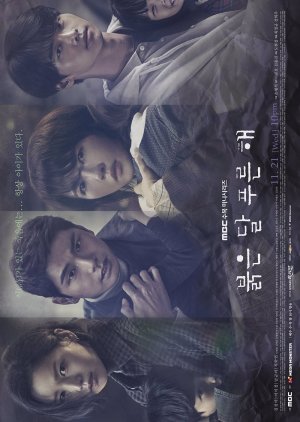
If you're looking for a KDrama of the usual type, then you won't find it in "Children of Nobody". Here you are dealing with an impressive psychological thriller with lasting influence that comes across without make-up by Korean standards. This is about child abuse. The powerful here are not the economic giants, but the parents in their sacred halls. Not funny. The story wants to stir you up and it does. In the original, the title is actually "Red Moon, Blue Sun" and alludes to modern South Korean poetry that has been quoted several times. In connection with the crimes against children, poetry seems downright paradoxical.If "Children of Nobody" at the time didn't make spectacular waves in the ratings, it's not because it wasn't done convincingly, but because there are a large number of unreported families in South Korea for whom physical abuse and the "stick of love" are still taken for granted. Sooner or later, these viewers would have to take a good look at their own noses. The topic is treated in a differentiated manner from a wide variety of perspectives.
----------------------------------------- SIDE NOTE: --- child abuse vs free, upright citizens ---
If people are broken mentally and physically from an early age, how are they supposed to learn to live as upright citizens? The road to free, responsible citizens still seems a long way off. 20/30 years ago in South Korea - without high technology, ubiquitous internet and social media - many people in their personal world largely only knew people for whom these practices of physical abuse were also a matter of course. The children and young people of today and the young parents of tomorrow, on the other hand, grew up in a time when they could learn a lot more about alternative living environments, value systems and educational concepts through the media. The field of consciousness is expanding. Conflicts with traditional structures arise. New perspectives are given space. In the exchange via social media, resistance and support can form, discussions are held and new values and self-images spread. Change becomes possible.
---------------------------------------------------------------
KDramas increasingly provide positive models of how things must become different in the future. In its own way, it tries to straighten things out in the context of child abuse that many take for granted.
Therfore "Children of Nobody" is a strong production. A bold story. A commitment to a future with free, responsible citizens - precisely because they are ruthlessly confronting with where society (in South Korea) actually stands.
Fantastic actors. Captivating story. Highly valuable.
Was this review helpful to you?
Was this review helpful to you?

As a big fan of thrillers, horrors, and criminals I quickly added this drama to my watchlist when it popped out at my recommended page. However, as I lately often end up getting this feeling of disappointment at the end of the drama, either because of the plot holes or tension lost halfway through I didn't watch it immediately nor started watching it with big enthusiasm.
I did have some hopes as I started watching when I found out that Children of Nobody has the same screenwriter as Achiara which I really enjoyed, but worrying that it would end up being another overdramatized, not too interesting series my hopes weren't too big.
How happy I was to find out I had no reason to be worried. From the first episode, I fell in love with the atmosphere, tension, acting, characters... The whole drama in general. I couldn't wait for the next episodes to come up getting all excited since the morning of the day they were coming out.
Obviously, I was still kinda anxious since let's be real here, it happens often that the captivating drama you would recommend to everyone at first becomes a draggy, filled with plot holes mess at the end.
It wasn't the case this time. Children of Nobody gets more interesting as we go deeper, the plot is developing and getting even more intriguing as the action develops, the characters are acting logically are well build and thought through, plot holes are nowhere to be found, therefore as I was watching I was getting more and more invested.
This drama also became the first drama that I'm currently watching with my parents. We are not watching new episodes together but I'm watching them one more time when the lyrics in my native language come out since neither I or my parents are not native English speakers ( which you can probably tell reading the review heh) and they don't understand English enough to watch it.
Anyway, my parents are far from being enthusiastic about Asian dramas in general, but since I'm learning Japanese for 5 years now they just kinda think of it as my passion and weird interest and don't mind it too much, which doesn't stop them from harsh commentary and ridiculing content I sometimes show them.
It was also the case in Children of Nobody case so when I put the first episode on the TV screen in the living room, being all the way enthusiastic and immune to protests, dad was commenting sarcastically about every scene from the start to something like the almost end of the first episode. But as it finished, he fell silent, and after waiting a while he asked: "why are you not playing the next one?" > <. It was the first time it happened and we watched all the episodes available in my language and as I asked if he wants to know when new ones came out, he said he does ><.
Therefore I'm also kind of thankful to this drama for the opportunity of watching it again with my parents as our tastes are usually a lot different > <. I guess it was a good choice to show a psychological drama to pair of psychologists, hah ><.
Anyway not to take too long, in summary:
Children of Nobody is a truly amazing gem and I can't find enough words to express how much I love it.
It became my favorite drama in no time. Excellent acting, thought through rich plot, the tension, not becoming any less interesting, but in contrary becoming more engaging as the action goes... This drama has it all and more.
So if anyone is hesitating: watch it, you're not gonna regret it!
Was this review helpful to you?

This review may contain spoilers
Unfortunately for this drama, it was utterly overlooked due to other dramas airing at the same time. Due to that fact the ratings for this drama in Korea was low but do not let it put you down. This drama is one of the few dramas that have ventured to a side that K-dramas hadn't before. It touches a heavy topic but gives it in a way that can be digested by all. The story behind it is simple. The unfortunate truth is that this will continue. This gives us a dash of reality, the hard truth that is happening in the world. In our country unfortunately these types of abuse is taken lightly. It's swept under the rug saying that it's to teach children. I have many friends who have had the same experiences (not as bad as this but the beating and the mental abuse) but still go on with their lives thinking it's normal. For me this is not normal. The fact that we are beaten is (like I mentioned above) very normal in our country. I would say 95% of our generation would have been beaten and once my own mother has told me that she had beaten by her father to the point she lost three teeth. Asia in that manner is still in the dark regarding these situations. Thus this is a start to let everyone know the truth also to educate people.Also I would like to especially applaud N's acting here. It is commendable and without doubt he stood out among everyone. His realistic acting made me feel so much for Lee Eun Ho. He brought the character of Lee Eun Ho to life perfectly. His character will stay with me for a long long time.
Was this review helpful to you?

This story talks about those who are forgotten and ignored by society. When a child screams for help and endures such cruelty who is here to help? Parents mean the world for their child but when It's not the reality is there someone else to protect them?
This drama portrays the lack of children's protection, justice and the killer who I consider as an anti-hero felt so helpless that he knew he has to do something. I won't judge him or the victims, I don't know what I would do if I were in their shoes.
Props to Kim Sun Ah, who gave life to her character. She did an amazing job even though she had an introvert character her face told us everything. A very skilled actress I don't see anyone else doing it. Cha Woo Kyung has been through so much, I hope she will recover and live a great life.
Props to Lee Yi Kyung, who had great character development, he's a great actor.
I never thought I'll be able to finish this story and I don't regret it I felt so many things watching this drama: anger, sadness, happiness also rage. I held my tears so many times and It's only a glimpse from reality. So many children suffer from abuse in this world secretly.
Thank you for all the cast, the production, director, screenwriter for putting lights to those who suffer in silence.
Was this review helpful to you?

Especially on topics like child abuse and domestic violence, things can get really dramatized and only shown as a form of miseryporn. Children of nobody does not do that, and really uses their actors (especially child actors who where phenomenal) in a way that still feels respective to the dark stories that come up as the plot goes on.
The only real criticism I have is that even though the writing is really good and holds up, some of the characters (like the police) gets sadly underdeveloped and it feels like they scrapped some extra plot lines for them (especially the female detective) in the end to focus more on the whole. Also, how it ends feels a bit dragged out, but still not at all because how it really shows the characters reactions of the big resolution, but still opens a lot more questions just about how the characters will move on.
Was this review helpful to you?

I'm glad I did. I def see myself re-watching this in the future.
It is not for the faint of heart. I have PTSD from an abusive childhood. This show has been very triggering. I actually considered stopping myself from finishing the show as a form of self-care.
Well... damn, my intrigue outweighed my self-care.
The only, real weakness I can identify with is the female co-detective's backstory.
Her backstory was literally introduced in episodes 31 and 32. WTF.
It was like the writers thought "oh! we forgot about the detective's side story...let's fit her background in two minutes." Honestly, it was unnecessary and crude.
They should have (1) shown a scene where the detective shows extreme empathy and later explains the origins of why her reaction was triggered, or (2) dialed down the backstory-related characters' actions and treated the detective with respect and dignity.
Go in with a box of tissues for each episode.
Was this review helpful to you?
On the face of it, the issue handled here is child abuse. But through numerous powerful moments achieved by brilliant staging, upending the inherent socially constructed meaning of certain daily moments, it has portrayed how complicated and unfairly influential a parent-child relationship is.
There is a prevailing mystery which keeps the show engaging. But you get a feeling that without it there is nothing substantial, This notion is broken when the show reaches a certain point when you are made to feel useless at the helpless state of affairs. Until that moment, the effect of abuse or a sense of appreciation for vigilantism itself was significantly less. This may be since previous victims were not exposed to the audience as much as the one who drills through the viewer. But it could also be because until then, the need for such unlawful heroism was mildly established.
After that point, the show expedites the process of resolving its mysteries. But you start noticing the minor and implicit psychological effects of the victims after that. That one particular point accentuates the whole show considerably. The complex dynamics involved in a parental relationship or any relationship in which one person has some sort of nurturing or forced authority over the other or the minute hierarchy of abuse or the subconscious response to ensure being enmeshed in such a hierarchy can be seen more clearly.
Towards the end, it just clings to classic mystery novel and other tropes by making some horrific reveals. Those are a tad bit extreme but that does not negate the underlying point it has always made throughout the show.
One should not mistake this show as an issue-based one. This a well-done killer investigation drama. There is tension, a well-ordered sequence of revelations; classic cliffhangers at the end of each episode; and a fair share of subterfuge. Multiple intensely staged scenes are placed when the show seems to dip slightly. It had its precursors and payoffs wherein some of those were incredibly disturbing. So this show is a worthy killer investigation drama in the first place. It has smartly plugged in child abuse for the most part without it being contrived.
There are these little details that elevate the experience. For one, this is a dimly lit show. The color tone and the pervasive grim lighting never provides a chance for you to escape this debased world the show is set in.
The world in which the show is built in seems confined. This claustrophobic effect adds to the inescapable situation of the victims.
There is a serial killer here. But the killer is not given a demented outfit. He/ She is not painted as having a twisted view of the world. They do not derive an unpleasant form of pleasure from their acts. Their actions are motivated by a combination of empathy and trauma. They are not addicted but convicted in their ideology to stop the suffering of a kid and punish those who caused such pain. Their actions are not persecuted as deranged but offered a more optimistic approach. This is an amazing aspect because this way the show acknowledges the diabolical nature of the legal system and the torturous flow of bureaucracy. At the same time, does not encourage the concept of judge jury and executioner.
The acting in this show needs to be mentioned as this show is heavily psychological. The actors have brought out every form of good, evil and trauma and sometimes all juxtaposed in a character. This is especially true for child actors. It is difficult to show an emotional wall built whilst hiding deeply disturbing memories behind for a kid. It is not just about being quiet, There should be something disquieting behind that quietness. The lack of expressiveness should be expressed. And this is what the kid does. And finally, during a particular moment when that wall breaks, it is elevated to be the best scene of the show.
Also, some characters’ development is well written. This is brought to the screen by some subdued presence with sporadic emotional bursts.
Even though this show does well in blending mystery and message, it fails to do the same for some of its characters. Their dynamics ls criminally underexposed.
Towards the end, mild redundancy starts to set in. The ultimate reveal does not produce any effect. This may also mean that while the show hooked in the viewer for its suspense, it made them stay for its heavy pathos.
This show may not be revolutionary but it does offer a must-have perspective into Corporal Punishment. The underlying point mentioned earlier is slowly etched in the viewers’ minds. It is not in the face of or explicit but once you complete watching it, you get their point about the issue. Corporal punishment of any degree is bad. It doesn't matter what your reasons may be or how small it is, it should never be the option one should opt-in parenting.
“ A child’s whole universe is its parents. There is no bigger horror when that universe starts attacking it.”
Was this review helpful to you?

Was this review helpful to you?

Poor
This drama primarily focused on serialized cases involving child abuse, while gradually developing its overarching plot. However, it failed to delve into anything profound or captivating, lacking the ambition one would expect from the first drama with such a theme. Furthermore, I don't think they did a good job handling the subject anyway. Its characters are its biggest problem. Initially, most of them were given over representation but eventually they didn't contribute much to the story. The FL's daughter was barely seen or given any involvement in the plot, wasn't even seen in the last episode. You would think she would be because of the theme and what FL went through.The characters remained static, lacking meaningful dynamics or genuine human emotions, which is particularly disappointing given the drama's thematic focus. In addition to the shortcomings, the color grading employed throughout the drama was remarkably poor and even embarrassing. The constant shifts between overly saturated green tones, flat magenta hues, and subdued blue shades were highly distracting and detracted from the overall visual experience, if it had any to begin with.
Ultimately, this drama offered little beyond a series of sad child abuse stories. It failed to deliver a compelling narrative or explore its themes in a profound and meaningful manner.
On another note, Soo Yeong is somewhat a fierce cop/detective yet there was a brief scene in the last episode of her being physically abused, that was the most redundant and unnecessary scene in the drama. It served no purpose to the narrative and contributed nothing to the story. On another another note, it's a mockery seeing people defending Eun Ho, if an old ugly guy was to play his character then nobody would dare to say anything.
Was this review helpful to you?

This review may contain spoilers
Does the weight of a crime disappear if the “crazy” are the only ones who remember it?
1.Moral InconsistencyIn this tale of those branded insane, what bothers me most about this series is the lack of moral consistency. The drama is meticulous almost relentless when it comes to punishing vigilante murderers, yet strikingly indifferent when harm is committed within socially acceptable roles like “parent,” “spouse,” or “family member.” The vigilantes who kill child abusers are pursued, condemned, and destroyed by the narrative. They are framed as criminals first and foremost, regardless of motive or emotional torment. The law closes in, society judges them, and the story ensures they face irreversible consequences. Their actions are treated as unforgivable, even when driven by grief, trauma, or desperation.
Now contrast that with the stepmother who killed her stepdaughter. Her consequence is not legal punishment, social condemnation, or even sustained moral reckoning. The primary “penalty” she faces is that the female lead does not forgive her. But refusal to forgive is not justice, it is an emotional boundary. It protects the victim; it does not hold the perpetrator accountable. Treating emotional estrangement as sufficient consequence for murder is a profound narrative imbalance. The female lead’s refusal to forgive is emotionally valid, but it cannot carry the entire weight of justice alone. Forgiveness is not a substitute for accountability, and silence is not resolution.
And then there is the husband. His infidelity, committed during his wife’s pregnancy, no less is effectively erased. He lives comfortably, faces no meaningful fallout, and continues his life without remorse or accountability. The drama does not even pretend to interrogate his actions. His betrayal is framed as incidental, something too minor to deserve narrative weight.
What disturbed me most was the way the drama implicitly suggests that betrayal becomes acceptable when the victim is unwell or emotionally vulnerable. Does the weight of commitment disappear when a partner is no longer “easy” to love? What, then, becomes of the vow of “in sickness and in health”? The narrative seems to quietly discard it the moment the wife actually needs support. Even more unsettling is how casually the story portrays the daughter’s almost immediate acceptance of the mistress simply because she is “nice,” as though kindness toward a child can neutralize betrayal of the family. This depiction is deeply troubling, not because forgiveness is impossible, but because it is presented as natural, effortless, and morally uncomplicated. The drama normalizes cheating without interrogation or consequence, creating the impression that infidelity falls within an acceptable range of behavior when a spouse is struggling. Leaving a sick partner might draw social judgment, but cheating (according to the narrative) is treated as understandable, even expected. It is not the act alone that disturbs me most, but how easily everyone moves on, as if betrayal is a reasonable response to hardship rather than a deliberate violation of trust.
This raises an uncomfortable question: Are some harms considered less worthy of consequence simply because they occur within “normal” family structures?
By punishing only those who act outside the system, the drama sends a message: that harm committed quietly, politely, and within accepted social roles is more forgivable than harm committed loudly in response to injustice. This is selective accountability.
The story insists that killing is unforgivable when done by those seeking justice for abused children, yet strangely negotiable when done by a stepmother behind closed doors. It condemns rage born from trauma but excuses betrayal born from convenience. In doing so, it unintentionally reinforces the very societal failures it claims to critique, where power, respectability, and silence shield wrongdoers from consequence.
When the narrative allows certain characters to move on unscathed simply because their wrongdoing is not the “focus,” it diminishes the seriousness of their actions.
Ultimately, the drama asks viewers to accept that some lives are destroyed for crossing moral lines, while others are allowed to thrive because their crimes are inconvenient to confront.
2.COMPLEXITY AND ACCOUNTABILITY
It is important to separate complexity from accountability. A well written character can be layered and still be unequivocally wrong. Depth, trauma, internal conflict, or sympathetic framing can help us understand why a character acts the way they do, but understanding is not the same as justification.
Circumstances may apply pressure, but they do not remove agency. Complexity does not erase choice. Every harmful act depicted in the drama (cheating, betrayal, neglect, even murder) was the result of a decision. Sympathy for their circumstances does not justify the pain they caused, nor does it absolve them of responsibility. When we absolve characters simply because they are nuanced or emotionally conflicted, we blur the line between empathy and excuse making. Explaining why someone chose self interest over commitment does not undo the damage caused, nor does it restore trust, safety, or dignity to the victim. Sympathy for the perpetrator’s internal struggle cannot outweigh accountability for the harm they knowingly caused. Defending these characters because they are “not purely evil” also sets a troubling standard: that wrongdoing is forgivable as long as it is done quietly, politely, or with sufficient emotional complexity. True complexity would require the narrative to hold these characters accountable while acknowledging their inner conflict. Without consequence, complexity becomes a shield rather than a lens. It turns moral failure into a character trait instead of what it actually is: a violation that demands recognition.
Complex characters can be compelling, tragic, even sympathetic. But complexity should deepen responsibility, not erase it.
3.Weight of a crime.
The weight of a crime does not disappear simply because of time, intention, remorse, circumstance, or narrative framing. If the question is whether the severity of wrongdoing lessens because the perpetrator suffered, felt conflicted, believed they had reasons, or because the story moves on, the answer remains the same: harm does not evaporate because it becomes inconvenient to acknowledge.
A crime’s weight is defined by the damage inflicted, not by how quietly it is absorbed, how gracefully the victim endures it, or how sympathetically the offender is portrayed. Silence from the victim does not equal absolution. Survival does not equal healing. Forgiveness, if it even exists does not retroactively erase wrongdoing.
What often does disappear is accountability. Narratives frequently shift focus away from consequences and toward the perpetrator’s emotional state, reframing harm as tragedy rather than responsibility. This does not reduce the crime’s gravity; it merely obscures it. The pain remains, even when it is no longer centered. If anything, the absence of consequences makes the crime heavier, not lighter because it reinforces the idea that some people’s suffering is expected, tolerable, or expendable. The weight does not disappear. It is either carried, acknowledged, and answered for or it is left to rest on the victim alone.
4.Severity can be ranked. Accountability cannot be optional.
Cheating, child harm, and murder cannot be meaningfully compared in a way that makes one “cancel out” or excuse the others, nor can they be reduced into something forgivable simply because a story decides only one of them is “important.”
What can be compared is severity, but comparison is not the same as erasure. In a drama, prioritisation of certain crimes for narrative focus does not change the moral weight of the others. When a story treats child abuse or murder as “serious” while framing cheating as trivial, understandable, or forgettable, it is not making a moral distinction, it is making a narrative convenience. The harm does not become smaller just because the plot moves past it.
Cheating is not equivalent to murder or child abuse in scale, but it is still a serious ethical violation. It involves deliberate betrayal, emotional harm, and often the destabilization of families and children. Reducing it to a forgivable flaw because “worse things exist” is a false moral hierarchy. By that logic, almost any harm could be dismissed as long as something more extreme appears elsewhere in the story.
Child harm and murder are crimes of irreversible damage; cheating is a crime of trust. They are different in form, but all are rooted in choice, power imbalance, and disregard for another person’s wellbeing. None of them become forgivable simply because the perpetrator suffered, had reasons, or was portrayed sympathetically. A drama can choose what it emphasises, but it cannot ethically reduce harm into irrelevance. Prioritizing one crime does not erase another. And no amount of narrative framing can transform intentional harm whether emotional or physical into something morally neutral or automatically forgivable.
5.Normalisation
I think cheating has become far too normalized, especially in media and popular narratives. It’s often framed as something inevitable, understandable, or even romantic, rather than what it actually is: a serious breach of trust. When infidelity is repeatedly portrayed without real consequences, it subtly reshapes how people perceive it, making betrayal seem less severe than it truly is.
Cheating is not a symptom of love “fading” or circumstances being difficult, it is a choice. Normalising it strips accountability from the person who made that choice and shifts focus away from the harm inflicted on the betrayed partner. This is particularly damaging because it minimizes emotional trauma and reinforces the idea that loyalty is optional when things become inconvenient.
Betraying someone you once professed to love, and with whom you share a child cannot be reduced to a narrative inconvenience or a morally neutral act. When infidelity occurs during pregnancy, a time of physical vulnerability and emotional strain, it reflects an even deeper level of disregard. Such behavior is not merely hurtful; it is ethically indefensible.
What is especially troubling is how the show minimizes this act by framing it as secondary to “more important” plot elements. In doing so, it implicitly treats infidelity as commonplace or inevitable, rather than as a serious violation deserving of accountability. The absence of consequences, social, emotional, or moral….creates the impression that betrayal carries little weight. The character in question assumes no responsibility, expresses no remorse, and faces no meaningful repercussions. This narrative choice subtly reinforces the idea that cheating is an acceptable or understandable response to relational difficulty, which is both misleading and harmful.
Cheating is not an unavoidable circumstance; it is a deliberate decision. At every point, there is an opportunity to communicate, seek support, or disengage honestly. Choosing instead to pursue another person, especially while one’s partner is enduring a difficult period reflects a prioritization of self interest over commitment and empathy. Portraying such a choice without consequence undermines the seriousness of the act and dismisses the emotional damage it causes.
Moreover, the lack of visible betrayal or reaction from the affected partner does not negate the harm done. Emotional restraint or forgiveness should not be mistaken for indifference, nor should it erase the wrongdoing itself. Even if the individual character is written as composed or self-sacrificing, the broader impact remains on the family, on those around her, and on the audience interpreting these dynamics. Media representations carry influence, and when betrayal is downplayed, it risks normalizing behavior that fractures trust and destabilizes relationships.
Ultimately, the issue is not simply about one character’s actions, but about the message the narrative conveys. By glossing over infidelity without addressing its moral and emotional consequences, the show fails to acknowledge the real world weight of such choices. Cheating should not be portrayed as a minor flaw or a tolerable norm; it is a serious violation that demands accountability. Ignoring this reality does a disservice not only to the characters involved, but also to viewers who understand the lasting harm betrayal can cause.
6.Thoughts on this Drama
The story unfolded in a fairly intense and engaging way, and I did find the progression compelling. Acting and pacing of the story was well done. However, from the very beginning, it was quite clear to me who was responsible. The character’s lean physique and, more notably, the disproportionate amount of screen time given to someone presented as a “side” character immediately stood out. For a character who was supposedly irrelevant to the central conflict, their repeated appearances felt deliberate rather than incidental. That narrative emphasis made it obvious that they were going to play a much larger role in the story, ultimately giving away the reveal long before it was officially confirmed.
One of the drama’s strongest elements lies in the cases themselves. Each case is disturbing, emotionally heavy, and handled with a level of seriousness that reflects the gravity of the subject matter. Rather than being used for shock value alone, the cases serve as mirrors to broader societal failures: neglect, abuse, silence, and the ways adults repeatedly fail children who depend on them for protection. What makes these cases particularly impactful is how they expose not only individual cruelty, but systemic indifference. The suffering depicted is not exaggerated or sensationalized; it feels painfully plausible, which makes it all the more unsettling. Through these narratives, the drama forces viewers to confront uncomfortable truths about responsibility, complicity, and the long term consequences of unchecked harm.
I thoroughly enjoyed the drama overall. That said, every time the husband appeared on screen, or the stepmother for that matter, I felt genuinely angry. They are not simply family members who made unfortunate mistakes or acted out of ignorance. They made conscious, deliberate choices that directly harmed FL. Their actions were not accidental, nor were they the result of misunderstandings, they knowingly prioritized their own interests at her expense. What frustrates me most is how the narrative attempts to soften their behavior by portraying them as otherwise “decent” or reasonable people. Decency cannot coexist with repeated, intentional harm. Being polite, well spoken, or socially acceptable does not erase the fact that they betrayed her trust and contributed to her suffering. Reducing their actions to mere family conflict minimizes the severity of what they did.
Was this review helpful to you?