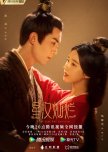
The Heart Will Go On
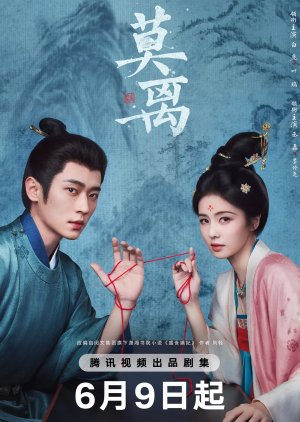
Ye Li is summoned from the elite Lishan Academy to prepare for her wedding to Mo Xiuyao, a crippled and unfavored prince. Her younger sister Ye Ying is now engaged to her former fiancé, Prince Mo Jingli. Ye Li is unfazed by the groom swap and blithely oblivious to her new husband's frosty glowers and suspicious side-eyes. True to Xiuyao's suspicions, there is more to Ye Li than meets the eye. She has secrets and has returned to the capital with a higher purpose than marriage—one focused on righting injustices against the former Prince Ding and Lishan Academy. As it turns out, both Ye Li and Mo Xiuyao were collateral damage in a power play at the highest level of imperial authority. Their common cause draws them together, but in order to truly work together, they must confront the past and put it behind them.Though set in the fictional dynasty of Dachu, the setting for The First Jasmine is clearly inspired by Wu Zetian's controversial ascent, and the costumes, political dynamics, and social structures are distinctly Tang dynasty. While the political plot is not particularly special, the past intrigue is revealed in a way that draws you in, like pieces of a puzzle gradually falling into place. Everyone is an unreliable narrator, divulging their own role in the multiple betrayals eight years ago from their own point of view. The plot does not bother to fully explain itself, leaving the audience to speculate on and eventually piece together what happened with a growing sense of dread.
The problem is that the drama reaches its emotional peak a little too early, and after that, there is a sense of anticlimax heading into the finale. The final plot arc is rushed and fails to deliver a sense that justice was served or that the country is in better hands.
That said, this is a very solid character-driven story about healing. Both Ye Li and Mo Xiuyao are deeply damaged by past trauma, and the way their relationship evolves makes sense given what they endured. Ye Li is a deeply traumatized and complicated protagonist who appears functional only because of the coping mechanisms she relies upon to get through her difficulties. As a character, perhaps Ye Li is too capable, but she embodies the ethos of the elite Lishan Academy, and through her, the heart will go on. That said, the Lishan backstory unveil took too long and left me emotionally exhausted.
While Bai Lu pulls off a memorable and heartbreaking portrayal of Ye Li's trauma, her final showdown lacked sufficient impact. Her cold, resting-death-face missed the mark, and I felt that Xiuyao—no less a victim—deserved to be in on the final confrontation. I am fine with sidelining the male lead in the finale of female-centric storylines, but the actress has to be able to rise to the moment. That didn't happen here.
There were many interesting character arcs that didn't play out. I expected Han Mingxi to play a more consequential role and saw potential in his hilarious interactions with Ye Ying. But to me, Mo Jingli was the biggest missed opportunity. He is a cunning and layered character who pursued a just cause via questionable means. I did not like how the narrative diminished his cause, his motivations, and his intelligence heading into the finale.
Ultimately, this drama tries to combine too many themes. It is difficult to mix romance into a heavy revenge story, so I didn't mind so much that they didn't really try. Where it falls down most for me is how the main revenge plot failed to deliver closure or transformation. The story introduces so many interesting characters who seem to have agency and free will, only to have them go down the path of tired tropes. Screenwriter Zhao Na strikes again - her dramas always start well on the inspiration from borrowed works but she is really building a track record in not knowing how to end her plot arcs properly.
This starts out as an 8.5-level drama, but with the ending, it only earns an 8.0+. Still, it has enough unique aspects to make it an enjoyable and recommended watch.
Was this review helpful to you?

This review may contain spoilers
A Story of Mental Survival
At first glance, Mo Li (First Jasmine) feels like a standard revenge drama, giving you that satisfying taste of payback right from the start. But as the story unfolds, it transforms into something deeper and more reflective. This shift in pacing might frustrate those waiting for bigger revenge moments, but it allows the story to deliver justice with more depth and realism. That being said, the last few episodes might feel disappointing to some, but I see them as an important part of the characters’ growth, despite the noticeably slower pace can feel dragging at times.Its most refreshing element is its exploration of mental illness, a theme more commonly associated with modern dramas than historical ones. Both leads suffer in different ways, physically and emotionally, and their relationship is built on mutual healing and understanding. The romance is mature. They heal each other, support each other, and stand by each other. It’s not the kind of romance that makes your heart race, but the kind that makes you feel safe.
On the downside, some of the heavy Tang dynasty-inspired style makeup on side characters felt excessive and distracting, especially compared to the leads. As for the acting, if I’m being honest, while I enjoyed the leads, it didn’t feel particularly remarkable, especially Bailu.
Was this review helpful to you?

The Shape Survival Leaves Behind
There is a difference between surviving something and learning how to live after it. The First Jasmine is most interesting when it lingers in that distance.Ye Li has survived so much that survival itself has become a way of being. She watches before she trusts, prepares before she rests, and carries an almost unsettling degree of self-control. The drama sometimes asks us to believe more of her than it convincingly earns, particularly once the truth about Li Shan Academy is revealed. The distance between the girl who endured those years and the remarkably capable, educated and socially composed woman we later meet is never fully bridged.
Still, Ye Li never felt emotionally empty to me. Bai Lu gives her restraint a history. Her trauma lingers in habits, hesitation and vigilance, in the strange difficulty of accepting happiness when one has become much better acquainted with loss. I did not always believe everything the plot allowed Ye Li to survive or accomplish, but I often understood the emotional logic behind the woman she had become.
This is where the drama is strongest. Not when Ye Li is being exceptionally capable, but when it allows that capability to become complicated. Strength can protect a person, but it can also become the only way they know how to exist. Healing here is not becoming softer or forgetting what happened. It is discovering that survival does not have to remain a permanent state.
Mo Xiuyao is part of that process, but not its entirety. Their marriage grows through familiarity, reliability and trust, and I found something quietly moving in watching two people accustomed to carrying themselves alone slowly allow another person to share the weight. The romance is restrained—occasionally more restrained than even I thought necessary—but the affection between them always felt present. At the same time, the drama already has trauma, revenge, politics and competing loyalties to resolve, and some romantic detours take more space than the larger story can comfortably afford.
That is perhaps the drama's central weakness. It wants to be many things, and I often found myself appreciating its individual parts more than the whole they eventually formed.
The political story can be absorbing, particularly when private grief begins shaping public decisions, and the supporting characters give the world much of its emotional weight. Yet certain histories remain incomplete, some developments are stronger in anticipation than explanation, and the final stretch never quite reaches the emotional force of what came before it. More than once, I understood exactly what a scene was reaching for without being fully carried there.
What stayed with me most was the drama's understanding that moving forward is not the same as leaving the past behind. The dead remain. Trauma remains. The person one had to become in order to survive remains too. Healing is simply the possibility that what happened yesterday may stop deciding everything that happens tomorrow.
I also found more pleasure than expected in simply looking at this drama. Its colours are subdued, its light gentle, and faces are allowed the small textures and imperfections that make people feel present rather than perfected. It quietly added to my affection for a world that often felt more lived in than polished.
On writing alone, The First Jasmine sits somewhere between a 7 and 7.5 for me. It is thoughtful but uneven, emotionally perceptive in places and frustratingly incomplete in others. It tries to hold healing, revenge, politics, romance and loss in the same hands, and occasionally drops something while reaching for something else.
Yet my feelings for it are warmer than that number suggests. Perhaps half a point belongs to the performances, perhaps some to the quiet pleasure of a visual world that still feels human. Mostly, it belongs to those moments when The First Jasmine stops trying to be everything at once and simply watches people learning how to live with what cannot be undone.
So I will leave it at an 8.
Was this review helpful to you?

This review may contain spoilers
Where Wounds Become Strength and Two Hearts Learn to Beat as One
The First Jasmine begins as what appears to be another arranged-marriage political drama but gradually reveals itself to be a remarkably layered story about trauma, justice, power, and healing. Set in the fictional Dachu Dynasty with Tang-inspired aesthetics, the drama follows Ye Li, a woman released from eight years of isolation on Lishan Mountain to marry the politically disgraced and crippled Prince Ding, Mo Xiuyao.Although it embraces familiar historical romance tropes, the series distinguishes itself through meticulous character writing, emotional maturity, and philosophical depth. Rather than relying on plot twists alone, it builds its story through psychological realism and carefully developed relationships.
YE LI: TRAUMA, REVENGE, AND HEALING
Ye Li is one of the strongest female protagonists in recent historical dramas. Calm, intelligent, and calculating on the surface, she is deeply scarred by the tragedy on Lishan Mountain, where she watched her family and friends die during the plague while remaining powerless to save them.
Bai Lu portrays this duality beautifully. Her hallucinations of the dead are presented not as supernatural events but as believable manifestations of unresolved trauma. The drama never sensationalizes her suffering, instead showing how trauma fragments the mind while allowing someone to continue functioning outwardly.
Her revenge is never driven by blind hatred. The four straw figures she keeps symbolize carefully planned justice rather than impulsive violence. Even her decision to eliminate Empress Dowager Guo Jin last demonstrates patience and political understanding. As the story progresses, revenge gradually transforms into healing as she learns to reclaim agency and build meaningful relationships again.
MO XIUYAO: STRENGTH BEYOND PHYSICAL POWER
Cheng Lei delivers one of his finest performances as Mo Xiuyao. After years of political humiliation, disability, and grief, he remains remarkably restrained, expressing pain through subtle expressions rather than exaggerated emotion.
His character challenges the traditional image of the invincible male lead. Although physically crippled, he possesses extraordinary intelligence, leadership, and emotional maturity. His recovery is satisfying not because he becomes physically powerful again, but because the audience has already learned to admire him before he ever stands.
His relationship with Ye Li develops naturally through trust, mutual respect, and shared suffering. Moments such as quietly caring for each other, cooking together, or simply watching the moon become far more meaningful than dramatic romantic declarations.
EMPRESS DOWAGER GUO JIN: A TRAGIC RULER
Guo Jin is arguably the drama's most fascinating character. Unlike conventional villains, she genuinely improves Dachu through tax reforms, women's education, infrastructure, and social policies. Yet every achievement comes at the cost of countless innocent lives.
Her final conversations with Ye Li explore one of the drama's central questions: does successful governance justify immoral methods?
Ye Li's grandfather once described Guo Jin as talented but lacking benevolence. She understood power but never fully understood compassion. This distinction becomes the philosophical heart of the series, separating effective rule from humane leadership.
Supporting Characters and Moral Ambiguity
The drama refuses to divide its characters into simple heroes and villains.
Mo Jingli's childhood trauma explains—but never excuses—his obsession with power. His final realization that he genuinely loved Ye Li despite originally viewing her as a political asset gives his downfall emotional weight.
Even Xu Wanzhou's controversial decisions stem from desperate attempts to save lives rather than selfish ambition. Throughout the series, good intentions repeatedly produce devastating consequences, creating a world filled with moral ambiguity instead of absolute right and wrong.
Supporting characters such as Lin Tinglan, Qin Cang, Li Feibai, Lady Yusheng, Wen Ran, and Feng Zhiyao all receive satisfying emotional arcs that strengthen the overall narrative rather than existing solely to support the protagonists.
THE CHESSBOARD PHILOSOPHY
Chess serves as the drama's central metaphor. Ye Li's grandfather teaches her about "solitary pieces"—pieces that become isolated from the rest of the board.
This metaphor defines several major characters. Guo Jin isolates herself through power, Mo Jingli through ambition, and Ye Li through trauma. Each discovers that isolation ultimately leads to emptiness, while genuine strength comes from connection and trust.
Rather than celebrating individual achievement, the series argues that relationships are what ultimately give life meaning.
TRAUMA AND RECOVERY
One of the drama's greatest achievements is its portrayal of psychological trauma.
Ye Li's hallucinations, emotional detachment, and gradual healing feel authentic rather than melodramatic. Recovery is portrayed as a slow process supported by understanding, patience, and love rather than miraculous transformation.
Similarly, Mo Xiuyao's hidden disability symbolizes emotional wounds carried in silence. Both protagonists learn that healing requires vulnerability rather than isolation.
The Lishan plague itself is particularly heartbreaking because it has no mastermind behind it. Sometimes tragedy simply happens, making the story's exploration of grief feel even more realistic.
FEMALE AGENCY
The series incorporates meaningful feminist themes without becoming preachy.
Women consistently demonstrate intelligence and leadership. Ye Li repeatedly outmaneuvers experienced politicians. Guo Jin transforms the country through reforms. Lin Tinglan pursues her career independently, while Princess Lingyun and Wen Ran each display remarkable resilience.
However, the drama also acknowledges that female authority often requires tremendous sacrifice. It celebrates women's achievements while recognizing the unequal burdens imposed by society.
THE SLOW-BURN ROMANCE
The romance succeeds because it develops naturally.
Ye Li and Mo Xiuyao begin as political partners before gradually becoming emotional anchors for one another. Their relationship is built through everyday acts of care rather than endless misunderstandings or exaggerated romantic gestures.
Their emotional confessions feel earned because they emerge after episodes of shared hardship. Cheng Lei and Bai Lu rely heavily on subtle acting, making small expressions often more powerful than dramatic speeches.
Secondary romances are equally meaningful. Feng Zhiyao and Princess Lingyun represent love destroyed by politics, while Li Feibai and Lady Yusheng explore freedom, choice, and respect rather than possession.
PERFORMANCES
Cheng Lei gives a career-defining performance. His physical acting convincingly portrays disability, while his emotional restraint makes scenes of vulnerability especially powerful.
Bai Lu delivers one of her most emotionally nuanced performances. Ye Li could easily have become another stereotypical "strong female lead," but Bai Lu instead creates someone whose strength exists alongside profound psychological fragility.
The supporting cast consistently elevates the material, ensuring even secondary characters leave lasting impressions.
PRODUCTION
Visually, the drama favors a restrained style. Warm domestic scenes contrast effectively with the colder political settings, while the dreamlike cinematography during Ye Li's hallucinations subtly reflects her psychological state.
Fight choreography is elegant without becoming excessive, and the soundtrack complements emotional moments without overwhelming them.
Although some CGI backgrounds appear artificial, these issues rarely undermine the overall experience.
## STRENGTHS
* Rich psychological characterization.
* Excellent performances from Bai Lu and Cheng Lei.
* Thoughtful exploration of trauma and healing.
* Mature political and philosophical themes.
* Organic slow-burn romance.
* Strong pacing with very little filler.
## WEAKNESSES
* Some visual effects feel noticeably artificial.
* A few minor supporting characters remain underdeveloped.
* The political resolution is slightly rushed compared to the careful buildup.
The First Jasmine stands out because it treats its audience with intelligence. Rather than relying solely on romance or palace intrigue, it explores grief, justice, political morality, and the importance of human connection with surprising maturity.
Its greatest strength is its refusal to simplify people into heroes or villains. Nearly every major character exists within shades of grey, making their choices feel deeply human. Combined with excellent performances, thoughtful writing, and one of the most satisfying slow-burn romances in recent historical dramas, the series delivers both emotional impact and philosophical depth.
Despite a few production flaws and a somewhat rushed ending, The First Jasmine remains one of the strongest historical dramas of the year. It proves that familiar genre conventions can still produce something memorable when supported by careful writing, nuanced performances, and characters whose emotional journeys feel genuinely earned.
Was this review helpful to you?

This review may contain spoilers
The Final Episodes Were Disappointing
The first half of the series was captivating — Ye Li came across as formidable, with sharp schemes and remarkable foresight. She was always a step ahead, and those glimpses of her fighting skills in her delusions gave me hope for more action against worthy opponents. I was heartbroken when Mo Xiu Yao divorced her, leading her to the forsaken Li Shan Academy in a disillusioned state of mind. Another painful blow came with Princess Ling Yun’s murder, leaving Feng Zhi Yao devastated.As the story moved toward its conclusion, the pacing slowed. Ye Li’s drive for business expansion faded, and she shifted into more of a supporting role. The formidable combat skills I anticipated never materialized, nor were there signs of a larger family or future offspring. Her rhetorical exchanges with the dying Empress Dowager felt subdued compared to her earlier sharpness. Most disappointing of all, Ye Li never fulfilled her revenge arc of killing the four people she had sworn to destroy.
Sadly, the final episodes left me struggling — the brilliance and intensity of the beginning gave way to a muted close that didn’t deliver on the promise of Ye Li’s character.
Was this review helpful to you?

king & queen of micro-expressions!!
things aren’t what they first seem here.bai lu is crafting one of her most compelling and complex characters in Ye Li, and regardless of what lengths she goes to, our hearts understand and hurt for her. not any leading lady could pull off this role, it requires the skill to convey a lot with extreme subtlety. bai lu is more than up to the challenge.
i’d say this is also one of the fresher takes on a mastermind character, portrayed with an appropriate amount of tenderness and disorder.
so we get a revenge story, where the mystery extends, envelopes and includes our main protagonist.
the weakness of this:
i wanted cheng lei to be given more to work with because his part of this leaves me wanting more. i feel he was underutilized here.
the romance isnt going for “romance” as much as its going for “healing” and “connection”. i personally dont mind that this doesnt feel sweepingly romantic, but ive seen people mention it as a minus.
something i do struggle with is that some plotting aspects seemed disjointed. the core was really good so its hard to notice but the weave could’ve been tighter. many subplots felt like they were put on pause so the main thing could happen without in world good enough justification.
so its very good, worth the watch if you like historical dramas, but has its flaws.
✨✨✨✨✨✨✨✨✨✨✨✨✨✨✨✨✨✨
Was this review helpful to you?

 1
1The Great Idol Drama Detox
Post-2022 idol costume dramas have gradually convinced me that ancient China was inhabited almost exclusively by three types of people:Perfect porcelain-faced aristocrats.
Individuals who fall deeply in love after approximately two meaningful glances and one accidental rescue.
Political masterminds whose greatest strategic weapon is refusing to explain anything until Episode 36.
The First Jasmine is still very much an idol drama. It simply declines all three invitations.
First of all...
The pores.
Ladies and gentlemen, the pores have returned.
I cannot believe one of my biggest compliments of 2026 is simply this:
The actors look like people.
Skin texture. Tiny imperfections. Faces that have apparently encountered weather instead of being digitally moisturized into another dimension. After years of idol dramas resembling luxury skincare campaigns with occasional palace conspiracies, this felt absurdly refreshing.
Even the muted colour grading deserves applause. The world finally feels lived in instead of permanently illuminated. Oddly enough, realism became the most luxurious production value of all.
That same philosophy extends to the writing.
Recent idol dramas sometimes confuse complicated plotting with complicated people. The First Jasmine remembers that the second one matters more. Characters make decisions shaped by trauma, loyalty, responsibility, and political reality rather than conveniently forgetting their intelligence whenever the plot needs another misunderstanding. Ye Li's psychological trauma and Mo Xiuyao's condition aren't decorative tragedies waiting to be healed by love. They fundamentally shape who these people are.
On paper, Ye Li should have triggered my internal "this is getting ridiculous" alarm. She never did. The difference is that The First Jasmine never mistakes competence for character. It doesn't ask us to admire an impossibly capable woman. It asks us to understand the cost of becoming one.
Did I believe everything the plot asked Ye Li to survive and accomplish? No. But I believed enough of the emotional logic behind her choices that she never felt artificial to me.
The drama never seemed particularly interested in impressing me with Ye Li's competence. Instead, it kept asking a much more uncomfortable question:
What kind of life produces a woman who needs this much self-control just to survive?
That question follows Ye Li through almost every scene, which is precisely why her restraint never felt like emotional emptiness to me. It felt learned.
Which brings me to the most divisive part of the drama: The romance.
If you're expecting explosive chemistry, endless longing stares, enough slow motion to qualify as a weather event, and romantic tension capable of overheating your screen...
...this probably isn't your drama.
Because this isn't really about falling in love. It's about learning to trust. Those are not the same thing.
Their relationship grows through reliability, mutual respect, shared burdens, and slowly earned trust. Watching two emotionally exhausted people become each other's safest place may not produce fireworks every episode. It does produce something rarer. A marriage that actually feels earned.
Personally, I never found the chemistry lacking. Its idea of intimacy feels quietly old-fashioned in the best possible way. Trust matters more than butterflies. Reliability matters more than grand declarations.
Rather than constantly explaining every emotion or spelling out every revelation the moment it happens, it trusts subtext, quiet observations, and conversations that often reveal more than they explicitly say. The writing quietly trusts the audience to connect the dots instead of drawing the entire picture for them.
This is one of the rare dramas where conversations build relationships more often than kisses do.
Ironically, the very restraint that makes those relationships so believable also becomes the drama's biggest weakness.
The First Jasmine consistently chooses psychological continuity over immediate emotional gratification. Most of the time, I appreciated that decision. Occasionally, I wished it trusted emotion just a little more. Not because it takes its time, but because a few scenes remain longer than they need to after they've already said what they came to say.
More than once, I found myself admiring what a scene was trying to do rather than being swept away by it. I understood exactly what a character was feeling. I just didn't always feel it alongside them. That distinction ultimately keeps this from becoming truly exceptional.
The political storyline follows the same philosophy.
It rewards attention more than adrenaline.
Names matter.
Family histories matter.
Your attention span matters too.
I appreciated that.
Still, patience alone doesn't automatically create momentum. More than once I admired the architecture of the story while wishing the rooms felt a little more lived in.
Performance-wise Bai Lu won me over.
She understood that Ye Li's silence isn't the absence of emotion. It's how she has learned to survive. Trauma doesn't always announce itself through dramatic breakdowns. Sometimes it simply becomes the way a person speaks, hesitates and carries themselves.
Bai Lu never overplays that.
Neither does Cheng Lei.
The First Jasmine won't work for everyone.
It whispers where many dramas shout. It values emotional accumulation over emotional spectacle. Some viewers will call that boring. Others will call it refreshing.
I somehow landed comfortably between those two camps.
I never completely fell in love with this drama.
But I found myself appreciating almost every creative decision it made. In an era increasingly convinced that louder automatically means better, The First Jasmine quietly argues the opposite.
Real faces.
Believable motivations.
A marriage built on trust instead of spectacle.
It doesn't always reach the emotional heights it aims for. But it reminded me that the most refreshing thing this drama brought back wasn't the pores. It was people who behaved like people.
Best suited for viewers who enjoy psychologically grounded characters, mature relationships, restrained cinematography, and dramas that reward patience more than adrenaline.
Less suited for viewers looking for fast pacing, explosive chemistry, constant twists, or highly melodramatic romance.
Was this review helpful to you?

A Beautiful Story of Healing Hidden Beneath Revenge
Going into The First Jasmine, I expected a gentle healing drama with mature romance, quiet emotions, and soft aesthetics. It definitely delivered those vibes—but what surprised me was how psychologically rich the story turned out to be. Beneath its elegant cinematography and slow-burn romance lies a tale of trauma, revenge, healing, and emotional resilience.A'Li is one of the strongest female leads I've seen this year. Her painful past, fragile mental state, and gradual journey toward healing felt incredibly layered. Instead of magically recovering overnight, her wounds remained a part of her, making every small step forward feel meaningful. On the other hand, A'Yao wasn't just someone she healed physically by treating his injured leg—he became the person who quietly stayed by her side, offering patience, understanding, and unwavering companionship. Their relationship wasn't built on grand romantic gestures but on trust, mutual healing, and silent support, which made it even more beautiful.
A'Ying's story - She deserved so much better. I really wish she focused on her becoming independent rather than defining her happiness through mo jingli. She had so much potential to grow into her own person.
And then there's Mo Jingli. Oh, Mo Jingli... He gave me serious Qi Min vibes. Unlike Qi Min, though, he wasn't outright toxic. Yes, after marrying Ye Ying, he remained obsessed with Ye Li and neglected his wife, which was undeniably frustrating. But his character wasn't one-dimensional. His ambitions, regrets, and internal conflicts made him surprisingly compelling, even when I disagreed with his choices.
Princess Lingyun deserved a happier ending too. Her story was tragic in a way that lingered long after it ended. I can only hope that in another lifetime, she and Feng Zhiyao finally get the peaceful life they were denied.
Of course, I can't finish this review without mentioning Bai Lu and Cheng Li. Their chemistry never relied on excessive romance—it thrived through subtle glances, quiet conversations, and an unspoken understanding that made every shared scene feel intimate. The cinematography, costume design, and soundtrack elevated the emotional atmosphere, creating a drama that felt both visually stunning and emotionally immersive.
The First Jasmine isn't just a revenge story or a romance. It's a story about broken people finding reasons to keep living, choosing trust over isolation, and discovering that healing doesn't erase the past—it teaches you how to live with it.
Was this review helpful to you?
Solid Drama
This is a solid drama with good acting, good character development, and a believable plot. Finally.The capable woman trope is finally done well. She's not capable for the sake of impressing the audience but because she earned it. We see what she had to go through for the skills she has. They don't magically appear for because the moment needs it.
The last few episodes do drag. The momentum gets lost toward the last 20 episodes. It was okay with me, but I will admit I did lose patience and started fast forwarding through the memories or repeated scenes.
Even with that, I would suggest watching this drama. The way characters were handled make it worth any later slow down in the plot.
Was this review helpful to you?

A Drama That Rewards Patience
This drama has a high barrier to entry, and I think that’s exactly why it’s so divisive.It doesn’t constantly explain itself, and it expects the audience to infer a lot. Rather than spoon-feeding every answer, it gradually reveals the bigger picture through subtle details, conversations, and character interactions. If that storytelling style resonates with you, you’ll probably love it. If it doesn’t, you’ll likely wonder what all the praise is about.
One aspect I especially appreciated was how the drama portrays invisible emotional wounds. Some scars aren’t immediately visible, and the story explores this with surprising sensitivity and restraint. It reminded me that not every battle leaves a physical mark. Some of the deepest scars are the ones no one else can see, and healing is rarely linear.
It may not be the easiest drama to watch, and I understand why it isn’t for everyone. But for viewers who enjoy layered narratives, imperfect characters, and stories that reveal themselves over time, I think it’s absolutely worth watching.
Was this review helpful to you?

This review may contain spoilers
✨An Emotionally Rich Journey That Stayed With Me✨
I went into this one knowing almost nothing about it, and it turned out to be an unexpectedly emotional and beautifully crafted journey.The writing, layered narration, multiple POVs, and haunting OST all come together to create a deeply immersive experience that stays with you after it ends.
Bai Lu and Cheng Lei are outstanding. While both are consistently strong actors, this drama gives them especially layered, complex characters. Bai Lu, in particular, may have delivered my favorite performance of hers so far—her character was intelligent, vulnerable, and compelling, and I found myself fully invested in her journey, rooting for her at every turn.
There is also a (not so) subtle but refreshing psychological layer to her character involving unresolved trauma and how she perceives her past, which adds unexpected depth without giving too much away—but I’ll leave that for viewers to discover.
The romance is equally well done, with chemistry that feels natural and earned rather than rushed. Even when things are difficult between them, the emotional build-up makes their connection all the more satisfying.
The overall premise—swapped marriage, political intrigue, and opposing schemes—is familiar, and many arcs, especially the final palace rebellion, follow a well-known historical drama formula. Still, Mo Li manages to stand out through its execution, character depth, and emotional pacing.
The ending is also a highlight, taking its time to resolve everything properly and giving the story a peaceful, satisfying conclusion.
All in all this one surprised me in the best possible way. It's beautifully written, wonderfully acted, emotionally powerful, and filled with heart. A memorable journey from beginning to end, and one I'll happily recommend to anyone looking for a historical drama that values both emotional depth and meaningful storytelling.
Was this review helpful to you?

This review may contain spoilers
The First Jasmine (2026) — Review
The First Jasmine has captivated me from start to finish. Its greatest achievement lies in the richly drawn central characters and the way their personal struggles intertwine with larger political conflicts, creating a narrative that feels both intimate and epic.Ye Li, masterfully portrayed by Bai Lu, serves as the emotional anchor of the series. As the eldest daughter of the Ye family, she returns from eight years of seclusion on Lishan Mountain to enter a strategic marriage with the crippled Prince Ding, Mo Xiu Yao. Bai Lu brings remarkable complexity to the role, balancing Ye Li’s outward poise and quiet dignity with the profound inner turmoil stemming from her clan’s persecution. Ye Li is intelligent, strategic, and driven by a deep sense of justice, yet she is also haunted by loss and isolation. The actress excels at conveying subtle shifts in expression moments of calculated calm giving way to glimpses of vulnerability, loneliness, or fierce resolve.
What draws me most to Ye Li is her humanity. She is not an untouchable heroine but a woman shaped by trauma who channels her pain into purposeful action. Her methodical pursuit of those who destroyed Lishan unfolds with precision, yet it never overshadows her capacity for compassion and growth. As the story progresses, we see her navigate the challenges of her new marriage while gradually opening herself to trust. Bai Lu’s performance captures these layers beautifully, making Ye Li’s journey from solitary survivor to integral partner incredibly compelling and relatable.
Mo Xiu Yao/Prince Ding, played by Cheng Lei, proves an equally fascinating counterpart. A once promising prince left physically impaired and politically sidelined after personal tragedies, he carries his own hidden agenda and deep seated pain. Cheng Lei delivers a nuanced portrayal that highlights the character’s quiet strength, sharp intellect, and guarded emotions. His initial suspicion toward Ye Li creates palpable tension, but the slow evolution of their relationship built on mutual respect, shared secrets, and tentative vulnerability becomes the drama’s beating heart.
The chemistry between Bai Lu and Cheng Lei is understated yet powerful. Their interactions, whether in moments of quiet caregiving (such as Ye Li attending to Mo Xiu Yao’s condition) or charged confrontations where truths begin to emerge, feel authentic and layered. Cheng Lei’s expressive performance allows viewers to sense the weight behind Mo Xiu Yao’s restraint, while Bai Lu matches him with emotional precision. Together, they transform from wary spouses into formidable allies, their individual strengths amplified by their partnership. This dynamic explores themes of healing, trust, and resilience in ways that resonate long after watching.
The supporting cast further elevates the story. Ye Ying, Ye Li’s sister, introduces familial jealousy and rivalry that adds emotional friction, particularly in her marriage to Mo Jing Li. Mo Jing Li himself emerges as a multifaceted figure whose ambitions and past connections with Ye Li complicate the central romance. Court officials, the emperor, and other power players bring believable motives and shifting allegiances that heighten the intrigue without feeling contrived. Each character feels purposeful, contributing to a world where personal vendettas and political machinations are deeply intertwined.
One of the drama’s most rewarding elements is its sensitive handling of trauma and recovery. Both protagonists bear significant scars Ye Li’s emotional and psychological burdens from her mountain years, and Mo Xiu Yao’s physical limitations coupled with family losses. Rather than relying on heavy exposition, the series reveals their inner worlds through actions, subtle dialogue, and pivotal revelations. Misunderstandings test their bond, leading to painful yet cathartic developments that strengthen their connection. These character driven moments make the larger revenge and restoration arcs feel personal and earned.
Production values support the strong writing and performances admirably. The Tang inspired visuals, elegant cinematography, and measured pacing allow the characters’ stories to breathe. Political schemes and strategic confrontations are woven seamlessly with quieter, introspective scenes, maintaining engagement across episodes.
Ultimately, The First Jasmine excels because it prioritizes character depth over formulaic tropes. Ye Li and Mo Xiu Yao are not merely vehicles for plot; they are fully realized individuals whose growth, vulnerabilities, and evolving love story form the true heart of the drama. I found myself invested in their fates, admiring their resilience, and rooting for their hard won peace. Bai Lu and Cheng Lei’s performances elevate the material into something memorable and emotionally rich.
This is a drama I recommend wholeheartedly to fans of historical tales with strong character focus, intricate relationships, and satisfying payoffs. It balances revenge, romance, and intrigue with thoughtful execution, leaving a lasting impression.
Was this review helpful to you?