

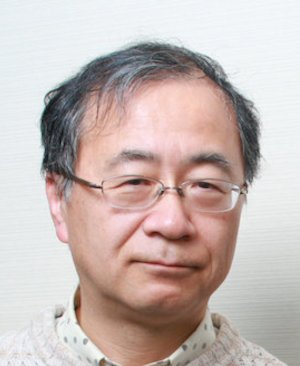
Kaneko Shusuke
- Name: Kaneko Shusuke
- Native name: 金子修介
- Also Known as: かねこ しゅうすけ
- Nationality: Japanese
- Gender: Male
- Born: June 8, 1955
- Age: 71
When not propped in front of the family TV or seated in local cinema houses, Kaneko drew pictures of his favorite monsters, going so far as to collect many of them in his own personal book detailing the history and abilities of the kaiju of the era. Kaneko also created his own manga series for his friends and himself.
During his late teens, a screening of the US film The Strawberry Statement perked his interest with its modern sensibility and attempt to express the turmoil the students of that day were experiencing. Armed with an 8-mm camera, Kaneko and some of his friends created their own version of the film. Discovering he enjoyed the filmmaking process, Kaneko felt he had found his calling. However, the Japanese cinema industry was in the midst of a severe crash and though wanting a career in film, Kaneko didn't believe it feasible. Instead, he majored in education at Tokyo Gakugei University with the goal of becoming an elementary school teacher.
Yet his desire to be a director never left. Upon graduating he applied for and took the entrance exam at Nikatsu Studios. To his surprise, out of the three-hundred applicants, only he and one other man passed. Kaneko was immediately hired as an assistant director.
At this time, Nikkatsu, one of Japan's oldest studios, had fallen upon difficult times. The once great studio, producers of some of the finest films in Japan, had seen ticket sales dwindle rapidly. Japanese sensibility had begun to experience a shift towards the more realistic and personal driven stories found in American cinema and the film industry in Japan was slow to keep up with this change. To stay afloat, Nikkatsu and several other studios took to producing exploitation roman-porno films (short for romance pornography). These movies were quickly made love tales spiced up with partial nudity and sexually provocative situations. Kaneko labored through thirty-five of these productions as an A.D. while at Nikkatsu. In addition, Kaneko also moonlighted as a writer of anime scripts, and penned several episodes of the then hugely popular Urusei Yatsura and Creamy Mami.
Kaneko directed his first film in 1984. The movie, Uno Koichiro no Nurete Utsu, was based on the works of erotic novelist Koichiro Uno. That year Kaneko also directed OL Yuri Zoku 19-Sai and Eve-chan no Hime, the latter netting him the "New Director Award" at the Yokohama Film Festival.
In 1985, Kaneko directed the film Minna Agechau (I'm All Yours). Though a sexual comedy about a young girl's quest to find true love and "lose it", it was the first mainstream attempt by Nikkatsu in five years. The story was derived from a popular manga of the time. While still considered a newcomer within the industry, Kaneko had become widely recognized for a visual style that reflected Japanese manga sensibility.
Kaneko left Nikkatsu and went freelance in 1985. His first film after leaving was the TV movie, The Samurai. This was a screwball comedy produced by Tsuburaya Productions, the creators of Ultraman, that featured several special effect sequences.
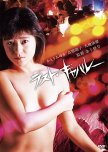
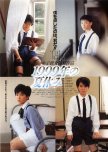
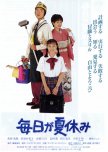
Two of Kaneko's most endearing films were shot in 1988: Summer Vacation: 1999 and Last Cabaret. Both films helped to cement Kaneko's reputation as a force in Japanese cinema. The two films also earned him the notoriety as a director with the ability to photograph women in rich and alluring ways. Kaneko's ability to bring out their personal beauty and character made him much in demand and to this day remains a staple of his work. Summer Vacation: 1999 was shown in New York City and became his first film released on video outside Japan. Last Cabaret was one of the final roman porno films made by Nikkatsu. The movie is considered an example of the best of the genre.
In 1993, Kaneko was invited to America to direct the sequence The Cold for the Brian Yuzna production Necronomicon. It was an experience that profoundly influenced Kaneko, as he has always revered the US style of filmmaking.
Kaneko continued directing for a variety of studios and quickly built an impressive resume.
When in 1993, Daiei Studios opted to revive their once popular Gamera series, Kaneko's name appeared on their short list of potential directors. Lobbying hard for the job, Daiei eventually awarded the directorial position to Kaneko. For this lifelong fan of kaiju, the task of creating his own film for the genre was the realization of a boyhood dream. Kaneko assembled a core creative staff consisting of then newcomer Shinji Higuchi, one of the cofounders of Studio Gainax, as effect director, and Kazunori Ito, writer of Ghost in the Shell, as scriptwriter.
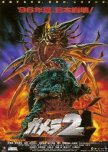
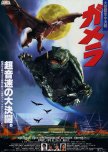
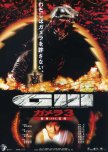
Gamera: Guardian of the Universe, released in 1995, was hailed for its sharp direction, realistic sensibility and groundbreaking effects. Kaiju films had originally begun in Japan with the original Godzilla in 1954 and remained more or less popular through the years. By 1995, however, they had been displaying a lack of originality and had fallen on tired clichés. Gamera was different, and the film successfully laid to rest any claims that the kaiju genre had gone dry. Kaneko followed the film with two successful sequels, Gamera 2: Attack of Legion in 1996 and Gamera 3: Revenge of Iris in 1999. (wikipeda) Edit Biography
Screenwriter
| Title | Rating |
|---|---|
| 2.0 | |
| 4.0 |
Director
| Title | Rating |
|---|---|
| 7.3 | |
| 6.6 | |
| 0.0 | |
| 6.8 | |
| 6.8 | |
| 6.0 | |
| 6.6 | |
| 6.3 | |
| 6.3 | |
| 0.0 | |
| 2.0 | |
| 7.3 | |
| 6.7 | |
| 7.3 | |
| 7.2 | |
| 7.7 | |
| 7.0 | |
| 7.7 | |
| 7.3 | |
| 7.5 | |
| 7.1 | |
| 7.2 | |
| 7.0 | |
| 5.0 | |
| 7.7 | |
| 7.5 | |
| 6.0 | |
| 0.0 | |
| 6.7 | |
| 0.0 | |
| 0.0 | |
| 0.0 | |
| 2.0 | |
| 6.4 | |
| 6.2 |




Screenwriter & Director
| Title | Rating |
|---|---|
| 7.2 | |
| 7.2 | |
| 6.8 | |
| 8.0 | |
| 7.8 | |
| 7.4 | |
| 7.0 | |
| 7.9 | |
| 7.0 | |
| 7.0 | |
| 7.3 | |
| 7.8 | |
| 7.0 | |
| 6.0 | |
| 6.5 |
Original Creator
| Title | Rating |
|---|---|
| 6.7 |
Assistant Director
| Title | Rating |
|---|---|
| 4.5 |
Movie
| Title | Rating |
|---|---|
Linking Love
Japanese Movie, 2017,
[Movie director]
(Guest Role)
|
7.2
|
Gamera 1999
Japanese Movie, 1999,
[Himself]
(Main Role)
|
0.0
|

Main Theme
Japanese Movie, 1984,
[Ballroom boy]
(Bit part)
|
6.3
|
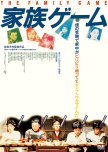
Kazoku Game
Japanese Movie, 1983,
["Kubota Bookstore" clerk]
(Bit part)
|
7.1
|
Director
| Title | Rating |
|---|---|
| 6.0 | |
| 7.0 |

Trending Articles
Top 12 upcoming dramas on every fan's watchlist
From highly anticipated adaptations to gripping thrillers, the upcoming drama lineup has something for every fan. With teasers already dropping, these 12 dramas are generating plenty of buzz even before their premieres. Here are the titles to keep on your

Jing Bo Ran says 'The Early Spring' is his first true 'idol drama', shares insights into character styling
Jing Bo Ran opens up about his acting journey, styling Luan Nian in 'The Early Spring', and the roles that have shaped him as an actor

Zhao Lusi to make her directorial debut with her upcoming drama
Youku unveiled its 2027 lineup, officially announcing the drama 'Farewell Letter'
Xiao Zhan ranks 27th in China brand figures Top 500
Xiao Zhan has ranked 27th overall in the annual Brand Figures ranking released by Topbrand Union

Park Shin Hye and Choi Tae Joon become parents of two
Park Shin Hye (36) and Choi Tae Joon (35) have welcomed their second child

Park Jin Young and Jeon So Young offered roles in new historical K-drama
Park Jin Young and Jeon So Young could be joining a new historical drama!

Top 9 C-drama female warriors every Mulan fan should know
If you're a Mulan fan looking for your next favorite warrior heroine, here are some C-dramas you'll want on your watchlist
China supports live-action micro-short dramas, tightens regulations on AI productions
China's new policy to strongly support live-action micro-short dramas while tightening regulations on AI-generated productions


