

 148
148 438
438 16
16 2
2 6
6 3
3 8
8 10
10 3
3 13
13 1
1 1
1 1
1 1
1 2
2 7
7 9
9 5
5 9
9


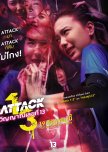
Jin transfers to a new school where a queen bee rules the other girls with an iron fist or more aptly a volleyball spike to the head. Jin has her own dark secrets and doesn’t take anything off of Bussaba. The volleyball captain extorts money and water boards anyone she is displeased with. Jin refuses to be bullied and the two girls clash often until one morning Bussaba is found hanging from the basketball goal. Things begin going wrong at the funeral and escalate minute by minute placing team members and Bussaba’s boyfriend in grave danger. A shaman tells them they have three days to break the spell or everyone will die.
This felt like a low budget horror flick that featured numerous gruesome deaths. The ghost wasn’t super scary because you could tell it was a makeup job. As there were several teens involved, there was almost no character development for any of them which in turn didn’t trigger any emotional loss when people were killed. In the same way movie teens go into the spooky house or cemetery, these teens did similar stupid things. Not that it mattered, this ghost was practically omnipresent. There were scenes that were funnier than scary because they were so absurd.
What I learned:
1) When a malevolent ghost is out for blood, do not hire a bargain basement shaman. Ask for references and do a background check.
2) If offered legit talismans for protection against malevolent ghosts---take them
3) Girls need to be taught it is okay to say no and to obey their gut instinct.
4) Being able to count to 3 is important
5) It’s also okay to call in the authorities instead of cleaning up one’s own mess.
6) While not being too nosy, it might prove useful to know if any of your friends have any kinky proclivities
If you are looking for a spooky Halloween flick, Attack 13 might be one to try. It may have appeared low budget, but there were still enough deaths and creepy crawlies if you are wanting a few jump scares. And a few laughs.
21 October 2025
Triggers: Gruesome deaths-impalements of various body parts, including the head and eye. Creepy multi-legged insects and snakes. Decapitation. Lots of spurty CGI blood and the KY Jelly colored gooey kind. A bare bottom scene. Discussions of abortion, sexual abuse, and physical abuse. Numerous scenes displaying a “suicide”.
Was this review helpful to you?
"Heed my warning or we're all doomed!"
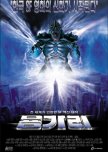
South Korea brought back their 1967 kaiju in Yonggary 1998. This time Yonggary is a fossil discovered by an unscrupulous professor. His mentor tries to warn him and the government that a global disaster is at hand. Per usual, the dire warnings go unheeded until an alien spaceship arrives and reanimates Yonggary!Professor Campbell discovers a fossilized dinosaur fifty times bigger than a T-Rex. As it is excavated crew members beginning dying horrific deaths. His assistant, Helen, quits over the cover-ups. She is approached my Professor Hughes, Campbell’s ex-mentor. Hughes tells Helen that with Yongarry being disturbed, aliens will soon arrive and bring Yonggary back to life. She is skeptical, but almost immediately his prophecies come true. The government calls them in to help find a way to defeat not only the massive kaiju but the aliens in orbit controlling him.
The first thing that has to be said is that this may have been a Korean production, but there weren’t any Korean actors in it. The cast was predominantly white. I had to stop the film and make sure I was watching the correct movie.
This film was made for 7 million USD/10 billion won and I have no idea where the money went. The CGI was laughably bad. It truly would have been better if they had guys in rubber suits stomping through town. The acting wasn’t much better and the dialogue was awful. There were lines lifted from other films such as Independence Day. I laughed all the way through it, especially every time Capt. Cue Card had trouble reading his lines! I took off a ½ point for one guy calling Godzilla a p*ssy. Seriously, we do not denigrate Big G. The military war room was hysterically funny. There were tall living room lamps for lighting and posters on the wall, even a stuffed animal displayed. One general smoked a cigar through all the hand-wringing and planning causing everyone else to have to hotbox his stinky smoke. Definitely, not a designated smoking area.
Despite the extremely low quality, Yonggary aka Reptilian had one thing going for it—there was a lot of kaiju action. It might not have been good CGI but planes, helicopters, and people in jet packs battled Yonggary and later another kaiju, Cycor, appeared to throw down as well. I laughed in all the wrong places which was its own kind of entertainment. Even for fans of kaiju flicks, this one might be a giant footprint too far. Best to watch the original from 1967 rather than this terrible effort.
17 October 2025
Was this review helpful to you?
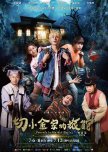
Hsiao Chin/Xiao Gin/Xiao Jin is on his third high school in five years. His parents died when he was nine and he’s lived with an aunt and uncle on and off since. At his new school he inadvertently saves two boys from being bullied and they latch on to him for dear life. When he’s called home due to his grandfather being ill, Little Princess and Lu Qun follow him to his family’s hotel. Unlike the website’s pictures of a luxurious spa, the hotel is run down and his grandparents nickel and dime guests at every turn. The trio end up bonding as they encounter spooky apparitions. In the face of their fears, Hsiao Chin will have to decide whether he is going to continue in the family business or not.
I am a fraidy cat when it comes to spooky stories and this was about as tame as a “ghost” story can get. The main thrust of this film was Hsiao Chin’s healing and coming to terms with his parents’ deaths and also developing friendships with an unusual duo. I found some scenes humorous, but admit this film wasn’t exactly my cup of silly tea. Everyone’s sense of humor is different and I’m quite sure others will find it more to their liking. My biggest complaint was that not much happened for the first 40 minutes of the film and the direction of the film was highly foreshadowed. The friendships were cute if overly stereotyped and everyone was able to grow and have problems resolved in a playful manner. Not likely a film for horror fans, but perhaps more for comedy friendship fans.
13 October 2025
Was this review helpful to you?
"There are no coincidences in this world"
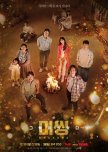
Missing: The Other Side S2 picked up two years after the last story ended. Kim Wook and Jang Pan Seok can once again see the dearly departed as well as one of the villages where those whose bodies have never been found are trapped. Enemies from the past re-emerge as well as new nefarious opponents.Lee Jong A busts Wook and Jang’s chops over not being able pay their rent. Hero work, it turns out, doesn’t pay very well. Just as the ex-ghost busters decide to attain traditional paying jobs, Wook saves a woman from a scammer with the help of a wandering ghost. Despite not being able to see the old village, with Oh Il Yong’s guidance, they discover a new village filled with children and a few adults. Captain Kang, who has been there for 30 years is the de facto director. Various mysteries are in need of solving. Jang discovers he has a connection to the village. Wook is faced with a blast from the past that shows up on his doorstep. Il Yong has ties to a vicious criminal syndicate and can travel in between worlds and villages unlike the rest of the undead inhabitants. After their first trip to the Industrial Complex Three, Wook and Jang needed no coaxing to aid the village children so that they could move on. They’ll have the assistance of Jong A and trusty Detective Shin to hunt down the lost bodies and people responsible for the disappearances.
S2 had a nice mix of heartbreaking and heartwarming stories. The resolutions usually came easily with the characters even commenting how quickly the Scooby Gang found the missing bodies. This was mostly comfort food that held no surprises. Even the more sinister criminal characters and actions weren't scary. There were elements that dragged on too long for me. Jang’s obsession with staying in the village due to his daughter’s connection to it began to wear thin as well as the focus on entertaining the children. I found it baffling and sad that children who had been living in the village for years were never able to mature mentally though if they were stuck in their small bodies forever it made some sense. Lee Jung Eun as Capt. Kang truly made the village compelling through the force of her screen presence.
Go Soo and Huh Joon Ho still had chemistry but it was Wook’s bickering bromance with Il Yong that stole the show. I have to say I enjoyed Go’s Farrah Fawcett 1970s hairdo. He started out dressing like a surfer dude and transitioned to more stylish clothes after the halfway mark. For a guy who couldn’t pay his rent he had an extensive selection of expensive jackets. Il Yong’s look also transformed substantially as revelations were made about his character.
Missing: The Other Side S2 may not have had any jump scares and could strain its own world building at times, but I enjoyed the camaraderie between the characters. At its heart it was grand wish fulfillment that those denied justice would finally have it. The drama ended leaving room for a third season. I have to admit, I’ll be back for another round of mystery solving with a side dish of emotional healing for the living and the dead.
4 October 2025
Was this review helpful to you?
"We're all alone in life"
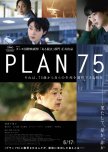
Plan 75 took a calculated approach to culling the herd so to speak. As Japan faced a shrinking younger population and growing older population, Plan 75 was implemented. Anyone 75 or older could chose to be euthanized and receive $1000 and funeral expenses. But is it really voluntary if the poor elderly are financially ostracized leaving them with few choices?Michi is 78-years-old and working as a cleaning maid with other elderly women. She has no family and her apartment is scheduled to be demolished. When she loses her job, she is left with few options. No one will hire her, no one will rent an apartment to her without a substantial deposit, and the welfare office is “closed.” Michi meets with Plan 75 agent Hiromu and signs up. Hiromu’s estranged uncle also signs up causing him to look into the program more closely.
My first thought was that this felt like a re-working of Kinoshita’s The Ballad of Narayama (1958). In TBoN when a person reached 70 in an impoverished village a family member carried them up the mountain where they were left to die of starvation and exposure. The opening sequence of Plan 75 featured a mass killing of people in an assisted living facility reminiscent of a real-life mass murder in Japan in 2016. The film killing and other hate crimes against older folks spurred the creation of Plan 75.
The first thing that hits you is that all of these people were near the poverty line if not below it. They either had no family or their families had largely abandoned them. None of the people who agreed to be euthanized as good citizens were wealthy. Shocking, I know. It’s briefly implied that businesses were profiting off the human loss of life driving the application age downward. However, there was no real discussion of the glaring pitfalls of such a program and the de-humanization of the elderly. Who has the right to decide if a life is of value and when that life should end? Were the wealthy and powerful held to such a standard? Who will be called on next to make sacrifices? Homeless people or the poor? The handicapped, the sick, the infertile? The LGBTQ+ community? People who aren’t living up to society’s expectations? And when does it stop being encouraged and start being enforced? The lack of a deep dive into the potential for corruption was disappointing.
Plan 75 showed the sad truth that many elderly live alone and on limited funds. When they die, they often die alone. In this film, Hiromu discovered that his uncle had helped build Japan’s transportation infrastructure. Michi had worked her whole life---Basho Chieko gave a quietly inspired performance in this role. Now they were considered a drain on society. Instead of cherishing them, providing for them, and recognizing the value of their lives and contributions they had become disposable. When one group of people is dehumanized, it’s not long before another one will be. Only the poor and powerless were called upon to make the ultimate sacrifice. Characters came to realize that life is precious and death should be handled with dignity. Not everyone is ready to leave this mortal coil at 75, there might be one more glorious sunset to bathe in.
“In the shade of the old apple tree,
Tomorrow let’s meet once again
When the red setting sun sinks in the west.”
18 September 2025
Was this review helpful to you?
"I see me in them"
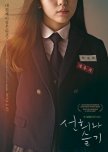
What happens when a high school girl tries desperately to fit in with the cool girls and everything goes awry? Second Life gives Seon Hee a second chance, but will she learn to accept herself and take responsibility for her actions?Seon Hee’s parents are either arguing or so involved in their own lives that she is merely a second thought. Shy, and lacking confidence she looks on with envy when Jeong Mi’s friends celebrate her birthday at school. Seon Hee goes to great lengths to find a way into their group. Her constant lying to fit in is obvious to the girls who decide to reject her. When Seon Hee takes revenge, tragedy strikes. She runs away and starts a second life in a rural village orphanage. Life seems to be taking a turn for the better, if only her past could stay hidden.
The beautiful scenery, cinematography, and score were all well done. The acting, however, was very hit and miss. I thought the story’s concept was interesting yet it ultimately left me unfulfilled. High school is a tough place for shy students, especially ones desperate for attention and acceptance. One lie can lead to another, until those lies are inevitably revealed. Even worse are the lies we tell ourselves. Actions born out of revenge can also have unexpected consequences. Seon Hee found that there are people who will accept you for yourself. But growing up and learning to take responsibility for your actions isn’t easy and doesn’t happen overnight…or maybe ever.
11 September 2025
Was this review helpful to you?
"We're all waiting for that someone to forgive us"
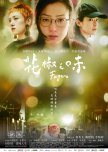
Heiward Mak directed Fagara, a story about three half-sisters who meet at their father’s funeral. The three women have different mothers from Hong Kong, Taiwan, and China. Having dealt with a largely absentee father, the three have wounds to heal as they get to know each other.In Hong Kong, Acacia receives a call saying that her estranged father is in the hospital. He dies before she arrives. When she charges his phone, she discovers a secret, actually two, she has a sister in Taiwan and one in China. She invites both of them to the funeral where they awkwardly meet. Branch is a professional pool player while Cherry is a wannabe influencer in China. Acacia has to decide what to do with her father’s hot pot restaurant as there is another year on the lease. She discovers that her father did most of the work and is exhausted attempting to keep it open. The staff call in her sisters to help. The three grow closer as they search for the hot pot broth’s secret recipe, which might turn out to be a bit of a family scrapbook.
I enjoyed the sisters learning about each other and supporting each other. They all shared unfulfilling relationships with their parents, especially their dad. Through taking over the hot pot restaurant they worked through their feelings about him and others in their lives. I liked that none of the three relied on men to tell them what to do or to support them. They were independent, making choices that best served them in their lives. And they made a loving sisterly family where none had existed before. All three actresses created three very different characters that felt real---Sammi Cheng as the sullen, hurt Hong Kong daughter, Megan Lai as the pool player with a secret love life, and Li Xiao Feng as the effervescent influencer who adored her grandmother. It was fun to see Wu Yan Shu (Meet Yourself) play Cherry’s feisty grandmother. Liu Shui Chi looked like she could have been Branch’s mother in real life. The women's stories and relationships were heartfelt without plunging headfirst into melodrama.
What didn’t work for me---The dad was portrayed as a great guy, misunderstood, but always willing to give people a chance and helpful advice. He was still a man who created three children with three different women and wasn’t a real father to any of them. He withheld the words and time his daughters needed. Acacia and Branch felt rejected and tended to emotionally isolate themselves. Cherry quipped she had never been anyone’s choice. Her mother had moved with her to Canada, calling her a niece and not a daughter. Eventually, she ended up with her grandmother in China. All three dealt with resentments and feelings of rejection that were too often smoothed over or seen as overreaction. The film kept circling around trying to make the dad out to not have been a deadbeat and worthy of great respect, but I never made it to that point. That all three needed to come to terms with him and make peace with a flawed parent was understandable. Painting him to be better than he was caused me to drop my score. While I’m ranting, Andy Lau’s character mansplaining men to Acacia was grating. No Andy, “want to be with you” and “can be with you” don’t mean the same thing. Get a dictionary and a clue.
Aside from the writers trying to make the father out to be better than he was and expecting the women to accept the crumbs he gave them as better than they were, I really enjoyed this film about sisters coming together and healing through love and food. And I loved that Acacia not only learned how to drive, but learned when to drive away and when to drive toward something she wanted.
9 September 2025
I used the names given in the movie version I watched: Acacia Ha=Hsia Ru Shu; Branch/Blanche Ha=Hsia Ru Zhi; Cherry Ha=Hsia Ru Guo
Was this review helpful to you?
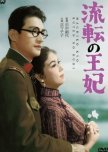
The army decides that Ryuko (Saga) is to be married to Pujie, the younger brother of Puyi, the last emperor of China and the current puppet ruler of Manchukuo. Pujie is a lieutenant in the Japanese army. Ryuko and Pujie make a surprisingly good fit and are happy together in their small house in Manchukuo even with Pujie's spendthrift ways. Despite the Kwangtung Army’s disrespect of them, the two refuse to let anything get them down. They have a daughter, Eisei, whom Pujie dotes on. But this is war and war is hell. When the Japanese are defeated, Puyi abdicates, and soon the extended royal family is on the run from the Chinese and the Soviets.
I had three complaints about this film. Perhaps because Saga and other people involved in the story were still alive, Tanaka showed too much deference. They didn't say what the empress' illness was until late in the film when they finally revealed she was dealing with opium withdrawal. In the prison Ryuko had an almost obsessive need to protect her when her daughter was completely dependent on her. Saga had also written in her book that she felt Puyi's cruel behavior had contributed to the opium use so she had been well aware of it. The death the film began with was whitewashed*, which was egregious as apparently it was a rather well-known scandal at the time. A few abuses committed by the Japanese military were listed which wasn’t the same thing as showing, a far more powerful technique.
In real life, there was no one to root for in this story. Puyi enjoyed torturing his servants and could be sadistic to his wives, which wasn't shown in this film. The Manchurians were literally being used as slave labor, something Puyi supported. The Kwangtung Army ruled everyone with a vicious hand. In the film, that same military was considered a monolith, much like Star Trek’s Borg. Orders weren’t given by any individual, “the army said,” was all the reason given throughout the film. "The army said" Ryuko would marry Pujie, "the army said" the Manchurians would receive no coal during the winter, etc. Ryuko and Pujie may have fallen in love, but it doesn't negate the fact the only reason they were there was because Japan occupied Manchukuo. Ryuko might be given a bit of a pass as she and her family had been encouraged to agree to the marriage by "the army."
This leads to my third complaint which is more artistic in nature. Many of the more poignant moments took place off screen. The Manchurians' suffering was mentioned and yet was all but invisible, heartbreaking final goodbyes and tearful reunions weren’t shown yet there was time for at least three long scenes of people singing. Ryuko was shown to be almost saintly in all of her interactions. It felt like there were missed opportunities for real human moments instead of ones that felt distanced by telling us what happened and sanitizing the story.
What did work? Kyo Machiko gave a strong performance as Ryuko showing how she sought to fit in with her new country and husband. After a life of being pampered, she was faced with hardship and death she'd never known. I also liked that this telling of the story was from a woman’s point of view, instead of the deposed emperor's. The cinematography was stunning and highlighted the hardships of the refugees as they traversed difficult mountainous terrain. It was nice for a change that a royal arranged marriage worked out, both Ryuko and Pujie were quite enamored with each other. Even after both having spent time in prison they longed to reunite. The OST fit the film like a musical glove. And finally, the few action scenes were well choreographed and filmed for the time. Despite not diving too deeply into the Kwangtung Army’s faults, Tanaka never really let them off the hook either.
The Wandering Princess wandered too much and Ryuko was too optimistic and unable to accept the cruelty all around her. It was interesting to see this story play out through this woman’s idealistic, if not realistic eyes, eyes that hoped to see Japanese and Chinese children playing together in Manchukuo. What she didn’t grasp about the Manchukuo she and Pujie dreamed about was that people are more willing to work toward harmonious relationships if no one brings an army and forces their way in and enslaves much of the indigenous population.
1 September 2025
Real life spoilers:
Not long after this movie came out, Pujie was released from prison and Saga Hiro was allowed to go to him in Beijing.
*Film Eisei was a composite of Pujie and Saga's two daughters. Eisei was 19 and in love with a young man that her mother did not approve of. The two were found dead together, a murder-suicide/lovers’ suicide. Eisei didn’t commit suicide due to the pressure of being a Qing heir as alluded to in the film. She also didn’t have to make the arduous trip and spend time in prison like her mother and younger sister. She had moved to Japan earlier to study and was not caught up in the expulsion and termination of the Japanese after the end of WWII.
Was this review helpful to you?
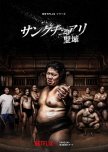
"Dignity is important, but winning is way more important"
If you are squeamish around a lot of bare skin, best to skip Sanctuary. This sumo drama abounded in nearly nekkid men as the sport requires. Big, bountiful butt cheeks and bellies everywhere. I knew very little about the sport so was interested in peering into their world. My review will show I still know next to nothing but it is up a step up from nothing.Oze Kiyoshi had a troubled family life after his father lost their sushi restaurant. His mother ran off with other men and racked up enormous debt. His father who had physical limitations (maybe from a stroke?) was relegated to working on a road crew as the flag man. The Ensho stable master, Ensho Oyakata, recruits Oze after he quits judo telling Oze he can make a lot of money in sumo. Oze refuses to learn the sumo way, preferring his own bag of mostly useless tricks, he is pounded repeatedly in every practice. His unconventional approach to sumo will be sorely tested when he goes head-to-head with Shizuuchi, a mountain of a man with a more painful background than his own. In a similar vein, reporter Kunishima Asuka has been demoted from the news desk and reassigned to covering sumo. Sullen and sulky, disrespectful of sumo, she is a petulant thorn in her boss’ side. Can the two people on either side of the ring come to appreciate and respect the ancient sport?
The most difficult aspect of this drama for me was Oze. He was thoroughly unlikable. Rude, cocky, and violent, disrespectful to everyone, and on top of that, he often behaved stupidly. It helps to pick an unlikable trait-unrelentingly rude or stupid, Oze managed to be both. I was not rooting for him, in fact, was hoping someone would knock his block off. Boy, did I get my wish. Oze was not alone--devious stable heads, other wrestlers, parents (dear goodness his mother was cartoonishly awful)—all behaved badly. The hazing could be violent and there was also college frat boy childish hazing behavior that I didn’t find funny. Kunishima’s growth could at least be seen episode by episode, Oze became embarrassingly worse with each episode until his world view was shattered and he was forced to make a life decision the audience had been waiting six-and-a-half episodes for.
Sanctuary did give insights into the secretive sport with brutal hazing and masculine spaces that had invisible yet strongly enforced “no girls allowed” signs. Any criticisms were quickly swept under the rug, even Kunishima abandoned them as she became enamored with the sport and Enno. Side stories and characters were unceremoniously shoved under the same rug. The last couple of episodes were more entertaining and what I wouldn’t pay to see a gaggle of nearly nekkid sumos running through the streets Rocky style. However, the journey to redemption was just so slow and awful, perhaps more realistic, but not much fun to watch. The ending was also a bitter letdown after a huge emotional buildup. While I enjoyed learning more about the ancient sport with its intricate traditions, Oze/Enno was an irritating guide for much of the drama. I’m still glad I watched it for sumo educational purposes, but the drama itself was a challenge to wade through.
30 August 2025 7.25 could go either way on a coin flip, 7.0 or 7.5
Trigger warnings: bare derrieres, sexual content, lots of boob grabbing, numerous vomiting scenes, a suicide, and a very violent bloody scene.
SPOILER TRIGGER: Ended on a Cliffhanger with lots of dangling stories.
Was this review helpful to you?
"When you're stuck, try another thing"
Everyday Hero was based on the efforts of Guo Jian Nan aka Brother Nan, an engineer who worked for the Poverty Alleviation committee. All but deified in the film, Brother Nan travels to the village of Li Tan that has been damaged by a typhoon. He dedicates his life to lifting the villagers out of poverty.When Guo Jian Nan is called into his boss’ office and offered the job of surveying Li Tan for a factory, he jumps at the chance. A factory would offer 500 jobs to the local villages and help raise the people out of poverty. He and his sidekick Da Zhi discover there is no place for the factory but instead of giving up they remain and work to find other projects that will benefit the people.
The film was an idealized vision of people and offered little conflict. The villagers largely accepted Guo with open arms and were willing to do whatever he asked of them. Liu Bao, the local who benefited from the Pioneer of Prosperity hadn’t shared his wealth from oyster farming. Yet with the arrival of Guo his behavior became overtly generous. The primary beneficiary of Guo’s plans was Aunt Ya/Aunt Mute and her geese. There were few obstacles that Guo could not find a solution for. Though the heartbreaking dilemma of parents having to leave children behind so that they could work in the city was highlighted through the child Papaya and students at the small school. At one point Guo was reprimanded for telling the truth regarding the issues of building a factory to his bosses but that seemed ludicrous. One way or another they would discover why it would be impossible. Another criticism from on high blew over quickly as well. Family troubles were forgiven and support was shored up for him. Everyone understood he had a higher calling of establishing new sources of income for the village and eliminating privation.
The editing could be choppy and situations weren’t always explained well. Maybe they were but were lost in translation. While the characters and events could have been developed better, overall, I enjoyed this film. Watching people work together harmoniously for the most part is a nice break from the real world. The PRC has dedicated significant resources to reducing poverty with Brother Nan and Li Tan being one of the success stories. Everyday Hero (Everybody’s Dream) was an homage to Guo Jian Nan who gave everything he had to improve the lives of one village. The film stated that poverty is a worldwide problem, which is absolutely correct, a problem that would benefit from more enlightened solutions, cooperation, and resolve from the global village.
27 August 2025
Was this review helpful to you?
"There's a century worth of stories here and rubbish which makes it the filthiest river"
Suzhou River was a breakout role for Zhou Xun. She won the Paris Film Fest and Chinese Film Media awards for Best Actress. For her co-star Jia Hong Sheng it was a comeback film after a long battle with drug addiction and mental illness. I had mixed reactions to the blurring of reality and fantasy in this story set along the Suzhou River.A narrator voices his story of struggling to find work as a videographer in the rundown area around the Suzhou River. One night in a seamy bar he’s asked to video the mermaid swimming on display. The mermaid, Mei Mei, and the narrator begin a relationship marred by her moments of sadness and random disappearances. She mentions the tragic love story of Mardar and Mu Dan and would he search for her forever as Mardar did for the missing Mu Dan. Thus begins the story of the doomed lovers.
I enjoyed the first half of the film more than the second half. In the first half it was distracting that the narrator continually inserted into the story comments that it was only a story and he was making it up as he went along. It was very hard for me to connect with characters when I was narratively jostled about. But at least the lovers’ story held some interest as two disaffected people finding a connection. The second half when the narrator became so enamored with his creations that he inserted himself into the story dragged it down for me, especially the enigmatic ending. By that point I didn’t care about any of them and their heartbreak and sense of loss became meaningless.
Zhou Xun did a splendid job playing two different characters. My biggest problem was that Mu Dan was supposed to be a teenager which made her relationship with Mardar on the icky side as Jia had a hardened adult face and Mardar had an adult criminal job. The narrator knew nothing about his girlfriend, Mei Mei, which meant the audience didn’t either. We never see the narrator. He and his camera are the observers. Scenes through the camera’s POV were very shaky, a style that makes me rather nauseated.
Aside from the shaky camera issues, the color scheme was often gray and even blurred as if watching through too much smog. Or like an old scratchy film never lovingly restored. The music at least effectively matched the scenes and emotions.
As I watched this film repeatedly being pulled out of the characters’ world by the narrator, I couldn’t help but wonder if the story would have felt more cohesive and compelling if the director had told the story straight instead of bouncing around in time and between reality and fantasy. It was hard to care about people who were constantly described through the lens of urban legend and then blended with a lonely storyteller’s life.
20 July 2025
Was this review helpful to you?
"I've lived my entire life looking up"
The Starting Point is a Korean snowy crime drama directed by Lee Man Hee. Crime, murder, prostitution, and dancing by a campfire, this film covered all the noir bases. Lol. If you watch any Korean dramas or films you know better than to be suckered into those happy moments for too long.Seok Gu (though never actually called by name in the film) breaks into a building to steal files from a safe. Hunted by a determined security man, the two fight to the death with Seok losing the briefcase of files. Boss Choi is none too happy and feels that somehow Seok is a threat to the gang’s Seven Year Secret. Choi sends Seok off to Mt Sorak with a prostitute named Seon (whose name is never mentioned in the film) to act as newlyweds. The newlyweds are in a group with other singles and couples, one of whom is a shady gynecologist who treats prostitutes and recognizes Seon.
We never know why Seok thinks he’s been sent to the mountain. Seon was supposed to be sexually available to Seok, but was their a more sinister order at play? We also never learn what the Seven Year Secret plan is. An assassin was sent to the mountain to partake in the fireside festivities as well. And later more bad guys showed up. It seemed like there could have been a much simpler, less convoluted plan to kill Seok. Watching the characters climb, scramble, and fall off the mountain did make use of the gorgeous scenery even if it was shot in black and white. The middle section of the film gave the two main characters a chance to fall in love as they participated in the lodge activities and for some humor to be injected, but as a whole it left that section flabby compared to the thrilling opening and ending segments.
The opening espionage scene was exciting and disconcertingly quiet. Ten minutes passed before a brief word was spoken. The final act with chases up and down the snowy mountain had to have been rigorous and exhausting for the actors. Shin Sung Il and Moon Hee had strong chemistry as two withdrawn people who trusted no one and with good reason. They were also stunningly beautiful to gaze upon. Seon talked Seok into making the difficult climb to the mountaintop. Her whole life she had been looked down upon, just once she wanted to be able to look down instead of up.
Despite concerns I had with the script, The Starting Point was entertaining and only a couple of steps from being very good. If nothing else it was quite aesthetically pleasing and benefited from being restored in 2023. Seon wanted someone to see her and get to know her, “He didn’t hate me,” was as close as she got to true love. In a life filled with pain and shame, maybe it was enough.
7 June 2025
Note: YouTube issues all sorts of warnings about age appropriateness and not for all audiences. There was no nudity. No sexual scenes. No gratuitous violence or gore. There was a notice about the birth control pill being available. People did seem to be concerned about a population boom, but other than that, I’m not sure what the warning was for. The women all clutched their pearls upon finding out Seon was a prostitute, so maybe whoever posted the film was concerned about a prostitute being a main character. I honestly I have no idea what the problem was.
Was this review helpful to you?
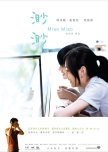
"Fish get depressed if you put them in square tanks"
Miao Miao is a 2008 Taiwanese coming of age film about two school girls who experienced both the rush of joy and the pain of first love. Not nearly as deep or devastating as it could have been Miao Miao splashed along the surface of life and relationships.Ai ignores her father and the breakfast he cooked for her like she does every morning. Once again late for school, she brings a cake she made to share with her friends. Her love for baking hasn’t transformed her very limited skills and her friends don’t exactly dig into her creation. A new foreign exchange student catches Ai’s eye. Miao Miao is studying in Taiwan for the year before returning to Japan. The two hit it off, their bond deepened by Miao Miao’s advanced baking techniques. The two girls visit the site of the bakery where Miao Miao’s grandmother met her first love, only now it’s a used CD store owned by a moody musician. Chen Fei religiously wears headphones and ignores people as much as he can. Miao Miao falls head over heels for the reclusive musician who scarcely acknowledges her existence. He is nursing his grief and broken heart over the loss of his love. Ai is discovering her own burgeoning feelings for Miao Miao. The three young people attempt to navigate the precarious path to and from love.
This film had potential as the girls’ friendship developed and then had the obstacle of Miao Miao’s crush. Not all people know how to maintain and nurture a friendship when one person’s attention becomes focused on a love interest. The stress on the friendship was increased as Ai wasn’t just jealous of the time Miao Miao spent attempting to catch Chen Fei’s attention but jealous that her friend was romantically interested in the brooding store owner. Sandrine Penna and Ko Chia Yen gave their best given the limitations of the script. The source of Chen Fei’s angst was shown in flashback with a strong performance by Chris Wu Kang Ren as the lover. Fan Chih Wei’s performance was not nearly as inspired.
The course of first love is rarely smooth or a straight line. Sometimes even admitting to feelings that might be rejected not only by another but also society can make the journey downright rocky. Though dealing with heartache and unrequited love, Miao Miao didn’t stumble by becoming melodramatic. It would have been nice if it had taken a more scenic route off of the well-trod path it insisted on keeping to. Neither groundbreaking nor overly deep, Miao Miao showed that the best remedy for a broken heart was friendship, even when that relationship caused the pain in the first place.
24 May 2025
Trigger warning: If real life scumbags are a deterrent for you, I discovered after watching this film that Fan Chih Wei has not been good to women, including assault.
Was this review helpful to you?
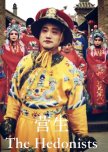
"Socialism is not about you making money while you sleep"
The Hedonists is a short film by Jia Zhang Ke following a group of three miners after their mine is closed. The little guys once again take it on the chin when forces bigger than themselves are at work.San Ming, Liang Zi, and Wen Qian begin their day like any other at the mine. Unfortunately, for them and everyone else at the mine they are told it is their last day. It’s become cheaper to import coal than to produce it at home. Their boss tells them there are lot of opportunities out there, “Go fight for yourself!” Problem is, the same economic forces causing the mine to close are also depressing the job markets elsewhere. The three middle-aged men with limited education and skills begin their job search. No job is off the table for these three, including bodyguard work for a big boss or acting at a new Shangxi Folkland as a royal court.
While the subject matter was dreary, Jia kept the mood light. Unemployment in mid-life is never something to look forward to, especially when the people involved are barely making it as it is. These three were willing to try anything except farming. Wen Qian’s “mental boxing” skills and a wrestling tryout set to the Blue Danube waltz were funny. Liang Zi’s smiling Qing emperor and San Ming’s smoking Ming guard showed the men may not have taken their jobs and lives too seriously.
Jia had been known to run afoul of the censors with his critiques, he even mentioned a historian who’d had his own run ins. This film managed to be critical and hopeful at the same time. The tone of the film suggested that these three lovely losers all stacked on the same motorcycle would find a way to survive and have a good time while they were at it.
23 May 2025
Was this review helpful to you?
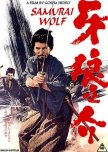
"Go the other way"
Samurai Wolf was directed by Gosha Hideo and starred Natsuyagi Isao in his first major film role as the titular character. Reminiscent of Kurosawa’s Yojimbo, a down on his luck ronin stumbles into a town populated by people willing to do anything to reach their nefarious goals.While paying off his dinner by doing manual labor for the owner, from a distance Kiba the Furious Wolf sees two escorts killed by three bandits. He brings the bodies to a small dusty village looking for the law and finding none. The employees at the relay post immediately recognize their deceased co-workers. Nizaemon, the official messenger for the shogunate is a corrupt official who wants to force Chise, the blind owner of the relay post, to have to close down so that he can take over. Kiba takes an immediate liking to Chise and agrees to help her men transport the next big shipment. Nizaemon sends his men to kill Kiba, but the inconspicuous ronin proves to be “the devil.” The evil messenger calls in a ringer by the name of Sanai Akizuki, the only man who can kill Kiba. Other than the deadly Sanai, Kiba had his hands full with the deceptive and greedy residents as they double and triple crossed each other to steal a shipment of gold.
Gosha used a similar Spaghetti Western setup and music, the town even had a tower much like in Yojimbo. He also judiciously used sound. Several fight scenes began silently to increase the suspense and then implemented sound and music to drive the action on.
Gosha kept the action coming in this tight film clocking in around 75 minutes. Kiba was a poor, but clever ronin who was highly skilled with a sword and a pair of scissors. Much like Yojimbo he knew how to play people off of each other and had a good heart. Despite the short run time, most of the main characters were fairly well fleshed out. Nearly everyone in town wanted Kiba or Sanai dead or both, making it difficult for the accomplished swordsmen to have their epic battle. Unusual for a film from this era there was a fair amount of spurting and spraying blood.
I found Natsuyagi Isao utterly charming as the down on his luck, but never down on himself ronin. It’s hard to believe this was his first role. Handsome, flirty, and fierce, he made this film entertaining, even when the story hit a few rough spots near the end. The body count was high yet the film didn’t take itself too seriously and injected moments of levity. If you like old samurai films, Samurai Wolf is one to try.
16 May 2025
Trigger warning: Spurting blood. There was also a monkey that hopefully was not injured or killed during the making of this film.
Was this review helpful to you?


