

 148
148 438
438 16
16 2
2 6
6 3
3 8
8 10
10 3
3 13
13 1
1 1
1 1
1 1
1 2
2 7
7 9
9 5
5 9
9


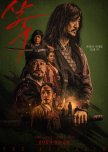
"Listening to your story isn't part of my job"
The Assassin aka Night of the Assassin appeared to have a small budget. The story relied heavily on Shin Hyun Joon as the titular character to carry this flick. The production values were low but there was still enjoyment to be had while watching it.Yi Nan is a fierce and feared assassin who works for the highest bidder during a turbulent and chaotic time. He doesn’t make moral judgements on the targets, he just quickly and effectively takes them out. After visiting a doctor, he discovers he has a serious heart condition. It’s not long before everyone knows and “the weakened tiger is attacked by wolves.” Yi Nan disappears into the mountains to look for a specific herb that can heal his condition. He ends up working at a local tavern for a widow and her young son. In a corrupt world, he is drawn back into dealing out death. His only fear is that Death may finally catch up with him before he can accomplish his last mission.
Shin Hyun Joon made for an imposing assassin. I had trouble buying his overnight transformation but it was still fun to watch him avenge a critical death. Kim Min Kyung gave a nicely rounded performance as the widow who helps a stranger out and falls into danger with her son. The supporting cast gave wildly over-the-top performances. If not for the high body count this film almost amounted to a comedic parody of the genre. The villains, of which there were many, lacked any sense of menace, especially a female assassin and her strange voodoo abilities. The film veered wildly from comedy to deathly serious. The fight choreography ranged from quite good to blurry, shaky, what the heck is happening.
Night of the Assassin’s production values were quite low, most Kdramas have better camera work. There was a moral to the story, assassins were not to be glorified for they killed the innocent and the guilty. Yet Yi Nan’s skill with a sword and cooking knife were indeed glorified. If you don’t mind a low budget film and are in the mood for a strange rampage fueled assassin flick, The Assassin might fill that small niche.
20 January 2025
Was this review helpful to you?
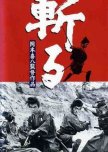
"Samurai aren't as great as you think"
“Kill!” was a 1968 film adapted from the same book Kurosawa Akira used for Sanjuro (1962). Just as with Sanjuro, “Kill!” had a hero who didn’t want to kill yet ended up having to take lives to save lives. The honor of the samurai was called into question as Genta, the itinerant ronin, found himself working to rescue a handful of loyal samurai from a corrupt system. With his wild eyes and hair, Nakadai Tatsuya perfectly played the humorous yet lethal swordsman.Tabata is a farmer who sold his land to buy samurai swords and is in town seeking a yakuza family that is hiring swordsmen. More than anything he wants to be a samurai. Well, almost anything. He hasn’t eaten in five days when he arrives in a town nearly destroyed by a recent revolt. Tabata meets another hungry ronin named Genta, as they both eye a scrawny chicken that would have made Moana’s Heihei* proud. In town are seven dedicated samurai who kill a corrupt official that has stepped out of line with their lord. The local chamberlain, Ayuzawa Tamiya, gave his tacit agreement for the assassination. Tabata goes to work for Ayuzawa while Genta sees a plot that may cost the seven loyal samurai their lives and begins to covertly work on a way to extricate them from the trap they have fallen into.
The first 30 minutes of the film felt needlessly complicated, though I suppose when introducing two dozen characters it was inevitable for there to be confusion. Nakadai Tatsuya played Genta, the wandering ronin who gave up being a samurai two years prior. Quick witted and quick with a sword, it was hard not to like Genta, especially as played by Nakadai. I have come to truly appreciate his wild eyes and cocksure smile. He looked like he was having great fun playing the skilled samurai masquerading as a vagrant. Takahashi Etsushi’s Tabata had a heart and physical strength greater than his brain power. Though not the sharpest katana in a battle, he made up for his lack in enthusiasm. The two unkempt swordsmen would find themselves on opposite sides but never truly enemies.
“Kill!” had numerous humorous moments yet never more than dipped its toe into slapstick. Other samurai films were alluded to without diving into parody. The samurai fell into “the good guys,”“the bad guys,” and “the average guys,” who were just trying to make a living. Swords, arrows, and bullets didn’t care which category the men belonged to and there was one death that particularly hurt. “Kill!” had several narrative issues, but I enjoyed it based mostly on Nakadai’s performance. The unlikely duo of farmer and reluctant samurai was entertaining as they attempted to save the “good guys" and “the average guys” all while trying to stay alive themselves. Once the film found its footing this chambara was entertaining. If you liked Yojimbo or Sanjuro, “Kill!” is one to try.
14 January 2025
*Spoiler---The chicken lives!
Was this review helpful to you?
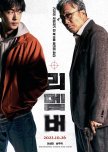
"One can't hide his true self even after his role has changed"
Time can’t erase some memories, memories seared deep into a person’s psyche. The kind of trauma that refuses to be healed. For Han Pil Ju who lost his family and more during the Japanese occupation, time could not take away his need for vengeance against the collaborators who prospered and were hailed as heroes in the years that followed.Han Pil Ju is working his last day at TGIF Fridays and it’s the last day he will be known as “Freddie” at the restaurant. He’s made a friend of In Gyu aka “Jason.” Freddie hires Jason to drive him around in an unregistered red Porsche sports car for important errands. It turns out that his errands involve killing the men who were responsible for the deaths of his family members. All of the men have prospered and hidden their traitorous pasts during the Japanese occupation. Jason gets pulled into Freddie’s revenge scheme as much as he would like to be free from it.
Fifty-three-year-old Lee Sung Min was extraordinary as the eighty-year-old with Alzheimer’s determined to clean the slate in his remaining days. How deep does a wound have to be for a man to hold on to vengeance for over 50 years? Pil Ju’s memory ebbed and flowed, yet he was still coherent enough to remember intricate details of his schemes. He avoided the Inigo Montoya trope, “You killed my father, prepare to die,” though at times was close to it. Nam Joo Hyuk gave In Gyu a naivete and ultimately solidarity with the old man. The two built a nice rapport with each other, something the success of the film hinged on.
Most of the targets were successful and wealthy enough that they couldn’t understand anyone not being able to let go of the past. “It’s illogical to talk about justice when one can’t protect his own family.” Blaming the victims for being beaten to death, dying from forced labor, or the consequences of being forced to be one of the comfort women was probably not the wisest course of action. They couldn’t see or didn’t care that their wealth and power were built on the blood of their own people they caused to be spilled.
Remember didn’t excuse Pil Ju’s actions any more than he did himself. What it did show was that there was still a national trauma that had not yet fully healed. As generations pass on, the memory may fade. “There is no future for people stuck in the past.” It was hard for Pil Ju to move on when justice had yet to be served and the individual tragedies had been dismissed. Remember kept the action moving, and at 2 hours felt tightly directed and well-acted. There were plot holes and using a bright red Porsche wasn’t the best getaway car, but it was an emotionally gripping film from start to finish.
9 January 2025
Was this review helpful to you?
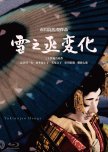
"An actor's revenge certainly is dramatic"
An Actor’s Revenge was actor Hasegawa’s 300th film and a remake of his 1935 film by the same name. Both life and the play were equally theatrical and equally theatrically shot. The gender bending characters made me wonder if life was just an extension of the kabuki play or if it was a progressive look at gender.Nakamura Yukinojo is a famous onnagata who stays in character on stage and off. At the age of seven, his parents killed themselves when a friend colluded with two powerful men to destroy his father’s company, leaving the family destitute. One of the conspirators, Sansai, the ex-magistrate of Nagasaki and his daughter Namiji attend Yukinojo’s play. Kawaguchiya, the perfidious employee and co-conspirator also is there. Namiji is the shogun’s concubine but falls hopelessly in love with Yukinojo, becoming ill when he refuses to meet with her. Fellow merchant Hiromiya is also revealed to be an accomplice as he takes an interest in Yukinojo. The actor plots to use innocent Namiji to bring the 3 men down. He's aided by a lookalike Robin Hood thief, Yamitaro.
The hardest hurdle to scale was actor Hasegawa Kazuo. He was 55 at the filming of this movie and playing a character in his 20’s. When much younger Namiji fell instantly in love and called him “beguilingly beautiful” did she see beyond his paunchy middle-aged appearance? The female thief Ohatsu who was criticized for being too masculine and had never loved a man also fell in love with Yukinojo. Perhaps because the actor was decidedly feminine? Meanwhile, Yukinojo and his troupe leader Kikunojo seemed to have a deeper than friendship relationship. The thief also played by Hasegawa had sworn off all relationships with women though he was intrigued by Ohatsu. Whether it was the intention or not, love appeared fluid, flowing as it willed irrespective of gender or appearance.
Yukinojo’s revenge was nothing exceptional, but satisfying. What made this film enjoyable for me were the creative filming techniques that made all of life a stage. Trees in the forest were obviously fake as Yukinojo was confronted by an old foe. Director Ichikawa used dramatic filming techniques with inky blackness and strategic spotlights. Though it could make the action difficult to follow, the style was intriguing. Yamitaro’s identical appearance was perplexing. At first, I though perhaps Yukinojo had a split personality, especially when Yamitaro commented personally on the actor’s actions. In the end, I guess he was just one more narrator. Ichikawa made use of the famous benshi, Tokugawa Musei, as the primary narrator for the film.
An Actor’s Revenge was an entertaining kabuki experience on the stage and off. Hasegawa’s age could be difficult to overcome, but I suppose age wasn’t important on the stage so it wasn’t important off the stage in this film either. More style than substance and your enjoyment will be whether that off-beat, at times humorous style appeals to you. The suspension of reality and theater acting could be hit and miss with me, in the end it was worth the ride.
4 January 2025
Was this review helpful to you?

"It's not up to others to decide what kind of human being you are"
Born with It was a short eye-opening film for people who live comfortably in the majority and confirmation of what people who are declared “different” already know. This film didn’t pull any punches and stripped away all the sugary, feel-good moments another film might have doled out to make people feel better and less uncomfortable with reality.Keisuke begins school late in the year in a rural area after moving from Tokyo with his mom. Born to a Japanese mother and black father, he is in the only child of color in his class. Fellow student, Kento, can’t believe he can speak Japanese. “I am Japanese,” Keisuke tells him. In a thoroughly homogenous society Keisuke is viewed suspiciously. Kento declares that he must have AIDS for his skin to be that color and tells everyone to not associate with him.
I live in a multi-cultural, multi-ethnic, multi-religious society. Bi-racial children of all sorts are nothing unusual. That doesn’t mean that they don’t face prejudice. But the level of ignorance and otherism of these children was off the charts. Unfortunately, it’s not only these Japanese students who are cruel. I watched a drama not long ago that had a Japanese actor of color named Anthony in it. I saw numerous derogatory comments about him from people not from Japan. He too, was born of a Japanese mother and African American father. His father died when he was a toddler. His mother married a Japanese man when he was five. As he said of growing up, “There were girls and boys and then there was me, this mysterious black being.” Much like this child, he was thoroughly Japanese except for his looks, and in a monoethnic society it was hard to fit in.
Keisuke’s mom did not coddle him or tell him everything was going to be okay. She told him he could not let others decide who he was, he would have to figure that out for himself and fight his own battles. A heartbreaking reality for such a beautiful, kind child. While this short film showed the ignorance some people of color face in Japan, it’s also a reminder for the rest of us to open our hearts and minds to the “others” in our own communities. Regardless of race or sex we are all humans and want to be treated with respect and to be accepted. Born with It showed how much more some people have to fight daily to achieve that baseline of humane treatment.
24 December 2024
Was this review helpful to you?

"A heart that loves, never gets tired"
Homecoming was a part of the Jollibee’s Valentine 2018 series and a follow-up to its immensely popular short film/commercial Crush. Rather than a sequel, it filled out Crush’s story of young love that had a rocky start.Our nameless college student who delivered Jollibee hamburgers with encouraging notes to the female student he had a crush on in Crush, had to watch his love interest interacting with her boyfriend. As was hinted at in the first short, the boyfriend was very self-involved. The stalkerish good guy was always there to lend a hand or emotional support when she needed it. The beginning of the film showed they ended up together. The vignettes played out the progress of their relationship as she observed his generosity and tenacity.
I liked this short film/commercial better as it showed his actions that won her over and not just leaving her cold hamburgers with anonymous notes everywhere which I didn’t find particularly romantic. I won’t leave a drink unattended in a crowd, I’m certainly not going to eat a hamburger that appeared in my locker or on a bench. Here he stepped up to help her and was attentive to her needs. Jollibee was not forgotten after they became a couple. Even in old age she still loved Jollibee burgers and he was still Johnny on the spot to make sure she always had one on hand. The pragmatist in me wanted to mention she might need to have her cholesterol checked.
Homecoming was a cute follow-up to Crush that helped better explain how this couple based on a real story found their way to each other through a devotion to Jollibee burgers. Homecoming felt less contrived with a less problematic approach to romance than the first short film. As always, beauty and true love are in the eye of the beholder.
22 December 2024
Was this review helpful to you?

Nine minutes of film sunshine
Hand Sign: I’ll Be Your Ears aka Boku ga Kimi no Mimi ni Naru was based on a true story which made this sweet short film all the more poignant. In many ways it was a music video as there were very few words spoken out loud by the characters. Set at a university, two students met and despite their differences found they had something in common.A new deaf female student hands out fliers trying to find someone to help her take notes during class but has no takers. One day a male student in her class sees her frustration at attempting to read the professor’s lips and steps up to help her. As the two spend more time together, Rika wants to learn more about the joy of music and Wataru wants to learn more about sign language.
I don’t know the name of the band playing but I loved that they signed the lyrics and of course this played into the budding love story. Rika and Wataru did a fine job portraying the steps in the relationship, from tentative greeting to eagerly wanting to know more about each other.
While the story was sweet it avoided being saccharine, especially knowing it was based on the experiences of two real life university students. Those little extra efforts at communication people often avoid can lead to friendship and even love. How many interesting relationships do we miss out on by not stepping out of our comfort zones? The real people who inspired this hopeful and sunny film discovered the rewards and were generous enough to share them with the rest of us.
20 December 2024
Was this review helpful to you?
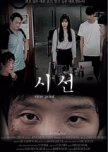
When a smiling distraught man approaches a woman, she assumes he has something nefarious in mind as does a male witness. As does the police officer who questions everyone except the wounded man. When Haneul, the wounded man, finally breaks down and gets their attention the story comes tumbling out.
In this world there are many biases that cloud our vision and interpretation of events. Every experience is sifted through cultural and social prejudices and norms often to the detriment of marginalized people. The Viewpoint showed the weakness of eye witness accounts and the harm caused by assumptions. A short and powerful reminder to open our minds to those we feel are “different” from us.
15 December 2024
Was this review helpful to you?

Like a rolling stone
Full disclosure, after watching this two-minute film I had to scurry across the internet and look up what sailing stones were. After doing my due diligence, I went back and rewatched Sailing Stones. I came to the conclusion that this was more a video piece of art than traditional film.Sailing Stones was filmed in black and white with zero dialogue. Several expressionless people are on the beach with long narrow tracks behind them. Their ages and sex vary. All stare ahead even as the sound of stone against stone grinds and moves them forward. At long last the sun begins to wake behind the mountain.
For anyone like me who is confused by the title, sailing stones (also sliding, walking, or rolling stones) have been found in Death Valley, California, USA. For a long time, stones were found to have moved with a dragging trail behind them. Turns out when the stones are on a melting sheet of ice, the strong winds can cause them to “sail.”
The disparate people in this short film were propelled in curving trails, victims of external forces instead of their own will and volition. Filmed for 10 CM’s single, “Sleepless in Seoul,” each of the individuals had their own reason for sleeplessness. A pregnant woman, a student, a salaryman, all were pushed about by the ever-present wind. Was the ground frozen beneath their feet or were their hearts and lives frozen as they were dispassionately transported?
I suspect like viewing a painting or a Rorschach test, everyone will have their own interpretation of this short film. I found the concept intriguing.
11 December 2024
Was this review helpful to you?
A bus ride you will not forget
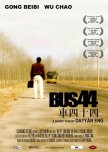
Many of the short films I’ve watched have been heartwarming, life affirming, or poignant. Bus 44 blew those sentiments up in 11 minutes of dismal human nature with a series of shock and awe.Bus 44 travels through a rural area of idyllic lined trees and farm lands. The female bus driver stops for a young man who innocently flirts with her. At the next stop, two men enter the bus with evil on their minds. They rob the bus and make a decision that will prove fateful for everyone.
Director Dayyan Eng squeezed every minute out of this film imbuing the two leads with enough emotions to make them feel real. He managed to hit the Goldilocks Effect with the film not running too short nor too long. Without a whit of compassion, he also demonstrated the dire consequences of the Bystander Effect.
Bus 44 was short, horrifying, and satisfying in a grisly and perverse way. If you are looking for a feel good film, this is not it. Bus 44 showed the dark side of criminal behavior and group passivity. This well made film earned the film festival awards it won.
10 December 2024
***Spoilery trigger warning listed below***
Trigger warning: It’s listed as a spoiler in the tags, but for some people this needs to be more prominently displayed-Rape
Was this review helpful to you?
"In the royal household, they regard their children as enemies"
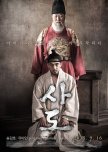
This was a hard film for me to write a review for. The Throne told the events leading up to the explosive event in 1762 when King Young Jo took his troublesome son’s punishment into his own hands. Or at least part of the events, giving reasons or making excuses for Crown Prince Sado’s reprehensible behavior depending on how you looked at it.Crown Prince Sado is called before his father after a possible aborted attempt to kill the king, something largely frowned upon. The king is in a jam because he can’t execute the prince for being a traitor because of the problematic law that states the whole family of a traitor would be judged, implicating the king and royal grandson as well. If the prince kills himself, his retainers and supporters are afraid they will be executed. Eventually, the king settles on locking the prince in a rice box with no food or water. The story then flips back and forth in time to explain how the two came to this moment of deadly impasse.
King Young Jo prided himself on his studies and discipline to Confucian ideals and decorum. Sado enjoyed art and hated studying. As the young prince grew up, the king became more disenchanted with the crown prince and more critical. When he made Sado a regent, Sado attempted to change taxation and create laws to benefit the people instead of the nobles. Rival factions were not amused and the king stepped in fearing a loss of power and prestige for himself. Regardless of what decisions Sado made, the king ridiculed him. And apparently because his daddy was mean to him, Sado snapped and became a murdering deviant.
In real life, Sado murdered a eunuch and carried the head around in his private quarters. He beat and raped the women in his circle and murdered many servants. Which came first, the chicken or the egg? The serial rapist/murderer behavior or a distant critical father? In the film the Queen Dowager, his wife, and other women seemed to care for him and dote on him so he wasn’t without attention and positive affirmation. It felt like the film was attempting to drum up sympathy for Sado, but I dare say all of the people he murdered and raped would not feel much compassion regardless of the reason for his brutal and inhuman behavior. Glossing over his vicious actions seemed to weigh the scales without all the facts.
The costumes, wigs, and sets were all beautiful and luxurious. The Throne excelled in the poignant performances by most of the actors including Song Kang Ho, Yoo Ah In, and Kim Hae Sook. Song showed how the king was strictly disciplined in his own life, having no leniency for Sado’s more lax behavior. He also portrayed the king as distraught by the actions he felt had to be done for the country and to spare his grandson. Yoo brought out the complexities of this screen prince who wasn’t in a hurry to be king and had his own ideas for the crown. The dissent into madness was believable. Kim played the pivotal role of the Dowager Queen who saw more good in her grandson than her son did.
If I hadn’t read about Sado’s unbearably cruel behavior, I would have rated this film higher. Somehow leaving out the details seemed disingenuous when assigning blame for his actions to the king’s critical conduct toward his son. If you can block all that out and enjoy the film for the quality acting and cinematography, it is a stunning film to watch.
4 December 2024
Was this review helpful to you?
Promises, promises...
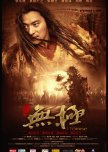
I was drawn to The Promise because Nicholas Tse and Sanada Hiroyuki were in the cast. It sounded like a fairytale which also had possibilities. If the characters hadn’t been so shallowly drawn, the promise of an entertaining film might have been fulfilled.Qian Cheng is a starving child with a sick mother. After scavenging food from a battlefield, she is approached by a goddess who offers her a deal she can’t turn down. Qian Cheng can be wealthy and adored by men. The catch, there’s always a catch, she can never fall in love or she will lose her love. Years later during a battle, a slave named Kun Lun displays a propensity for running---fast. General Guang Ming knows talent when he sees it and makes Kun Lun his personal slave. Duke Wu Huan is determined to take over the kingdom and have a grown Qian Cheng for his own. The table is now set for a love square.
The whole premise of the story is that Kun Lun, Guang Ming, and Wu Huan were all obsessed with Qian Cheng. It had to be the spell, for while she was beautiful, she wasn’t charismatic. Qian Cheng fell deeply in love with the masked man who saved her and had no qualms about giving herself to her supposed savior despite never having seen his face. Instead of coming across as a seductress, she appeared vapid to me. I found it difficult to care about any of the characters or root for any of the possible love combinations. They all seemed fairly vacuous. Aside from Kun Lun being able to enter the Speed Force, they just weren’t that interesting. Sanada and Tse camped it up a little in their portrayals of foes and besotted men, though Wu had other reasons for his obsession.
The CGI and special effects were rudimentary at best. There were luxurious costumes, especially for the opposing armies. You would not miss Guang Ming’s men in their bright red armor. The wigs left a lot to be desired though.
I enjoyed the premise of The Promise, or rather, I wanted to enjoy the premise of the film. The one-dimensional characters were difficult to become invested in. I appreciated most of the performances, it would be hard to ignore Sanada Hiroyuki and Nicholas Tse. The sets, scenery, and costumes were beautiful even with the low grade CGI and occasional editing glitches. It just felt like the movie promised so much more.
2 December 2024
Was this review helpful to you?
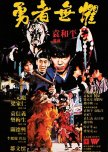
Laundry Kung Fu!
Dreadnaught was a martial arts film directed by Yuen Woo Ping. It starred Yuen Biao and a non-beardy “Beardy” Bryan Leung. In a supporting role was The Wong Fei Hung, Kwan Tak Hing, who’d played the character in at least 80 films. Most of the Yuen clan made a showing in this film or helped as martial arts directors.Mousy is a cowardly laundry man who is afraid of his own shadow and especially his sister. He is friends with Leung Foon, a student of the famous Wong Fei Hung. Across town is a rival of Wong’s, Tam King who is intent on bringing the physician down. The maniacal White Tiger is on the loose and Tam gives him shelter in his opera troupe. Mousy’s “lucky” bells trigger White Tiger’s deadly instincts sending the killer on the fearful washer’s tail.
Full disclosure, I’m not a big fan of slapstick comedy and Dreadnaught had its share. I found Mousy more annoying than endearing. If slapstick is your thing, you will likely enjoy this more than me. For a comedy it also had a rather high body count. With so many Yuens involved it couldn’t help but have creative and quality fights. The opening Lion dance and deadly dance off exhibited choreography requiring numerous skills. Yuen most likely to be cast as a deranged killer, Yuen Shun Yi, played the serial killer with frightening opera face paint. White Tiger seemed unable to speak only using growls to communicate. Yuen Biao was quite acrobatic and his latent laundry kung fu was interesting. Bryan Leung was excellent as Leung Foon who played for laughs and tears. Brandy Yuen and Yuen Cheung Yan both played assistants to the Marshall. This was my first time to see Kwan Tak Hing play Wong Fei Hung. At 76 most of his fights were choreographed using stunt doubles though he still held his own in several scenes. Rule of thumb with fight scenes on tv or movies. If you can’t see the face, it’s probably a double. Phillip Ko Fei made an appearance as bad guy Tam King. And Sai Gwa Pau who played Cocky So in Kwan’s movies also showed up here. Too bad they couldn’t get Walter Tso (Leung Foon) for a cameo.
Despite my dislike of Mousy’s over the top cowardice, I did enjoy this movie. Yuen Shun Yi made for a terrifying Big Bad, mainly because he had the skills to back it up. Yuen Biao and Bryan Leung’s kung fu abilities worked well with the fight choreography, making each fight entertaining. And it was fun to see elder statesman Wong Fei Hung, Kwan Tak Hing, have the chance to show he still had some moves left as he pushed eighty. This wasn’t the best Yuen Woo Ping film, but it was worth watching for the fight scenes. As always, I grade this old kung fu flicks on a curve.
30 November 2024
Dreadnaught: “One that is among the largest or most powerful of its kind.”
Was this review helpful to you?
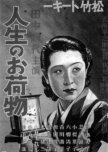
"Women are like products for sale"
Burden of Life was a short Gosho Heinosuke film from 1935. Not going to sugar coat this one. I hated it. Even taking into account the time period, it was so overtly sexist that it made my blood boil.There might be a couple of elements below that could be considered spoilery:
The film starts out safely enough (sort of) with a playful bantering of the sexes. Itsuko is the middle sister married to an artist who paints semi-nude portraits of her. They live beyond their means and rely on her parents helping them out with money. Oldest daughter Takako is married to Tetsuo and are always fighting. He disapproves of her buying anything for herself, yet he spends his time in hostess bars drinking and buying drinks for the hostesses. Machiko, the youngest daughter, is about to be married which is costing her dad more money. Nine-year-old Kanichi is the baby of the family. He stays away from his dad as much as possible, even eating dinner in the kitchen to avoid him. Shozo has nothing good to say about the boy. His mantra is, “We never should have had him.” Finally, the mother has had enough and begs the father to be kinder to him and plan for the son’s future as well.
I’ve watched numerous older films, but the gaslighting of the mom to prove that the father knew best and women were overly emotional was too much for me. There appeared to be a tiny softening of Shozo near the end but it was not nearly enough for me to accept any real character growth. I found the father’s attitude deeply disturbing. Shozo didn’t know Kanichi’s age and had no plans for the boy to be educated. He considered the boy too short and too ugly to ever be married. Surprisingly, this was one of the first times I’ve come across a father wanting to be rid of a son. Daughters were often lambasted as being useless, but sons always seemed to be coveted. Shozo’s domineering attitude toward his wife had me hoping she’d smother him with her pillow while he slept. He kept saying he wished Kanichi had never been born, being as brilliant as he was, surely he knew how babies were made, didn’t he?
Despite the age of the film and knowing attitudes have changed in the last nearly 100 years, I could not enjoy this film at all. Other early directors had a modicum of respect for their female characters and audience. A child being continually rejected by his father destroyed any enjoyment I might have had with this film otherwise. If you are a fan of Gosho or can tolerate bad parenting and dismissive attitudes for women, at 67 minutes it’s worth a try. I gave myself a day to think about it and try to rationalize the father/husband’s behaviors and the neighbors’ but am still mad. Given this was supposed to be a lighthearted slice of life, I don’t think that’s the response Gosho was trying to elicit.
17 November 2024
Was this review helpful to you?
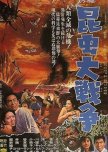
Revenge of the insects!
Genocide was a dark film with a very bleak opinion of humanity. Director Nihonmatsu Kazui threw a lifetime of grievances against the screen to see what would stick-nuclear war, environmental concerns, concentration camps, PTSD, racism (whether intentional or not), sexism (whether intentional or not), murderous insects that could communicate, and the Cold War. That was a lot to tackle in 86 minutes.Joji collects insects on an uninhabited island with Annabelle both for her own study and for his friend, Dr. Nagumo in Tokyo. When Joji and Annabelle are “relaxing” they see a plane catch fire with four parachutes dropping out. Later, two American crew members are found dead and one unconscious. Because Joji tried to sell a watch he found that belonged to a crew member he is arrested for murder. Colonel Gordon wants him to pay for their deaths but he is far more concerned about a missing nuclear bomb. Soviet spies are scouring the islands attempting to find it as well. To complicate matters, killer bees are on the loose bent on destroying humanity. Joji, his wife Yukari, and Dr. Nagumo become hopelessly entangled with a vengeful scientist, predatory insects, and two super powers.
There really was a lot to unpack with this film. Charlie, the black crew member, suffered casual and overt racism from just about everybody. He’d suffered severe PTSD from the war and had become addicted to drugs which caused everyone to treat him even worse. Yukari was sexually assaulted twice and the female doctor once with very little afterthought. The vengeful scientist was a survivor of the notorious Auschwitz concentration camp and had it in for humanity. “I love insects because they never lie.” The American colonel seemed to be a rogue commander willing to start a nuclear war and kill thousands of people to cover up his mistake. The Russians were using the deadly bee research for biological weapons and desperately wanted to get their hands on the bomb. As people showed their ruthlessness and/or utter stupidity on a regular basis, I began to root for the bees.
The actors performed well, something of a rarity for cheap horror flicks. There were several non-Japanese actors who were dubbed in Japanese. I don’t know who wrangled the bee actors but I hope they were paid handsomely. My biggest complaint was in the editing. There were times that people disappeared and ended up somewhere else without explanation. If you have a problem with insects, this film has numerous buggy scenes. I had to turn my head when bodies were infested with creepy crawlies or being chewed on. The science and logic for the film was genuinely lacking. It stretched credulity when a USAF officer believed that detonating a nuclear bomb was a smaller offense than going to the trouble to retrieve it. It's not like someone could have stuffed a multi-ton bomb into a backpack and carried it off the wooded island. Despite gruesome infested wounds, no one would believe the scientists that the insects had turned against humans. Un-bee-lievable.
Genocide was unflinching in its nihilistic view of the world and humans’ place in it right to the bitter end. Nihonmatsu took a stand and didn’t deviate from it. The insects let people know, “The Earth doesn’t belong to humans alone. We don’t care if mankind destroys itself with nuclear weapons, but we refuse to let you take us with you!”
29 October 2024
Trigger warning: Numerous insect scenes in a variety of manner and stages
(Rated on a curve for old, low budget, niche films)
Was this review helpful to you?


