

 148
148 438
438 16
16 2
2 6
6 3
3 8
8 10
10 3
3 13
13 1
1 1
1 1
1 1
1 2
2 7
7 9
9 5
5 9
9


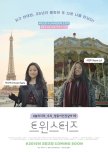
"Family is what you make of it"
Twinsters is one example of the internet and social media being used for good. After taking part in a YouTube video, American actress Samantha Futerman was contacted by a French woman living in London named Anais Bordier. The woman’s profile pic looked eerily familiar. Both women were adopted. Both women were born on November 19, 1987 in Busan. And both women looked exactly alike!This documentary followed Sam making contact with her sister and their journey toward learning more about themselves and their past. Sam grew up with two brothers and feeling accepted at home and school. Anais was an only child and often felt lonely and had anger issues when she was young. She was taunted at school for being adopted and different and did not feel accepted. Both women were excited and nervous about meeting the other. Sam and her family visited Anais and her family in London. Anais later visited Sam in Los Angeles. The sisters traveled to Korea to do more research into their past. Sam had been to Korea before to gain information and had met her foster mom. This time Anais would be able to do the same and discover maybe she’d been loved and cared for more than she’d ever known.
The Twins Study Center did the DNA testing for Sam and Anais as well as testing them for similarities and differences. When in Korea the two women attended the International Korean Adoptees Association gathering where their birth country welcomed them. It was heartwarming to watch two sisters go from not hugging to holding hands and embracing each other. They faced the ups and downs of their adoption stories together and in the process found that they were surrounded by more love than they thought possible.
“Family is what you make of it. There is no definition.”
12 October 2024
Was this review helpful to you?
Two children are seen searching for anything to eat, knowing they are starving and could die. Their world is decaying and crumbling apart. Every step crunching on the ruins of civilization emphasizes how they live in a godforsaken land. They search a blown-out building and find a man tied and chained to a wall. Realizing he might be someone else’s food cache; they work quickly to secure him for themselves. Is he dead or still alive? And does that even matter anymore?
This is not a great film, but one that people who want to annihilate others should see. Governments who believe there is such a thing as “limited” nuclear war should see. Our mutually assured destruction can put us in a position where those who survive have only the bodies of other unfortunate souls to feed upon. Hu Bo’s pessimistic vision of the future is a dark place of utter misery. Children who should be giggling, playing, and well-fed have become scavengers in a wasteland spiraling down a hole deeper than any well.
10 October 2024
Was this review helpful to you?
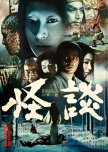
"It was no dream"
Kwaidan is a 1964 film that contained four unrelated ghost stories. The film drew most of its material from Lafcadio Hearn’s 1904 book called Kwaidan: Stories and Studies of Strange Things. Director Kobayashi Masaki crafted each stylized story much like a painting. The skies were often brightly painted backgrounds with each vignette taking place primarily on a soundstage. These were not terrifying or gory tales, more like eerie, karmic, Twilight Zone episodes.1) The Black Hair/Kurokami (B)
An impoverished ronin discovers what goes around comes around aka payback is a bitch when he leaves his loving wife to marry up and take a new position.
2) The Woman of the Snow/Yuki Onna (B+)
A young woodcutter is spared by a snow witch on the grounds that he never tell anyone he saw her. He learns the lesson to never betray a woman.
3) Hoichi the Earless/Miminashi Hoichi no Hanashi (B)
Blind, kind, Hoichi is a young monk at a temple not far from where an epic battle took place 700 years before. The ghostly Heike clan calls upon him to sing the tales of their failed battle night after night. He pays a painful price for his freedom.
4) In a Cup of Tea/Chawan no Naka (B-)
Can you swallow someone’s soul when drinking a cup of tea? A writer receives a proper punishment for writing an open ending to his story.
I enjoyed the stylized view of each of the stories with most having a stage production look and feel. They often appeared surreal, especially Yuki Onna’s swirling eyes in the sky. Each varied in length with Hoichi the Earless being the longest (maybe too long) and In a Cup of Tea being the shortest (maybe not long enough).
The cast for each story was strong. Nakadai Tatsuya played the naïve woodcutter and Kishi Keiko played the complicated Yuki in Yuki Onna. I love his wild eyes though he was the babe in the woods in this segment. Shimura Takashi as a Buddhist priest tried to help the blind Hoichi who was bound to his ghostly visitors each night. Too bad his character didn’t have a strict attention to detail.
Each of the four stories took a different approach to the supernatural though all of the main human characters paid a price for their encounters. Kwaidan had strong performances, taut stories, and a mesmerizing artistic appeal to it. There was an almost poetic rhythm to the moralistic storytelling. While these were technically horror stories, they were the type you could see people telling around a campfire, preferably with any powerful talisman available hanging around their neck.
3 October 2024
Was this review helpful to you?
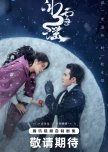
What I Liked:
--Vengo Gao-He was tailor made for the role of a suave, badass vampire.
--Gothic vibes-the dark exteriors and interiors were perfect for this story.
--Costumes-I loved all the velvet, especially Jing Xue’s wardrobe.
--Eternally winter-a great vampire setting. You never see vampires sipping Mai Thais on the beach. The Snowpiercer train ride through the frozen landscape also felt other-worldly.
--Ever present Snowman- I had hoped Frosty would have transformed into a snow monster but we can't have everything.
--Gold Crow-I’m a fan of the Corvus genus of birds though this avian actor was forgotten about much of the time.
--Non-romantic relationship for most of the drama-Based on Mi Lan’s childlike personality, there was definitely a maturity gap and vastly unequal power structure between her and Zhi Heng. Lovers don’t usually tell the other to “drink your milk.”
Neutral:
--CGI-Not great, but not a deal breaker for me
--Ending-spoilery comments after review
--The writers couldn’t use the word “vampire” or show them drinking blood but angry, biting, hair-pulling sex was all right. Mmmm…kay
What I didn’t like
--Zhi Heng written to be utterly stupid and inept in the opening salvo. This brutal scene had him acting completely out of character. They needed a set-up for him and Mi Lan to meet and to show his mostly indestructibleness but man it made him look less than powerful or intelligent.
--Anything that hinted at a romantic relationship. I don’t mind age gaps, but this was a maturity gap. Mi Lan was treated like a 12-year-old and acted like one for much of the drama.
--Terrible wigs-some of the wigs looked like roadkill.
--Both Liang and Situ weren’t written consistently and could give you whiplash with their back-and-forth emotions
--Liang’s plot armor-Zhi Heng could take on a jillion Shadow Warriors but somehow Liang always slipped through his fingers. Although he was always being beaten, shot, etc. Characters would also go into hiding and then come back into the open with no consequences.
--The magical stones element felt ill developed and clunky. Another demerit for censorship-it plays havoc with creativity.
--Wei Lian’s creepy walk on the dark side with Jing Xue
In conclusion:
❄Overall, I enjoyed this drama. It was a nice attempt at the vampire genre given all the restrictions and had a luxurious look. The costumes and settings may have been Republican Era but the drama felt more like a magical storybook which I quite liked. Far from perfect, yet also strangely addictive, Snowfall made for an interesting if fractured fairytale.❄
30 September 2024
Short spoiler below
*********
*********
*********
*********
*********
I didn’t mind the SE. It had been foreshadowed from the beginning. Since I didn’t care for any romance between the two main characters, I didn’t need the HE. The only thing I didn’t care for was the apparent deviation from the source material. Of the Republican Era and strictly historical dramas I’ve watched, the censors seem to prefer sad endings so I know going into these dramas the likelihood of the main couple living HEA is a low percentage. At least it didn’t come out of the blue and the story was headed in that direction from the beginning unlike other dramas where a disappointing ending is tacked on.
Was this review helpful to you?
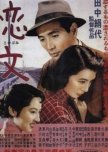
"Who can throw a stone?"
Love Letter was actress Tanaka Kinuyo’s first film to direct. WWII was over and the censors had left so she could address sensitive issues about American G.I.’s having Japanese lovers. The subject for her first film was a tough one and the 1950’s attitude of the male lead was difficult to sympathize with.Five years after WWII, Reikichi lives with his younger brother, Hiroshi, who pays most of the bills. An old friend brings him into his business translating and writing love letters in English for women who have been involved with American soldiers. Most of the women are asking for money and Yamaji makes the letters flowery and eloquent. Reluctantly, Reikichi begins work there to bring in more money. He’s despondent because he has never forgotten his first love who married someone else. When he discovers that she’s a widow he goes to the train station every day to search for her. As luck would have it, she comes into the shop to have a letter written to an American soldier who had fathered her baby.
First the positive. I enjoyed Tanaka’s fluid directorial style. Despite the year and cultural values, she showed Michiko in a mostly sympathetic light. Mori Masayuki gave a wonderfully complex performance, even when I wanted his character to erupt in flames. Yuga Yoshiko brought a damaged, yet sweet spirit to Michiko. Michiko was a woman who had lived through her own hell and was still able to be kind to others. The supporting characters were also strong. Tanaka made a guest appearance as a woman needing a letter written by Reikichi but instead received an earful about her lifestyle from the sullen man.
Much was made of Reikichi’s loyalty in waiting for Michiko for five years. They made a point of him standing next to the Hachiko statue, the dog who had waited faithfully for his deceased owner every day at the station for nearly 10 years. For Michiko to have sullied herself with a foreigner from the country that had defeated them was too much and the diatribe Reikichi buried her in was vile. That she’d also given birth to a “blue-eyed baby” who had died made her acts even worse. He knew nothing about her and the struggles and pain she had faced. He was unable to comprehend that the man she’d been involved with had been what she needed at the time. This kind of overly precious attitude about women’s virtue struck me as false given the horrors the Japanese military committed against women during the war.
What saved this film for me was that both Hiroshi and Yamaji called Reikichi on his stupidity and stubbornness. “Who do you think you are? A saint? You can’t be proud of the way you lived.” They knew that the war years and post war years were brutal for women, especially single women without a family to support them. For Hiroshi, Michiko’s actions could be forgiven as she had only been with one guy, unlike the prostitutes who made a living off the white bread foreigners. Michiko was a kind and elegant women who condemned herself for being “depraved” which was awful to hear. Reikichi wasn’t exactly a great catch. Though well educated he’d been sponging off his brother since he came home.
Japan had much to process after the war. Soldiers had experienced traumas and civilians had lived through their own. Most people had either visible or invisible battle scars. Reikichi was learning the hard way that forgiveness was hard to come by and sometimes harder to give when clinging to rigid ideals.
30 August 2024
Was this review helpful to you?
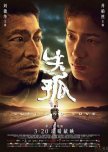
"If you search, fate grows. If you give up, fate dies"
In 2015 it was estimated 20,000 children in China had been stolen and trafficked just for that year. Some were sold for adoption, others for forced labor or prostitution. Lost and Love told the story based on a real-life father who had spent 15 years chasing down leads and searching for his child all over China. Andy Lau gave one of his best performances as the determined father who would never stop in his quest to be reunited with his son.Lei Ze Kuan rides his motorcycle with flags displaying missing children’s faces as he chases down leads on his missing son. After a road accident he meets Zeng Shuai when the young man fixes his bike. It turns out that Shuai was a kidnapped child and “adopted” by the family he lives with. The family has been good to him, but because of his unknown status he cannot go to university, marry, ride the train, or any other thing which requires an id card. He asks Lei to take a side trip and go with him to check on clues as to where his family might be. The two men bond during their road trip seeking the truth they both desperately want.
I’ve watched many films with Andy Lau, but Lost and Love is the first one where I wasn’t constantly reminded by his acting that he was “Andy Lau.” He gave a vulnerable performance as a father who was ridden with guilt and anguished over his loss. This understated interpretation was quite moving. Jing Bo Ran also gave a realistic performance as a lost son torn between wanting to find his biological parents and not wanting to betray his adoptive parents. The chemistry between the two quickly evolved into a surrogate family as they traversed the country. As they grew closer there were several tender and playful moments between them.
Peng San Yuan based the story on real life father, Guo Gang Tang. She added another missing child whose story with Sandra Ng as a trafficker was woven throughout the film, though it did turn melodramatic. Peng illustrated the complicated feelings and responses parents had who lived through the nightmare of having a child stolen from them. Aside from the guilt and fear, the trauma caused marriages to dissolve, mental health to collapse, and for some parents, the despair drove them to suicide. Peng not only wrote the screenplay but also directed the film. The pacing and transitions kept the film flowing even with three stories being told. The film was visually appealing as Peng highlighted the stunning verdant scenery of the countryside and architectural beauty of old chain bridges.
Lost and Love was heartwarming and heartbreaking and did so without falling into the trap of sentimentality. There were a couple of coincidences that were a bit too on the nose, but I’m a sucker for these stories based on real life events and was able to overlook them. I cannot imagine the terror of not knowing if your child was safe and whether you’d ever see them again. I also cannot imagine having the strength to spend every day for nearly two decades following any hint that might bring me closer to that child and dealing with the soul crushing despair every time a lead did not pan out. Lost and Love brought a horrifically painful subject to light while also showing the supportive networks and people trying to reunite families.
If you’d like to see how the real-life father’s story was resolved, see below.
28 August 2024
*****************************************************************
After TWENTY-FOUR years, Guo was reunited with his son!!!
This link still works as of this writing:
https://www.bbc.com/news/world-asia-china-57815491
Was this review helpful to you?
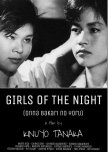
Mrs. Nogami, the headmistress of the Shiragiku Dormitory finds Kuniko work as a live-in worker at a shop. No one there knows what Kuniko used to do for a living. Her boss works her from morning until night and after her living allowance is subtracted from her wages Kuniko will only be making 10, 000 yen/68 USD a year. After her past is revealed, the shopkeeper is determined to demean and replace Kuniko. Rather than be humiliated and taken advantage of, Kuniko takes the situation literally into her own hands. At her next job in a factory, Kuniko tries another tactic and reveals her past to the women in the dormitory. Instead of being supportive her female co-workers violated Kuniko in a disturbingly violent scene. At her third job she finds love, but also runs into the limitations of societal forgiveness and acceptance.
Girls of the Night was one of the few films from this time that was both directed and written by women. Tanaka Kinuyo filmed a fairly progressive film given the timing of the new law. Far from condemning the ex-prostitutes, the film tried to show that the majority of the women sold their bodies due to tragic situations pressuring them from society, family, or personal relationships. Mrs. Nogami time and again supported Kuniko and the other women in her care. When Kuniko asked why it had been okay for her to use her body as she wished before and now it was illegal, Mrs. Nogami had no good answer for her. Girls of the Night also had a lesbian character in a small supporting role, the first I’ve run across in this era. Whether due to the source material or concerns of how the audience would receive the film, they did hedge their bets by having Kuniko be harshly critical of her own past actions and decisions.
The pure and polite society Kuniko interacted with might not have had to sell their bodies to make a living but they also showed they were far from the moral ideal. Kuniko had more than her share of encounters with vile humans but she also found healing in the people who accepted her. The most important person she had to convince that her past could be forgiven was herself. Tanaka’s 5th film in the director’s chair once again showed Mizoguchi Kenji was wrong and that she was quite smart enough to direct a film.
10 August 2024
Was this review helpful to you?
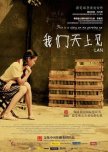
During the 1960’s at the age of three, Jiang Xiao Lan’s parents were sent to the “countryside”. Her 89-year-old grandfather was left in charge of her. Initially enforcing his authority with a ruler style whacking stick, the neighbors convinced him to use his words instead. At school Xiao Lan was ridiculed and taunted mercilessly as a “bastard of counter revolutionaries.” Grandpa wanted Xiao Lan to have a skill so that when she grew up she would not be sent to “the countryside.” She joined gymnastics but was never accepted and always considered an amateur. Lan missed the parents she scarcely knew. The only connection she had to them were their letters that Grandpa read to her. After a time jump, not much changed for Xiao Lan as she entered adolescence.
Lan was beautifully shot as if each scene was a painting, featuring both photogenic actresses who played Lan. Most of the scenes contained either rain or snow with Lan carrying her ubiquitous umbrella. Lovely music accompanied Xiao Lan’s growth from small child to teenager. Zhu Xu as Grandpa Tang gave a tender performance as the man who cared for and tried to shield Xiao Lan from the harsh realities of her life. Yao Jun and Zhu Yinuo seamlessly portrayed the melancholy Xiao Lan who desperately wanted to fit in somewhere and longed for her missing parents. Director Jiang created several whimsical scenes such as Xiao Lan flying across the Huai River with her umbrella to the north to find her parents. There were also several references to missing teeth, the meaning of which eluded me.
Jiang Wen Li composed a touching film showing the consequences of the cultural revolution on families. The relationship between Grandpa Tang and Xiao Lan came across as loving and realistic. While it was beautiful to look at it, I kept waiting for some sort of emotional climax which never came. I enjoyed Lan and maybe on a different day would have rated this graceful film higher.
9 August 2024
(7.75)
Was this review helpful to you?
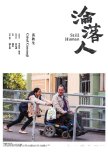
Still Human. Still Dreaming.
Still Human is the kind of heartwarming, healing film that is like catnip to me. I’ve seen this paradigm before of the Filipina maid changing hearts and breaking down barriers, but Anthony Wong and Crisel Consunji put their own stamp on it.Cheong Wing has been confined to a wheelchair ever since a construction accident. His wife divorced him and is now remarried. His son is in the States studying to be a doctor leaving Cheong Wing alone in his miniscule public assisted housing. With his closed off persona believing himself to be “rubbish” and having special needs he hasn’t been able to keep a maid. In walks Evelyn Santos from the Philippines. She speaks no Cantonese and he only speaks a little English, at first glance it does not seem like a match made in heaven as he confiscates her passport. Other Filipinas in Hong Kong tell her to play dumb and never let him know if she learns Cantonese or else her workload will be greater. As Evelyn and Cheong Wing come to know each other and see the other as human, healing and growth occur.
This film highlighted the marginalized people in the community. Evelyn and the other maids were on duty 24/6, with only Sundays off. She suffered derogatory comments and treatment almost everywhere. Cheong Wing struggled to keep his head up as he felt like a burden on his family and friends. Director/writer Oliver Chan hammered home the message that despite a person’s circumstances, as long as they were breathing, a person could have dreams. Everyone needs a purpose, a dream, something for them to reach for in life to give their experience meaning. It didn't matter if the person was old, handicapped, poor, or an other. The two characters broke down those barriers to otherness with respect and compassion.
Oliver Chan made this charming film for around 3.25 HKD/415,000USD. Anthony Wong was said to have forgone a salary. With or without pay he gave a complex performance of a man, father, friend without a reason to live only to be given another chance at meaning in his life. For the most part, Crisel Consunji held her own with Wong as the goodhearted Evelyn with a delightfully wicked sense of humor. “Sir, you even learn Japanese” as Cheong Wing attempted to hide his Japanese porn.
Still Human. Still Dreaming. If you are in need of an uplifting film to remind you that we are all neighbors, all family on this beautiful blue marble, that no one is less than, Still Human is just the ticket.
31 July 2024
Was this review helpful to you?
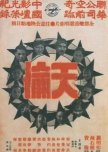
"Grant all children a place in your heart, and regard the elderly as your own"
Song of China was difficult to rate as it was a film fragment with at least one reel missing. The beginning and ending seemed to be intact, but there was a bridge of information needed to make some connections. During a time when leftist movies were being made this film called people to return to traditional values and highlighted the moral superiority of rural life. It was the first Chinese film to be shown in the USA, but it also suffered from Hollywood interference with the story editing and subtitles.A dying father beseeches his son to “Grant all children a place in your heart, and regard the aged as your own.” The son and his young family move to the city in search of better opportunities. During the early days of the Republic, his son marries. The new couple spends most of their time partying, leaving their baby in the grandparents’ care. After a time, the father decides to move them back to a rural life. He and his wife guide their grandson, teaching him Confucian values. When the father sees poor peasants outside the window as a raucous party held by his son rages on, he determines to open an orphanage and school to comply with his father’s dying wishes.
The conflicts between the generations, traditional vs modern values, and city vs country life all played out in this story of 3 generations in a family. I’m sure there was a political motivation for the return to traditional virtues, but I’m not well versed enough in the history to make an informed discussion of it.
I did find a 1936 *NYT’s review interesting. It said "The subtitles were more Chinese in flavor than the performances." The subtitles were actually translated how Americans thought the Chinese talked in a much more flowery way. The reviewer was expecting Chinese Opera style acting and found the acting to be subdued. The acting is what I liked. In early American silent films, the acting could be hammy and overdone. I quite enjoy the often more realistic acting of Chinese and Japanese silent films.
The film I watched was the shortened 45-minute version and was badly degraded. The music was appropriate though I don’t know if it was original. There is a 65-minute version somewhere. While it could be heavy-handed with the filial piety sermonizing it still had entertaining moments and was an interesting snapshot of how some people felt during this time of transition.
16 July 2024
*https://www.nytimes.com/1936/11/10/archives/song-of-china-an-allchinese-silent-picture-has-a-premiere-here-at.html
Was this review helpful to you?
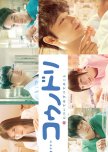
"Reality continues after miracles"
Dr. Storks S2 continued the stories of the doctors in the OB/Gyn and NICU departments at Persona Hospital. Miraculous stories of new life and stories of heartrending losses were shared. This time around there was also focus on the reality that faced many of the new mothers before and after the miracle of birth.Dr. Konotori Sakura with his cheerful and uplifting personality still seeks to give mothers and their babies the best chance at success. Dr. Shinomiya Haruki is there to balance our Sakura’s optimism with a strong dose of if not pessimism, a harsher view of reality. Imahashi Takayuki remains the rock of labor and delivery as the head of the department and NICU. Komatsu Rumiko, the midwife, helps keep everyone grounded and focused on the mothers’ experiences and needs. The team confronts all sorts of crises for mothers and babies alike. There would also be movement in and out of the department as people seek to broaden their educations or return from other experiences.
For my review of S1 I lamented the lack of women doctors. The OB/Gyn profession is dominated by women in my country and around half of the neonatal docs are female as well. Then I read this, “In 2018, Tokyo Medical University admitted to manipulating women applicants’ entrance exam scores for years to restrict the number of female doctors, in part because they were performing better than male applicants.” * The previous statement helped explain the dearth of women in the profession. It might also explain why the women were either portrayed as overly emotional or with almost no emotion and why one of the doctors was worried if she became pregnant she couldn’t continue to work as a physician. With all the public service announcements they had in the drama, it would have been nice to have shown competent and emotionally stable women physicians. Also, NICU nurses are the unsung heroes in that department and they were an almost invisible presence in the drama with the doctors doing all the work. Rant over.
I did like the holistic approach they had toward prenatal care and labor. The support a couple with a stillborn child had from the staff was particularly moving. The midwife, Komatsu, pushed the need for more maternal services before and after the birth. This season brought up the demand for support for postpartum depression, birth defects, and multiple miscarriages. Another topic of interest presented remote places with limited medical facilities. Women carried a great burden along with their babies if doctors were too far away. Without babies, remote places’ futures came into question.
If S1 was about the miracle of life and birth, S2 dealt with the reality of life of not only birth, but after the baby was taken home. Much emphasis was also put on teamwork both with the doctors and patients. Doctors and new parents need emotional support and also support in order to become better at what they do. While I enjoyed S2, I didn’t find it as compelling as S1.
“If you want to go fast, go alone. If you want to go far, go together.”
27 June 2024
*https://geographical.co.uk/culture/countries-with-the-most-female-doctors
Was this review helpful to you?
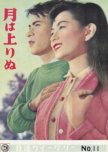
"Try what you can, then you'll find what you like"
The Moon Has Risen was a charming, sweetly funny film written by Ozu Yasujiro and directed by prolific actress Tanaka Kinuyo. A father living with his three daughters, all of marriage age, would have to brace himself as the matchmaking and romancing were about to escalate with the full moons.Asai Mokichi lives in Nara with his three daughters. He has a hands-off approach with their love lives, letting his daughters do as they will. Chizu is the eldest daughter and a widow. She is traditional and loves caring for the family and her father. Ayako, the second daughter, is quietly shy, and falls somewhere between modern and traditional. Much to her consternation, her aunt is always trying to set her up with marriages she has no interest in. Setsuko, the youngest at 21, is effusive and effervescent. She is close friends with Shoji, a man who is currently living on the premises and unemployed. Shoji’s friend, Amamiya, visits for a while during a business trip. Setsuko and Shoji join forces to matchmake for Ayako and Amamiya when they see how much the two care for each other. The course of true love never runs smoothly, and that goes for Setsuko and Shoji as well!
Many Ozu story elements were to be found. A widowed father, played by Ozu regular Ryu Chishu, had daughters of marriage age. This time though, no one was overly worried about the father being left alone. Chizu enjoyed caring for her father, but even she may have had a love match. No older male friends were called in to help find potential mates, the sisters took care of their own futures. And each other. I loved the sisters’ relationships with each other. I worried that I might find Setsuko annoying as she attempted to bring Ayako and Amamiya together, but after the first few scenes, I found her to be a fun character and appealing. Watching the relationship grow between Setsuko and the aimless Shoji was compelling as well.
This was Tanaka Kinuyo’s second directorial effort and I thoroughly enjoyed how she framed shots. It might have been an Ozu script but she didn’t stay cemented to shooting from the mat as he did. Nor were there the head on conversations directly to the camera and overly controlled acting. Her characters moved fluidly and gracefully. She used beautiful outdoor scenes, tranquil temple locations, and gorgeously composed rooms to great effect. The characters were more tactile and looser than in an Ozu film. The family even had a pet dog! The humor was gentle and felt authentic to the story. I found Tanaka’s style of directing very relaxing.
The Moon Has Risen was an endearing film about three sisters as they carved out futures for themselves and when they faltered there was always a sister around to give destiny a little push in the right direction. Tanaka Kinuyo tied everything together with her own method of directing and extracted excellent performances from the actors. Only the second Japanese woman at the time to direct a feature film, she proved herself well. Oh, and Mizoguchi Kenji, you were wrong, she had plenty of brains to direct.
16 June 2024
*Mizoguchi was against Tanaka directing, stating, she “does not have enough brains to be a film director.”
Was this review helpful to you?
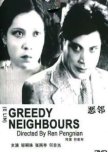
"Better to be broken jade than cheap tile intact"
This forty-one minute film fragment managed to fit in lots of Greedy Neighbors. This was one of director Ren Peng Nian’s early films which also starred his wife, Wu Li Zhu. Originally, the film was around 100 hundred minutes, but enough frames survived to get the gist of the story.Hua Ren inherited his considerable wealth which includes prosperous farmlands. His wife, Guo Fen, is the daughter of a famous fighter, which will come into play later in the movie. She and his sister Si Wen try to keep things running smoothly as Hua tends to spend money frivolously. The local warlord, Wild Dog, decides it’s time to bully his neighbor into giving him his farmlands. Another scoundrel, Smiling Tiger, also has his sights set on fleecing the wealthy fool. Smiling Tiger convinces Hua Ren to take his sister, Zhi Hua, as his second wife. Zhi Hua quickly mesmerizes Hua Ren and drives a wedge between him and his sensible first wife and sister. Having fallen into the clutches of Wild Dog and Smiling Tiger, the clueless Hua Ren is in for some challenging times.
Hua Ren was not a sympathetic character. I was far more invested in Guo Fen and Si Wen, who coincidentally, were excellent martial artists and protected their own. Perhaps in the longer version of this film they had more time allotted, they certainly deserved it. I’m not sure if Zhi Hua and Smiling Tiger were actually related or if she was a plant because they had a very, uh, tactile relationship.
Once Hua Ren was about to lose everything, his sister and male servant helped to turn things around and galvanize him into action. “Today’s world is run by might…Better to be a broken jade than cheap tile intact.” The events that followed in the last part of the film were confusing as Wild Dog had to be confronted twice with no explanation. Given the mood of the film, it did seem to have a proper ending which is always a concern with film fragments.
If you have an interest in silent films from this era, Greedy Neighbors did give a little insight into the political happenings of the time and the vulnerability of the people. Ren Peng Nian and Wu Li Zhu would go on to make numerous martial arts and wuxia films together, with Wu often cast as a heroine. I’d be interested in seeing some of those. This film was a struggle watching the pampered and easily manipulated Hua Ren letting the important people in his life suffer while he partied. He was lucky enough to have two strong women who had his back or at least tried to. More than he probably deserved.
14 June 2024
Was this review helpful to you?
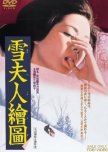
"Am I a coward?"
Portrait of Madame Yuki was a strange and twisted tale from Mizoguchi Kenji. Ostensibly about male domination, it felt more like a toxic relationship based on S & M.Yuki and her husband live apart most of the time, but have reunited over the death of the family patriarch. All that they have left is the estate she owns. Her husband has a mistress and is a wastrel with money. Yuki and her friend, Professor Kikunaka, decide to open her house as an inn in order for her to make money and become independent. The servants all believe she’s in love with the professor but their relationship always comes across as platonic, though his feelings may run deeper. Her husband isn’t afraid to bring his mistress home or even to force himself on Yuki. Regardless of how badly he humiliates her, Yuki can never tell him no. The professor tries to convince Yuki to divorce her husband, but the “demon” inside her won’t let him go even when he attempts to steal her home out from under her.
The version I watched of this film was difficult to follow at first as whoever/whatever did the translations completely messed up the English pronouns. Yuki was often referred to as him, her, or it. Plural pronouns were also used for singular people interspersed with singular ones in the wrong tense. It took a while to figure out if it was Yuki’s father or her husband’s father who died and whether it was the husband, Yuki, or himself the professor was talking about in a conversation. Other than that annoyance, the story itself was not a pleasant one. Despite the professor encouraging Yuki to be strong and stand up for herself and do the things that would make her life better, Yuki usually collapsed into a heap blubbering about how she was a coward, defeated, and not strong. Ultimately, no matter how badly her husband treated her, she could not resist whatever he did in the bedroom. Instead of embracing this part of herself or cutting ties with her husband, she chose to suffer. She always seemed to be slumped over, most likely because she was lacking a backbone.
This film was beautifully shot both indoors and outdoors. Mizoguchi certainly had an excellent eye for framing scenes. The acting was all very good, Kogure played Yuki as a pathetic creature ruled by her demons, Yanagi gave the husband a twisted sense of resentment toward his wife, and Hamada with her gum snapping duplicitous Ayako rounded out the reluctant ménage à trois. Based on the synopsis, I thought that Hamako would have a bigger role, but she was mostly relegated to the background after Yuki was introduced.
Portrait of Madame Yuki ended up being a depressing look at a woman who felt trapped by societal constraints and her own despised appetites. If you are looking for a tragic film with an open attitude toward sex (1950’s style) and are a fan of Mizoguchi’s work, this might be one to try.
*If suicide is a trigger for you, please do not watch this film. There is a lot of talk about suicide, a suicide attempt, and completion.*
13 June 2024
Was this review helpful to you?
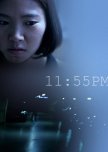
A young woman is heading home late at night. When she arrives at the parking garage at her apartment complex her boss calls. She needs to redo her work and have it done by midnight. Put out at the late night order, she accidentally leaves her phone in the car. That’s when things go from bad to worse.
Director Oh In Chun showed how isolated a person can be and feel when threatened. And also how the brain and body can freeze from fear. I don’t know the name of the actress but she accurately portrayed the initial irritation a person would feel at an annoying person disturbing her work and quiet late at night. As the realization of her predicament slowly sank in her face and actions grew more frightened.
If you’ve ever been face to face with a fight or flight scenario when neither response is a viable option, you’ll recognize the terror inherent in the situation. For long time horror fans this will likely feel tame. As for me, I’ll double-check my locks tonight and make sure my phone is charged.
9 June 2024
Spoiler hint for the urban legend below
*
*
*
*
*
*
*
*
*
*
*
*
*
*
*
*
From what I read (@cocomila on YT), the symbol drawn on the door means Beta---
Alpha: empty home
Beta: female home
X= saw the inhabitant (usually female) alone or about to rob
And people from my country know the punchline from the story kids tell each other to scare themselves,
“The call is coming from inside the house!”
Definitely going to re-check those locks now!
Was this review helpful to you?


