

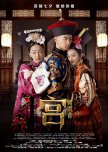
"The Palace" is about two friends Chen Xing and Lui Li, who are palace maids, and their relationships with the 13th Prince. This movie is mainly about Friendship, Loyalty, Betrayal and Love. There is also misundertandings and a stealed identity.
One character turns into a mischievous and schemeful woman that betrays those who trust her. I like how they explain the origin of her behaviour - she wanted to have power and freedom in a place and period where she is fated to serve others.
Another character is portrayed as a pure and innocent woman who stays true to her love and friendships. She tends to make sacrifices and resign to her fate. Sometimes I was annoyed about this while other times amazed.
I liked the evolution of the characters and the contrast between them, but I would have liked some mixings. Not black and white characters but grey characters. Even so, I think that the fact that they are black and white makes the story more epic and memorable.
What I loved most was the photography. All scenes were recorded beautifully and each frame is like a photo itself. Great casting and costums.
I think "The Palace" should be more popular. I haven't watched any of the dramas named "The Palace" that are set in the same years so I don't know if the storyline is very similar or not.
I recommend this movie.
Questa recensione ti è stata utile?

Qing Qing Ru Huai
35 persone hanno trovato utile questa recensione
Hidden Pearl
The story is not new, but the execution is great. I've seen a lot of C-dramas. This is not to be missed. ML and FL not only paint wonderfully in ancient costumes, but can also play. This was the first story I saw them in, but it certainly won't be the last. FL is beautiful, smart . ML is persistent, handsome and cunning. The chemistry, the humor, and the visuals are also great. The music with the heartbeat and the insertion into the series is perfect. Even though it's only a miniseries, I would watch the characters for a longer time.Congratulations for the team.
Questa recensione ti è stata utile?
Questa recensione può contenere spoiler
It's the best one I've ever watched but what a shame that it doesn't have a season 2 yet .
Like ohh my god I really can't express this , but I can't resist to write , I want to write and express my feelings about this particular series .I swear it's the first series that made me cry like a fool .
I'm so impressed by Stay with Me; it's better than I ever imagined.
I am completely obsessed with Shu Yu and Wu Bi! The way they fell in love, fought, and found their way back to each other was pure perfection. Hands down, this is the best drama I have ever watched!
I know I’m late to the party, but I just finished this drama and I am completely overwhelmed by how deeply attached I’ve become. Wu Bi’s fierce possessiveness and jealousy made my heart skip a beat, while Shu Yu’s adorable teasing perfectly balanced their dynamic. Their love was so profound that they were truly ready to sacrifice everything for one another. The finale proved this beautifully: when the brakes failed, Wu Bi intentionally steered the car to take the brunt of the impact himself, choosing to risk his own life just to shield Shu Yu from harm. I understood Wu Bi’s devotion through every single episode. It’s hard to put into words exactly what I’m feeling right now, but watching this masterpiece was worth every second.
I’m convinced that when Shuyu said 'I love you, Ocean,' he was actually telling Wubi. It’s obvious that Wubi is the reason Shuyu moved on from Ye Wan Wing; he knew his heart belonged to Wubi all along. They were inseparable, and I’ve never seen Shuyu smile like that with anyone else. The way Shuyu changed Wubi’s life is indescribable. They were truly meant for each other, meeting at the perfect time when they needed each other most.
Shuyu finally realized that he is the most important person in Wubi's life—a truth captured perfectly in Wubi's smile. Wubi did everything in his power to protect Shuyu, proving that genuine love has nothing to do with external beauty or gender. Instead, true love is built on the time spent together, mutual care, and a constant, comforting warmth. It is defined by selfless sacrifice, where a single embrace provides complete comfort, and finding joy in fulfilling the other person's wishes is the only reward that matters. ..
I never thought I could fall so deeply in love with a bromance series, but this show completely shattered the thought of mine that bromance can't compete with BL dramas. I am so incredibly grateful to the friend who recommended this masterpiece!
It’s not just a cute show that makes me blush —it resonates with me on a profound level. The scriptwriter, the director, and the lead actors deserve endless praise for bringing this majestic, outstanding project to life. You can truly see the deep meaning and immense effort behind every single frame.
It is deeply frustrating that strict censorship regulations have prevented the production of Stay With Me Season 2. As dedicated fans, we deserve a proper resolution to the story of Su Yu and Wu Bi, especially since the audience is so emotionally invested. It is well-known that the cast is eager to film the sequel, making it highly disappointing that industry roadblocks are holding it back.
While Zhang Jiongmin continues to secure roles in various new dramas, it feels unfair that his partnership with Xu Bin for this series has been completely stalled. Leaving an audience hanging for over three years is incredibly disheartening for a fandom that has supported the show from the very beginning.
I’ve actually cried over this because I am so deeply attached to their story.
What I wrote is way too short to express what it made me feel .
Questa recensione ti è stata utile?
Put Your Feet in My Shoes
Despite a 7.9 rating here on MDL as of this writing, The Trust is a lovely drama. The idea of body switching is not new, but the execution of it is interesting and very funny. Imagine a distrustful couple, the lord of a city and his wife, switches bodies, and they must continue to perform the roles of the other as if nothing has happened. Putting their own feet into each other's shoes, they finally understand the other's pains, predicaments, and perspectives, and come to empathize with each other.This is a story of political power struggle and harem cat fights, though at a smaller scale but as deadly. Political rivals scheme to bring down the other, and the City Master tries to maintain the balance of power while silently fighting against the onslaught of his own uncle who is ambitious and treacherous.
Xu Yu (Song Yanfei) is the daughter of the most powerful general in the land, guarding the northern border with a formidable army. Growing up in such a household, Xu Yu becomes very adept in sword fighting, horse riding, bow and arrow, but not so good academically. She is a carefree girl and in love with Xiao Jinyun (Zhang Haowei) whom she has grown up with. After marrying him, Xu Yu finds life not what she had expected; she becomes disillusioned and unhappy. Disappointed, she stops caring about all matters in the household, and doesn’t vie for attention from her husband, while others in the harem fight tooth and nail. With such an attitude, her mother-in-law does not like her and she repeatedly gets into trouble, and is always being framed and blamed for everything that she hasn’t done by her husband's concubines.
Having a heavy burden to carry for his city kingdom, a discord court of academic (文官) and military (武官) officials, and a big household to maintain, Xiao Jinyun’s demeanor is serious, uptight and unaffectionate towards his wife and concubines (he has at least 4 of them). This has led to his concubines vying for his attention by backstabbing each other, especially they bully Xu Yu who doesn’t care to fight back. He is suspicious and wary of Xu Yu’s father, General Xu and her two brothers because of the strong military power they wield, more so when fanned by the academic officials like his scheming uncle. On top of that, the military and academic ministers don’t see eye-to-eye on anything and always bicker among themselves over even the most trivial matters. Again and again, the academic sect tries to take down General Xu at every chance they get.
On that fateful day, through some magical force from some meteorite stones and an eclipse of the sun, they exchange bodies; Xiao Jinyun lives in Xu Yu’s body and she in his. Now living in a man’s body, Xu Yu is liberated. She/he goes to the brothel, gets drunk, attends court assembly to fend for her father when he’s being attacked; she even goes to war to help her father in fighting the invaders. To others, their City Master has suddenly changed in character, playful, impulsive, an excellent sword fighter and an archer. To Xiao Jinyun’s surprise, Xu Yu manages her role as the City Master in court very well as her way in handling the disarrayed court officials seems to be effective.
For Xu Yu with Xiao Jinyun inside, her change is just as significant; she becomes mature, responsible, and calm in dealing with everything negative that comes her way. For the first time, Xiao Jinyun realizes how badly Xu Yu has been treated by his own mother and concubines; they criticize, backstab, frame her, and lie about her to him. In General Xu's daughter's body, Xiao Jinyun knows that the Xu family is totally committed to him; their loyalty is second to none, One of the hilarious scenes is when he also experiences her menstruation pains. As Xu Yu, Xiao Jinyun manages to improve Xu Yu’s relationship with his mother and helps her in reclaiming her status as the main wife, gaining respect from everyone.
As they grow to understand and trust each other more, all their misunderstandings resolved. They work together to tackle a series of crises, politically and at home. Their romance is gradual and sweet, from distrust to trust with no doubts.
I have never watched any dramas by Song Yanfei and Zhang Haowei, but I find their acting very natural and convincing here. I love how they each plays both characters, bringing out the contrasting individual characteristics and demeanor. How Zhang Haowei becomes girly and rolls his eyes when he acts as Xu Yu is hilarious, while Song Yanfei as Xiao Jinyun becomes the one that always has a plan, and makes the first move. The scenes are cute and very funny, accentuated by playful background music.
There are at least two BL/bromance couples here. The Xu Youran (Li Junchen)/ Xiao Jinming (Cao Junxiang) pair is amazingly good looking with wonderful chemistry. By the way, watch out for the rabbit Xiao Jinming brought for Xu Youran to care. I presume this is a hint of their relationship. The other pair, Jiang Tang (Feng Mingjing) / Xu Jun (Li Ji), is equally interesting and fun to watch. Too bad they have too few scenes and dialogs together.
My Verdict
This is a very underrated series. It is a lovely story, cute with very funny dialogs. As unserious the tone as it is, the acting and the plot are serious. The script writing, directing, editing, and acting are all brilliantly executed. The court powerplay is not boring as we have great acting here by Zhang Haowei, and the harem cat fights are not infuriating as Song Yanfei’s portrayal is brilliant and very lovable.
I've come to realize that the low viewership (hence rating) is probably due to the poor English subtitles. It is such a pity because this is a wonderful series that deserves to be watched and loved. Strongly recommended.
BRAVO!
Anime link:
https://www.youtube.com/playlist?list=PLBakWosU0sfj2hkpghsp3loSDXl6w-P1h
Very good. Recommended!
Questa recensione ti è stata utile?
When you play the game of thrones, you win or you die.
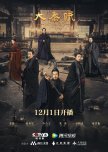
Qin Dynasty Epic, the fourth and final installment of the highly regarded Qin Dynasty series, is about how Yin Zheng fulfilled "Heaven's Mandate" to unify the Warring States (475-221 BC) and became the first emperor of China at age 38 in 221 BC. Such a monumental task was not achieved without the vision and dedication of many great talents from brilliant tacticians, crafty spies, talented engineers and powerful generals. These characters that made it all possible and how they were pitted against wily and determined opponents from six rival kingdoms is magnificently and vividly brought to life in this stunning production.The production values are very high and there is extraordinary, game of thrones worthy battle footage against some truly breathless backdrops that convey the epic vastness and splendor of the empire. In-depth research and meticulous attention to detail are evident in the costumes, the weapons, the sets and the authentic portrayal of military strategies, diplomacy, espionage, the economics of funding prolonged warfare, the evolution of a common script, immigration and the consequent racial frictions and the conflict between meritocracy and legacy. These themes are seamlessly woven into the visual storytelling in a way that you cannot miss the natural, impenetrable mountain fortress that is Hangu Pass and the Qin life size battle map that further reinforces the topological and geographical advantages of the Qin state.
This is a historical drama but if you are not familiar with Qin history, then be warned that there are mild spoilers in the paragraphs ahead.
Duan Yihong's delicious portrayal of Lv Buwei, venal merchant turned kingmaker and indisputably one of history's great adventurers anchors well over half the drama. His economic reforms and policies paved the way for the eventual unification of the Warring States well before Ying Zheng's conquests began. This is the best written and best acted role in the drama that literally steals the show. This wonderfully grey character that was so inspired by a vision bigger than himself that he actively recruited and promoted the best talent even against his own nature and interest, notably in the case of Li Si. Their scheming both as rivals and allies and mutual respect despite their differences is one of the most complex and riveting portrayals in this drama. I find Li Si the character insufferable and while Li Naiwen's acting is good, it is not quite on par with that of Duan Yihong. Even though I think the drama ends at the right place, it is a pity we don't get to see the irony that Li Si whose life work was Qin's unification may have brought about Qin's rapid downfall with his cruel interference in Ying Zheng's succession. I love that this drama properly credits both Lv Buwei and Li Si with many of the lasting reforms made during Ying Zheng's reign; indeed many (not all) were well underway while he was still a powerless boy king.
The most slanderous and malicious accusation in Sima Qian's Shiji (史记 or Records of the Grand Historian) is that Ying Zheng was in fact Lv Buwei's son; that his former concubine Zhao Ji was already pregnant when she married Ying Yiren. Current historians are rightly skeptical as that would have been a 12 month pregnancy but the drama raises the question head on and leaves room for viewers to decide for themselves. It is likely no accident however, that they cast two actors that bear a strong resemblance to each other as Ying Yiren and Ying Zheng; both in terms of stature and elongated, elegant facial features and in sharp contrast to both Zhao Ji and Lv Buwei's more common rounded features. The desire to put both actors side by side results in the drama's biggest judgement error of having a 40 year old man play the 13-year old Ying Zheng. This is a tall ask of any actor and Zhang Luyi did the best he could but it isn't until well over halfway through the drama that the character's age catches up with that of the actor. In a misguided attempt to make Ying Zheng more relatable, we suffer through some unfathomable cringe dialogues as the obviously middle aged Zhang Luyi plays an adolescent Ying Zheng who is bullied, questions his legitimacy, experiences infatuation and grapples with his mommy issues.
In an attempt to appeal to broad audiences, the drama over-indulges in the salacious Lao Ai/Zhao Ji arc. Zhao Ji is mercilessly portrayed as the wanton, shallow, selfish, reckless and easily manipulated harlot who likely turned Ying Zheng into a misogynist whose women were all anonymous. And while Lao Ai's allegedly majestic physical attributes can never be disproven, he definitely had a peanut sized brain and his attempted coup was puny and nowhere near the scale the drama suggests. Although scandal holds timeless appeal, I am here to watch the first emperor of China, not the first gigolo of China. The time would have been better spent building up characters who become prominent after Lv Buwei's exit and indeed the immediate next 1-2 episodes feel like one hand clapping.
I must mention that Zhang Lu Yi redeems himself with his characterization of the mature Ying Zheng. I was riveted by how he howled like his heart was torn from him when he "fulfilled" Zhao Yan's abominable request only to be overcome with remorse and cowardice when faced with the real thing years later. His portrayal of Ying Zheng's encounter with Jing Ke is also exceptional. That said, I have mixed feelings about how this larger than life figure was written, it somewhat diminishes him. While I like that they humanized him and gave him a benevolent side that is at odds with countless other depictions, I wish they went with a bolder, more controversial interpretation by balancing that out with some vices and a more ruthless, darker side as well. I didn't need to see him cook scholars but even how he dealt with Lao Ai's kids was just glossed over, not to mention his legendary harem and his intense superstition. The real Ying Zheng is probably turning in his undisturbed tomb at this millenial, tree hugging, touchy feely characterization that robs him of the requisite ruthlessness to do great and hard things.
While there are many epic battle scenes the unification wars were fought just as much behind the scenes as on the front lines as all warfare is based on deception. By the time Yin Zheng took over, the six kingdoms appeared to be largely sitting ducks but nonetheless, they put up a really good fight. While the conquest of the remaining kingdoms after Zhao (especially Chu) feels a bit rushed, all the important moments are there. I really felt for the vanquished in this show, was moved by their desperate causes and teared up at their inevitable defeats. The sense of loss experienced by the de-throned young Zhao king with his mother and uncle as regent could have well have been the young Ying Zheng. Under resourced, out smarted, undermined by their own and with the odds against them, Li Mu, Prince Fei and Prince Dan still fought bravely and valiantly. But when you play the game of thrones, you win or you die.
One of my favourite Cantonese expressions is 七国咁乱 which roughly means as chaotic as the warring states. I always find making sense of that messy, turbulent period of Chinese history so mind boggling that I cannot praise enough the clean, smart way this drama's narrative navigates the multitude of important events and characters that lead to the unification of China under Qin and the reforms and contributions that lasted thousands of years. Yes, there are some flaws, some missed opportunities and digressions that do not detract much from this sumptuous and enveloping historical drama that makes this a very solid 9.0 for me.
Questa recensione ti è stata utile?
On Your Wedding Day (2020)
35 persone hanno trovato utile questa recensione
Questa recensione può contenere spoiler
A Love Story That Isn't for Everyone
I have been wanting to watch this movie since I first watched the trailer and had "No Regrets" by Li Rong Hao on repeat for over a month. I knew this was a movie that would make me cry. I don't think this movie is for everyone, when it's a love story that isn't for everyone; especially people that doesn't like very flawed characters and that not all love will have a happy ending.Zhou Xiao Qi is our male lead that is super rash and emotional throughout the movie, while You Yong Ci (our female lead) was a girl that wanted to simply feel loved and safe in a relationship due to her past family issues. I honestly felt like female lead's character was not fleshed out well compared to the male lead's character, but I think the main focus of the story was on Zhou Xiao Qi. They are both very flawed characters though. The moment Zhou Xiao Qi did the stupid thing that ruined his future, I knew their relationship would fail no matter what. There would always be regrets for him, and then for Yong Ci will forever feel guilty for it. No matter how much they loved each other, it would just not work out.
I think the message that the movie wants to tell us is that just because you love each other, doesn't mean you have to end up together. It gave a realistic view on how when you are young, rash and emotional; you make stupid mistakes and say stupid things that can make or break a relationship. But it's important to look back and cherish the love you had for each other in the past. We should view it as a happy memory; it's better to have loved and been loved, then to not have loved and not been loved Also, it's important to live with the decisions you made and to not have regrets. Keep looking forward, learn from your mistakes and try to become a better person.
Questa recensione ti è stata utile?
Lian Lian Xiao Jiu Wo
35 persone hanno trovato utile questa recensione
All the usual angst
Manipulation ✔️ Bitchy ex- girlfriend (the worst I have seen in any drama! ) ✔️ Lots of misunderstanding ✔️ Lack of communication✔️ Love triangle✔️And yet somehow, I didn’t skip much and finished all the way through 😂 I did find it quite engaging although the storyline was annoying. There were some nice moments between the main leads, and they did manage to express and communicate their feelings.
Not a great watch. Only if you have nothing better😉.
Questa recensione ti è stata utile?

Boys Over Flowers
35 persone hanno trovato utile questa recensione
Questa recensione può contenere spoiler
A Refreshing and Outstanding Adaptation
"Boys Over Flowers" has been adapted in various versions, but one stands out as the best. This particular adaptation did a fantastic job of changing the story in a great way. Thyme's character was portrayed wonderfully, adding depth and making them different from other versions. Gorya's acting was top-notch, and she really nailed her character. Ren, who connected Gorya and Thyme, was also a favorite.What I liked most was that they changed a plot point from other versions. In this adaptation, the main female lead didn't kiss the second male lead, which often made me angry in other versions. It was a welcome change that kept me engaged. However, I didn't like Thyme's mother. She was like a villain throughout, and it felt one-dimensional.
This adaptation beautifully showcased the strong friendship between Gorya and the other F4 members, something that wasn't as clear in other versions. The drama didn't drag on with too many episodes, which was a relief. It covered the whole story in just 16 episodes, maintaining a good pace. While I would have loved to see a wedding part, I still felt satisfied and overwhelmed by the overall experience.
The unity and loyalty displayed by F4 with their motto of "All for one, one for all" was heartwarming and added an extra layer of enjoyment.
In conclusion, this adaptation of "Boys Over Flowers" brought a refreshing take on the story, with standout character portrayals and strong friendship bonds. While not everything was perfect, it left me feeling satisfied and overwhelmed. If you're a fan of the original story, this adaptation is definitely worth watching.
Questa recensione ti è stata utile?
Here the heroes individually are insignificant, helpless. Together they can make a difference.
"Falsify" (also "Distorted") tells an exciting story about the business with official truth. I think this works particularly well as the KDrama offers a critical examination of the rather difficult concept of 'truth', which can be bent and manipulated depending on the eye of the viewer. Is the rule of law just a pretty farce? Rather an eloquent backdrop for the mighty who operate in the shadow? Does actually anything like justice exist? What truth are we hearing? Which one do we want to hear? Which preferably not? Is it always so good to bring the truth to light?Regarding the recently common term 'lying media', used as an accusations from all different directions, "Falsify" offers a burning issue. Also a bit of an 'Watergate Affair' in South Korean garb (as the underlying case resembles some real South Korean one). Sophisticated journalism and sensation-hungry tabloids, public prosecutors and lawyers as law enforcement officers, so called respectable (yet cheating) businessmen as well as gangs are all frighteningly close together. Against this background, seldom has sich wide range of positions, attitudes and motivations been thus successfully intertwined and presented close to touch on the basis of individual fates, altogether mixed up in an exciting story. Abysses open up in view of social ideals and their illusions. And yet hope is not lost in the face of (quite deadly) superiority.
This is definitely not a ´Marvel´-like (super)hero story. Here the 'heroes' individually are insignificant, inconspicuous, fallible, and to some extend helpless puppets in a complex mechanism that is controlled by opaque forces. However, together they can make a difference in co-creation - by bundling their potentials, throwing their prejudices overboard, getting involved with each other, learning to trust each other (despite initial contempt), and no longer reflecting on what separates them. The key is a unifying idea that is bigger than each individual (with their physical, emotional or social needs). They want to give this idea shape, body, weight and charisma with all imaginable creative means. This cross-personal idea is what gives them strength (even in the face of massive personal threats) and overcomes fear. Here it is the idea of a democratic constitutional state in which there is justice for ALL; in which ALL are equal before the law; in which every citizen can/must bear responsibility for his/her actions - the price for the freedom of responsible citizens: a minimum consensus of laws, rights and obligations that are binding and binding for everyone.
This idea sounds nicer and more promising than it really is, because it usually stays with the idea that is trampled on behind the scenes. Yet, it is (real) people who fill this (abstract) idea with life. But where there are people, there are also their corruptibility, their greed, their vulnerability to blackmail and their cowardice, as well as the fitting people to unscrupulously exploit such weak points. South Korea's young democracy and long history of corruption and mighty ones operating in the shadow offers a realistic, scandal-ridden environment to process this exciting and at the same time outrageous KDrama - thus offering a wide range of gray tones, emotionally differentiated and authentic.
By following various protagonists from the press and the courts, the story begins with individual threads of action that are at best loosely connected to one another, but which become entangled over the course of the story and together form a strong strand that everyone can pull on together. So a bit of patience is required from the audience, but it pays off! The differently motivated characters come to life in a tangible way, become comprehensible in good and bad and reveal a reality about the business with truth that makes you shudder. We as the audience are ourselves cleverly integrated as part of the story - as representatives of public opinion and thus as perpetrators and victims at the same time.
Wow!
Good job. Ambitous. Thought-provoking.
P.S.:
Also ideally suited for repeated series enjoyment due to the differentiated, complex story.
Questa recensione ti è stata utile?
The Great King, Sejong
35 persone hanno trovato utile questa recensione
The first half of the show is particularly strong, in part due to outstanding performances by Kim Young Chul as Taejong and Choi Myung Gil as his embittered queen. Taejong may be monstrous, but he’s also powerfully human, and the show loses some of its spark when he exits the scene. The second half is weaker, perhaps because the series was cut down from 100 episodes to 86. This causes pacing issues, as some events are rushed through while drawn-out moments of pathos feel unearned due to a lack of dramatic set-up. Subplots get dropped and major characters disappear without acknowledgment or comment. It also means that Sejong comes off as far more serious than perhaps he was, as the show leaves out such “frivolous” elements of his life as his love of music and his passionate relationships with his concubines. In general, the show is more comfortable in the elegiac than the celebratory mode, but its tendency to emphasize loss sometimes deflects attention from just how extraordinary Sejong’s achievements were. It may be difficult to do great things, but there is great joy in such success as well.
Questa recensione ti è stata utile?
Questa recensione può contenere spoiler
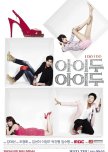
Within the aura of a love story some socially critical topics on successful woman, work & family
"I Do I Do" tends to be humorous, offers a nevertheless emotional love story and at the same time the backdrop for the critical processing of a merciless everyday professional and living environment to which women in South Korea are exposed. As also, for example, "Romance is a Bonus Book", "Scent of a Woman", "Revolutionary Love" or "Angry Mom" the KDrama uses the comedic touch to lift the emphasis of the topic into a lighter tone that is easier to digest. Cheerful and serious aspects are well balanced, also thanks to a great cast.
Within the aura of a love story "I Do I Do" comes along with some socially dominant topics around woman, work and family that want to critically be processed. "I Do I Do" precedes "Now, We are Breaking Up" by nine years. Not much has changed in the status of the professional life of a successful woman (in the fashion scene). The scenario reminds here and there: the experienced, successful and talented designer (here elegant pumps) who has chosen career over relationship/marriage/family; the parents who want their daughter to finally get married properly; a younger man who, after a one-night stand, throws the orderly life of the confident businesswoman upside down. In the case of "I Do I Do", the protagonist ends up in a one-night stand, which is rather untypical for her (and him) due to a chain of special circumstances. The hook for further drama is her completely unexpected pregnancy. ... and 37-year-old Hwang Ji-ahn, still being single, having just been medically diagnosed with a premature menopause...
------------------------------- SIDE NOTE: --- Woman, Work and Family as far as South Korean society is concerned ---
- A woman (in South Korea) can perhaps be successful, but the price for this is her woman-ness (as in many places on earth...). She proves herself to be a better man and simply has no room for relationships where she could live out her soft, tender, feminine side. Showing her weakness at work whatsoever would jeopardize her position. Competitors are already waiting for a devastating neckbutt.
- A woman can be excellent and even unique in her work. From a marketing point of view, however, it is more promising (because it is more binding for business partners) if a man bears the official, managerial responsibility for business sucess... because who knows when the woman will leave the professional world behind and take up her role as wife and mother... The dramaturgical dynamics in this regard are astonishingly differentiated in "I Do I Do". There is even room for the aspect of how women envy each others decisions for either way (instead of solidarily supporting each other - here and there).
- A woman should get married. She can mercifully let off steam for a while in her professional life, since society has already become about 10 years more tolerant in 2012 than in the decades/centuries/millennia before. But the age of 37 is (biologically speaking) a magical limit... because now it's high time. (The KDrama actually offers an exceptional man as a role model who thinks progressively here...)
- Dating, a woman automatically becomes the one who needs/wants to be protected and the one who in turn provides the man with allround care. What a mess, if roles lose their clear assignments. Here, too, the KDrama offers, among other things, another (different) exceptional male role model - one who (although instinctively a protector, too, but nevertheless) is ready to develop in a different way.
- And then equally valid for men and women: relationship is not a private matter. At least the parents are the first to have a say.
-Also: The greatest happiness in life should be a permanent position. Everything else is extra...
---------------------------------------------------
"I Do I Do" defies these societal norms, which in South Korea seem to be chiselled in stone. This is no piece of cake. Interestingly, the KDrama offers only one answer to the question "What are the arguments in favor of deciding to have a child or a family as a professionally ambitious woman?" - this in the face of an almost endless list of reasons that argue against it... This single commitment to a "yes" (towards children and family) is located beyond rationality. This "yes" has nothing to do with virtue and values. This one and only "yes" argument is completely personal. (My respect for taking such a position - one that actually stands outside of society´s right to have a say in this!)
After all, "I Do I Do" eventually shows another variation in the Cinderella spirit of fairy tale love stories ... But. I consider the way as the goal! And the path described in this KDrama (the circumstances and processes of the main protagonist) makes it definitely worth seeing. In addition, Kim Sun-ah finds a good balance between a competent, unapproachable boss and an approachable, not so competent 'woman' with her heart in the right place. Lee Jang-woo also convinces me here in his role as the much younger, impulsive, unconventional Park Tae-kang.
By the way: Since it is about the world of fashion designers and pumps in particular, it would be worth mentioning that the viewers get to see a lot in this regard. Not only in Ji-ahn's well-stocked private shoe room, but also beyond that - 500 pairs of pumps were brought up for the series that were supposedly worth almost 9,000 euros. Also, the protagonist Ji-ahn's individual fashionable style (which goes back mainly to Kim Sun-ah's specific, personal suggestions) became a trendsetter at the time.
Questa recensione ti è stata utile?
Questa recensione ti è stata utile?

Sahara-sensei to Toki-kun
35 persone hanno trovato utile questa recensione
Questa recensione può contenere spoiler
Started out fun and engaging, even the cinematography (the yellowish filter which reminded me of the horror movies in the 2000s, i thought Sadako was gonna spring out out of nowhere) is A grade, Then somehow it got a little boring in the middle and then i realized i wasnt even looking forward to any of the episodes anymore, i just finished watching just for the sake of finishing the series.One big problem is the chemistry between Sahara and Toki. I dont mind and i actually like the awkward overacting, but they just didnt show enough to make me care about their characters and to root for the relationship. I didnt even understand the 'slap in the back' thingy which were supposed to be a thing of affection considering those were such strong slaps and didnt they say Sahara has (or had) a back injury?
The addition of Nekoto- and for goodness sake his emo hair is so annoying - n the last few episodes even made the show worse, no wonder why Sahara chose Toki isntead of him.
Let me get this out of the way too. The idea of a teacher getting into a relationship with a high school student is very cringy layered with too many inappropriateness that gets worse when being romanticized. I am not a conservative but this is not something that i would feel comfortable seeing in real life no matter how small the age gap is.
Is this something that happens normally in Japan and i wonder what is the targeted demographic for these kind of contents? it smells of something predatory.
The fact that this is the second Japanese BL within the past 6 months with this age gap (the other one is One Room Angel) kinda bothered me a little. One other BL with this kind of premise is Minato's Laundromat (with not just one but 2 of this kind of relationship) and that even got a second season. In these series, they show the younger leads vehemently pursuing the older guys, and they make you think it is ok. I somehow feel its not. These 3 series features younger HIGH SCHOOL male leads being partnered with adult guys (to be fair Minato's Laundromat handled it better) Im not against big age gap between partners but i think we have to be reminded that these high school students are STILL kids compared to the older guys they are running after. At least make both characters "adult" even if you make a 20-year age gap then it might be ok.
Overall, its a 6.5 for me. This is a series i wont even remember after a few months, and its not even entertaining enough to be rewatched.
Questa recensione ti è stata utile?
Say Hero Who Is Hero
35 persone hanno trovato utile questa recensione
Beware: Sexual Assaults Uncut
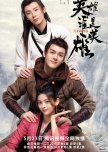
Yes, this drama consists of some sexual assault scenes of one of the main characters, and viewers be warned to decide if you want to pursue this story or not. It's very rare to have a Chinese costume drama that has the women being violated. Nonetheless, aside from those rather upsetting scenes, the overall drama is consistent with how wuxia dramas generally play out: adventure packed, revenge, pride, justice, brotherhood, friendship, self-sacrifice etc.Wang Xiaoshi (Zeng Shun Xi aka Joseph Zeng) leaves the mountains where he lives, and begins his journey of exploring the world. He meets Wen Rou (Yang Chaoyue) and Bai Choufei (Liu Yuning) and they become best friends and travel together. Wang Xiaoshi is upstanding, easy going, truthful, kind, positive and always sees the best in another person, whereas Bai Choufei is ambitious, ambiguous, cruel and has a shade of darkness around him. As Wang Xiaoshi just wants to see the world, Bai Choufei wants to make a name for himself. Just as they are going from places to places, they unwittingly embroil in the politics of “jiangfu” and meet Su Mengzhen (Chen Chuhe aka Baron Chen) who is the leader of the House of Sunset Drizzle, a powerful upstanding organization helping jiangfu by bringing justice to the poor and weak. Su Mengzhen is sickly and he needs talents to help him. The three men become sworn brothers and vow to stand by each other. However, as the story unfolds, Bai Choufei becomes dissatisfied to come under Su Mengzhen and he strays; he wants to be the number one.
I really like Joseph Zeng. He has an irresistible charisma that attracts viewers. As Wang Xiaoshi, he has really brought alive the character as a positive and unsuspecting personality, and later becomes mature and solemn. His transformation is great and Joseph Zeng has successfully executed the role convincingly. He is a wonderful actor.
Liu Yuning’s acting is equally amazing, from a cold, rather selfish character, to a half crazy, power-crazed lunatic, Liu Yuning has had a great performance. Every snicker he makes sends chills down my spine, that’s how good he is.
Chen Chuhe’s Su Mengzhen is painful to watch. Every time he coughs, my heart goes out to him. Despite being sickly all the time, his character is strong and amazing to watch when he fights. The acting is simply authentic and convincing.
Though she doesn’t, every time when Wen Rou is around, I dread she messes up other people’s plans. Yang Chaoyue’s acting here is a lot better than she was in Dance of the Phoenix and I hope she continues improving her acting skills.
My Verdict
This is a through and through wuxia drama. However, the screen writing is less than desirable with rather childish logic at times, multiple plot holes and tons of inconsistencies. This is supposed to be a story about brotherhood, that's why Wang Xiaoshi is guarding so protectively over their relationship, and that's why he's so devastated when he loses his brothers. The script writing has not really brought out the brotherhood essence strong enough but just bypassing it. What an opportunity lost. The story can get very slow as the love triangle develops, and the replacement of the “lou zhu” at the end feels very random. As in most Chinese costume dramas, almost all the characters that appear at the beginning of the story perish by the end. Having said that, the wirefu acting, martial art sword fighting are all very well executed and convincing.
All these shortcomings become trivial as we dwell deeper into the message of the story: it questions the purpose of life, the difference between living and surviving; it advocates for freedom of ideologies, and denounces authoritarianism; it is very political. The story seems parallel to today’s world in politics: power blinds as in Bai Choufei; government corruptions hurting its own people as in Prime Minister Cai (Lo Ka Leung). And we need heroes like Wang Xiaoshi and Su Mengzhen to clean up the rot, one by one.
This is a great drama for wuxia fans. Great watch!
Questa recensione ti è stata utile?
The Queen's Classroom
35 persone hanno trovato utile questa recensione
 1
1Questa recensione può contenere spoiler
@ mobbing, friendship, class culture and reflecting moral behavior among 6th grade pupils. Great!
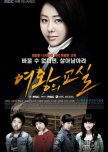
"The Queen's Classroom" is a dramaturgically fascinating story about kids at a South Korean elementary school, shortly before their transition to middle school. The young actors are fantastic. Likewise the adults. At the same time, it is a nuanced, clever study of bullying from 2013. I appreciate this series very much because it not only shows THAT there are enormous social problems with an increasingly traumatizing marginalization of young students, but also how/that the school, i.e. the teachers, can contribute in a creative, constructive, pedagogically valuable way, and thus counteract the trend. For this reason alone, "The Queen's Classroom" is worth seeing. In addition, the KDrama tells a wonderful story about the idea of friendship - about how the mere concept and label 'friendship' becomes a real, three-dimensional relationship with a solid grounding. Fabulous.The unique approach is a focus on the age between elementary and middle school - a phase that is crucial in the development of personality, e.g. for the cognitive development with regard to the moral assessment of situations, the ability to change perspective and a differentiated understanding of moral values. Eventually, the moral assessment of mobbing/bullying is the crucial first step in order to seriously counteract the ominous trend. This aspect is a characteristic problem in South Korean schools. (See side note below.)
In the case of "The Queen's Classroom", the homeroom teacher sets important impulses for the personal processes of individual pupils and the class as a whole with quite idiosyncratic, (of course also dramaturgically effective), provocative pedagogical methods. The aim is to use paradoxical intervention in order to trigger more profound emotional and cognitive processes, so that the students can move from the sometimes naive surface of their beliefs to their true, genuine core. On this basis only can they then stand their by all means noble, idealistic convictions powerfully and authentically against adverse circumstances. Personal processes can often be a bit painful, as is the case here. However, the result is quite spectacular for the individuals and for the class as a whole, too. It could/should be something like this or something similar, it HAS to be if the increasing trend of bullying in schools is to change.
Chapeau! "The Queen's Classroom" is boldly leading the way as a small but mighty pioneer in the KDrama world. To be fair, the KDrama is based on a Japanese production. Since the social problem is similar there, it is not surprising. In any case, the Korean remake didn't do any harm... Despite all the emotional seriousness, it's a great pleasure to accompany the kids on their bumpy road.
---------------------------------------
SIDE NOTE: --- Wang-ta - Bullying in a collectivistic society, like South Korea ---
While 'mobbing', strictly speaking, refers to psychological terror or physical violence by a group, 'bullying' describes the harassment itself, regardless of how many people take part in it. However, the choice of term does not change the fact that far too many students are involved - be it as victims, as perpetrators or as spectators/witnesses. This is an international phenomenon, with more or less extreme manifestations. There is peculiarity in South Korea, though: collectivism (vs. Western individualism). When the welfare of the collective has the highest priority, it means that the interests of the individual are subordinated to those of the associated social group - be it family, work, school, class, club, friends, etc. Peer pressure also exists in individualistic Societies, true enough, but in collectivism it has an even stronger impact. This should not be underestimated when dealing with the topic of mobbing/bullying.
'Wang-ta' is a specific, common South Korean slang term that is used in connection with and in dealing with a person who is not part of the group. One becomes an outsider very quickly, wearing the wrong clothes, having the wrong interests or preferences, belonging to the wrong group or to no group, having poor, stigmatized or less influential parents, living in the wrong family constellation or only achieving bad grades. However, this label commonly implies (in collectivist society) that it socially 'is allowed' to devalue and harass this person for being an outsider. When group norms are thus strong, such exclusion based on appearance, lack of achievement, special preferences, etc. can have particularly fatal consequences. Those experiencing 'Wang-ta' first hand, may lack the chance of getting rid of this label again.
- Those who 'choose' the victim are hardly aware of any guilt, since they are convinced, that they are rightly criticizing a deviation from the set norm.
- The other peers will thus avoid the stigmatized pupil and assume that there is something to it, so that the label (and exclusion) is justified.
- And those labeled ´wang-ta´ will only withdraw even further, ashamed of their 'apparent' lack, and feel even more inferior, than they might already do.
Empirical studies in 1998 ff with pupils from European or American countries (with individualistic socialization) showed, that in 85 percent of bullying cases peers were involved as bystanders. Of those, only 11 percent eventually intervened. Unfortunately, I don't have any comparable South Korean numbers, neither from then nor from today. However, I probably don't lean too far out of the window when I suspect that there are significantly less, who would actively intervene.
In the course of further international studies it was possible to prove that intervention by peers is, however, an essential first step towards change. Active intervention on-site in the middle of the situation triggers a (moral) debate among the peers about the situation in the first place. As long as there are only passive, tolerating bystanders, the act is socially approved and its justification defacto confirmed.
There are South Korean studies that show: although the majority of the pupils interviewed do not like bullying, at the same time they also believe that it is inevitable. In fact, they assume, that the victims in general deserve to be punished because of their (self-inflicted) being an outsider.
The peer group has the greatest influence during the school years from late elementary school to high school. At the same time, this is the phase in which generosity in dealing with diversity can and must be learned as an essential social value. If such a value is not socially recognized at that time, then young people will not be able to integrate it into their further lives, let alone apply it. This is the painful crux of the issue of "wang-ta" in South Korean schools (or later in the workplace): generosity in dealing with diversity has no tradition, no culture, no socially recognized value on the peninsula. If you want to change the school bullying trend, then you have to start here. I.e. as a teacher in elementary and middle school, opening up spaces for experience with tolerance and thus creating the opportunity for a new culture of social interaction. A confident class culture that explicitly acknowledges diversity, that socially and openly and explicitly questions wang-ta as a social option, can form the fertile breeding ground for fundamental societal changes that leave more room for individuality. In the face of an ever-approaching, globally networked world, this is becoming increasingly necessary in order to create the personal and social balancing act of a hybrid between traditional and global, between collectivistic and individualistic.
Questa recensione ti è stata utile?


