

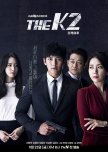
Story
The K2 is ambitious, it wants to be intriguing and captivating but too much pressure has underwhelming results. The drama is a weird combo of action, political drama and romance that doesn't really work. There are 4 main characters, all of them perfectly demonstrated and completely 3-D, each of them has a story of revenge or ambition about the future and all their stories get entangled to set the plot. The characterization is the best part of the drama.
The base story is there and it's quite well-thought-out once you get to grasp it (takes a few episodes - or more than a few), however the K2 was one of those dramas that even though you enjoy it, only drawbacks come to mind when you think of it, sadly.
The drama felt 50% superman, 30% boring political talk and no act and 20% forced romance.
Most surprising thing about this drama is that the biggest and most critical asset of it, the action scenes, ended up working against the whole thing. Ji Chang Wook was immaculate in them, it's not his fault that after 2-3 episodes my initial enthusiasm turned into yawning. It was certainly not his fault. The directing and editing is to blame here. They overplayed the scenes so much, they quickly lose their spark and interest; unnecessary slow-motion, gratuitous weird angles and more made them look overly cheesy. What's more, it quickly felt that the drama pays too much attention in CJW doing his thing than to the plot itself which made the drama feel increasingly superficial and shallow.
Furthermore, what is the korean obsession with making their male leads look like superman? As the episodes continue CJW's character felt more and more unreal. Humans have their limits, that's their charm. Striping them of that feature makes them look fake. I didn't sign up for a hero film, sorry.
Another really awkward thing is that each episode is packed with action, or scheming, plotting, romance, so many things going on, but when i stopped to think what had actually happened after the end of every episode, how the episode contributed to the overall story, i came up always with nothing. In retrospect, nothing actually had happened. Amazing isn't it? The story is there but there is no real development until the end. Dissapointing, what a letdown.
Continuing, the drama is defined by its political aspect. I'm not into political dramas, so once this part kicked in i was inevitably bored. However, I'm usually very much into scheming evil characters and backstabbing and this drama has plenty of it, but the build up to all this was lenghty and quite tiresome to watch.
Additionally, i'd like to talk about the dissapointing romance. CJW is paired with Yoona here, and while they do look good together, their romance felt thorougly forced and wasn't given adequate time to grow and develop. On the contrary CJW and Choi Yoo Na's chemistry was effortless and off the charts. I think i can safely speak on behalf of almost every viewer when i express my dissapointment in the writer's persistence to shove the former couple down our throats when the latter was there and was spotless since the very first moment.
Drawing my rant to a conclusion i'd want to talk about the misuse of Yoona (Anna) as a character. She was either running, crying screaming or taken hostage throughout the whole thing, while she barely appeared in the first half. She basically made CJW's character look like super mario trying to save his girlfriend, unrealistic and cringy.
At this point i feel inclined to mention and stress the significance of Song Yoon Ah's character who probably makes the drama worth watching on her own. Finding characters that are 3D and not carricature versions of real life people is difficult in kdramas. Here, all the character were well-created but Choi Yoo Jin was the perfect villain or more like the anti-hero. There are several layers of her character that go deep and are visible little by little. She was the perfect villain who everyone grew fond of quickly and she deserved better from start to finish. You'll love her believe me.
Acting
The acting was dazzling.
Yoona who is seemigly the weakest link of the main cast was way better than expected. She suited the character perfectly and was completely satisfying in her every scene even though severely misused.
Ji Chang Wook executed his action scenes spotlessly, and to be honest that was his character's main goal. I have nothing else to add, he was manly and a worthy main lead, but he deserves better as an actor.
Jo Sung Ha was also spectacular in his twisted role, but the real queen of the drama was Song Yoon Ah, hands down. Her character was disturbed, easy to misunderstand, but she made us all care for her and see beyond her evil mask. Loved her completely. Star quality actor.
Recommend/Rewatch
Overall, the drama wasn't bad, it is one of those dramas that blow up in the beginning but never come up with the goods. It was enjoyable for the most part (let's exclude the boring political talk), and entertaining. If you are into hot guys playing superman in fight scenes, like evil characters scheming and double-crossing as well as some kind of romance in the sidetracks, do give this a chance. Having low expectations will surely result in higher pleasure. My 8 is kind of a stretch, consider this a 7.5 + 0.5 for the perfect poetic ending! I will never rewatch this.
Was this review helpful to you?
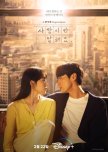
I love melos and haven't seen one that really got my attention in a while
A romantic melodrama that depicts the story of a man and a woman who, exhausted from their harsh reality, begin to understand each other with new emotions and find themselves gradually changing.The FL and her prickly attitude. I AM LOVING OUR CHAOTIC FEMALE LEAD.
First thing I really want to mention is how much I really like the entire Shim family. The siblings are adorable and the mother is a pretty nice person, now that we finally get a chance to know her. They are good people. It makes you even sadder that their father, who seemed to have a good relationship with them before, cheated on his wife and abandoned his family.
She really was dealt by life with so many shitty cards due to her father’s infidelity, and I think because of the trauma and environment she was raised in she was never able to fully express her opinion or be open about anything. She can speak about what’s on her mind about other things and people. But you can see her and her siblings struggle with being open and honest with each other - they instead choose to pretend to not notice things. So I can see why this is difficult for her.
The chemistry is WOW - Lee Sung Kyung and Kim Young Kwang both are incredibly expressive with micro expressions. The director and writers and actors are all incredible.
My heart broke for all of the characters. The oldest sister consumed by anxiety and the pressure of being the oldest, who feels like she failed her siblings by being weak minded. The mother who was ill later on but before that, disappeared when her kids needed her the most, consumed by the pain and anxiety of her husband’s betrayal. The FL who felt like the world was on her shoulders and that happiness never would be hers again. The brother who feels guilty for how immature he has been, but really doesn’t see that in normal circumstances it would be okay at his age to chase his dreams.
And then we have ML, I feel so bad for him because aside from the man who was his stepfather and took him camping, he has been so incredibly lonely. You really finally hear from him how badly his mother treated him, leaving him alone for days as a child while she pursued a married man. She failed him in so many ways, neglected and abused him, and never apologized for it. In fact, she continued to torture him and destroyed his personal relationships. His life revolved around the destructive hurricane that was his mother. When he said he never even called her mother then, I had tears in my eyes.
For a show about revenge, there’s just so much love. Romantic love, love between a parent and her three children, love between siblings, love between life long friends, love between co-workers.
_________________________________________
Let's conclude here :) hope you are convinced by my views and already started watching this 😂❤️
Was this review helpful to you?
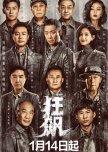
 1
1The road to perdition.
To put it simply, The Knockout knocks it out of the park with its audacious portrayal of an anti-villain as the main protagonist. Spanning twenty years, it is a masterful account of how a struggling everyman insidiously strays onto the road to perdition. The stage is set brilliantly from the get-go to manipulate us into sympathizing with a character who does terrible things. We are blinded by their humanity and blame the system for failing them, forcing the oppressed to become the oppressor.Gao Qiqiang starts out as a humble fishmonger doing his best to raise his younger brother and sister. When thugs threaten their livelihood, he stands up to them but is framed and arrested. An upstanding young officer An Xi suspects he was bullied, books the case leniently, and tries to keep his tormentors at bay. Ironically with small acts of kindness, An Xi empowers Gao Giqiang and propels him in unimaginable ways. The complex and sincere bond of empathy and indebtedness that is forged between the two men is the linchpin of this story. Their most pivotal character turning points and moments of truth play out on the neutral ground of a humble noodle shop. where much is revealed with few words.
It is clear from the outpouring of accolades that Gao Qiqiang is an iconic portrayal that put the hitherto under-appreciated Zhang Songwen on the map. Gao Qiqiang is a visionary mastermind who draws inspiration from Sun Tzu's Art of War. He is dangerously underestimated because of his amicable facade and his disarming affection for and vulnerability with those he cares for. The way he embraces fashion to please his wife to how he willfully blinds himself to his brother's weaknesses is both touching and relatable. When crossed, threatened, or betrayed, he is unforgiving and cruel to the point of depravity - no one is safe from him. He is chillingly ruthless and implacable when it comes to imposing his own brand of loyalty and justice. Like any good sociopath he oozes regret but in truth has no qualms about sacrificing his generals. He "makes it right" by caring for their families sincerely and with deep gratitude. He is bound by a very misguided code; one that is ruthless and amoral yet oddly authentic and honorable. Zhang Songwen embodies this character so well that some believe he is not acting and insist he should be at least investigated, if not locked up.
An Xi is both Gao Qiqiang's savior and his nemesis. More than anything, he is his biggest victim. This character makes me sad and mad. He is well meaning and does the right thing with all the wrong outcomes. Zhang Yi was reluctant to accept the role of An Xi, feeling he wasn't a good fit and wouldn't able to pull it off. But Zhang Songwen's Gao Qiqiang would not be so compelling without Zhang Yi's An Xi. It is their incredible rapport and ability to silently communicate that makes the small screen seem huge. Zhang Yi's expressive gaze and more subtle style is the perfect foil for Zhang Songwen's flamboyance and charisma. While I admired and sympathised with Gao Qiqiang, An Xi is the one that often moved me to tears. His speaking eyes frequently implore Gao Qiqiang to be a good man and convey bottomless dejection that gives lie to the goofy smiles he flashes at Meng Yu. The aging of characters over three distinct time arcs across twenty years is rarely captured as well as it is here. But it is Zhang Yi that simply nails this part - he is wary and tired but not quite beaten; the righteous flame in his eyes are dimmed but at the core still burns hot.
This drama is impeccably cast and is a who's who list of China's best actors, all of whom deliver immersive performances. The director's incisive lens meticulously peels back the many layers of the multi-faceted characters and their intricate relationships. The female characters are written to be strong and impactful beyond their screen time. Li Yitong really takes her acting to another level as Meng Yu; it is by far her strongest, most memorable role to date. Her screen chemistry with Zhang Yi is unexpected and endearing. And then there is Gao Ye's simply sensational Chen Shuting, the ultimate gangster's moll - cool, stylish and fearless. The way she menaces the wits out of Gao Qiqiang is one of the drama's highlights for me. There is a lot more on-screen violence in this drama than I expected. While the worst of it takes place off-screen, it is so well staged that it is more visceral and blood thirsty in my overactive imagination.
The rich plot builds to a shocking, unpredictable and devastating climax about a third of the way through. Then it loses momentum and in the final ten episodes it limps toward a predictable ending. This is somewhat to be expected as this was produced in partnership with the state, the nationalist message is inevitable.I really did not care about the party's anti corruption task force and yawned through their heroic sweep through Jinghai City to weed out the endemic corruption that had seeped into the cracks at every level of the bureaucracy. It is clear that there were some cuts and at least one character is whitewashed but I don't think it changes the gist of the final outcome. The final confrontation between Gao Qiqiang and An Xi saves the entire arc and there were enough characters I cared about including Meng Yu that it was still overall a decent arc. All considered, I am not as dismayed by the way this ends as others are. The fact that the government always wins is a foregone conclusion and not a spoiler in any crime and/or corruption themed Chinese drama. But in this case, I don't really think it shines that great of a light on "the good guys". I mean where were they for twenty years? And I am not sure the "good guys" win here. Poor An Xi is definitely is not a winner; in fact no one wins. Indeed audiences overwhelmingly empathise with Gao Qiqiang. Thus this is actually a very dark crime story with a surreptitiously bold and critical ending.
This spectacular crime thriller is a must watch. The first 30 episodes feel like a tour de force that can easily be rated 9.0/9.5. The rest are more at the 8.0 level so 9.0 feels about right for my final rating.
Was this review helpful to you?
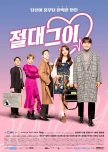
This review may contain spoilers
I'm going to start by saying, I will defend this drama in this review so please if you don't agree, feel free to ignore me.I don't understand the amount of hate and scorn this drama has been collecting from basically before it even aired. I get it might not be your cup of tea, but no need to destroy it without even giving it a chance. [To defend the robot/human category I should write a whole article on its own, but. Ever heard of Bicentennial Man (1999), with Robin Williams? I, Robot? Or, most recently, the tv show Westworld? We've always been intrigued by the possibilities hidden in the A.I. realm, so really, what's so weird or wrong or hateful in a drama that takes this concept and turns it into a love story?]
I really loved the original manga and I've been waiting for a transposition that would do it justice, and honestly, My Absolute Boyfriend did not disappoint (much, but not because of the plot, which wasn't that different from the original material). I mean, this drama didn't pretend to be something it wasn’t - it's a rom-com, cute and light and fluffy, and you'd probably enjoy it much more if you don't start watching it with too high expectations.
Yeo Jin Goo’s ability to jump from a dramatic role (The Crowned Clown) to this one is fantastic, and he tackles the both of them with the same professionalism, despite the raw difference. As terrifying as he was in the role of a psychopath king, he is just as adorable in the role of a newly awaken robot built to be a Dating Companion, and clings to his girlfriend with the same eagerness and enthusiasm of a pup (every time he called her 여자 친구 my heart melted a little). At first he simply follows his code, which is why Eom Da Da doesn't trust him, or his feelings; of course, she's also dealing with the abrupt end of her seven-years-long relationship with actor Ma Wang Joon, so that's why she's cold and tries to keep a distance between herself and the robot.
I didn’t know Bang Min Ah before this drama, but I liked her despite some awkward acting in the beginning – it almost feels like this was her first job and she still needed to get her footing right. But she’s a very expressive actress, and made me cry almost every time she was even a bit sad (she’s either really good or I’m simply too empathetic, lol). It was a bit annoying at first for how she acted towards Yong Goo because instinctively I wanted to protect the pure robot boyfriend, but she managed to grow on me.
As time passes, however, we start to notice a change in Yong Goo: whereas his code should make him act in a certain way, he defies all logic and does all the opposite, to the point where he even manages to 'wake himself up' from a reset that would have supposedly taken all of the memories he had with Eom Da Da – thus preventing from ever remembering her. As his love for Eom Da Da grows, so does his intelligence evolve and advance, making him become self-aware: he wants, he feels, he longs for thing he shouldn’t – he pretends to be loved just as he loves, placing the first stone towards him becoming more human.
[The man who built him used to read him “The Happy Prince” before he was released in the world (something that tells you how this story will end from the start, so you keep watching all the cute and fluffy moments with a bitter sweetness that make them all the more precious), so really, Yong Goo was made to be a hopeless romantic: it’s not surprising that he ended up developing those kinds of feelings.]
Of course, the drama has its flaws. Like the one-dimensional "villain", Diana, who really is nothing more but a spoiled little rich girl; she’s the original owner of Yong Goo, the one who paid for him to be clear, who was however famous for destroying her robots and being generally an awful person. Which is why the man who built Yong Goo kidnaps him and sends him to another owner instead of her – he loves his creation too much to risk letting him end in the wrong hands. Ugh every time Diana appeared on screen I had this urge to hit her, which is bad because I don't like violence, but, you know - one of those sharp slaps that kdramas are so famous for?? That wouldn't have hurt. Instead, we get to watch her act badly and gloat as she hurts people, purposelessly.
And don't get me started with Ma Wang Joon - the personification of Can't-Take-No-For-An-Answer. The guy believed that he and Eom Da Da never actually broke up, so had the nerve to be jealous and annoying whenever he saw her with her new boyfriend, without all the stupid consequences of that behaviour. They were trying to justify him in the beginning with the unoriginal "he's being an ass and a terrible boyfriend because he's being threatened and doesn't want to put her in danger", but you can imagine how that worked out for him. Spoiler: it didn't. Even the writers shrugged and gave up on that storyline at some point, lol.
Some episodes are slower and more boring than others, something that can happen with 40 episodes to fill when one does not have a clear idea of what to do with the characters and the plot as it’s evidently the case with the writers. It’s like that meme – they’re a little confused, but they got the spirit. I personally wouldn’t have given Ma Wang Joon so many scenes with the protagonist: there are way too many episodes with him as the lead in the relationship with Eom Da Da, considering that they didn’t plan to make them go back together – something that it’s very, very unclear up until the last ten or something episodes, by the way and that leaves you with some weird aftertaste because you wasted too much time with him instead of deepening the relationship between Da Da and Yong Goo: it’s as if they did want to make her go back with her ex-human-boyfriend, but changed idea half-way and didn’t know how to salvage that storyline. Letting it just die and – ruining the flow.
So, the plot could have been better developed, no doubts – we could have done without a few characters or some useless plot points – but that doesn't take away too much from the final product. It's a sweet, funny, uncomplicated love story between a young woman who has been disappointed by love and is now a bit cynical because of it, and a gentle, kind robot who falls for her so much that it breaks him, in the end, and makes her fall in love with him in return. Loving her makes him human, and he prefers to 'die' instead of losing all memories of her love to save himself. Damn, the last six episodes made me cry like a fountain, but it was worth it. I never felt like his feelings for Eom Da Da were forced or fake – it’s pretty clear that the poor robot truly loves her, you can’t help but cheering for him. #protectYongGoo2k19
I personally think that the cast made a marvellous job with the (objectively scanty) material they had been given - something that with another crew of actors would undoubtedly be cringey and a bit lame, they managed to turn it into something pleasant to watch and lovely to enjoy. The actors did a good job, and made me watch the whole show without skipping a single scene, keeping me entertained until the end.
I would definitely recommend it, and 10/10 would watch again.
Was this review helpful to you?
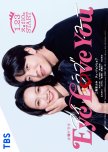
This review may contain spoilers
Lead chemistry saved this show
The good:The song "Ikuokukonen" by Omoinotake is an absolute banger. I've been following this band since they made the ost for the "Twittering Birds Never Fly" movie, and I'm glad they got their break with "Ikuokukonen".
Acting:
Chae Jong Hyeop's acting is seriously great! He exudes that golden retriever energy without being cringy, and his subtle acting with his eyes when the tone gets serious makes me emotional. I've been following the producers for the show and Jong Hyeop contributed to some of my favorite scenes!
The Cast:
I've been following the show's Instagram/Twitter/TikTok accounts, and the chemistry between Chae Jong Hyeop and fumi nikaido and with the staff heals me lol.
The Bad:
The story needs a lot of work. I read on the producer's Twitter account that he worked on this story since 2021 and it still needs work. The added drama with Min Ha Na and the book was unnecessary and contrived. They added some lore that had something to do with Ainu people that looks like went nowhere. IDK, the plot is a bit of a mess after episode 5/6.
I see people criticizing the people criticizing the FL's acting, but even Japanese people have been saying it's bad on filmarks.com (which is like the Japanese version of IMDB). I kinda agree, but I feel like it's the fault of the director and how they characterized her character.
Anyways I love Chae Jong Hyeop and he really carried this show for me. Overall I like the show, and its a comfort show for me. Something easy to watch and makes me feel all warm inside lol. I watched episodes 1-3 three times already and Tae-Oh still gives me butterflies in my stomach lol. He smile is to die for.
Was this review helpful to you?

This review may contain spoilers
I entered this drama thinking it was a cute fluffy little love story but man does it change your mindset fast. Story
Where do i begin? The first few episodes made it seem like it was your typical “poor girl meets rich obnoxious guy”, it may seem really draggy but by around the 5-7th episode you’re just only getting started on the rollercoaster ride. The “plot” twist about each characters backgrounds and motives always left me in awe,, i found the second leads back story really heartbreaking ???? Although there are “dark” scenes, there’re still countless numbers of lovely dovey scenes but honestly, the “dark,gloomy” episodes are still so much more entertaining!!! I’ll stop here and let you in on your own ride!!
Acting
LET ME SAY THIS FIRST.
SIMON. IS. SUCH. A. SMOL. BEAN.
you don’t understand how i was so attracted to him? his acting in this drama was so well done!!!! he was able to pull off the “cold” guy, the “caring” guy etc (with great expressions) amazingly omg. Yiren also delivered all of her lines perfectly!! The crying scenes weren’t draggy and annoying like most cdramas show. The chemistry in this drama tho,,, dang there was so much chemistry between them.
Music
I don’t keep track of the music but the opening theme is catching
Rewatch
Absolutely!!
Was this review helpful to you?
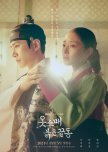
An Anti-Romance in the Best Possible Way
The Red Sleeve does something I never thought I’d see in a K-drama - it dares to suggest that love may not conquer all. Most “romantic” sageuks start with the premise that every commoner or court lady dreams of being swept off her feet by a handsome prince, but few look closely at the power dynamics of such relationships, especially in the Joseon era where the patriarchy was so rigid that even the most powerful woman in the kingdom, the Queen Dowager, was essentially under house arrest. To its credit, The Red Sleeve centers this fundamental inequality, suggesting that consenting relationships are impossible if one person is the master and the other, functionally, a slave. It’s also smart enough to feature one of Joseon’s “best” kings as its male lead, emphasizing that the issue is systemic, not individual, and that no ruler, no matter how just, upright and swoony can be an ideal partner as long as they view their love interest as a possession. And when a woman must obey, the line between rape and mutual affection quickly blurs, even if the man is doing it “for her own good.” The discomfort the show induces is magnified by the fact that it includes no easy villains. Everyone has an agenda, but everyone is also trying to do their best in a world where protocol and order take precedence over human feeling. But when human feelings must be excised in the name of duty, the drama reminds us that it’s often women who take the fall. It asks us to reconsider whose lives matter, and argues that agency, even the agency to choose heartbreak, may be preferable to even the dreamiest of suitors.Was this review helpful to you?
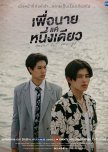
This review may contain spoilers
One of the better Thai BLs I've seen in more than a year!
Despite all the negative comments I read here on MDL, I really liked this one and am going to miss it. Here are my pros and cons:PROS
STORY. Yes, that's right. Sure, there were some moments that suspended belief, but what Thai BL doesn't have those? For the most part, I found this compelling. And, contrary to so many BLs, it actually HAD a story (yes, I'm looking at you, Bad Buddy). Even better, everything was wrapped up in the end, and with no cliffhangers.
ACTING. I really had no issues with the acting. Nat was great as the villain, as was Perth as his conflicted son. Phuwin played his lead role respectably, with some really good moments here and there. Pond was pretty good, as was Chimon (in a part that gave him little to do). And Pawin was delicious as the conniving and underhanded Phum.
OST SONGS. Phuwin has a beautiful voice and I loved his OST. Pond singing was surprisingly pleasant and I enjoyed his OST, played in the ending credits. (As for the rest of the music... what was up with all those misplaced Christmas carols? And that hideous cowboy song??)
CHEMISTRY. Palm was so adorably sweet and protective with Neung. And they weren't afraid to kiss with some passion.
CONS
"ELDERLY" PEOPLE. That dance class for the elderly! The oldest person I saw looked to be maybe 45. What's the life expectancy in Thailand, 48?
"JUST SHOOT ME!" It was either Episode 10 or 11 (I forgot) where three or four of the characters (separately) got themselves in a situation where they felt compelled to scream out "Shoot me! Go ahead, shoot me!" A bit silly.
THE NOTES AND LEAVING. It was annoying enough with Neung did it. It was downright ridiculous when Palm returned the favor in the finale.
Still, none of those were dealbreakers for me. I'm giving it a 9.0.
Was this review helpful to you?
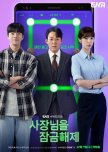
This review may contain spoilers
Satisfying series! Highly reccomended.Binged watched the whole series in one night. Engaging from the start till the end., the twelve episodes were used perfectly!
Coming in, you'd think you are watching a semi-fantasy scifi show. Its a story of a missing IT tycoon whose consciousness was mysteriously trapped inside a mobile phone. The phone landed in the hands of a seemingly unlucky jobless man who wasoffered to be the CEO of the company to solve the mystery of the boss' disappearance
I loved that the male princess cinderella transformation wasnt overdone. I specially enjoyed the main lead's boyish charm and acting and his dynamics with his family. I was also happy about the way they resolved the mystery of the trapped boss.
If there's anything con ts the fact that Chae Jong Hyeop's arms are so distracting, cause the guy oozes masculinity even without taking his shirt off.
Give it a go, you'd enjoy it too. Overall its an 8.5.
Was this review helpful to you?
This review may contain spoilers
How a Guy Speedran His Mid-life Crisis: The Movie
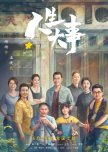
Now, I know what it sounds like when I literally rate this a 10/10 across the board but I swear I cannot overstate this when I say this is forever going to be one of my favorite movies for the rest of time. Director and writer Liu Jiangjiang was very humble when he said that some people might think it's an immature movie, with immature/inexperienced staff and actors, and with messages that might be too on the nose -- he went on to say that he just hopes everyone will appreciate the movie, even if just a little bit, because he and the rest of the cast and crew put so much of their heart into it. And you know what? Lighting Up the Stars exceeded all expectations, at least for me. Heartwarming, funny, profound, playful, a tearjerker... This film is the equivalent of finally coming home after being away for a while, of being wrapped in a blanket on a cold winter's day, of sleepovers with your friends in childhood, giggling after lights-out. Words cannot do justice to how this film makes you unlock emotions you probably weren't even aware of -- in a good way.Before I go on with this review, I do want to stress that there's a scene near the start that's extremely uncomfortable to watch, showing Sange basically attempting to sexually assault his ex-girlfriend. It's obviously not shown in a good light, and nothing happens because they get interrupted by her new boyfriend who she cheated on him with while he was in jail. Still, I want to add this warning beforehand, because despite how much I adore this film this was the sole thing I absolutely despised.
It's a very straightforward story, but that doesn't detract from everything else at all, it's one of its strengths. The topics of funerals and death is one that has a lot of taboos associated with them, and choosing to tell the narrative from a child's (Xiaowen's) point of view gives the already novel subject matter a spin you don't often see. While ostensibly a movie about a little girl losing her grandmother and gaining a new family, it's about much more than that. Yes, Xiaowen is at the heart of the story; it is, in many ways, a story about her more so than the adults around her. But it's also about what family really means, it's about what you want in life, it's about love in all its forms, it's about what you do -- and what you don't do. It's about the very outlook on life and death, and how one small change can make the difference. It's about a little girl just wanting her grandma back, and a man who is disillusioned with the world desperately wanting to live up to his dead brother's image finding each other and being what the other needs.
Connected through a series of funerals (of course, what else could it be, when it's Sange's literal line of work), each one is distinct in not only execution but also atmosphere, set dressing, and so on; each one a beat in the movie showing the changes in the characters and driving the story forward. While the ostentatious one with the old man who pretends to be dead is by far the loudest and most colorful (and definitely the funniest), the funeral that stuck with me the most was actually one of the first, with the little girl. From Xiaowen pretending to be Sange's daughter to get her family's approval to manage her funeral to her drawing on the girl's cinerary casket which couldn't be washed off, to the girl's family bursting out into tears of gratitude because their little girl loved to draw and Xiaowen's scribbles are so much better than more impersonal casket it originally was... While to some degree you can see it coming, it definitely sets the stage and does so well to convey the unpredictability of life and death, and human's hearts. Liu Jiangjiang's family is in this business and it shows in the care and details he puts into every one of the funerals depicted, the people who are buried but also their friends and family who are grieving for them.
For a movie of roughly two hours, the pacing doesn't feel rushed or drawn out, and the character development, while at times a little flat for anyone who aren't the main leads, is still very well done. Sange going from "she's my arch nemesis" and "look how you're going to ruin me" on day one to appreciating her place in his life and wanting to keep and protect her not even a day and a half later is, yes, hilarious, but on a fundamental level it's so heartwarming to see his entire outlook on life change for the better because of her, and in such a short amount of time. It shows how much he really wanted something (someone) to care about this much, a sentiment echoed later by his ailing father. Vice versa, when Xiaowen gets adopted by Sange's friends (which happened through a hilarious turn of events, and for a movie about death, there's way more comedy than expected, or, perhaps, just the right amount to offset everything else) and nominally by Sange himself, she starts letting go of her grandmother and starts opening up, all of it culminating in her telling Sange that she knows he lied, but that's okay, she's not scared anymore because she's got a dad now.
It makes their separation all the more painful when he basically lets her mother (who! surprise! is not dead but just had horrible luck in life and hit rock bottom and went to jail like Sange and just wants to be a good mom now and loves her daughter deeply and means well despite everything and-- well. You get the idea.) kidnap her in the middle of the night. One might be frustrated at the lack of communication from Sange, but when you remember how he never really had a childhood growing up in a funeral house, and how he has inferiority issues and a slew of other problems, his actions become understandable even though still not justified. All's well that ends well though, and they reunite with a scene that had me bawling when I first saw the clip months ago, released as promotional material, and that made me bawl again watching the full scene, entirely attached to both characters.
The cast of the movie is phenomenal. Zhu Yilong has delivered probably his best performance yet, portraying a character entirely different from his body of work and doing it in such a way it feels entirely natural and immersive. In interviews, Liu Jiangjiang mentioned how he wasn't sure about Zhu Yilong playing someone like Sange -- isn't he too handsome? Isn't he too pretty? Isn't he well-known for playing gentlemanly, scholarly, soft-spoken types of characters? And to a certain degree, he's right; Zhu Yilong's entire image is that of a prettyboy actor who, despite being fairly well-known as a good actor beyond his looks, and simply does not get cast as an uncouth rogue like Sange. So, a departure from his previous works for sure but in the best way possible. Zhu Yilong as Sange shows once again how versatile his acting skill is, and what range he has as an actor. When shooting, everyone called him Sange; Han Yan (the producer) even said that once he'd cut his hair and they started shooting in Wuhan, Zhu Yilong wasn't there anymore: he was Sange.
The fact that the entire movie was mainly spoken in Wuhan dialect (Xiaowen mainly spoke in a Sichuan dialect, or Sichuan-accented putonghua) or Wuhan-accented putonghua (they couldn't have the entire movie be in the Wuhan dialect, for viewer's accessibility, so han-pu was the compromise) added a lot of depth to the film as well, really showing the locality and anchoring it in a way most films don't consider. From a personal point of view, it's also just such a breath of fresh air not to hear standardized accents from everyone when it's filmed and takes place in a very specific part of China where of course everyone would more likely speak in the local dialect. Zhu Yilong, a Wuhan native, was said to have added a lot of his own knowledge of Wuhan to Sange's character, from when to speak the pure dialect and when to speak han-pu, to which scenes he'd smoke cigarettes and when to mention something specific to the culture there. All of this shows in how real Sange feels as a character. While he's been known to be meticulous when crafting characters, this one, more than any other role he's played before, is the one that cements his status as character actor.
Yang Enyou, the other lead in this movie, was also amazing. While I generally don't approve of child actors (on moral grounds more so than lack of acting skills or otherwise), the fact of the matter is that as Wu Xiaowen she really was the glue that kept the movie together. It was a joy seeing her on the screen and her acting was convincing and emotionally poignant. For a debut movie, this role really made her shine. Zhu Yilong also treated her the way he thinks Sange would've treated her to help her with acting, and interacted with her in a way that was really sweet, as were the other cast and crew members. I will say that from cast interviews and behind the scenes clips there are things I definitely don't agree with in how they handled having a 7 year old on set, mainly how they intentionally ignored her or made her angry by teasing/bullying her to get her in character. While it's no Shelly Duvall in The Shining type of situation, it still feels needlessly cruel to be mean to a literal child purely for a better shot or a more "real" emotional reaction.
The actors for the side characters also did a great job, all with their own motivations and lives and relationships with each other and outside of the scope of the movie, brought to life (or not, haha) by the cast. I especially loved how every character, no matter how minor, was played with the utmost conviction and with every last bit of heart that the main cast had too. Lighting Up the Stars is a work of love, and the way every single actor brought that to their character shined through.
I also adored that everyone looked like quote-unquote normal people. As with the usage of Wuhan dialect over putonghua, the deliberate choice to cast actors who aren't conventionally attractive like idol dramas and movies (it's why Zhu Yilong's casting made such waves), and instead style everyone to look like someone you could meet on the street is probably an understated but no less important aspect of this film. It brings together everything else about the film as well; Liu Jiangjiang said he wanted to focus on the day-today lives of ordinary citizens, the nitty gritty of everyday life, and the styling of the characters reflects that vision. From Sange's floral shirts to the background characters' colorful (but not distracting, more like the bassline that adds to the symphony of the rest of the film) clothes, everything fits and has that feeling of "oh this really is a movie about normal people" to it. The only person who stands out, then, is Xiaowen's mother, who looks sleek and dresses fashionably, and is immediately branded as an outsider because of it. Even without everything else in the narrative telling the viewer she is different, this visual element tells a whole story in itself. And yet, it's also because she cares so much about Xiaowen that she looks like that, perhaps to leave her past behind where she failed her daughter, but more importantly to show that she can take care of her daughter now: look at her, all dressed up, visible make-up, brand name clothing and all.
Xiaowen and Sange being styled after Nezha and Sun Wukong was also a detail I especially loved. Xiaowen's feral little act, especially near the start of the movie, with her red-tasseled spear and her hair in two buns, drives home her resemblance to Nezha. Sange on the other hand doesn't look like a lot like the Monkey King (although the funeral where he's in opera get-up and starts twirling the staff to protect Xiaowen is incredibly reminiscent of Sun Wukong and his golden-banded staff), the resemblance being more narrative- and dialogue-driven. Their stories mimic those of Nezha and Sun Wukong to a certain degree as well, and there are a lot of jokes and references made to Journey to the West, especially with regard to Sange (memorably, "Are you Sun Wukong, always changing your shape so easily?!" because he changed his mind and wanted to keep Xiaowen by his side after wanting to get rid of her initially).
I'm sure there are things I've missed, things I couldn't think of or that I felt didn't fit in this already too-long review of a film about family -- I haven't even touched on the many dynamics in this movie that aren't the main leads' which I nonetheless truly loved. I'm also sure that there are people who think it was much sillier than I make it out to be, or not as good as I've praised everything from the narrative to the acting to the styling. In the end, though, the message of the film is very clear: if you think you hit rock bottom, adopt a child.
And if none of this managed to convince you: Zhu Yilong strips down to his underwear in this film.
Was this review helpful to you?
A fresh Kdrama from a winning script
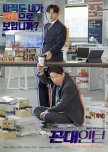
At first, I have low expectations for this. Business or office drama is not my favorite genre. It can be a boring subject. But this drama seems to understand that and deliver the content in a fresh way. Below are the reasons why you should watch this:1. The chemistry between both lead: Park Hae Jin and Kim Eung Soo is so good, they should get Best Couple Award
2. Every case or problem is solved quickly in an episode or two. I like that
3. Every character is not just a side character, they have their own story. Even the grandma that act as the receptionist
4. The plot twist here and there that make you wanted to watch from ep. 1
5. Even serious event can be a comedic one
6. Lessons on friendships and office teamwork are told smoothly with fresh scenarios
7. Marketing strategies that some of us can relate to.
8. A funny ending and anti-cliche one (I like the ending)
9. The trot songs are refreshing compared to pop songs in all dramas
Hope the writer create more script like this. Kdrama seems to run out of ideas.
Was this review helpful to you?
This review may contain spoilers
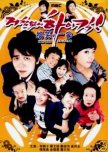
I recently finished watching Unstoppable High Kick as have started High Kick Through the Roof, also known as High Kick 2, which a second season of the High Kick sitcom series with different characters. Although some of the cast from the first season appear as cameos. The seasons are totally unrelated.I started off my love for all things Korean with Unstoppable High Kick. It was my first drama and I have to say, it is my favorite. Unstoppable High Kick has this kind of 'fun' family setting. I have thought many times that it would be so great if I could just place myself among the Lee family and live my life with them. I know, for sure I could never say life was boring.
The sitcom takes us through a joy ride of the daily lives of the Lee family and the 'psuedo-family'(what the show refers to friends of the family who are in their household most of the time- basically act like it's their house). We are shown the ups and downs in the lives of each character in the family. This is what I love the most about this drama. Each character gets the floor at a certain point and we see things in their perspective. The daily lives of this characters are hilarious. The coincidences, the situations, will make you laugh. Though, rarely will you crack your sides with laughter.
Lee Soon Jae, the head of the household (grandfather) is beating and chasing his eldest son, Lee Junha, around the house, for causing him to lose money in his stocks. Lee Junha's wife, Park Haemi is lecturing her mother-in-law, Na Munhee, about the faults she made when doing the housework. Na Munhee is extremely angry because her daughter-in-law treats her so condescending though her feelings are only expressed in her thoughts. Lee Junha and Park Haemi's youngest son, Lee Yunho, the 'bad guy', is chasing his younger brother, Lee Minho( the studious one) and Lee Minho's best friend, Kim Beom, who got the title "home-stay Beom". Lee Minyoung, who is the youngest son of Na Munhee and Lee Soon Jae, would most likely not be present, since he acts anti-social towards his family. Although, the romance part of the show includes him. Hwang Chansung, a classmate of the boys and calls himself Yunho's bestfriend, is listening to Hip-hop through his headphones and breakdancing amidst all the ruckus. Na Hyemi and Kang Yoomi are fighting with each other.
^That my friend, is the Lee Household in a nutshell.
And of course, the reason why I started watching this 167 episode drama was because of Kim Beom and Kim Hye Sung(Lee Minho)'s bromance. They displayed a deep friendship throughout the show, even hints of some yaoi- but nay. Though, they had a few fights throughtout the show. Not to mention:
Minho: Beom.
Boem: Minho.
Minho: Beom!
Minho: Minho!
[insert hug here.]
Well sorry for the long review. It's just that I really love this sitcom and would recommend it. Don't let anything deter from watching it. Overall, I enjoyed watching this show a lot. Compared to the second season, the first is superior and I enjoyed it much more.
Some quotes from the drama:
"What the...All the people in this family are crazy"~Nurse Yu
"Why does everything in this family have to be so abnormal?" ~Park Haemi
“No one in that family is normal.” ~Nurse Park
Was this review helpful to you?
Thoughts from an Asexual in her 20s
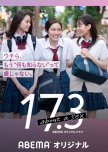
When most shows or movies advertise being about the teenage experience, you typically see a focus on things like first love, peer pressure, drugs, etc. And don't get me wrong, those things can definitely be a part of the teenage experience. But the topic that this drama decided to tackle is perhaps much more widely applicable. And needed. It's what sex education should be, told through the lives of realistic teenagers.In it, there are discussions not just about sex the deed, but many things related to it (in no particular order): stigmas and pressure, sexuality, desire, terminology, self-gratification, history, STDs, harassment, birth control, periods, pregnancy, abortion, parenthood, parent-child relations, consent, feeling ready/prepared, and even where to find additional resources. It doesn't feel crowded. Nor does it feel like a scare tactic to encourage abstinence (like what was used in my own sex education). It was organic. And realistic. And grounded in real experiences I or those around me have encountered.
It was told through the lives of 3 female leads who all had to learn something or another about the above topics: a sexually-experienced and outspoken female lead, a shy and nervous female lead raised in a conservative household, and the sexually-indifferent to sexually-repulsed aroace female lead who often acts as the voice of reason for the other 2. And at the end of each episode, they come together at their favorite diner to discuss the lessons they learned and to encourage each other once again to keep learning all they can and to accept one another on their different journeys.
At first I wondered why a diner? It's so public. But I guess that was the point. It's effectively saying that this is a normal part of life. One that doesn't need to be discussed behind closed doors. Because when you leave these conversations for only private spaces, you run the risk of not having the conversations at all.
And I say aroace (aromantic asexual), despite the FL in question only being canonically labelled asexual, because she defines herself as not interested in romantic or sexual relations. It was actually my only major gripe with this story. I actually had to stop and put this on hold because the way she handled this label was incredibly irksome and disappointing to me. And I needed to give it some breathing room in order to see beyond this at all the good qualities of her representation.
Here's why it disappointed. There is a big movement in the asexual and aromantic communities to raise awareness about the differences between sexual and romantic attraction. Too often, the conflation of those terms is used to delegitimize us and our experiences. Too often, the conflation of these terms confuse those of us just trying to figure ourselves out. Too often, the conflation of these terms leads us to believing that asexuality/aromanticism are terms that almost fit, but don't. And using a phrase like "there are many ways to be asexual" does not erase the potential harm of ignoring why that movement of awareness exists. And it's even worse when the resources and adult figure informing the FL all describe the term in terms of sexual attraction - but the FL turns around and almost solely uses the term in reference to romantic attraction (instead of perhaps saying both). "It means I do not feel any desire for a romantic relationship." Like I said, it irked. A lot.
Perhaps this could be partially the fault of the subtitles though, because I do think i heard the term aromantic pop up in the spoken dialogue a few times. But as I do not speak the language, I may never know.
That being said, I related to the asexual FL a lot. Her perspective on the conversations her friends had and the pressures she overheard were a lot like mine. Her annoyances and break downs stung, because I have (and even continue to) feel them. She's comfortable with the label, and won't hesitate to support her allosexual friends and advocate for the spectrum of experiences. She's good rep, conflation of the asexual and aromantic terms aside. So it is a great start for asexual rep, and I look at this character with all sorts of fondness for existing.
But one other warning i will give though, is that this is NOT a show to binge. While it does overall have a happy and hopeful tone with great messages, it tackles a lot of heavy, sensitive, and/or uncomfortable topics and experiences. And I don't think it's just my fellow aces who will be itching to hit the exit button after too many episodes in a row. So for the sake of your ability to enjoy and appreciate the story, I highly recommend only watching a couple episodes at a time.
Was this review helpful to you?
This review may contain spoilers
A promising yet unfulfilled journey
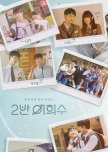
Prior to troubling the waters with my critique, I would be remiss not to honor the quiet revolution unfolding on screen. Ahn Ji Ho and Lee Sang Jun, rising stars in Korean cinema, have chosen paths less traveled. They assumed the personae of those whose affections stand in defiance of the heterosexist orthodoxy, and in doing so, they performed resistance. Others in the public eye might be moved to follow so commendable an exampleThe interplay between Ji Ho (Hee Su) and Sang Jun (Seung Won) is, without a shadow of a doubt, endearing. Sang Jun (Seung Won) is a reticent and emotionally guarded suitor, yearning to draw closer to Ji Ho (Hee Su). True to the source material, the glances that linger just beyond propriety, the verbal exchanges, and the physical proximities that tremble with implication accumulate with intentionality and culminate in a long-withheld romantic confession
Seung Won: "I don't like Ji Yu"
Hee Su: "Why did you lie?"
Seung Won: "Because I wanted to keep hanging out with you" (chapters 42-43)
A screenshot: https://imgur.com/a/7ElUfSX
Drama Seung Won, too, nudges drama Hee Su to acknowledge his true feelings and discover the solace and happiness that await him in drama Seung Won's arms
Complementing Ji Ho (Hee Su) and Sang Jun (Seung Won)'s chemistry, the adaptation gains narrative sophistication through drama Hee Su's empathetic disposition. This is exemplified in the first episode (5:10-7:04), where he lends an impartial ear to a woman's self-exploration of same-sex desire/introspective reckoning with her attraction toward another woman. He invites us into a space of uncoerced emotional authenticity
Now, it is conceivable that my observation might provoke dissent; however, I am disengaged by a dissonance between the performers' mature appearances and the adolescent roles they enact. Their mature appearances suggest individuals well into their late twenties, if not beyond. The collision of adult identity with the stylized "immaturity" of high school/teenage tropes generates a dissonance that is, for me, disruptive to the suspension of disbelief. A more coherent and plausible alternative might have been to transpose the setting into a university or workplace
I can be lenient with these matters. What troubles me is the pacing and the straightwashing of the source material to cater to the squeamishness of homophobic audiences wary of encountering too many rainbows on their screens. The central gay relationship spends the bulk of its runtime vying for visibility and relevance against the privileged "straight" script that overshadows it in both duration and execution. "Straightness" centers the stage by force, reasserting its dominance and softening the gayness for broader consumption. It has no rightful place here
The source material refrains from constructing a non-platonic Chan Yeong x Ji Yu storyline. To fabricate one where none exists, and to do so by excising the secondary gay pairing of Sun Woo and Yoo Dahm, is a move I find dishonest and regressive. A screenshot of Sun Woo and Yoo Dahm from chapter 56: https://imgur.com/a/OInfwbQ
How mind-boggling it is that our same-sex ships/pairings are condemned as corrosive to friendships, while society destroys opposite-sex friendships by defaulting to non-platonic arcs with nary a consequence
Some might rationalize the excision of the secondary gay couple by appealing to their placement in the second season. It is a dubious, flimsy excuse at best. Being classmates and friends, Hee Su is acquainted with the secondary gay couple. Their early introduction could have contributed to the exploration of identity, intimacy, or social belonging and accelerated Hee Su's journey toward self-acceptance. Sun Woo and Yoo Dahm need not have been "useless" or "irrelevant"
Timelines are malleable. The screenwriters were afforded the opportunity to recalibrate the timeline of the source material/fine-tune the sequence of events in order to optimize the seamless integration of two seasons into a compact drama format. Nevertheless, their creativity was not exercised in service of non-straight visibility. They delegitimized non-straight modes of subjectivity and relegated them to an inferior, irrelevant, or disruptive status
Those reading might pose the question, "are you a hater?" To which I will respond in the negative. Neither animosity nor resentment informs my evaluation
My contention is that preserving one of the two gay pairings is not a sufficient or ambitious act of fidelity. It is, in fact, justified for audiences to experience discomfort when confronted with deviations from the source material. The phenomenon is not unprecedented. Public discourse surrounding the cinematic reimaginings of "The Little Mermaid" (2023) and "Snow White" (2025) demonstrated how even superficial modifications precipitate public disapproval. By parallel reasoning, it follows that modifications to gay source materials would precipitate scrutiny and disapproval
Questioning the producers' call to accommodate societal prejudices against gay-centered narratives does not amount to prejudice or -phobia. The public dissemination of a creative or intellectual work instigates a dynamic feedback mechanism, wherein audience reception, positive or negative, re-enters the production process and compels producers to adapt to the cultural climate and evolve or risk obsolescence
I do appreciate the effort invested in the part-BL/part-gay adaptation. Moving forward, I would love to see BLs exclusive in focus that center and honor gay love without compromise or dilution
Was this review helpful to you?
This review may contain spoilers
Is it a Perfect Propose(al)?
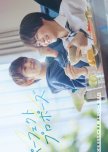
This is six-episode, too short, yet too realistic episodes of two people coming together against a world full of expectations and responsibilities. Although I thoroughly enjoyed every moment of it and wished they added just an episode or two (or made the episodes 5 to 10 minutes longer), I’m also afraid doing so would change the dynamics of the story. So, I’m just taking in what is given to us, and just enjoy every minute of it.Did that first paragraph make sense? If you think not, then that’s how this show is, starting with the title, shouldn’t it be "Perfect Proposal"? Somehow, a lot of the things shown in this series doesn’t make sense at all too, yet somehow, we accepted and took pleasure in it. I bet that controversial forced h*nd-j*b hooked a lot of viewers in - but who will not be, if a good-looking guy like Kai is giving it to you?
What I related most was the robotic slave nature of Hirokuni's work. Thats how I was in the real world for almost 2 decades - until I realized it was too late to change things and I’ve already missed out on a lot. Kai wasn’t only a person who needed a place to stay - Kai was also Hiro's saviour. I wish someone had saved me like that 10 or 15 years ago.
Both characters have difficulty expressing in words how they truly feel, and it’s frustrating - but that’s how we are in real life even if we don’t even realize it.
But I’m also afraid the show didn’t show me enough to make me fully understand both their situations. Flashback to their youths are so minimal and too edited, and their individual back stories are almost non-existent, that I feel like I’m just starting to unravel the mystery but never really got to the point of really caring about their characters - it’s a shame cause I feel like I want to care and know more about their individual characters and to know what happened to them as a couple.
With that said, is this a Perfect proposal? Not exactly but watching this still gave me a good feeling inside. Would I recommend this? YES! Will I rewatch? I’m not sure yet, maybe when I get bored in a layover or stuck in traffic. I also have a feeling we are going to see a lot more of these 2 fine actors in their bright future as actors. Giving this an overall score of 8.5
PS. While watching the show, i initially thought Hirokuni was being played by Thailand's Din Teerapat Ruangritkul that I had to look it up after the first episode. Their similarity is uncanny.
Was this review helpful to you?


