


"When I'm cornered I tend to do some crazy things"
Snow Trail was a lot of people’s firsts. This film was Mifune Toshiro’s first film. It was Ifukube Akira’s first film to score. And it was the first of 53 films that Mifune and Shimura Takashi would make together. Kurosawa Akira wrote the screenplay marking the first, albeit minor, collaboration between he and Mifune as well.Three bank robbers flee to the mountains in Nagano with the police hot on their tails. They start out at a hot springs spa hotel before making their way deeper into the mountains where an old man, his granddaughter, and a mountaineer are staying in their rustic guest house. The robbers face the problem that there is only one road in and out of the mountains. Climbing over the mountains could be deadly as they face avalanches, blizzards, and treachery.
Let me just get this out of my system, Mifune was a sexy beast in this film and in his debut he showed the charisma that would keep him employed for many decades. But as much as a young Mifune Toshiro appealed to me, this was Shimura Takashi’s film. As the two men were cooped up in the guesthouse, Shimura’s Nojiro softened, longing for home and missing his lost daughter. Mifune’s Eijima grew more restless and dangerous by the minute like a caged panther. Kono Akitake had the pivotal role of the mountaineer coerced into leading the two criminals over the deadly mountains.
I can only imagine how beautiful this film would have been in a 1947 theater. The cinematography in the mountains was stunning even in this faded copy. I would also love to read about the making of this film as they climbed up, rolled down, and stumbled through the snow and rock.
The film showed the depravity of humanity through Eijima and the hidden humanity waiting to be restored as in Nojiro. The generous and cheerful grandfather and granddaughter elicited opposite emotional reactions in the two crooks. Shimura gave a touching performance as the crook transformed by human kindness. Mifune also gave a strong performance as Eijima’s baser instincts took over. The grandfather did not seem too concerned about the events that unfolded on the snowy peaks, “The mighty mountain will punish the bad.”
Snow Trail combined a thrilling mountain escape with a redemption story, fleshed out by two actors I enjoy watching work together. Ifukube’s music hit all the right notes as the men struggled against nature and themselves. Yeah, I enjoyed this film and could easily recommend to people who enjoy old Japanese films or want to be reminded that we are all tied together.
“Mountaineers have a code. No matter what, we don't cut the rope. The rope that ties one human life to another is not to be touched.”
19 June 2025
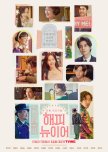
Intertwined multiple stories, only one of which is appealing.
the rating is perhaps inflated due to the one (of 3 stories lines) that appealed to me.Specifically, the Cinderella storyline is sweet & really watching the lead male smile is all the reason you need to enjoy this short drama.
It took me A long time to hunt this down so that I could watch it (ended up finding it on Plex). The multiple stories were woven together well, but they tried too hard to make too many romantic happy endings. Weirdly the males here were all kind of clueless & Honestly, most the stories didn't appeal to me (not alot of warm fuzzies except from one couple). With the older couple, it was never clear to me who the father of the older woman's daughter was & it was super awkward that the older man really didn't seem to want a romance as he was still very much in love with his dead wife. The storyline of the girl who had a long time crush on one of her best friends-fell flat as her crush was (apparently accidently ?) really sending mixed signals & actually didn't seem all that interested in getting married (he also didn't seem like a "catch" ). I really cringed at the way they resolved the guy who was planning on committing suicide's story. That really felt forced. The Hotel CEO's story was cute, but I wanted to see him to follow his creative dream, so his choice was disappointing. Everyone (important) DOES get thier happy ending & overall it was an enjoyable movie.
One more candid comment:
The Christmas content that was sprinkled throughout hits differently as there is a cultural disconnect -so it doesn't evoke the same meaning as it would in the U.S.

Violent & dark. Throws shade on legal system. Not actually very entertaining
The lead does a great job, but this was too dark & too violent for me. Any heroism is overshadowed by the sense of outrage that bubbles up out of you as it's in your face the whole time just how horrible & lacking the South Korean laws are [IF any of the content was based on reality]. It succeeded if it's goal was to expose how bad the South Korean legal system was- because there were so many ex prisoners running around free (albeit with ankle monitors on). By the end I was disturbed & wanting to fund a group of vigilantes to remove the evil repeat offenders from societies' enablement. So, sadly, not very entertaining or inspiring.
The best biology lesson I've gotten
Biology was one of my favorite things to learn when I was learning biology and stuff, but this may be the single best lesson in biology and the human body that I've gotten. Helps that it's a movie that's got the quirkiest anthropomorphic characters and a surprisingly emotional storyline, but it still counts.Especially since it didn't really shy away from the theory or the details, I always say this, but titles from Japan never shy away from the technicalities of it all, and while they were present here as well, it wasn't too overwhelming for a movie, nor was it glossed over considering this is a movie that's literally about "Cells at Work"!
I haven't watched either of the animes the movie is based on, but just off a general sense I could tell that a lot of hard and passionate work went into making this. Whether the storyline was true to the original or not, I can't say, and it doesn't matter much either because this one was funny, emotional and heartwarming.
All of the actors did a great job, just the right amount of quirkiness and seriousness to balance it out and bring out different sides in the characters, and the cast is filled with so many wonderful actors. The CGI was pretty good as well, and once again, while I cannot vouch that all the scientific facts were correct (it's me, I don't have all the facts and details), I can say that the facts I know were in the movie, and all of them were right! Points for technicality and research as well.
This was a fun, well made film that is definitely worth a watch, and for anyone wanting a science lesson, or looking to do some revision, it would be especially useful! Have fun watching!

Movie version that's knock off to "Love 020" drama but this falls short in comparison
This is somehow a remake (?) movie version of Chinese drama : Love 020-with differernt actors. But this movie pales in comparison and this falls incredibly short of everything I loved about the Love 020 the series. First off the actors here are not meltingly attractive. The Love 020 series was a satisfying warm fuzzy fest with the 2 leads looking unrealistically attractive. The plot (which in the series, was pretty thin to begin with & relied heavily on the game graphics & the visuals & charm of the actors) is condensed here into a banal chopped piece meal of a story that kind of needs you to have seen Love 020 series to appreciate it at all. The series Love 020 had me smiling & riding a cloud throughout. The only thing that I liked about this movie was the graphic /animated parts. I'm sorry to say that it's just not alluring at all, but just a knock off of the series highlighting some of the memorable moments from the series & that's all.
Not entertaining & not funny.
Yet another waste of time. The movie is nothing like the picture. There are no sexy psies in this. This tries to be a BFF girlfriend movie but instead comes across as girl liking girl in a crossing the line kind of way. There is no romance and the comedy is thin. I was sorry to have watched it when the main character acted like a female dog flirting with a male dog (literally that's what she did). This was not entertaining & not funny.
Boring then just confusing
It's always hard to review something that you got so little enjoyment or entertainment value from...AND when it isn't very memorable, but here goes : this "Fantasy island" (old American TV show) type of story is mind numbingly boring. It switched gears 3/4 of the way through & I couldn't understand what the heck they were doing. I skipped to the end & it still made no sense. All I could make out was that they were like, doing some sort of ode to nature. Perhaps this is one of those movies best viewed while drunk ?
Not much of interest other than the lead actor
The trailer looked like it would be alot more fun than the movie actually ended up being. .The male lead is fun to watch be snarky and lethal, but the kids were grating on the nerves-incredibly annoying. There is a lot of violence. Too much of the movie was in the dark or in smoke filled rooms, which made those parts were long & boring
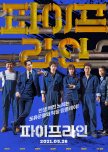
watch for the leads- everything else is boring
The only reason to watch this is the male leads- who are always a treat to watch. Here they they are pitted against each other. Other than that, it just was not that interesting to me. It may be the genre is not in my "wheel house" , or that it has alot violence and boring action, (as opposed to interesting or fun action), honestly it's a bit generic & forgettable. I didn't find any attention worthy bromances or buddy stuff that stood out.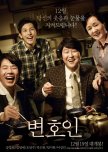
About conscience & courage in a society that appears democratic, but is ruled by authoritarian force
He only wanted to do taxes. Draft contracts. Earn money. Song Woo-seok is a pragmatic lawyer — smart, efficient, unsentimental. But when the son of a woman who once trusted him in hard times is taken by the police, the man who once only saw paragraphs begins to see people. The Attorney tells the story of a man who thought he knew his place in the world — and only begins to truly live when he takes a stand.Based on true events — the 1981 Burim case — the film follows the early journey of future president Roh Moo-hyun, without ever naming him. We witness a successful attorney becoming the defender of students branded as “communists,” tortured, and tried — simply for reading the wrong books at the wrong time. What unfolds is a courtroom drama that reverberates far beyond the trial itself: a story about conscience. About courage. And about the painful awakening in a society that appears democratic — but is ruled with authoritarian force.
Song Kang-ho, in one of his most compelling performances, carries the film with an intensity that makes anger, shame, and resolve palpable in every gesture. His transformation is moving precisely because it isn’t heroic — it’s hesitant, searching, deeply human. And it’s in this quiet where the power lies: when he rises and says, “I’m his attorney,” it isn’t a flourish — it’s a vow.
------------------------------ A historical side note: The long shadow of dictatorship ------------------------------------
In South Korea, the memory of Chun Doo-hwan’s authoritarian rule remains an open wound. The Burim case stands as a stark symbol of a time when civil rights existed only on paper — and disappeared into basements. The state’s orchestration of paranoia, the systematic torture of alleged dissidents, and the suspicion cast on intellectual life: The Attorney captures all of this with devastating simplicity.
And it shows: not all complicity comes from conviction. Some from fear. Others from habit. The film asks what it takes to break out of that cycle — and offers an answer that’s not political, but personal: empathy.
A major box office hit with over 11 million viewers, “The Attorney” is a landmark of Korea’s cinematic reckoning with its past. It reminds us that justice is more than a system — and that sometimes, justice begins with a single line: “I’ll take the case.”
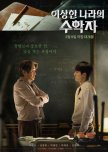
Two outsiders. One equation: trust + time = transformation.
Some films shout. Others whisper — yet linger in your mind long after the credits roll. In Our Prime belongs to the latter.An older man hides his brilliance behind a janitor's uniform. A young student, adrift among numbers and expectations. Two people, like distant islands — until they start to truly hear each other. What follows isn’t a grand gesture or dramatic spectacle. It’s something far rarer: a genuine connection.
Mathematics here is more than curriculum. It’s a space for thought, a shared language, even a kind of comfort. The film doesn’t promise glittering careers or textbook triumphs. Instead, it shows what can unfold when someone believes in you — not to solve the problem for you, but to walk the path with you.
There’s no melodrama, no inflated conflict. Just quiet gazes, thoughtful words, and a camera that respects its characters enough to let them breathe. In Our Prime finds dignity in the act of thinking and tenderness - in the simple gesture of someone offering a pencil, not to provide answers, but to begin the search.
With quiet sensitivity, "In Our Prime" tells a story of marginalization and a sense of belonging, of the silent power of recognition — how subtle forms of acceptance can reshape a life.
Gentle and empathetic. Uplifting and sincere.
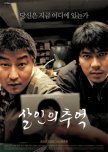
A film based on a true story
For those of you who didn't understand the ending (why the actor looks at the camera and breaks the 4th wall) :First of all this movies is based on a true story. Keep that in mind.
The events in the movie happens in 1986.
The movies came out in 2003.
The killer confessed in 2019
Okay, now that you have some context, here is my interpretation. There is 2 actually.
1. The actor may have looked at the camera after the girls said that the man looked "kind of plain" because well, WE, us, the viewers are normal, plain, ordinary. It means that the murderer may have been anyone. Any korean if i may say so. A normal citizen hiding in plain sight.
2. As I said in 2003, the killer had not confessed to his crimes yet, not until 2019. That is why, thinking that the killer might be watching the movie, the director made the actor look at the camera who may be watching the movie. (If it was the reason, well, it's awesome!).
Anyways, the movies was amazing, great cinematography and as always Bong Joon-Ho did not disappoint.
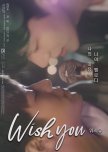
When the movie surpasses the series!!!!
Disclaimer: This is a resubmission of my original review to match my current writing style for BL series that were edited into a movie version.The series/movie: Overall, this was a beautiful and heartwarming story. The script was wonderful and not overly dramatic. It also reviled the ugly truth about the music industry on how it views their artist as products and not as humans. However, the main problem with the series version is it feels incomplete due to a lot of missing content. As for the actors, all of them did an incredible job. The music was great which is good considering this is about the music industry. They also did a good job with the music placement throughout the series/movie. The cinematography was beautiful.
The movie: They did a great job editing the episodes into one cohesive movie. As for the content, this is another great example of why editing is important. The series version suffered from very poor editing. The movie version has a lot of extra scenes which added so much to the story. It also helped make the conflict scenario introduce towards the end not seem random. There were a few scene placements that were changed and some scenes cut short.
Random note:
A strongly recommend watching the movie version!!!! There is about 15 extra scenes in the movie that the series does not have. I’m very puzzled on their decision with not including all the extra scenes.
I watched this on Netflix when it was still available in the U.S. (it was listed as Wish You) not knowing this was a BL series turned into a movie. It is a shame that it’s no longer available in the U.S. because the English subtitles were better.
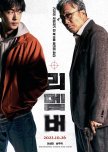
He forgets the past — but carries its weight, one name at a time, until memory becomes justice
"Remember" ist a Film about Revenge, Memory, and the Echo of HistoryAn old man. A revolver. Five names tattooed on his fingers — and a memory slowly fading. "Remember" is no ordinary revenge thriller. It’s a film about guilt, about forgetting — and about what remains when history isn’t confronted, but buried.
At its center is Han Pil-joo, portrayed masterfully by Lee Sung-min. Before his memory slips away for good, he has one last mission. At his side: the young In-gyu (Nam Joo-hyuk), who only meant to drive the old man — and suddenly finds himself an accomplice in a revenge mission that is as absurd as it is moving.
What makes the film so remarkable is its tone: poised between tragedy and dark humor, between road movie and history lesson. This is no hero’s journey, but a moral dilemma — laced with dry wit, laconic dialogue, and a kind of tender melancholy. The camera remains still, the violence understated, almost quiet. And yet it cuts deep.
"Remember" is more than a thriller — it’s a commentary on Korea’s unresolved colonial past. From 1910 to 1945, Korea was under Japanese rule — a traumatic era that still reverberates. Many Koreans were forced into labor, women abused as so-called “comfort women.” And yet, some Koreans collaborated — out of fear, opportunism, or conviction.
The film poses an uncomfortable question: What if those collaborators survived — and simply continued their careers after 1945? What if they now sit in high offices, as businessmen, politicians, patriarchs? "Remember" hints at this — and leaves the audience with the haunting question of whether justice expires. Or whether, sometimes, it needs an old man with a gun.
In Korea, the topic remains sensitive. Official reckoning was long delayed, many archives stayed sealed, many names unspoken. And while Japan still struggles with a clear apology, Korea wrestles with its own culture of remembrance: How do you remember betrayal without losing yourself?
"Remember" doesn’t answer that. But it asks the right questions. And it does so through a protagonist who forgets — and in doing so, reminds us.


