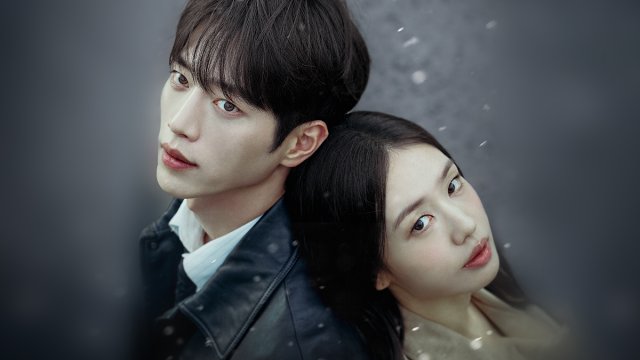
Bullshit
Nonsense! Don't waste your time watching this. The daughter is rude and the stepfather is ill-mannered. What kind of ending is this?! They end up living together while she has a boyfriend! What world does this writer live in? The screenwriter clearly has no values or morals.đđ»đđ»đđ»đđ»Was this review helpful to you?
This review may contain spoilers
What the hell did I just watch!?
This movie reminds me a lot of a Chinese film called âLove Story in Londonâ. Both represent productions that destroy themselves by pouring money into filming abroad, but fail where it matters most which is the story.With that said, I completely disagree with the above-8 rating of this show on MyDramaList. Itâs completely illogical to me, maybe just reflecting mad fansâ love for the male lead. And it serves as proof for producers that even a stupid work can still be profitable if you hire a lead with a solid fanbase.
------------------------------------------------
Official Review
------------------------------------------------
There are basically 3-4 storylines in this movie:
1. The MLâs refugee life
2. The FLâs family problem
3. The FL's problem with mafia gang
4. The romance between the leads
And 3 out of 4 storylines are extremely problematic.
------------------------------------------------
đ The FLâs family problem
The movie tries to tell us that the FL had a deep bond with her mom since sheâs extremely furious about the mom's euthanasia. But it never shows her relationship with either parent. Not before the momâs death and not after.
The dad seems decent, reasonable and caring, but we barely see any real interaction between them. The FL gets involved with mafia gang and drugs, but her dad seems to be completely unaware. He seems to only label her as rebellious because of grief, which feels shallow.
Then at the end, when she suddenly has to flee the country because the mafia is chasing her, the dad isnât even that surprised or concerned. He just helps her get a plane ticket and lets her go - alone. This is a wealthy, well-connected man with access to top lawyers, yet he makes no real attempt to properly resolve his daughterâs situation.
And the issue is simply that the FL is financially indebted to the mafia. So, why doesnât her dad just pay it off and solve the problem, at least in one way?
Instead, itâs the ML who decides that she has to leave the country without turning back.
How does such a decisive solution come from a naive, inexperienced refugee applicant who barely knows the country, canât even speak the language and has only just arrived?
Also, the FL holding onto anger for three years makes no sense. Sheâs not a child. Her mom made her own decision, yet the FL is enraged at her father and reacts by publicly destroying her mom's memorial ceremony like a kid throwing a tantrum even three years later. If the FL is this childish, how come the father feels at ease to let her go out of the country to an unfamiliar new place alone at the end? This only feels unconvincing.
------------------------------------------------
đ The FL's problem with the mafia
I have no idea why two mafia groups want the FL so badly. The only thing I can infer is that the leader of the first gang might have feelings for her, but thereâs no real romantic behavior to support that. The only indication is him killing members of the other gang at the end to keep her with him. But then later, it turns out heâs just following orders from a higher-up to kidnap her to Germany.
So what is it exactly - whatâs so valuable about the FL that makes her worth all this?
Honestly, this is just a mess. Itâs illogical and full of contradictions. I donât find any bit of the mafia storyline convincing at all. Theyâre not intimidating. They donât act with any real urgency or seriousness, and they let the FL, who owes them money, slip away too easily.
------------------------------------------------
đ The romance between the leads
Their relationship doesnât convince me at all.
Thereâs nothing clear about how their feelings develop. Especially for the FL, who is already drowning in her own problems and has teenage shallow hostile attitude toward life, including the ML, most of the time. There's nowhere in the movie showing that the uneducated, poor-look ML is attractive to her. So where does this âdeep loveâ come from?
When they suddenly start having sex, it completely caught me off guard because there was no buildup at all. The ML also seems decent in bed, as if heâs experienced, which doesnât match his background of having no education while living with his mom his whole life.
------------------------------------------------
đ The MLâs refugee life
I'm already tired of all the disarray in this film, so let me not go too deep into this. Just that the process and details arenât accurate while the tone of this film is realistic.
------------------------------------------------
Things in this movie are just too illogical. They try to juggle 3-4 storylines but never really commit to developing any of them properly. It feels like the writing team brainstormed a few random ideas, then didnât bother to shape them into something coherent or at least filter out the weaker ideas.
In the end, it just comes across as a number of half-baked plots forced together onto one plate
đ ⊠đ
Was this review helpful to you?
A Quiet Story With Subtlely That Makes It Work
Core Feeling: quiet, sensual, intimateStandout: the silent, unconventional connection between the leads
What Worked: the subtle storytelling and emotional atmosphere
What Didn't: not very memorable in specific details
One Honest Thought: I don't remember everything but I remember how I feltâ and that feeling stayed with me.
Emotional Impact: 8/10
Finished: 8/19/21
Was this review helpful to you?
Why Chinese Wuxia Outclasses Modern Action Films
Western action often asks, âHow can we keep you excited?â Chinese wuxia often asks, âHow can movement itself carry meaning?âWatching Blades of the Guardians is not just another wuxia film, it feels like a full-scale revival of martial arts cinema at its highest level. Exceptional fight choreography that Western films will never match: long, fluid sword fights with real weight and timing, emphasis on physical skill, rhythm, and spatial clarity. Large-scale battles (desert ambushes, duels in storms) feel organic, not like CGI-heavy spectacle. Here, every hit is readable and meaningful, almost like dance choreography with lethal consequences. The desert combat feels grounded and creates a level of tension many Hollywood blockbusters no longer achieve; you can feel the danger instead of just seeing effects. The filmâs landscapes, deserts, ancient cities, war-torn borders are not just backgrounds; they function like characters. Sandstorms become battle arenas. Fire and dust shape the rhythm of combat. The cinematography leans into mythic, almost legendary imagery, which paradoxically feels like art rather than violence for the sake of it.
Blades of the Guardians offers visible technique and training, clear fight geography, real impact in every strike, emotion tied directly to combat, and a respect for martial arts as an art form, not just spectacle. It feels âmore real,â âmore intense,â and even âmore cinematicâ than most Hollywood action films today. It leans fully into what wuxia does best: honour, betrayal, survival across impossible landscapes, and combat that feels like storytelling itself. It is not just an action movie, it is a reminder that cinema action can still be handcrafted, elegant, and emotionally charged at the same time. If Western action represents controlled spectacle, Blades of the Guardians represents chaotic poetry with blades.
I loved it because the wuxia approach stays intimate even when the scale is large. It feels like watching internal codes of life and death being tested in real time. In contrast with the peak of modern Western action design, fast, engineered, and globally oriented, Blades of the Guardians represents a more traditional, almost philosophical approach to action, where movement itself carries meaning beyond plot function. That is why they feel so different to watch, and I loved it. One is built like a high-speed machine; the other feels more like a crafted ritual.
The Chinese wuxia approach won me over because it treats action as expression rather than logistics. In wuxia, and in Blades of the Guardians, a fight is not just a way to move the plot forward, it is the emotional and narrative moment. You feel character, history, and philosophy inside the choreography itself. The pacing is slower, but that slowdown is intentional: it allows tension, body language, and spatial awareness to become part of the storytelling. Instead of cutting away from complexity, it leans into it. The rhythm is carefully balanced, with moments of wit and humour that lighten the intensity without breaking immersion.
There is also a stronger sense of visual clarity and craftsmanship. The choreography is designed so you can actually read what is happening: footwork, distance, weapon control, rhythm. That creates a different kind of engagement. You are not just reacting to explosions or edits; you are following a physical conversation between characters.
Western blockbusters often build tension through external stakes: preventing a global disaster, stopping a bomb, outrunning time. Itâs exciting, but itâs structural. Chinese martial arts cinema often builds tension through internal codes, honour, loyalty, betrayal, destiny, sacrifice. That makes even smaller moments feel heavy, because the conflict is not just physical but moral and personal.
There is also a philosophical layer that I find richer. Wuxia traditions often come from ideas about discipline, balance, fate, and the meaning of violence itself. The action is not just spectacle; it is connected to identity and worldview. That gives the film a kind of depth that feels less common in many Western action franchises, which are often more focused on momentum and entertainment efficiency, and for which is the reason I donât go to the cinema anymore. Blades of the Guardians has artistic depth, visual readability, emotional weight inside action, and choreography as storytelling. I highly enjoyed it.
Was this review helpful to you?
AN ODE TO KABUKI THEATRE
I will say that I expected something completely different. A story about two rivals that compete with each other. Something darker, more brutal and tense. However, in the end this was a tale about brotherhood, wrong -and right- decisions, art, love, passion, loneliness and ambition. It was a masterpiece with painfully beautiful music and splendid costumes. An ode to Kabuki theatre; and it was beautiful for what it is.The last scene is simply perfect and reminded me of the reason why I love cinema so much.
Was this review helpful to you?
This review may contain spoilers
A Dream That Finds a Home
I rewatched As Long as We Both Shall Live today because I needed something soft. Not something intense or emotionally draining, just something calm that lets you settle into it without resistance.And this really is that kind of film.
It doesnât feel like a story that unfolds in big moments. It feels more like a quiet shift. Like stepping out of a long stretch of cold into a space that isnât warm yet, but no longer hurts to exist in.
Miyo lives in that kind of emotional winter at the beginning. Not loud, not dramatic, just constant. The kind that slowly shapes how you see yourself. So when sheâs sent into this arranged marriage, it doesnât feel like anything is about to change. Just another place to endure.
What I liked is that the movie doesnât rush to prove otherwise.
Kiyoka isnât written as a sudden contrast. Heâs not warmth all at once. Heâs just steady; controlled, distant, but consistent in a way that slowly starts to matter. Their relationship doesnât build through dramatic turning points, but through small, almost quiet shifts. A sense of safety that grows without needing to be announced.
The fantasy aspect stays mostly in the background, but it adds an interesting layer, especially with Miyoâs ability, the Dreamweaver power. At first, sheâs treated as if she has none, which is why sheâs dismissed so easily. But her ability is actually one of the rarest. It works through dreams, memory, and the subconscious, something you donât see on the surface, but that quietly shapes everything underneath. And that fits her character in a way that feels intentional. Miyo has always been someone whose world exists internally, suppressed, unheard, unseen. So when that ability begins to surface, it doesnât feel like a dramatic reveal. It feels like something that was always there finally being allowed to exist. Not loud, not overwhelming, just present.
Visually, the movie leans into that same softness. Muted tones, gentle lighting, and a kind of stillness that carries through almost every scene. It captures its atmosphere really well without trying too hard to impress. It just lets the mood settle.
The performances follow that same approach. Nothing feels exaggerated. Miyoâs fragility stays grounded, and Kiyokaâs restraint never feels empty. Both actors keep everything contained in a way that actually works for the story, making their dynamic feel natural.
If thereâs a weakness, itâs in how much the film holds back. You can feel thereâs more beneath the surface, more to the world, the politics, even the Dreamweaver concept, but two hours isnât enough to fully explore it. What should feel layered instead comes across as lightly sketched, with key elements introduced but never given the space to truly develop.
This is where the film loses some of its potential. The emotional core is strong, but the surrounding world feels underbuilt in comparison. Itâs the kind of story that hints at complexity without fully committing to it, which makes parts of it feel smaller than they could have been. Itâs easy to imagine this working far better as a 10-episode series, where both the characters and the world have room to breathe. As it stands, the film captures the feeling of the story, but not its full depth.
Despite its limitations, Iâd still rate it a strong 8.5, rounded up to a generous 9, not for a groundbreaking plot or narrative complexity, but because of how much I enjoyed it. And maybe it doesnât hurt that I have a soft spot for silver-haired generals; though this time, even that blends seamlessly into the filmâs calm, restrained tone.
A gentle, atmospheric movie carried by strong performances and beautiful cinematography. While the story feels larger than its runtime allows, it delivers a calm, quietly comforting experience. Even if fantasy isnât your genre, its atmosphere alone is enough to draw you in.
Was this review helpful to you?
Completely over the top
very disgusting movie. the acting was very good though, especially from ichi's character. i'm still so confused on what his deal was... surprisingly still a decent movie despite the excessive amount of gore and absolutely terrible cgi/sfx LMFAOOO they did the best they could for that time though i guess.Was this review helpful to you?
This review may contain spoilers
Goosebumps Every Time Kabuki is Played
The story is quite straightforward, with a constantly evolving plot. It depicts the main characters' sacrifices and efforts to achieve their dreams, while selfishness takes over.Yoshizawa Ryo and Ryusei Yokohama portray their characters masterfully. Each of their kabuki roles evokes a sense of pain and heaviness, befitting the kabuki theme they portray. The audience is drawn into and immersed in their roles.
The music in this film is sumptuous and dramatic, but it's a bit of a shame that many plot points could have been explained further, particularly regarding Akiko's fate, the fate of Shunsuke child, and so on. It's certainly not entirely plot sensitive, considering the film's length.
Was this review helpful to you?
still the best version
This one has a special place in my heart. I remember watching it before even knowing it was based on an anime/manga, and Iâve always preferred this version. Its beautiful cinematography, quiet pacing, scenery, and the natural chemistry between the cast especially Haruma and Mikako bring it to life. The soundtrack and visual direction also creates a soft, thoughtful aesthetic that lingers with you. Even with newer adaptations, this one still stands above the rest.Was this review helpful to you?
Not Your Usual Tragic Lesbian Period Piece
The Handmaiden is based on Fingersmith (2002) by British lesbian author Sarah Waters.The Handmaiden (2016) moves the story to 1930s Japanese-occupied Korea and then just starts pulling the rug out from under you every twenty minutes.
A pickpocket named Sook-hee (working under the alias Tamako) is recruited by a swindler known as Count Fujiwara. His plan is for Sook-hee to become the handmaiden to Lady Hideko, a wealthy and secluded Japanese heiress living with her domineering uncle, Kouzuki (in a beautifully gothic mansion, I must say). Sook-hee is tasked with convincing Hideko to marry the Count, after which they intend to commit her to an asylum and steal her inheritance.
What I love is how it takes the whole doomed, repressed lesbian period drama expectation and just refuses to sit in that box. The longing is there, the tension is there, but it doesnât wallow in suffering. Itâs messy, funny, horny, and, crucially, it lets its women be active participants in their own story instead of just tragic figures trapped in it.
And yeah, the sex scenes. People always circle those, and yes, they should've had a sapphic intimacy coordinator. But at the same time, the charactersâ only frame of reference is those pornographic books, so it kind of makes sense? Regardless, even when parts of the love scenes feel inauthentic, the connection between the leads is incredibly intimate and powerful. The sex scenes do NEED to be there, theyâre kind of the point. Not in a cheap way, but in a âthis is what reclaiming your own body actually looks likeâ way. Itâs deeply moving because itâs the only time these women are allowed to be fully real and liberated.
The acting overall is pretty much pitch perfect, especially the two leads. They start with this ice princess / nurturing maid dynamic that slowly evolves into something much more intimate as the layers theyâre hiding are revealed, both emotionally and physically. And honestly, that dynamic has clearly had a huge impact. You can see versions of it everywhere now, across sapphic series, manga and manhwa.
Also, the movie is just outrageously good-looking. Chung Chung-hoon shoots this like every frame is trying to seduce you personally. The house alone deserves its own credit, all sharp edges and hidden spaces, like itâs constantly watching the characters right back. Besides being a thriller, erotic, and a bit of a heist movie, I mainly see it as a gothic romance. In fact, Iâd go as far as to say it might be the greatest gothic romance film ever made.
There are some things here and there I wish were done differently (less time spent on the men in the last part, for one), and a few moments I couldâve done without, but it doesnât really take away from the overall experience. The final reveal is one of the best feelings Iâve ever had watching a movie. And that library scene is just incredibly moving.
Itâs vicious, beautiful, horny, scary, romantic, playful, a little bit feral (in the best way). And underneath all the twists and schemes, thereâs something incredibly satisfying about a story where women who desire each other donât get reduced to a cautionary tale.
It has resonated deeply with many Korean women for its sharp, satirical dismantling of colonial and patriarchal structures. Itâs a film that understands that the most dangerous thing in a manâs world is two women who love each other.
Genuinely one of those films that makes you want to immediately rewatch it just to see how it pulled everything off. Itâs now regarded as one of the best films ever made, and that honestly makes me very happy.
4.5/5
Was this review helpful to you?
This review may contain spoilers
ItÂŽs not really a zombie movie
Itâs a movie about the making of a zombie movie. At no point are there actual zombies. The first part is promising but then it makes a complete shift. It has some funny points but the execution is lacking and it becomes drawn out with the way that you watch the movie that was made, go back in time and then watch be made with what went wrong behind the scenes. It would have been better had I known this from the start. If youâre looking for an actual zombie movie this isnât it in my opinion.Was this review helpful to you?
Even if This Love Disappears from the World Tonight
0 people found this review helpful
Not watching this a second time ! Trauma !!
This movie is just another JTrauma, and recently, Korea dropped its remake, However, if you're looking for a viewing experience that will profoundly traumatize you, I highly recommend the original Japanese version. I wonât give away any plot details, but I must emphasize just how powerful and moving this adaptation is. Itâs a cinematic experience that left me deeply affected, so much so that I donât think I could ever bring myself to watch it again. Although itâs an incredible and emotionally charged, itâs one that lingers long after the credits roll. You should definitely watch it, though, because itâs truly a beautiful piece of art that deserves to be seen.Was this review helpful to you?
This review may contain spoilers
Does blood relation make you actually a family?
Shoplifters is one of those movies that deserve a spot on every must-watch movie list; it's a great example of how Japan is the pioneer of cinematic storytelling. This movie took me through so many emotions and really defined the meaning of family.The film addresses many societal issues, but it presents them in such a way that they exist in a grey area. Itâs difficult to label the charactersâ actions as entirely wrong, yet they canât be deemed right either. For instance, when they decide to keep the little girl Itâs saying itâs not a kidnapping if you donât ask for a ransom. Itâs similar logic to how Osamu justifies stealing to Shota, telling him itâs OK if itâs not someone elseâs property and that items in a store donât belong to anyone yet.
Though the characters in the movie are not blood-related and each one has their own backstory of hiding, lying, damaged and frightened, they create a warm, cozy family, making the best of things from day to day. The dynamic between them is so warm and beautiful that it makes you wonder if you could choose your family, could you actually be happy? Does blood relation make you actually a family? This is exactly the theme in this movie. As a viewers, we witness their crimes but also see the genuine love they share as a family, which makes it challenging to condemn them. Perhaps, this is what the movie wants us to notice: that sometimes certain things are very much a grey area and it is difficult to differentiate the right from wrong!
Also, the movie dives deep into a part of society we donât see often: the marginalized community, the poor who donât have enough money to even eat, yet they have still have so much warmth and love for each other.
"Shoplifter" is a delicate work painted with so many details, moments, smiles, and is deeply intelligent.In term of acting, the actors did a phenomenal job in portraying these characters, giving them so much depth in their humanistic storytelling, and I have strong admiration towards Sakura Ando; she delivered such a strong performance in this role, with so much depth and layers. This is one of those movies that you will never see and nobody would be able to recreate. The last few minutes of the movie still haunt me; it left me with a profound sense of loss as if I myself lost a family I found.
Was this review helpful to you?
This review may contain spoilers
Another JTrauma
There is a specific category of Japanese anime and movies that are called Jtrauma, because of how traumatic they are. They often have really touching relationships and romantic love stories that make you giggle and blush, and then when you least expect it, they are going to hit you with one of the characters dying. It's gonna come in such an unexpected way that itâs gonna hurt like a punch in the stomach. And this movie belongs right to that category.So this is my warning in case you don't want to cry, but if you are crazy just like many of us, this was a great movie. The story is so sad but a great experience. Dayum, I thought I got used to these Jtrauma after watching so many movies like this, but it seems like I still have not built enough tolerance 'cause I was sobbing the whole time.
Another aspect I enjoyed was the cinematography and the use of light. The contrast between the couple and the world outside was fascinating. The room seemed much darker, almost foreshadowing the tragic ending, while the light coming from outside was soft, bright, and full of hope. This contrast intensified the emotional impact of the story. I did find it a bit annoying how high the brightness was compared to the darkness, as I had to constantly adjust the brightness on my screen. Still, it was a clever choice to emphasize the difference between life and death.
Definetly a great movie and worth watching.
Was this review helpful to you?
A lot of tears
You are going to cry; this movie is so sad! If you don't enjoy dramatic films, you might want to avoid it. However, it is truly excellent. This typical Japanese movie features a cute love story with a sad ending, and itâs really nice. As much as it is sad, it is also very funny. I would say this was a great watch;I cried a lot, but I laughed a lot too. Overall, this was definitely a nice oneWas this review helpful to you?
1
1