
 Editorials

Legends of the Condor Heroes: The Gallants
0 people found this review helpful
My June Recommendation movie
Watch this because recommendation challenge from 𝑨𝒏𝒉𝒖𝒂.The film follows the journey of Guo Jing (GJ), a pure-hearted and fiercely loyal Han youth who was raised among the Mongols under the care of Genghis Khan. After spending two years in the Central Plains mastering elite martial arts, he finds his life entangled in a web of devastating misunderstandings, heartbreaking romantic separation, and a looming war that threatens to tear the land apart.
During his time in the Central Plains, GJ meets the free-spirited Huang Rong (HR) , and the two quickly develop a deep bond. However, their relationship is pushed to its breaking point when most of GJ's former martial arts masters are brutally murdered. Misled into believing that HR's unorthodox father is the killer, a heartbroken GJ distances himself from her, leaving her vulnerable to the dangers closing in around her.
Eventually, GJ uncovers the truth and realizes that HR's father was never responsible for his masters' deaths. But by the time he recognizes how deeply he has wronged her, she has already disappeared amid the chaos of a town skirmish. Determined to make amends, he embarks on a desperate journey to find her, protect her from the enemies pursuing her, and finally clear the misunderstanding between them.
Meanwhile, the Mongol Empire under Genghis Khan prepares a massive military campaign against the Southern Song Dynasty, leaving GJ trapped between two worlds. Having been raised on the steppes after his father's death, he owes the Mongols immense gratitude and respect. Yet, his true homeland is Song China, whose people now face invasion. Torn between loyalty to those who raised him and his duty to protect his homeland, GJ faces the greatest dilemma of his life.
As war becomes inevitable, GJ and HR reunite to confront both the madness of Ouyang Feng and the unstoppable Mongol army. Standing firmly on the front lines to protect his homeland, GJ embraces his ultimate destiny as a true gallant hero. With HR’s brilliant mind and his own unmatched martial arts, they stand together against the impending storm, determined to stop the invasion and save millions of innocent lives.
That's pretty much the story without giving anymore spoilers.
What I like:
+ As usual, Xiao Chan's acting never disappointed.
+ I really like that they stick with the Mongol language instead of changing it into Chinese.
What I don't really like:
- Unlike many previous adaptations of The Legend of the Condor Heroes, The Gallants assumes that viewers are already somewhat familiar with the characters and their history. It kinda baffled me in the beginning…
Overall if you are a fan of Xiao Chan you can watch this. But remember, familiar yourself first with the story…
Was this review helpful to you?

The story begins when international action star Jackie Chan is invited to attend a special adoption ceremony at a wildlife reserve. There, he becomes the adoptive guardian of a rare giant panda cub named Hu Hu, whose unusual appearance and exceptional genetic traits make him famous around the world. While Jackie simply wants to enjoy his time with the lovable panda, Hu Hu's popularity also attracts the attention of a ruthless international crime syndicate.
The situation quickly takes a chaotic turn when the crime syndicate tries to collect a massive $100 million bounty placed on Hu Hu by a wealthy Middle Eastern sheikh, and a heavily armed team of international mercenaries storms the park to kidnap the cub. Suddenly, Jackie finds himself trapped in a real-life action movie—only this time, there are no directors, special effects, or stunt doubles to save the day.
To protect the defenseless panda, Jackie teams up with his cowardly but well-meaning talent agent, David, and Hu Hu's fiercely dedicated caretaker, Su Xiaozhu. Together, this unlikely trio must rely on their wits, the environment around them, and Jackie's signature improvised kung fu skills to outsmart the high-tech mercenaries and keep Hu Hu safe.
So, how does the story end? Will Jackie Chan succeed in saving Hu Hu from the bad guys, just like he does in his movies? Or will the syndicate ultimately succeed in snatching Hu Hu and claim their prize?
That's pretty much the story without giving anymore spoilers.
This film reminds us that Jackie Chan is getting older. Jackie Chan’s action may be slower now, but his spirit, his comedy remains unchanged. I really like how he kinda changed his action movie to a more gentler one…
If you're a fan of Jackie Chan. This is a must watch…
Was this review helpful to you?
50/50
The absolute saving grace of this film is its cast. The actors deliver raw, powerhouse performancesWhile the execution is brilliant, the story itself is incredibly heavy and, at times, deeply troubling. The narrative hinges on a core act of betrayal—one that is so malicious, and devastating that it crosses a line into being completely unforgivable.
Plot/Story: 3.0/10 (Ethically backward and frustratingly manipulative)
Acting/Cast: 9/10 (Phenomenal, award-worthy performances)
Overall Value: 4/10
Was this review helpful to you?
Shark: The Beginning — One of the Best Webtoon Adaptations I've Seen
As someone who already loved the webtoon, I was both excited and nervous when Shark: The Beginning was announced. Too many webtoon adaptations lose what made the original special. Thankfully, this isn't one of them. From beginning to end, it captures the same determination, pain, and hope that made me love the source material.The story is much more than a simple school bullying drama. It's about someone who has everything taken away from him and has to rebuild himself from nothing. Every setback makes Cha Woo Sol stronger, not because he suddenly becomes invincible, but because he slowly learns that surviving sometimes means changing completely. That progression feels believable, and I found myself rooting for him during every fight.
Kim Min Seok is absolutely fantastic.
I've always thought he has something unique as an actor. No matter how physically strong his characters become, he keeps this innocent look that immediately makes you want to protect him. That quality is perfect for Woo Sol. Even while learning how to fight, he never loses the vulnerability that defines the character. It makes every victory feel earned instead of inevitable.
It's also impressive to see the physical work he put into the role after returning from military service. The training sequences look convincing because he clearly committed to becoming this character rather than simply acting the part.
The supporting cast is equally strong, especially Wi Ha Joon. His presence completely changes the atmosphere whenever he appears on screen. Rather than becoming a stereotypical mentor, he creates a relationship with Woo Sol that is built on respect, discipline, and mutual understanding. Watching their dynamic develop became one of my favourite parts of the film.
The action scenes deserve special praise. They're brutal without becoming unrealistic, and every punch has consequences. Instead of trying to create flashy martial arts choreography, the film focuses on survival, making every fight feel dangerous.
Final Thought
Shark: The Beginning proves that a great webtoon adaptation doesn't need to reinvent the source material. It simply needs to understand why readers fell in love with it in the first place. Kim Min Seok delivers one of my favourite performances of his career, and I honestly hope this isn't the last time we see Woo Sol's story continue.
Was this review helpful to you?

"If you don't respect animals, you'll be punished"
Mr Zoo: The Missing VIP was a cute cross between Dr. Doolittle and Pets starring a gorgeous German Shepherd named Ali and the dependable human ahjussi Lee Sung Min.Agent Joo Tae Joo leads a regimented life with a touch of OCD. He’s up for promotion and determined to get the position. When the Chinese envoy for the 25th Anniversary of the Korean-Chinese Diplomatic Relations turns out to be a panda named Ming Ming he doesn’t hesitate to volunteer for the assignment in hopes it will seal the deal for his promotion-despite his anathema for animals. His life takes a strange twist when he abuses a stray cat named GOD and later sustains a head injury trying to thwart a pandanapping. He ends up being able to understand what animals are saying and can communicate with them. The agency isn’t thrilled with his new “abilities” and benches Joo during the search for Ming Ming. Fortune smiles on him when a military dog named Ali steps in to help him find the culprits.
I found the first 40 minutes or so terribly uneven and uninteresting. Lee Sung Min gave his all as he always does so his performance was not the problem. Kim Seo Hyung made the most of this lighter role, showing she could do comedy as well. The problem was that this type of story has been done numerous times and execution is critical. The editing and scene setups came across amateurish and unpolished. There was the required estranged child who desperately needed the father who had no idea how to talk with her. And the competitive colleague licking his chops at the chance to leap frog over Joo.
Mr. Zoo had a beautiful German Shepherd, Ali, who was truly a good boy. Ming Ming, the star of the anniversary celebration knew her worth and tried to hog the spotlight whenever possible. An array of other creatures with legs and for those triggered-without them-were the highlight of the film. Not a great film, but entertaining for what it was. Fair warning, while this was a family film aimed at children there were disturbing scenes of violence against animals albeit with the requisite disclaimers.
27 June 2026
Trigger warning: A snake shown in different scenes. Dancing rats.
Kung Fu Panda Note: The animal costumes were actually pretty good.
Was this review helpful to you?
I can't help but compare it to Mercy for None—though to be fair, that's a series, which naturally gives it more room to properly build up the story. That said, it’s still a decent action flick when it comes to the fight scenes.
Was this review helpful to you?

sociology students will love this piece
I watched this movie thinking that maybe it is related to some viruses and infections. But to my surprise It was about viruses and parasites we have among our society, the parasite of class system, the parasite that is between a rich and a poor.This movie is not your regular rom-com rather it show cases the true nature of human beings, It shows how no one is fully saint nor fully evil. And no matter how much you dislike each character for something they did( i dislike their acts too) but at the end you can't deny not doing the same if being in their position. The start of the movie kind of broke my heart and the way a scene captures a gold medal hanging on the wall of their home in the basement, truly shows that without having money in your hands even your gold medals are equivalent to nothing.
That is harsh and bitter reality of society. Through the family's struggle we were shown how every person was trying to climb up the ladder of social mobility.
you must not watch this movie with a lens of critique rather watch it with the lens of understanding. what is movie trying to SHOW.
the pacing was great. the story telling was great.
the ending was great, it is the kind of ending that stays with you even after the credits roll.
Was this review helpful to you?

Sweet coming-of-age tale
I honestly went into this expecting a B-grade teenage rom-com but this turned out better than I expected.The premise of My Future You is when two teens meet by accident online only to eventually realise that they're existing 15 years apart. Of course, the usual Back To The Future style mishaps ensue.
The dialogue is pretty cheesy, the acting is hit and miss, and the romantic ending feels a little...off. However, the strength of this movie lies in the FL's coming-of-age scenes which happen around the climax of the storyline. These are incredibly heartfelt and reflect are well-written plot structure.
This was a nice way to pass a Saturday evening while doing chores.
Was this review helpful to you?

Love for One Day
Watching a movie wasn't on my To-do list for today but seeing that this was only 30 minutes long, i saw it during my morning coffee. I like having a note with stuff i am planning to do during the day, and that is precisely the topic of this movie: a list of things one girl set on to do. It was very interesting seeing how her plan is developing together with a stranger she meet awkwardly on a beach.Since this is a short film it is more dynamic than usual full feature Hong Sang-soo movies. It still has the same ingredients: people sitting and talking developing human connection, but here, the scenes are shorter, the dialogue is more concise, and there is also some action like playing badminton and some bonus short shoots, like for an example a dog eating ice-cream. I had a nice time watching this, but now, I should continue with things on my personal List in real life.
Was this review helpful to you?
Fun For Watch
Instead of depicting the Edo period in somber tones, this film presents a colorful portrayal of the Edo period, spiced up with a touch of comedy.Instead of depicting the Edo period in somber tones, this film presents a colorful portrayal of the Edo period, spiced up with a touch of comedy.
Instead of depicting the Edo period in somber tones, this film presents a colorful portrayal of the Edo period, spiced up with a touch of comedy.
Instead of depicting the Edo period in somber tones, this film presents a colorful portrayal of the Edo period, spiced up with a touch of comedy.
Was this review helpful to you?

"You don't have the slightest notion of what war is like!"
By a Man’s Face Shall You Know Him tried hard to be a film about the futility of violence yet could only accomplish that task through buckets of blood and a high body count. Set in postwar Japan, instead of the Crips vs The Bloods, it was the Korean gangsters vs…a doctor.Dr. Amamiya recognizes a traffic victim who is rolled into his small clinic. The man’s face causes him to remember a difficult, desperate time from the past. After he returned from the war, Amamiya wanted nothing to do with killing or violence. The only problem being, a Korean gang was determined to take over the street market of which he was the owner. The gang took what they wanted, killed who they wanted, with no consequences from the police or government. Amamiya could be the only thing standing between the people being threatened and the gangsters determined to eliminate them.
The film had flashbacks and flashbacks within flashbacks. Dr. Amamiya had become disillusioned with the government and people in general after realizing he’d been lied to during the war, made worse by the lives he’d taken. He wanted the cycle of violence and death to end even as he was faced with it every day. When his brother came to town on a break from university, the stakes went way up as the way out narrowed.
This film had the look of a lower budget film with the performances hit or miss. There was a great deal of exaggerated acting which could be taxing to watch. Ando Noboru gave a convincing performance as the doctor with a very particular skill set unrelated to the medical field. Coincidentally, in real life, Ando had been a gang leader before he entered the entertainment field. Amamiya’s love interest, Maki, was always covered in sweat and screaming, obsessively clinging to him. Not exactly the epitome of a cool-headed nurse. Of course, the good doctor didn’t mind having a nooner in the clinic which wasn’t particularly professional.
For a film with gangsters, it incorporated more issues with post war societal and political upheaval than I would have expected. What interested me, despite the overt racism toward the Japanese Koreans, was the Korean gang. Japanese Koreans were not often the focus of many Japanese films. The Japanese looked down on the Koreans and the Koreans felt like their time of being dominated was over. Payback was coming. There was no lack of criticism for the war and the repercussions from it. Amamiya was criticized by multiple people for not choosing violence while his brother was considered a hero for confronting the large gang despite his spectacular failure. The yakuza were even too afraid to take on the Korean gang. The film used one of my least favorite tropes with a hero that refused to fight until the body count forced him to. Another issue was that women were not shown in the most flattering light. Maki was a basket case. The writers had the Korean woman Gye do something that lowered my score. For all time, no sane woman asks a man to rape her.
By a Man’s Face Shall You Know Him started out slow paced for a gangster film yet was also deeper than most. I didn’t appreciate the sexploitation and old school machismo acting. However, the bloody ultimate showdown did not disappoint. Though it is flawed, if you enjoy old school gangster flicks, this might be one to try.
26 June 2026
Trigger warnings: Sexual Assault. Sexual situations. Bloody, violent fight using guns and katanas.
Was this review helpful to you?
If you had grown up with a lot of HK/Chinese action movies featuring Jet Li, you most certainly would come to know about Xie Miao... who played the role of Jet Li's son in two movies. And this time, Xie Miao would also take the role of a father for the first time in this movie.
The Furious tells the story of a father, Wang Wei, who suddenly had to take desperate action to save his daughter after she was suddenly kidnapped by a human trafficking gang. And while tracking the whereabouts of the kidnappers, Wang Wei came to meet with Navin (played by Joe Taslim), who was also going after the gang in order to find his missing wife, who happened to be investigating the human traffickers as a journalist. The story is simple enough to understand: two men had their loved ones taken away from them, and by the sheer will of their own desperation and anger... they strive to recover and save their loved ones from that danger.
The action scenes were quite intense from start to end, and if you're a fan of old HK action movies... you'll have your attention hooked on from start to finish. Some people would argue that a few of the action scenes don't make sense, like... how could someone get back up so fast after being hit by a truck or a huge boulder of a man, but you'd be surprised by what a human body could do under adrenaline. And something people may miss about this movie; because unlike usual action flicks, the fighting power of the characters in this movie was more or less equal, thus what gives one the extra boost is their rage and fury... which was the core theme of this movie. Some would say that they'd want to see more of the story behind the main characters, but... in the end, does it really matter for us to find out the true identity of this mute man who appeared to be very good at fighting? In the end, he was still just a father who would give everything he had to save his daughter from bad people.
For fans of HK actions movies, The Furious pays homage to quite a number of past titles... notably Fist of Legend, in which director Tanigaki Kenji once appeared as an extra, as well as some tribute to Xie Miao's earlier works like New Legend of Shaolin, My Father is a Hero... and even Eye to Eye 2, in which Yang Enyou also starred as a sort of daughter-like character to Xie Miao's character. For fans of those other works... as well as past works of the rest of the cast, it would also be a great experience to spot any references from those works inside The Furious. All in all, The Furious really paved the way to a new genre of HK action movie, or extreme kungfu genre.
Was this review helpful to you?
This review may contain spoilers
"Do you think life's beautiful?"
Just finished watching this movie. And I have so many mixed emotions right now. I cane to know about this movie through an Instagram reel, which showed a man attempting suicide by standing on the train tracks, and it mentioned you need to watch it to understand why? So I decided to give it a try. At first you will hate the main character of the movie so much that you will feel no pity for him. The story is presented in a reverse chronological order, where it takes you to the backstory of the main character. What really lead him to attempt suicide. The main character really lost everything. he had a loving girlfriend ~ who used to give peppermint candy to him. The movie projects the horrors of the South Korean civil war. At the end you find the innocent main character who is deeply in love with her girl, and cries out in melancholy at the same riverside where the group had gathered for picnic.I really feel sorry for his girlfriend...........
Was this review helpful to you?
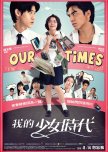
this movie is like a love letter to youth
it's a feel good, comfort watch that echoes fond memories of youth, innocence, first loves and friendships. what a beautiful movie and the main couple truly looked cute together.Was this review helpful to you?
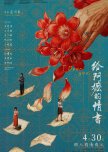
It's all fun and games 'til the tears start flowing
Fool was I to think during the first 20 minutes or so of Dear You that this would would be a whirlwind comedy with a smattering of poignant, emotional scenes. Instead, it ended up being the reverse.Dear You is a story topped and tailed in the present day, but most of the plot is set during the mid-20th century. It revolves around qiaopi, the letters and money that Chinese overseas (in Thailand, in this case) sent back home to their loved ones.
What makes Dear You so touching is how it uses simple misunderstandings between characters to show how strong bonds between people actually are, and how yearning for home provides strength for a community. Human resilience and sincerity is the emotional force of this film.
Everyone in the movie theatre was trying to be polite and not cry too loudly, but I clearly wasn't the only one that spent the majority of Dear You in tears.
What surprised me when I was reading about the movie afterwards is how much they've achieved with a shoestring budget and relatively unknown actors. I would have never guessed this was such a cheap production!
It's also interesting to see how the movie's success seems to have spurred conversations in Singapore around language politics.
This is the first movie I've seen in Teocheow. I watch a lot of Chinese, Taiwanese, and some Hong Kong cinema, but haven't watched an entire movie or series that hasn't been in either Mandarin or Cantonese. I think the closest has been was the sporadic use of Taiwanese Hokkien in Autumn's Concerto.
This piece of history around qiaopi was also new to me. I think the icing on the cake was the epilogue of Dear You where they showed how qiaopi that had featured in the storyline were actually based on real life qiaopi. And so we all started crying again :')
Was this review helpful to you?


